
Evelyn De Morgan is one of my favourite Pre-Raphaelite painters. I love her images of strong women, her attention to detail, and use of symbolism and myth. The ‘Painted Dreams’ exhibition at Wolverhampton (reviewed here) was overwhelmingly lovely, and you can see De Morgan’s work at the Guildhall, London at the moment.
There are themes which appear throughout her life, which is one of the aspects that particularly appeals to me (especially since I edited her childhood poems), and I’m always noticing little things that I immediately have to follow up on!
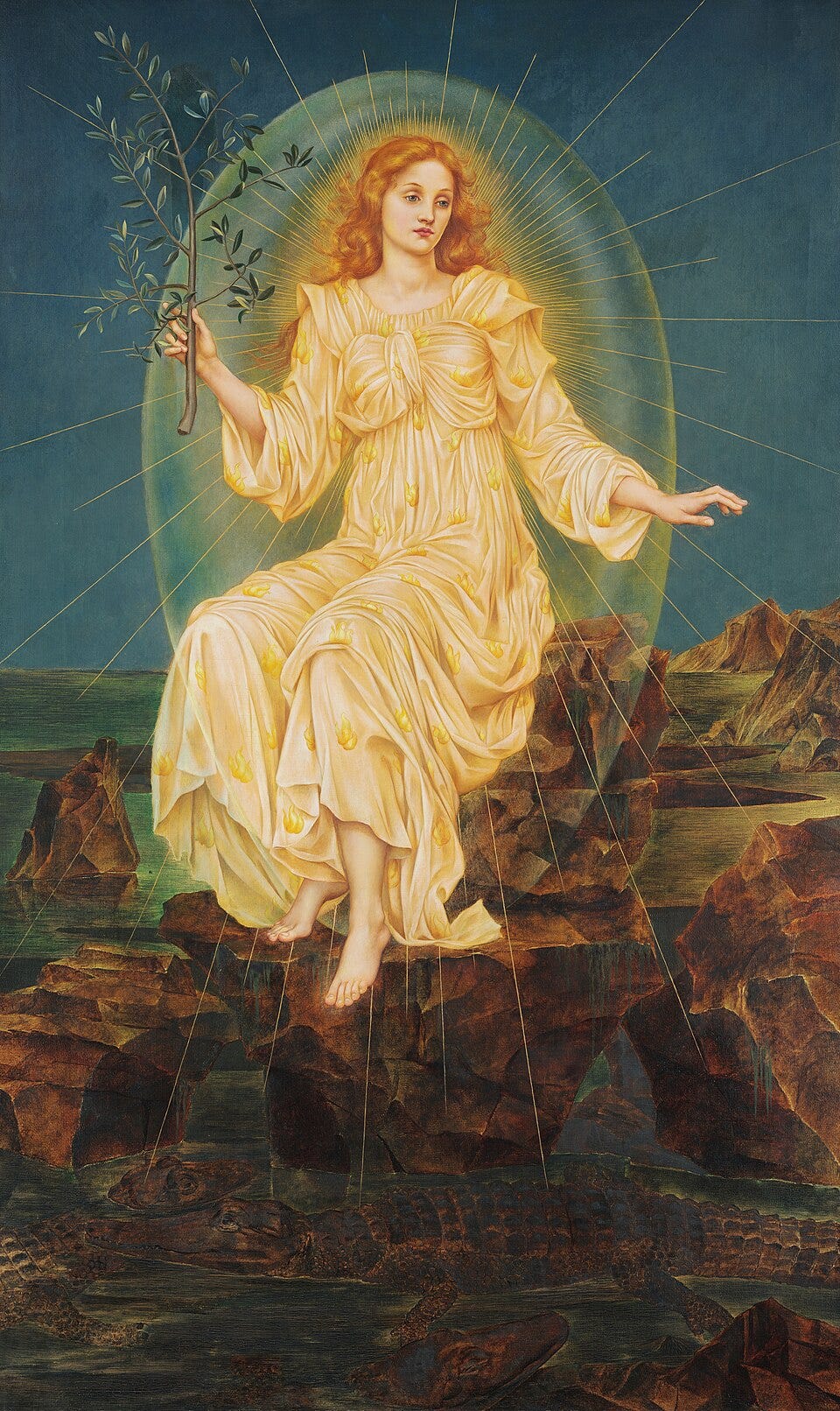
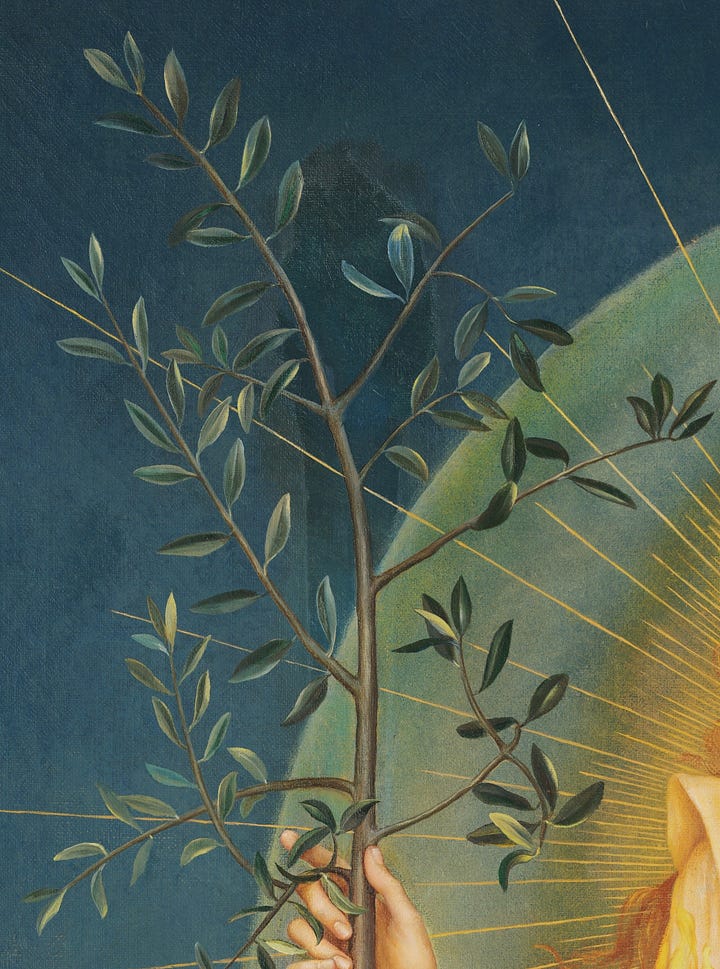
Most recently, I’ve been thinking about olives branches. In Lux in Tenebris, ‘Light in the darkness’, a glowing painting in which a luminous figure representing goodness, truth and beauty descends from the sky to illuminate a darkened world with threatening mountains and hints of monstrous crocodiles, the figure is holding an olive branch. The painting’s title comes from the Gospel of John, 1.5: ‘And the light shineth in darkness; and the darkness comprehended it not.’ De Morgan was a Spiritualist, and her conviction through her belief that illumination and peace were possible for the world shines through this painting (read more about this here).
What really interests me, though, is that research has shown that the figure originally help a flaming torch. This is traditionally a symbol for enlightenment, knowledge and hope, but De Morgan changed it for an olive branch, a symbol of peace since ancient Greece, and a symbol of hope in the Bible where the dove returns to the Ark with an olive twig. De Morgan’s painting thus becomes a representation of hope and peace, then, indicative of her Pacifist stance, developed during the first Boer War and becoming particularly strong during World War One.
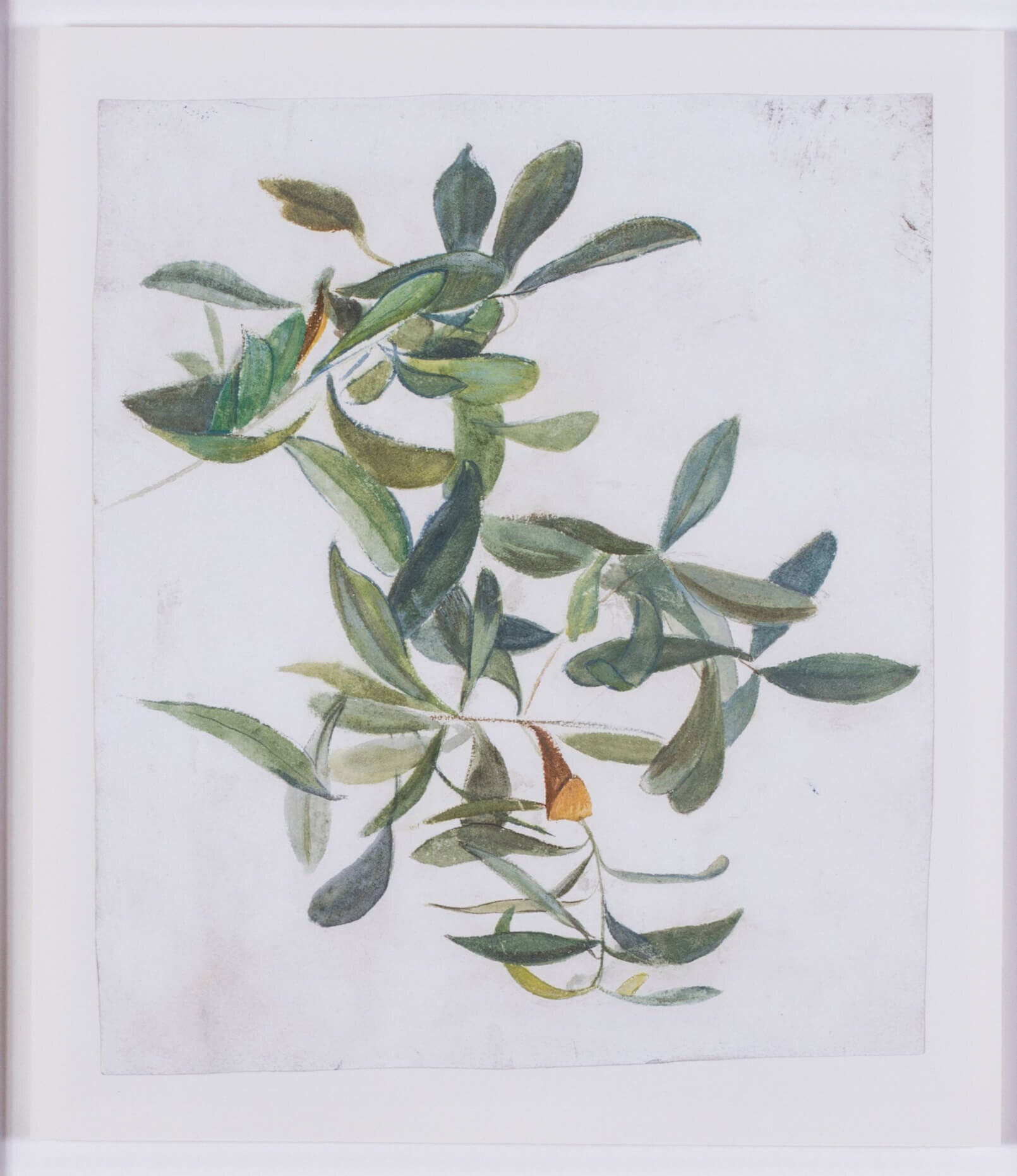
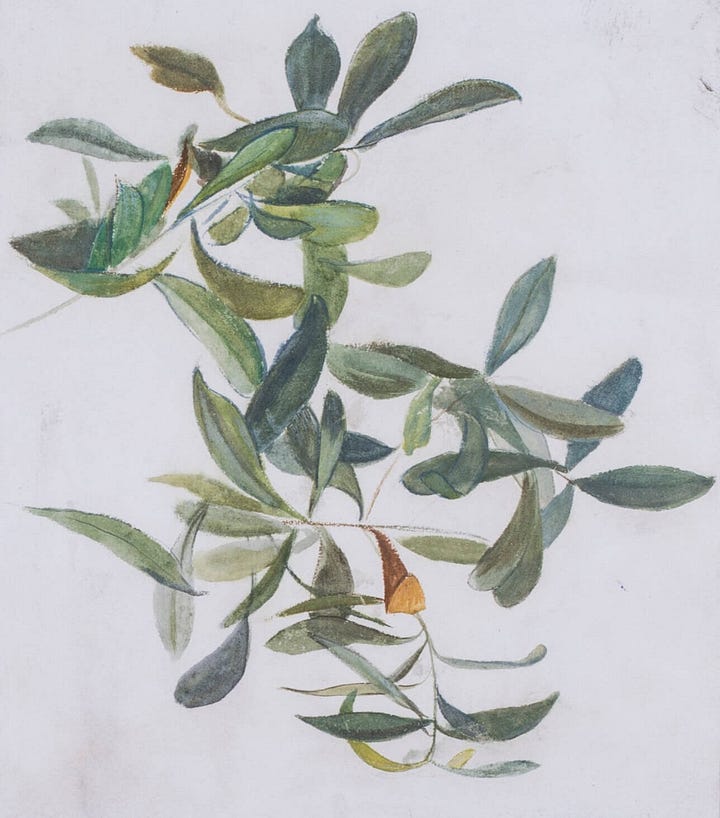
For De Morgan the olive branch is clearly a powerful symbol (and it is always associated with women in her paintings.) A watercolour sketch of an olive branch by De Morgan (above) has led me to look in more detail at olive leaves in her work. I am wondering if this (undated) sketch was in preparation for Lux in Tenebris or another work.
In The Coming of Peace (1902, painting now lost but sketch extant) a figure descends to a burning city holding an olive branch in a painting that echoes Lux in Tenebris, while Our Lady of Peace is bedecked with what could be olive leaves or laurels (another symbol which, for De Morgan, often accompanies the olive branch).

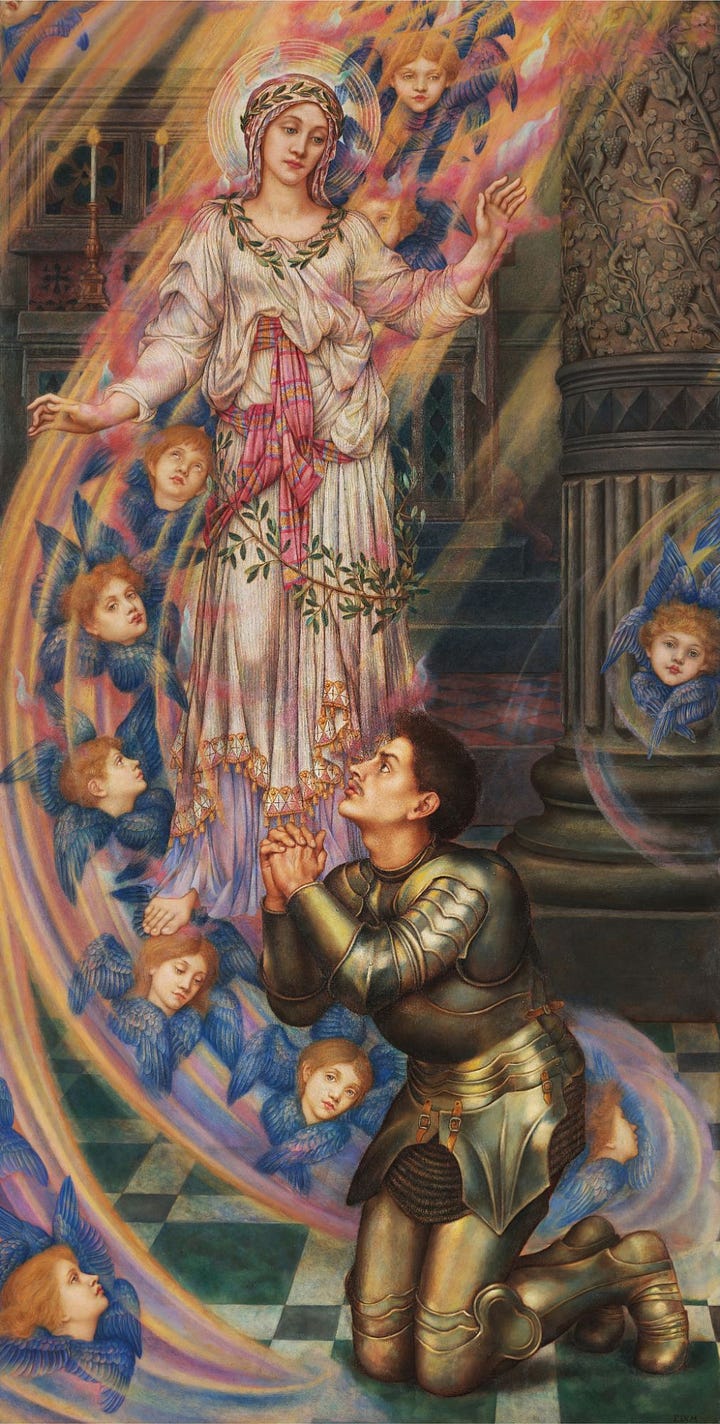
In fact she often seems to use laurels and olives either together or interchangeably, with the laurel representing glory, knowledge and triumph in traditional symbolism. In Death of the Dragon, painted late in the First World War in which peace and victory are symbolised, the female figure is crowned with leaves which could be laurel or olive.
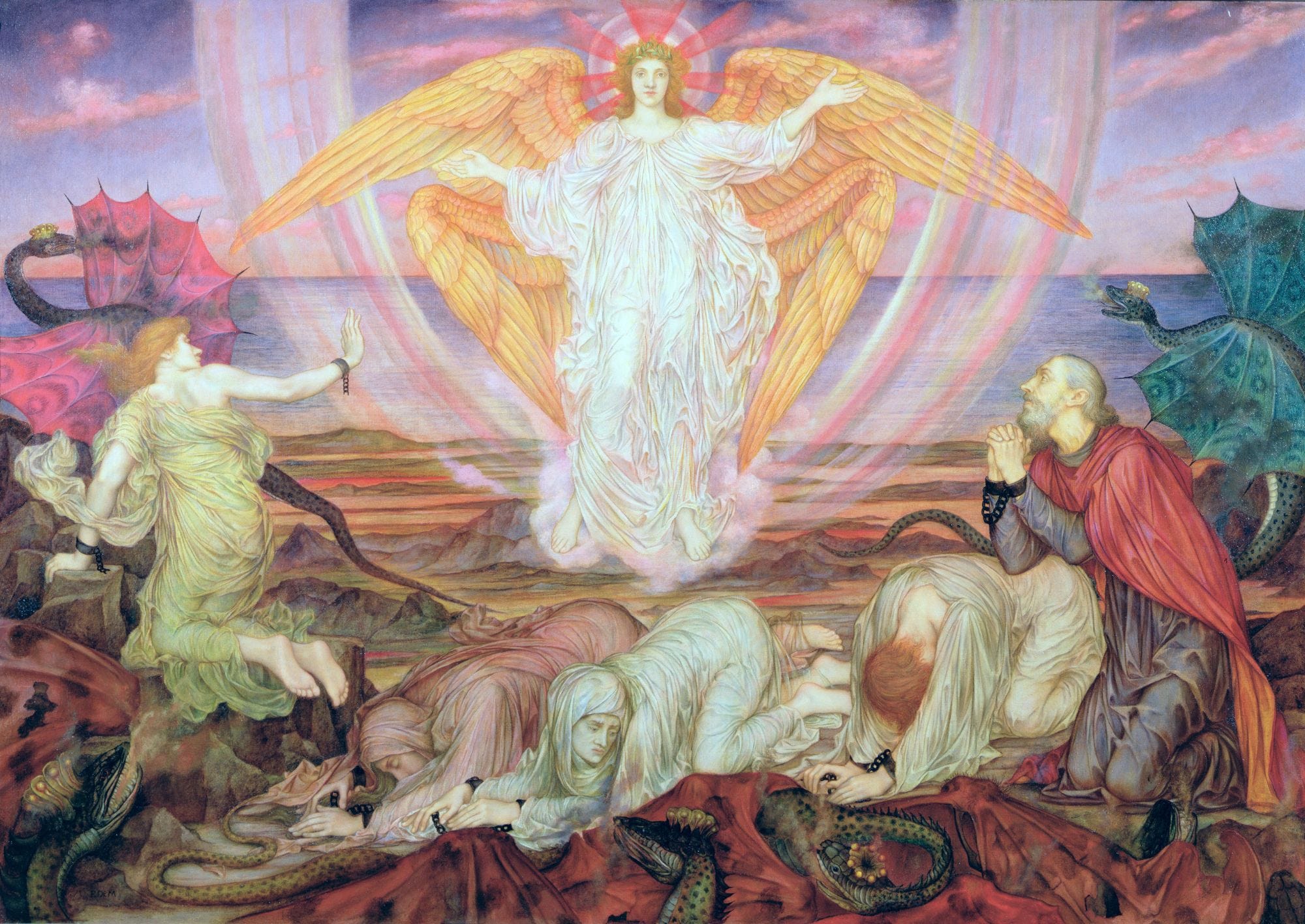
It seems to me that De Morgan associates women with peace and knowledge, illumination and glory: I can’t find any instances of men associated with olive branches in her work. And, as with all the Pre-Raphaelite painters, nothing here is accidental; everything in every painting has deep significance.
Comments
Nothing yet. Say the first thing.
Sign in to join the conversation.