
Most people don’t think about their liver very often.
You notice your heart when it races.
Your lungs when breathing feels difficult.
Your stomach when digestion goes wrong.
But the liver is quieter than that.
It works in the background.
Filtering. Processing. Storing. Breaking things down. Rebuilding things again.
Every minute, blood moves through it carrying:
nutrients
hormones
medications
toxins
alcohol
waste products
signals from almost every part of the body
And somehow, this organ keeps balancing all of it.
Which is why liver disease can become surprisingly advanced before someone realizes something is wrong.
Because the liver is built to compensate.
Quietly.
Until it can’t anymore.
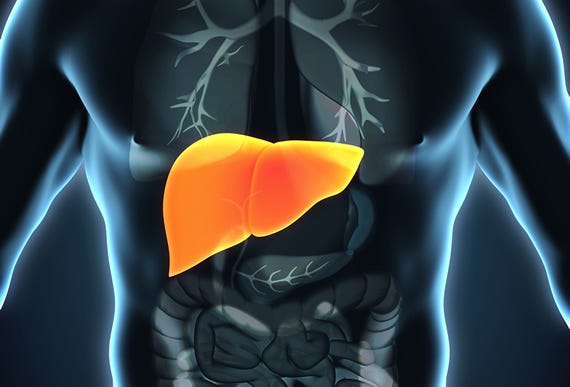
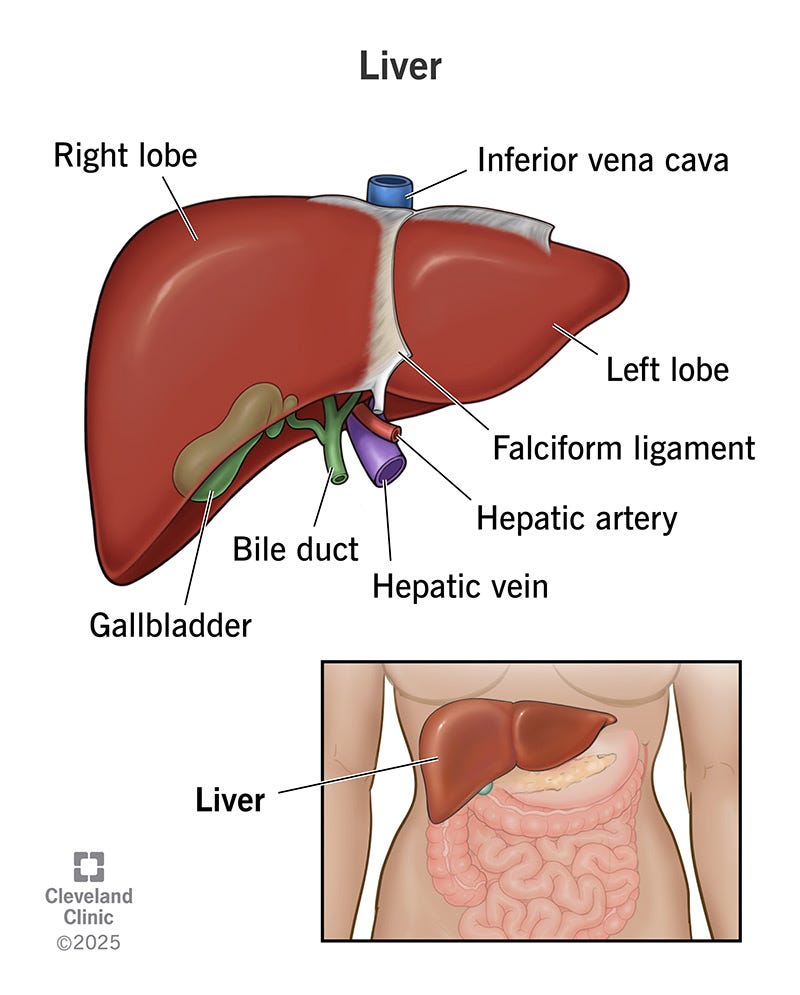
The liver is the largest internal organ in the body.
It sits mostly on the upper right side of the abdomen, just beneath the diaphragm and behind the lower ribs.
And structurally, it’s fascinating.
The liver receives blood from two major sources:
the hepatic artery, which brings oxygen-rich blood from the heart
the portal vein, which brings nutrient-rich blood directly from the digestive tract
That second part is important.
Because it means almost everything you absorb from food passes through the liver first.
Not just nutrients.
Alcohol too.
Medications too.
Environmental toxins too.
The liver becomes the body’s biochemical checkpoint.
When people hear “the liver detoxifies the body,” they usually imagine something vague.
But the liver’s responsibilities go far beyond detox.
It is constantly:
converting nutrients into usable forms
regulating blood sugar
managing fats and cholesterol
producing proteins
processing hormones
supporting immunity
storing vitamins and minerals
helping digestion
Which is why liver dysfunction can affect far more than digestion alone.
This is the liver’s most famous role.
But detoxification doesn’t mean “removing all toxins instantly.”
It means chemically transforming substances so the body can safely remove them.
Your liver processes:
alcohol
medications
metabolic waste
environmental chemicals
excess hormones
Inside liver cells are enzyme systems that break compounds down into forms the body can excrete through urine or stool.
This process happens continuously.
Not occasionally.
Not during a cleanse.
Every single day.
Your liver helps stabilize blood glucose levels.
After you eat:
excess glucose gets stored as glycogen in the liver
Between meals:
the liver releases stored glucose back into the bloodstream
Without this system, blood sugar would swing far more dramatically.
This is one reason liver dysfunction can affect:
energy
concentration
metabolism
fatigue levels
The liver processes fats constantly.
It:
breaks down fatty acids
produces cholesterol
packages fats for transport
regulates triglycerides
But when fat accumulation exceeds what the liver can manage, fat begins building up inside liver cells.
This is how fatty liver disease develops.
And surprisingly, alcohol is no longer the only major cause.
The liver produces bile, which is stored in the gallbladder.
Bile helps digest fats and absorb fat-soluble vitamins like:
Vitamin A
Vitamin D
Vitamin E
Vitamin K
Without proper bile flow:
digestion changes
stool color may change
nutrient absorption can become impaired
The liver produces important proteins including:
albumin (helps maintain fluid balance)
clotting factors (help blood clot properly)
This is why advanced liver disease can lead to:
swelling
fluid buildup
easy bruising
bleeding problems
Your liver also helps break down hormones after they’ve done their job.
Including:
estrogen
cortisol
insulin
When liver function declines, hormone regulation can become disrupted.
Which is one reason liver disease can affect:
mood
metabolism
menstrual cycles
energy levels
The liver stores:
iron
copper
glycogen
vitamins A, D, E, K, and B12
Which means it also acts like a reserve system for the body.
At some point reading all this, most people usually pause and think:
“Wait… the liver does ALL this?”
Yes.
And it does it quietly enough that people rarely notice until something begins to fail.
The internet loves the idea of “detoxing.”
Detox teas.
Juice cleanses.
Quick fixes.
But biologically, your body already has a detox system.
And your liver is central to it.
The problem is not usually that your body “forgot” how to detox.
The problem is often:
overload
chronic inflammation
alcohol excess
metabolic stress
poor sleep
nutrient imbalance
long-term exposure to damaging habits
The liver doesn’t need trendy cleansing rituals nearly as much as it needs:
reduced strain
stable metabolic health
time to repair
That distinction matters.
Because “supporting” the liver is very different from “flushing toxins.”
Liver damage is rarely about one dramatic moment.
Usually, it’s gradual.
Small stressors repeated over time.
Alcohol is metabolized primarily in the liver.
During this process:
toxic byproducts are produced
oxidative stress increases
inflammation rises
Over time this can progress from:
fatty liver
→ alcoholic hepatitis
→ fibrosis
→ cirrhosis
Not everyone progresses at the same rate.
Genetics, nutrition, sex, and metabolic health all influence risk.
Viruses like:
Hepatitis B
Hepatitis C
can cause chronic inflammation inside the liver.
And chronic inflammation slowly damages tissue over years.
This is becoming one of the biggest liver health problems globally.
Especially with rising:
obesity
insulin resistance
sedentary lifestyles
excess sugar intake
Fat begins accumulating inside liver cells.
And at first, many people feel completely normal.
This part surprises many people.
Large amounts of fructose, especially from sugary drinks and ultra-processed foods, are heavily processed by the liver.
Excess intake can contribute to fat accumulation inside liver tissue.
Not because sugar is “poison.”
But because chronic excess overwhelms metabolic pathways over time.
The liver processes most medications.
Which means some drugs can stress or damage liver cells if:
overused
improperly combined
taken in high doses
Even common medications can become harmful when misused.
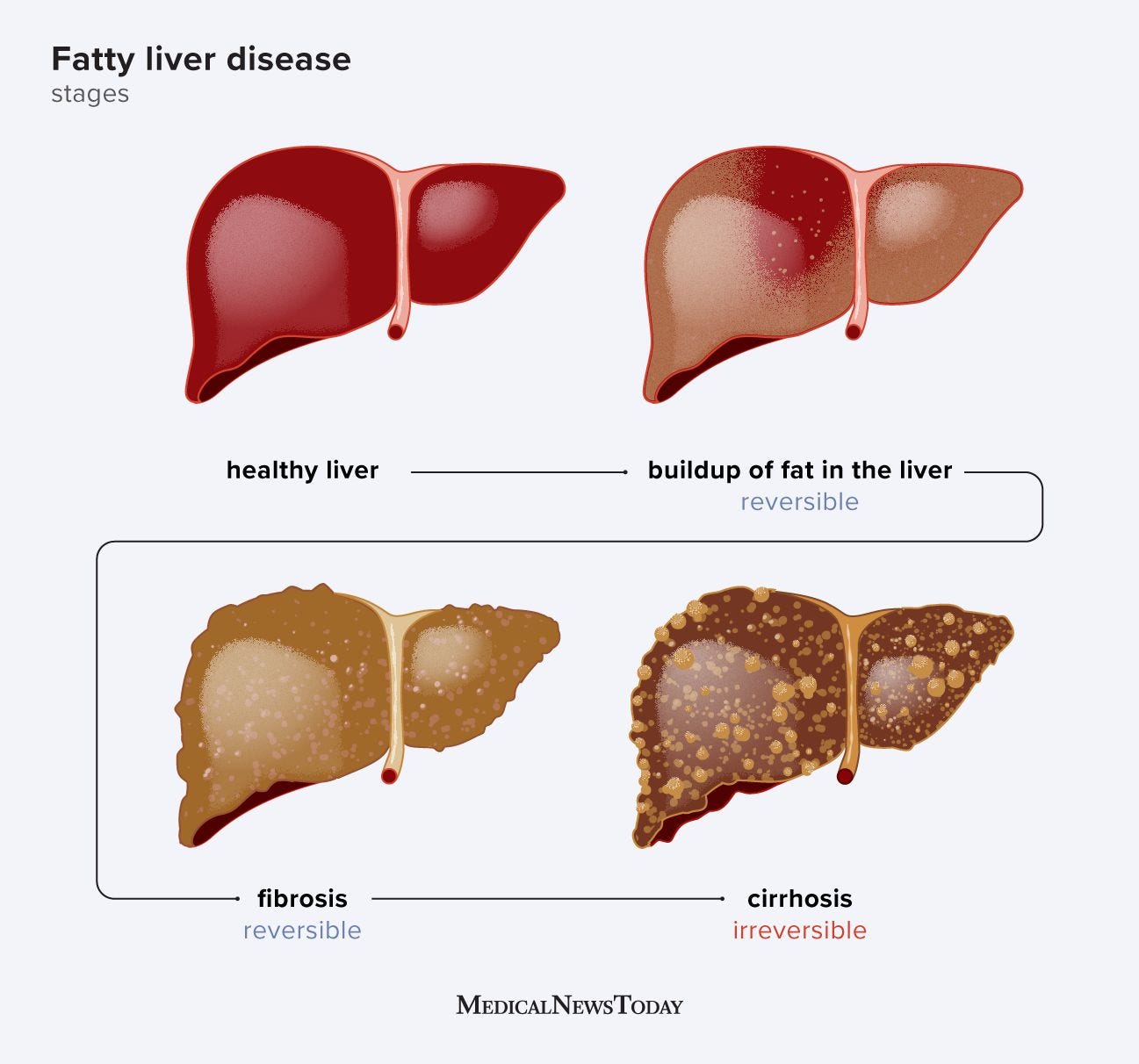
This is probably one of the most important things to understand.
Liver disease usually progresses gradually:
Normal structure and function.
↓
The immune system responds to injury.
↓
Fat accumulates inside liver cells.
↓
Scar tissue begins forming.
↓
Extensive scarring disrupts blood flow and function.
↓
The liver can no longer maintain essential processes.
The frightening part?
A person can move through several of these stages while still functioning relatively normally.
Because the liver compensates incredibly well.
It has reserve capacity.
And unlike pain-sensitive organs, the liver itself doesn’t usually “hurt” early on.
So people often ignore subtle signs like:
fatigue
brain fog
appetite changes
mild abdominal discomfort
Until damage becomes advanced.
This is where the body finally starts signaling more clearly.
One of the earliest and most common signs.
Because metabolism, detoxification, inflammation, and blood sugar regulation are all affected.
This happens when bilirubin builds up.
Normally, the liver processes bilirubin efficiently.
But when function declines:
bilirubin accumulates
skin and eyes become yellow
This surprises people.
Bile flow problems can cause bile salts to accumulate in the bloodstream, triggering intense itching.
Changes in bile processing alter stool and urine color.
This is often a sign bile flow is being disrupted.
Advanced liver disease can reduce albumin production and alter blood flow.
Fluid then begins accumulating in the abdomen.
The liver produces clotting proteins.
When production drops:
bruising becomes easier
bleeding may last longer
The liver normally removes metabolic waste products.
When it struggles:
toxins can accumulate
brain function may become affected
This is called hepatic encephalopathy in severe cases.
Digestion and metabolism become altered.
Food may feel less appealing.
Interestingly… yes.
The liver is one of the few organs with strong regenerative capacity.
Liver cells can regrow after injury.
Which is why:
fatty liver disease can often improve
inflammation can sometimes reverse
IF the damaging factor is removed early enough.
Once extensive scarring develops, especially in cirrhosis:
architecture changes permanently
blood flow becomes disrupted
regeneration becomes limited
At that stage, management becomes more about slowing progression than full reversal.
Not through extreme cleanses.
Not through panic.
Mostly through reducing chronic stress on the system.
Not every liver issue comes from alcohol.
But chronic excess remains one of the biggest preventable causes of liver damage.
This matters more than many people realize.
Movement, balanced nutrition, and insulin sensitivity strongly affect liver health.
Poor sleep affects:
inflammation
metabolic regulation
insulin sensitivity
repair processes
The liver works on a circadian rhythm too.
Especially long-term self-medication or combining substances unnecessarily.
Vaccines exist for:
Hepatitis A
Hepatitis B
Prevention matters.
This includes:
diet quality
exercise
stress regulation
smoking reduction
Not all tiredness is “stress.”
The body often signals internally through visible changes.
Liver damage is usually cumulative.
Your liver rarely asks for attention loudly.
It adapts. Compensates. Keeps working.
Quietly filtering, balancing, storing, regulating, repairing.
And because it does so much silently, people often underestimate it until symptoms finally appear.
But liver health is not just about avoiding alcohol or doing detoxes.
It’s about understanding that this organ sits at the center of:
metabolism
hormones
digestion
energy
inflammation
survival itself
And the better you understand it…
the earlier you notice when something begins to shift.
Still learning your body, one feeling at a time.
Layo.
If this article clicked with you or made you think of someone, please share it. You might just be helping them hear their own body a little clearer.
Disclaimer: Curious Health is for informational purposes only. It is not intended to replace professional medical advice, diagnosis, or treatment. Always consult a qualified healthcare provider with any health concerns.
No posts
Comments
Nothing yet. Say the first thing.
Sign in to join the conversation.