
There’s a kind of stomach discomfort people learn to live with.
Sometimes it feels like burning.
Sometimes like hunger, but slightly off.
Sometimes it shows up after you eat. Other times when you haven’t eaten at all.
So you adjust.
You skip certain foods.
You take something quick for relief.
You tell yourself it’s probably just “acidity.”
But then it keeps coming back.
And at some point, you start wondering:
What is actually going on inside my stomach?
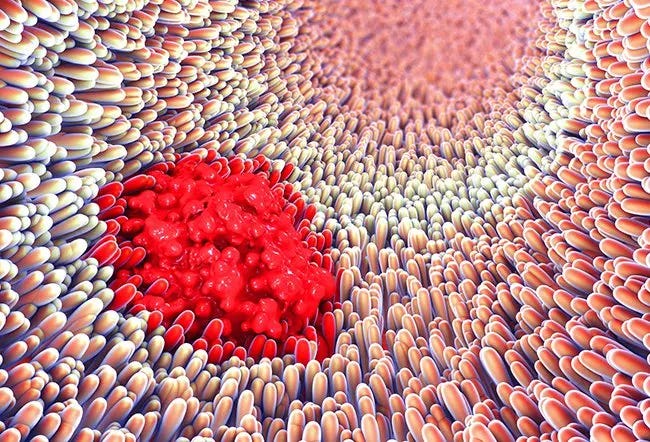
A stomach ulcer is not just discomfort.
It is a wound.
A break in the lining of your stomach.
Medically, this falls under a broader condition called
Peptic ulcer disease.
That simply means:
→ ulcers caused by stomach acid
And it includes:
Stomach ulcer (gastric ulcer)
Duodenal ulcer
So when we say “stomach ulcer,” we’re talking about one specific type.
Your stomach contains acid strong enough to break down food.
So it protects itself using:
a thick mucus layer
bicarbonate (to neutralize acid near the surface)
constant cell repair
steady blood flow
As long as this system is balanced, your stomach is safe.
Ulcers happen when that balance is lost.
Not because acid suddenly became stronger…
But because protection became weaker.
Let’s clear this early.
Ulcers are not mainly caused by spicy food or stress.
The major causes are:
A bacterium called
Helicobacter pylori
This is one of the biggest causes worldwide.
It gets into the body through:
contaminated food or water
poor hygiene
close contact
Many people carry it for years without knowing.
It doesn’t “eat your stomach.”
Instead, it:
lives in the mucus layer
produces urease → creates ammonia → reduces local acidity
weakens the protective barrier
triggers chronic inflammation
And then…
Your own stomach acid does the damage.
That’s the key idea.
Drugs like:
Ibuprofen
Aspirin
reduce prostaglandins.
And prostaglandins help:
maintain mucus
support blood flow
protect the lining
So over time, protection drops.
Not primary causes, but they make things worse:
smoking
alcohol
chronic stress
irregular eating patterns


Skipping meals does not directly cause ulcers.
But it changes the environment.
Your stomach still produces acid… even when empty.
So when there’s no food:
acid has nothing to buffer it
it sits against the lining
it irritates vulnerable areas
Which is why ulcer pain often feels worse:
between meals
late at night
when you’re hungry
Food doesn’t usually create the ulcer.
But once the lining is damaged:
Certain foods make it more noticeable:
spicy meals
caffeine
alcohol
acidic foods
They irritate exposed tissue.
So the pain feels like it’s “caused by food,”
when it’s actually revealing something already there.
This pattern is almost textbook.
You eat → relief
Later → discomfort returns
Because:
food temporarily buffers acid
then digestion continues
acid remains
the exposed lining gets irritated again
So the cycle repeats.
This part is often skipped, but it matters.
Protective mucus weakens
Inflammation begins
Surface erosion develops
Deeper tissue is exposed
Ulcer forms
By the time symptoms are obvious…
The process has already been happening for a while.
This is one of the most important parts.
Recurrence usually means:
H. pylori was not fully treated
medication use continued
treatment was stopped too early
the lining didn’t fully heal
So symptoms improve…
But the internal environment hasn’t changed.
Ulcer treatment is not one thing.
It usually involves:
Amoxicillin
Clarithromycin
Metronidazole
These remove the cause.
Omeprazole
Reduces acid so the lining can heal.
Sucralfate
Forms a barrier over the ulcer.
These drugs don’t “force healing.”
They:
remove the cause
reduce irritation
allow the body to repair itself
In many cases, yes.
If:
the bacteria is treated
the trigger is removed
The ulcer can heal completely.
But…
If the same conditions return:
→ it can come back
So it’s not just about cure.
It’s about changing the environment that allowed it.
Most ulcers are manageable.
But if ignored, they can lead to:
bleeding
perforation (hole in the stomach)
obstruction
This is how someone can “almost die from an ulcer.”
Not sudden.
But progression.
Not extreme rules.
Just practical awareness.
treat H. pylori if present
avoid unnecessary long-term NSAID use
eat regularly (avoid long acid exposure periods)
limit irritants when symptomatic
don’t ignore recurring pain
complete treatment fully
avoid stopping medication early
reduce triggers while healing
Healing takes weeks, not days.
“Spicy food causes ulcers”
No. It irritates existing ones.
“Ulcers are just stress”
Stress contributes, but isn’t the main cause.
“Milk heals ulcers”
Temporary relief, but can increase acid later.
“If pain stops, it’s gone”
Symptoms can improve before healing is complete.
When the pain happens
Timing tells you a lot.What you’re using regularly
Especially painkillers.Whether it keeps returning
Recurrence is a signal, not coincidence.
A stomach ulcer is not random.
It’s the result of a slow shift in balance:
protection vs exposure
healing vs irritation
And when protection drops for long enough…
Your stomach starts reacting to its own acid.
Still learning your body, one signal at a time.
Layo.
If this article clicked with you or made you think of someone, please share it. You might just be helping them hear their own body a little clearer.
Disclaimer: Curious Health is for informational purposes only. It is not intended to replace professional medical advice, diagnosis, or treatment. Always consult a qualified healthcare provider with any health concerns.
No posts
Comments
Nothing yet. Say the first thing.
Sign in to join the conversation.