
You felt a tickle in your throat.
By evening, your nose was running.
By the next morning, you were at the pharmacy, asking for something strong.
And nine times out of ten, that something strong was an antibiotic.
For a cold.
That your body was already handling on its own.
And this is where the problem begins.
Not because you’re careless.
But because antibiotics have become the default answer to a question that was never really asked.
Antibiotics kill bacteria.
That is the entire job description.
Colds, flu, most coughs, most sore throats — these are viral infections.
Antibiotics have no business there.
Taking one doesn’t speed up your recovery.
It doesn’t make you feel better faster.
It doesn’t “just help, in case.”
What it does instead is something quieter.
And far more consequential.
Inside your body right now, billions of bacteria are living peacefully.
On your skin. In your gut. In your throat.
Most of them are harmless. Many are helpful.
When you take an antibiotic unnecessarily, you don’t just target the bacteria making you sick.
You expose all of them.
And bacteria are remarkably good at one thing: surviving.
The ones that survive aren’t lucky. They’re resistant.
They pass that resistance on to the next generation.
And the generation after that.
Over time, with enough unnecessary exposure, bacteria evolve to outsmart the very drugs we built to stop them.
That process is called antimicrobial resistance.
And it is happening right now, in communities across the world, partly because of decisions that felt perfectly reasonable in the moment.
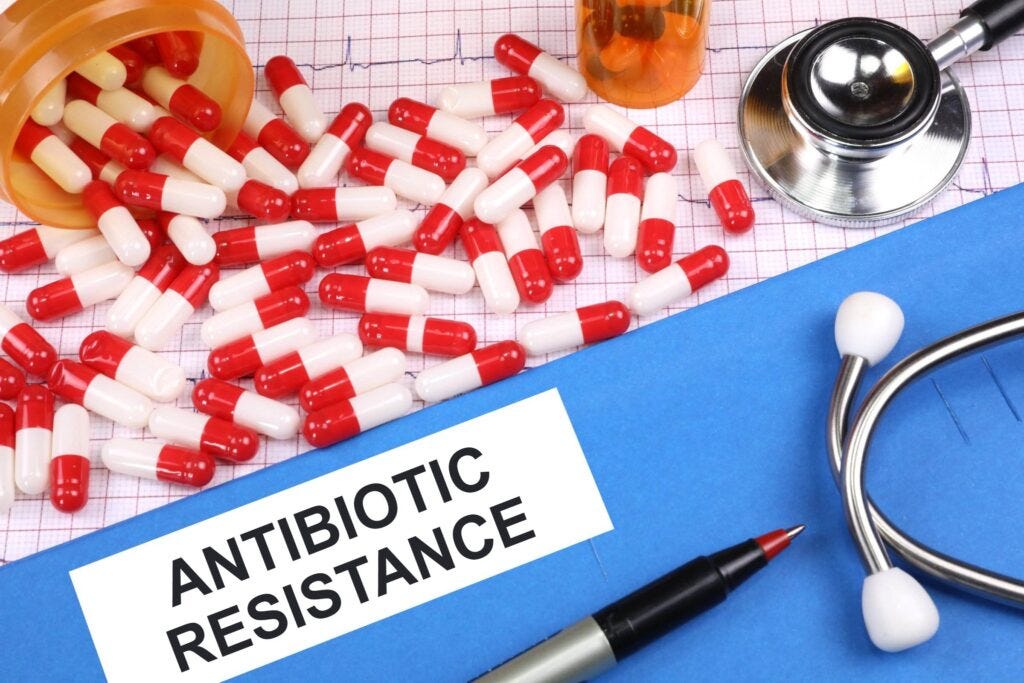
Taking antibiotics for a cold, flu, or viral sore throat
Stopping the course early because you feel better
Saving leftover pills for “next time”
Taking a friend’s prescription because your symptoms looked similar
Asking your doctor to prescribe “just to be safe”
Buying antibiotics over the counter without a diagnosis
None of these feel reckless.
They feel responsible, even proactive.
But bacteria don’t care about your intentions.
They only care about exposure.
Every unnecessary dose is a training session — a chance for the toughest bacteria to survive, adapt, and multiply.
This isn’t an abstract, far-off, scientists-are-concerned kind of problem.
It is already changing how medicine works.
Infections that once cleared in five days with a simple antibiotic course are now requiring multiple drugs, hospital admissions, and sometimes neither works at all.
Surgeries most people don’t think twice about — a C-section, a hip replacement, an appendix removal — all quietly depend on antibiotics working in the background to prevent infection.
Take away reliable antibiotics, and routine medicine becomes something far less routine.
The World Health Organization lists antimicrobial resistance as one of the greatest threats to global health today.
Not in the future.
Now.
Imagine a child with a bacterial infection.
The first antibiotic doesn’t work.
The second one doesn’t either.
The doctor reaches for a third — older, harsher, with more side effects.
This is not a hypothetical scenario.
It is happening in hospitals around the world, including in Nigeria, where antibiotic misuse in both human and veterinary medicine has accelerated resistance significantly.
The drugs exist.
But increasingly, the bacteria have already seen them.
And learned to survive them.
1. Let a Diagnosis Decide, Not a Guess
Before reaching for antibiotics, see a doctor and ask directly: is this bacterial or viral?
If it is viral, antibiotics will not help — and taking them only contributes to a larger problem.
2. Always Finish the Full Course
If antibiotics are genuinely prescribed, finish every dose even when you feel better by day three.
Stopping early leaves the strongest bacteria alive — the ones most likely to survive and develop resistance.
3. Never Share or Reuse Leftover Antibiotics
A prescription is specific to a person, a bacteria, and a dosage.
What worked for someone else may not match your infection — and self-medicating with leftover drugs is one of the most direct paths to resistance.
Antimicrobial resistance is not being built by reckless people making dangerous decisions.
It is being built quietly, by ordinary people making understandable ones.
The person who didn’t want to miss work.
The parent who couldn’t watch their child be uncomfortable.
The patient who asked for “something strong” because waiting felt unbearable.
These are human choices.
But they carry a collective weight that is now reshaping medicine.
The good news is that the same logic applies in reverse.
If resistance spreads through millions of small decisions, it can also be slowed through millions of better ones.
Yours might be the next one that matters.
Still learning your body, one signal at a time.
Layo
If this article clicked with you or made you think of someone, please share it. You might just be helping them hear their own body a little clearer.
Disclaimer: Curious Health is for informational purposes only. It is not intended to replace professional medical advice, diagnosis, or treatment. Always consult a qualified healthcare provider with any health concerns.
No posts
Comments
Nothing yet. Say the first thing.
Sign in to join the conversation.