
There’s a kind of anxiety that feels… unfair.
Nothing bad has happened.
No one has said anything.
You’re just there, maybe even in a normal moment, and suddenly your chest feels tight, your thoughts start racing, and your body acts like something is wrong.
And the most frustrating part?
You can’t explain it.
So you start asking yourself:
Why do I feel like this when nothing is happening?
But something is happening.
Just not in the way you expect.
At the center of this feeling is a small part of your brain called the amygdala.
Think of it as your internal alarm system.
Its job is simple:
Detect danger → react fast → keep you safe
The problem is… it doesn’t always wait for clear evidence.
Sometimes, it reacts to:
subtle changes in your environment
a memory you’re not consciously thinking about
even a body sensation (like a faster heartbeat)
Before you’ve had time to think, your brain has already decided:
“Something might be wrong.”
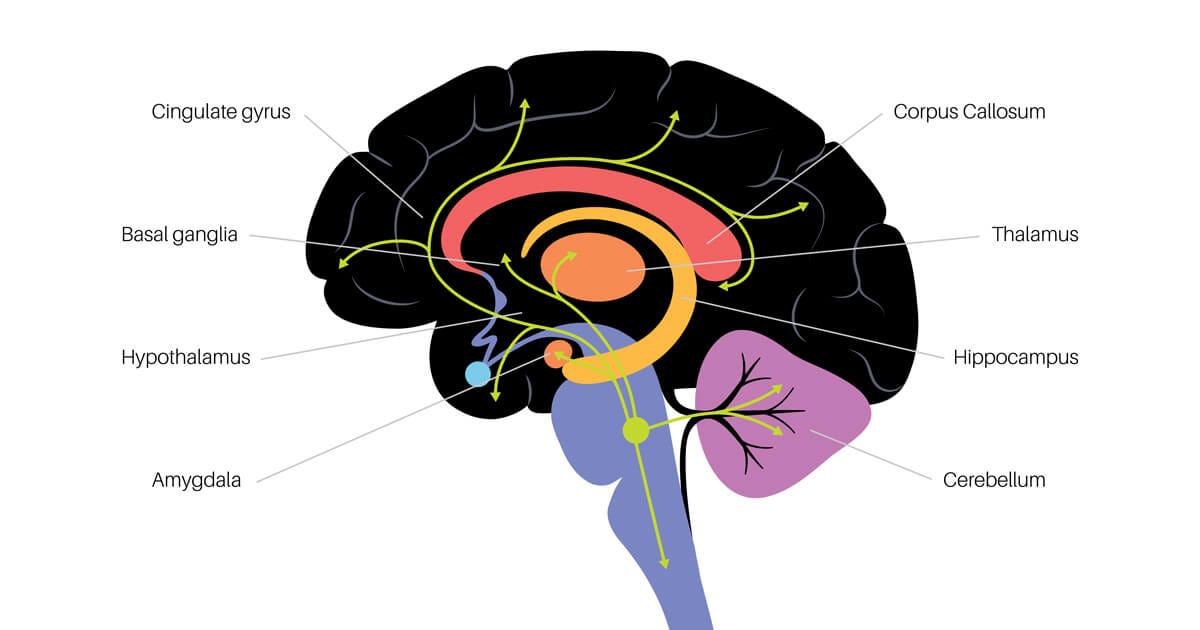
Once your brain senses possible danger, it activates something called the fight-or-flight response.
This is an automatic survival system.
Your body starts to:
release stress hormones like cortisol
increase your heart rate
sharpen your awareness
tense your muscles
All of this is meant to prepare you to either fight or run.
But in moments like this…
there’s nothing to fight. Nowhere to run.
So the energy just sits in your body.
And that feels like anxiety.
Here’s where it gets a bit tricky.
There’s another part of your brain, the prefrontal cortex, that handles logic and reasoning.
This is the part saying:
“You’re fine. Calm down.”
But it works slower than the alarm system.
So what you experience is a mismatch:
your body is already reacting
your logical mind is trying to catch up
That gap is what creates the feeling of:
“Why am I anxious for no reason?”
Your brain doesn’t only react to what’s happening now.
It also reacts to:
past experiences
patterns it has learned
stress that has been building quietly
Even things like:
poor sleep
too much caffeine
long-term pressure
can make your brain more sensitive to perceived threats.
So it doesn’t take much to trigger a reaction.
It’s like your alarm system has been set a little too high.

Another way to look at it is this:
Sometimes your body notices something before your mind does.
A shift in mood.
A buildup of stress.
A feeling you haven’t processed yet.
And instead of coming as a clear thought like:
“I’m overwhelmed”
It shows up as:
restlessness
tight chest
uneasiness
Which you then experience as anxiety “out of nowhere.”
The goal is not to “shut it down immediately.”
Because your brain is not trying to harm you.
It’s trying to protect you.
But you can help it calm down.
Simple things like:
slowing your breathing
grounding yourself in your surroundings
gently reminding yourself that you’re safe
can signal to your brain that the danger has passed.
Not instantly.
But gradually.
Instead of asking:
“Why is this happening to me?”
Try shifting it to:
“What is my brain trying to respond to?”
That small shift changes the experience.
From confusion…
to curiosity.
That feeling of anxiety “for no reason” can be unsettling.
But it’s not random.
And it’s not a sign that something is wrong with you.
It’s your brain doing its job…
just a little too soon, or a little too strongly.
And once you start understanding that,
it becomes a bit less scary.
Still figuring it out, one feeling at a time.
Layo.
If this article clicked with you or made you think of someone, please share it. You might just be helping them hear their own body a little clearer.
Disclaimer: Curious Health is for informational purposes only. It is not intended to replace professional medical advice, diagnosis, or treatment. Always consult a qualified healthcare provider with any health concerns.
No posts
Comments
Nothing yet. Say the first thing.
Sign in to join the conversation.