
Here’s a business that just delivered one of its best years on record: revenue up 27%, profit after tax nearly doubling, margins expanding, and a balance sheet that flipped from net debt to a genuine net cash position. By almost every operating measure, this was a company firing on all cylinders.
And yet, the stock trades at a price-to-earnings ratio of roughly 80 times — well over double its listed peer group’s median multiple. When a business is executing this well, the market rewarding it isn’t surprising. The real question is whether it’s rewarding it by more than the numbers actually justify.
This is an electronics manufacturing services company — the kind of business that designs, prototypes, assembles, and tests circuit boards and finished electronic products on behalf of brands that would rather not run their own factories. Its customer base spans automotive, consumer electronics, industrial equipment, medical technology, defense electronics, and IT and railways.
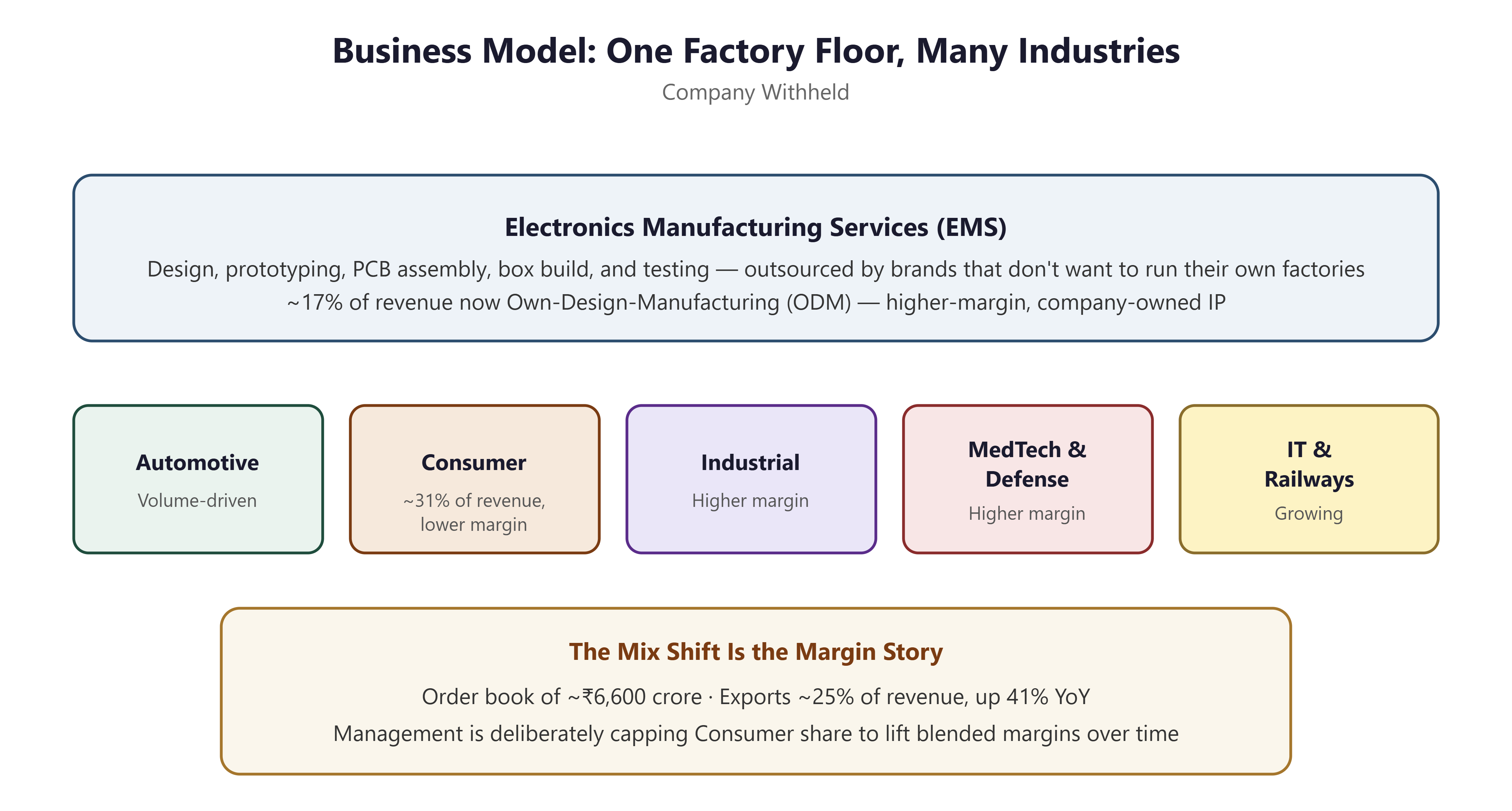
The mix matters more than the total here. Consumer electronics work is high-volume but comparatively low-margin, and currently makes up close to a third of revenue — deliberately capped there by management, who have been steering the business toward industrial, medical, and defense work instead, categories that carry meaningfully better margins. Roughly 17% of revenue now comes from Own-Design-Manufacturing, where the company owns the underlying product design rather than simply assembling someone else’s, a structurally higher-margin position. Exports have also been scaling quickly, up 41% year-on-year to around a quarter of total revenue.
Full-year revenue came in at roughly ₹4,819 crore, up 27% year-on-year, while profit after tax surged to around ₹346 crore, an 87.5% jump — profit growing more than three times faster than revenue.
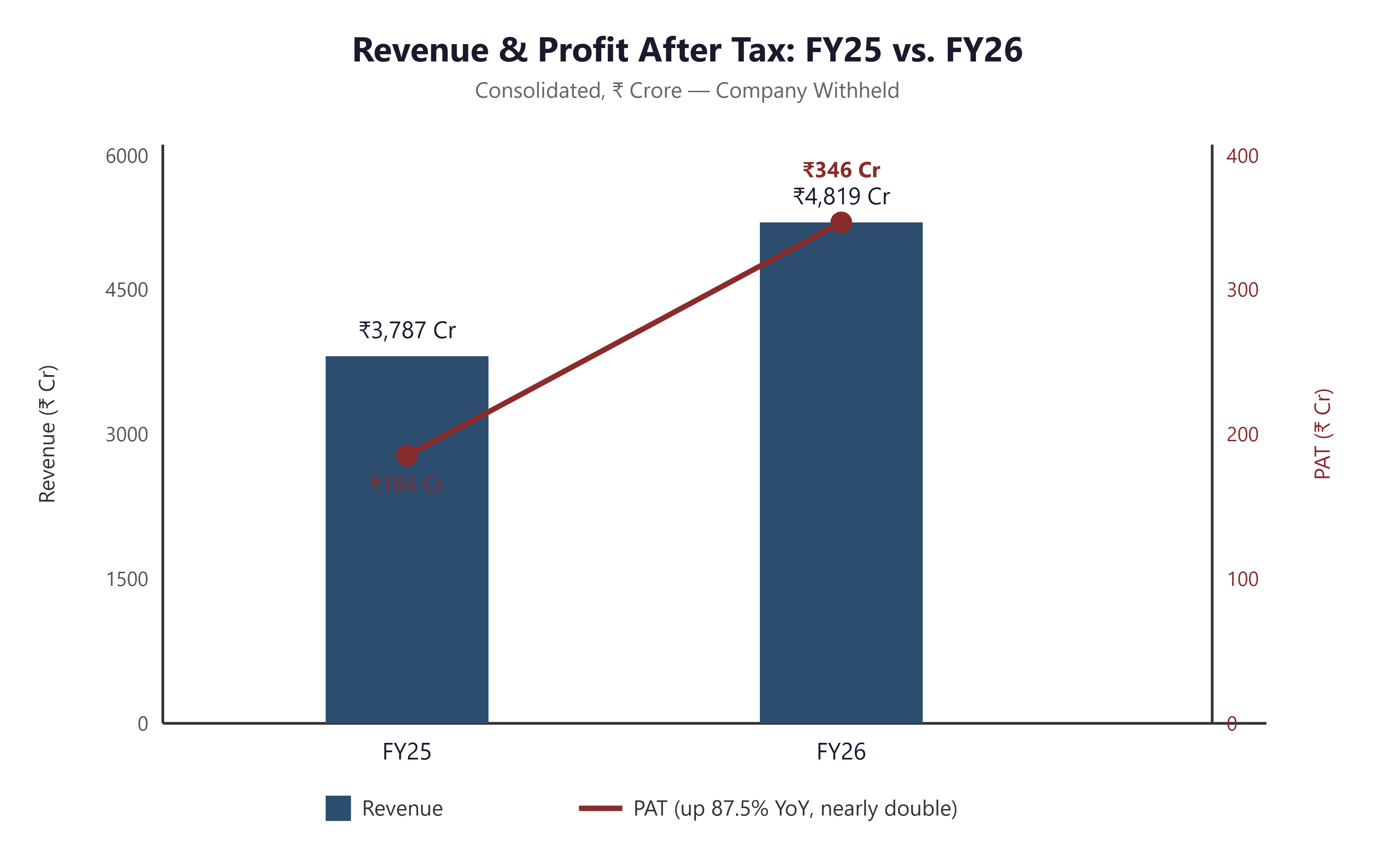
Net profit margin expanded from 4.9% to 7.2% over the year, a meaningful 230 basis point improvement, and operating EBITDA reached roughly ₹545 crore. The most recent quarter alone delivered ₹1,465–1,477 crore in revenue, up close to 58% year-on-year, alongside profit that grew faster still — though quarterly operating margin actually contracted slightly sequentially, a reminder that the margin story here, while genuinely improving, isn’t a straight line upward every quarter.
The balance sheet tells a genuinely encouraging story: the company moved from a net debt position to net cash of roughly ₹467 crore by year-end, following a capital raise earlier in the year. That said, a new fundraise through a further institutional placement was approved at the most recent board meeting — worth watching for whether it’s a continuation of a healthy growth-funding pattern, or a signal that working capital needs are outpacing internal cash generation.
Here’s the number that puts the valuation in context, though:
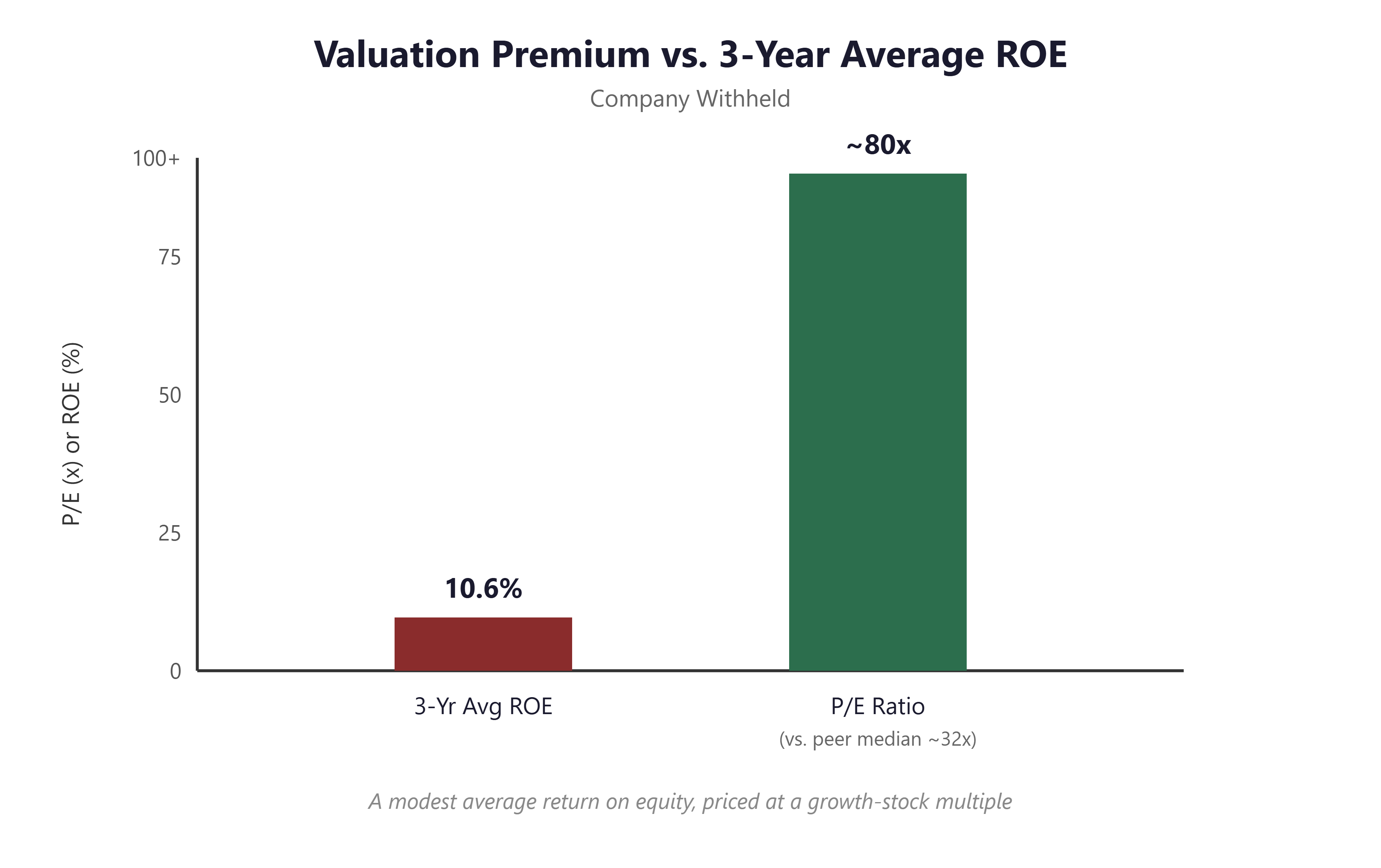
Despite this year’s sharp profit jump, the three-year average return on equity sits at a comparatively modest 10.6%. That’s not a red flag on its own — a business scaling this fast, with margins actively improving, often shows a return profile that lags what a single strong year might suggest. But it does mean the market is pricing a continuation and acceleration of this trend, not simply rewarding what’s already been delivered.
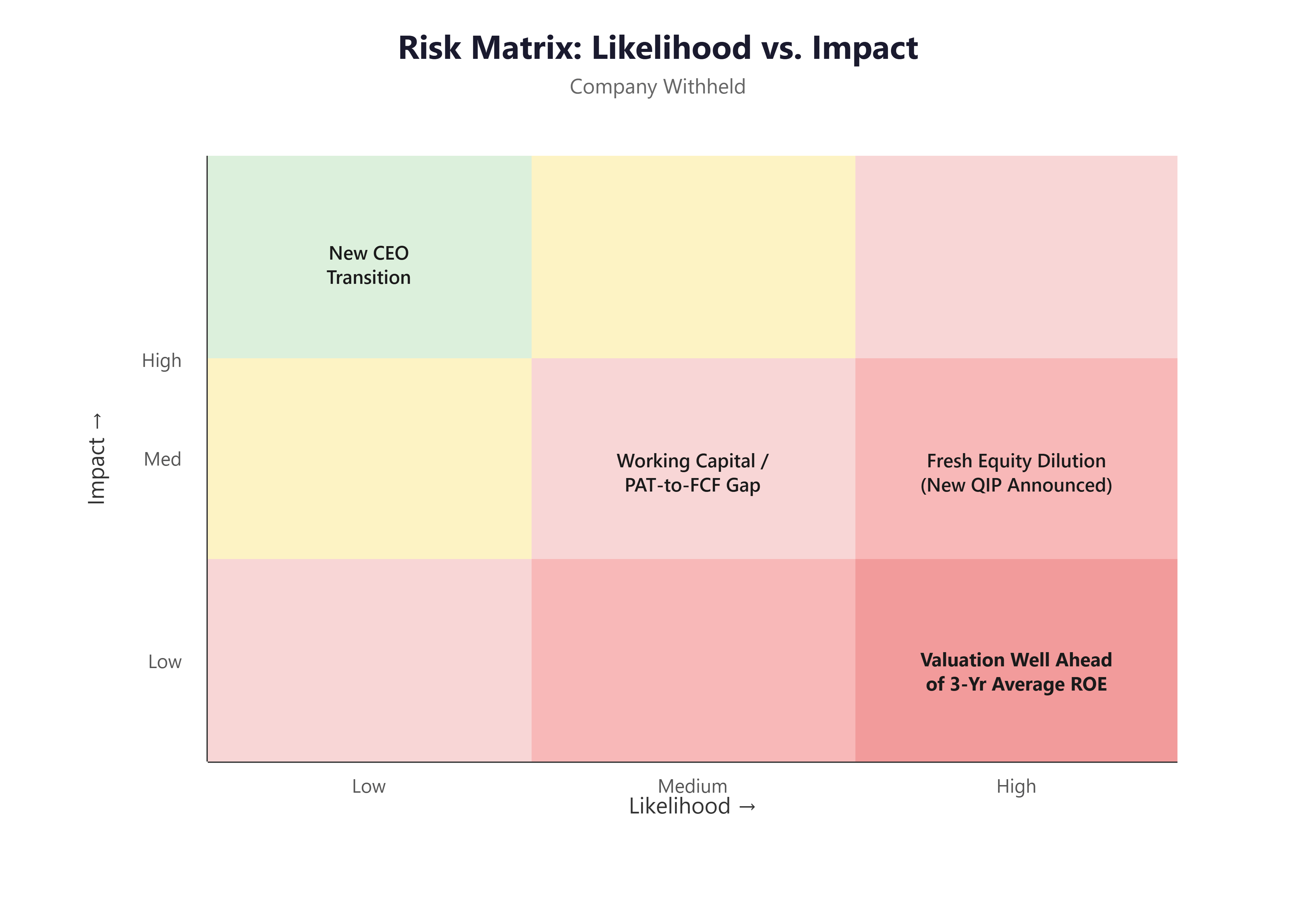
A very recent CEO transition. Leadership changed hands in the last couple of months, right at a moment when execution consistency matters most to sustaining the current growth and margin trajectory
A dropped acquisition. A previously announced expansion deal was called off after conditions weren’t met — a reminder that not every strategic move here lands as planned
Working capital intensity and a real PAT-to-free-cash-flow gap, flagged by independent analysts — profit on paper hasn’t fully converted to cash at the same pace, worth monitoring over the next few quarters
Fresh dilution risk, with a new institutional fundraise recently approved by the board
Consumer segment concentration, which still makes up close to a third of revenue and carries structurally lower margins than the mix shift management is targeting
A valuation that assumes the growth and margin story not only continues, but continues at a pace well above the peer group, leaving limited room for a disappointing quarter
At a market capitalization of roughly ₹25,700–26,100 crore, this stock trades at a P/E in the neighborhood of 80 times and a price-to-book multiple over 9 times — both more than double the respective medians of its listed peer group. That premium is being paid for a genuinely real growth and margin-improvement story, not a fabricated one; the operating numbers this year back it up. But an 80x multiple leaves very little room for error. A single quarter of margin disappointment, a slower-than-guided FY27, or dilution from the newly approved fundraise landing awkwardly could compress that multiple quickly, even if the underlying business keeps growing at a healthy clip.
So — which company is it?
Comments
Nothing yet. Say the first thing.
Sign in to join the conversation.