
“We can’t put the genie back into the bottle.”
The phrase is a spell that keeps us justifying or acquiescing to our civilization’s many technologies of destruction — from nuclear weapons to AI. Its rote repetition brings us individually and collectively deeper into a trance.
Being Autistic, being an animist, and being an anarchist (and the three flow together,)1 I tend to be distrustful of the “received wisdom” of this culture and to think that words matter and that metaphors are only worthwhile when all of their elements hold up to scrutiny. And, under scrutiny, the underlying premises of saying “we can’t put the genie back into the bottle” in relation to technologies prove to be mythologically and historically inaccurate.
To begin with — what “genie?” Where?
I am not well versed in Arabic or Persian culture, but I know enough to be able to say a djinn is not a thing made by humans.
Djinn are living spirits — shapeshifters who inhabit spaces beyond human control and whose form and demeanor are determined in part by how the humans coming into the territory approach them and the land they inhabit. And while both the material and the imaginal craftings of humans can become animate in their own way, that animacy is dependent on the life force given over to them by humans (which often in turn has been forcibly extracted from the living world by humans) whereas the life of a djinn arises from the land in the way the life of a Leopard or a Cedar or a Rose does.
I am loathe to turn any creature into a metaphor, especially one whose life arises from ecologies I have not experienced and whose mythos comes through cultures not my own — but if pressed to, I would say that when speaking of djinn metaphorically in relation to technology, it makes more sense to assign the role of “genie” not to the human creation we are speaking of, but to the biological and geological and meteorological forces stirred into response by human actions. So nuclear weapons are not a “genie” — but perhaps there are djinn associated with the mountains and deserts mined for uranium and the rivers and oceans the mining tailings and the water used to cool the nuclear power plants that refine the fissile material flow into. “Artificial Intelligence” is not a “genie” — but there likely are djinn and similar spirits associated with the wells and springs and streams fed by the aquifers being drained to cool the data centers, and the storm systems fed by the global warming accelerated by the generation of the massive amounts of electricity AI demands.
If djinn have been loosed and we are seeing them in the world around us, we are seeing them in wildfires and storms and floods.
What of the bottle?
It is indeed the way of civilization to want to contain and imprison forces beyond its control. And that inevitably fails. Do you think that a bottle only opens when someone uncorks it? Bottles are fragile things. Dams break. Fire suppression leads to bigger blazes. Nothing stops the wind.
But trying to subjugate the forces we fear is not the only way.
Most traditional cultures around the world looked and look at these forces as other beings who exist in dynamic relation with us. Like humans, other-than-human persons tend to be neither inherently benevolent or malevolent. When encountering their fury we need not sacrifice ourselves to it, but we would be wise to inquire into what unleashed it, and to find ways to restore right relation with them.
And what of the idea of going back to the way things were before?
It is true that nothing can be undone. Pain exists. Damage exists. Whatever repair can be made doesn’t erase them. What trust can be rebuilt will be different from the trust that was broken.
But that does not mean the individually or collectively we have to continue doing what we are doing.
We are indoctrinated in the myth that evolution, human and wild, is a linear process, inevitably progressing in a single direction. This is not true — straight lines do not exist in the material world we inhabit. And individuals, communities, cultures, ecologies are not pieces on a chess board — they can and do move in myriad directions. Yes, our own culture, driven by the assumption of linear progress, has acted as though it is the only option for centuries or millennia. But when we drop that assumption and look at the broad swath of human history, we see that other options always were and still remain available. As Sophie Strand recently wrote:
“We have walked away from cities leaving them as ghostly warnings to those who seek to gain power over each other and over the earth. Unlike Troy, many of these examples are quiet and without violet collapse. The archeological record suggests that people actually just got up and walked back into the fields and forests and mountains.”
That walking away was never simple. And choosing it again won’t be either. But the fact that we haven’t yet done it, the fact that we don’t know how, the fact that what we walk away into will not be idyllic — none of these mean that we don’t have choices.
And it is time to start asking the world to help us dream our way into them — instead of pretending that carving a perditious road further into the territory of Leopards and Djinn and Wild Roses is the only direction our culture can take from here.
This is likely worth an essay of its own — but in short: Animism, being an experience of the life and intelligence of the world, comes fairly naturally to people whose empathy is more somatic and emotional than conceptual, which tends to be true of high-tryptamine nervous systems. Anarchism is the political philosophy of opposing coercive hierarchies — and is fairly natural to people who don’t understand the logic of hierarchies, and to people who see the fluid complexity or relations in human and other-than-human communities.
—-
I rarely paywall articles or poetry here, and am unlikely to start doing so with any frequency. All are welcome to the free material here — and if you have a little money to redistribute, your spending some of it on a paid subscription or on a class or consultation with me would be greatly appreciated — especially in a time when more and more of those my work does connect with cannot afford to pay. .) You can also make a one time gift through https://buymeacoffee.com/seanpadraigodonoghue or https://account.venmo.com/u/Sean-ODonoghue-53
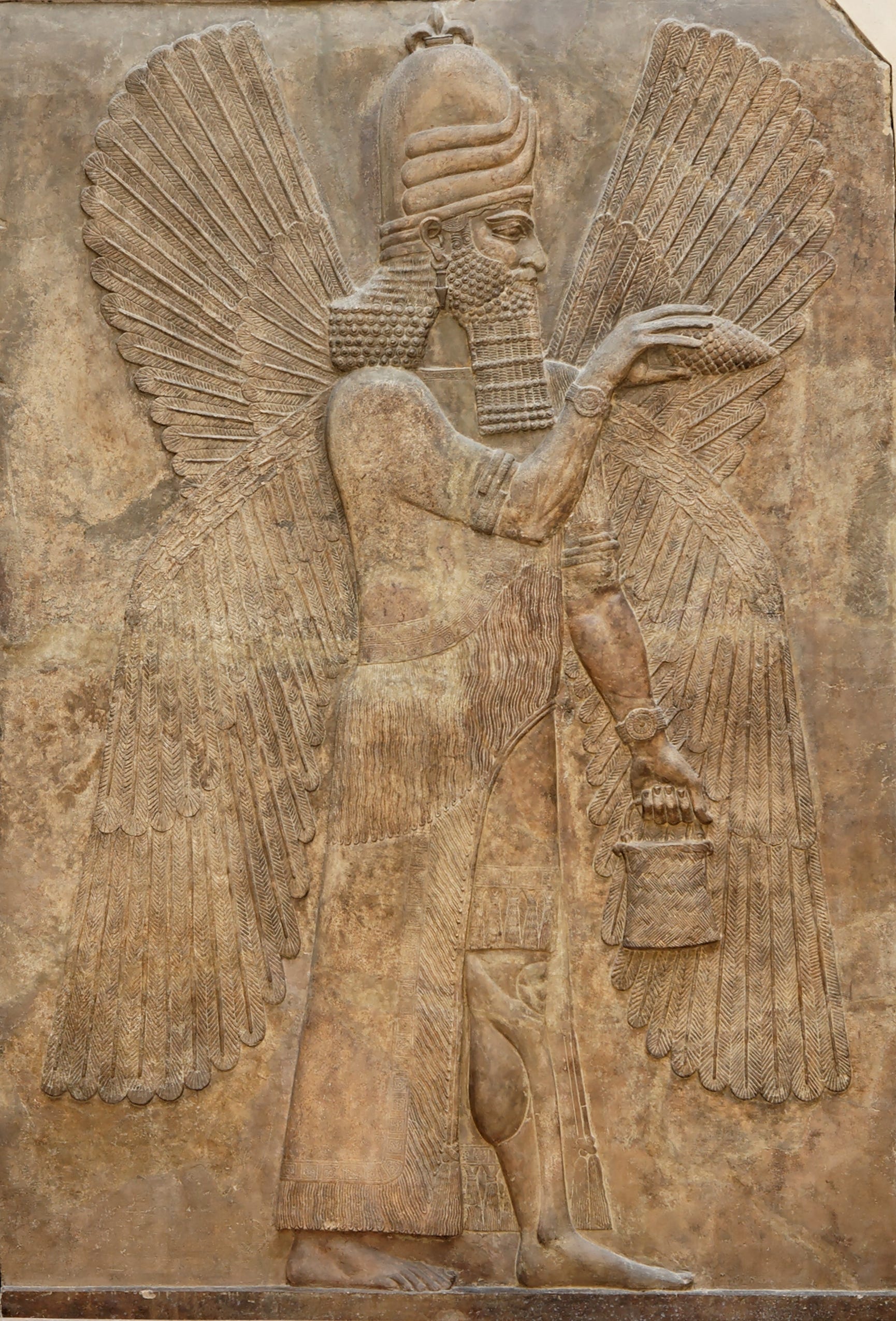
photo from Wikimedia Commons
No posts
Comments
Nothing yet. Say the first thing.
Sign in to join the conversation.