
Before heading into the kitchen, a note (well, yet another note!) about seafood and travel—a common theme around here. The new season of Tucci in Italy that recently launched includes an episode focused on Sicily. In which, among all sorts of delicious explorations, Stanley Tucci visits a trattoria in Trapani to watch a signature dish of the area being made: seafood couscous. Geez, that looked delicious. (I so loved seeing a Note from judy witts francini that she’d had the seafood couscous at that trattoria.)
I loved that particular segment for a couple of reasons. First, couscous brings up some dear college-era memories of reveling in this new-to-me, exotic dish at North African restaurants in Paris while on a couple of study-abroad trips. And second, it’s a seafood specialty that is clearly associated with one very distinct area: the western part of Sicily where the city of Trapani is found.
This brings to mind tielles de Sète, a distinctive savory tart filled with seafood (traditionally octopus, but I saw other fillings, such as mussels, while in Sète a couple of years ago). No other region that I know of claims a tielle among its specialties, every version I’ve seen—even in Paris markets—ties the savory tart to that small Mediterranean town.
These two dishes are such great examples of why I find seafood + travel to be so endlessly delightful. Species of regional seafoods we encounter on the road make for delicious new dining experiences, as do the notable seafood dishes that don’t show up much outside those regions.
From your travels, is there a seafood dish like this that comes to mind, something with a strong tie to the city/region but not often seen outside that area? If so, I’d love to hear about it in the comments below. I’m behind on working up a recipe for tielles that does some justice to those from Sète (tielles de Seattle?), and I will definitely be trying my hand at an adaptation of the couscous alla Trapanese. Results from which I’ll share with you down the line. Happy to add other seafood specialties to my list, if you have any to suggest!
Now to the cooking……
I’ve touched on a lot of different cooking techniques for seafood over the nearly four years of writing this newsletter. Most often it has been in the context of a specific recipe I featured, with a bit about the technique to accompany the recipe. One such example is this shallow-poached sole recipe.
With this issue, and others in future months, I’ll devote a bit more space to a particular technique (or two, if closely related, like here)—spelling out some tips and insights for the technique, suggestions of how it works well with seafood, and some recipe links and suggestions.
With these posts, I hope to add a new tip or insight to your seafood-cooking tool kit—particularly with the comfort of off-the-cuff cooking in mind. The more we know about what seafoods work well with different techniques, it’s that much easier to walk into the kitchen to whip up something delicious without always needing to rely on a recipe.
And over time, my goal is for these posts to represent the breadth of possibilities there are for cooking seafood. Sure, there are certain classic preparations that are classic for good reason: seared scallops, steamed clams, grilled salmon. AND…there are plenty of other ways to cook those seafoods, too.
For today, it’s a look at sautéing and pan-frying, two techniques that offer countless options for creating easy, delicious meals with a skillet on the stovetop.
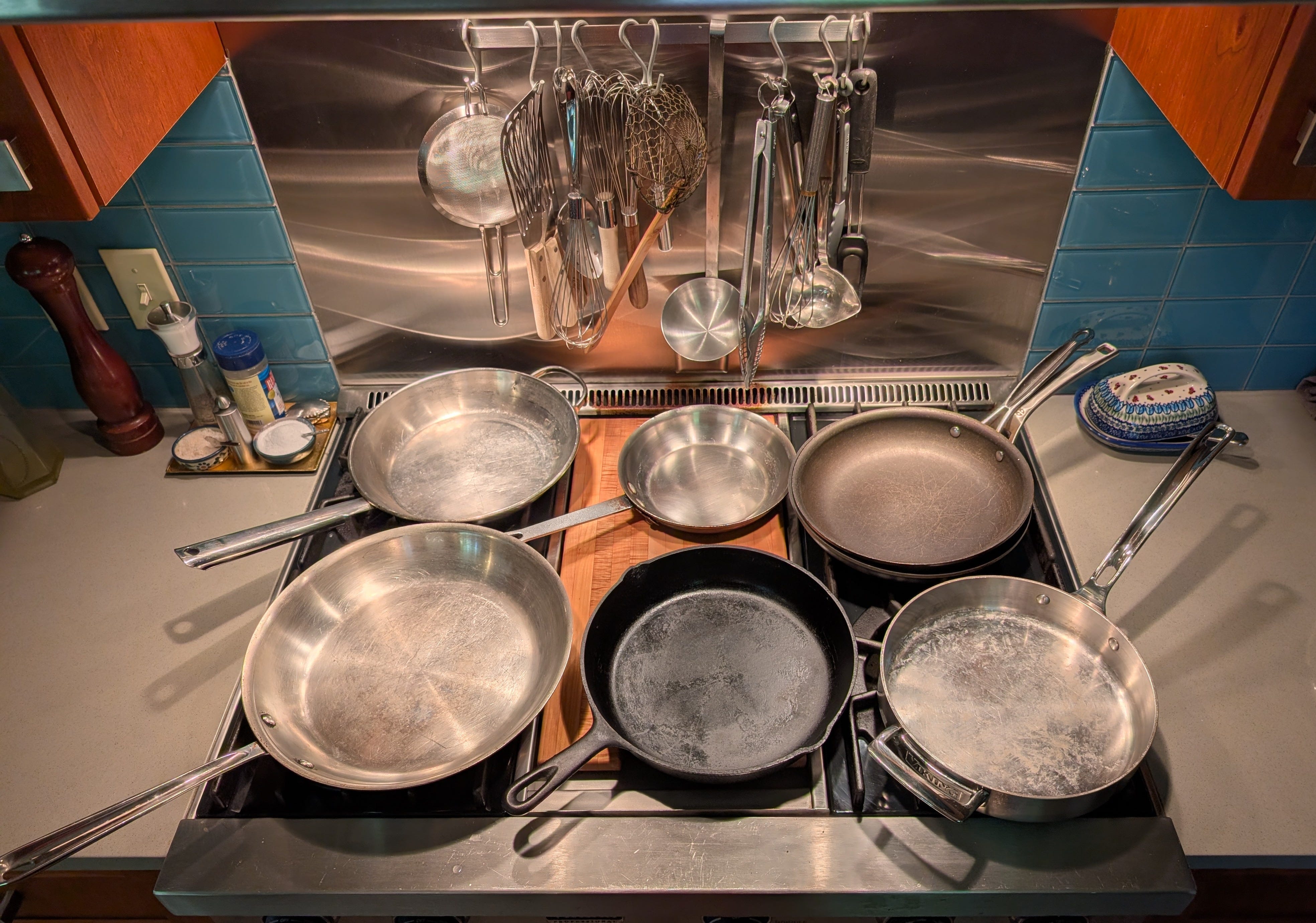
That photo above shows most of the skillets and sauté pans I have on hand, a few other size options are in the cupboard below. I primarily use the two stainless steel skillets on the left and the cast iron (of course!).
Sautéing and pan-frying both use medium to medium-high heat, with the aim of at least a bit of browning on the surface (more so with pan-frying). Thinner, smaller pieces work well on medium-high heat, as they’ll cook through pretty quickly. Larger, denser pieces will be good at medium, so the surface won’t be too brown by the time the seafood’s cooked through.
You won’t need much fat in the pan, just enough to evenly coat the bottom. If there’s a textured coating on seafood being pan-fried, such as coarse bread crumbs, a bit more fat may help achieve a good, even browning.
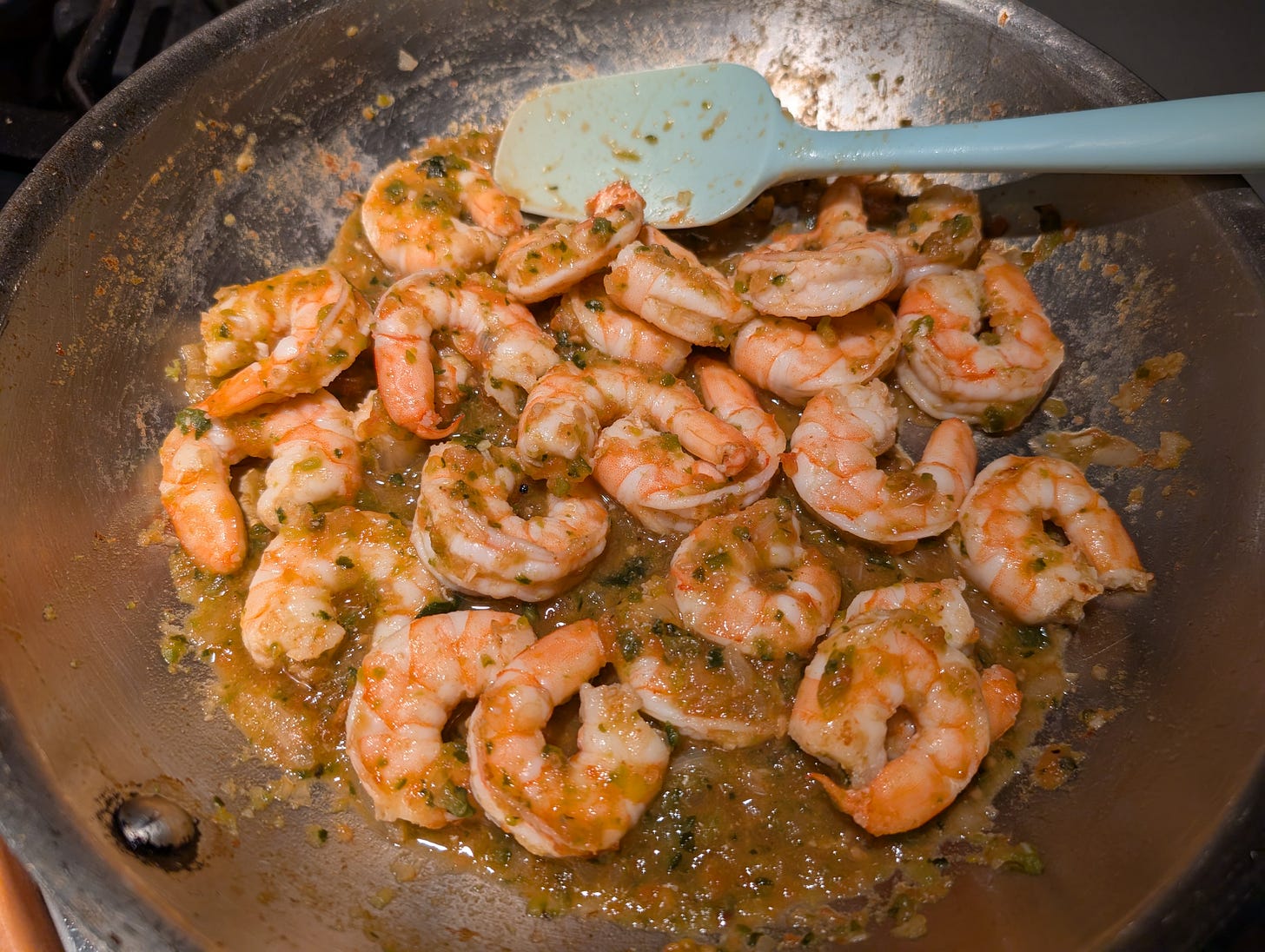
There’s a natural sauce-making element that’s a bonus with these techniques. Usually that comes in the form of broth, citrus juice, or wine (maybe salsa as in the photo below) added partway through or near the end of cooking for a sauté, or after the seafood’s been cooked and removed from the pan for pan-frying. Herbs, aromatics, other seasonings are often in the sauce mix, too.
You don’t want to crowd the pan for either method, the broad shallow surface allows room for the stirring and flipping needed. That’s why it’s great to have at least a couple different sizes to choose from.
For me, the prime differences between the two techniques are the size of the seafood pieces being cooked and how much activity there is while cooking. Generally speaking. There is definitely a lot of overlap between the two, and variances in how the terms are used in different recipes. Someone else’s “sauté” I might call a “pan-fry.”
So these aren’t hard and fast rules. Ultimately, the goal is a hot pan, great seafood, a handful of other ingredients, and a very little time before dinner is served.
Sauté comes from the French word for “jump,” which I take as a cue that things are usually moving around with this technique, the ingredients stirred and/or tossed along the way. This is where the skillet’s sloping sides come in handy, easier for tossing. Sauté pans—with straight rather than sloped sides—work well too, just plan on stirring instead of tossing.
For sautéing, ingredients are in pieces small enough to maneuver around in the pan while cooking—whether that’s stirring or tossing, or a bit of both. Most types of fish would break into bits when sautéed, so fish are often not an ideal choice here. Unless, of course, being in flaky bits is ideal for the recipe, as with a salmon and potato hash. Seafoods great for sautéing include scallops, squid, and shrimp, for which recipes abound. One example is this Sautéed Shrimp with Garlic and Crisp Rosemary recipe. And Herbed Cast-Iron Squid, too, a variation that cooks squid very quickly in a hot pan, tossed with a flavorful herb dressing after cooking.
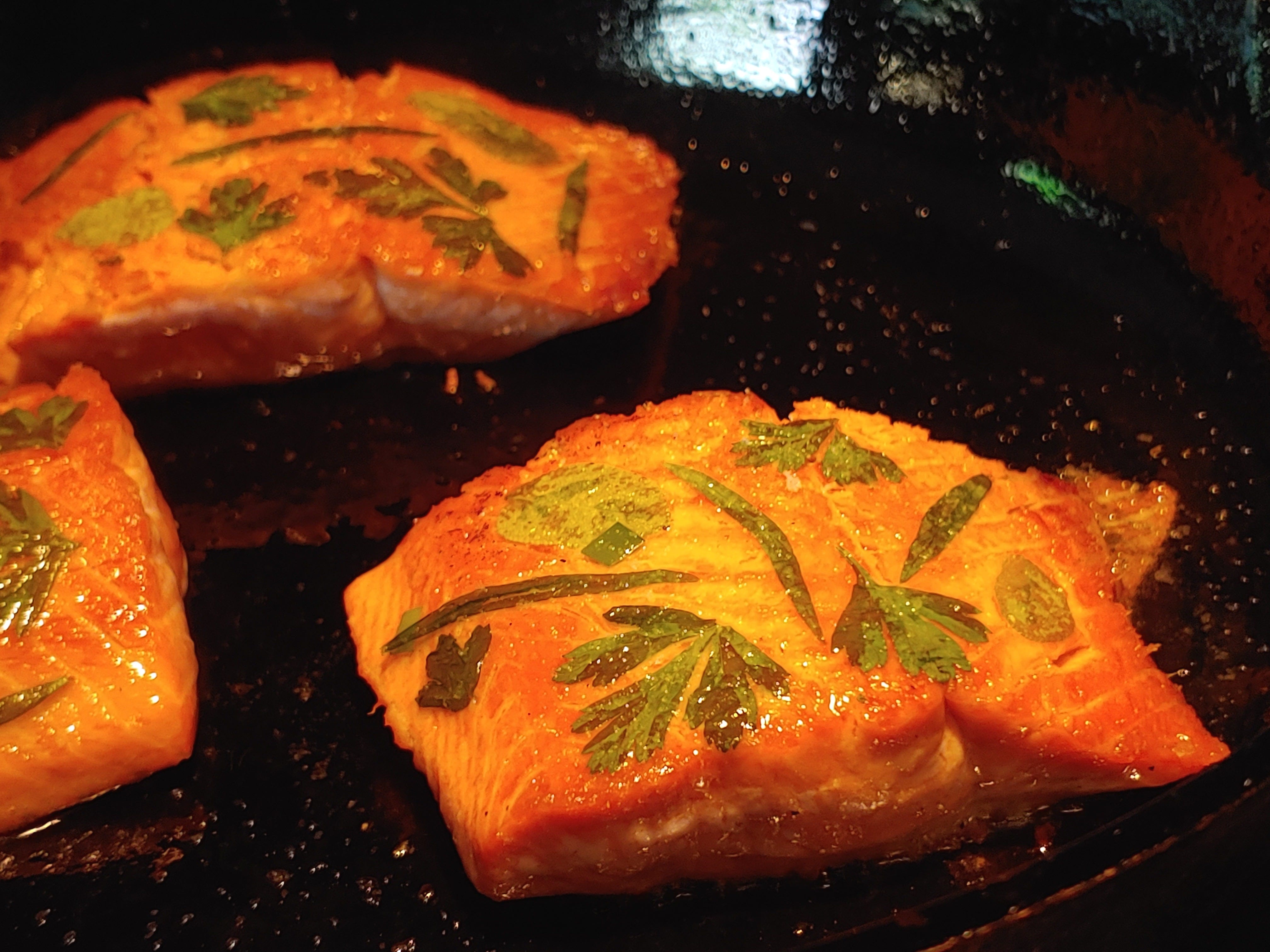
Pan-frying is perfect for larger portions of fish, whether that’s thin sole fillets (Sole Meunière Inspired by Julia), salmon fillet pieces (Herb-Tattooed Salmon, above), or a dense steak such as swordfish (Swordfish Piccata).
Generally you’re just turning the fish once, shooting for a nicely browned surface and flesh that’s just cooked through. It’s best to let the fish cook undisturbed between adding to the pan and turning, so the surface sets. If you fiddle with the seafood too soon, sticking can be an issue.
I can’t think of a type of fish that wouldn’t work well pan-fried. Ideally the fish pieces aren’t too large or thick, so they’re easier to handle and ensure even cooking. I highly recommend having a fish spatula on hand to make flipping easier, particularly with thinner and more delicate fish.
Most shellfish are naturally in smaller pieces, suiting them more to sautéing. An exception is larger sea scallops, which are often seared. And pan-fried oysters, one of my all-time favorite seafood preps, which I wrote an ode to here, complete with review of all the elements for a great batch and a recipe.
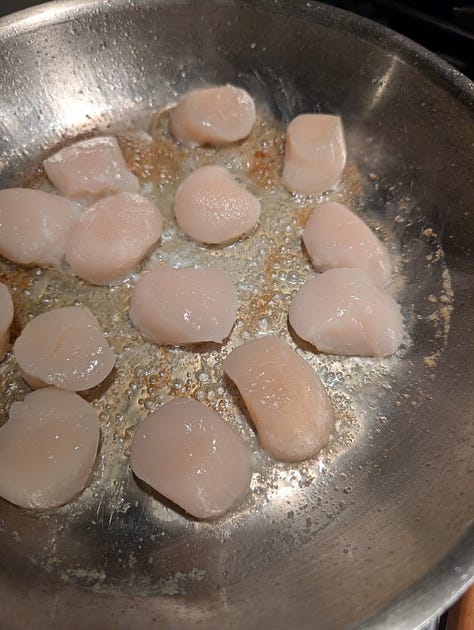
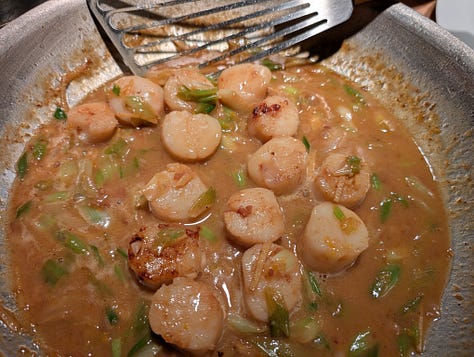
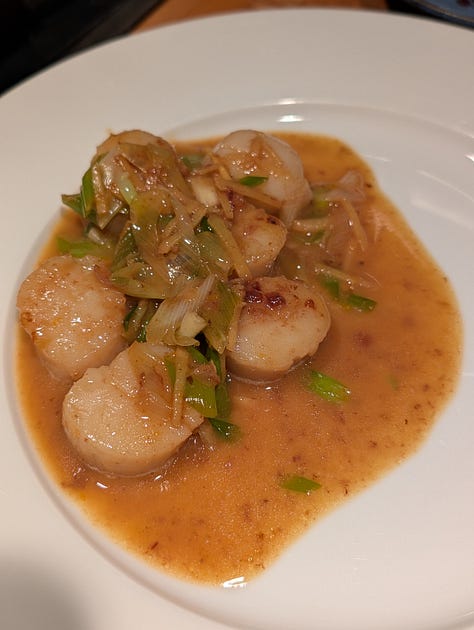
An unintentional oversight: I just realized this is the first scallop recipe I’ve shared since starting this newsletter! Not sure how that happened, I’ll work more scallops in before long. This recipe is one I taught in a citrus-focused seafood class a few months ago, which inspired this post about the joys of citrus and seafood together.
Simple pan sauces like this are often finished with a splash of white wine, but for this one I use freshly squeezed orange juice. Instead of the larger scallops, you could use bay scallops, reducing the sauté time by a minute or two. In place of rice, the scallops could be served with sautéed greens, over or alongside.
Do your best to get “dry pack” scallops, which haven’t been treated with additives to retain moisture. They’ll brown better and you won’t face the liquid that treated scallops give off, impeding browning and diluting flavors in the pan.
1 pound sea scallops
5 tablespoons unsalted butter, divided
Kosher salt
4 green onions, white and pale green portions cut into 1/4-inch pieces on the bias
2 tablespoons julienned fresh ginger (from about a 1-inch piece of ginger)
3/4 cup freshly squeezed orange juice
1/4 teaspoon finely grated orange zest
Cooked jasmine rice or other long-grain rice, for serving
Remove the tough little side muscle if it’s present on any of the scallops. Dry the scallops well with paper towels; set aside until needed.
Melt 2 tablespoons of the butter in a large skillet over medium-high heat; while the pan is heating, cut the remaining butter into 4 pieces and put it in the refrigerator to chill.
Season the scallops lightly with salt and add them to the skillet. Cook the scallops undisturbed until nicely browned, about 2 minutes. Turn the scallops and brown on the other side, about 2 minutes longer. Transfer the scallops to a plate and set aside.
Reduce the heat to medium, add the green onions and ginger to the skillet and cook, stirring often, until tender and aromatic, 2 to 3 minutes. Add the orange juice and simmer the liquid until reduced by about half, stirring to lift up flavorful bits stuck to the bottom of the skillet, 2 to 3 minutes.
Take the pan from the heat and add the reserved chilled butter, stirring gently so the butter melts creamily into the pan liquids, creating a silky sauce. Set the pan over low heat, add the scallops and orange zest and warm gently, stirring, for about 1 minute. Taste for seasoning, adding more salt if needed.
Spoon the scallops and sauce over rice on individual plates, and serve right away.
Makes 2 to 4 servings
No posts
Comments
Nothing yet. Say the first thing.
Sign in to join the conversation.