
On July 22, the House Committee on Science, Space, and Technology convened a hearing called “Unleashing the Golden Age of Science: Examining the Priorities of the FY2027 Research and Technology Enterprise.” The hypocrisy appeared to be right there in the hearing title.
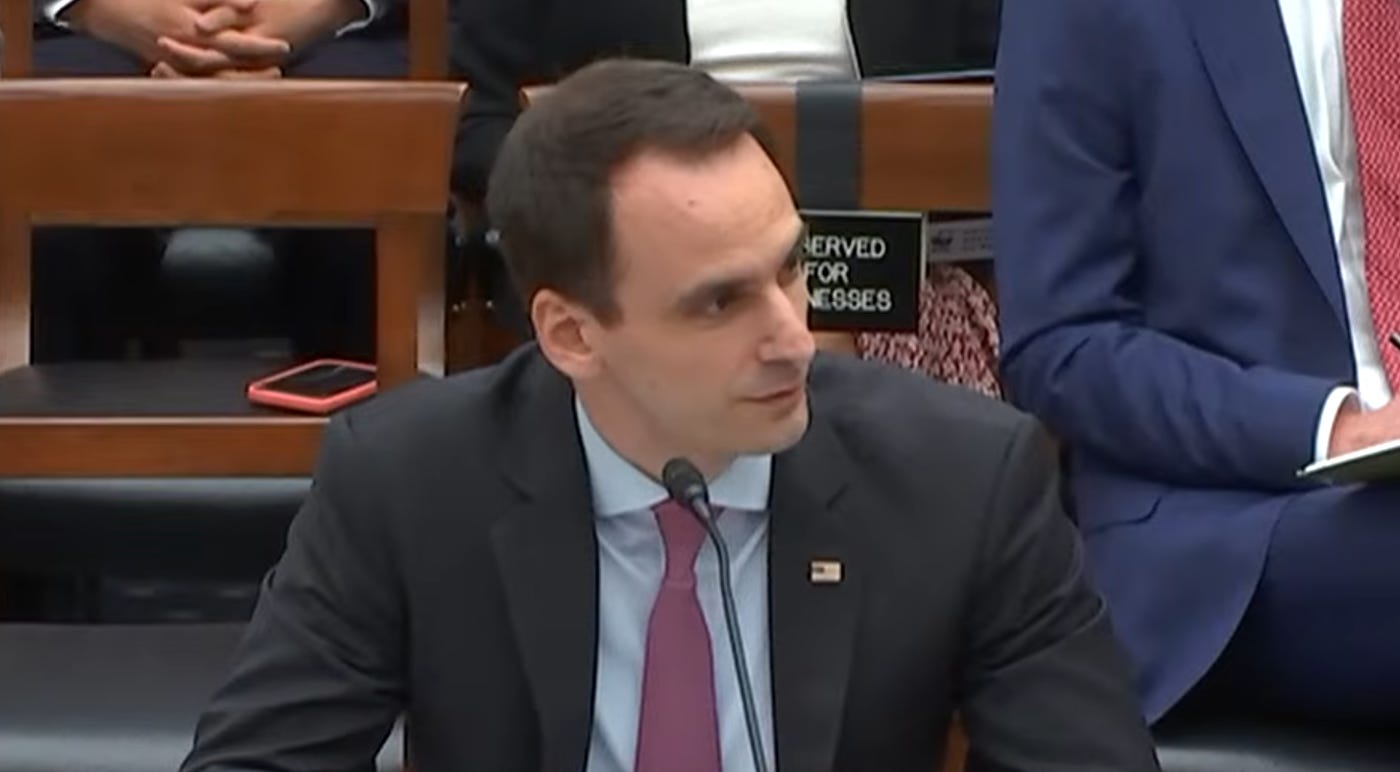
The sole witness was Michael Kratsios, director of the White House Office of Science and Technology Policy, who sat before the committee to discuss a new report to the president: A New Golden Age. The report seems to emphasize the importance of science, but its vision was profoundly different from the administration’s record.
Since returning to office, President Donald Trump’s administration has worked to weaken the federal agencies, universities, programs, and safeguards that sustain American science. It has proposed enormous cuts to research budgets, disrupted grants, attacked universities, reduced the federal scientific workforce, and sought greater political control over funding. Then it declared a golden age.
Kratsios presented the report as a modern counterpart to Vannevar Bush’s landmark 1945 report, Science: The Endless Frontier, which established the federal government’s role in supporting fundamental research. The administration appears to want the prestige of that legacy, but not the investment and independence that made it work.
The report talks about empowering individual scientists, but seems to forget about the loss of senior scientists to foreign countries as a result of threats to scientists and their research. It also ignores the fact that the administration appears to require that scientists now need to get permission from political appointees before receiving federal grants.
The report also strongly favors artificial intelligence, manufacturing, and defense-related research and places less emphasis on universities. It also reduces transparency and shifts support away from research and education programs that benefit nature and public health.
At the same time, the administration’s proposed FY2027 budget would cut the National Science Foundation’s discretionary funding by more than half (55%). NSF research funding would fall by 58%, and the share of competitive proposals receiving funding could drop from 18% to 7%. The National Institute of Standards and Technology would lose close to $1 billion, and the Manufacturing Extension Partnership would be eliminated. Major cuts would also hit NASA, the U.S. Geological Survey and the National Oceanic and Atmospheric Administration.
These are not just accounting decisions. Research depends on skilled people, laboratories, equipment, reliable data, and institutions capable of sustaining work over many years. A government cannot dismantle those foundations and credibly claim it is accelerating discovery and innovation.
Committee Chairman Brian Babin argued at the beginning of the hearing that a golden age should be judged by results rather than spending. But scientific outcomes need funding. Outcomes cannot be separated from the resources needed to produce the research in the first place. Researchers require stable support and the confidence that grants won’t be canceled or delayed due to politics.
The administration also weakened independent oversight. In April, Trump dismissed all 22 members of the National Science Board, which governs the NSF and advises Congress and the president. Months later, these seats are still vacant, raising serious concerns that independent scientific guidance is being replaced by politics.
Democrats in the hearing did recognize many of these contradictions. Unfortunately, they did not press Kratsios hard enough. Ranking Member Zoe Lofgren did call the hearing title “stunningly ironic” and criticized grant cancellations, attacks on universities, and proposed cuts. Other members also raised concerns about delayed funding and political involvement in grant decisions. However, Kratsios often offered broad assurances or said he “did not know the details,” and too often, members simply moved on without pressing him further.
They should have demanded the answers. How does reducing the NSF proposal success rate to 7% empower researchers? How does dismissing the entire National Science Board protect scientific independence? How can the administration promise unbiased peer review while seeking political control over grantmaking? If it succeeds in cutting the workforce and ends research programs, is AI where they will place all their investment? How many future discoveries is the administration willing to sacrifice for this?
AI cannot substitute for the research ecosystem that produces new knowledge, trains scientists, and drives discovery. The administration presents AI as the centerpiece of American scientific competitiveness, yet it is only as strong as the science, data, human expertise, and institutions that support it. As one colleague put it, AI no more “does” science than a hammer builds a house. It cannot replace the researchers, laboratories, universities, field studies, peer review, and sustained public investment that once made the U.S. a global scientific leader. Nor is AI without costs. The rapid expansion of data centers requires enormous amounts of electricity, land, and water, creates growing demands on infrastructure, and raises important questions about local environmental impacts and public health in surrounding communities. All of this is weakening the nation’s scientific foundations, all at once.

A genuine golden age would reinforce those foundations. It would protect scientists from political interference, restore the federal research workforce, preserve public data, and provide dependable funding for basic and applied research. It would strengthen universities rather than threaten or intimidate them.
The research system can certainly be improved. Sometimes grantmaking can be slow, administrative burdens can discourage scientists, and agencies should continually examine whether public money is being used effectively. But reform is not complete destruction, and branding it “golden age” is not policy.
Congress should not allow the White House to describe cuts to science as being more efficient, political interference as accountability, or institutional damage with a wrecking ball as innovation. A golden age of science can’t be declared. It must be built through investment, strong institutions, and public trust. You just can’t unleash American science by dismantling it.
That’s it for today - Thank you so much for reading SciLight!
If you enjoyed today’s post, please like it or share it with others. You can also support the work to shine a light on the politicization of science by becoming a paid subscriber!
If you want to share today’s post as a web page with your network, click this button:
If you have suggestions, questions, comments, or want to drop us a line, send it all to scilightsubstack@gmail.com
Comments
Nothing yet. Say the first thing.
Sign in to join the conversation.