
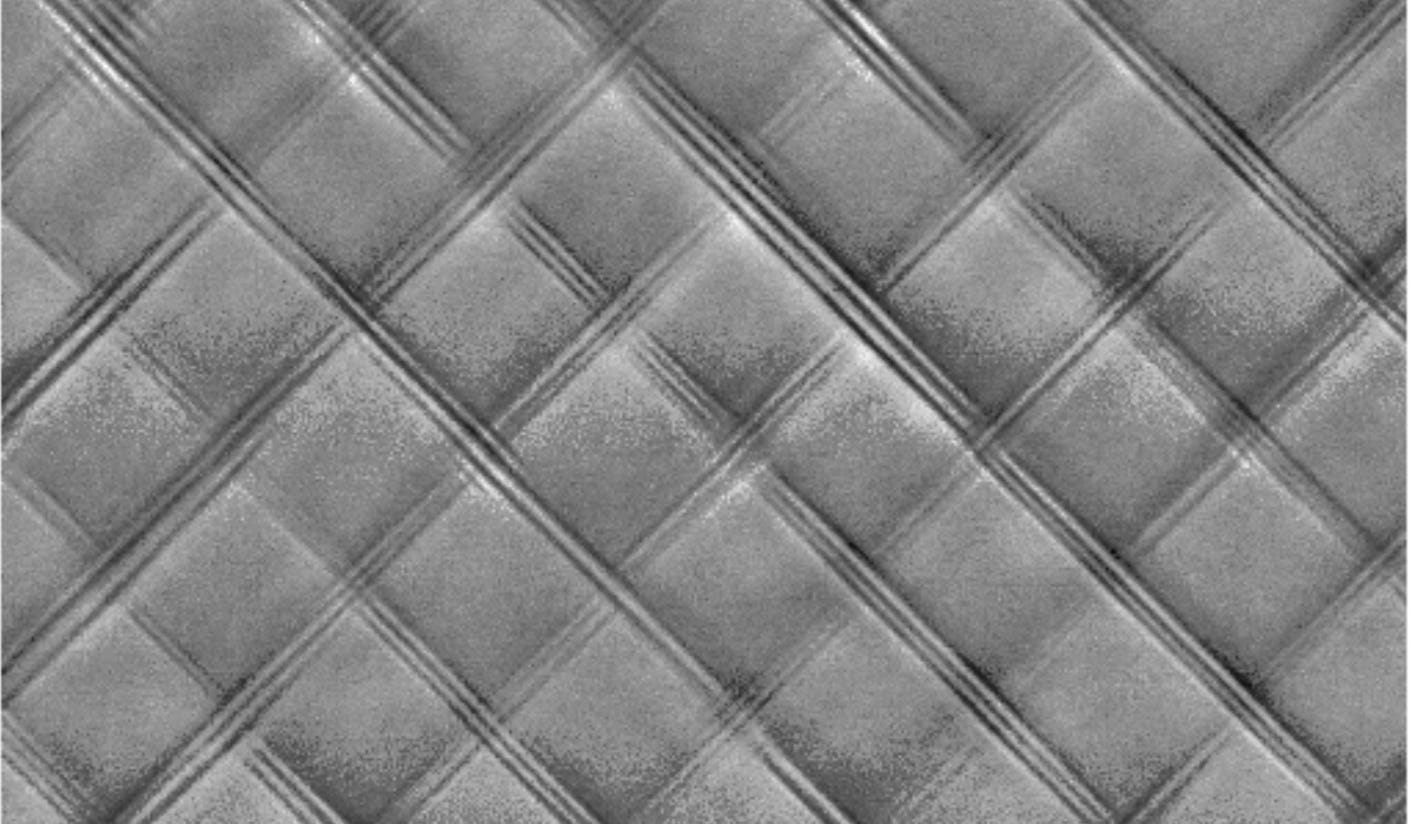
Fig. 1a, cropped, from Xin, F., Gelkop, Y., van der Veer, E. et al., "Spontaneous formation and optical manipulation of a woven domain fabric in a ferroelectric crystal", Light: Science & Applications 15, 315 (2026). Licensed under CC BY 4.0.
News like this doesn’t come every day: Scientists have discovered a new type of matter. This is potential material for a Nobel Prize. Let’s have a look. Crystals are especially regular arrangements of matter and they come in many forms. We value them not just because they are pretty but because many of them have special properties. The most widely used one is probably crystalline silicon which is used in microchips and solar panels. But crystals are also used for some types of lasers and precision clocks. Diamonds, because they are so hard, are used for some types of saws and cutters. High-performance turbine blades are often made of crystals because that makes them more durable. Metal organic frameworks, which won last year’s Nobel Prize in chemistry, are also a sort of crystal. They can selectively trap molecules and catalyse chemical reactions. That makes them super useful for the chemical industry.
The authors of the new paper were studying a ferroelectric crystal. That’s a normal, regular and periodic crystal lattice with a special property. In a ferroelectric crystal, you have tiny regions, in which the average positive electric charge is somewhat displaced from the negative electric charge. These regions are called ‘domains’ and they each have a preferred electrical direction. It’s similar to magnetic domains in ferromagnets.
The important part is that this direction in a ferroelectric crystal can often be flipped by applying an electric field, and it can remain flipped after the field is removed. This is what the authors of the new paper work with.
They used one of those materials which can become a ferroelectric crystal when cooled. They cooled it and saw the ferroelectric domains appear. So far, so normal. Then they cooled it further and something amazing happened. In the surface layers of the crystal, the ferroelectric domains arranged into long strands that passed over and under each other. They formed a three-dimensional weave!
This weave spontaneously formed at about 17°C. Yes, you heard that right, that 17°C, not Kelvin. Celsius, according to my husband this counts as room temperature.
They checked this by probing the crystal with polarised light and taking microscope images at different depths. So this is not just lines that happen to cross when you look at them from above, it’s really a three-dimensional structure. They also found that if they heat the crystal and cool it again, it produces a weave again, but in a different pattern. Once the pattern has formed, though, it remains stable as long as the temperature stays roughly constant. But wait, that wasn’t it. They also figured out that they can change parts of the woven pattern with a laser. The laser made parts of the weave disappear and rearrange itself. That worked with a green laser but not with infrared, so it’s not just heating.
So you have a material that spontaneously forms a pattern, the pattern is stable, and can be changed with light. This makes it potentially useful for many applications. The authors suggest new types of memory storage and neuromorphic computing, which means computer hardware designed to process information in ways inspired by neural networks.
Now, this is a small lab study and applications are far away. And while the laser did alter the weave, they could not control just what it did, so if you want to use that to store memory it’s not great. You might just remember that you were supposed to remember something but not what. Still, I am not joking when I say that this is the sort of discovery that can become Nobel Prize material. Strands of domains have been observed before in some materials, but not as regular as this, so this is a genuinely new discovery. And who knows what new electrical or optical properties such crystals will turn out to have when further studied. Really, I think we have just witnessed the beginning of an entirely new research area. Quasicrystals and the metal organic frameworks which I mentioned earlier quickly made it from a quirky discovery to practical uses and a Nobel Prize as well. I give this a 0 out of 10 on the bullshit meter. It’s not my research area, so I can’t properly judge the experiment, but it seems unlikely to me that there is something seriously wrong with either the data or the interpretation. Part of the reason I find this interesting is that I think material science is super underrated. There’s a reason that we now have so many AI startups that want to work on the discovery of new materials. Because this science has a huge impact on our daily lives. Because think about it, we name historical epochs, not by food sources or artistic skills, but by our ability to shape materials. Still, if someone born 10,000 years ago came to visit us I believe the first thing they’d be surprised by would not be phones or cars. It would be concrete, glass, mirrors, and plastic. It would be microfibres, optical fibres, and Teflon. It would be all the brilliant pigments, paved streets, stainless steel, and anodised aluminium. And then we’d give them a plastic fork that snaps in the potato salad. Welcome to civilisation.
Comments
Nothing yet. Say the first thing.
Sign in to join the conversation.