
How The Sober Lush ended up on my reading list:
1.
There was no one day when I woke up and thought, I should stop drinking. It was lots of days until it was most days until it was every day. For twenty-two years (give or take, with a sober summer and two pregnancies as exceptions), every single time I drank—which was often, which was too often, which for too long was every day—I woke up the next morning or afternoon and thought, I should stop drinking. I wrote it in my journal countless times, the loose sloppiness of my handwriting a dead giveaway of how hungover (or maybe still a little drunk) I was. The only difference on June 21, 2020, was that instead of should, I thought, I am going to stop drinking.
And then I wrote it down.
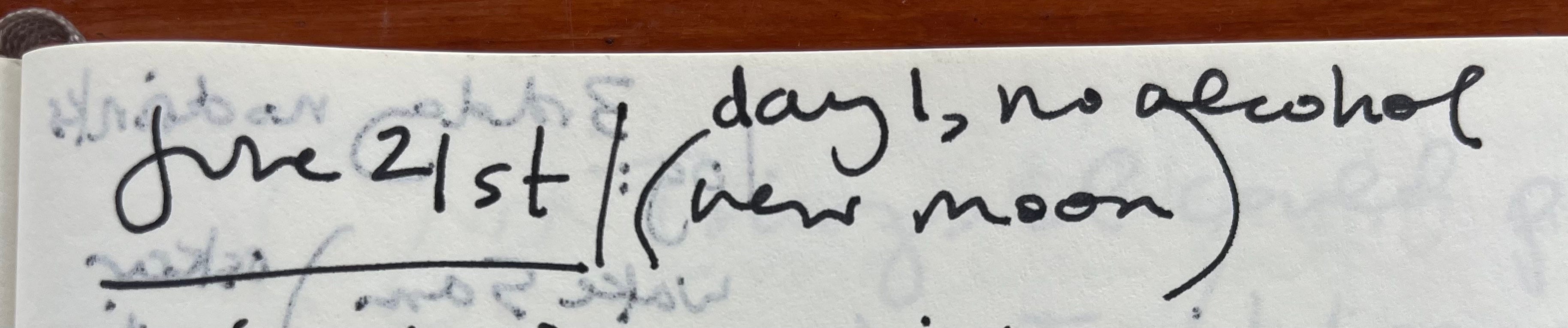
And then the next day, I wrote Day 2, no drinks, and the day after that, Day 3, no booze, and Day 4, onward, until Day 44, when it seemed I’d done the impossible and actually listened to myself, done the thing I’d long wanted to do, and I wrote SOBER.

Today, I am six years sober and it is a fucking miracle and it will never not be a miracle that I gave myself permission—at long last—to be fully, brilliantly, clearly, and quietly myself.
I did not go to AA.1 Not then, not ever. In the beginning, I told no one what I was doing except my husband—who was still drinking, but one thing at a time and I did not feel capable of telling him that he ought to sober up too while I was in the middle of my own process. Eventually I had to tell my family. Eventually I had to tell my friends. But for the first many months I kept my fledgling sobriety a secret. I couldn’t imagine being as vulnerable as I needed to be in those months with anyone but myself (and even that was difficult).
Lockdown had mostly lifted but the world was still quiet, crouched in the shadow of Covid, and I was home with the kids and I focused on them, on the house, on my breath. I went on walks around the neighborhood and listened to podcasts. I slept, a lot the first couple of weeks, as much as I could, more maybe than I had in years. I wrote. And best of all, I read.
When you are tipsy or buzzed or drunk every night, it’s hard to read. When most days are a smash of headache and dry mouth and twisty stomach, white knuckling through to 5pm (or 4pm or 3pm or noon), it’s hard to focus. Words swim over the page, plots scramble, dialogue dizzies. I’ve always been a reader, but suddenly I was a reader again, a person invested in her books, a person who remembered what she read and looked forward to more.
There are a lot of sobriety memoirs out there. Plenty of how-to-get and how-to-stay sober manuals too. I read them.2 Some are good, some are depressing, lots are mediocre; plenty cover the familiar territory of pre-sobriety train wreck, which is its own kind of solace, but very few gave interesting, tangible advice about how to be a sober human in a world where you’ve lived so long drunk. Here’s a harsh sober reality: if you come of age with alcohol as a flotation device—as I did—you must relearn how to have a good time without said device. It was so weird to be 39 and discover I had no idea how to have fun3 without alcohol in the mix. (Weird, and sad.)
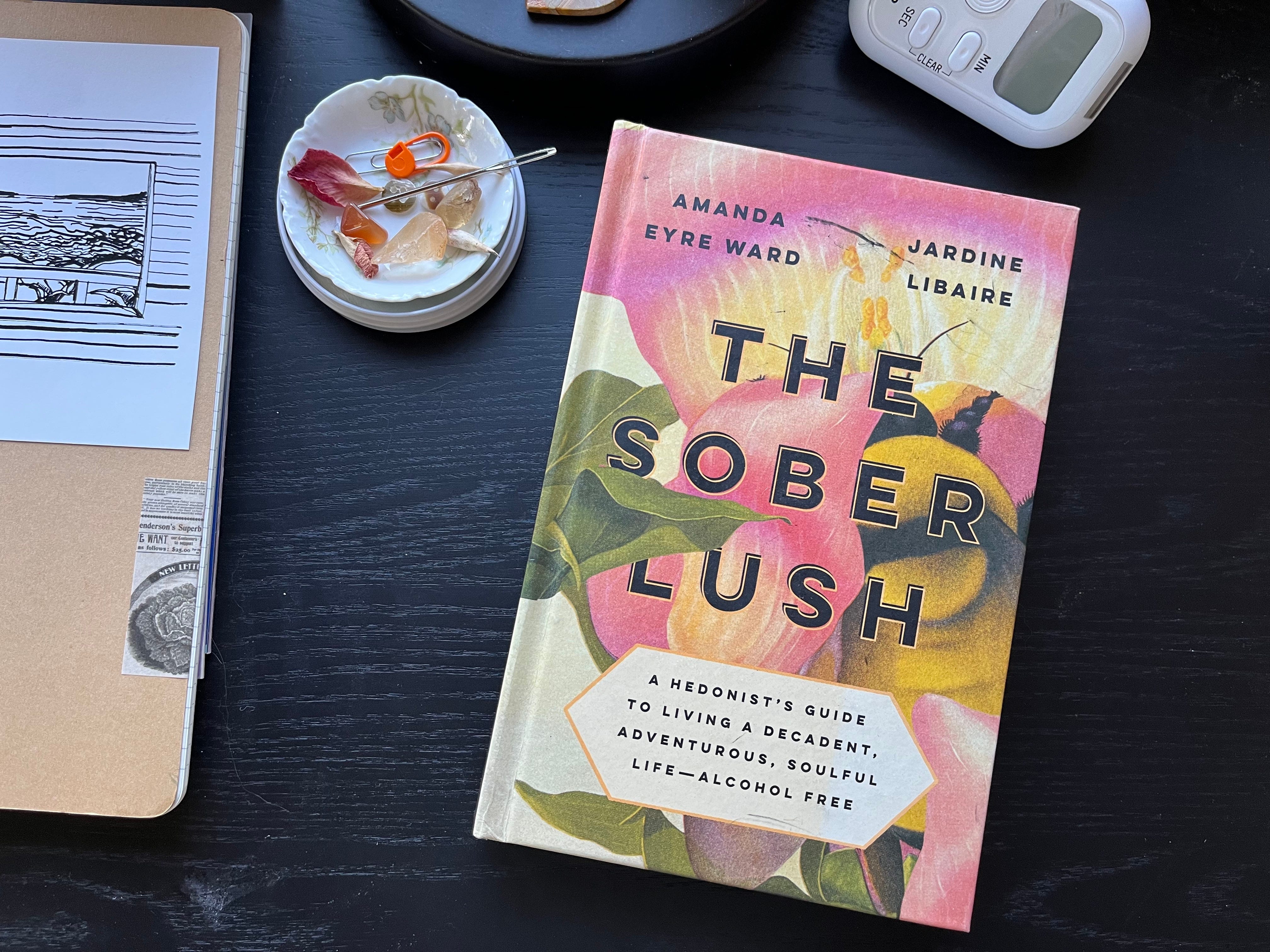
I can’t remember when or where I first heard about The Sober Lush: A Hedonist’s Guide to Living a Decadent, Adventurous, Soulful Life—Alcohol Free. But the timing was perfect. I ordered a copy that summer and picked it up curbside at my local bookstore and I read it and I listened to all the podcast interviews I could find with the two authors and then I read it again.4
The book gave me something I didn’t realize I needed: evidence that it was possible to live a full, exciting, gorgeous, complex, and meaningful life as a sober person. Broken into twelve sections with titles like “Divine Transgressions,” “Coping,” “Playing,” “Tiny Magic Connections,” and “Slowing Down,” the book’s mini-essays are practical and poetic, serious and silly, honest and hopeful. As I read, I was reminded of the beauty of having a crush, how music and incense can transform an hour, that trying new things is exhilarating, that mini golf is for grown ups too, that dressing up is its own fun, that the true beauty of a drink is in the ritual, not the alcohol. Most importantly, I was reminded of something I already knew, once upon a time: that pleasure and joy are right there, waiting to be experienced, if you are paying attention. (Much easier, I can attest, when sober.)
I still had to do the hard work of being sober: once the pink cloud cleared, I had to reckon with the reality of myself and my life and I had to make difficult changes to who I was and how I lived in the world. I cried a lot. I sifted through the mistakes I’d made and repaired what I could and made peace with what I couldn’t. I took baths, took the kids for ice cream, took the time to watch the sun rise from our picture window each morning. I wrote XO.5 I brought trashy novels on vacation and my full self to conversations. I brewed a cup of lavender-chamomile tea each night at 8pm. I learned how to make a decent mocktail. I began6 writing the Impossible Project, set during the unprecedented and unexpectedly transcendent sober summer I was 20, a time that (much to my deep sadness) did not end happily or well.7 A year into sobriety, I told my husband I thought he needed to get sober, and he agreed.8
I ate a shit-ton of candy9 that first year and half a shit-ton the second year and early in the third year my body stopped needing to mainline sugar and I found myself somewhere I’d been many times—in a bar at a writers’ conference—doing something I never thought I would: sipping club soda with lime. Near midnight, when I said I was tired and going to head out, the group I was with looked at one another and said, Yeah, we will too. We walked in the direction of our hotels and said our good nights as we split off and I headed up to my hotel room with a clear head and a clear heart. Not one person commented on my drink choice and I knew, deep within, it wouldn’t have mattered if they did. I was—I am—free.
This is not a judgment of AA: I read a lot about the program, and in my own way, did many of the twelve steps, but I am not a group person. My solitary nature is something I have tried to change (drinking was, in many ways, a manifestation of that struggle), but I’ve finally accepted that solitary I am and solitary I will be. There’s nothing wrong with being able to do things on one’s own.
The ones I liked and/or recommend: Drinking: A Love Story by Caroline Knapp; Blackout by Sarah Hepola; The Unexpected Joy of Being Sober by Catherine Gray.
How to dance; how to flirt; how to make love; how to celebrate; what to do on vacation; where to hang out after 8pm; how to enjoy dinner; how to talk to strangers or acquaintances or even, sometimes, friends; how to pass a plan-free weekend; how to relax after work, after raking leaves, after putting the kids to bed, after a good day or a bad day or a boring day; how to listen; how to remember; how to feel; how to articulate those feelings; how to laugh; how to cry. I often say I had to relearn how to “have fun” when I got sober, but what I mean is I had to relearn how to be alive.
And again. And again. And… again.
The first full draft took me about six months—July 2020 to January 2021. Edits came a bit later, but overall it was a fast book.
In May 2021. (Finally finished a full draft in August 2024. Not every book is fast!)
This unwieldy project is half summer romance, half fall from grace. There is no way I could have written—or even truly approached—this material without getting sober. I had told myself a lot of lies over the years to make how that narrative played out bearable, and I had to undo all of them. Excerpts HERE, HERE, & HERE.
My husband was straightedge until he was 24, so he didn’t struggle much with the “how to have fun” quandary. It was still a process for him to sober up, but a different one from mine.
Jolly Ranchers, Dum-dums, Sour Patch Kids, Swedish Fish, Dots, Wiley Wallaby’s, organic vegan gummy bears from the coop that taste nowhere near as good as the trashy grocery store kind. I am, historically, not a sweet person, so my cravings confused me until I realized my body was DESPERATE for the sugar it had grown used to receiving in the form of bourbon and wine.
Comments
Nothing yet. Say the first thing.
Sign in to join the conversation.