
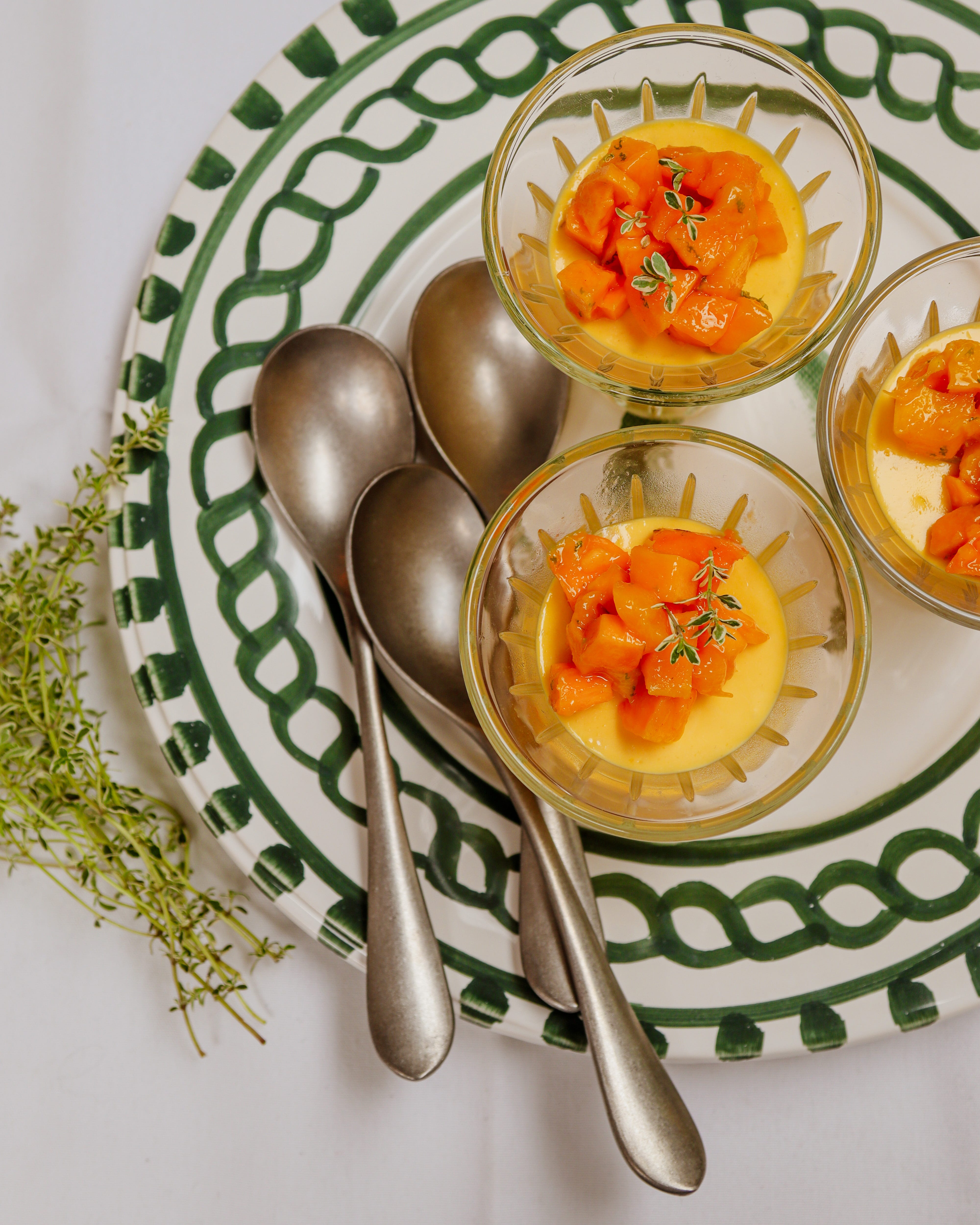
A posset is one of the simplest puddings you can make. Cream, sugar, acid, fruit. Here you warm the cream and the sugar in a saucepan, stir in the lime juice and the mango purée, pour the mixture into glasses, put them in the fridge and a few hours later you have a set, cool, slightly tart, slightly tropical dessert that disappears in three spoonfuls. There is no oven involved. No gelatine. No eggs. No equipment beyond a saucepan and a whisk.
It is, in other words, exactly the right thing to make in the kind of slow English heatwave I am sitting in as I write this. And it is also one of the most English desserts in the British repertoire.

I am writing this during heatwave from the kitchen of a cottage in Devon, where Jeremy and I have come for a week at the end of June, with our friend Basia and the dogs, Bibi and Bobo. The weather has been the kind of English summer that does not quite feel real, long hot days that stretch into long hot evenings. Here, unlike London, the sea air drifts up through the open windows which is a relief. During the time of year I refuse to cook anything that requires the oven and almost all the time I would be eating outside.
I made these possets again yesterday morning. They are sitting in the fridge now, waiting for tonight, when the four of us will eat them in glasses at the kitchen table with the door open and the dogs at our feet. Hoping to get a treat.
Devon is, among many other things, a dairy country. The fields here have been giving milk and cream for as long as anyone has farmed them, and the local creameries still produce some of the best cream in Britain, thick, deeply yellow, almost cultured in flavour, the kind of cream that reminds you why English desserts are built so much around it. Devon clotted cream alone is one of the great food gifts this country has given the world. I have been buying cream from a small dairy down the road and I will admit that, sitting here making a dessert from it, I have started to think about the unfussiness of this English pudding as its whole genius. A few good ingredients, prepared simply, allowed to speak for themselves. There is a wisdom in that.

Here is something I did not know for a long time, and only learned properly when I started cooking with British home cooks in mind: the posset is one of the oldest desserts in the English tradition.In its earliest form, going back to the medieval period, a posset was a hot drink - milk or cream curdled with ale or wine, sweetened, often spiced, drunk from special two-handled pots designed for the purpose. It was both comforting food and medicine. It appears in Shakespeare. Lady Macbeth gives possets to the guards she intends to drug. By the Stuart period, the dish had evolved into something thicker, set rather than drunk, made with cream and sugar and citrus, eaten with a spoon.
And then, like many old English dishes, it almost disappeared. Through most of the twentieth century, the posset was largely forgotten. It survived in a few books and on a few Christmas tables but was no longer something a person under sixty would necessarily have eaten. What brought it back, in the last thirty years or so, was the work of a generation of British cooks who looked again at the country’s older traditions and realised how good some of them genuinely were. Fergus Henderson, Simon Hopkinson, Nigel Slater and others reintroduced the posset to the British dinner table. Now you find it in restaurants and home kitchens everywhere, almost always made with lemon, almost always served in a small glass.
I love this kind of history. A dessert that has been on these islands for seven hundred years, that almost went extinct, that has been revived by cooks who refused to let it go. It belongs to Britain in a deep, slightly stubborn way and that is part of the pleasure of cooking it, especially here, in a county where the cream has been doing this work for centuries.
This is, of course, a dessert from my adopted country rather than my native one. The Levantine dessert tradition - knafeh, baklava, muhalabieh - runs on different logic. Syrup, honey, semolina, milk pudding. The posset belongs to a different family entirely. But after thirty years of living and cooking here, I have come to think of British puddings as part of my own repertoire and the posset has earned a permanent place in it.
There is a small bit of food-science magic in a posset that I want to take a moment to explain, because I find it genuinely delightful and I think you will too.
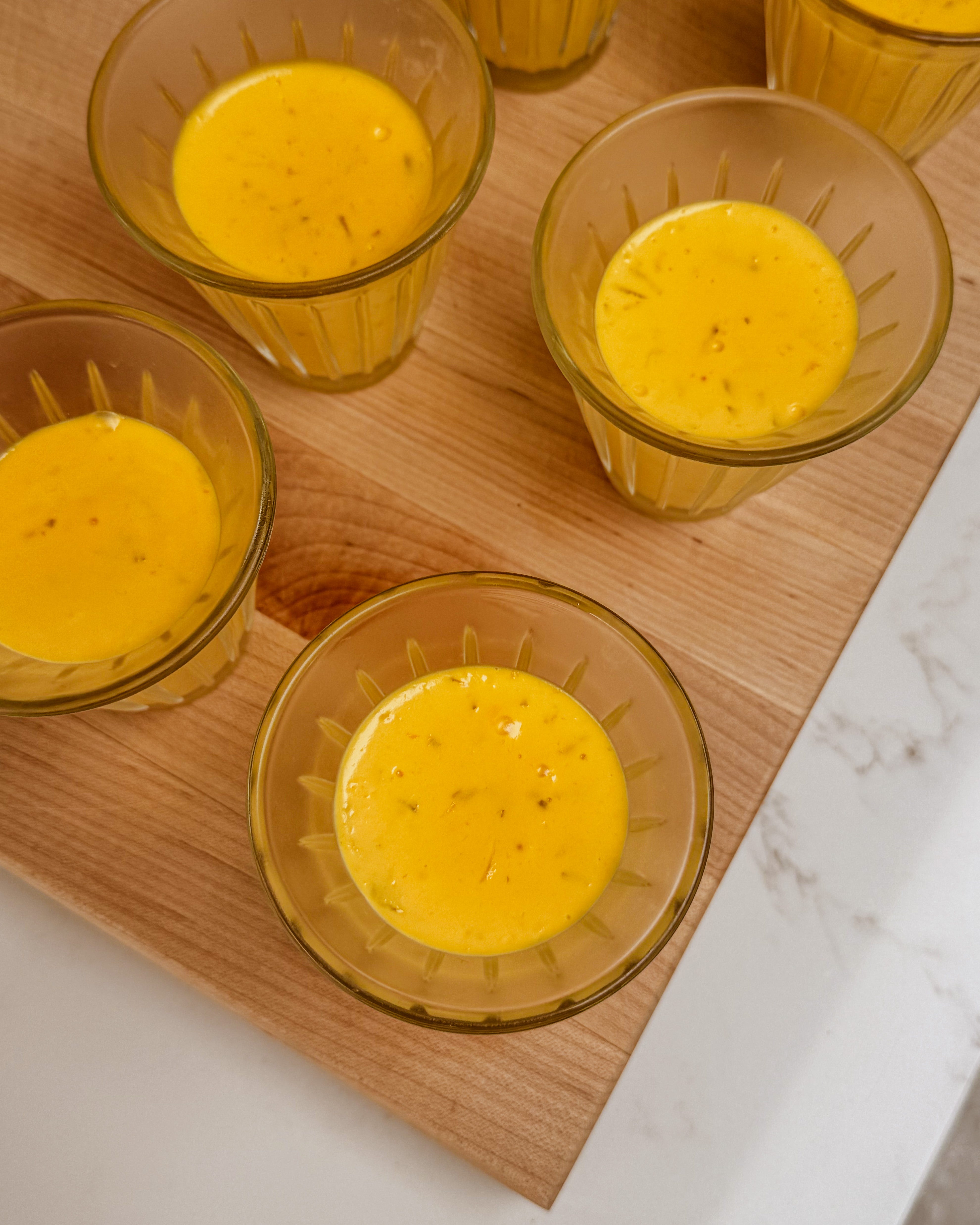
You warm cream and sugar to just below a simmer. You pour in lime juice. You whisk gently. And almost immediately, the mixture begins to thicken in front of your eyes. Not because of any gelatine, there is none. Not because of any cornflour or eggs or thickener, there are none. The acid in the lime juice causes the proteins in the cream to coagulate just enough to set the dessert as it cools. That is the whole trick. Cream, sugar, acid. Heat them together. Walk away.
Very few desserts work this way and I think it is part of why the posset feels almost too easy to be real. You watch the cream stiffen slightly under your whisk and you can hardly believe that nothing else is required. But nothing else is. The chemistry is doing the work, and your only job is to pour the mixture into glasses before it sets in the saucepan.
This is also why the lime in this version is doing more than flavouring. The lime is the setting agent. Replace it with milder citrus, or with too little of it, and the posset will not set properly. The recipe I have given you uses 75ml of lime juice for 350ml of double cream, which is the ratio you need. Trust it.
The classic British posset is made with lemon. Lemon and cream and sugar, that is it. It is one of the great minimalist desserts and I make it often.
But the version here, with mango and lime, is the one I have found myself returning to most in recent summers, and I want to say why.
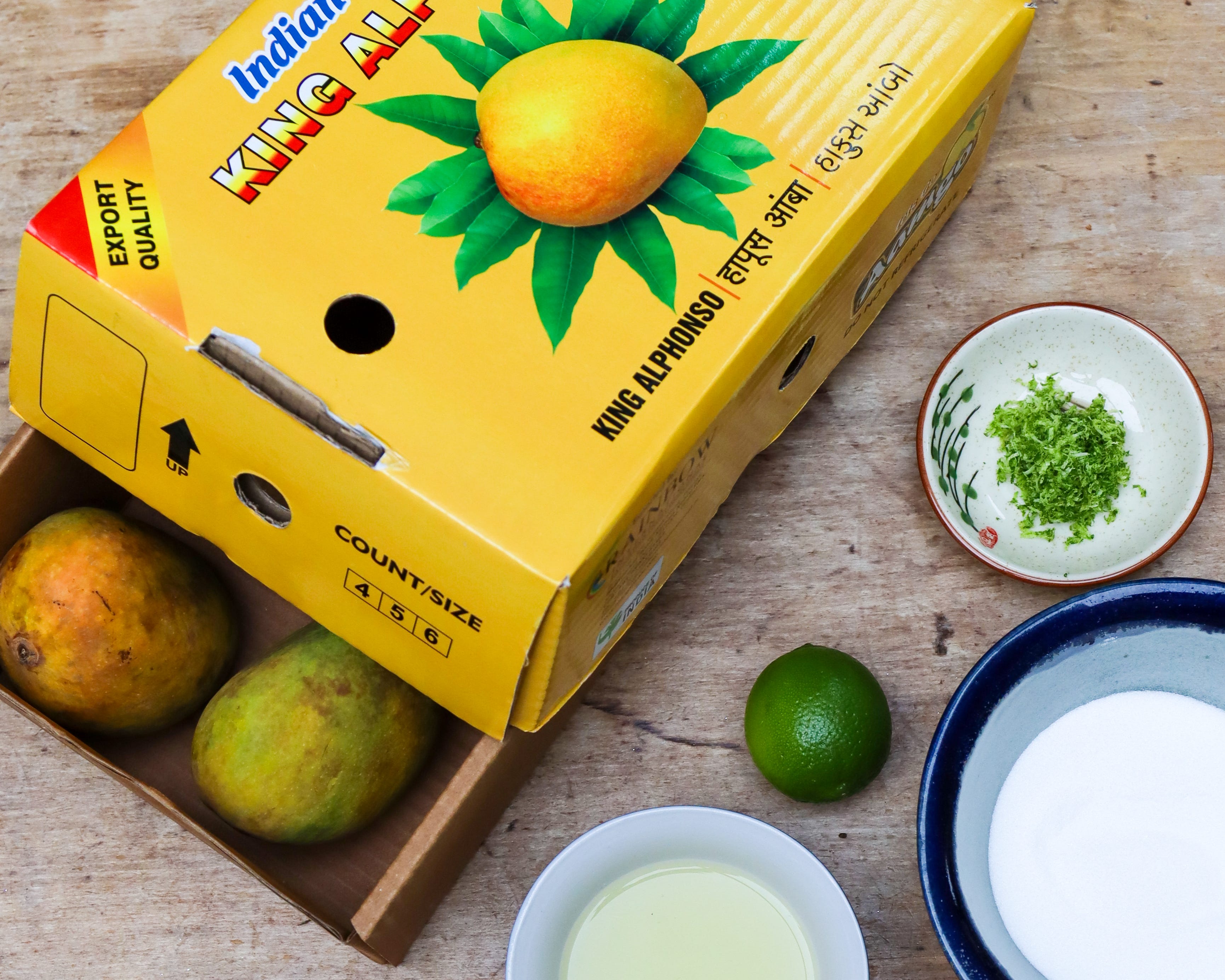
When I was testing this recipe earlier this year, I used a very special variety. The Alfonso, the king of Indian mangoes, grown in Maharashtra and Gujarat, arrives in Britain for a very short season, roughly April to June. They come in cardboard boxes of twelve, sold mostly in Indian and Pakistani shops and at certain markets and for those few weeks they are one of the great annual pleasures of cooking here. They are intensely fragrant, almost custard-coloured, sweet without being sugary, with a depth of flavour that the year-round supermarket ones simply do not have. If you can get hold of Alfonsos when they are in, this dessert is at its absolute best.
Now, the Alfonso season is coming to a close and that is genuinely fine. Any good ripe variety: Kesar, Pakistani Honey, even a properly ripe Tommy Atkins from a supermarket (if you wait until it gives slightly under your thumb) will make a very good posset. The mango is providing colour, perfume and a tropical sweetness that the lime then cuts through. The lime is doing the architectural work; the mango is providing the warmth. Perfect for this ‘tropical’ English weather.
This is a make-ahead dessert in the best sense of the word. You can prepare the possets up to two days before you want to serve them, and they will sit happily in the fridge waiting for you. Eat them after a long warm summer dinner, when the table is still half-full of plates and someone has poured the last of the wine, and the conversation has slowed to the point where everyone is just glad to be sitting where they are.
A few ginger biscuits alongside, if you have them, for the small joy of scooping rather than spooning. A coffee afterwards, if anyone is still up to it.
This, for me, is what summer puddings are for. Not grand. Not complicated. Just cold, sweet, sharp, and there when you need it.
Now, yalla, let’s make it!
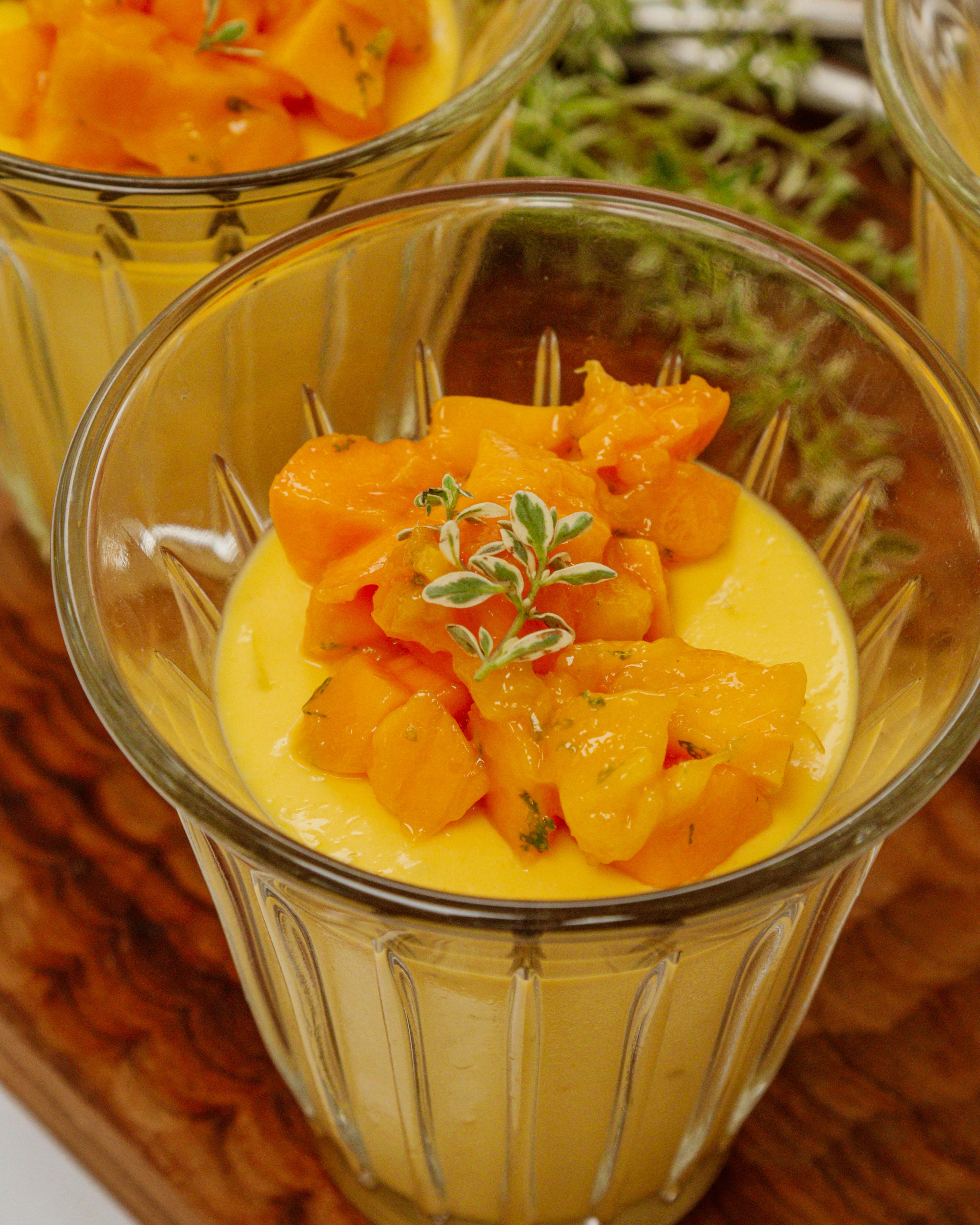
Serves 4-6
Comments
Nothing yet. Say the first thing.
Sign in to join the conversation.