
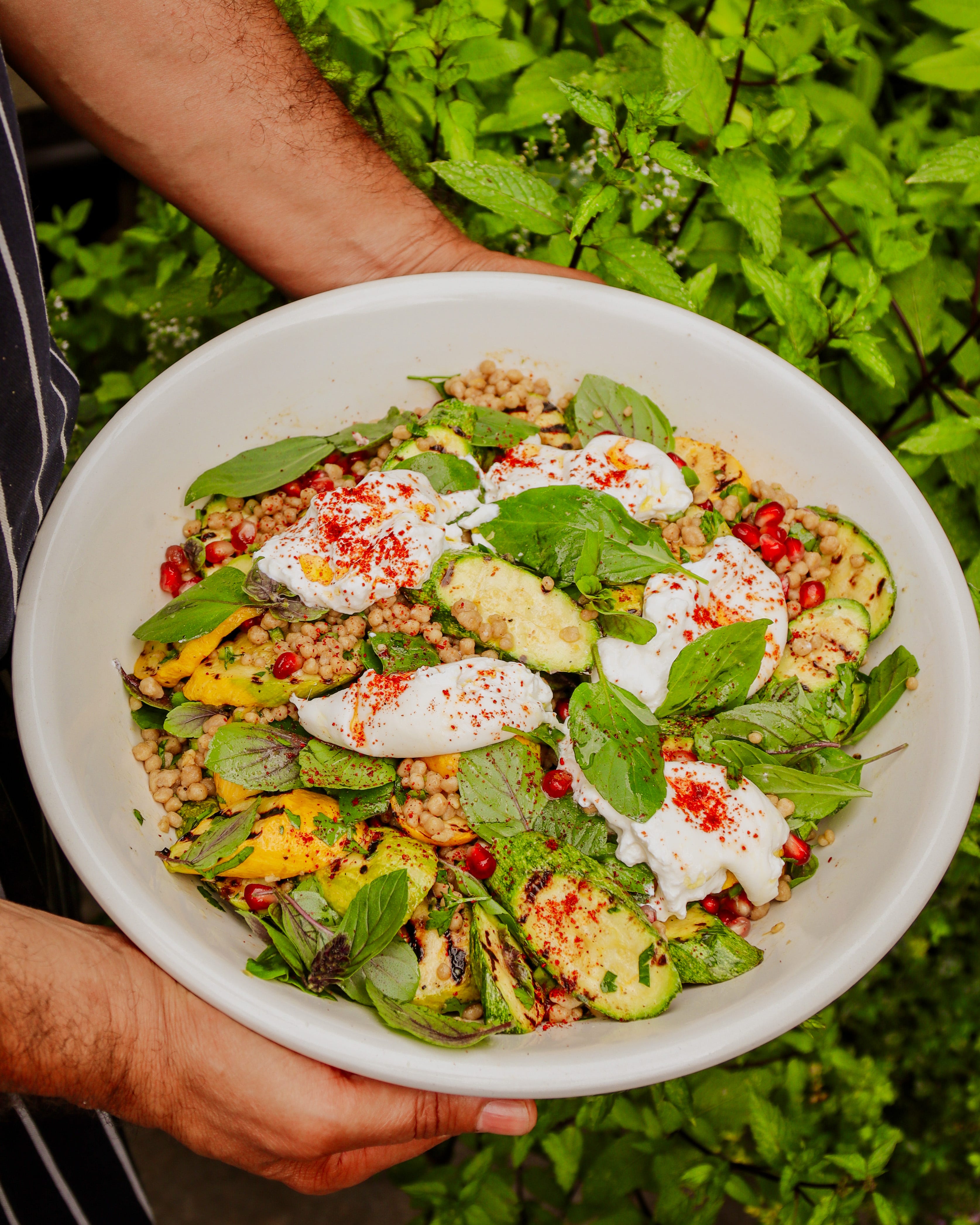
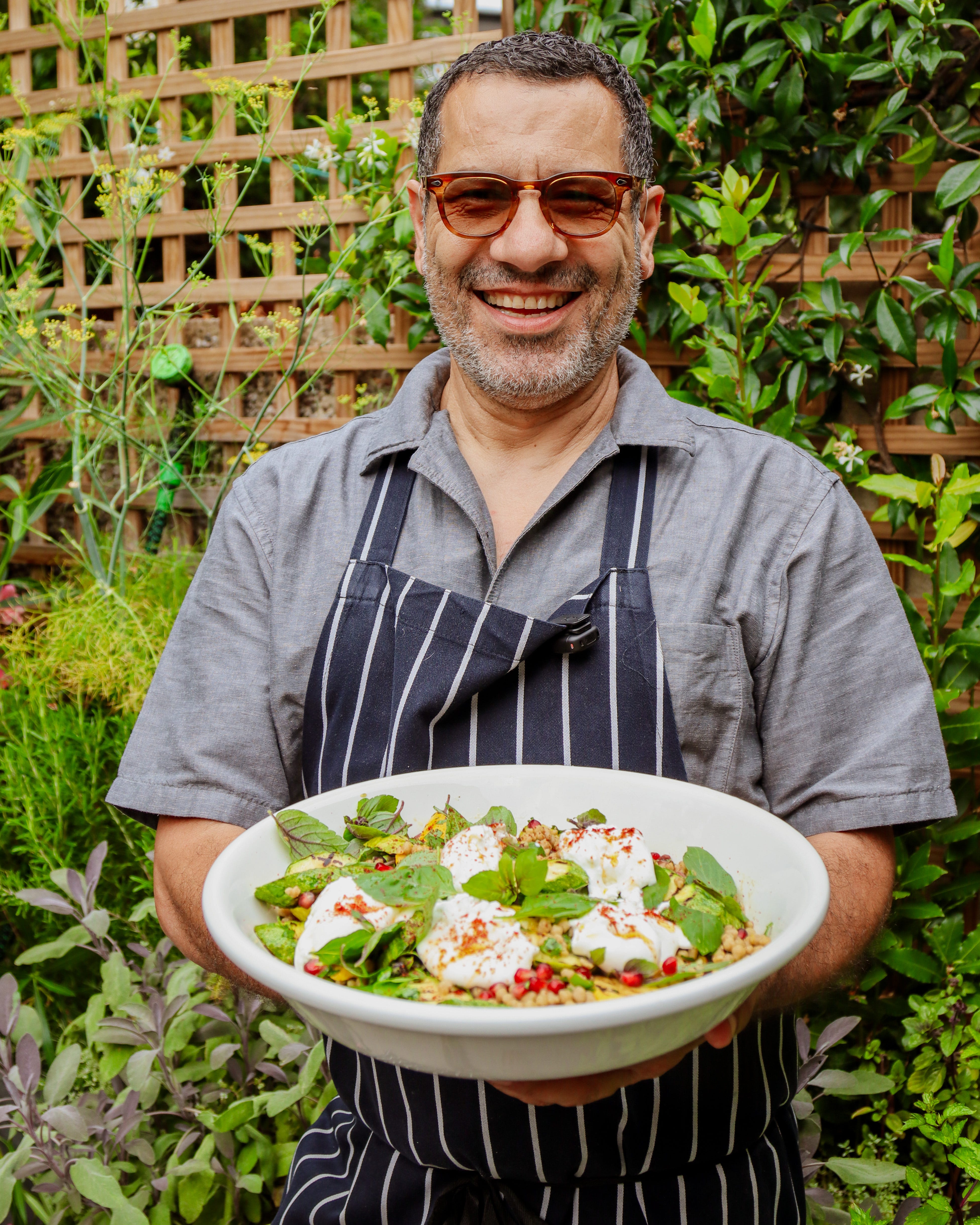
A simple salad. It’s perfect for eating outdoors.
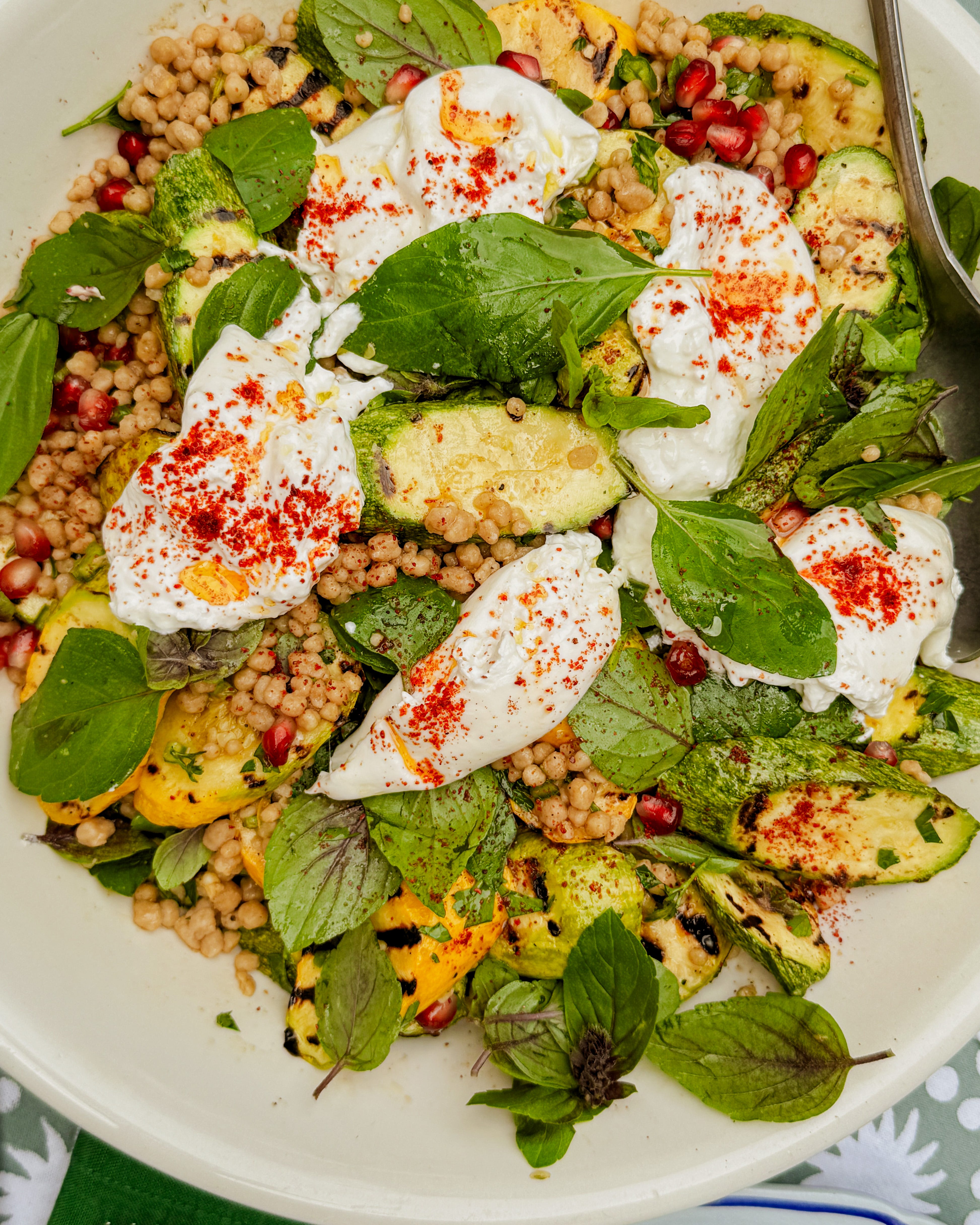
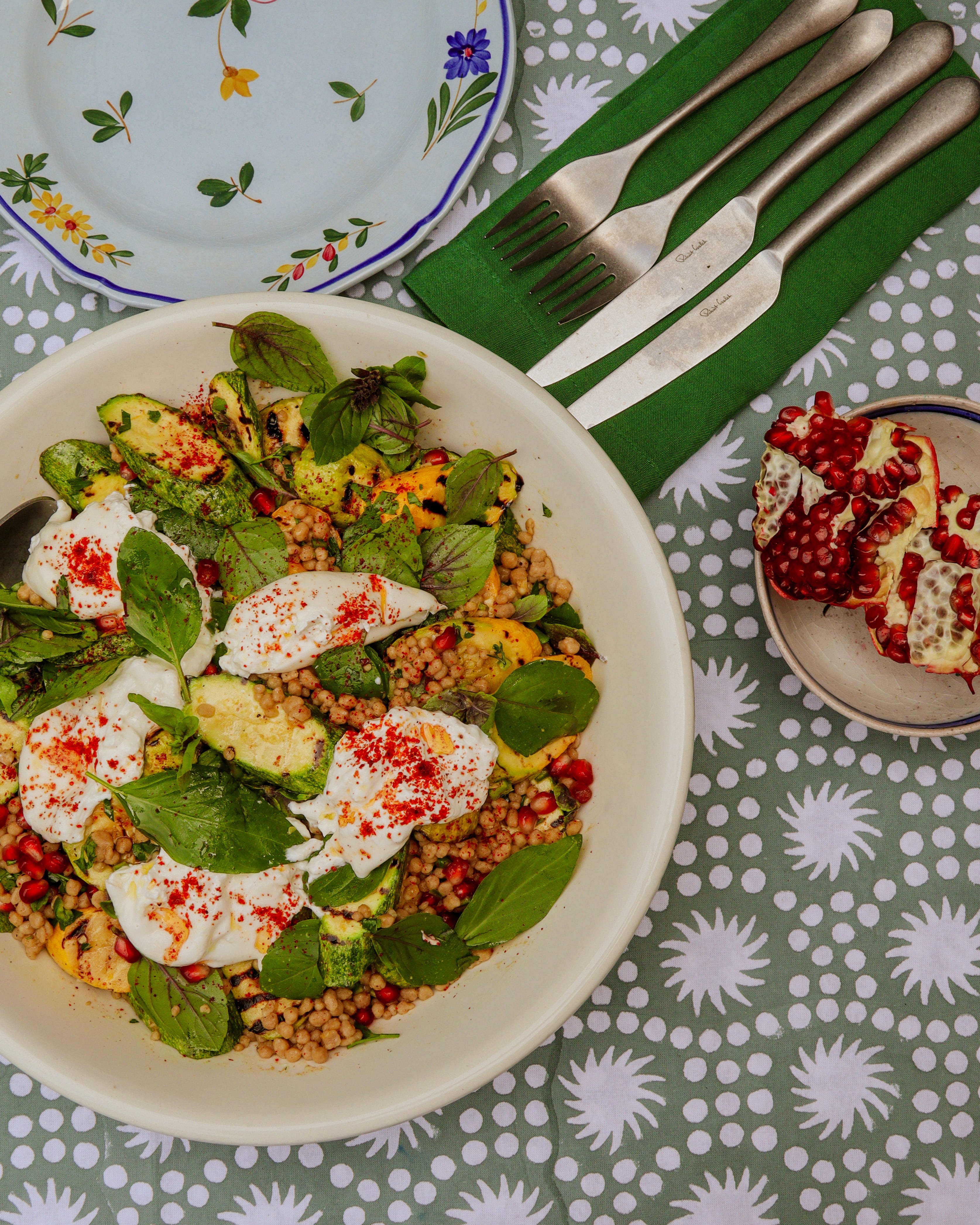
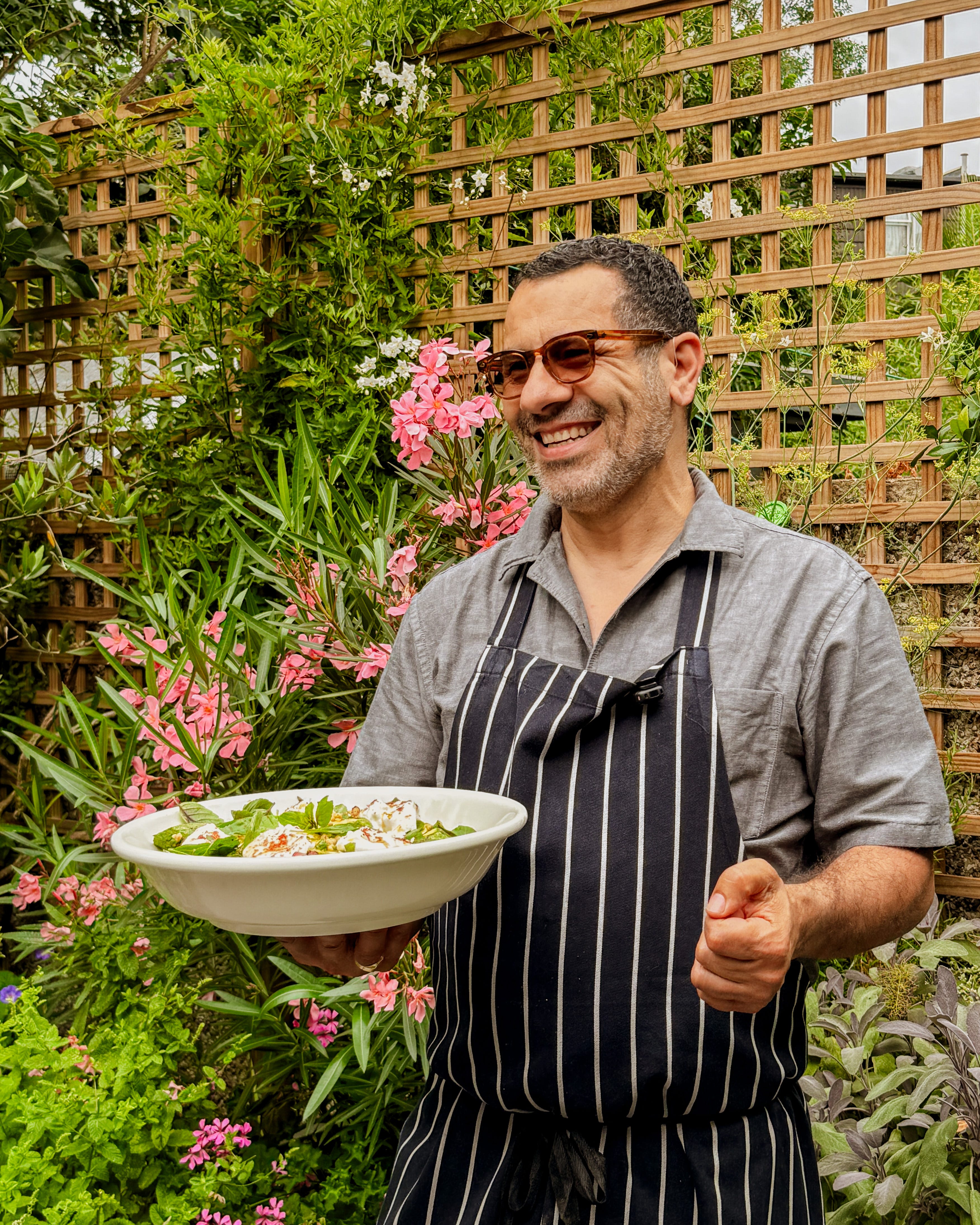
I made it for my friends when we were playing Uno in my garden. We played and fought so long that we forgot that lunchtime had passed. It only took a few minutes to put together: maftoul mixed with charred courgettes, creamy burrata, and tangy pomegranate. Perfect for a weekday lunch, on its own, or as part of a dinner spread, maybe with grilled aubergines or chicken. Cold, nutty, sharp, and creamy. This salad has everything you need.
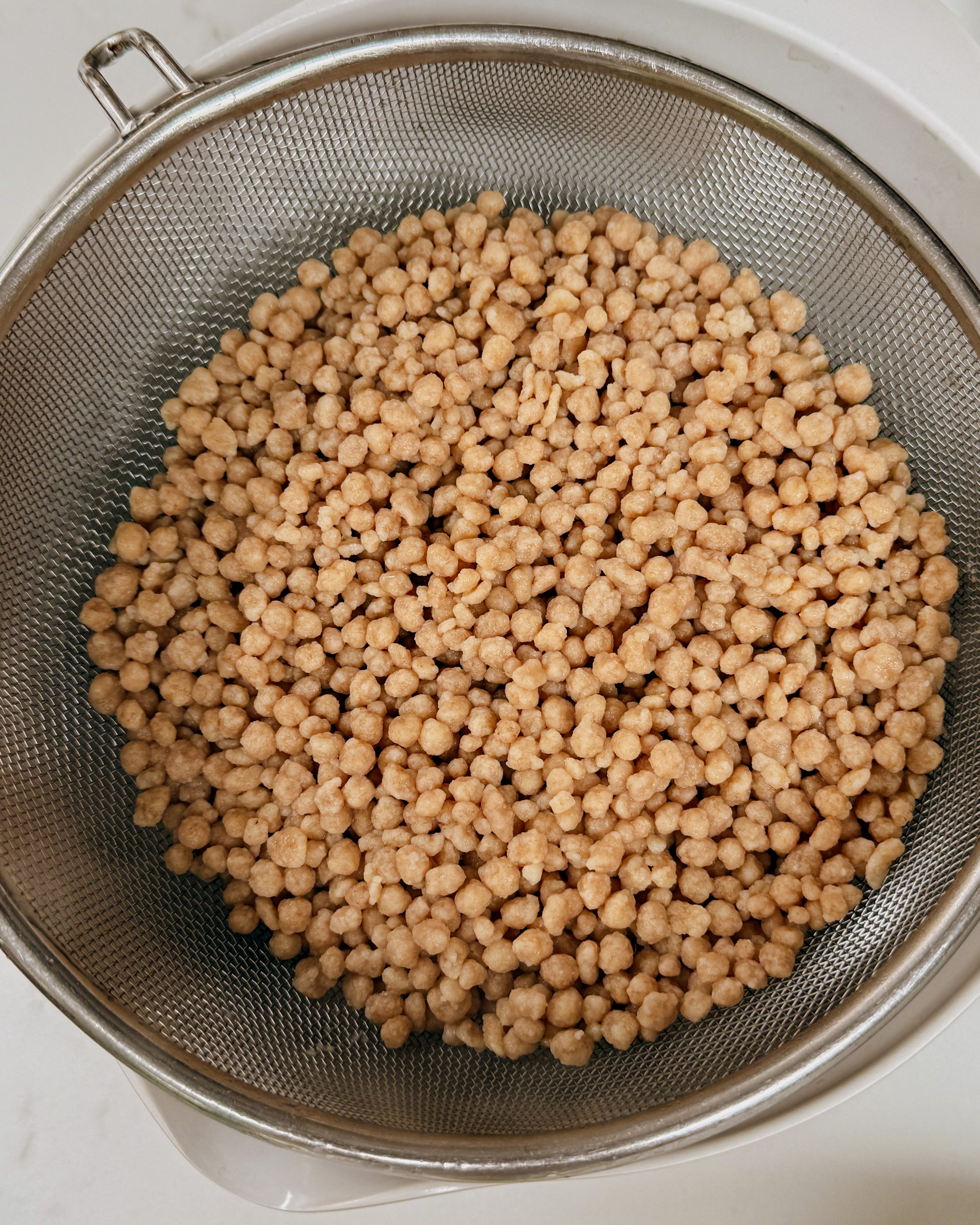
A small grain called maftoul brings something special to this dish. It has a mild flavour that gives the salad a warm, nutty base. But, it’s not a background singer, it’s the star of the show.
What is maftoul? Let’s start with the name, because it’s the whole thing.
The name comes from the Arabic fatala, ‘to twist’ or ‘to roll’. The grain is named after the motion that makes it. And here is how it is made: bulgur, cracked wheat, is spread out on a wide tray and sprinkled with water. Then it is dusted with wheat flour. And then it is rolled by hand, in circles. The flour catches on the bulgur and each grain begins to build up in layers around itself. It is like creating a pearl. Every single grain has been formed by a hand. I find that honestly difficult to fathom. We are talking about a staple food, a thing eaten in vast quantities by whole villages, like rice or potatoes. Yet it’s made one bead at a time in the winter months when there is time to sit around in the afternoon and gossip.
Thanks for reading Sami Tamimi - notes from my kitchen! This post is public so feel free to share it.
Maftoul is sometimes called Palestinian couscous. Palestinians sometimes scoff at this, as though it demotes the dish to our version of somebody else’s. My thought is that as with many dishes, one owes its origins to the other.
Couscous is undeniably North African. It came to the Middle East with Moroccan migrants a few hundred years ago. In Lebanon and Syria, it’s called moghrabieh, which means, more or less, “the Maghrebi thing”. But Palestinians in the hill villages did not just copy it. They started making it from the grain that actually grew on their land. Although both are made with wheat, Morocco uses fine and pale semolina, made from durum. Palestine has bulgur.
The result is just different. Bigger, uneven, darker, nuttier and chewier. It holds its shape in water where couscous dissolves, so you can boil it like pasta rather than steam it. If you have only ever eaten North African couscous, the first mouthful of maftoul is a genuine surprise. It has a bite!
It is something that arrived from far away, was remade in the local fashion and became part of a tradition. Which is, more or less, what happens to everything that travels. Including people.
Most of the maftoul you can find in supermarkets is mass produced, rolled by machines into perfect little balls. It is good; I will not tell you not to buy it. But my favourite is the real deal, made by hand, irregular. It’s imported to the UK by my friends at Zaytoun.
It is still overwhelmingly women who make it. There are women cooperatives across the hill villages of the West Bank like Deir Ballout or The Anza Women’s Club, up in the hills near Jenin. The method and the equipment are the same as their grandmothers’. The difference is in their reach. Through the drought, the closures and everything else that happened in the past years, these women have carried on: rolling it, drying it, boxing it and shipping it. Their product now gets to Europe, the US, Japan, Australia and elsewhere. It’s one of a very small number of Palestinian products that reaches the other side of the world.
So, if you can find hand-rolled Palestinian maftoul, buy it. It costs more than the industrial version, but it is completely worth every penny. That extra money goes to a palestinian community you can actually point to on a map. To people that care about preserving their culture.
And then, when you sit down with a bowl of this delicious maftoul, you might remember what you are eating. Every one of those small pearls passed through somebody’s hands, in a distant village. There are very few things left in a modern kitchen that are still made that way.
Now, yalla, let’s cook.
Thanks for reading Sami Tamimi - notes from my kitchen! This post is public so feel free to share it.
Serves 4
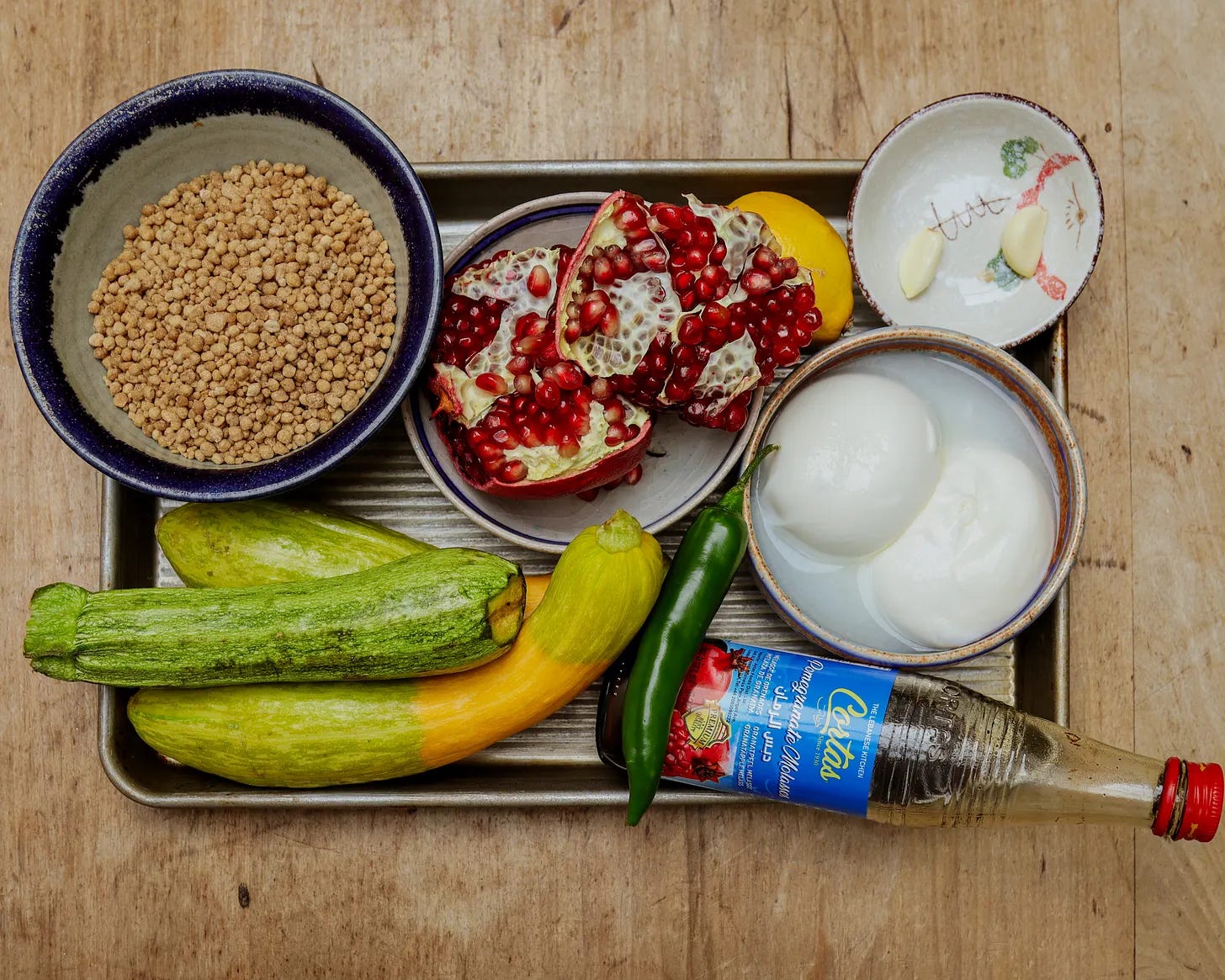
350g maftoul or giant couscous
4 medium courgettes, cut into thick rounds
30g pitted Kalamata olives, chopped
5g parsley, roughly chopped
5 tbsp olive oil
1 tsp lemon zest
2tbsp lemon juice
1 tbsp pomegranate molasses
1 clove of garlic, crushed
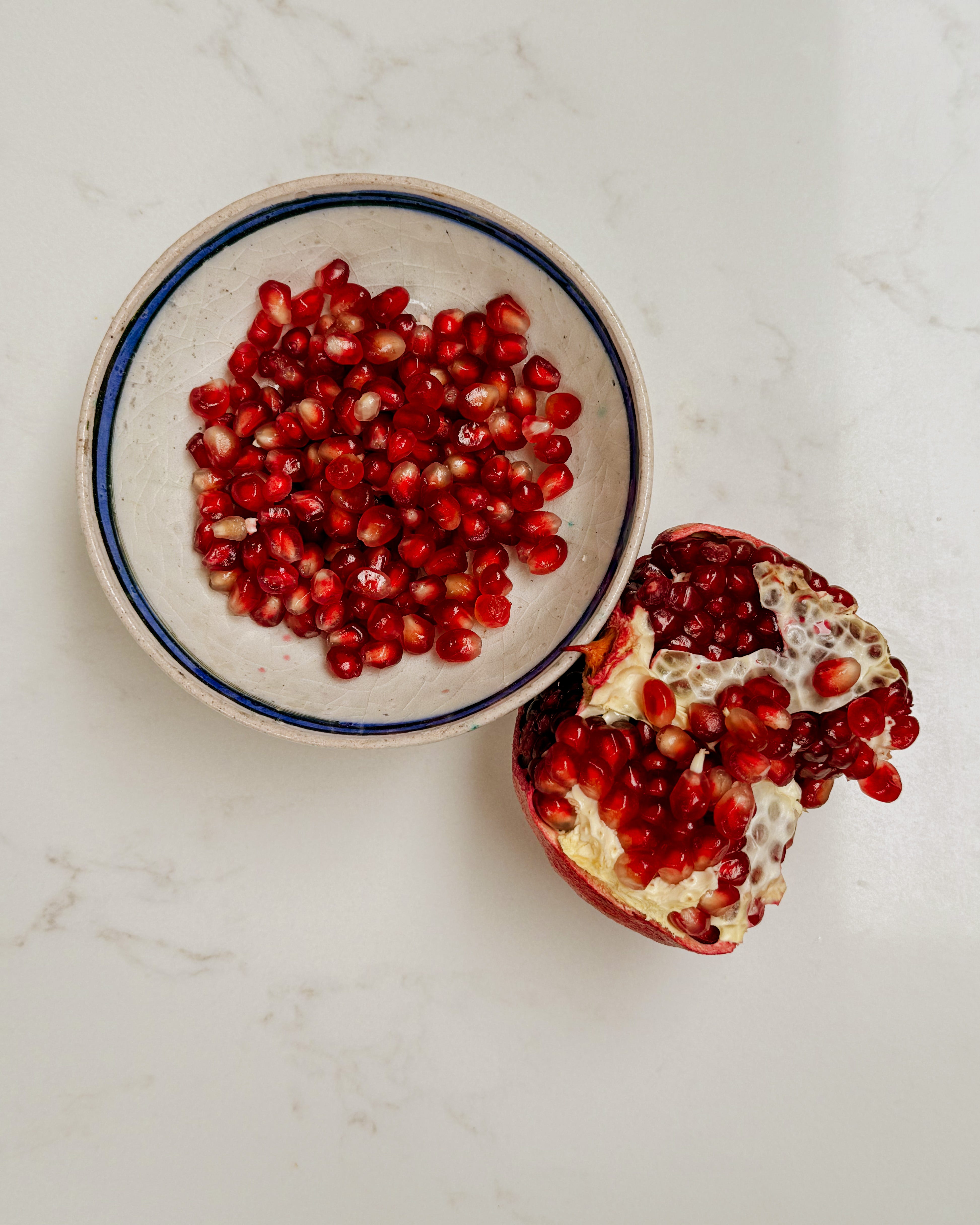
35g pomegranate seeds
15g basil leaves
salt and black pepper
2 burratas
½ tsp Aleppo chilli
Cook maftoul in in plenty of boiling salted water for 20 minutes, until al dente. Drain and rinse with under cold water to stop the cooking process.
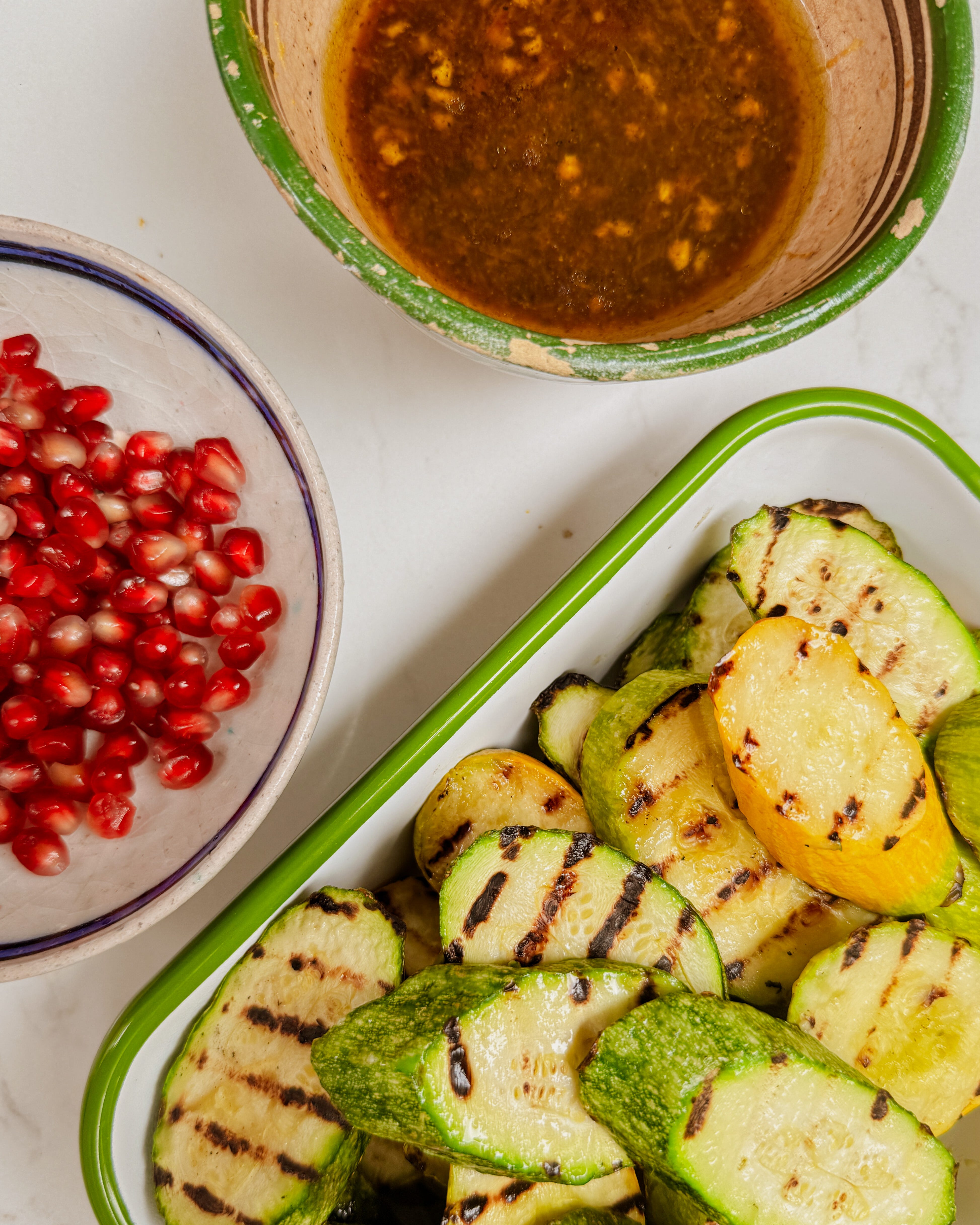
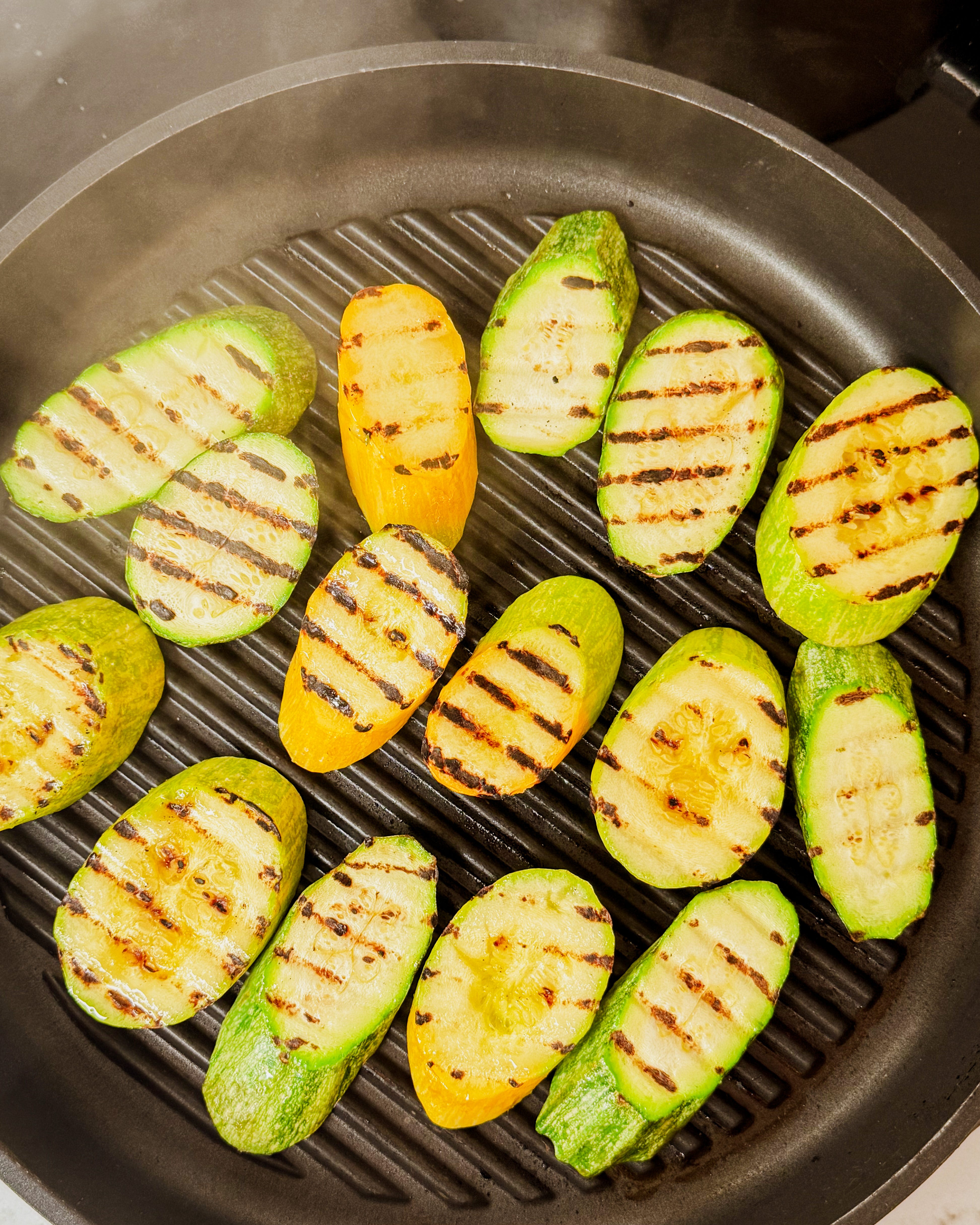
While the maftoul is cooking, heat a griddle pan over high heat. chargrill the courgette slices on both sides for 2–3 minutes, until deep, dark grill marks develop and the edges soften slightly.
In a small bowl, whisk together the extra-virgin olive oil, lemon juice, lemon zest, garlic, salt and a good grind of black pepper until well combined.
In a large mixing bowl, combine the cooled maftoul, charred courgettes, parsley, and pomegranate seeds. Pour the dressing over and toss gently to coat.
Fold in the fresh basil leaves just before serving so they stay bright. Transfer the salad into serving platter and arrange chunks of the burrata on top. Sprinkle with Aleppo chilli and a drizzle of olive oil.
Thanks for reading Sami Tamimi - notes from my kitchen! This post is public so feel free to share it.
No posts
Comments
Nothing yet. Say the first thing.
Sign in to join the conversation.