
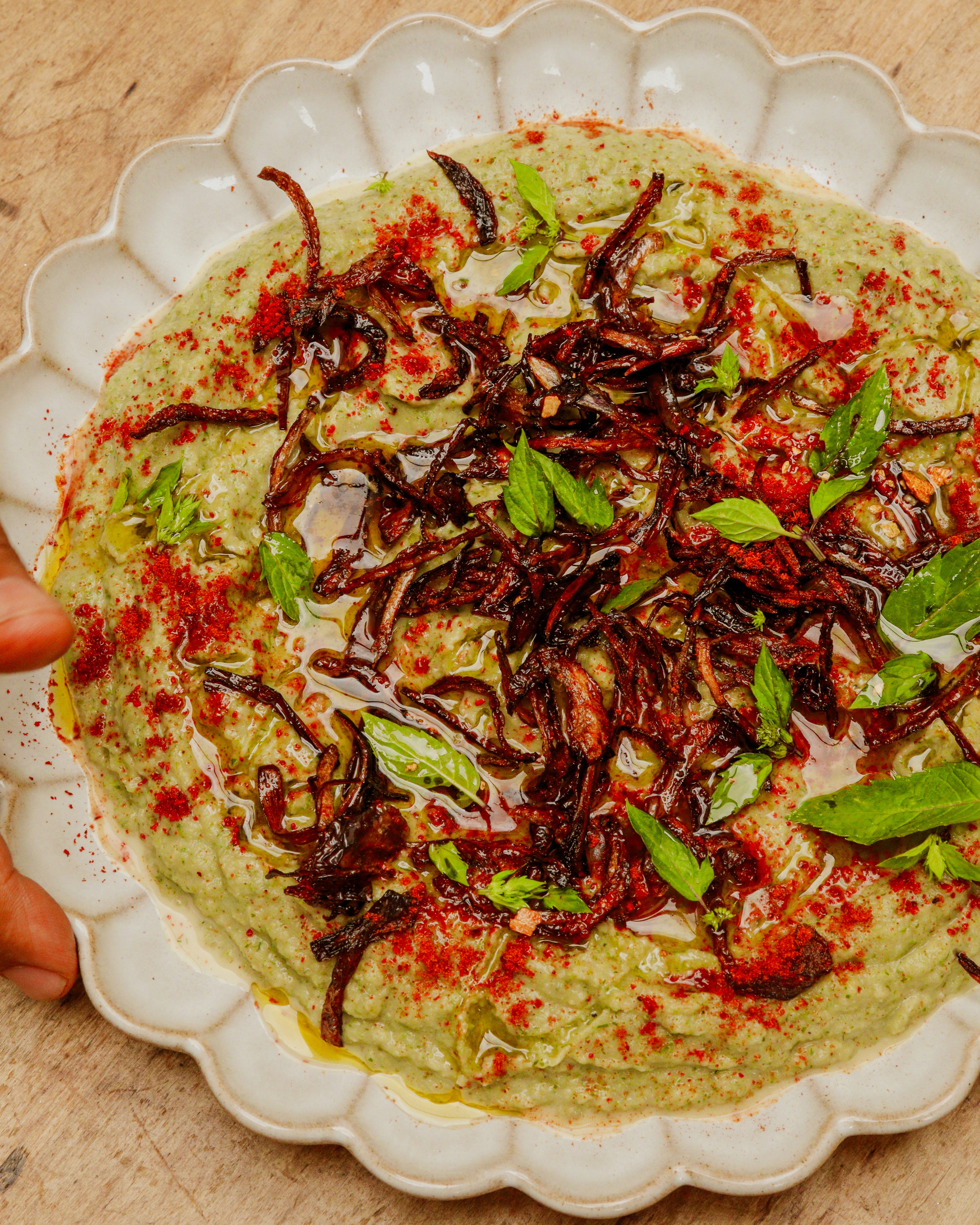
When you think of Middle Eastern cooking, I’m sure dips are some of the first dishes that come to mind. Rightly so, we have plenty to share with the world. Hummus is now everywhere, though completely commercialised. There is also muhammara, labneh, baba ghanoush and countless m’tabbals. Delicious. But there is nothing more truly Middle Eastern than this simple fava bean dip, bissara. It has been made by people living here for ages, literally.
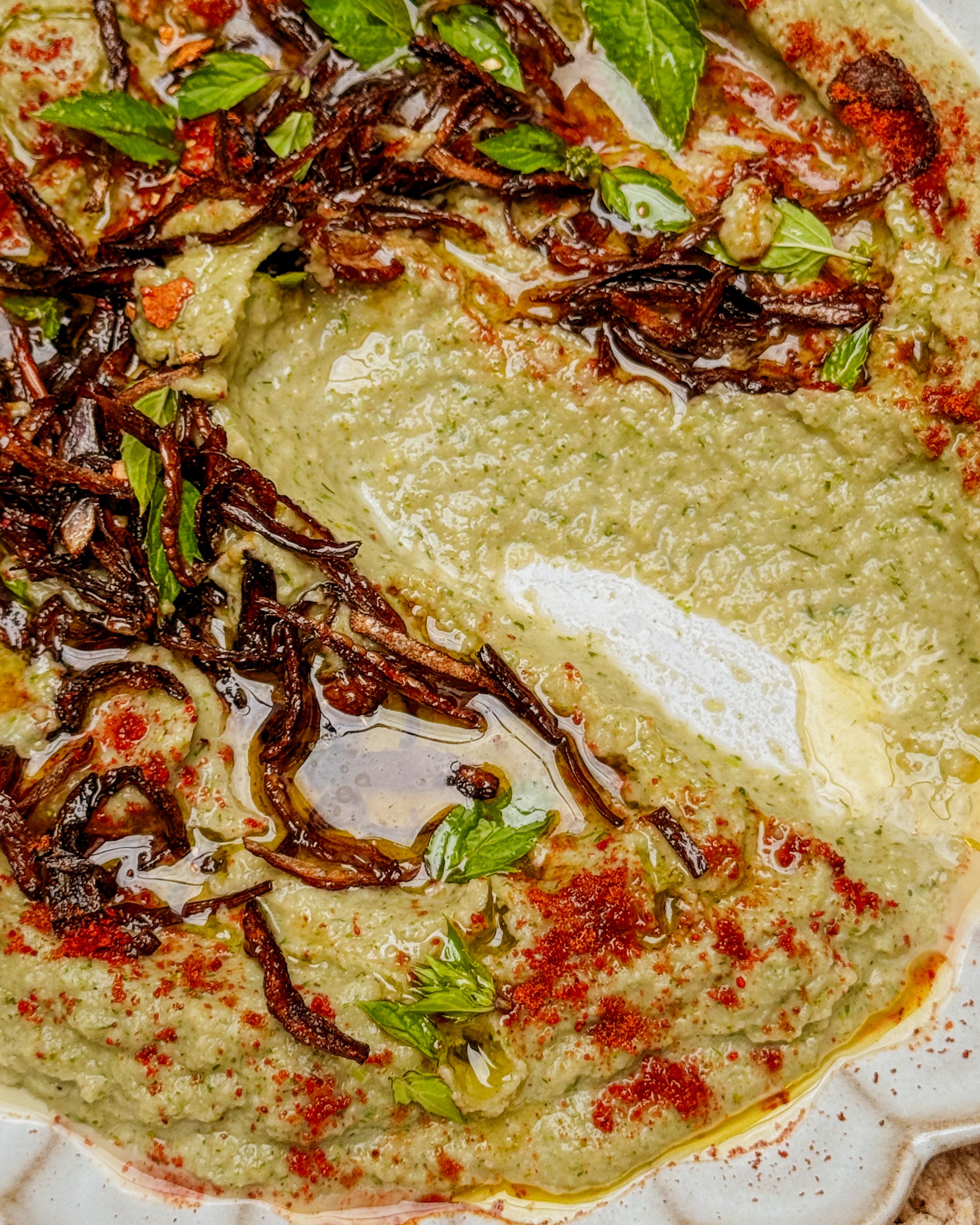
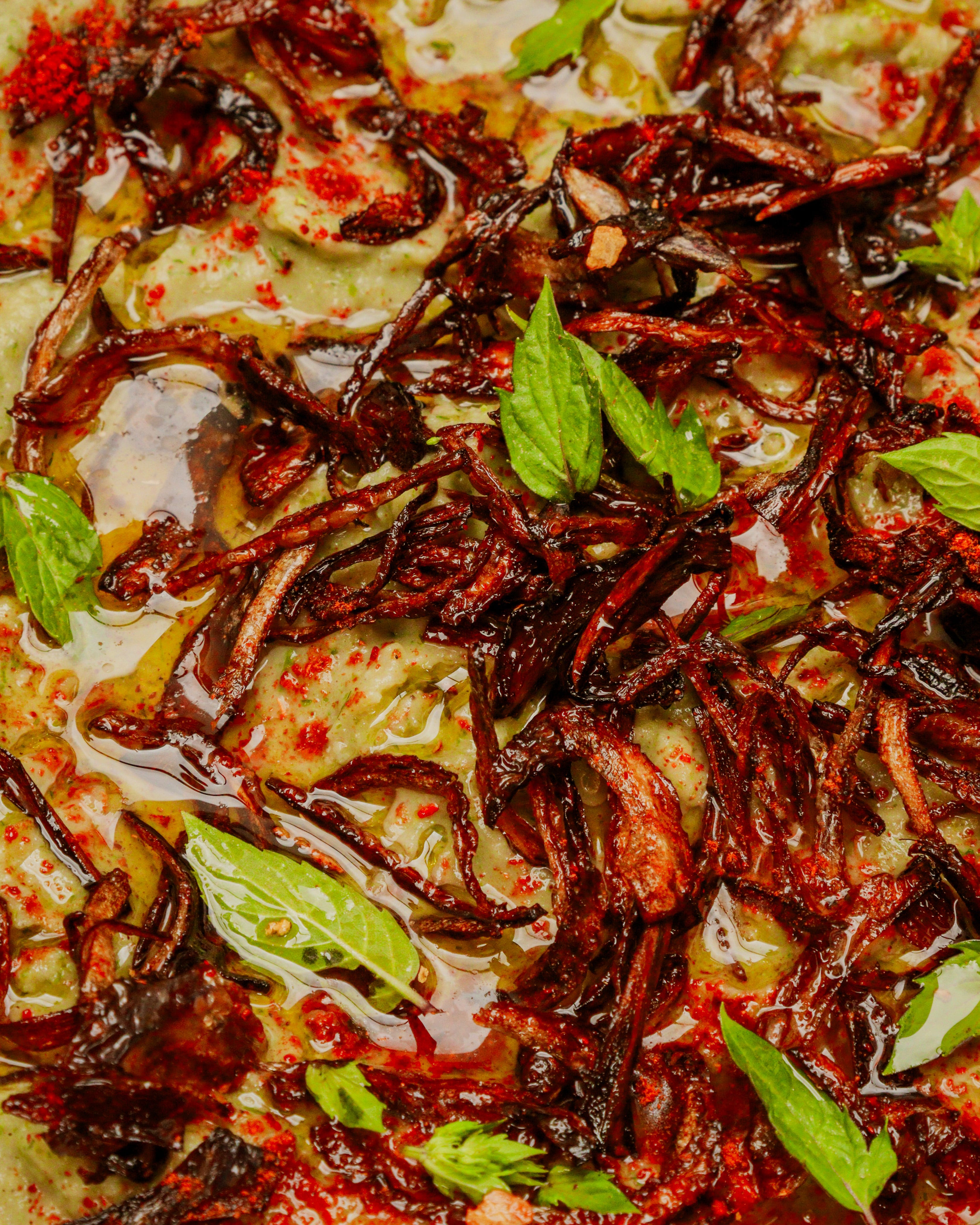
Dried fava beans soaked and cooked until soft with onion and garlic, then blended with a great heap of coriander, parsley, dill and mint until the whole thing turns pale green and creamy. Crispy shallots over the top and a touch of Aleppo chilli. Warm pita for scooping.
That is all it is. And that’s all I want to eat now.
For me, the middle of August always feels like a tipping point. The abundance of the fruit and veg is at its peak. But this is the exact moment you need to start preserving for winter. All you are doing is encapsulating the flavour of summer, ready whenever you need it. This is what the mooneh, or pantry, is for. It is full of dried spices, jars of preserved lemons, peaches, aubergines, wild za’atar in oil, fig syrup and so on. But most importantly, make sure you have enough dried beans to last you a millennium.
Fava beans are perhaps as old as civilisation. They are one of the oldest domesticated plants on Earth, farmed before wheat and barley. There are traces found in Galilee in Palestine that date back to 10,000 years ago (I must have been about five at the time!). Before green beans, lima or kidney beans arrived from the Americas, the word ‘bean’ simply meant fava, nothing else.
In fact, this bean is so historical that it is connected with one of the big brains of antiquity: Pythagoras, who had such an inexplicable fear of it and adamantly forbade his students from any contact with fava. As the legend has it, a group of Pythagoreans fleeing an enemy refused to enter a blooming field of it and were killed rather than cross it. Now, wiser people than me speculate that Pythagoras could suffer from something called favism. It is a hereditary condition found in the DNA of some Mediterranean and can be quite dangerous when exposed to fava. It’s a real thing. I myself know a very Greek chef who, like Pythagoras, panics when he hears ‘fava’ anywhere near his kitchen.
The name of this dip is almost as old as the bean.
Bissara comes from the Coptic pesouro, meaning simply something close to mashed beans. Coptic language is incredibly old, it is the final stage of the Egyptian language, spoken before Arabic arrived with the Muslim conquest, still used in Christian liturgy there. So, every time someone in Cairo asks for bissara, they are asking for a dish that outlived the tongue that named it, in a city that still remembers its echoes.
The funny thing is that for a dish this old and this beloved, the written record is thin.
Even though in the Middle Ages, bissara was known as an Egyptian speciality, it almost doesn’t appear in Arabic culinary books. I think the reason is simple: those very books were written for the rich, documenting the food of elites who could afford court kitchens, palace banquets and the medieval version of a Substack food writer. Bissara and other fava bean dishes were the food of everybody else. No one needed to write it down. Much as, now, you do not write a recipe for a ham and cheese sandwich or beans on toast.
With centuries of not writing it down, the dish started to take on different shapes. In Morocco it became more of a soup. In Egypt, it is always a dip. There is also a Palestinian bissara. In Gaza they make it thick with dried molokhiyeh leaves and they make it spicy. I grew up ninety minutes away in Jerusalem, but it never once appeared on our table in that form. The Gazans kept it for themselves, it seems. Funny how some recipes travel the length of the Mediterranean and some do not make it up the road.
Once you make it, you’ll see the method is as plain as the dish deserves. And why it survived the centuries.
Soak the beans overnight. Do not try to shortcut it. Cook them with the onion, garlic and cumin. The colour is half the pleasure of this dish, so add the herbs near the end, so they stay green. When you blend it, it will be beautifully pale green. The shallots are the only part that asks for any patience.
Then it is just a piece of bread and your hands.
Once you eat it, you will see why I think hummus is overrated.
Serves 4
Comments
Nothing yet. Say the first thing.
Sign in to join the conversation.