
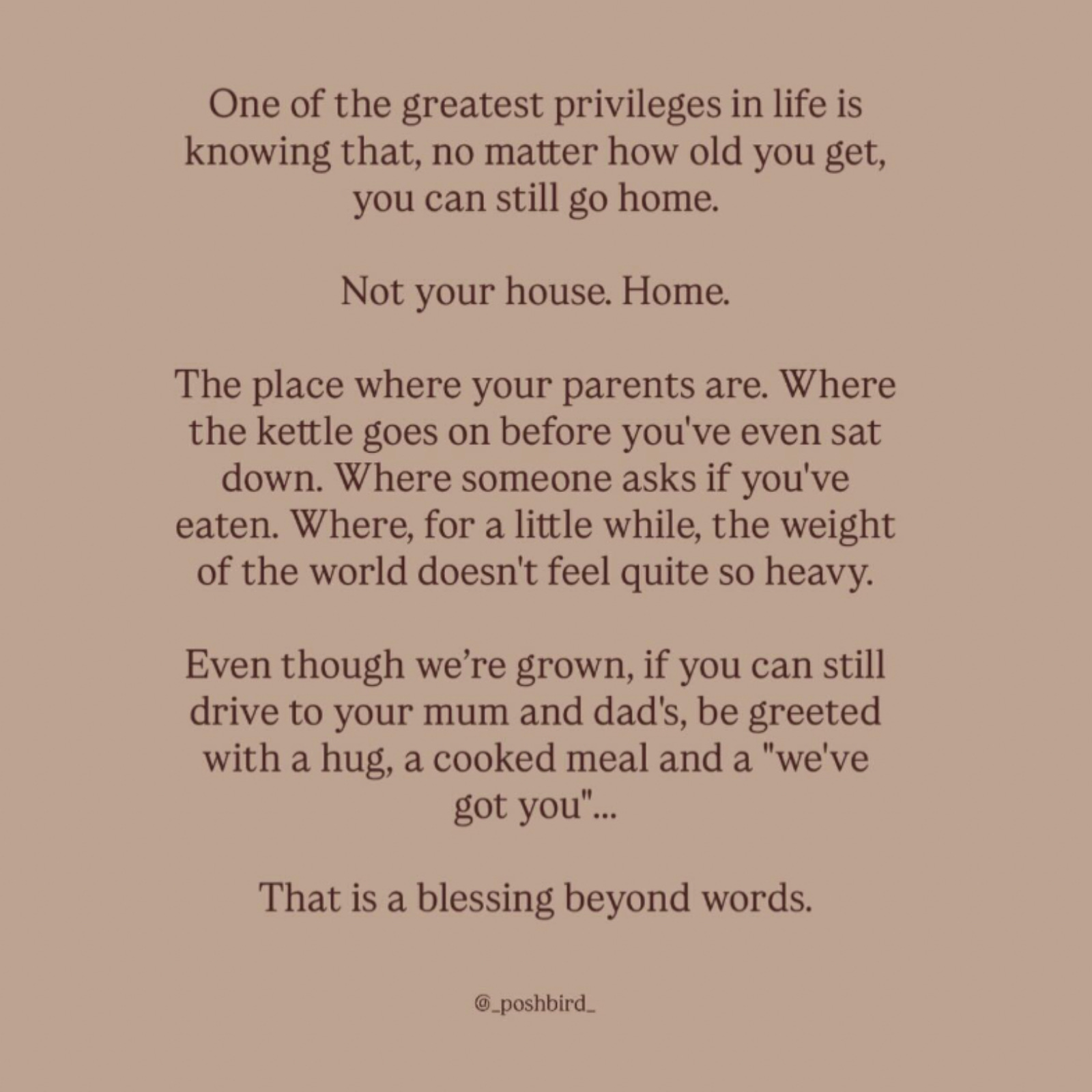
I read a *post recently about how one of life’s greatest privileges is being able to go home to your parents’ house, no matter how old you are. The charming naivete of it struck me, because that isn’t available forever. At some point that home disappears.
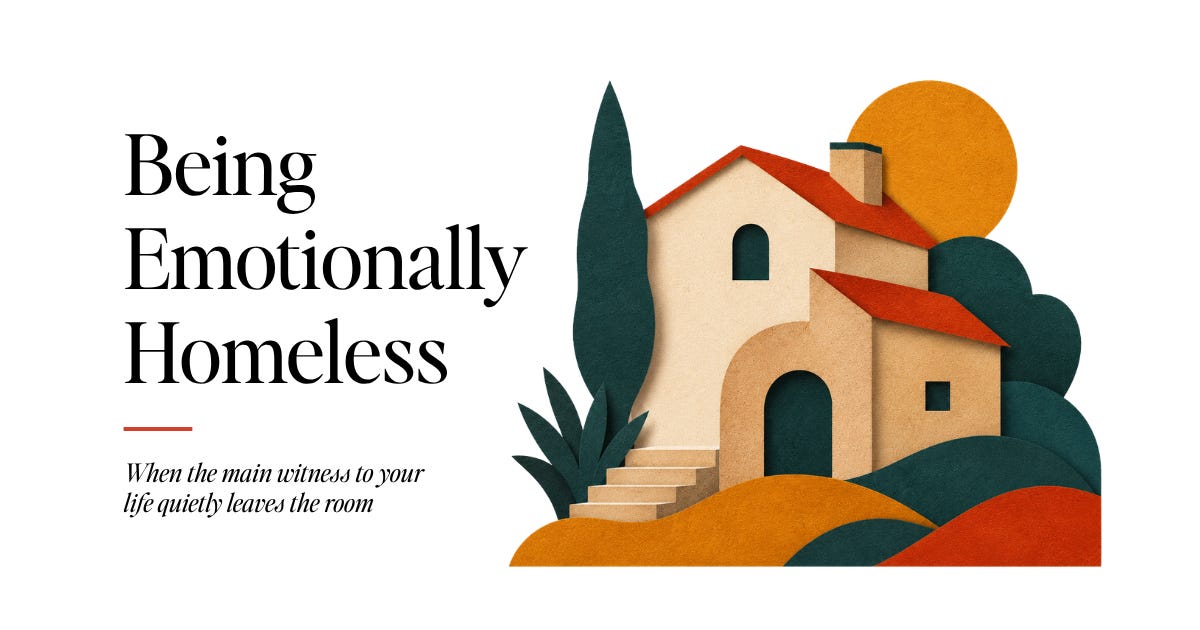
Or at least, that’s what it feels like.
When my mum died, I thought I understood what I was grieving. I thought I was grieving her. Her voice. Her laugh. Her hugs. The conversations we would never have.
But over the years I’ve realised I was grieving something much bigger that I couldn’t quite put into words at the time.
I wasn’t just losing my mum.
I was losing my home.
For the longest time I couldn’t understand why losing her left me feeling so untethered. I was a grown woman. I’d lived independently for years. I’d moved countries on my own. I’d built businesses. Navigated heartbreak, career changes and all sorts of life’s messiness.
So why did losing one person make me feel as though I’d somehow become unmoored?
Having sat with this for eleven years, I now believe it’s because, long before our houses become our homes, another human being is our home.
Before we know the house we live in, the streets we play in, the neighbours we wave to, we know the feeling of belonging.
Our very first home isn’t a place.
It’s a person.
Maybe that’s why losing a mother can feel so disorientating, even decades into adulthood. It’s not simply that we’ve lost someone we love. It’s that the place where we first belonged no longer exists in quite the same way.
She carried my beginning.
She remembered the little girl I had been before I remembered her myself.
She knew stories I’d forgotten. She remembered versions of me that no one else ever met.
When she died, it felt as though part of my own history quietly disappeared with her.
I wonder whether that’s why so many people describe feeling like an orphan, even when they lose a parent in their sixties or seventies.
It’s not about age.
It’s about losing the person who still held the beginning of your story.
As I’ve been thinking about all of this, another thought has been quietly forming.
For those of us who don’t have children, there isn’t necessarily another family home for us later in life.
There are no adult children dropping in for Sunday lunch. No grandchildren running through the garden. No gradual shift from being someone’s child to becoming the place everyone else comes home to.
At first, that thought made me feel a little sad.
But then another thought arrived.
Maybe one of the quiet tasks of adulthood is learning to build a home somewhere else entirely.
Inside ourselves.
I don’t mean becoming fiercely independent or convincing ourselves we don’t need people. I think we will always need people. We are wired for connection.
I mean becoming the place we return to when life feels uncertain.
Learning to trust ourselves.
To comfort ourselves.
To speak to ourselves with kindness.
To know that wherever life takes us, whatever changes, whoever we lose, we are still able to find our way home.
I don’t think that’s something we’re born knowing how to do. I think it’s something life slowly teaches us.
And maybe that’s what I’ve been learning all along.
Moving from South Africa to England on my own.
Building a life from scratch.
Losing my mum.
Moving to Spain.
Starting over more than once.
Maybe every chapter has been gently asking me the same question.
Where is home?
For a long time I thought it was a country.
Then I thought it was a house.
Then I thought it was another person.
Now, for the first time, I’m beginning to wonder if home is something we slowly build within ourselves.
A place where every version of us is still welcome.
A place we can always return to.
No matter where we are in the world.
*the post:
Comments
Nothing yet. Say the first thing.
Sign in to join the conversation.