
Everyone of us probably learned this in the 4th grade.
The heart is a pump. It beats about 100,000 times a day and pushes blood through all of your arteries and veins, delivering oxygen and nutrients to every corner of your body.
Sounds simple right? One organ, job.
However, what if that’s not the full story?
What if the story we were told about our own heart, the organ that has been beating inside our chests since before you were born, is missing something so important that it has quietly shaped the entire way we think about conditions like heart disease, and why, despite decades of “advances” in cardiology, heart disease still kills more people than anything else on the planet?
That question is where this story starts.
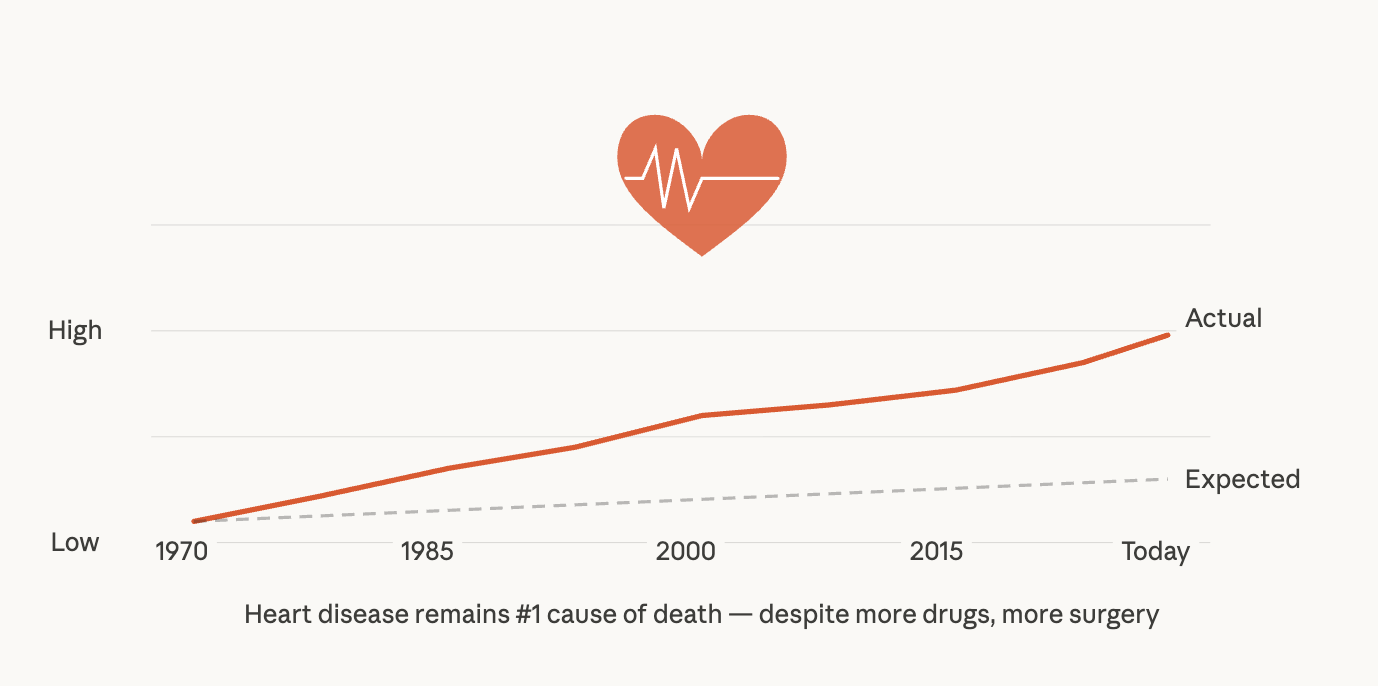
Coronary Artery Disease is the number one killer in the world. Not cancer (not yet). Not infections. The disease of the heart. And yet, despite better techniques, surgeries, a billion more medications, and hundreds of billions of research dollars spent, more than any other area of medicine, the rates keep climbing.
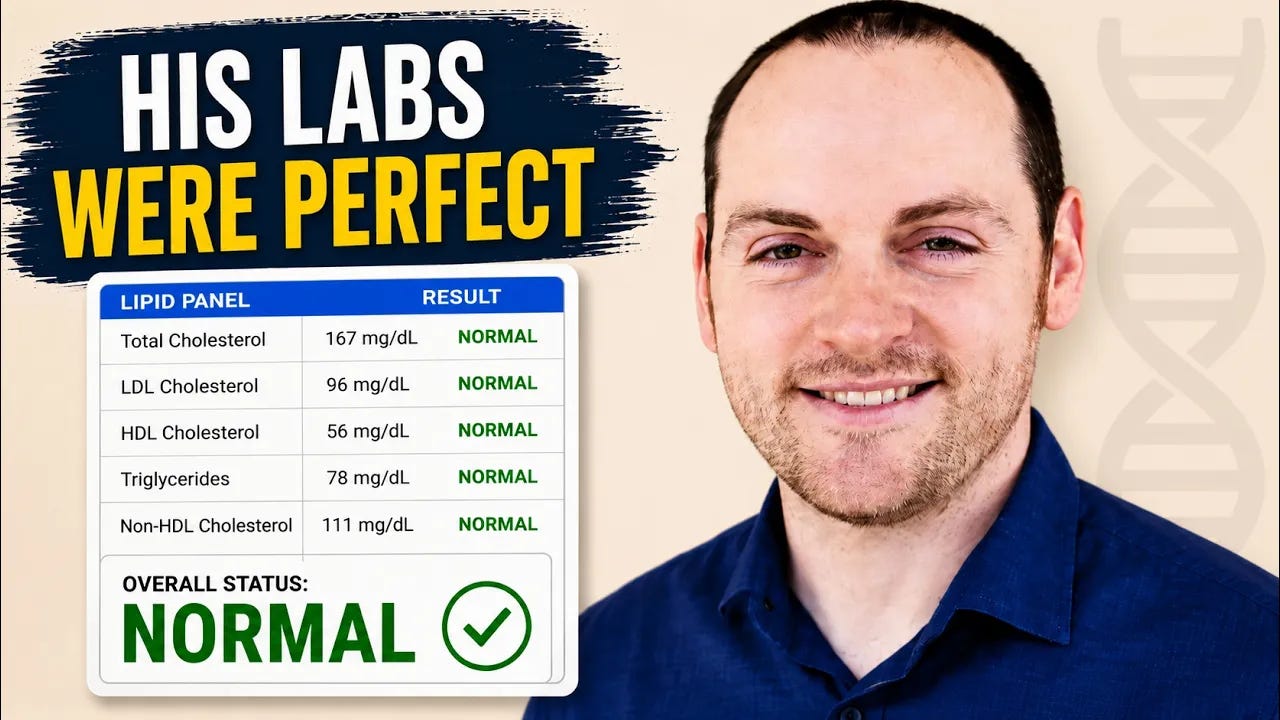
To top it all off, 50-75% of all heart attacks happen in people with NORMAL amounts of “so called bad” cholesterol (LDL).
Something must be missing.
Something foundational.
Recently I spoke with Dr. Stephen Hussey, a functional medicine practitioner and author of Understanding the Heart, knows this personally. At 34 years old, living what he thought was a healthy lifestyle, all of his blood markers were completely normal when he suddenly had a MASSIVE heart attack, a STEMI, the kind doctors call the “widowmaker.”
Statistically, only 12 percent of people who have one outside of a hospital survive. He was one of them. And after this event Stephen faced, potentially, the most uncertainty filled decision of his life: follow the standard cardiologist’s playbook (that already wasn’t working or preventing cardiac events), or start from scratch and begin applying everything he’d spent years learning about how the heart actually works.
He chose the latter.
What he learned, and what you’re about to read, doesn’t just challenge the pump model of the heart. It may just turn the entire story of cardiovascular health inside out.
You can watch our full interview with Dr. Stephen Hussey:
Or by listening on Spotify: For those of you who want to keep reading, in the reaminder of the article I’ll be exploring several nuances of the heart, its capacity to createa and respond to magnetic fields, the mitochodrial density in the heart and why this is critically important to understanding what the heart is doing and more. But this is for my premium substack members only, if you’d like to get a sneak peak at what’s next
Why and how blood carries its own momentum, and what your heart is actually doing when it contracts (not just pumping blood)
The fourth (structured) phase of water, and the University of Washington lab that produced days of continuous flow through a tube using nothing but light. (spooky)
Why your aorta bends inward under pressure instead of outward the way a real pump would force it, and what that single detail tells you about suction versus pushing
The mitochondrial loop connecting sunlight, your own body heat, and blood flow, and why your heart is the most mitochondria-dense organ you own
What Gilbert Ling worked out about the water inside your cells, and why losing that charge is what exhaustion actually feels like
Why the heart has 40,000 neurons and generates a magnetic field you can measure feet away from your chest
The full seven-part protocol with starting doses, titration timelines, and separate notes for MCAS, autoimmunity, and POTS on every single step
The three-item version for anyone whose system is too reactive to handle more than three things
If this interests you, and you’d like to unlock all of my paid work, protocols and deep dives, consider upgrading to paid for $9.99/month or you can save a little with a yearly subscription of $80/year ($6.67/month). This support really means the world to me and helps me do what I love, help others upgrade their health knowledge and lead more resilient lives.
Before we begin let’s rephrase the question at hand. What if heart disease is an energy problem instead of a plumbing problem? Does this make every treatment decision you have ever been handed looks different? Let’s dive in…
Comments
Nothing yet. Say the first thing.
Sign in to join the conversation.