
There’s something every bacterium trying to make you sick right now needs one thing to grow.
Not just sugar. Not just a optimal environment. Iron.
That potential situation sits underneath almost every infection you have ever had, and almost nobody talks about it. While many people vaguely like to talk about immune boosting. We talk about vitamin C and zinc and elderberry. Meanwhile the actual war happening inside you is a fight over a metal.
Iron is not optional for you either. And it’s one thing that on a clients lab panel almost always comes in out of whack, despite their physician saying “its normal!” It carries oxygen through your blood. It builds the red cells that keep your brain fed. It sits at the center of your mitochondria, powering the electron transport chain that makes the energy running your heartbeat right now. Strip iron out of a human and you get a corpse in about four minutes.
So you need it. Badly.
And so does every single organism that wants to use your body as a food source.
That is the trap your physician or functional practitioner almost always misses. The one nutrient you cannot live without is the same nutrient your invaders are hunting for. You are walking around carrying roughly four grams of the most fought over resource in biology, and your body has to keep it away from things that would use it against you while still delivering it everywhere it belongs.
Think of iron like gasoline. Your physiology requires it. Yet, so do the enemy tanks. Leaving fuel cans sitting out in the open does not make you stronger. It arms whoever shows up.
We can’t let the opportunistic organisms win.
And your body has known this. Long before antibiotics, long before hand soap, long before anyone understood what a bacterium was, evolution built a system for controlling who gets the iron. That system has two parts. One works deep inside your bloodstream. The other one guards the doors.
The guard at the door is a protein called lactoferrin. It is one of the most underrated molecules in human health, and the richest source of it you can actually buy sits in a food most adults abandoned before they could form a memory.
If you read my breakdown on how iron drives inflammation, this is the sequel. That article showed you the problem. This one hands you the tool.
When an infection starts, something strange can show up in your bloodwork.
Iron dropping.
But doctors don’t see it usually, because when you live in a world where reference ranges are built on a sick population, you lose what optimal is. A patient comes in fighting something, and their serum iron reads low ( below 130mcg/dL, but maybe not to the physician). If they do catch it, the reflex is to call it a deficiency and reach for a supplement. In this case the reflex is backwards, and understanding why changes how you think about your whole immune system.
Your body might have pulled that iron on purpose.
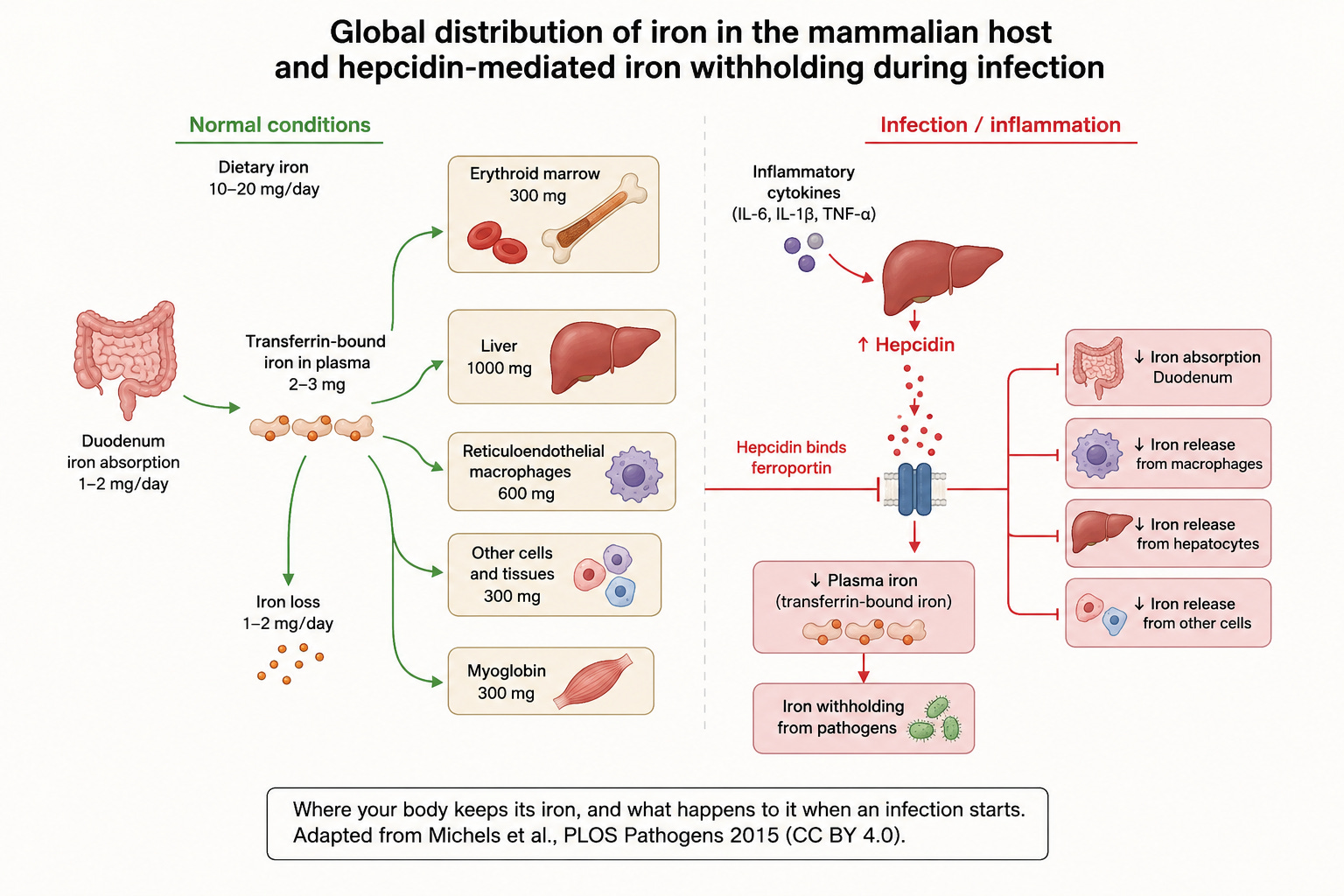
In the literature we call this nutritional immunity, and it is one of our bodies oldest defense strategies. The moment your immune system detects an invader, it starts hiding the iron. It yanks it out of circulation and locks it away inside your cells where bacteria cannot reach it. The invader shows up expecting a full tank and finds the pumps shut off.
The hormone responsible for this operation is hepcidin.
Hepcidin works like a master dimmer switch for iron. When inflammation rises, your liver pumps out hepcidin, and hepcidin shuts down the gates that release iron into your blood. Iron stops getting absorbed from your gut. Iron already stored in your cells stays put. Within hours your bloodstream becomes a much harder place to be a bacterium.
This system is so effective that some pathogens evolved counter weapons just to overcome it. Certain bacteria manufacture molecules called siderophores, which are essentially iron thieves. They grab iron with a stronger grip than your own proteins and rip it away. That arms race has been running for hundreds of millions of years, which tells you how much is at stake.
Your body then evolved a counter to the counter. You produce proteins that hunt down bacterial siderophores and neutralize them before they can deliver their stolen cargo. Weapons built to defeat weapons built to defeat your first weapon, layered on top of each other over evolutionary time.
Nothing in your body gets that complicated unless the stakes are enormous.
This is also why the reflex to supplement iron during an active infection deserves a much harder look than it usually gets. You are not correcting a deficiency in that moment. You are potentially unlocking the vault your body deliberately sealed. I am not telling you to avoid iron, and anyone with genuine iron deficiency anemia needs real treatment under real supervision. What I am telling you is that a low iron reading taken while your body is fighting something is not the same measurement as a low iron reading taken when you are well, and treating those two numbers identically is how well meaning care goes sideways.
Here is where I personally think it gets fun…
Hepcidin controls the iron in your blood and your organs, deep behind the walls. But most invaders never make it that far, because most invaders are trying to break in through the front door. Your gut lining. Your mouth. Your eyes. Your airways. The wet surfaces where the outside world touches the inside of you.
Hepcidin has almost no reach out there.
The front door needs its own guard (don’t want thieves to steal things).
The protein standing at that front door is lactoferrin (mentioned previously)
And it may surprise you to know you have it in your tears. You have it in your saliva. It coats your gut lining, sits in your airways, and rides inside your white blood cells waiting to be dumped onto a problem. Anywhere your body touches the outside world, lactoferrin is already there.
Its job is actually quite ismple. Lactoferrin hunts down loose iron and clamps onto it before a microbe can.
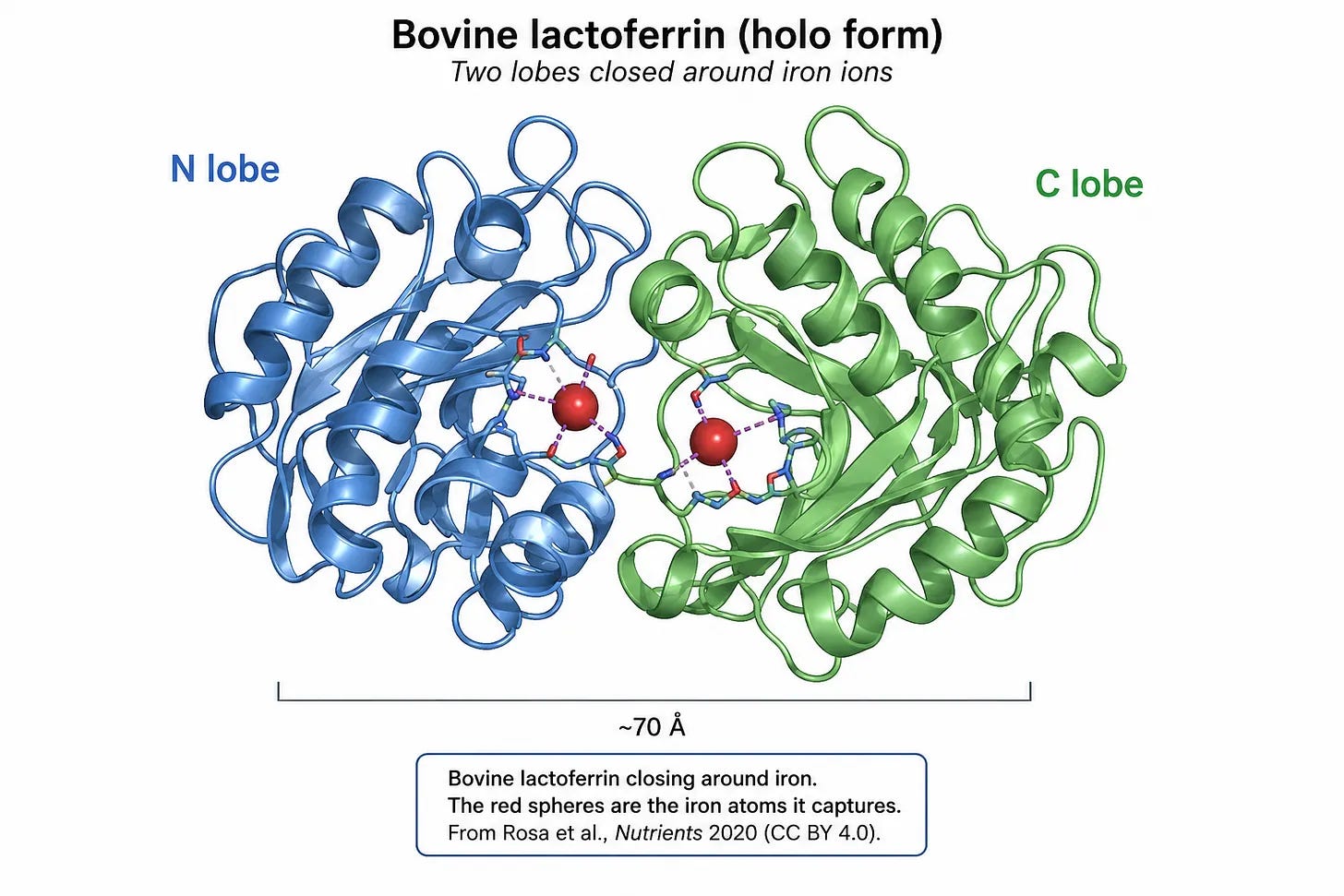
Lactoferrin folds into two lobes, and each lobe closes around an iron atom like a hand closing around a marble. Once it grabs, it does not let go easily. It holds iron with a grip roughly three hundred times tighter than the protein that normally ferries iron through your blood. Even in the acidic, hostile environment of an inflamed tissue, lactoferrin keeps its fist closed.
So the bacteria arrive at the border, and the fuel is already gone. Somebody got there first, good for you.
This is why lactoferrin shows up in tears. Your eyes are wet, exposed, and touched by dirty hands all day long. They should be infected constantly. They are not, because every blink washes them in a protein that strips the iron out of the environment before anything can use it.
“Okay cool Ryan, but how does this apply to me?” Well i’m so glad you asked…
Lactoferrin is most concentrated in colostrum, the thick first milk a mother produces in the days right after birth. Human colostrum carries several times more lactoferrin than the mature milk that follows. Cow colostrum is the most concentrated source you can actually put in a jar and buy.
And cow lactoferrin works in your body. It shares roughly seventy eight percent of its structure with the human version, close enough that your tissues recognize it and use it. The FDA classifies bovine lactoferrin as generally recognized as safe (for what it’s worth).
If you think about it, its sort of amazing.
Your very first meal, before food, before water, before you opened your eyes, was a concentrated dose of the protein that guards your borders. Evolution front loaded it. A newborn arrives with a gut that leaks like cheesecloth and an immune system that has never met a single pathogen, and the first thing it receives is a shot of border security.
Then you grew up never knowing what it was, how it supported your development and we stopped drinking it.
Every other mammal does the same, of course. What no other mammal does is spend forty years eating processed food 70% of the time, living and sleeping under artificial light, taking painkillers and anti-anxiety meds to get by, and grinding its gut lining down while wondering why suddenly you feel like crap and have no energy all the time…
I’ve personally been using colostrum for exactly this reason this past year.
It is the most concentrated lactoferrin source available without a prescription, and it arrives packaged with the immune factors that evolution designed to travel alongside it.
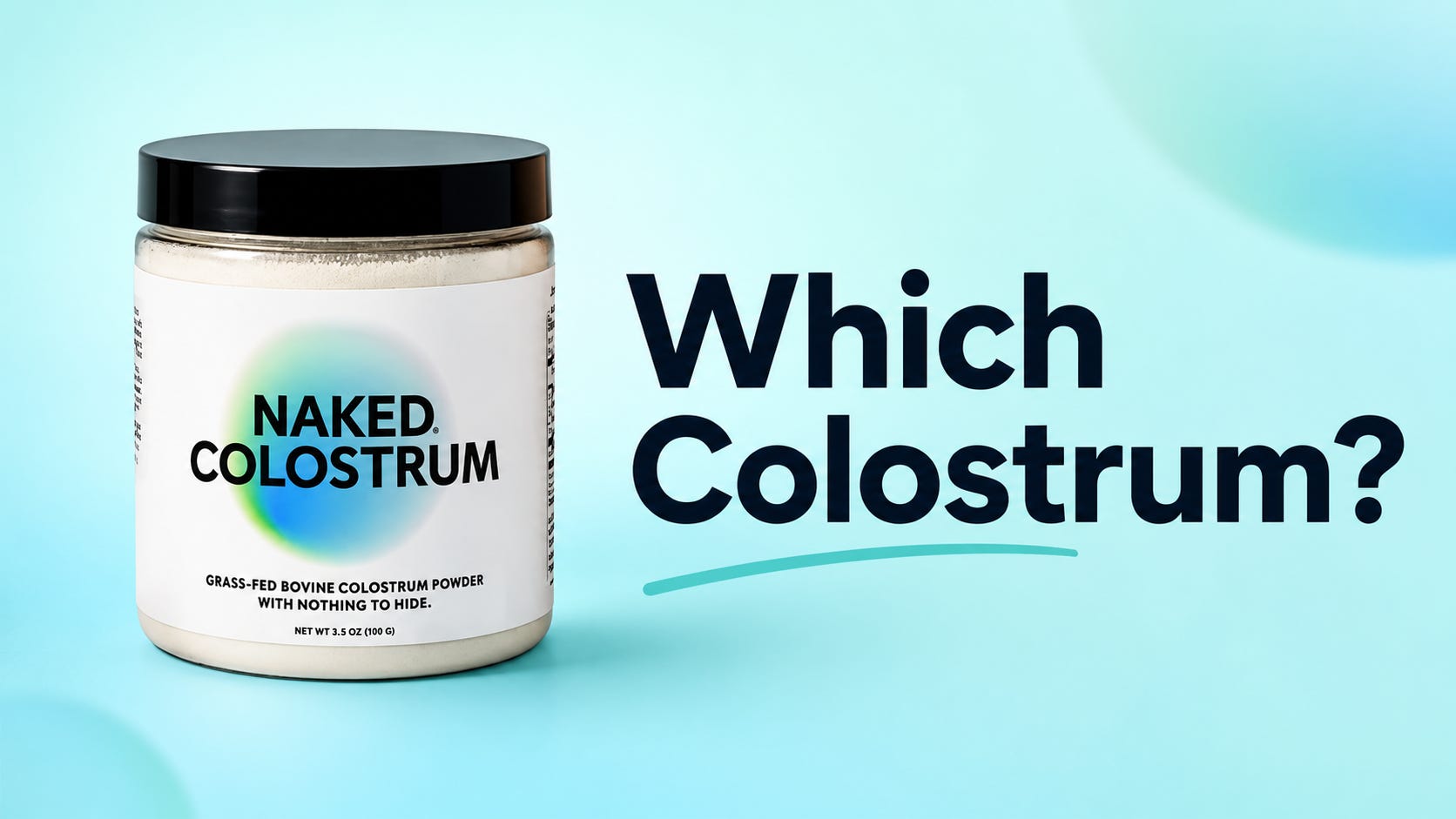
One brand I’ve used consistently for the last year or so and am happy to be partnered with is Naked Nutrition, specifically their Naked Colostrum.
Naked Nutrition’s Colostrum is grass fed, sourced from US dairy farms, and it is a single ingredient with nothing else added. No fillers, no gums, no flavoring, no proprietary blend hiding the ratios. Naked Nutrition ensures it is third party tested for immunoglobulin content, and it is dried at low heat. Thank goodness.
That last part may sound unimportant, but it’s critical to not skip in understanding, so I am going to spend the next part of this article proving it to you, because the drying step is where most colostrum on the market quietly dies without anyone noticing.
Now let’s dive into the second half of what lactoferrin does…
Loose iron does not only feed your bad bacteria/fungus.
It also burns you from the inside out.
To understand this you need one chemical reaction, and it is worth learning because it explains an enormous amount about aging, autoimmunity, and chronic disease. It is called the Fenton reaction.
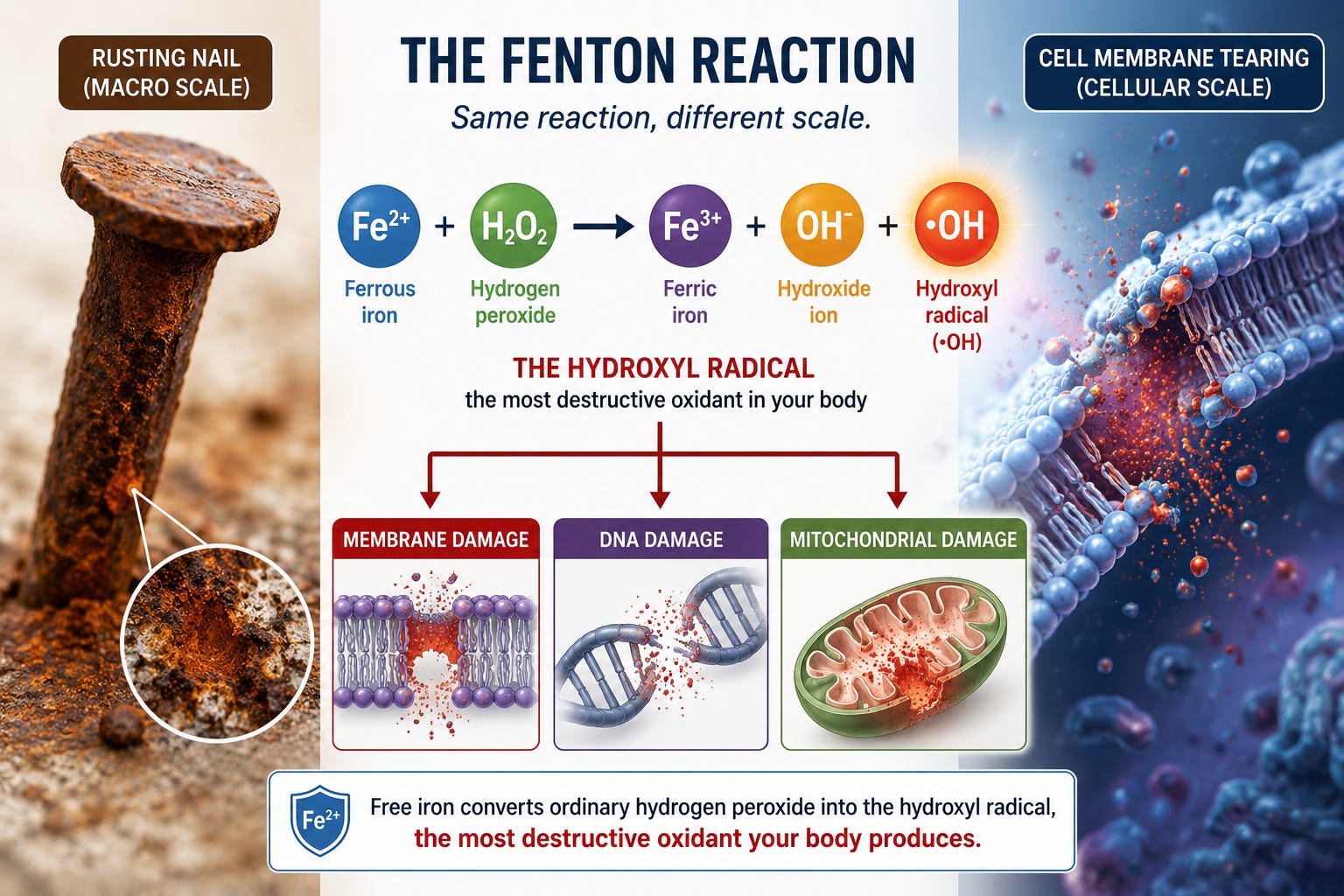
Your cells constantly produce hydrogen peroxide. That is normal. It is a byproduct of running your mitochondria, and in small controlled amounts your body uses it for signaling. On its own it is manageable.
Drop free iron into that peroxide and the chemistry changes instantly.
Iron takes the relatively tame peroxide and converts it into a hydroxyl radical, which is one of the most destructive molecules in all of biology. It has no specificity and no restraint. It attacks whatever it touches first. Cell membranes. Proteins. DNA. The delicate machinery inside your mitochondria.
A hydroxyl radical lasts about a billionth of a second. In that time it will wreck whatever molecule it happens to be standing next to.
You already know what this reaction looks like on a larger scale, because you have seen iron meet oxygen and moisture out in the world. You have watched a nail go orange and flake apart. You have seen a car panel bubble up from the inside.
Rust is slow fire. Your tissues are running a version of it whenever iron gets loose.
This is the mechanism behind so much of what I write about. It is a major reason chronic inflammation damages tissue over time. It is central to the type of cell death called ferroptosis, which is literally named after iron. When I talk about protecting your mitochondria, a large part of that conversation is about keeping iron out of places it does not belong.
Lactoferrin sits directly on top of this problem.
By clamping onto free iron, it removes the spark before the fire starts. It starves the invader and it denies the fire its fuel with a single action.
That’s killing two birds with one stone.
So now that we know this, we can reframe what we “think” we knew abou iron. Iron is not simply good or bad, and the endless supplement debates simply put the forest before the trees. THE KEY is that iron held properly builds you and iron running loose DESTROYS you. The difference between those two states is whether you have enough of the proteins that keep it under control.
Look at it like a lit match dropped in a dry forest (not a good situation). Lactoferrin is the foot promptly stamping out the sparks before a uncontrolled forest fire begins.
Tucked inside the lactoferrin molecule is a short fragment called lactoferricin. When lactoferrin gets broken down in your digestive tract, that fragment is released, and it does something completely different from iron binding.
It punches holes in bacteria.
Lactoferricin carries a strong positive charge. Bacterial membranes carry a negative one. The fragment is pulled straight onto the surface of the microbe like a magnet snapping to steel, and once it lands it disrupts the membrane and the cell falls apart.
So a bacterium that manages to find iron somewhere else still has a problem. Evading the fuel blockade does not save it from the knife.
Lactoferrin has a third job that matters just as much for anyone dealing with an autoimmune condition. It talks to your immune system. It influences the signaling molecules that turn inflammation up and down, helping mount a response when a threat is real and helping settle things once the threat has passed.
I want to be careful with how I frame that third role. The iron binding and the direct antimicrobial action are established at the molecular level and easy to demonstrate. The immune signaling effects are documented across many studies, and the full picture of how oral lactoferrin influences systemic immune regulation in adults is still being worked out. Treat the signaling piece as strongly supported and actively developing rather than settled.
What is not in question is the design. Your body built a protein that removes the enemy’s fuel, carries a weapon, and knows when to tell the guards to stand down. Then it packed the highest concentration of that protein into the very first meal of your life.
Which brings us to another problem.
All of this only matters if the lactoferrin in your colostrum is still alive by the time it reaches you.
Similar to probiotics, a dead guard is about as useful as a door with no handle.
And that is where this story takes a turn that most brands either don’t know about their product or don’t care to tell you.
In 2020, a research team led by gastroenterologist Raymond Playford did something the supplement industry had somehow never bothered to do.
They bought twenty commercial colostrum products off the market and tested whether they actually worked.
Not whether the label was accurate. Whether the powder still had biological activity. They ran the samples against living intestinal cells and measured real function: could this colostrum make gut cells grow, and could it make them migrate to close a wound in the cell layer? Those are the actions that matter, the ones behind every benefit colostrum is sold for.
The results swung wildly from product to product.
Some samples performed powerfully. Others did close to nothing. Same category, same shelf, same promises on the front of the jar, completely different biology inside.
That alone should change how you shop. The next finding should change it permanently.
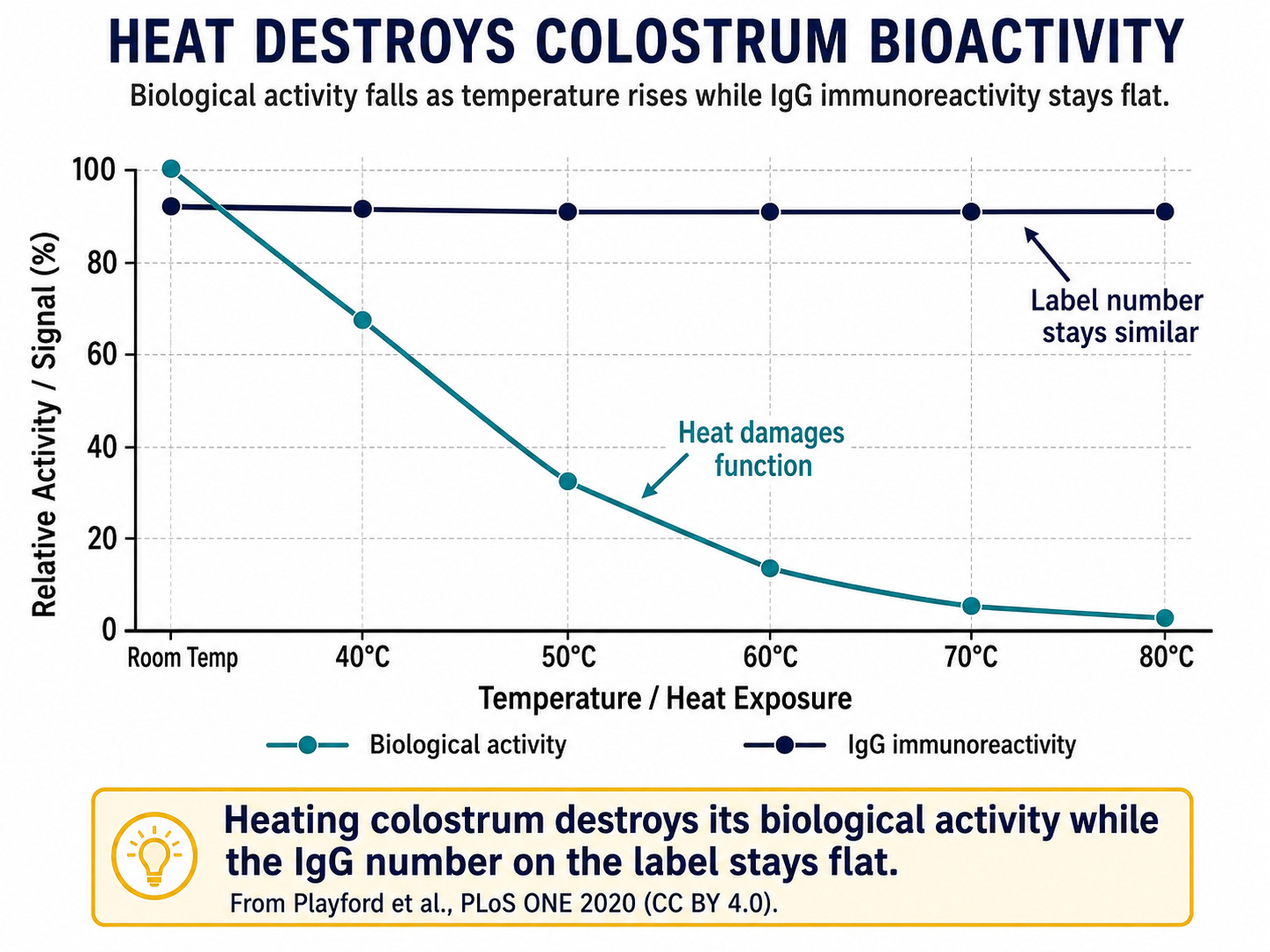
The researchers took colostrum powder and heated it. Sixty minutes at temperatures between 40 and 60 degrees Celsius, which is not extreme. That range is easily reached during industrial processing and easily exceeded in your kitchen.
The biological activity collapsed. Cell growth dropped. Wound closing dropped. The heated powder progressively lost the ability to do the things colostrum is supposed to do.
But this is the part that you should actually be concerned with.
The IgG measurement did not move.
The immunoglobulin content, the exact number printed on the front of the jar, the figure every brand advertises and every buyer uses to compare products, stayed essentially unchanged after the heat destroyed the function. Total protein was unaffected too.
A batch of colostrum can be cooked biologically lifeless and still test at twenty percent IgG.
Counting the IgG on a label is like counting the bricks after a house fire. Every brick is still sitting there. You can measure them, photograph them, put the number on your packaging. The house is gone.
Heat leaves the count intact and burns down the function.
The same study flagged a second variable. Colostrum bioactivity is highest in the very first milking after the calf is born, and it falls off measurably over the following days. A product made from milk collected on day three is a diluted version of one made from the first milking, regardless of what either label claims.
Think about what this means for the last colostrum you bought.
You compared jars. You looked at the IgG percentages, maybe compared price per serving, and picked the one that looked like the better deal. Every piece of information you used to make that decision was information that survives being cooked. The one variable that actually determined whether the product would do anything for you was invisible from the outside, unmentioned on the packaging, and impossible to compare.
That is not a small gap in consumer information. That is the entire category being sold on a number that stops meaning anything the moment heat enters the room.
It also explains something that has frustrated researchers for years. Clinical trials on colostrum come back inconsistent, with some showing strong effects and others showing very little. When the test material itself varies this much in biological activity between products, and nobody was measuring that activity before running the studies, some of that inconsistency was baked in before the first subject ever swallowed a capsule.
One note on this cited source, because we need to hold to a standard: the Playford paper discloses funding involvement from a colostrum producer. That does not invalidate the heat findings exactly, which are straightforward laboratory measurements and consistent with what heat does to bioactive proteins generally. I am telling you so you can weigh it yourself.
Here’s a quick list on how you can vet your colostrum…
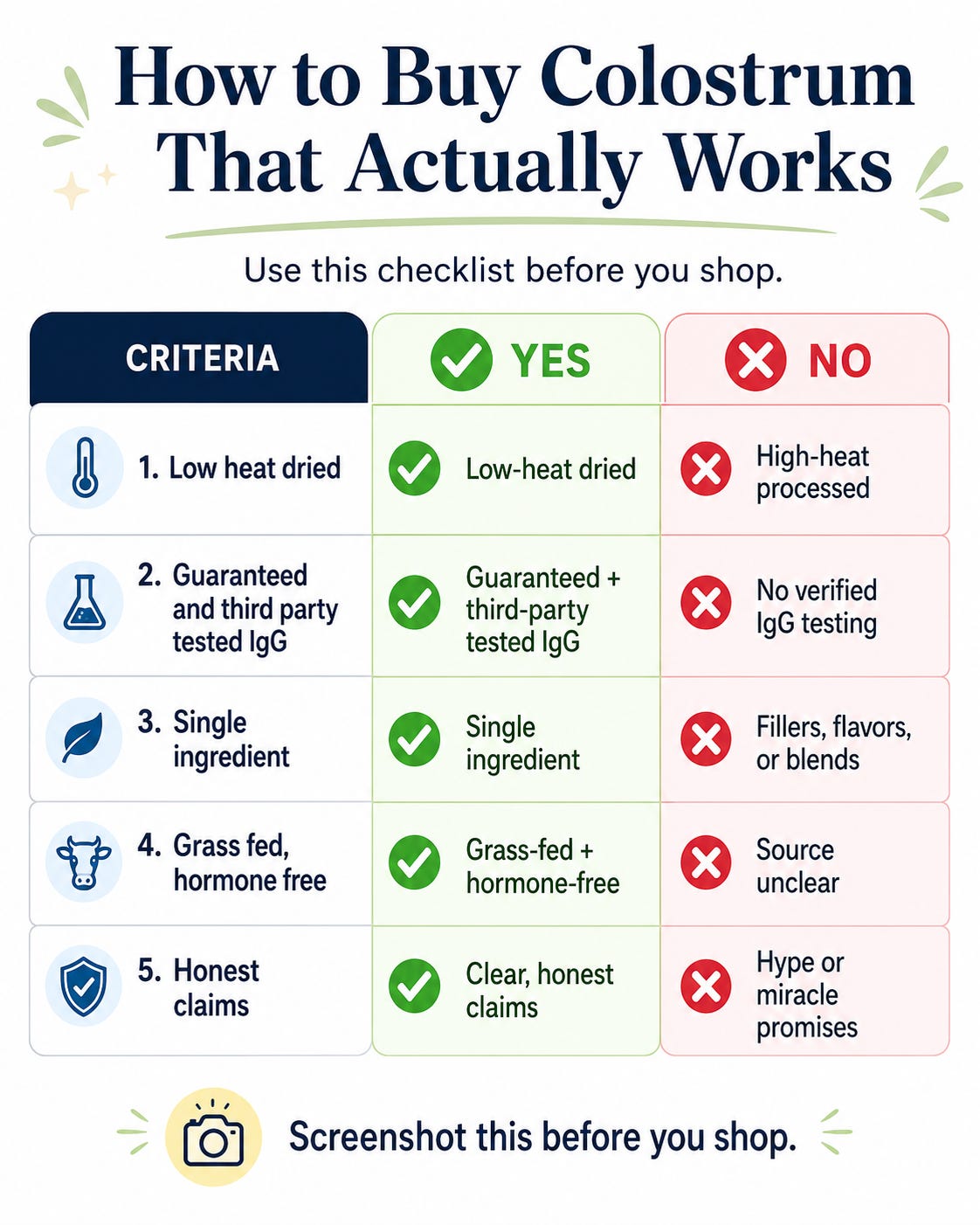
1. Find out how it was dried.
This is the criterion that separates living colostrum from expensive powder, and it is the one almost nobody checks. Colostrum has to be turned from liquid into powder somehow, and the cheapest way to do that is with heat. High heat processing is fast, it is cheap, and based on what Playford’s team measured, it guts the biology while leaving your label numbers perfectly intact.
If a company cannot tell you how it dries its colostrum, assume the worst. A brand that invested in low heat processing will tell you, because that investment is expensive and it is the whole reason their product works. Naked Nutrition uses low heat drying, and that is the specific reason I use it.
2. Look for a guaranteed immunoglobulin level, verified by an outside lab.
I just spent a thousand words telling you the IgG number does not prove potency, so let me be precise about why it still matters.
IgG tells you the raw material was rich and the batches are consistent. It does not tell you the biology survived processing. You want both, and neither one substitutes for the other. A guaranteed and independently verified IgG level tells you the company is measuring what goes into the jar instead of hoping. Naked Nutrition guarantees its immunoglobulin content and tests outside its own walls.
Any brand advertising a big IgG number while staying silent about processing is telling you which half of the equation they care about.
3. Read the ingredient list and count the words.
Colostrum should be colostrum. One ingredient.
Fillers, gums, sweeteners, and proprietary blends are where quality hides. A proprietary blend exists so you cannot see the ratios, and there is no version of that arrangement that benefits you. Naked Nutrition is a single ingredient.
4. Check the animals.
You are buying an immune signal produced by a living cow, which makes the health of that cow part of the product. Look for grass fed, no added hormones, no rBST or rBGH, and farms the company can actually name. Naked Nutrition sources from US grass fed dairy without added hormones.
5. Watch how the company talks.
Colostrum supports your gut barrier and your immune defenses. It does not cure autoimmune disease, reverse aging, or replace anything your doctor prescribed. A brand promising miracles is selling something other than science, and that is the loudest quality signal available to you.
Every one of these five checks exists to protect the same two things: live lactoferrin and intact immune factors. That is what you came for. Everything else on the label is packaging.
A quick word on where colostrum sits next to the other gut supplements people ask me about. Whey builds muscle. Collagen supplies raw material for connective tissue. Colostrum carries immune signaling and barrier support, which puts it upstream of both. They solve different problems and I am not going to pretend one replaces another.
You can buy the best colostrum on the market and destroy it in your own kitchen in about four seconds.
Mix it cold.
That is the whole rule, and it follows directly from the Playford data. If sixty minutes at moderate heat wrecks bioactivity in a laboratory, dropping that powder into fresh coffee or hot tea does the same thing to your morning scoop. You paid for living protein and turned it into expensive dust before the mug reached your lips.
Cold water. Cold milk. A smoothie. Room temperature anything. Stir it into yogurt if you want. Just keep it away from heat.
Toasting a probiotic would strike you as absurd. Boiling colostrum is the same mistake wearing a different outfit.
For dosing, follow the serving size on the label rather than a number I made up. Most people take it in the morning, and taking it on a relatively empty stomach gives it a cleaner run at your gut lining before a full meal arrives. Consistency does more for you than dose escalation. Daily beats heroic.
Some people should be cautious, and I would rather say this plainly than bury it.
Colostrum is a dairy product. A true dairy allergy is a real contraindication and not something to experiment around. If you are pregnant, immunocompromised, managing an inflammatory bowel condition, or taking medication that affects your immune system, talk to your clinician before starting. The research on colostrum in inflammatory bowel disease specifically discusses both benefits and situations calling for caution, which is exactly the nuance a supplement label will never give you.
Let me also be straight about the state of the evidence, since that is the standard I hold everyone else to.
The iron binding chemistry is rock solid and demonstrable in a test tube. The direct antimicrobial action of lactoferricin is well established. The strongest clinical work on colostrum as a whole sits in gut barrier protection and immune resilience, with good randomized data behind it. The broader claims about systemic immune regulation from oral supplementation are supported and still developing.
That is an honest picture. It is also a better one than almost anything else in the supplement aisle can claim.
Come back to the paradox we started with.
Iron keeps you alive, and iron feeds the things that want you dead. Your body has been solving that riddle every second since you were born, using tools you never knew you had.
One of those tools was handed to you before you could see, before you could speak, before you had any immune memory at all. A thick, golden, unglamorous first meal loaded with the protein that stands at your borders and takes the fuel away from anything trying to get in.
You drank it once. Then you spent decades wearing down the barrier it was built to protect, and nobody ever told you the tool existed.
Colostrum is not a trend. It is not a hack. It is reclaiming a signal that evolution already wrote for you and that modern life quietly deleted from your diet.
You cannot control every invader that shows up at the door. You can control whether there is a guard standing at it, and whether the guard you paid for is still breathing when it arrives.
If you missed it, my full guide to colostrum and gut barrier repair covers the other half of this story. Start there if you want the complete picture. Sincerely your friendly neighborhood health nerd, Ryan

Playford RJ, Cattell M, Marchbank T. Marked variability in bioactivity between commercially available bovine colostrum for human use; implications for clinical trials. PLoS ONE. 2020;15(6):e0234719. PMID 32555629. PMC7299325. Correction published: PLoS ONE. 2020;15(10):e0240392. License: CC BY 4.0.
Michels K, Nemeth E, Ganz T, Mehrad B. Hepcidin and Host Defense against Infectious Diseases. PLOS Pathogens. 2015;11(8):e1004998. PMID 26291319. PMC4546197. CC BY 4.0.
Rosa L, Cutone A, Lepanto MS, et al. Lactoferrin from Bovine Milk: A Protective Companion for Life. Nutrients. 2020;12(9):2562. DOI 10.3390/nu12092562. CC BY 4.0.
The Multifaceted Functions of Lactoferrin in Antimicrobial Defense and Inflammation. Biomolecules. 2025;15(8):1174. PMC12384211. CC BY.
Ferroptosis in Human Diseases: Fundamental Roles and Emerging Therapeutic Perspectives. Antioxidants. 2025;14(12):1411. CC BY.
Programmed Cell Death by Ferroptosis: Antioxidants as Mitigators. PMC6801403. CC BY.
Supplementation of Bovine Colostrum in Inflammatory Bowel Disease: Benefits and Contraindications. PMC8009748.
Playford RJ, Weiser MJ. Bovine Colostrum: Its Constituents and Uses. Nutrients. 2021;13(1):265.
No posts
Comments
Nothing yet. Say the first thing.
Sign in to join the conversation.