
This short story was originally published in Issue CIX, 2014 Michaelmas of the Clare Market Review, the literary journal of the London School of Economics.
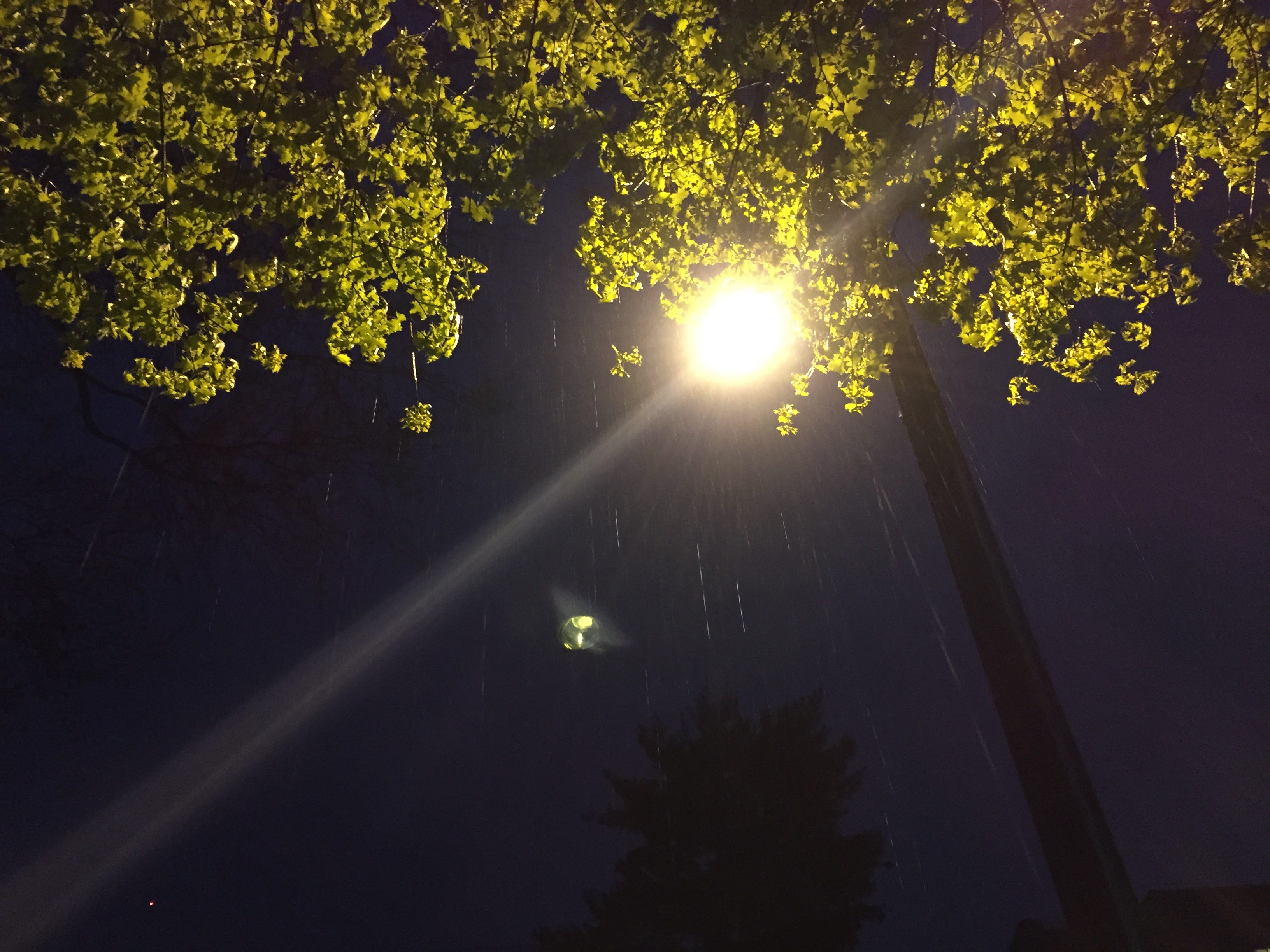
“TAXI!” I screamed. Frantically, I waved one down.
It swept into the gutter, next to the curb, and its lights flashed.
“Michael,” I breathed. Gently, I held his head. As if it were a baby chick hatching. Except the only thing emerging from his head was a profuse amount of blood.
The brick had come from nowhere.
“Michael,” I said, “we’re gonna get in a taxi. I’m taking you to the hospital.”
Finally, the cab driver came to his senses and helped me lift Michael off the ground and into the backseat.
“Put preshoor, put preshoor,” the cabbie ordered in his thick Middle Eastern accent.
He handed me a rag, and I forced it into the side of Michael’s head.
“I get you there fast, don’t woory,” the cabbie said. As if to prove his point, he promptly cut across two lanes of traffic.
The journey is now just a vaguely harrowing blur. I had never seen the inside of George Washington University Hospital, had never needed to go. But it somehow felt familiar, like St. Michael’s in Trenton (what an ironically eerie name-association), where my grandmother had been in and out on nearly a monthly basis, until I visited her there for the last time. I waited up all night while Michael was taken care of. I remember asking myself if this was the last time I would see him too; I know nothing of medicine. But of course a brick didn’t give you cancer and send you into the hospital every month until the blood drained from your face and a hand-hold replaced all the warmth and security of a hug, even if the love remains.
Yesterday I was at a table in The Bean Press, that café I like around Seventeenth and U, while Annabelle sat across from me in one of the more comfortable orange leather chairs and chattered on about her nascent love-life as if all the world stood still to watch Annabelle and Dan live their uniquely fascinating life together.
“I finally brought him over to my friends’ place to introduce him — it’s so…I was nervous, you know, to bring him to them,” she buzzed. “It’s hard to introduce this person who means so much to you to other people, you know what I mean?”
“Yeah,” I replied distantly. “What did they think of him?”
“Well, when he went to the bathroom, I asked them what they thought, and Liz said, ‘Annabelle, he seems so serious’…” Annabelle’s eyes grew wide behind the large rectangular-framed glasses that already magnified them; I always thought they had a strange pigment, befitting something like the feet of those Galapagos boobies — and now they were at least the proper size.
I stifled a snort.
“…And I said” — she grabbed my arm — “oh my God, is he too serious?! Because you know me, Tyler, I’m not serious at all. I can’t be with someone serious.” A raucous laugh, head thrown back, as if she felt it a lie not to prove how un-serious she was.
“Oh, that’s not the impression I got,” I said. “You don’t think he’s too serious?”
“No. No, I mean — you’ve met him, you know he’s as crazy as I am. But tell me about you. What’s going on in your life?”
I was suddenly aware of the traffic that rumbled by outside.
“Oh, you know, the same,” I managed. “Always on the look-out, never on the hunt.”
I smiled, my best attempt at charm; another raucous laugh from Annabelle.
“How’s the year going?” she pressed, but gently.
“Pretty good; I finally have more time than I’ve ever had to do some writing, which I’ve really appreciated.”
“That’s so great,” she said, head held in her palm, eyes beaming in a — was it a patronizing look? “What are you writing?”
“A young adult novel; it’s coming along.” I hedged; why did I make excuses for my work?
“That’s fantastic. Well, I have to get going,” she said, a hand on her bag, her eyes on her watch. “This was so much fun; we have to do it again sometime.”
“Absolutely.”
I stood as she left, and then returned to my cappuccino, pulling out my small notebook and a pen from the folds of my jacket. I lived in that notebook these days, a starving writer thinking I was extracting some career-saving crumb of culture in possibly the worst city to do so — Washington, DC. I guess of all the dark alcoves of this values-vacant city, U Street was the enclave in which to find these crumbs.
I noticed as I wrote that I hadn’t told Annabelle about Michael.
Last night, I met some friends at Millie’s Bar, a horrid place with too-loud TVs and too many people — though it’s a great place to get away from your thoughts (if the people there have any). Vicki got Tom to come, though he never seems to want to go out unless he can get black-out drunk and the rest of us can take care of him; and somehow John had gotten pulled into our orbit, along with Tom’s friends, April and Kelly, who were visiting for the weekend.
John: what a guy. The whole two hours at Millie’s felt like a therapy session as we tried to cure him of his fixation on Rachel, his once-and-never girlfriend who had “dumped” him.
“You shouldn’t drink when you’re sad,” was my helpful advice, to which he made some joke about already being an alcoholic. (“We shouldn’t be joking about that,” I insisted.) Vicki played the role of sympathizing-friend-who’s-a-girl-and-understands.
Naturally, after this exhilarating encounter at Millie’s, Tom wanted to go to Town. Again. Nevermind that he, too, is a recently-single straight man.
We traipsed down Fourteenth Street and back onto U Street. I suppose I was now the grumpy one, refusing to pay a high cover; I was still waiting on that coffee blog to direct-deposit the money for three weeks’ worth of posts into my account. Finally, we got to the door and, after the unpleasant pat-down, I called up to Tom and asked what the cover was.
My response to his muffled answer: “Twelve dollars?!”
Remember the “starving writer” part? John, too, didn’t pay, but that was because they couldn’t take credit cards — some problem with the machine — so instead we walked away together and he moaned, “That is so dumb! I want to pay, but they’re not taking cards. I just wanted to go out and forget about things tonight.”
“Oh, don’t be sad,” I said lamely. I have no patience for people currying sympathy over their lost and broken love-lives. I’ve been brought to my knees by that thing called “love,” drowned in its anguish until I didn’t believe it existed anymore, only to have its reality proven by those closest to me, who would die for me, who would give me the will to wade in again with the hope that, maybe this time, it wouldn’t hurt — who would then, by their own words, make me question again my ability to feel it for myself.
All this, and I’ve never whimpered to friends on a Friday night as if the outing were a party thrown just for me.
“But I am sad — and lonely,” John added.
Before I could offer some version of “there’s more fish in the sea,” he veered off and growled, “I’m going for a walk.”
This sounds contrived, but it actually happened — leaving me the rest of the night to do some writing. (I have the most fun Friday nights of anyone I know, I mocked myself with scornful gusto.) At long last, I stumbled back into my room and turned on my computer with sloppy, drunken fingers.
My phone chirped: a text from Michael, who I hadn’t seen or heard from in a week.
“Want to get a drink?” he asked.
I waited till I had pulled up my latest culture-crumb-inspired work — creatively titled “Stream of Consciousness” — and given the first page a cursory glance before responding:
“Can’t. Writing.”
It was cruel, I’ll admit, just like when my father said if I were gay it’d be like a knife in his heart. But I have come to the conclusion that it’s best not to ask the question, “Am I happy?” If you’re bothering to ask, you’re bound to realize that you’re not, and that realization will turn your world upside-down. Of course I’m not, and of course I don’t have to seek sympathy for it, and that’s all I’d be doing if I went out with Michael.
So instead, I tossed the phone onto my nearby bed and began to write.
And a brick hit Michael in the head.
Ryan R. Migeed is an international lawyer and emerging fiction writer who went to law school to “put off writing that novel.” Prior to law school, he served as a political speechwriter and as a freelance foreign policy reporter. His legal essays addressing various issues of international law and international trade have been published in the New York International Law Review, among others. When he is not advising clients on the latest changes in U.S. trade law, he is working on “that novel.”
Comments
Nothing yet. Say the first thing.
Sign in to join the conversation.