
My legal writing professor in law school (a woman who, with her charm and wit and shards of black hair scissored into a French pixie cut, is sure to appear as a character in a future novel) introduced us to a variant of the concept of “Chekhov’s Gun,” the playwriting principle that, if a pistol appears above the mantel in Act I, then it must be fired in Act II.
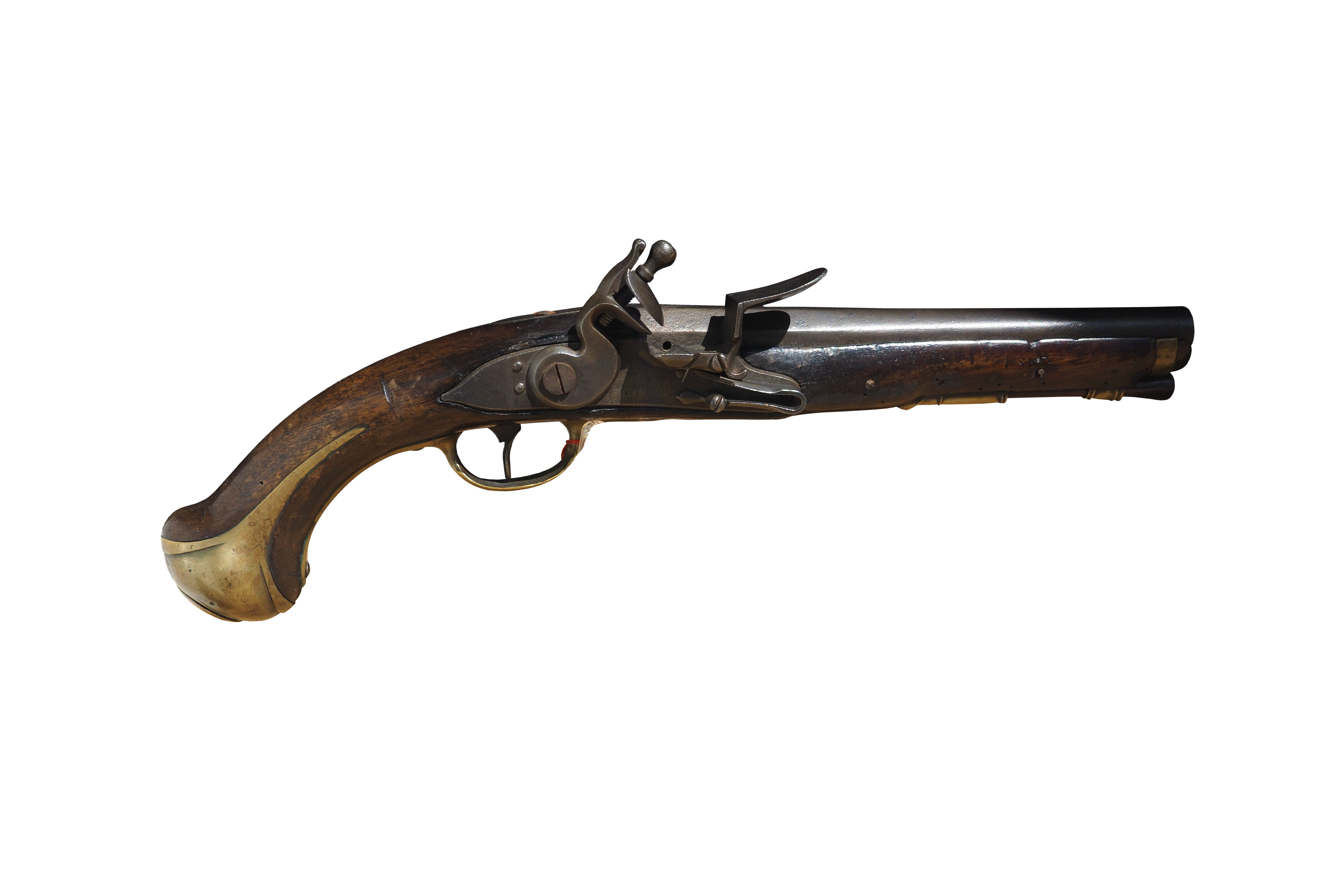
The principle of Chekhov’s gun (named after Russian playwright Anton Chekhov) is a familiar one for storytellers. It is typically understood as a thinning of narrative details. In other words, every detail introduced in a story should be necessary. A writer should not introduce a gun into the plot unless it is going to go off.
My legal writing prof turned this concept on its head or, more precisely, worked backwards from the gunshot. If there is to be a gunshot in Act III, the gun must have appeared in Act I. You must prepare the reader.
Foreshadowing is a necessary element of storytelling in the Western tradition.
In legal writing, we are frequently trying to reverse-engineer the placement of Chekhov’s gun. We know our conclusion before we begin writing a legal brief. We know the point we want the judge reading our brief to conclude. The conceit of good legal writing is to make this conclusion appear obvious in retrospect. To be the only logical conclusion that a reasonable mind could reach after assessing the evidence and analyzing the applicable law.
To make this conclusion obvious in retrospect, it must have been placed earlier in the argument. There are various ways to do this, and in legal writing you are encouraged to place your conclusion upfront. But the conclusion can (and should) also be suggested throughout, like a narrative breadcrumb trail—or a gun above the mantel.
In narrative fiction (and nonfiction), Chekhov’s gun is a helpful heuristic for all kinds of details. It is helpful even for establishing theme.
In legal writing, as in narrative storytelling, details pile up to establish a theory of the case, or a theme (as the case may be). These details, and their repetition over the course of long-form storytelling, help to develop all sorts of elements of a compelling story—mood, world-building, character—but their narrative power is in their successful placement throughout, careful reminders that lull the reader into a sense of familiarity so that when the reader reaches the conclusion, the reader’s reaction, rather than shock, is “but of course.” It was all obvious in retrospect. The story could not have ended any other way.
The obvious critique is that this makes for dry and predictable storytelling. Legal writing, at least, is encouraged to be predictable. Unlike in TV dramas, in real life you cannot enter a piece of evidence that unlocks the entire case in the final act. In real life, all the evidence is introduced at the beginning of a trial and it is the brief writer’s job to explain how the evidence supports their conclusion. But this is not unique to legal writing.
In fiction writing, too, your details must support your conclusion. Your hero cannot do something out of character—or else, wherefore character? Your ending must be foreshadowable, if not fully predictable—or else, wherefore exposition?
Chekhov’s gun is a useful device not because it renders the ending obvious, but obvious in retrospect. The distance between obvious and obvious in retrospect is measured by the skill of the writer.
Disclaimer: This post contains Ryan R. Migeed’s own thoughts and opinions, which do not necessarily reflect those of his employer, his clients, or any organization of which he may be a member.
Comments
Nothing yet. Say the first thing.
Sign in to join the conversation.