
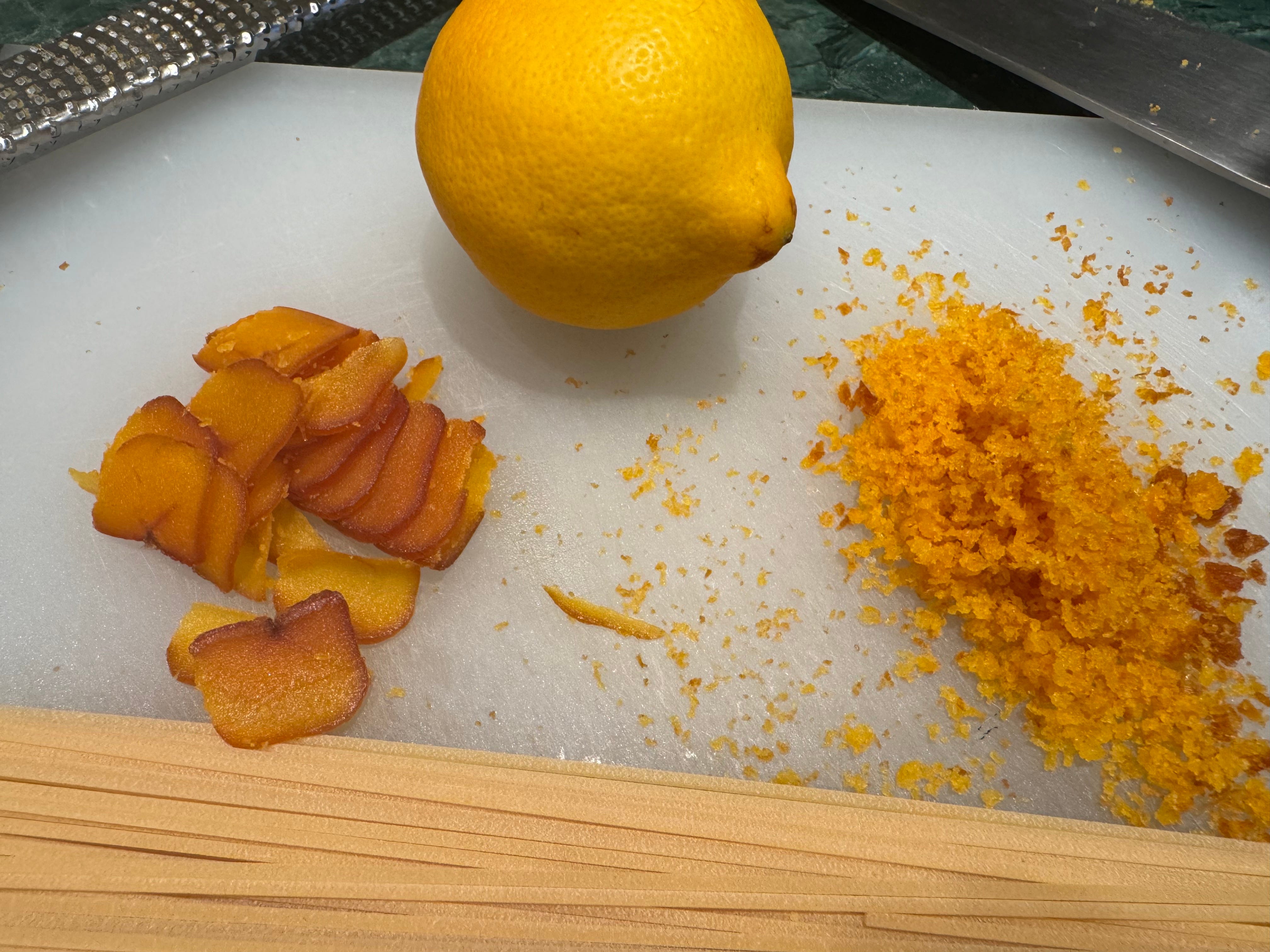
These are the ingredients for my current favorite dinner: I made it for myself 3 times last week. That beautiful orange stuff is bottarga, the cured roe of grey mullet, which is often called “poor man’s caviar.” It’s wonderful stuff, filled with the deepest, richest, sexiest saline flavor.
When I first wrote about this marvelous food - some fifteen years ago - I said:
Bottarga is poised to be tomorrow’s uni - the food darling of the moment - and we’re going to see it on everything. Why not? It’s fantastic shaved over pasta. It’s wonderful on salads. And one of the best dishes I’ve had recently is an appetizer April Bloomfield serves at The John Dory. She sandwiches thin slices of bottarga between achingly thin slabs of carta di musica (the Sardinian bread that seriously resembles matzo), along with generous amounts of butter and a sprinkling of chile slices. It’s almost impossible to stop eating.
I was obviously wrong about bottarga becoming the Next Big Thing. Hasn’t happened yet….but one can always hope.
Bottarga has traditionally come from Greece, Italy, or sometimes France but now there’s an American product that is local, sustainably produced and absolutely fantastic. I like Cortez Conservas bottarga better than anything I’ve had in Europe or even Japan (where it is known as karasumi).
A little bottarga goes a long way - and well wrapped and stored in the refrigerator it lasts a very long time. Here are a couple of my favorite recipes.
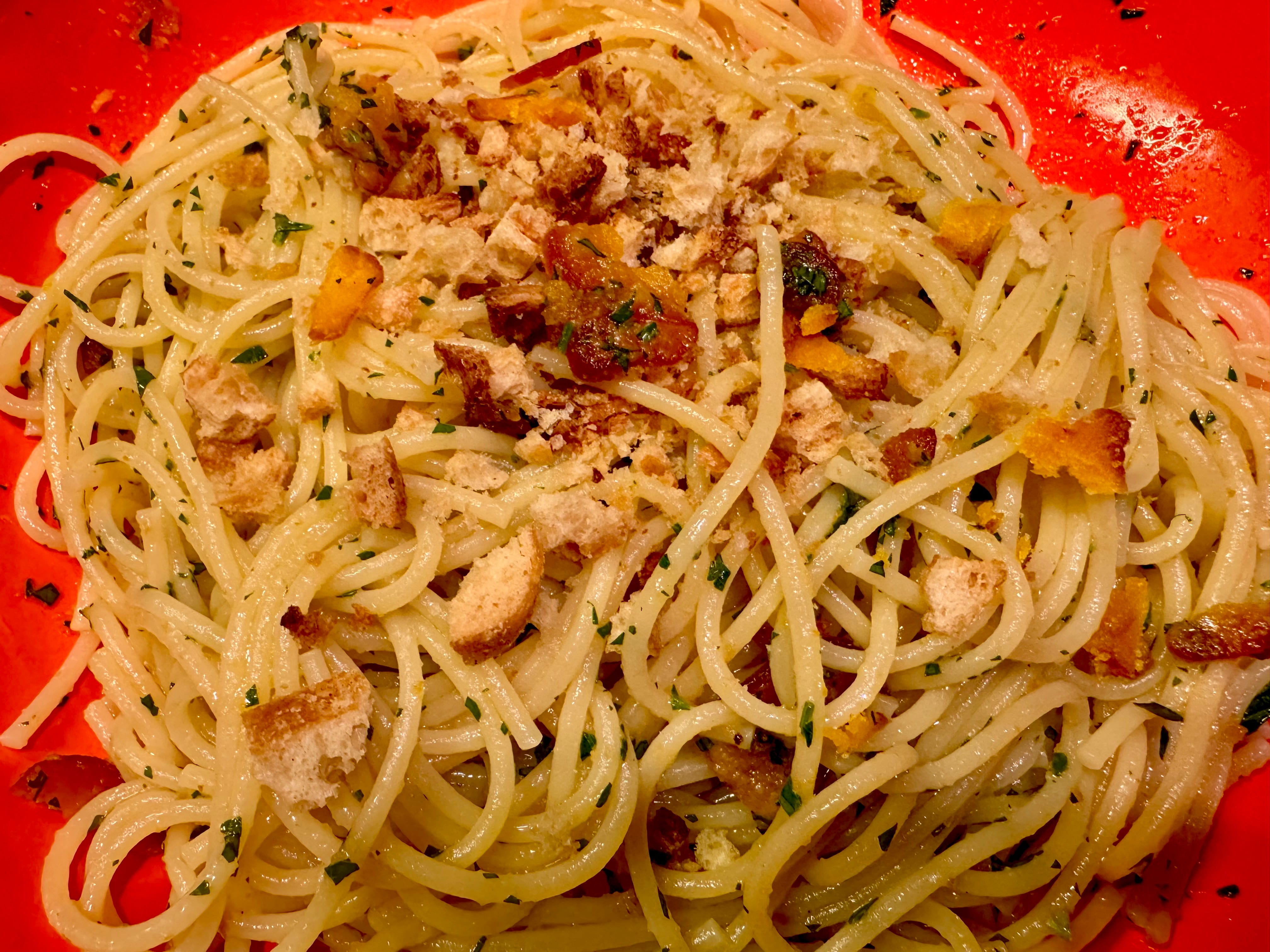
Spaghetti With Bottarga and Bread Crumbs
1 lobe bottarga, (about 1 1/2 - 2 ounces)
1/4 cup olive oil
2 cloves garlic, lightly crushed with the flat side of a knife
pinch red pepper flakes
1/2 pound spaghetti
1 lemon
chopped parsley
homemade bread crumbs
grated Parmesan cheese
Serves 2
Bottarga usually comes in paired lobes. Cut one lobe from the pair, carefully peel off the thin membrane on the outside and thinly slice or shave half of the lobe. Set the slices aside while you grate the other half.
Gently heat the olive oil over medium heat, drop in the cloves of garlic and let them gently brown for about 5 minutes, turning occasionally. Remove the garlic and discard. Sprinkle in the red pepper flakes and sizzle for about a minute.
Allow the oil to cool a bit, then stir in the grated bottarga.
Cook the pasta in a modest amount of salted water. (Be sparing with the liquid so you will have really starchy water to emulsify the sauce.) When the pasta is al dente scoop out a quarter cup of the water, stir it into the pan with the olive oil mixture and then add the drained pasta and toss well. Grate the rind of the lemon into the pan and toss in a handful of chopped parsley. Add the bread crumbs, grated parmesan and the sliced bottarga, add a few squeezes of lemon juice, toss well and serve.
Home Made Bread Crumbs
Cut a good loaf of stale bread into cubes and grind it into crumbs in a blender or a food processor. (A blender is better; it gives you a more uniform texture). If your bread is not stale enough to crumb, you can dry the cubes out in a 200 degree oven for about 15 minutes before grinding.
Spread the crumbs onto a baking sheet and toast in a 350 degree oven for about 20 minutes until they are crisp and golden. Drizzle with olive oil (about a quarter cup for every 2 cups of crumbs), season with salt and allow to cool completely before putting into containers.
These will keep in the freezer almost indefinitely. Just stick them in the microwave for a few seconds to take the chill off before using.
Bottarga Sandwiches
I copied this dish from April Bloomfield. At The John Dory she used the Sardinian bread carta di musica, which is considerably thinner than matzo, but sadly hard to find.
Bottarga, thinly sliced
1 package thin, crisp crackers or matzos
good unsalted butter, softened
very thinly sliced red chile pepper
Generously butter a cracker and sprinkle with the sliced chiles, sparingly or generously according to taste. Add the sliced bottarga and eat with enormous joy.

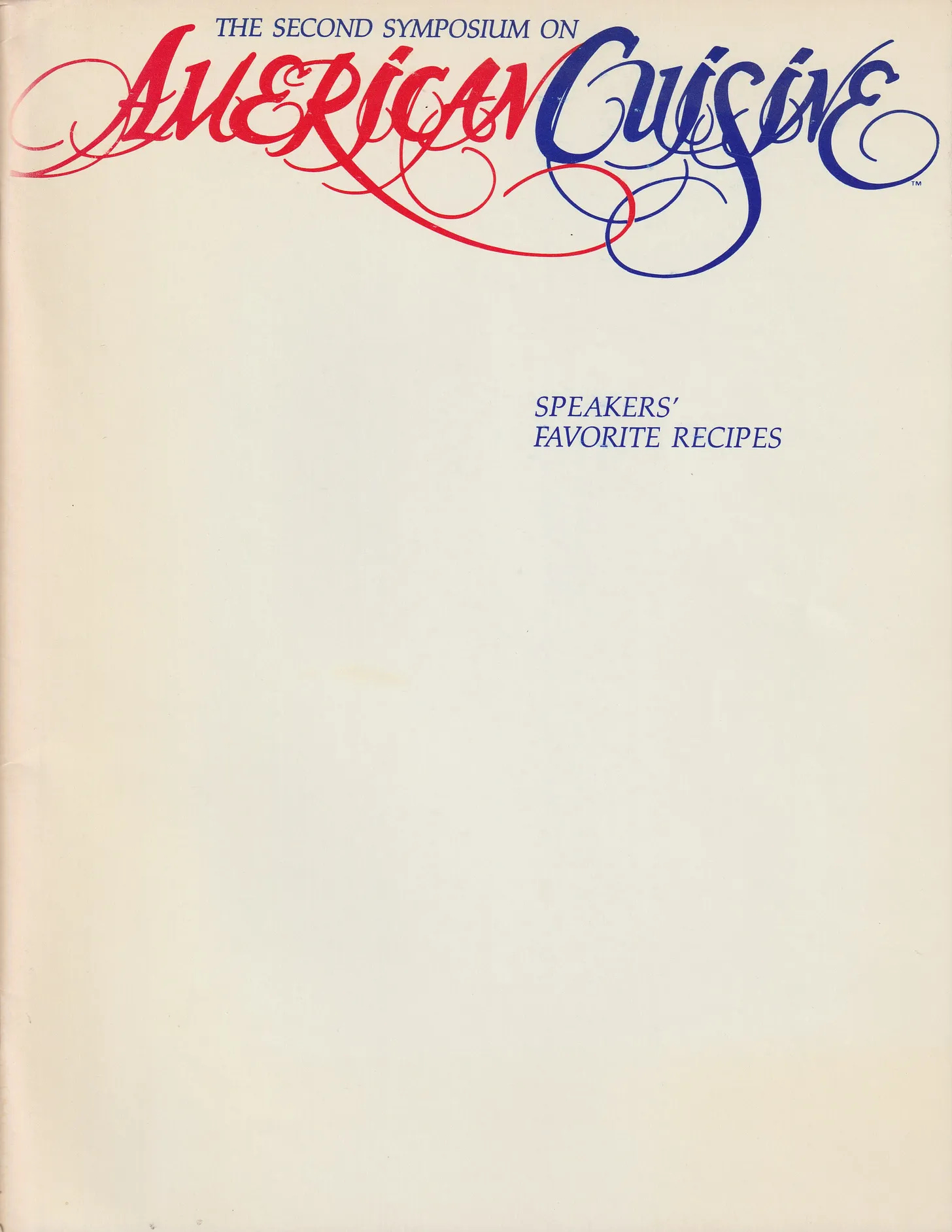
In the eighties the food world was so focused on the then-new notion of great American cooking that it held annual symposiums on the topic. The first was held in Louisville in 1982; Jim Villas gave the keynote speech in his typical curmudgeonly style. The following year the Symposium was held in New Orleans, and John Mariani was the keynote speaker. In 1985 it was held in San Francisco, and I apparently delivered the keynote.
I have, sadly, lost my speech, but from my notes it seems there was a lot of talk about restaurants starting to buy directly from farmers so as to eliminate the middlemen. There were seminars on native products ( wild mushrooms, regional berries, and specialty grains). We were enthusiastic about wood-fired grilling. And there was a serious backlash against the use of adorable but tasteless baby vegetables.
Amazing, isn’t it, how little has changed?
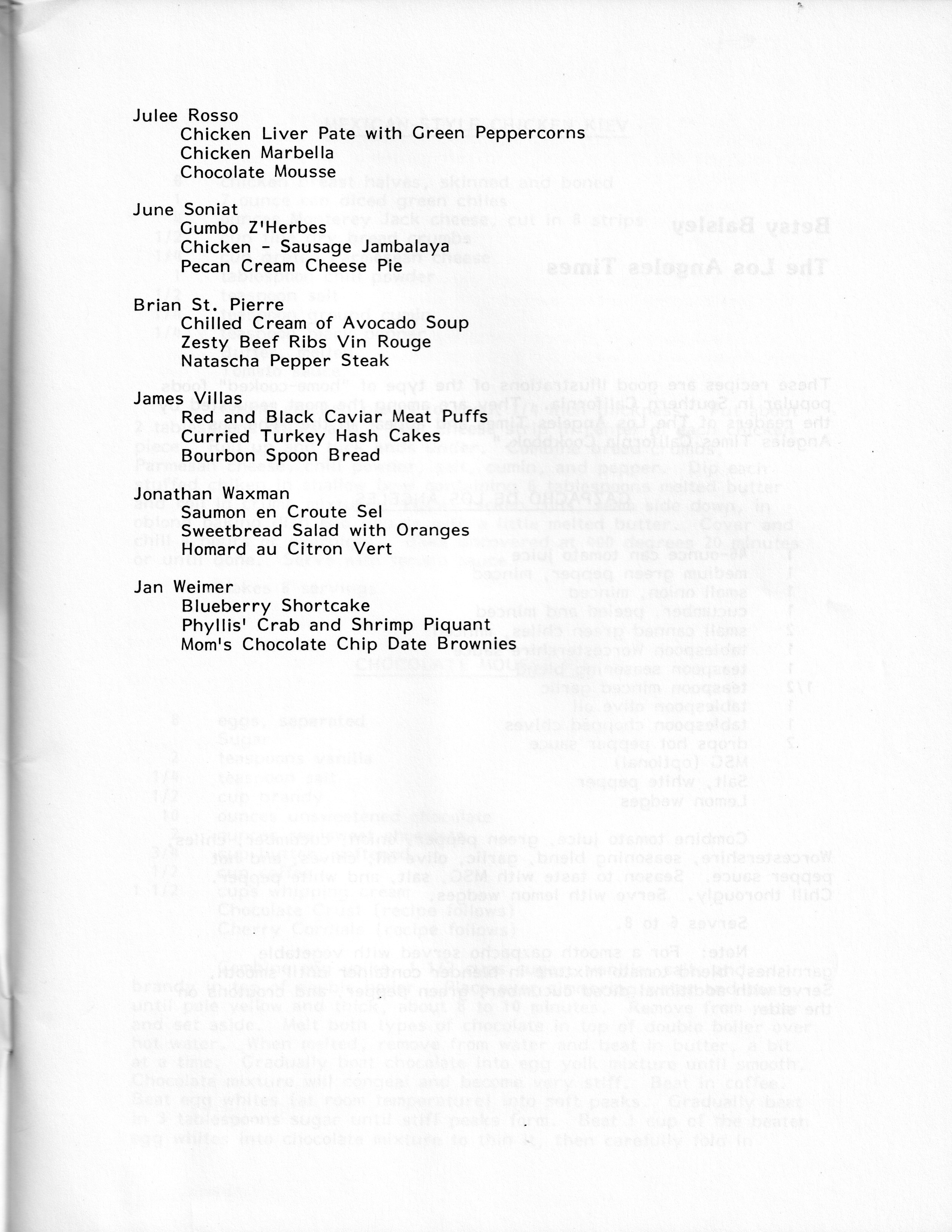
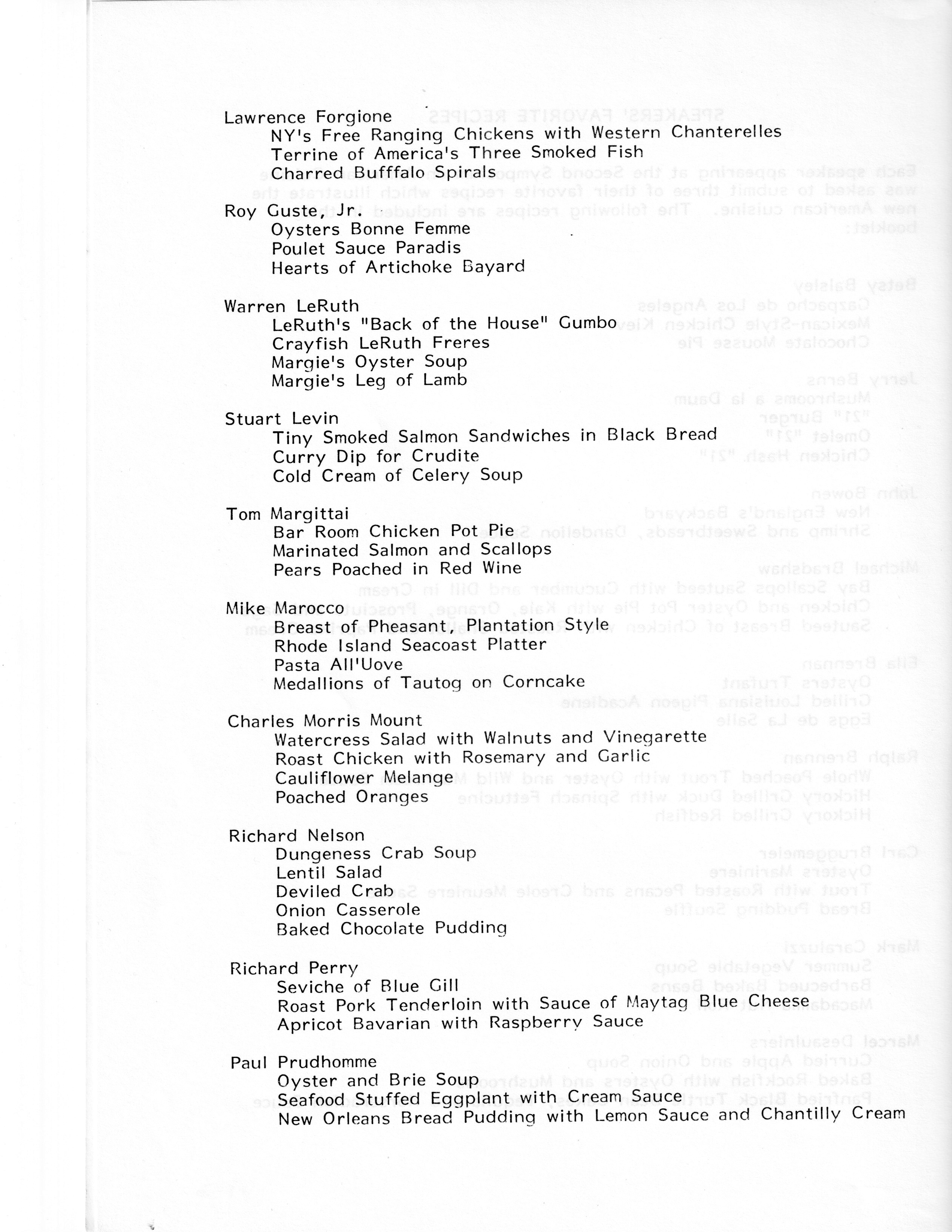
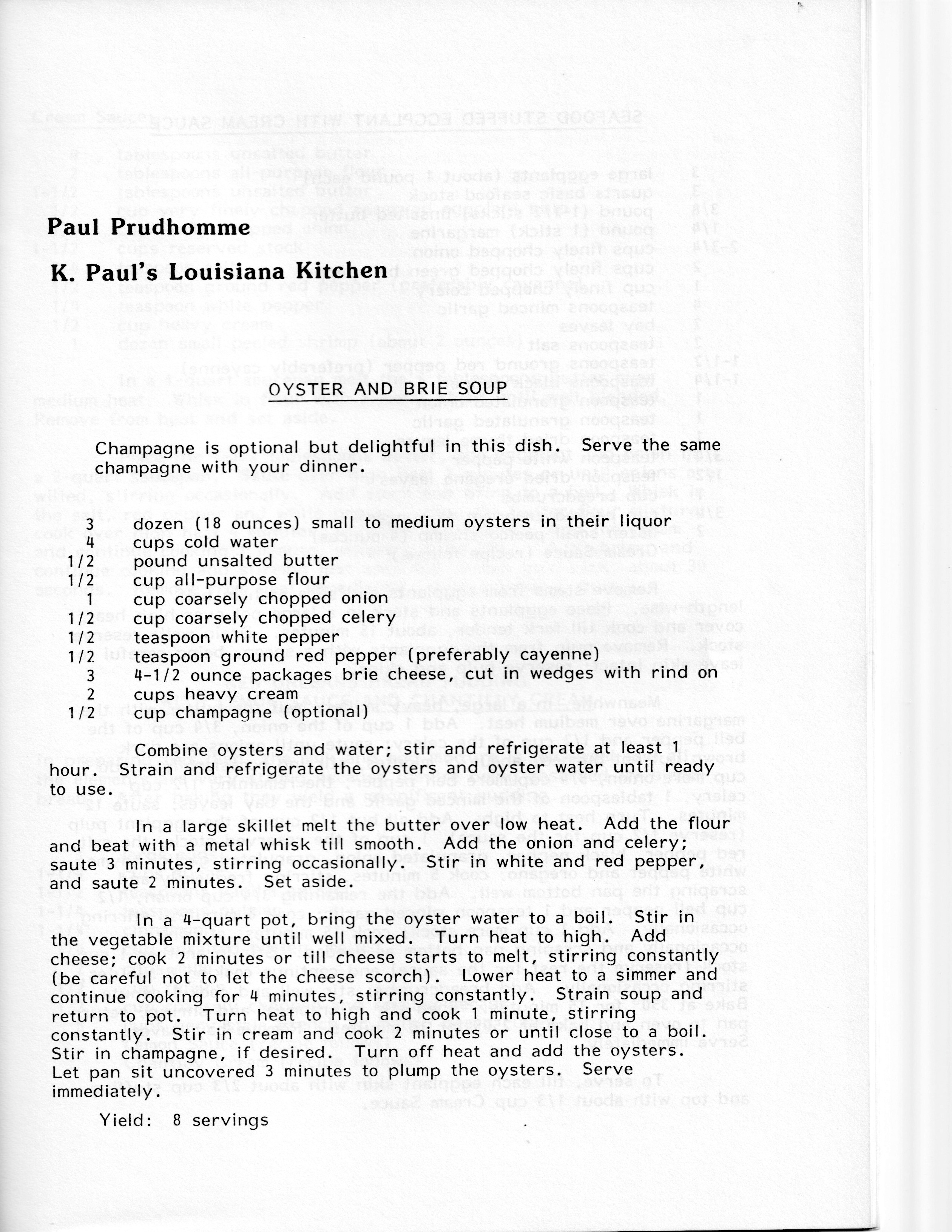
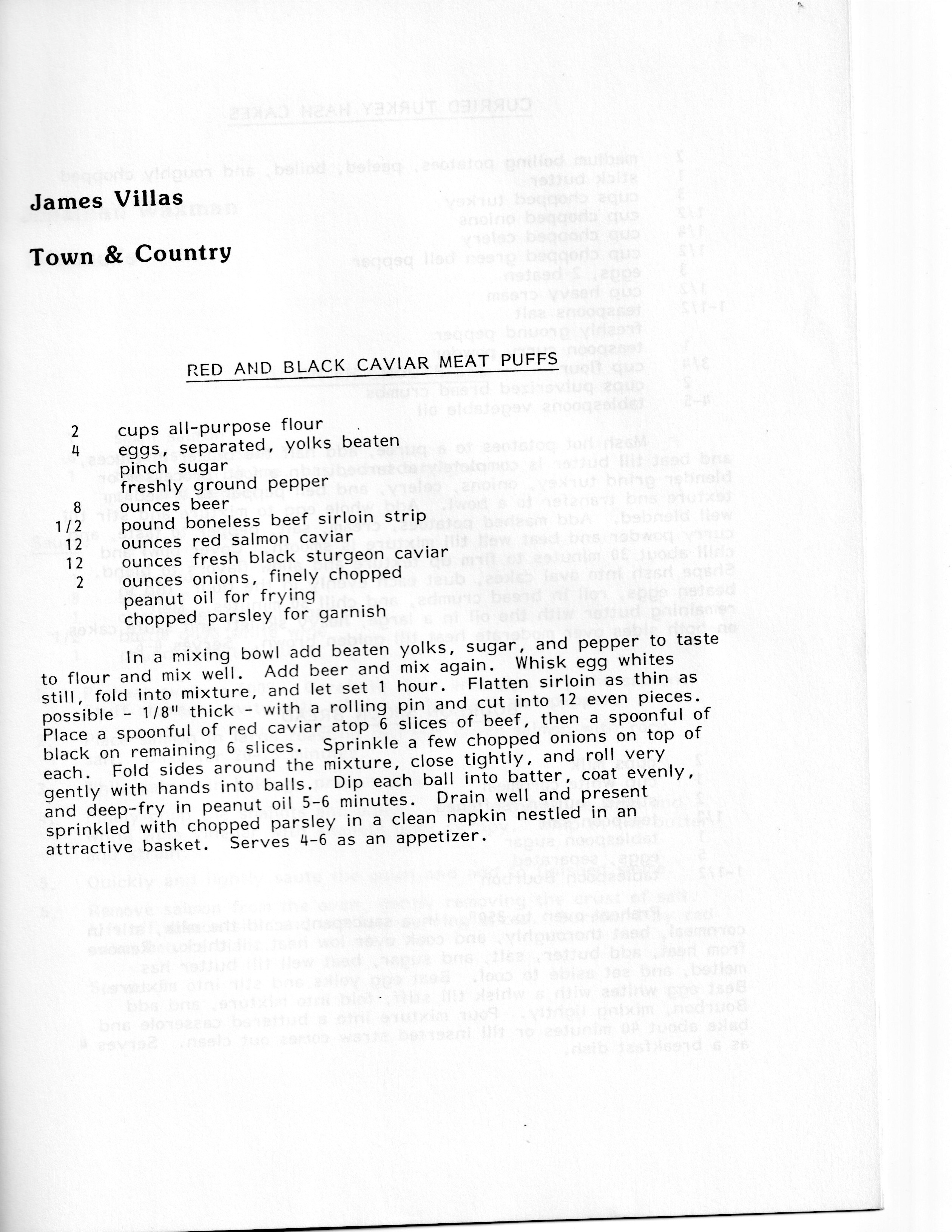
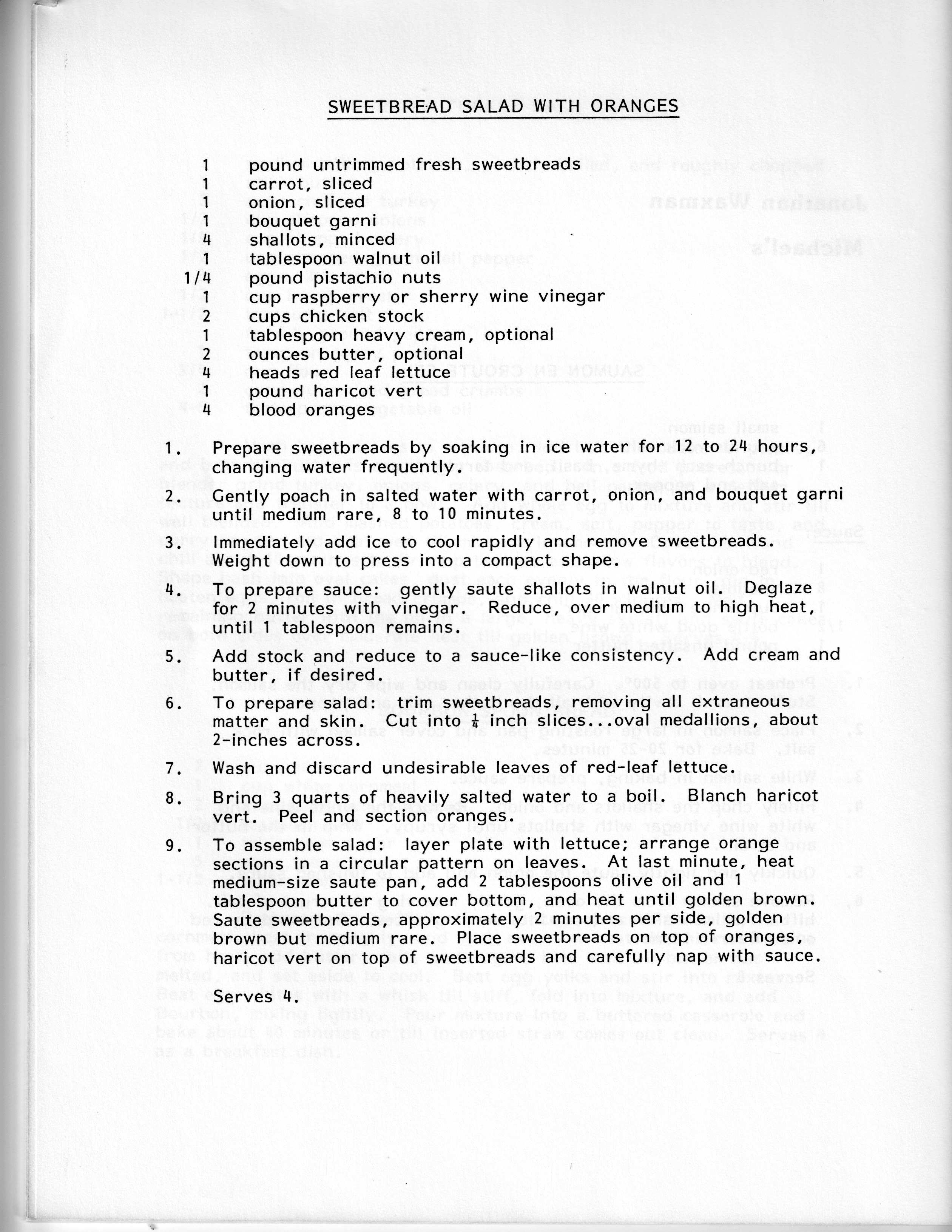
I found the catalogue from the first symposium, and as I flipped through it I couldn’t help thinking that the dishes the various chefs chose to serve say a great deal about both the chefs and that particular moment in our culinary history.
I’ve included three of the more intriguing recipes from the catalogue (although I have to admit that you could not pay me to make those Caviar Puffs).

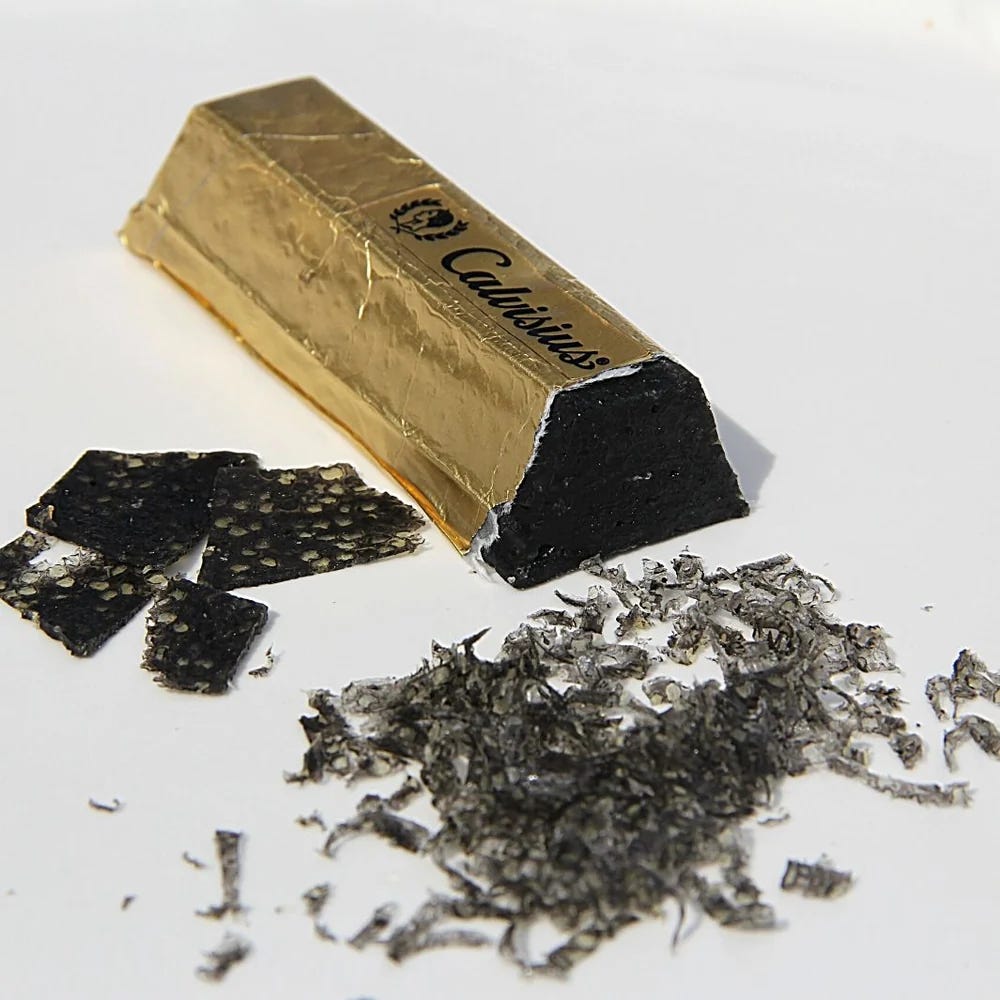
Bottarga is often referred to as “poor man’s caviar” because it is, after all, fish roe. But recently caviar producers have been making what I think of as “rich man’s bottarga.” They’re taking pricey sturgeon roe and curing it until it is a solid block. It’s wonderful simply grated over buttered pasta or omelets (the heat releases the flavor). And sliced into thin little sheets it’s the perfect topping for almost any canapé.
I particularly like the Calvisius Lingotto caviar, which is produced in Italy. Aged in oak molds, it comes swathed in gold - a perfectly pre-wrapped present.

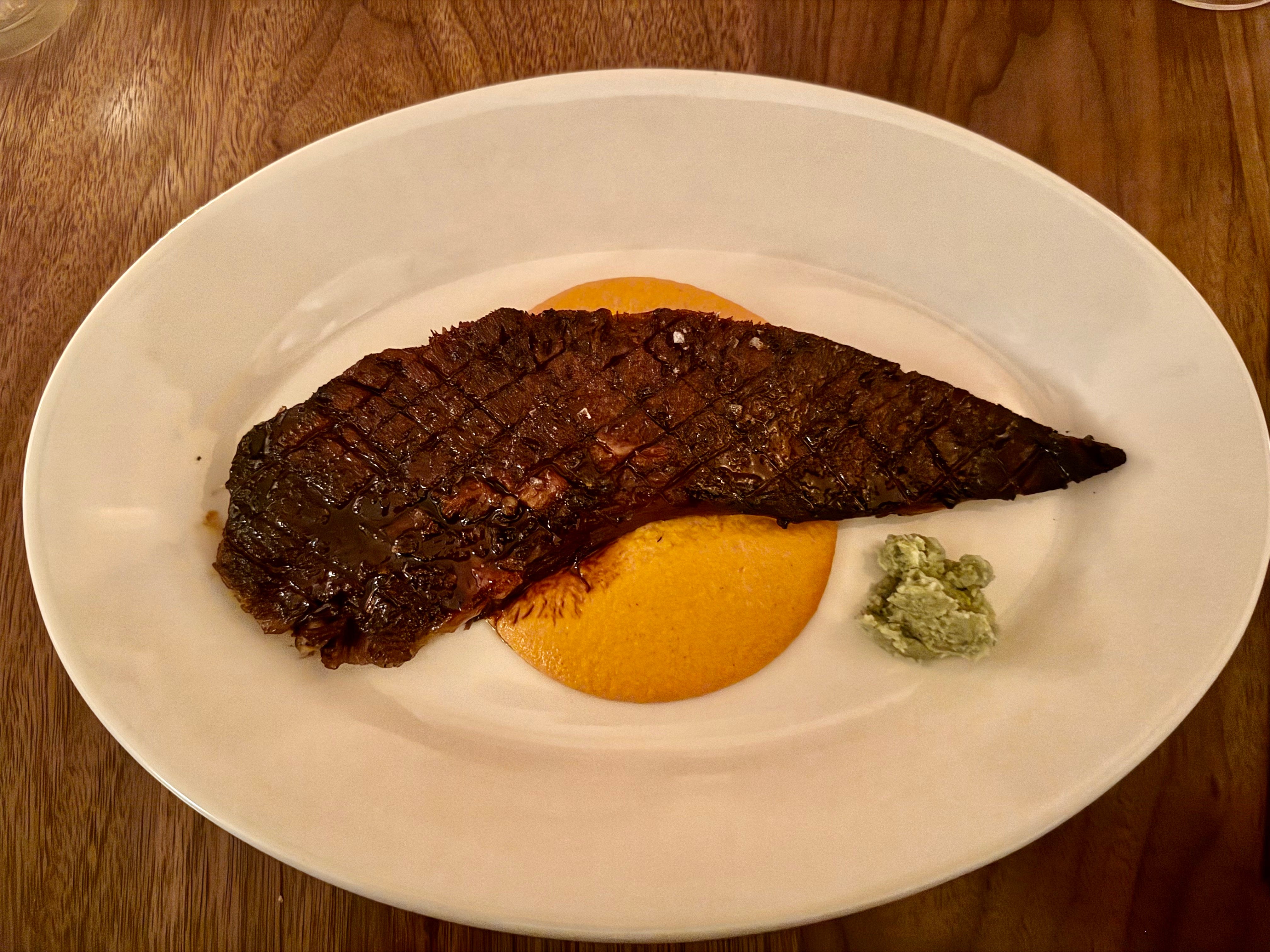
“You shouldn’t call this tongue,” I told our server after my first astonishing taste of this dish, “you should tell people that it’s a new kind of foie gras.”
This innocent looking slice of grilled tongue is surprisingly rich with the tenderest texture and a flavor so sneaky it keeps dancing away. The Romesco sauce is wonderful, but it’s the freshly grated wasabi that contributes the perfect note. The slight crunch of the grated root is the perfect counterpoint to the tender texture of the meat, while wasabi’s heat thrums beneath the flavor like the beat of a drum.
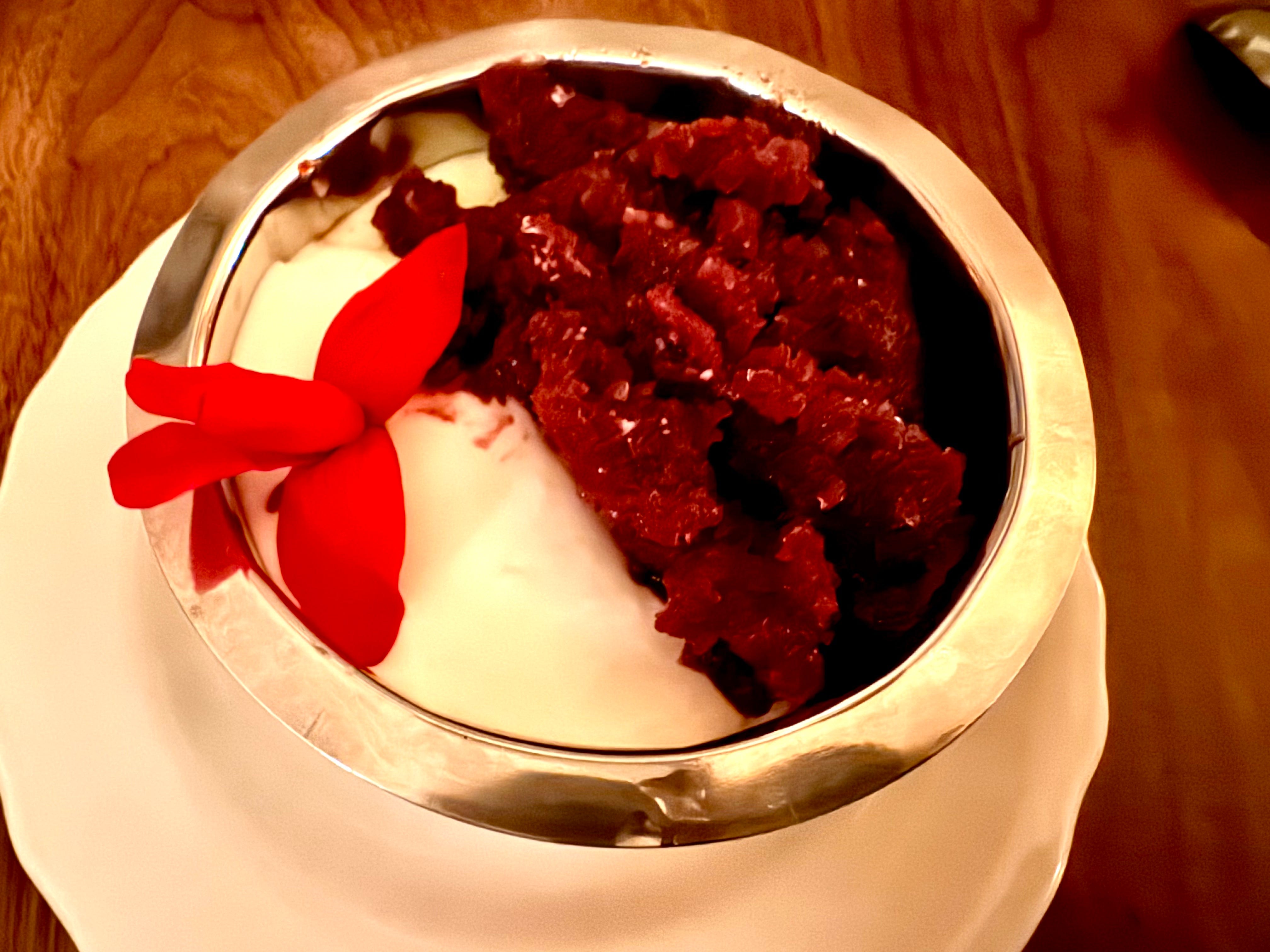
Somssi is the newest restaurant from the Atomix people. The menu is excitingly experimental; there’s very little here you’ve had before. Other winning dishes: 5 different kinds of mushroom, each prepared in a different way, set on curried rice and crowned with a sizzled egg. Linguine tossed with ragu and the surprise of mustard kimchi. And a smooth fig-leaf custard paired with a rough cherry granita.
I can’t wait to go back to try the rest of the menu.

No posts
Comments
Nothing yet. Say the first thing.
Sign in to join the conversation.