
Last week’s ode to Icelandic cod’s heads set off a fierce flood of anti-meat letters; reading them I couldn’t help thinking about David Foster Wallace’s thoughts about what he called the whole animal-cruelty-and-eating issue in his now-famous article, Consider the Lobster.
“I should add that it appears to me unlikely that many readers of Gourmet wish to think hard about it, either, or to be queried about the morality of their eating habits in the pages of a culinary monthly.”
It turns out that our readers did, indeed, wish to think hard about the issue: we got hundreds of thoughtful letter.
The recent letters touched a nerve with me; I spent a recent evening with one of my favorite chefs who confided that, while he wasn’t sure he wanted to tell me this, he was seriously considering going vegan for both health and ethical reasons. “Even cheese?” I asked. “Even cheese,” he replied, giving me a startling list of ethical reasons for that decision.
I”ll write about that another time, but right now I want to remember my late father’s equally impassioned anti-vegetarian stance… and how radically things have changed since then.

June 2006
Unless you count potatoes, my father never met a vegetable he really liked. He could tolerate the occasional spear of asparagus, provided it was fat, and he was known to eat a few forkfuls of red cabbage every once in a while. But to my knowledge, nothing green ever got into his mouth without a fight.
You can imagine his horror, therefore, when he discovered that the only restaurant within walking distance of his new office was a health food emporium. This was sometime in the early ‘70s, and when Dad went in to reconnoiter (”They must have something a person can eat,” he muttered), he came staggering out looking particularly pale. “They’re selling some substance made of soybeans as a replacement for meat!” he shuddered. Forced by hunger to go in for lunch one afternoon, he emerged with the information that the waitress had talked him into something called “vegetarian beef Stro-ganov.” She’d even persuaded him to have fresh carrot juice to wash it down. In consequence, he announced, he was taking the rest of the day off to recover.
Dad was a pioneer in a part of town slated for gentrification, and as the neighborhood changed, the restaurants did too. Before long, Dad’s unfortunate encounter with health food was completely forgotten. But it all came back to me one day a few weeks ago. I was walking to the farmers market in Union Square when I was suddenly assaulted by an olfactory memory. It was that strange, sharp vegetal smell those restaurants used to have, a kind of urban compost that mingled potato peelings, parsley, and grapefruit rind. I remembered, suddenly, what the words health food had once conjured up: strange brown lumps, gluey breads, and sad salads made of limp greens going dark at the edges. I had a brief vision of Dad coming out of that door, shouting, “How can they say that stuff’s good for you?”
I looked up again and saw that I was now passing the very spot where the health food restaurant once stood. Peering through the window into the restaurant that has replaced it, I saw smiling people sipping wine as they ate light, fluffy salads that looked like jewels. As I walked on to the market I thought how much had changed in a very short time.
I filled my arms with multicolored radishes and the first fresh lettuces of the season, the leaves small and ruffled with that tender new green that they have only in spring. I bought berries from the hands that had picked them, and a few early peas so delicate that I was unable to resist eating them on the spot. As I passed my fellow New Yorkers, all laden with produce just hours out of the earth, I wondered whether my father’s opinion of vegetables might have been different if all this had been available to him. We are so fortunate to be living in a time when even urban dwellers can buy fresh fruits and vegetables directly from the people who grow them.
But on that spring morning, as I wandered home considering what I was going to cook for dinner, I walked once more past the site of the much-loathed health food restaurant.
Union Square Cafe now sits on that spot, and as I looked through the window, I wished that my father were still here.
I imagined taking him inside and persuading him to eat something green. Maybe ricotta ravioli with spring greens and crispy golden garlic. Or a simple salad of baby beets, arugula, and apples. Or perhaps nothing more than a straightforward sauté of spinach grown by a nearby farmer.
“Dad,” I’d say, “this really is health food. Try it. You might like it.”
And in my imagination, at least, he does.

I wish Dad had gotten to eat at Greens, which opened in 1979 and is still going strong. Perched on the edge of San Francisco Bay it is a large, spare, serene space perched right over the water. The sophisticated vegetarian menu was truly revolutionary for its time; today it is enticing but hardly startling.
Originally it was part of the San Francisco Zen Center and the early Greens employees were all practitioners of Zen. Their vegetables came from Green Gulch, the community’s organic farm. And the wonderful Deborah Madison, who has gone on to write so many seminal cookbooks, was the restaurant’s first chef.
I think this menu is from a meal I shared with Marion Cunningham in 1983.
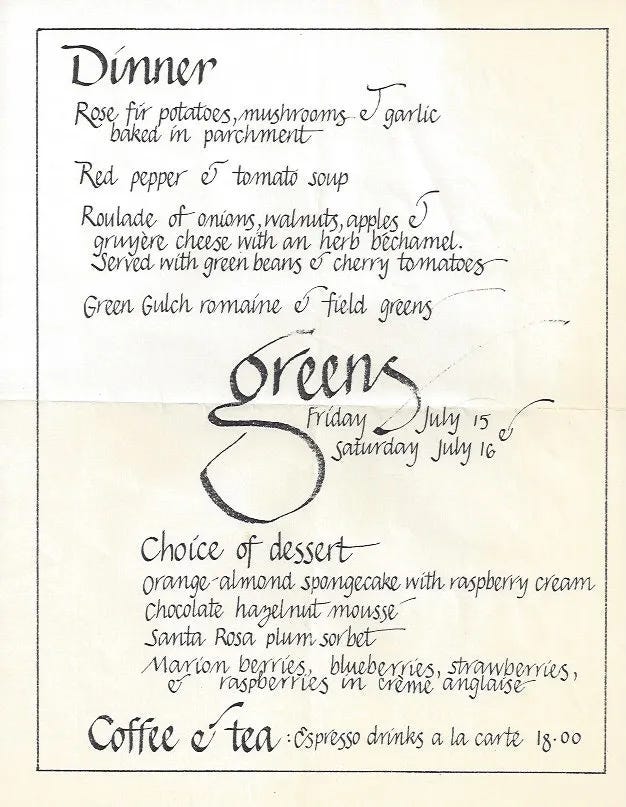

Another in the series of Memorable Meals
This one seems particularly apropos at this moment. It was, without any doubt, the most astonishing vegetarian meal I’ve ever eaten.
June 2017
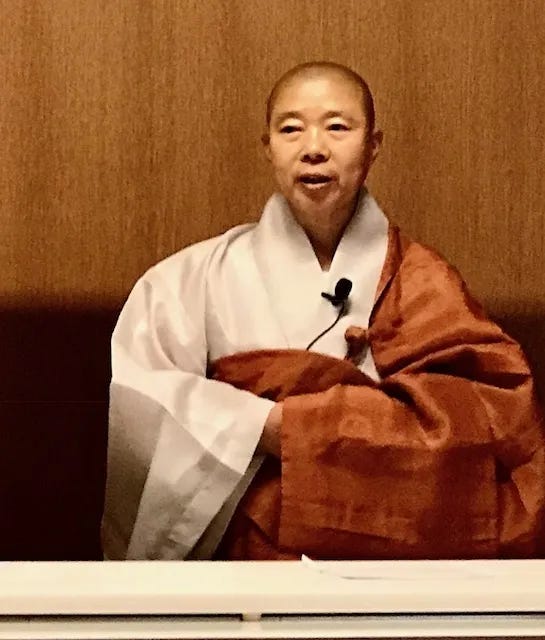
The Buddhist monk and celebrated chef Jeong Kwan was in New York yesterday, cooking a meal to celebrate the winter Olympics in PeyongChang next year.
Eric Ripert has spoken with great reverence about the chef, so I’ve always been eager to meet her. And the Chef’s Table episode about her is so beautiful that I was excited to have the opportunity to experience one of Jeong Kwan’s vegan meals.
We started with tiny porcelain cups of lotus flower tea: delicate, floral and fragrant, it’s one of those drinks you taste once and never forget.
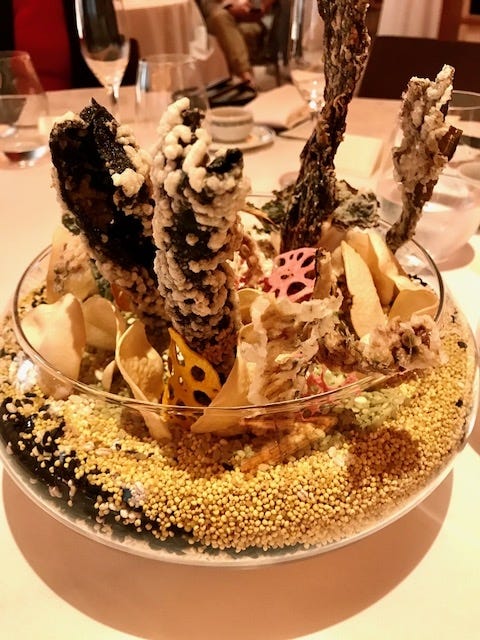
Then we were introduced to 15-year old soy sauce that the monk brews herself; she urged us to have a spoonful before we began eating and to use it liberally throughout the meal. It was dark, complex and mellow with a lingering flavor that echoed in your mouth long after the sauce itself was gone. I used it as dipping sauce for ganjang and bugak, this centerpiece of crisped seaweed (which had the robust and appealing flavor of fried fish tails), balloon flower leaf, ailanthus (which is also known as “tree of heaven”), potato and shiso.
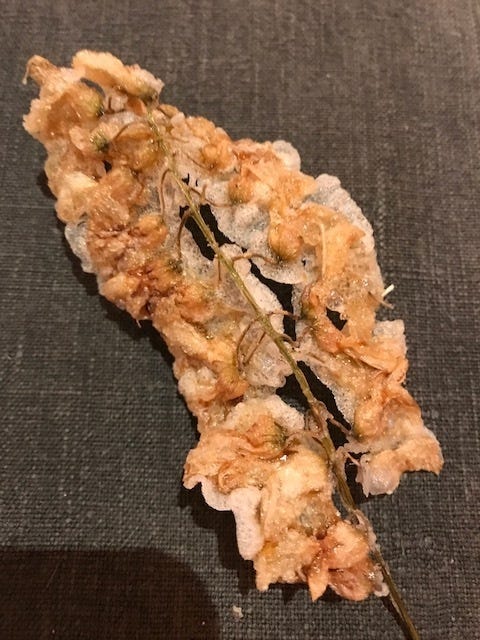
This was followed by a bowl of pretty little local leaves in a dressing that hinted at orange and spice, and then this grilled deodeok and deoduck with pine nut.
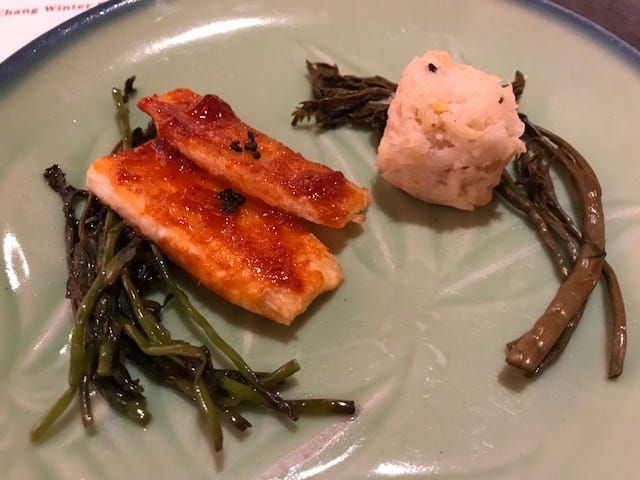
Deoduck is bonnet bellflower; the chewy root, splashed with gochujang, is a standard in Korea. But that little ball of pinenut and shredded deoduck on the side was remarkable: simultaneously soft and slightly crisp, it was tinged with the taste of sesame oil. The chef eschews all alliums - no garlic, no onion, no scallion - but she has no fear of either sweet or heat. There was a touch of chile in almost every dish we ate, and she uses rice syrup and fruit to contrast the saline flavor of soy.
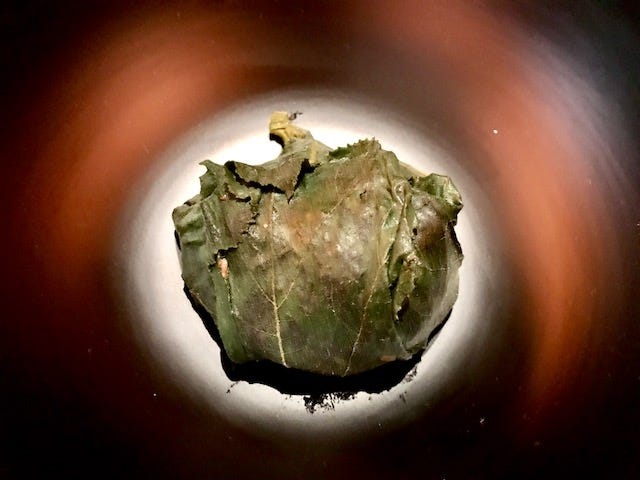
A surprise package sat at each plate. As each little sphere of gangwon was opened up the fragrance of chestnut and shiitake leapt into the air, enveloping the table in the most sensual aroma. Great fat juicy mushrooms had soaked up a luxurious broth of soy, sesame, rice syrup and fermented berry juice; they were tangled into gingko nuts and jujubes. Hauntingly delicious.
Now waiters appeared bearing a black tray covered with little black bowls for each diner: Barugongyang. The empty bowls were for soup and rice, which we passed around the table and served to one another. (I’m embarrassed to admit that our table neglected to wait for instruction and simply helped ourselves, putting the rice and soup into the wrong bowls.)
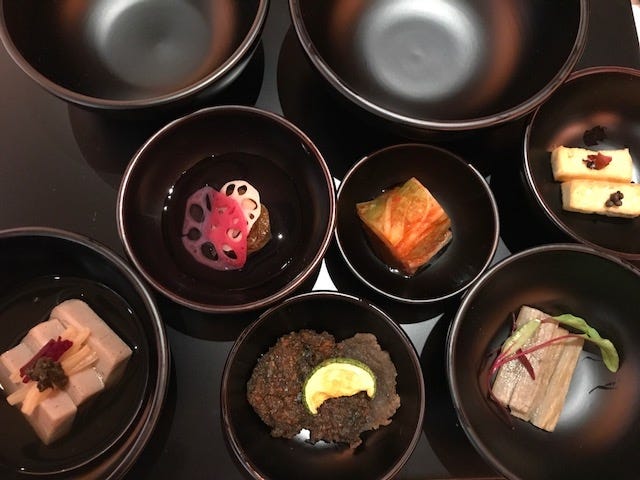
Starting at the bottom left:
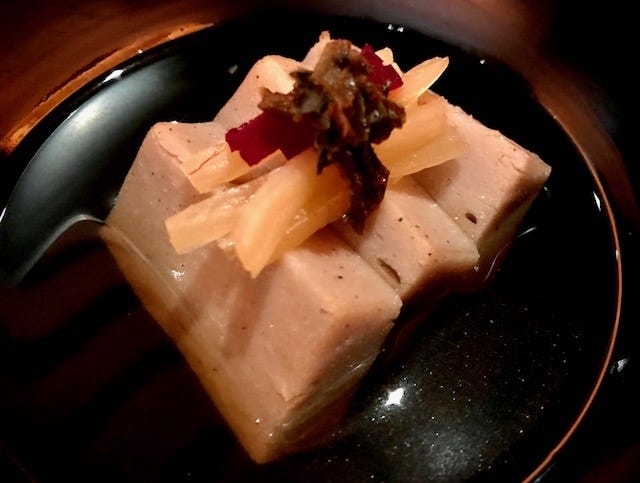
BongPyeong which was translated as “mook with buckwheat.”
Mook, or muk is a soft substance with the texture of taro that can be made from almost any starchy substance. This one was buckwheat topped with two year old kimchi, ailanthus, shiitake and cabbage.
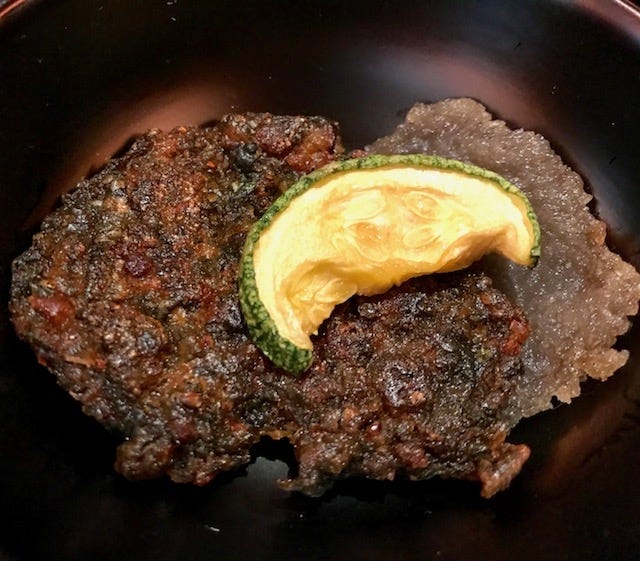
DunNae: a little pancake constructed from baby squash and wild sesame seeds and topped with a bit of squash. In contrast to the contemplative quietness of other dishes, this chewy, slightly spicy offering exploded on the palate like carnival food. A bit of excitement on the plate.
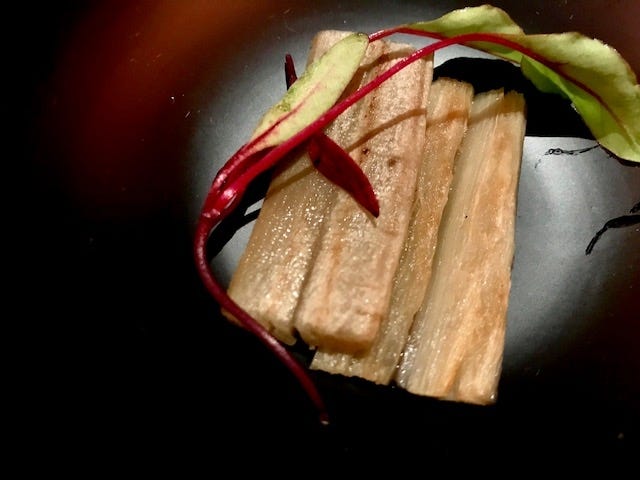
InJae: Grilled burdock topped with sprouted daikon, plum and rice syrup, gochujang, chili powder, sesame seed and sesame oil. Burdock is a bitter root to swallow; you either like it or don’t. If you don’t, all that seasoning won’t help.
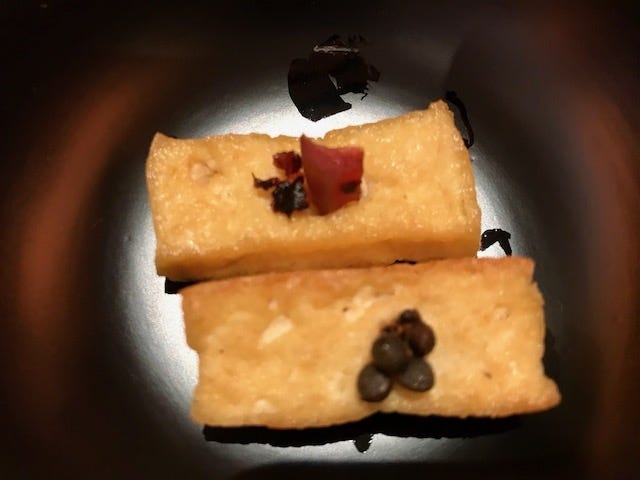
ChoDang: Pan-seared tofu with fermented sansho.
Tofu mans up and gets seriously macho here. Eaten slowly, you suddenly discover a world of flavor in this dense, chewy white substance.
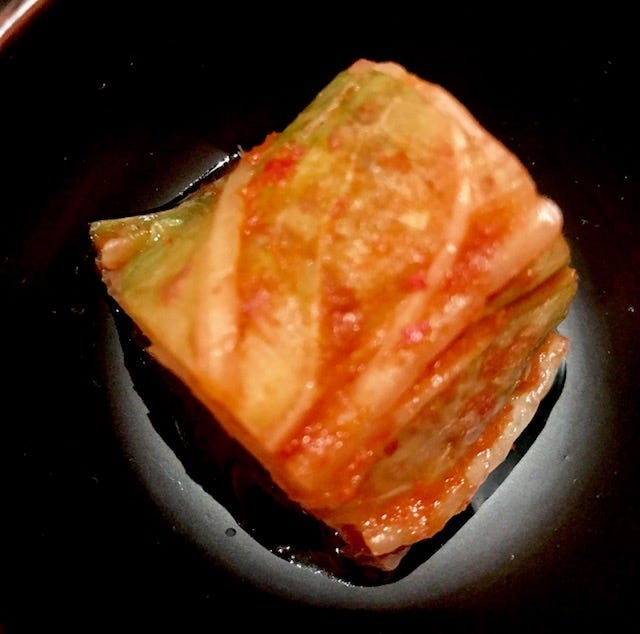
Daegwallyeong: Our old friend, cabbage kimchi.
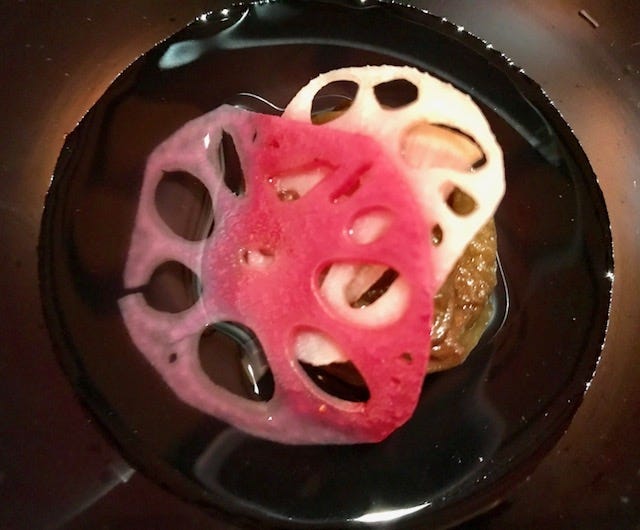
SokChu: Lotus root water kimchi
Water kimchi is a Korean standard. Not hot, the crunchy slices of lotus root were cooked in orange and plum syrup and persimmon vinegar. The chef asked us to leave a bit of lotus root to clean our bowls at the end of the meal. It felt like a sacrifice.
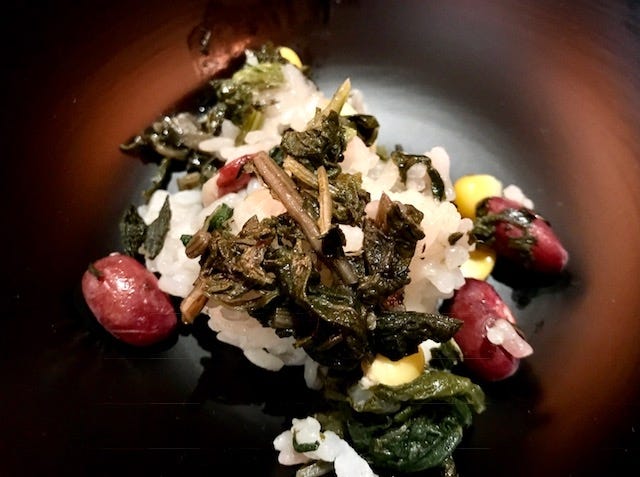
Named for a famous Korean mountain said to hold “the secret of ancient times,” this sticky rice was mingled with Korean thistle, kidney beans, puffed corn and wild sesame oil.
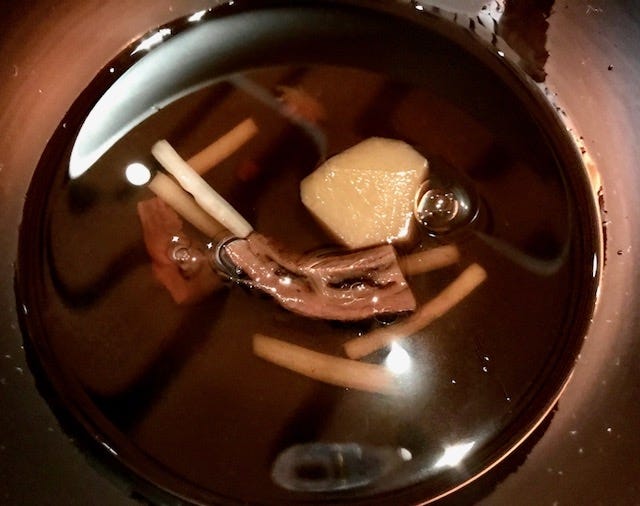
Odae Mountain
Sip slowly. Think about it. Tease out the flavor of mushroom, daikon, ginger, lotus leaf, jujube. Note the hint of chile. This is the entire meal in a single bowl: flavors that whisper instead of shout, asking that you listen carefully with all your senses. A reminder of how much there is to see, hear and taste if we will simply pay attention.
Postscript
Should you want to experience this Korean temple cuisine, one New York restaurant, Hangawi, provides that opportunity. I have to admit that I haven’t been in many years, but here’s my very old review from the New York Times.

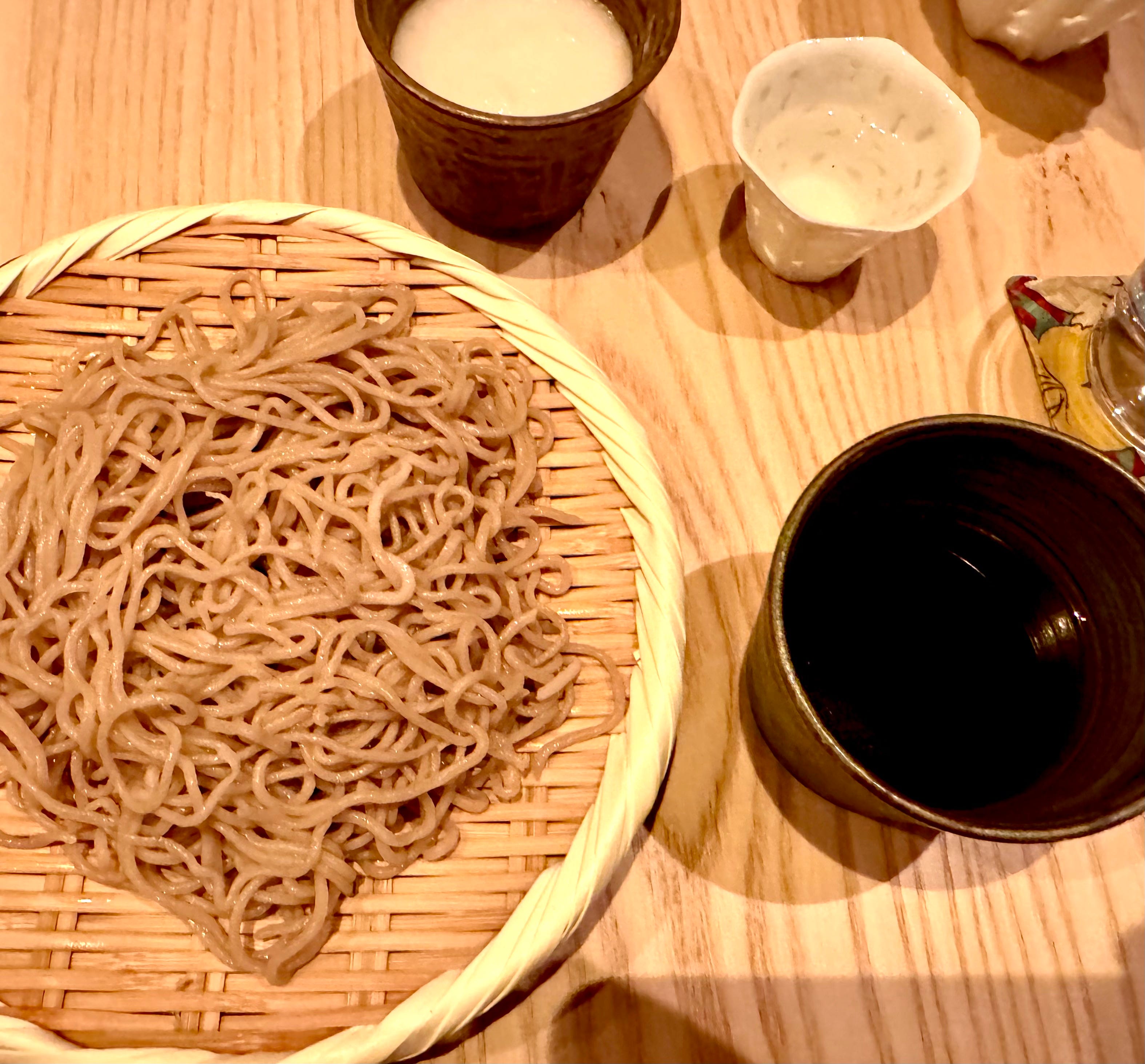
My favorite meal at the moment? Zaru soba - cold soba noodles that you dip into savory mentsuyu sauce made of soy sauce, mirin, sake, and dashi. (If you want to make the dish vegan, simply omit the bonito when making dashi).
Enlivened with a bit of wasabi and topped with tororo - grated yama imo (the wonderfully gooey mountain potato of Japan), it is the perfect dish on a hot summer day.
And I’ve found the perfect place to enjoy it: the new Soba Ulala, which occupies the former Hirohisa space in Soho. This small, serene restaurant is a wonderful place to revel in freshly-made buckwheat noodles with just a bit of bite.

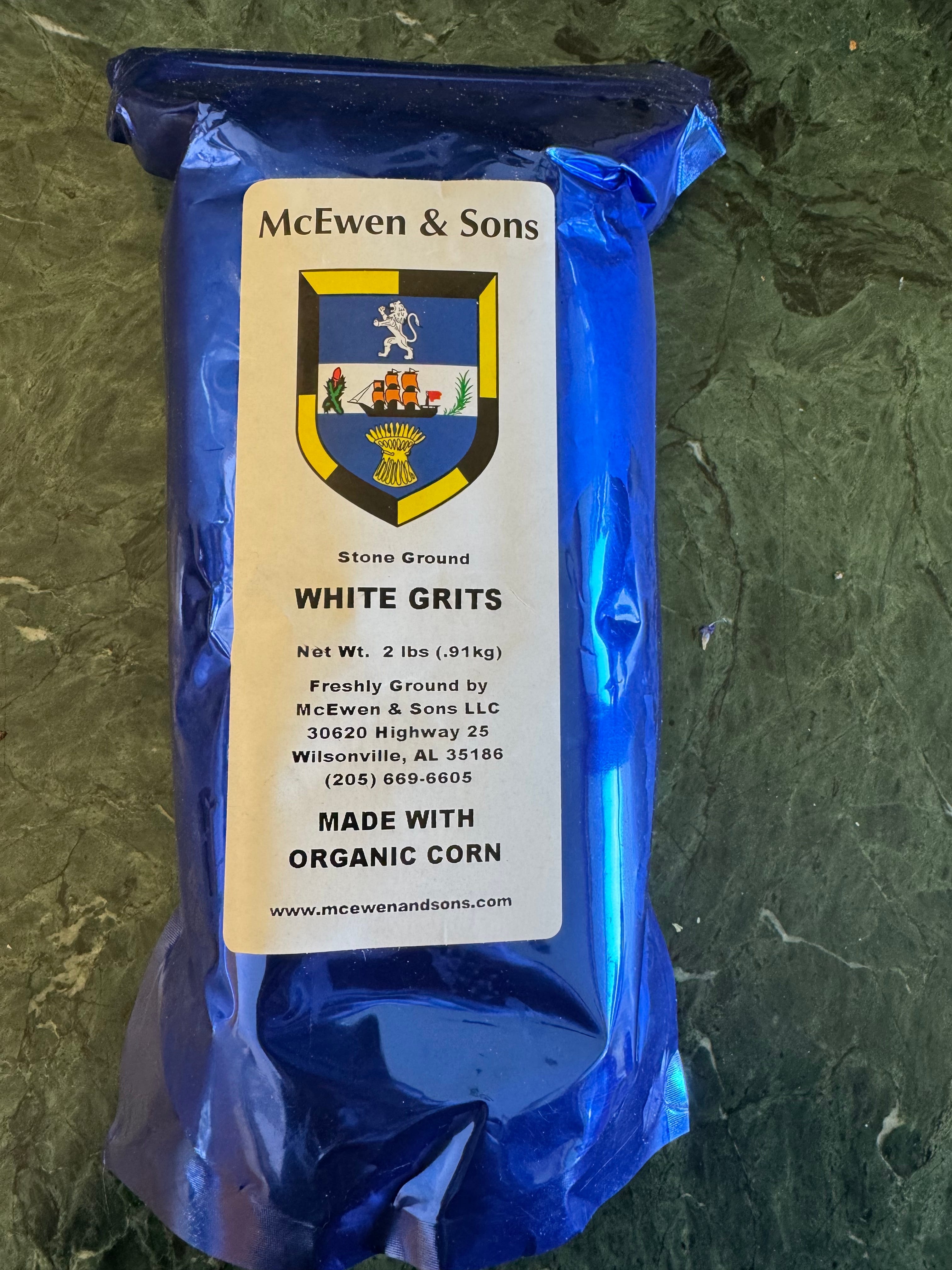
A few weeks ago, when I wrote about the shrimp and grits Robert Stehling made for a dinner at my house, I neglected to mention the chef’s dismay when he saw the grits on offer at our local grocery stores. Happily, I had some grits Robert approved of stashed in my freezer.
McEwan & Sons grits are the real deal: organic corn ground in a stone burr grist mill. The McEwans also make terrific cornmeal that will elevate whatever you bake with them..

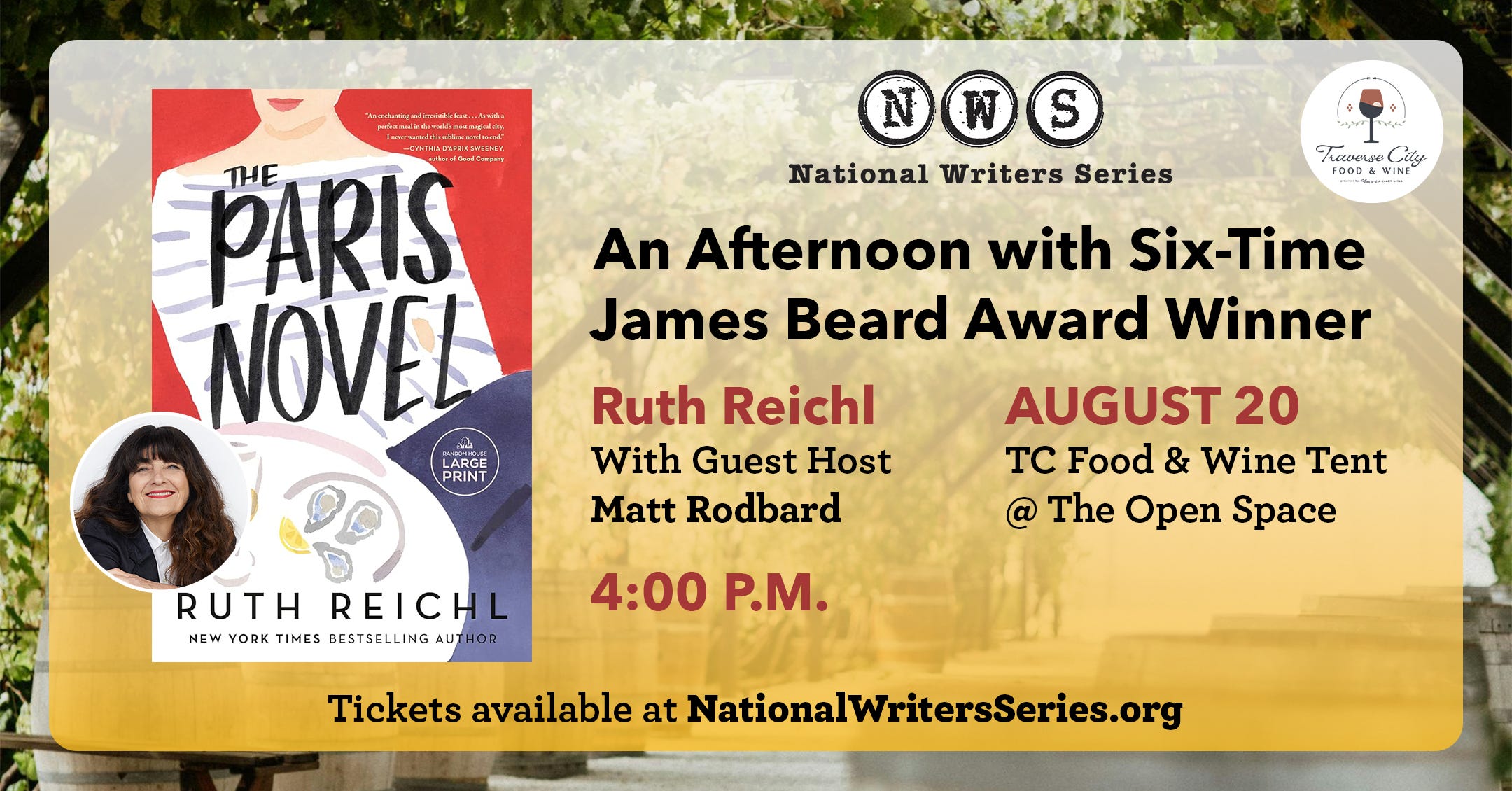
I have always loved Michigan’s Upper Penninsula, and I’m very happy that I’m going to be in Traverse City on August 20th.
If you’ll be there too, please come join me at the National Writer’s Series; tickets are available here.

No posts
Comments
Nothing yet. Say the first thing.
Sign in to join the conversation.