
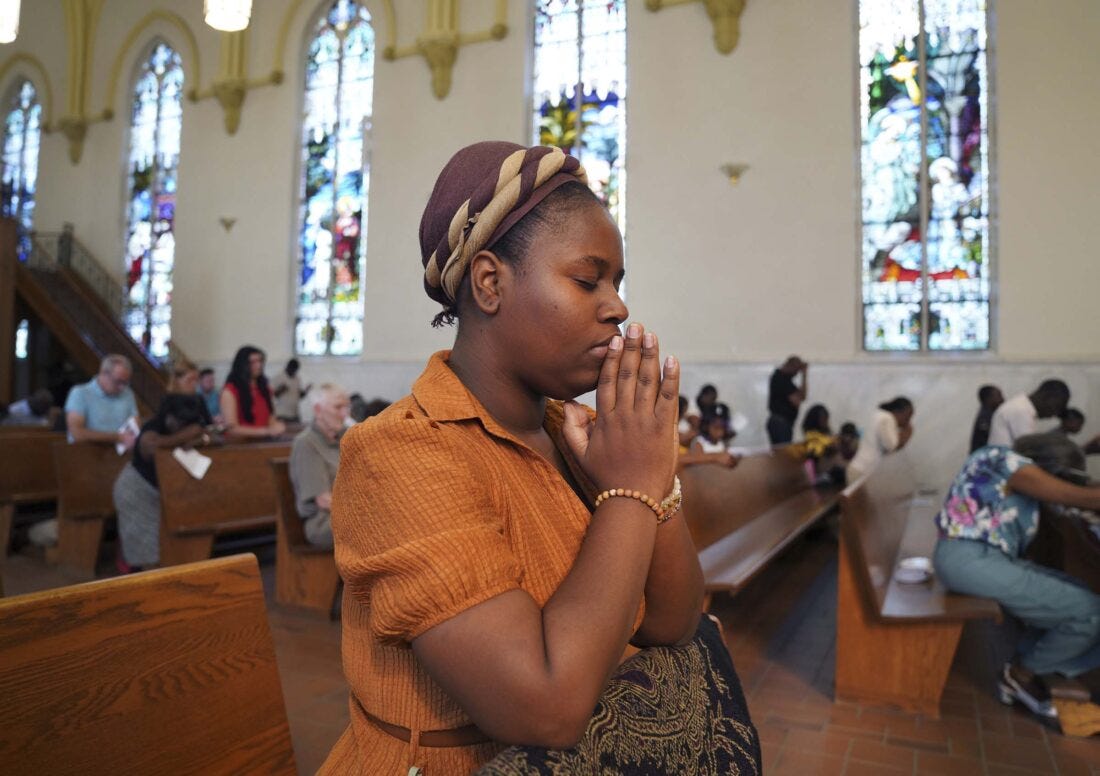
This is the first Fourth of July I have spent in the United States in years.
For most of my adult life, the holiday arrived overseas, and what I remember is not fireworks. It is the community. Americans posted abroad build a small country of their own: State, USAID, Defense, and CDC families at the same picnic tables, a yard sale where a departing officer sells his car to the diplomat replacing him, someone’s kid holding a paper flag while the colors go up over the compound. Far from home, the Fourth was less a celebration than a roll call.
One July I drew the short straw: duty officer over the holiday, the person who answers the after-hours emergency line while nearly everyone else flies home to parents and children in the States. It was my turn, so I stayed. From June 30 to July 6 the phone did not stay quiet. A flight that had originated in the country where I served went down across a border. Americans called from police stations. Families called about loved ones who had died suddenly, an ocean from home. It did not matter which agency’s badge I carried. When an American was in trouble somewhere in the world, an American answered the phone.
It turned out to be my last turn with the phone. I have been thinking about it all year.
On July 1, one year had passed since the administration moved to dismantle the United States Agency for International Development and absorb its remaining functions into the State Department. For thousands of people, the end arrived in an inbox: a notice, a date, instructions to surrender a badge. The people who knew which minister would take a call and which promise had been made to which village were sent home.
The hardest conversations were not with Washington. They were with partners overseas who asked why America had disappeared in the middle of its commitments.
There was no answer that was also true.
In September 2025, the State Department published its America First Global Health Strategy, the blueprint for what survived the dismantling. The document concedes in its own pages that American health assistance saved more than 26 million lives, prevented 7.8 million babies from being born with HIV, and stopped outbreaks before they reached the United States. The same document says those programs created a “culture of dependency” among the countries that received them. The concession and the verdict share a table of contents.
USAID carried an imperfect idea of America. Its commitments were supposed to outlast American politics. Its dismantling told them that a promise made in Washington could disappear before it reached the village.
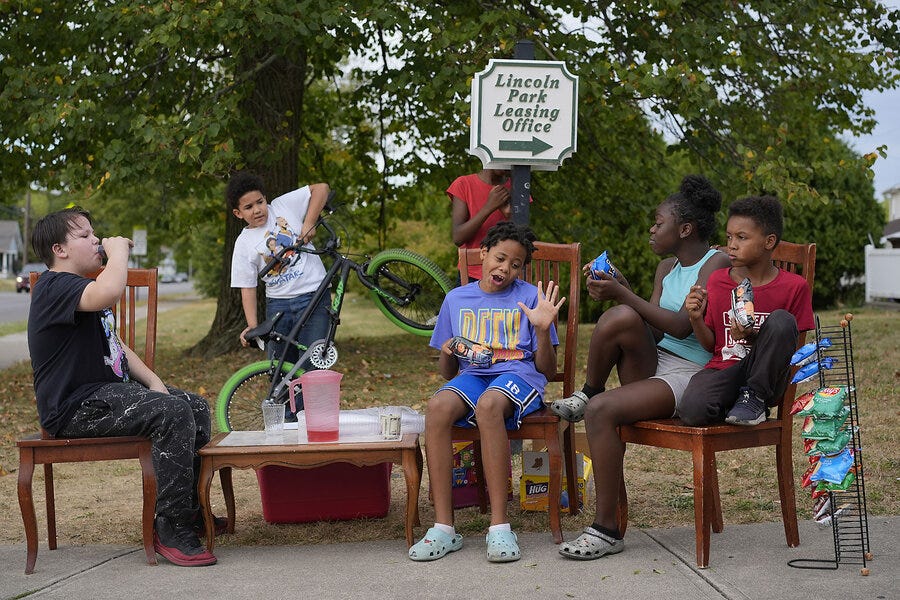
The hill in front of the hospital had the best view, a long lawn sloping down toward McCreight Avenue, and that is where my family sat for the Fourth of July parade. My mother marched with the other business owners. The rest of us watched from the grass and looked for neighbors in the crowd. When the fire trucks came through with their sirens open, the kids clamped their hands over their ears. When candy and political stickers flew, we ran. Afterward we worked on our father until he agreed to stop at Mike and Rosy’s, at the corner of McCreight and Plum, where the parade ended. The day went on from there: barbecues, deviled eggs, watermelon, corn on the cob, relatives arriving in the heat. The high school bands marched. Everyone waited for the jet flyover from Wright-Patterson Air Force Base. Veterans walked the route. For a few hours the town came out to see itself.
Much of my family has lived in and around Springfield for five generations. When people overseas asked where I was from, I said Springfield, Ohio, and meant all of that.
In September 2024, a presidential candidate told a debate audience that Haitian immigrants in Springfield were eating their neighbors’ pets. The claim was false. The Republican governor of Ohio said there was no evidence. At least 33 bomb threats followed anyway.
The Haitian families at the center of that lie had come to Springfield to work. Factories and warehouses could not fill shifts, and the people doing the recruiting were not activists. Many were Republican businessmen who needed labor. Haitian workers filled the shifts, bought houses and fixed them up, put life back into blocks that had been emptying for decades, and sent their children to schools that were later evacuated because of the threats. Many held Temporary Protected Status, a federal protection allowing them to remain and work while Haiti was deemed unsafe. On June 25, the Supreme Court let the administration end that protection for roughly 350,000 Haitians. Within days, people in Springfield were losing jobs. That was nine days before the Fourth of July. A lie made them targets. Paperwork made them removable.
The lie did not spread by itself. It found a politics ready to use it.
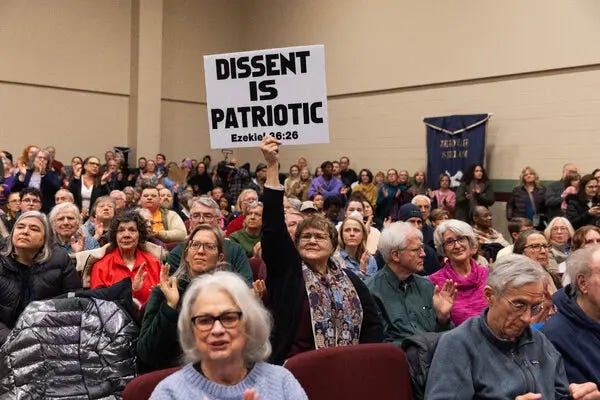
White Christian nationalism treats the country as property: owned by some Americans by birthright, lent to the rest on conditions. It borrows the language of faith while setting aside its demands for mercy, humility, and truth. Under its logic, a lie about Haitian neighbors becomes a warning, and their removal becomes protection. When the bomb threats came, church leaders in Springfield stood with the city’s Haitian residents.
The calls I answer now come from Springfield. One of the callers is my niece, who volunteers at a faith-based charity in town. She sits with parents whose children were born in the United States and are citizens while the parents are not. She hears how blame travels there: a crash involving one Haitian driver offered around town as evidence against every Haitian in it, a standard no one born there is asked to meet. She has heard county officials work through a possibility that used to belong to other countries: if the parents are removed and will not carry their children into danger, the foster care system will inherit the families the law divided.
She talks about one young woman, close to her own age, with a small daughter. She left Haiti because of the gangs and the killing, because there was no end to it in sight. Springfield invited her to work, and she worked. For the first time in years she felt safe. Now she has been handed a choice no parent should face: take her daughter, an American citizen, back to the danger she fled, or leave her behind in the hope that the child’s country will treat the child better than it treated her mother.
Nothing about this is partisan in Springfield. The town leans conservative. The charity is run by churches. The employers were Republicans. What my niece describes when she calls is not politics. It is what happens to neighbors.
For most of my career, the last mile was a physical place: the road beyond the paved road, the clinic at the edge of the map, the place where policy became real or failed. I did not expect it to run through the town that raised me. I recognized it anyway: a promise withdrawn, a family left to absorb the cost.
I have not given up on the country I served. For most of my career, I knew what it meant to answer when an American called from far away. The calls come from home now. One of them is about a little girl in Springfield, an American in trouble. It is my turn again, so I am staying.
America First Global Health Strategy: U.S. Department of State, September 2025. Lives saved and “culture of dependency” language appear in the Letter from Secretary Rubio, the Executive Summary, and pages 5 through 12.
Presidential debate claim about Springfield: ABC News presidential debate, September 10, 2024, as reported by NBC News.
“At least 33” bomb threats and hoax determination: Gov. Mike DeWine press conference, September 16, 2024 (CNBC, NBC News).
Haitian homeowners and church leaders standing with Haitian residents: NPR, September 19, 2024.
Temporary Protected Status ruling: Mullin v. Doe, U.S. Supreme Court, decided June 25, 2026 (SCOTUSblog; American Immigration Council).
Roughly 350,000 Haitian TPS holders affected: NBC News, June 25, 2026.
Immediate job losses in Springfield: NBC News, June 29, 2026.
Accounts from Clark County (foster care planning, individual family circumstances): firsthand testimony relayed to the author, June 2026. Details anonymized.
Comments
Nothing yet. Say the first thing.
Sign in to join the conversation.