
I remember the elevator more clearly than I remember receiving my reduction in force notice.
The notice had arrived only hours earlier. We all knew it was coming, but part of me still believed the United States would never dismantle an institution that had served American interests for more than sixty years. I had spent my career helping children whose education had been destroyed by war. The idea that USAID itself could simply disappear seemed unimaginable.
Later that afternoon, I stepped into the elevator of my apartment building in Bangkok. An older American got in beside me. We exchanged the kind of small talk strangers do. He asked what I did for a living.
“I work for USAID.”
For the next fifteen floors he unloaded everything he believed about the agency. We were destroying America. We were wasting taxpayer money. We were corrupt. We should all go get real jobs.
I let him finish.
Only when the doors opened did he ask the question he should have asked first.
“So...what do you actually do?”
“I help children whose education has been destroyed by war.”
He stared at me for a moment. The certainty disappeared from his face. The villain he had spent fifteen floors shouting at had become a person.
I have replayed that conversation many times over the past eighteen months. What stays with me is not his anger. Democracies have always had angry people. What stays with me is how completely someone could despise an institution he could not describe. He knew the accusations. He knew exactly who deserved his contempt. What he did not know was what the agency actually did.
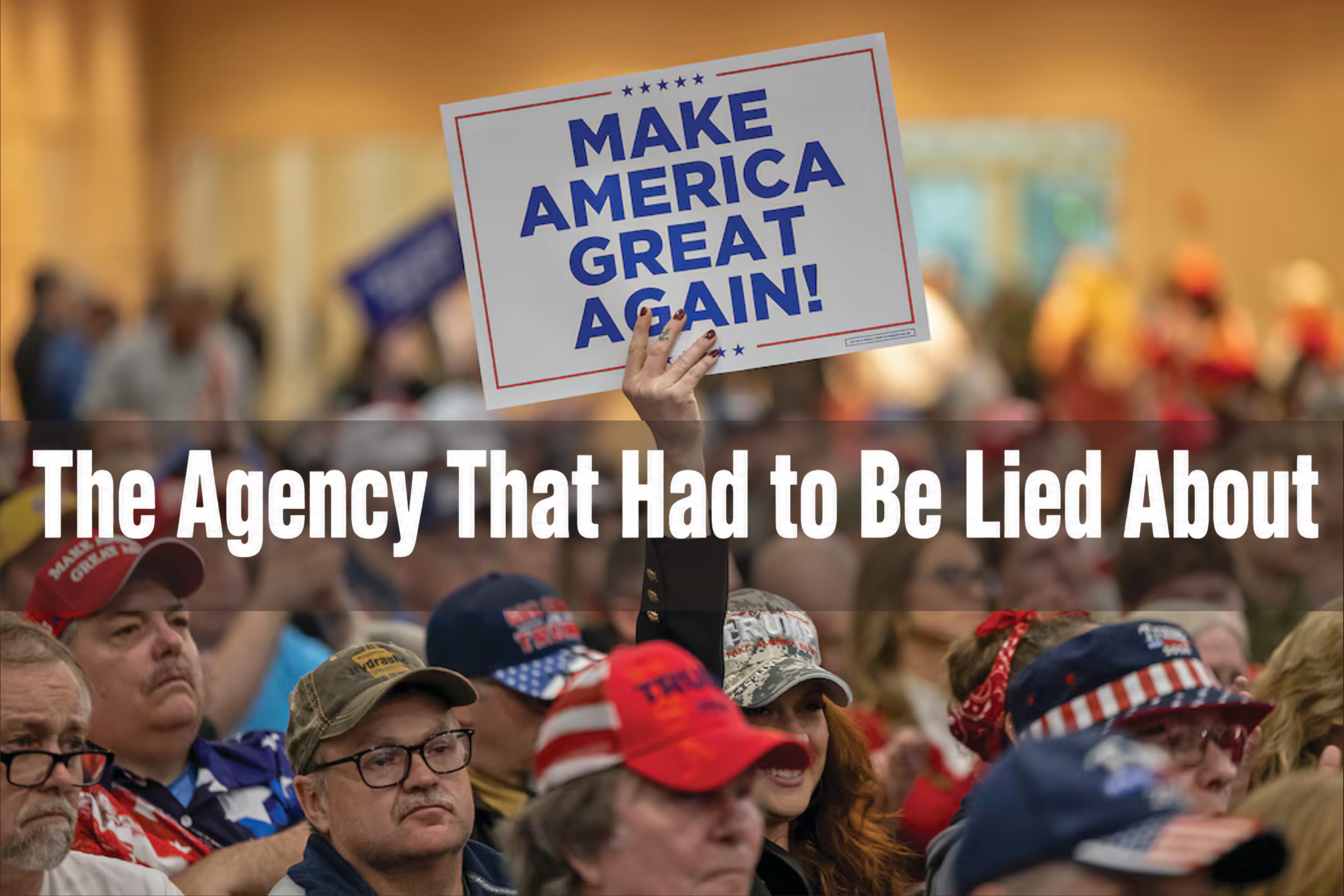
By January 20, 2025, tens of millions of Americans had reached the same verdict without asking the same question. The agency did not have to fail before it could be dismantled. Americans first had to believe it already had.
So it was lied about. Systematically, repeatedly, and on the record.
On February 7, 2025, the White House released a statement titled “At USAID, Waste and Abuse Runs Deep,” listing twelve examples of alleged misuse. The Washington Post’s Fact Checker examined every one. Eleven were misleading, wrong, or lacked context. Only one was accurate. Three of the four projects Press Secretary Karoline Leavitt held up before cameras that day were funded by the State Department, not USAID. FactCheck.org confirmed the same finding independently: of the four programs Leavitt presented as proof of waste, only one had anything to do with USAID.
Americans heard that USAID bought condoms for Hamas. The International Medical Corps stated that no U.S. government funding was used to procure or distribute condoms in Gaza. Americans heard about a $47,000 transgender opera in Colombia. The State Department, not USAID, awarded a $25,000 grant to a Colombian university for a production of an American opera that had debuted to critical acclaim in 2014. Americans heard about a transgender comic book in Peru. It was a State Department educational comic featuring a gay character, not a transgender one. It won two awards.
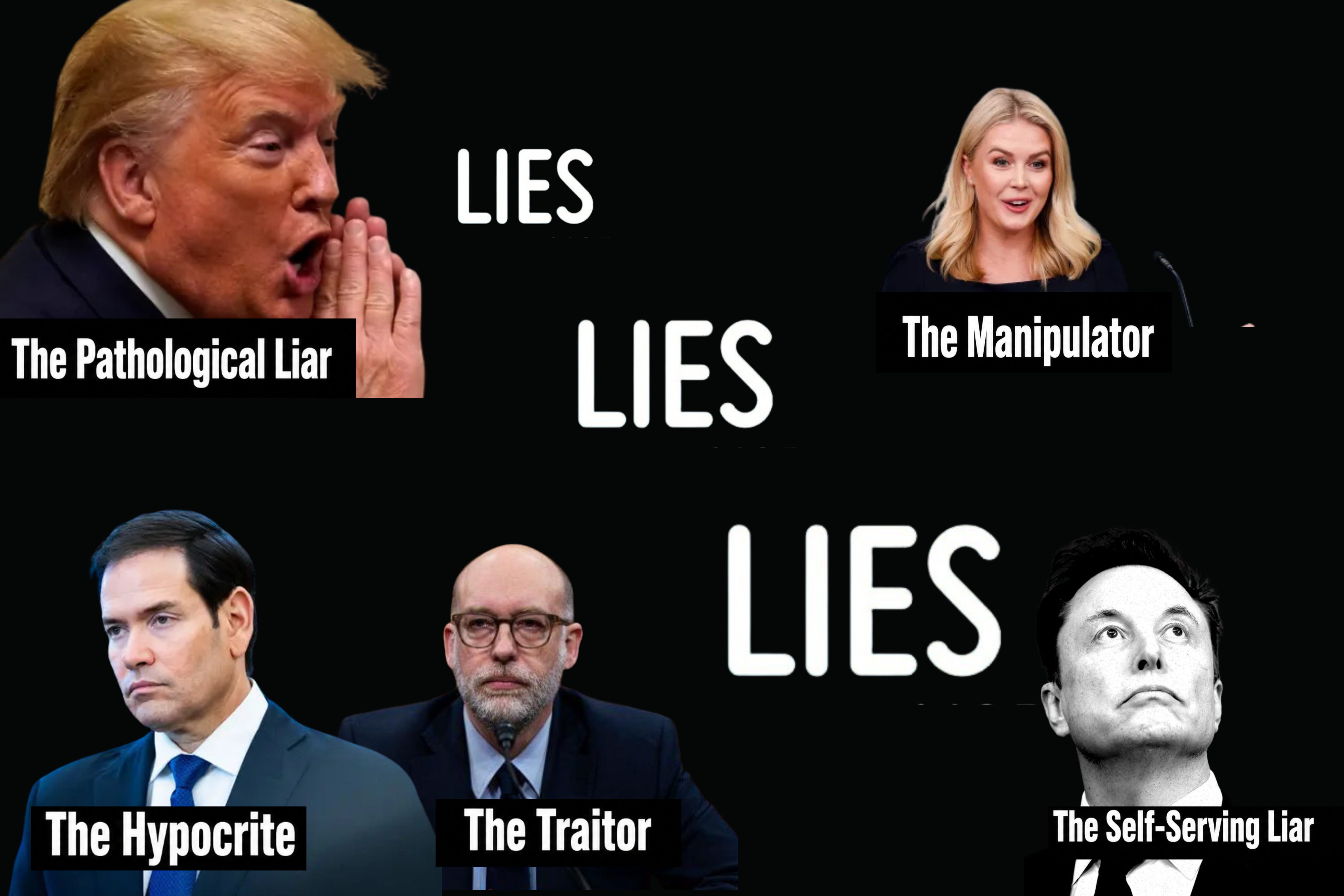
Elon Musk called USAID “a criminal organization” and suggested its administrator, Samantha Power, had enriched herself by $23 million while in office. FactCheck.org found no evidence supporting the claim. Her financial disclosures showed the range of her reported wealth stayed roughly the same from the time she entered office to the time she left. The accusation was constructed by comparing the low end of one filing’s range with the high end of another’s.
None of these corrections traveled as far as the original accusations.
Perhaps that was always USAID’s greatest political weakness. Its successes looked like nothing at all. A famine that never happened. An epidemic that never crossed an ocean. A child who quietly stayed in school instead of picking up a rifle. A refugee camp that never became a recruiting ground for extremists. Prevention leaves few monuments because it leaves behind ordinary days. That makes institutions built on prevention unusually vulnerable to politicians who can replace decades of quiet work with a single outrageous headline.
Quiet work leaves an enormous record once someone bothers to look. Between 2001 and 2021, researchers estimate USAID supported programs saved roughly 92 million lives. PEPFAR, launched under President George W. Bush, helped save more than 25 million people from HIV/AIDS and enabled 5.5 million babies to be born HIV free. The President’s Malaria Initiative helped drive malaria deaths down dramatically. Meanwhile, USAID’s own administrative costs remained about eleven percent of its budget, and the agency consistently passed its audits. The caricature that dominated political debate bore little resemblance to the institution described by its own record.
Ninety percent of USAID’s budget was earmarked by Congress. The agency administered Congressional appropriations. It did not invent them. The money went to organizations like World Vision, Catholic Relief Services, Save the Children, Project Hope, and the Adventist Development and Relief Agency. The whole enterprise cost the average American household about ten dollars a week.
None of that mattered once the decision had been made.
On July 1, 2025, Secretary Rubio announced that USAID would officially cease implementing foreign assistance. By November, Boston University epidemiologist Brooke Nichols’ modeling estimated that the collapse in health services may already have contributed to roughly 600,000 deaths, about two thirds of them children. The Lancet documented broken supply chains, interrupted HIV treatment, and shuttered clinics across multiple continents. Educational programs worldwide were slashed from 165 initiatives to 2. Food and medicine purchased with taxpayer dollars before the freeze spoiled in warehouses because the organizations contracted to distribute them had received neither permission nor payment to do so.
The dismantling of an agency that consumed less than one percent of the federal budget left a vacuum measured not in budget savings but in human lives. The man in the elevator never saw any of it.
I do not remember his anger nearly as clearly as I remember his silence. That brief moment when he realized he had spent fifteen floors shouting at someone who helped children, and that the story he had been told was not the story that was true.
I wish more of us had asked the question before we believed the answer.
Comments
Nothing yet. Say the first thing.
Sign in to join the conversation.