
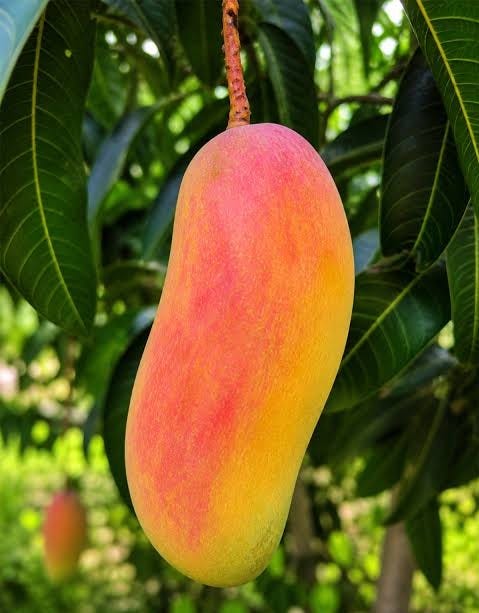
The mango in an American grocery store traveled a long chain to get there. Farmers, scientists, inspectors, processors, and public institutions made the trip possible. The varieties themselves started in Florida.
In 1910, a tree in Florence Haden’s Coconut Grove backyard produced the variety that took her family name. Seedlings from the Haden line later produced the Kent, Keitt, and Tommy Atkins. Those Florida varieties became the commercial standards grown in Mexico, Peru, Ecuador, and Brazil. American backyards bred the fruit that foreign growers now ship back to American stores.
Ninety-nine percent of mangos sold in the United States are imported. The supply chains that deliver them were not accidents. Someone built them.
Pakistan produces roughly 1.5 million tons of mangos a year. Growers struggled to reach export markets because orchards lacked certification, farms lacked processing infrastructure, and supply chains could not meet international standards.
USAID’s Mango Programme began in August 2009. The early record was poor. In November 2011, the inspector general reported that work had stalled and had not produced measurable results. That finding belongs in the story.
By July 2013, the project reported 26 orchards with GLOBALG.A.P. certification, 15 on-farm processing facilities, more than 3,700 trained farmers, and about 2,500 jobs created. Farm gate sales rose from $7.1 million to $12.4 million. Export revenue increased by $5.8 million.
Those were sales, not profit. Program reports, not independent evaluations. Serious oversight would ask how many jobs lasted, whether gains reached smaller growers, and how much growth would have occurred without the program. Development is not a slot machine. But $5.83 million in public funding connected to $20.5 million in documented commercial activity in a sector that had been failing to meet export standards.
In Ghana, USAID supported an eight-page manual on small-scale mango processing: sanitation, pasteurization, acidity, packaging, temperatures, pH, sequence. In Bangladesh, Virginia Tech’s Integrated Pest Management Lab, funded through USAID since 1993, helped farmers control the fruit flies that destroy crops and trigger quarantine restrictions. Those restrictions protect American farms. The insect does not check passports.
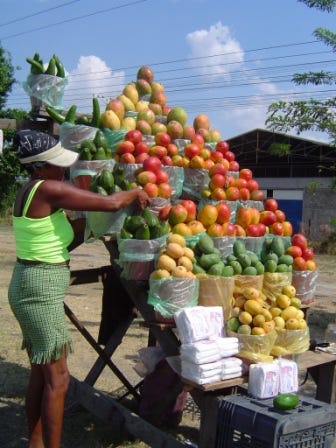
Venezuela shows what a mango becomes when everything else fails.
In Maracaibo in 2019, vehicle upholsterer Danilson Hernández ate mangos for breakfast from two trees at his workplace. He called them “the noise takers” because they quieted a hungry stomach. Nearly 90 percent of Venezuelan families lacked enough income to buy food, according to the national Life Conditions Survey cited by NPR. Ramón Arenas Morales, 81, hung twenty mangoes outside his gate every morning for strangers walking to work. A charity called Seglar Mercedary Fraternity served mangoes alongside free lunches for 600 children and 80 elderly people. The director said many of the children ate nothing but mangoes on weekends, when the program closed.
The mango supplied vitamins and temporary relief. It could not repair an economy. That is what remains after a food system disappears.
In 2025, Secretary Rubio shut down USAID and dismissed the public servants who ran it.
The people who knew how a mango orchard in Sindh Province becomes a certified export business are gone. The people who knew which fruit fly closes a market, which pasteurization temperature prevents contamination, which certification opens a border.
$5.83 million in. $20.5 million out. The people who understood why both numbers mattered are gone from public service.
Comments
Nothing yet. Say the first thing.
Sign in to join the conversation.