
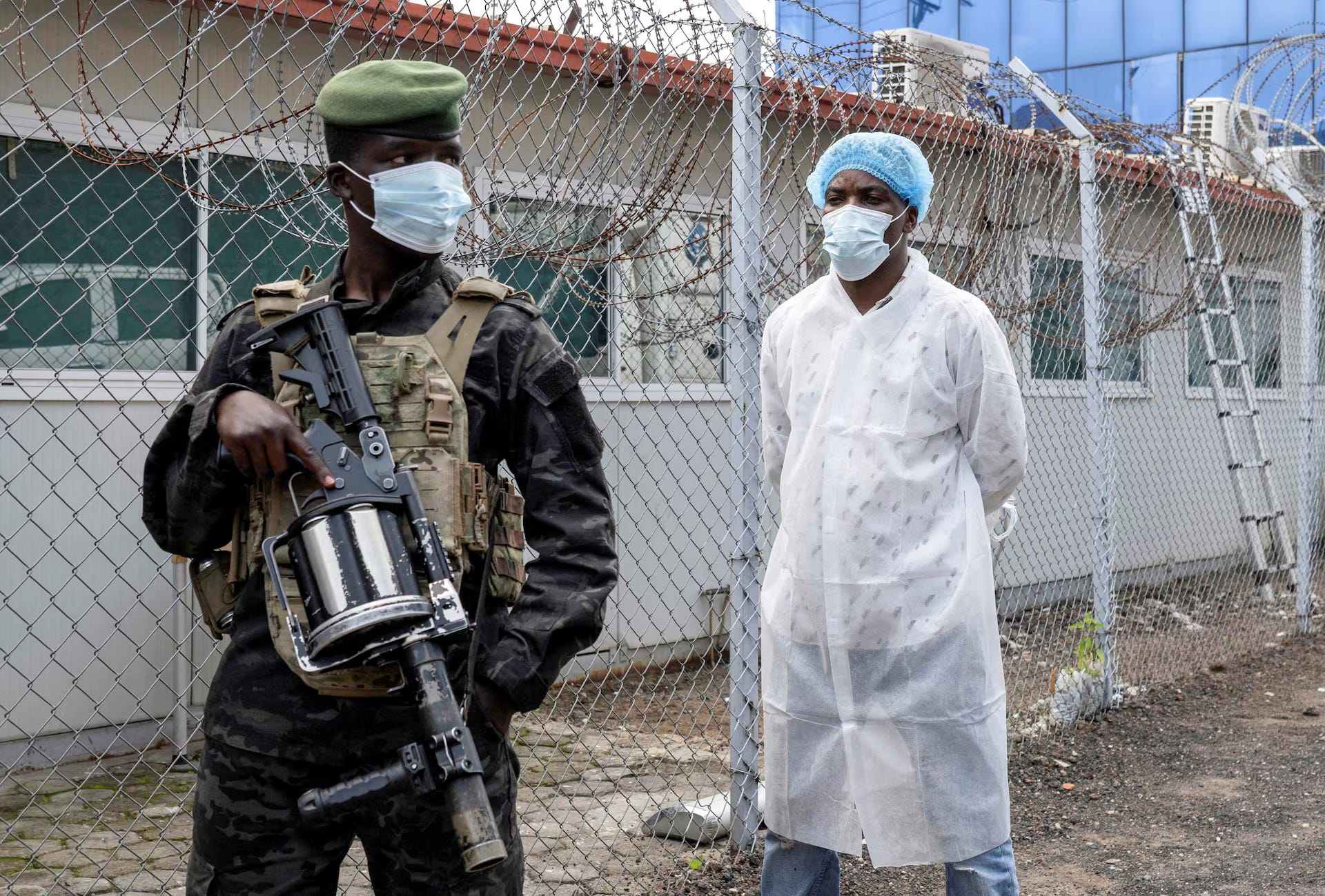
Seven American aid workers are sleeping on military cots inside large tents at Laikipia Air Base in Kenya. They are healthy, but the federal government is preventing them from boarding commercial flights home.
On July 13, Brian Christine, Robert F. Kennedy Jr.’s assistant secretary for health, signed an updated Title 42 order. The CDC and Department of Homeland Security then began using Title 49 authority to place Americans leaving the Democratic Republic of the Congo on a federal do-not-board list.
They could not take a commercial flight home until they had spent 21 days outside the DRC. The policy allowed case-by-case humanitarian exceptions. None brought these seven responders home.
The Samaritan’s Purse workers left Congo for the U.S.-built facility at Laikipia, where Kenyan authorities quarantined them. The State Department said they had “voluntarily moved” there. For these seven Americans, three weeks in Kenya was the price of a commercial flight home.
Washington called that voluntary.
Trump had already announced his position during the 2014 outbreak:
“The U.S. cannot allow EBOLA infected people back. People that go to far away places to help out are great-but must suffer the consequences!”
Twelve years later, his government turned the tweet into policy.
Kenya’s High Court ordered construction of the facility suspended. Work continued. The court found Kenya’s health minister in contempt for ignoring its orders, and the U.S.-backed facility opened anyway. At least two Kenyans died during protests against it. The seven responders became its first known occupants.
They had volunteered to fight the outbreak. Two other Americans contracted the virus. Both were evacuated to Germany; the first was discharged from a Berlin hospital in June.
The United States spent more than a decade and hundreds of millions of dollars building a national network for treating precisely such patients. Ten of its 13 federally supported centers confirmed that they were ready to receive people exposed to Ebola.
American wards remained empty. The infected went to Germany; the healthy responders went to military tents in Kenya.
The Heritage Foundation published the governing instructions in April 2023.
Project 2025’s Mandate for Leadership called for deleting “health equity,” “diversity, equity, and inclusion,” “gender,” “reproductive health,” and related language from federal grants, regulations, contracts, and legislation. It recommended that Congress convert NIH research funding into block grants to the states.
Its USAID chapter was more explicit. It called for “deep cuts,” demanded that the agency’s programs and structures be “deradicalized,” and proposed installing political appointees inside the office controlling contracts and grants.
The chapter’s author, Heritage senior fellow Max Primorac, wanted USAID’s global footprint reduced and its work placed under political control. He did not call for abolishing the agency.
The administration dismantled it anyway.
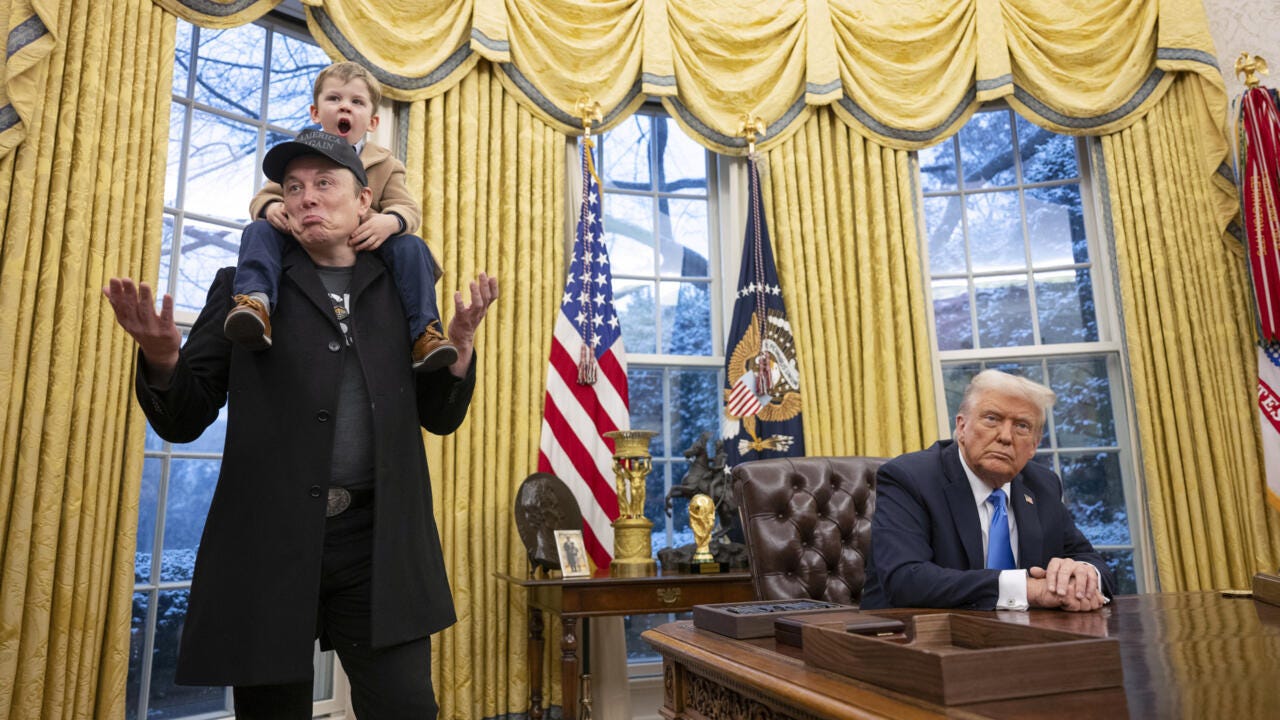
In February 2025, Elon Musk told the assembled Cabinet that his Department of Government Efficiency had accidentally canceled Ebola prevention while gutting USAID. He laughed.
“We restored the Ebola prevention immediately, and there was no interruption.”
At Cabinet, the canceled Ebola program was something to laugh off. The four-billion-dollar daily cutting target was the part Musk took seriously.
USAID officials said the work had not been restored. Jeremy Konyndyk, who led USAID’s response to the 2014 West Africa Ebola crisis, called Musk’s claim “bunk.” Whatever returned on paper, disease-surveillance programs remained disrupted, operation centers remained closed, and trained personnel remained gone.
DOGE treated an accidental cancellation of Ebola prevention like a patch note and kept cutting.
On March 28, the administration notified Congress that USAID’s independent operations would end and its surviving functions would move to the State Department. After more than a decade on the Senate Foreign Relations Committee, Secretary of State Marco Rubio could not plausibly claim ignorance of USAID’s emergency role. By July, thousands of employees had been laid off or placed on leave.
Closing USAID destroyed the command structure behind America’s international humanitarian response. During the 2014 Ebola crisis, USAID led the overseas operation while the CDC directed its medical and public-health work. USAID built treatment units, moved supplies, organized community response, and kept the CDC, Defense Department, WHO, local governments, and humanitarian organizations working across three countries.
Congress appropriated $5.4 billion for the combined response. By early 2015, West African Ebola cases had fallen 80 percent from their peak.
The State Department inherited the wreckage and called it a reorganization.
This time, the operating base was gone before the outbreak arrived. American assistance to the DRC fell from roughly $1.4 billion in 2024 to $430 million in 2025, with about $21 million allocated for fiscal 2026. The cuts reached the machinery of early response: case detection, community alerts, response kits, medical stockpiles, and the clinics expected to use them.
The International Rescue Committee cut its work at the center of the outbreak from five areas to two. Its country director, Heather Reoch Kerr, described what the cuts left behind:
“Years of underinvestment and recent funding cuts have left many health facilities without adequate protective equipment, surveillance capacity, or front-line support needed to respond quickly and safely.”
A health worker who lost a job to the cuts told STAT:
“Politicians control budgets; budgets control lives. That is the painful reality.”
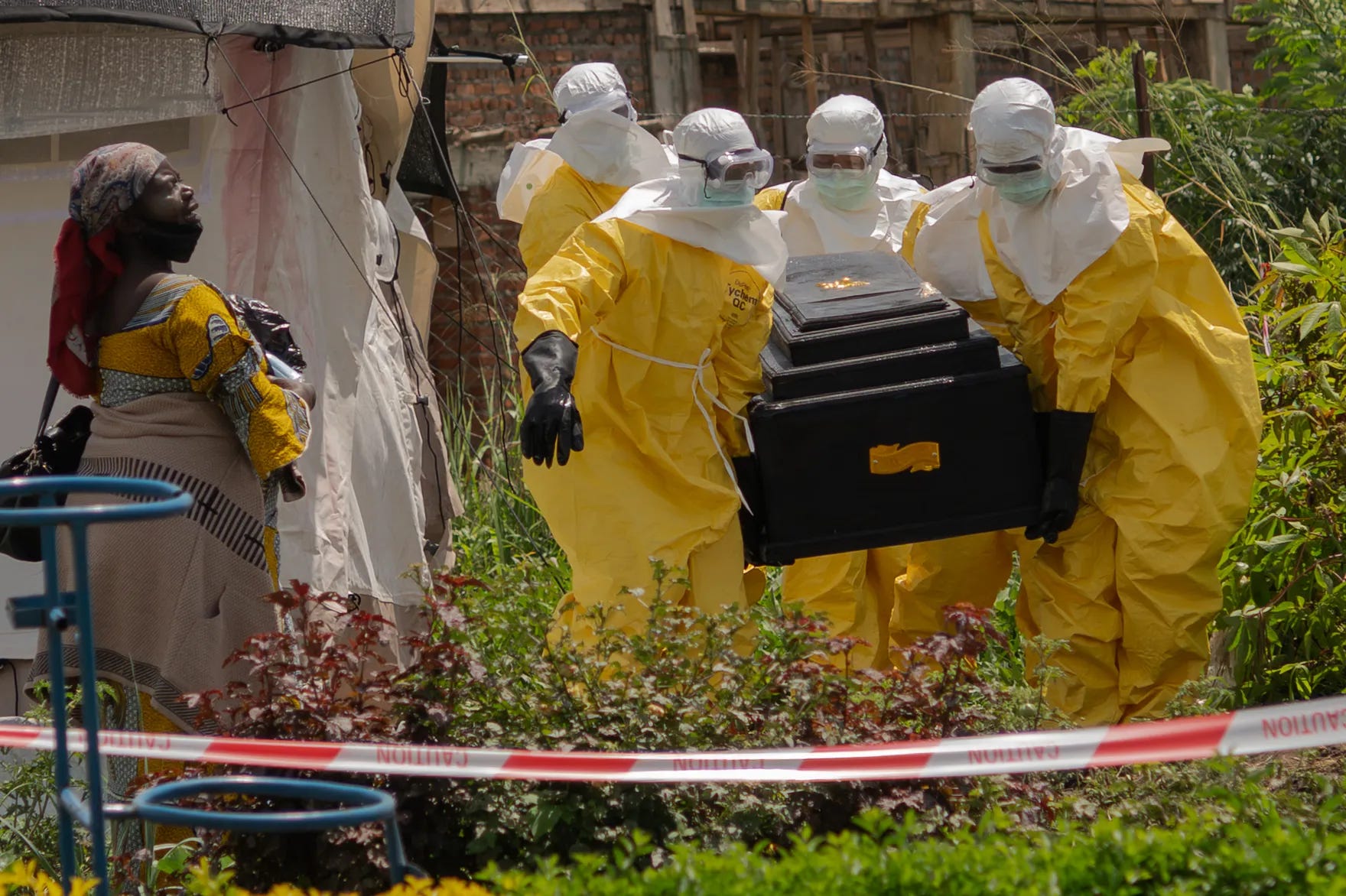
On May 15, 2026, the DRC declared an outbreak of Bundibugyo virus disease. Two days later, the WHO declared a public health emergency of international concern. By July 19, the DRC had reported 2,344 confirmed cases and 930 deaths. Uganda had reported 20 cases and two deaths.
Bundibugyo has no licensed vaccine or approved treatment. The two Ebola vaccines in general use target the Zaire strain, and the WHO advised against deploying them here. A trial of the antibody treatment MBP134 and the antiviral remdesivir began on July 2. Oxford launched the first human trial of a Bundibugyo vaccine on July 13.
The outbreak passed 1,000 cases faster than any previous Ebola outbreak in the DRC.
Jennifer Nuzzo, director of Brown University’s Pandemic Center, described the failure plainly:
“The CDC first learned of the outbreak when it was publicly confirmed.”
Rumors had circulated for weeks. American health officials had historically helped investigate such reports before they hardened into declared outbreaks. In May, the CDC got the news with everyone else.
Dr. Craig Spencer, a physician who survived Ebola in 2014, blamed the delay in part on the severed ties between American health agencies, the WHO, and other international partners.
“The world was flat footed, but we were even more flat footed because of this delay.”
Rubio’s response was to blame the WHO.
On May 19, the secretary of state accused the organization of being “a little late” to identify the outbreak. Gigi Gronvall, an immunologist at Johns Hopkins, rejected the charge. The WHO was working in a conflict zone with fewer resources after the United States withdrew and cut its funding. At home, the administration had cut the agencies responsible for detecting and containing infectious disease.
Rubio helped dismantle the system that warned Washington early, then complained that the warning came late.
Kennedy did not create the Bundibugyo vaccine gap. He chose to narrow the country’s options for closing the next one.
Under Kennedy, the Biomedical Advanced Research and Development Authority canceled or curtailed roughly $500 million across 22 mRNA vaccine projects after he asserted that the technology posed more risks than benefits. Most concerned respiratory viruses. None was a Bundibugyo vaccine ready for deployment.
In 2026, Chinese researchers published preclinical results for a multivalent mRNA vaccine targeting three lethal Ebola viruses, including Bundibugyo. Those animal studies were not a human vaccine. They showed something else: Chinese laboratories were testing where the platform might lead while Kennedy was winding down BARDA’s work on it.
Kennedy also blocked $600 million that Congress had appropriated for Gavi, the vaccine alliance responsible for the global Ebola stockpile. That stockpile contains no licensed Bundibugyo vaccine and could not have stopped this outbreak. Gavi nevertheless committed as much as $40 million to help manufacture and distribute a Bundibugyo vaccine if one succeeds.
In June, Rubio indicated that the United States might resume funding. He also told senators that Trump had asked the State Department to let Kennedy play “a leading role” in the decision. The Cabinet choreography changed. The money remained blocked while Ebola spread.
Career CDC officers kept the United States in the response. The agency’s country offices—nearly 30 staff in the DRC and close to 100 in Uganda—had preserved their relationships with both health ministries through USAID’s dismantling and the American withdrawal from the WHO. When the outbreak was confirmed, those ministries called the CDC. The State Department then named it the lead American agency.
The response still moves because people in Kinshasa and Kampala answer one another’s calls. Washington treated those relationships as overhead until it needed them.
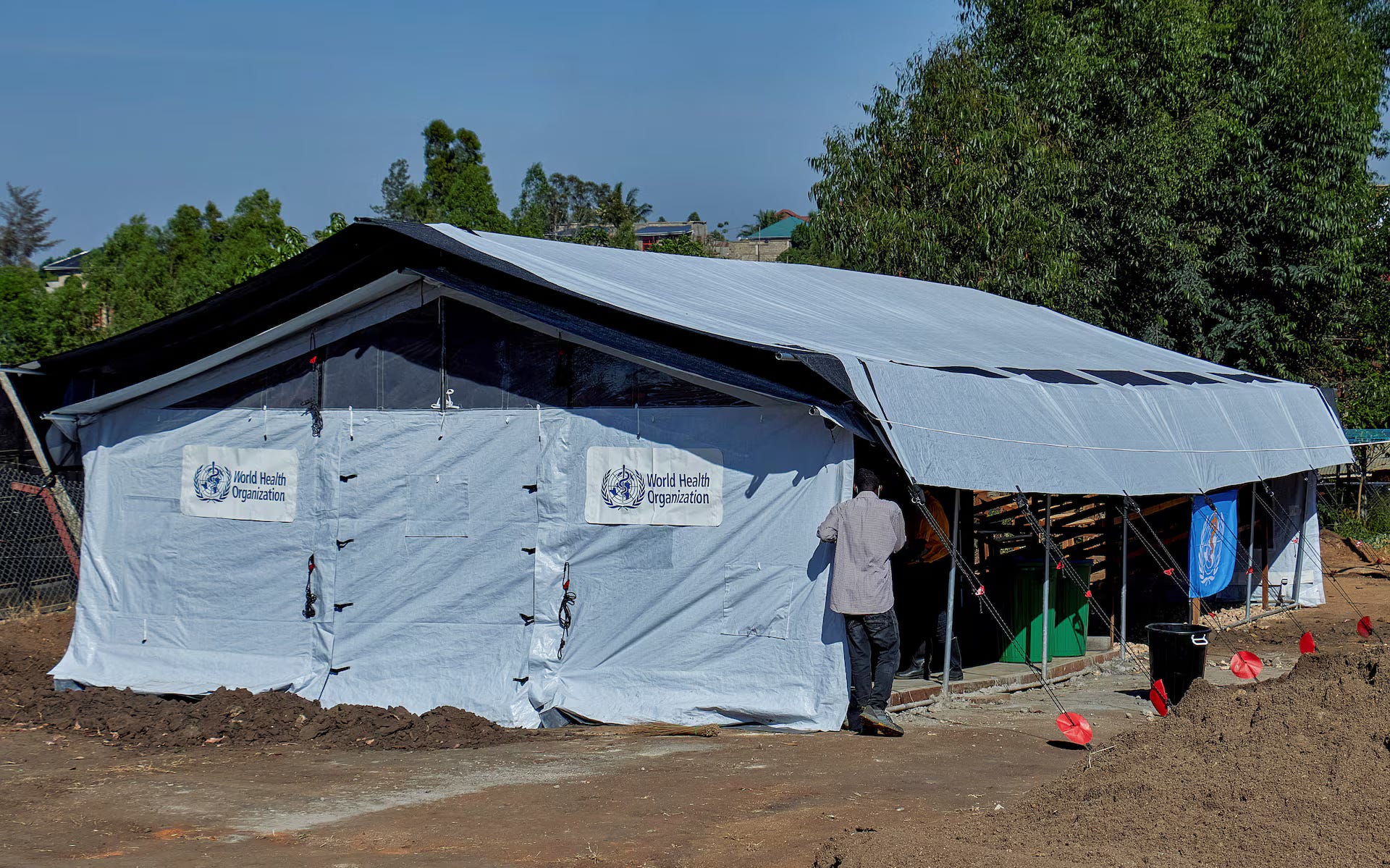
The last stage of the demolition is being sold as reform.
Matthew D. Brown retired in May 2026 after more than 30 years across the CDC, NIH, HHS, USAID, and the State Department. In a June analysis for Think Global Health, he traced what Rubio’s new system does.
Under State Department guidance issued May 5, money that once funded CDC work abroad directly instead passes through the department to partner governments. Those governments must choose which CDC services to purchase from a catalog of roughly 30 options. Countries receiving more than $125 million annually in American assistance must buy six basic services plus field epidemiology training. Everything else can be skipped.
The State Department did not fix fragmentation. It converted America’s disease-detection presence abroad into a purchasing decision and called that reform.
An unexplained cluster is not the moment to start shopping for surveillance. The laboratories, trained personnel, reporting systems, and local relationships must already be operating. By the time a government realizes that it needs the service it declined to purchase, the pathogen has already found the gap.
Bundibugyo did not pause while ministries reviewed the menu.
The same contempt for readiness now turns against the responders providing it. The border order does more than strand Americans. It makes the outbreak harder to stop.
Samaritan’s Purse runs Ebola treatment centers in Bunia and Nyankunde. By mid-July, the group had deployed about 80 Americans and treated more than 270 patients. Franklin Graham said the additional three weeks abroad would make medical volunteers harder and more expensive to recruit, forcing the organization to curtail its mission.
“It seems like we’re targeting our healthcare workers and treating them maybe a little bit like they are damaged goods.”
Daniel Jernigan, who helped lead the CDC’s 2014 Ebola response, called the do-not-board order unprecedented for citizens at little risk of infection. Craig Spencer had already identified the strategic absurdity: protecting Americans requires ending the outbreak where it began. Every additional week of transmission increases the danger the administration claims to be preventing.
Washington made the front line harder to staff and called it protection.
There is no bureaucratic fog thick enough to hide who made these decisions. The Heritage Foundation supplied the framework, and Trump turned it into a governing program. Musk’s DOGE drove the demolition of USAID, accidentally canceled Ebola prevention, laughed about it at Cabinet, and kept cutting. Rubio transferred the wreckage to the State Department, turned CDC expertise into a purchasing menu, and blamed the WHO for failing to detect the outbreak quickly enough. Kennedy blocked funding for the global vaccine alliance, wound down BARDA’s mRNA vaccine program, and led the department that issued the order stranding American responders abroad.
The virus caused the outbreak. Political leaders chose the weakness surrounding it.
Do not push their decisions down onto the career scientists, diplomats, and field officers still trying to contain the damage. USAID officials contradicted Musk when he claimed the Ebola work had been restored. CDC officers maintained the relationships Washington later needed. American clinicians volunteered to enter treatment centers without a licensed vaccine or approved therapy.
The people doing the work did not issue the orders that made their work harder.
Those orders came from political leadership.
Reverse them.
Restore USAID as an independent operational agency with dedicated appropriations, an experienced workforce, and authority to lead civilian responses to international emergencies. Not as a line item buried inside the State Department.
Fund CDC surveillance and technical cooperation directly. An early-warning network forced to sell itself one service at a time is not a network. It is a catalog.
Rebuild the research infrastructure and international scientific partnerships that allow the United States to recognize a pathogen before it reaches an airport. Those relationships are not discretionary spending. They are part of the defense.
Bring the responders home. The United States built specialized pathogen treatment centers for this purpose. Use them.
America had the science, the hospitals, and the people willing to go. What it lacked was political leadership willing to use what the country had built.
America prepared for this emergency. Then its government chose the tents.
Arizona Public Health Association (2026, May 29). “Ebola: U.S. surrenders global public health leadership.”
Association of American Medical Colleges (2026, July 7). “Tracking NIH awards in FY 2026 (Oct. 1–June 30).”
Benen, S. (2025). “Musk said Ebola prevention funding was restored. USAID officials reportedly say otherwise.” MSNBC.
Brown, M. D. (2026, June 12). “Ebola recalls why the U.S. needs a Foreign Health Service.” Think Global Health / Council on Foreign Relations.
CBS News (2026, July 14). “U.S. citizens traveling in Congo must spend 21 days elsewhere before entering U.S.”
CDC. “Ebola outbreak: Current situation.”
CDC Museum Digital Exhibits. “United States Government Response to Ebola.”
CNN (2025, March 10). “Rubio says Trump administration canceling 83% of programs at USAID.”
European Centre for Disease Prevention and Control (2026, July 20). “Ebola disease outbreak in the Democratic Republic of the Congo and Uganda.”
Gardner, S. (2026, June 13). “RFK Jr.’s olive branch isn’t winning over his staffers.” Politico.
Global Biodefense (2026, June 15). “U.S. dismantling of USAID is undermining Ebola response, experts warn.”
Hetzner, C. (2025, February 27). “Elon Musk admits DOGE accidentally eliminated prevention measures combatting Ebola virus.” Fortune.
Hetzner, C. (2026, July 6). “DOGE cuts to USAID have worsened the Congo’s Ebola outbreak, experts warn.” Fortune.
Inside Higher Ed (2025, May 27). “Nature: DOGE screening NIH awards, ordering projects killed.”
Izadi, R. (2026, July 20). “Why militaries benefit from U.S. foreign assistance cuts.” Good Authority.
Jovanovic, D. (2026, July 17). “7 Americans at US-backed Ebola isolation facility in Kenya, charity group says.” ABC News.
Kupferschmidt, K. (2025, June 9). “NIH terminates network aimed at stopping pandemics before they start.” Science.
Murray, P., Kaine, T., et al. (2026, June 9). “Letter to HHS Secretary Robert F. Kennedy Jr.” U.S. Senate.
Science (2025, June 13). “NIH documents reveal inconsistencies in grant terminations.”
Nolen, S., & Gay Stolberg, S. (2026, June 2). “Rubio suggests U.S. return to global vaccine program in rebuke of Kennedy.” The New York Times, via KFF Health News.
Obama White House (2014, September 16). “Fact sheet: U.S. response to the Ebola epidemic in West Africa.”
Oza, A. (2026, May 20). “NIH behind in filling top roles, with 15 of 27 institutes led by acting directors.” STAT.
Oza, A. (2026, June 3). “NIH cuts weakened network primed to respond to outbreaks like Ebola.” STAT.
Paun, C. (2026, July 17). “Americans who responded to Ebola outbreak are quarantined in Kenya, despite court order.” Politico.
Payne, D. (2026, May 19). “Trump’s cuts to foreign aid are undermining the Ebola response, insiders say.” STAT.
Scott, E., & Ross, N. (2026, June 23). “Overdue grant renewals at NIH and AHRQ.” Grant Witness.
The Heritage Foundation (2023). Mandate for Leadership: The Conservative Promise (Project 2025).
Tsvetkova, M., & Das, K. (2026, July 15). “US quarantine order for Americans returning from Congo will hurt Ebola response, aid group says.” Reuters.
United Nations News (2026, July 8). “Ebola continues to spread in DRC as death toll passes 500.”
Wilson, M. R. (2026, May 21). “Ebola outbreak collides with NIH turmoil.” The Washington Post.
World Health Organization (2026, July 18). “Epidemiological update: Ebola disease caused by Bundibugyo virus.”
Yang, M. (2026, May 19). “Rubio criticizes WHO’s Ebola response as US continues sweeping public health cuts.” The Guardian.
Comments
Nothing yet. Say the first thing.
Sign in to join the conversation.