
Hi and welcome to our newsletter!
Plenty of runners sign up for a half marathon and then wonder whether they’ve done enough to be ready. Since it’s such a common question, this week’s main guide answers it, walking through the clear signs that show you’re prepared to run 13.1.
While you’re at it, don’t miss our companion guide to race-day fueling, which breaks down what to eat and drink at every distance from the 5K to the ultra.
And stick around to the end for three stories worth your time, on the marathon wall, a record-breaking 50-state run, and a piece of Nike history.
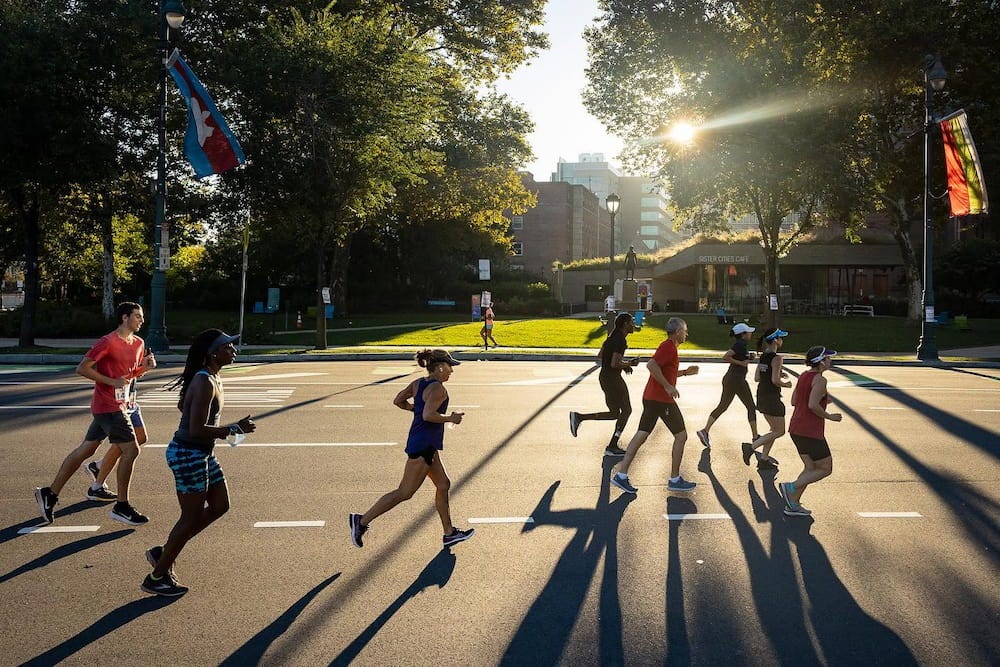
A few things separate a runner who’s ready for a half from one who’s in for a rough day: enough weekly mileage, easy long runs, and tested gear. Miss a few and you’ll feel it late in the race.
Here’s the checklist to see where you stand before you reach the start line at 13.1.
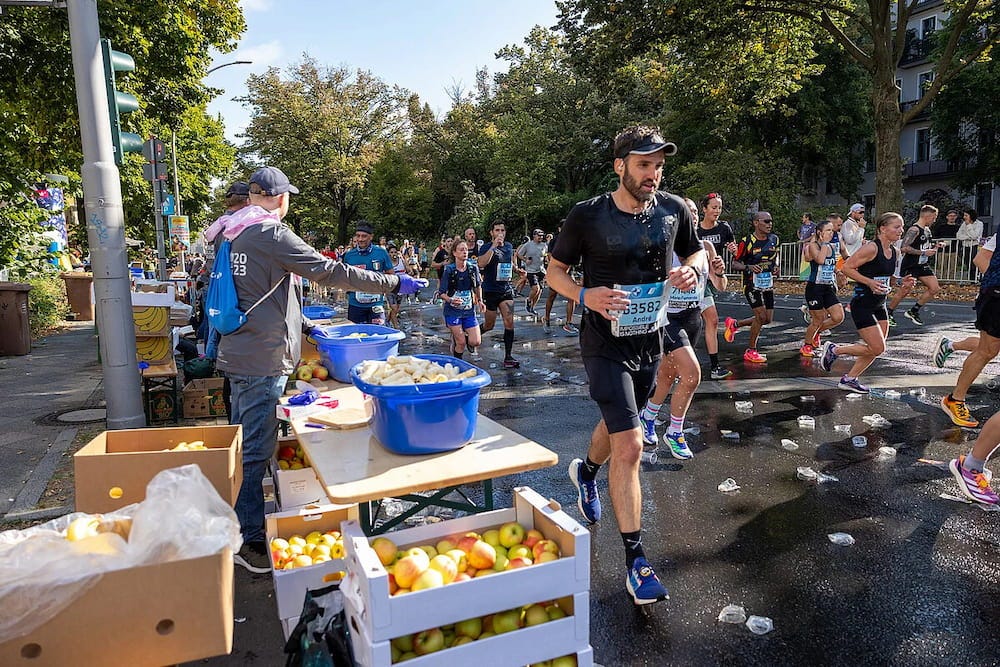
Water or gels? How many, and how often? The answer depends entirely on the distance. Here’s a clear, distance-by-distance plan for fueling every race from the 5K to the ultra.
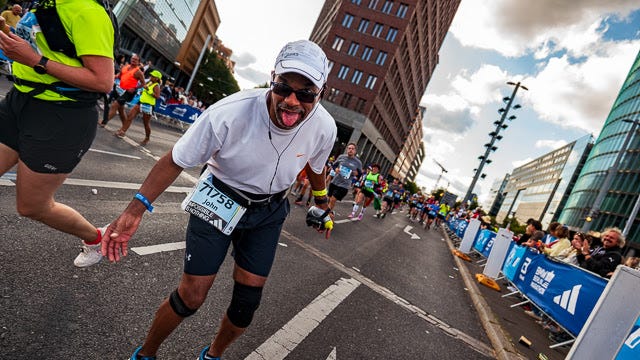
Scientific Reports has published a study of 873,334 Berlin Marathon finishers concluding that men hit the wall about twice as often as women. Across 27 years of results, roughly 18% of men faded badly after halfway, against 10% for women. The gap showed up in every race from 1999 to 2025, and since Berlin is flat and cool, heat and hills cannot explain it. The researchers call it a structural feature of how men run marathons.
So what drives it? Part of the answer is physiology. Women burn more fat at steady efforts and hold onto glycogen longer, and glycogen is the fuel that runs dry when the wall hits. The rest may be temperament, since men more often overestimate what they can do and go out too fast. Fitness offers no protection either. Even among sub-3-hour finishers, men blew up six times more often than women running the same times.
One caveat: the study counted only finishers, so runners who dropped out never entered the numbers, meaning the real rate is likely higher.

Tomasz Sobania, a 27-year-old ultrarunner from Poland, has run a marathon in every US state in 49 straight days, breaking a record that had held for nearly 20 years. The previous mark of 50 days was set by American ultrarunner Dean Karnazes.
Sobania finished in Times Square on June 27, a day ahead of schedule, running two marathons in his final 24 hours to do it. He started May 10 at the Golden Gate Bridge and logged 26.2 miles (42.2 km) a day for seven weeks. Nicknamed the “Polish Forrest Gump,” he timed the run to the 250th anniversary of American independence.
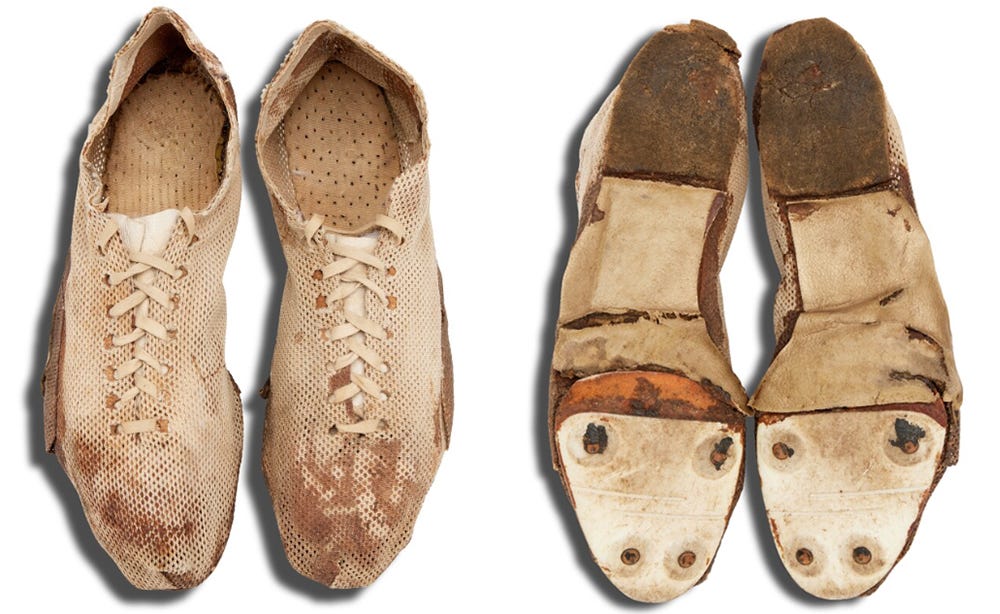
Before Nike was Nike, it was one coach tinkering with shoes in Oregon. Bill Bowerman, the legendary University of Oregon track coach who co-founded the company and whose experiments with a waffle iron inspired Nike’s famous waffle sole, built a pair of steeplechase spikes by hand around 1968. They are now up for sale at Sotheby’s with a starting bid of $250,000.
What makes them worth that much is timing. Bowerman made them before the brand even existed, when the company was still called Blue Ribbon Sports and the Nike name would not arrive until 1971. That makes them a piece of Nike’s origin story from before the brand had a name. Bidding closes July 20.
Our top picks this week:
No posts
Comments
Nothing yet. Say the first thing.
Sign in to join the conversation.