
Hi and welcome to our newsletter!
Months of training all come down to the final three weeks. This week’s main guide walks you through how to taper for your marathon: easing off without losing your edge, so you reach the start line fresh instead of fried. If you’ve got a race on the calendar, this is the one to read before you start cutting back.
While you’re at it, also check out our guide on lowering your heart rate while running — why it spikes the moment you run easy, and how to bring it down so you can run faster at the same effort.
And stick around to the end, where we’ve got two big stories from the world majors: London’s move to a two-day event in 2027, and Tokyo’s new record-setting prize purse. Let’s dive in!

The marathon taper can make or break race day. After months of building mileage, the final three weeks feel almost too easy, and that’s exactly where a lot of runners get nervous and start improvising.
Some squeeze in one last hard long run. Others keep their mileage high “just to be safe.” Both moves can drain the freshness you spent all that training to earn.
Our latest guide explains how to taper the right way: when your longest run should peak, how much mileage to cut each week, and what to leave alone so you don’t sabotage yourself in the home stretch.

If your heart rate jumps to 150–170 the moment you start running, you're not alone, and you're not broken. It's one of the most common frustrations new runners hit, and the usual instinct to push harder only makes it worse.
In this guide, we break down why your heart rate climbs and share four simple ways to bring it down so you can run faster at the same effort.
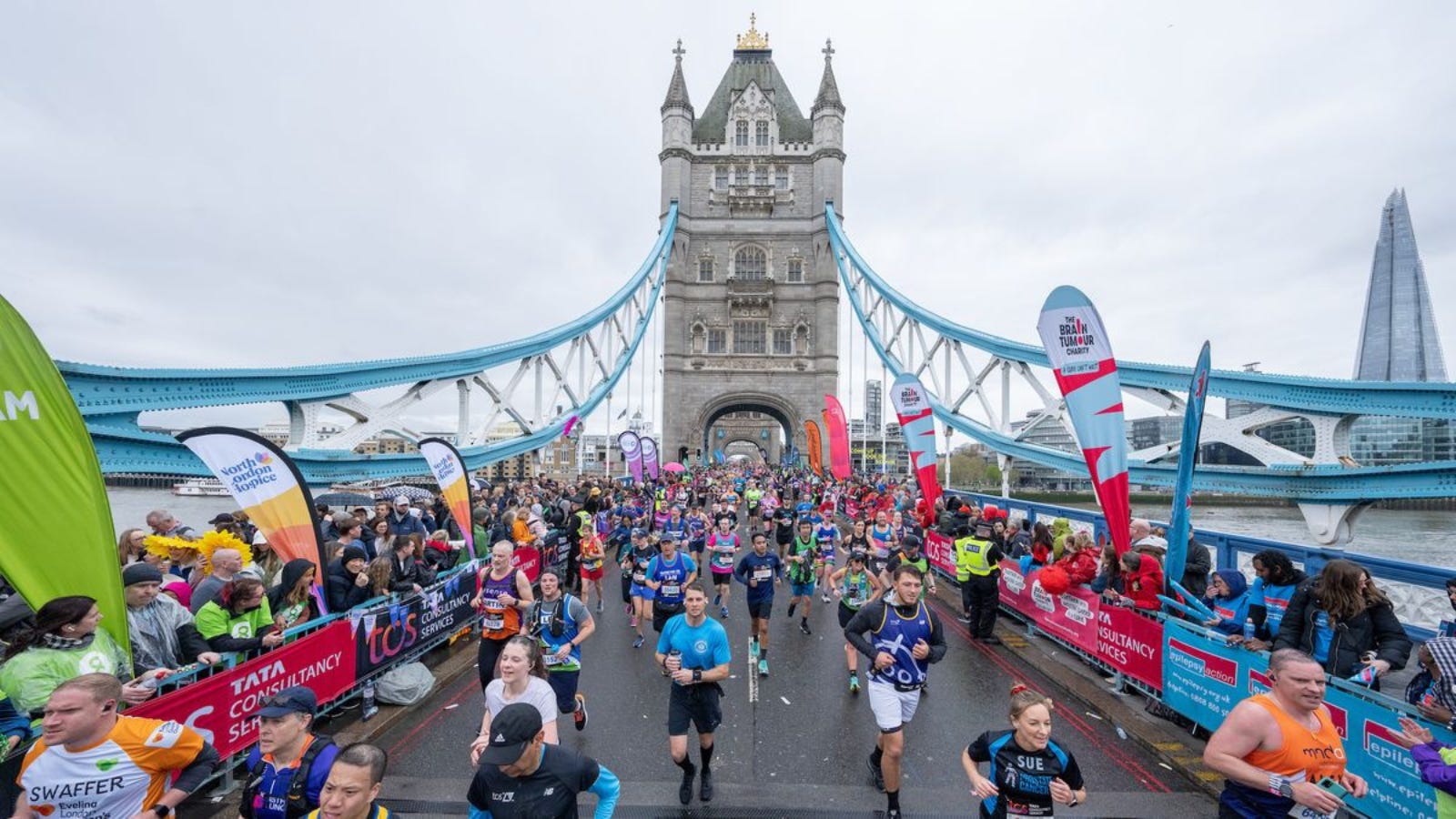
The 2027 TCS London Marathon will be staged across two days for the first time, expanding the field to 100,000 participants.
Organizers announced the race, dubbed “The Double,” will be held on Saturday, April 24, and Sunday, April 25, 2027.
The two-day format adds roughly 40,000 runners to the event and is designed to meet record demand, with 1.33 million people entering the ballot for next year’s race. Runners who entered the ballot will learn in early July whether they secured a spot on either day.
The elite women and elite men will compete on separate days, though organizers did not specify which group races on which day.
The London Marathon is already the world’s largest, with 59,830 finishers in 2026, when Sabastian Sawe of Kenya set a world record of 1:59:30. The race is also a major charity fundraiser, with runners raising about £90 million in 2026.
CEO Hugh Brasher said the expansion could raise more than £150 million for charity and deliver a £400 million social and economic benefit to the UK. The move follows a broader trend, as marathons including New York, Chicago, and Boston have grown their fields to keep pace with rising demand.
The two-day setup is a one-time arrangement, with the event returning to a single day in 2028.

The 2027 Tokyo Marathon will pay its men’s and women’s champions a record $170,000 each and grow its field to 40,000 runners as the race marks its 20th anniversary.
The Tokyo Marathon Foundation announced the changes on Monday. The champion’s purse is now the largest in the Abbott World Marathon Majors series, surpassing top payouts at events such as Boston and New York. Organizers say the figure is intended to attract the strongest possible elite field to Tokyo’s fast, mostly flat course.
Registration opens Wednesday, June 24, 2026, across several categories and runs through late August, with a lottery held if applications exceed capacity.
The race is set for Sunday, March 7, 2027.
Our top picks this week:
No posts
Comments
Nothing yet. Say the first thing.
Sign in to join the conversation.