
Hi and welcome to our newsletter!
In this issue, we’ve pulled together some of our latest articles: one to inspire your next run, one with the statistics to check before you set your sights on a Major, and one that answers a delicate question plenty of runners are too embarrassed to ask.
8 true running stories so inspiring they had to be turned into movies
Your real odds of getting into each Major, with the numbers most runners never see before they apply
The mid-run bathroom emergency. What sets it off, and how to stop it from wrecking your long run

Eight feature films based on true running stories, from Olympic legends to first-time marathoners. Watch them and find your own reason to run.
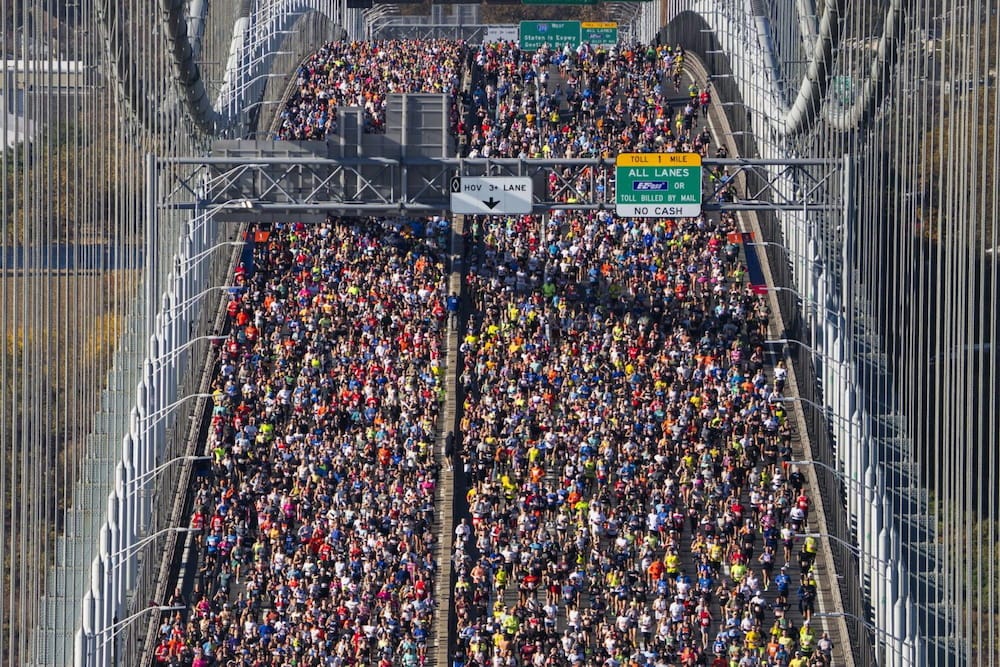
A record 240,000 people applied for this year’s New York City Marathon lottery. About 1% got in. That’s the hard end of the scale, and the distance between it and the friendliest Major on the list is enormous. We went through your real odds at all eight, including the one where luck plays no part at all.

Run hard enough or long enough and your gut can lose 80% of its blood supply. Your body decides digestion can wait, so whatever you ate is left half-processed and your bowel starts moving it along.
That’s one of four reasons you’re scanning for a bathroom at mile three, and we covered all of them this week, including the one that has nothing to do with your gut.
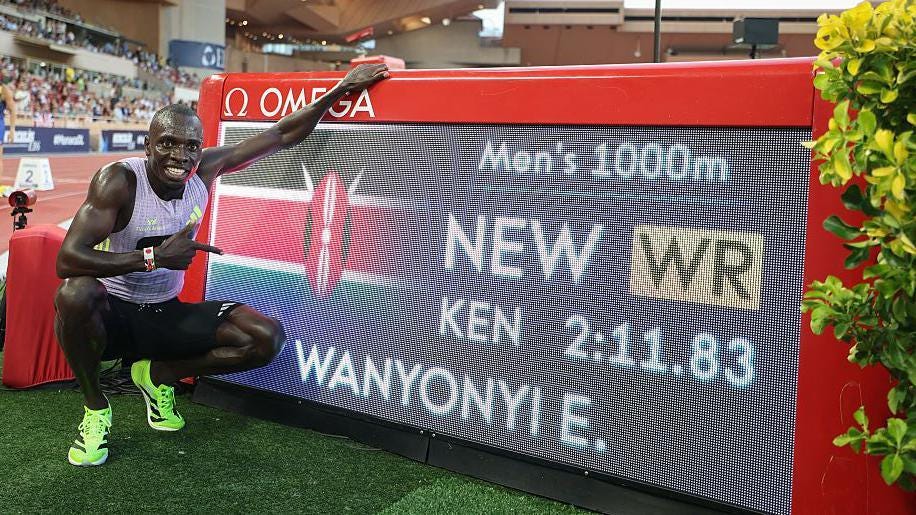
Nobody had beaten Noah Ngeny’s 1000m record since 1999. On July 10 in Monaco, Emmanuel Wanyonyi ran the distance for the first time in his life and clocked 2:11.83, erasing a mark set five years before he was born. The 21-year-old Kenyan slipped behind record pace with 150 meters to go, then took it back on the home straight.
The night paid $60,000: $10,000 for the win, $50,000 for the record. Next stop is London this Saturday, the same stadium where Rudisha ran 1:40.91 in 2012. Wanyonyi’s own 800m best already sits at 1:41.11.
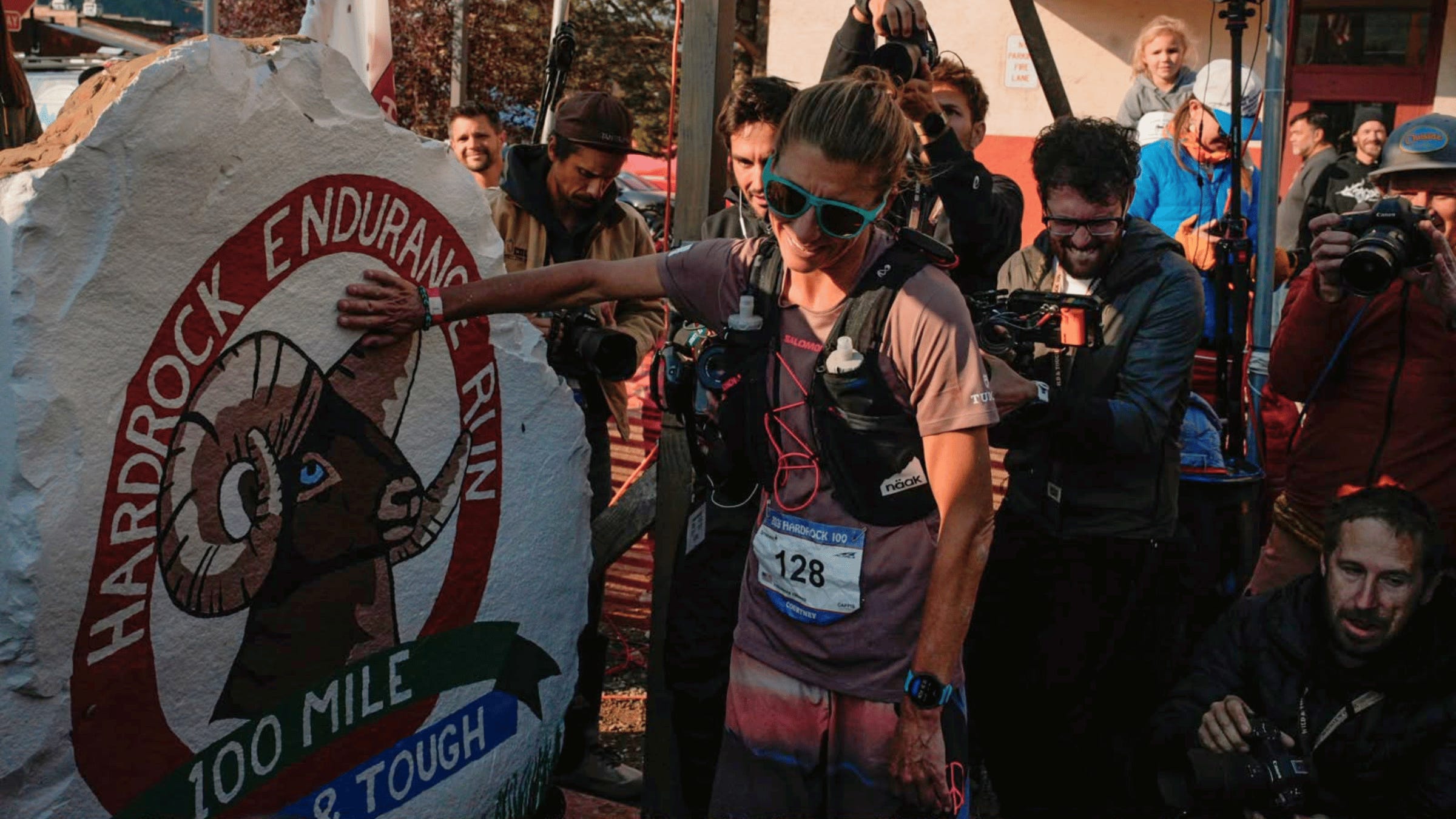
The men’s winner is 50. The women’s winner is 41. Both led from the front and beat their own marks.
Ludovic Pommeret won his third straight Hardrock 100 on July 11 in Silverton, Colorado, running 21:11:36. That is the fastest time anyone has covered the loop in either direction, and nearly 22 minutes quicker than his own 2024 record. His main rival, Tom Evans, dropped out with altitude sickness. The course averages 11,186 feet, and mountain experience counts for more there than sea-level fitness.
Courtney Dauwalter took her fourth women’s title in 26:03:10, beating her own clockwise record by more than eight minutes and finishing fifth overall against a field of men and women. She led the women’s race throughout, spent most of the night throwing up, and still put four and a half hours on second-place Careth Arnold. Katie Schide’s 25:50 from last year remains the outright women’s record, set in the other direction.
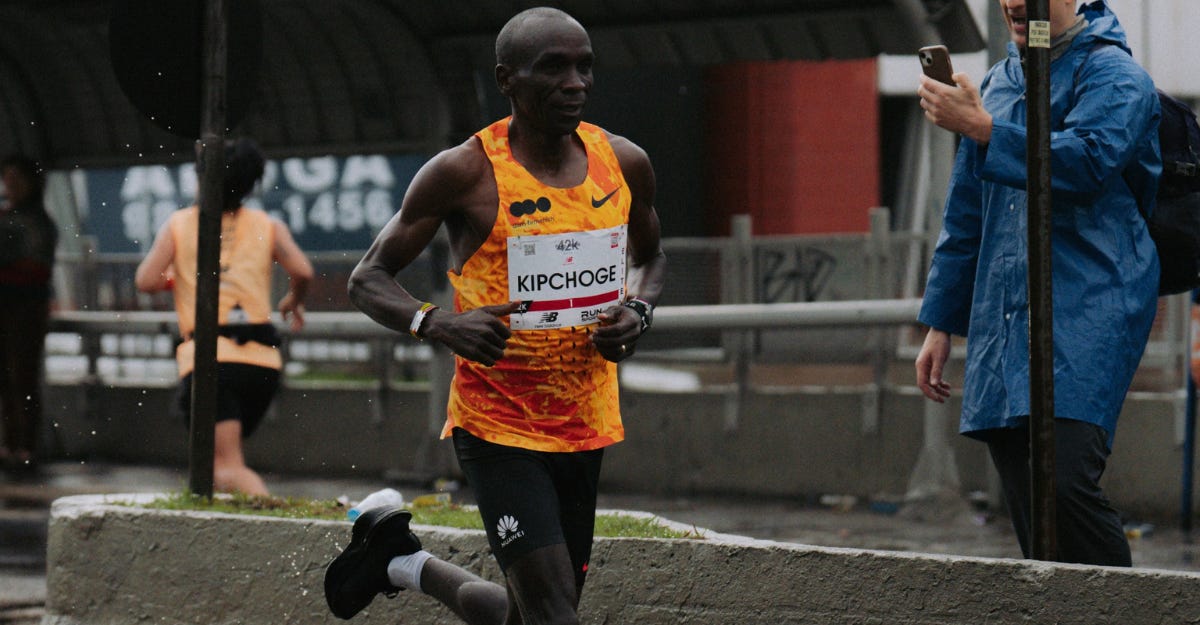
Eliud Kipchoge is racing a marathon on every continent over two years to raise a million dollars for his foundation. Stop two was Porto Alegre on Sunday, July 12, where he finished 12th in 2:18:39, about ten minutes behind Morocco’s Zineddine Ouria. Ouria won in 2:08:49, a personal best, and still could not touch the 2:08:44 Kipchoge ran to win gold in Rio a decade ago. That remains the fastest marathon ever run in Brazil.
Kipchoge, now 41, held 2:09 to 2:10 pace through 20 kilometers in light rain, then faded over the second half. Same shape as Cape Town in May, where he was 16th in 2:13:29. Positive splits twice in a row are a real change for a runner whose career was built on the opposite. His wife, Grace Sugut, finished her second marathon. Melbourne is next, on October 11.
Our top picks this week:
No posts
Comments
Nothing yet. Say the first thing.
Sign in to join the conversation.