
We designed activities, prepared schedules and imagined how the experience might unfold. At the same time, the more experienced facilitators kept reminding us of something important: mountains have a way of changing plans...
At that time, I understood those words intellectually. By the end of the OLE, I realised it was also a lesson about learning itself.
This was my first OLE in Prakriti. Looking back, I think I arrived in Ramgarh as much a learner as the thirty children travelling with us.
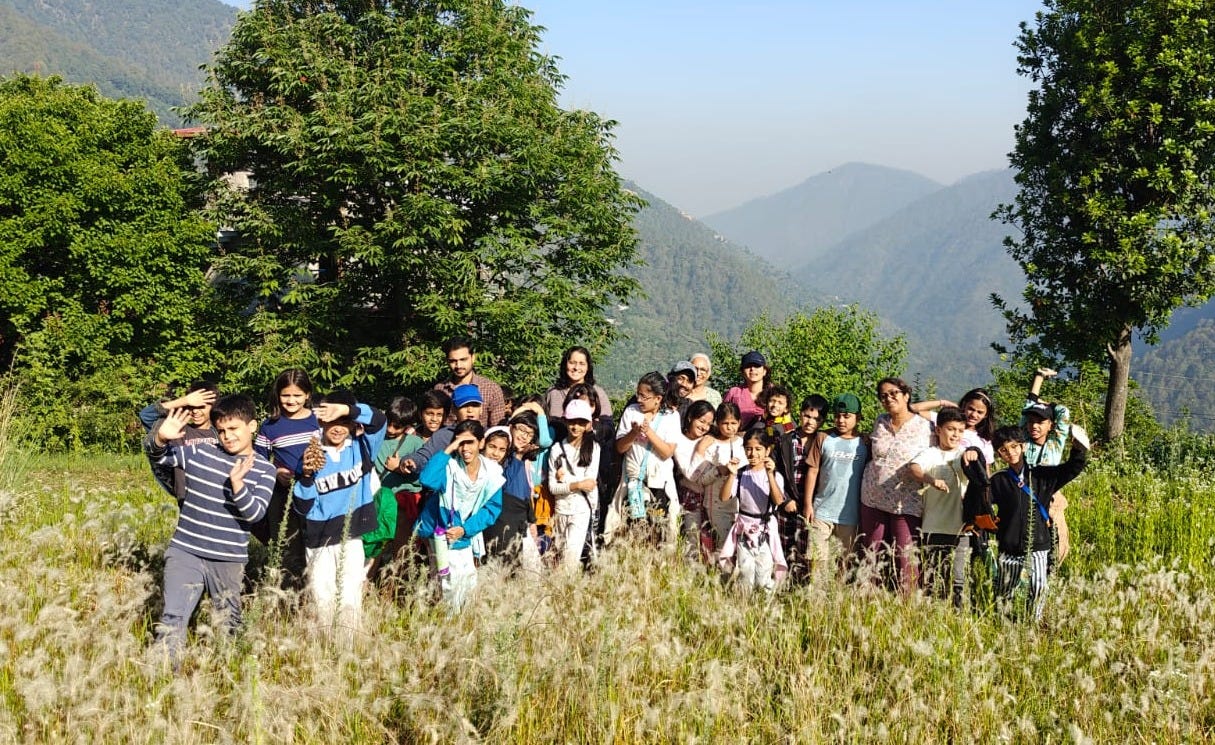
Thirty learners from Grades 4 and 5 boarded the train with us. For many of them, it was their first train journey. The excitement was contagious. Questions flowed endlessly. How many stations would come? How long would the journey take? What would the mountains look like?
When boredom briefly appeared, I introduced them to a game I used to play during my own childhood—Raja Mantri Chor Sipahi. I was secretly curious whether children growing up in a world full of screens and sophisticated games would enjoy something so simple. To my surprise, they were completely immersed. The game continued for hours. I found myself playing alongside them and smiling at how some things never lose their charm.
The bus ride from Kathgodam to Ramgarh brought our first glimpse of the mountains. We sang songs, spotted monkeys along the roadside and admired the breathtaking views. A few learners experienced motion sickness, Fortunately, that possibility had already been anticipated. Watching experienced facilitators calmly support learners reminded me that a great deal of care and planning often remains invisible to those experiencing the programme. When we finally reached Madhuban Ashram, one of the first things that caught my attention was a wall completely covered in ivy. It felt as though nature had gently embraced the building.
Soon after, we gathered in the dining hall.
I still remember my first meal there.
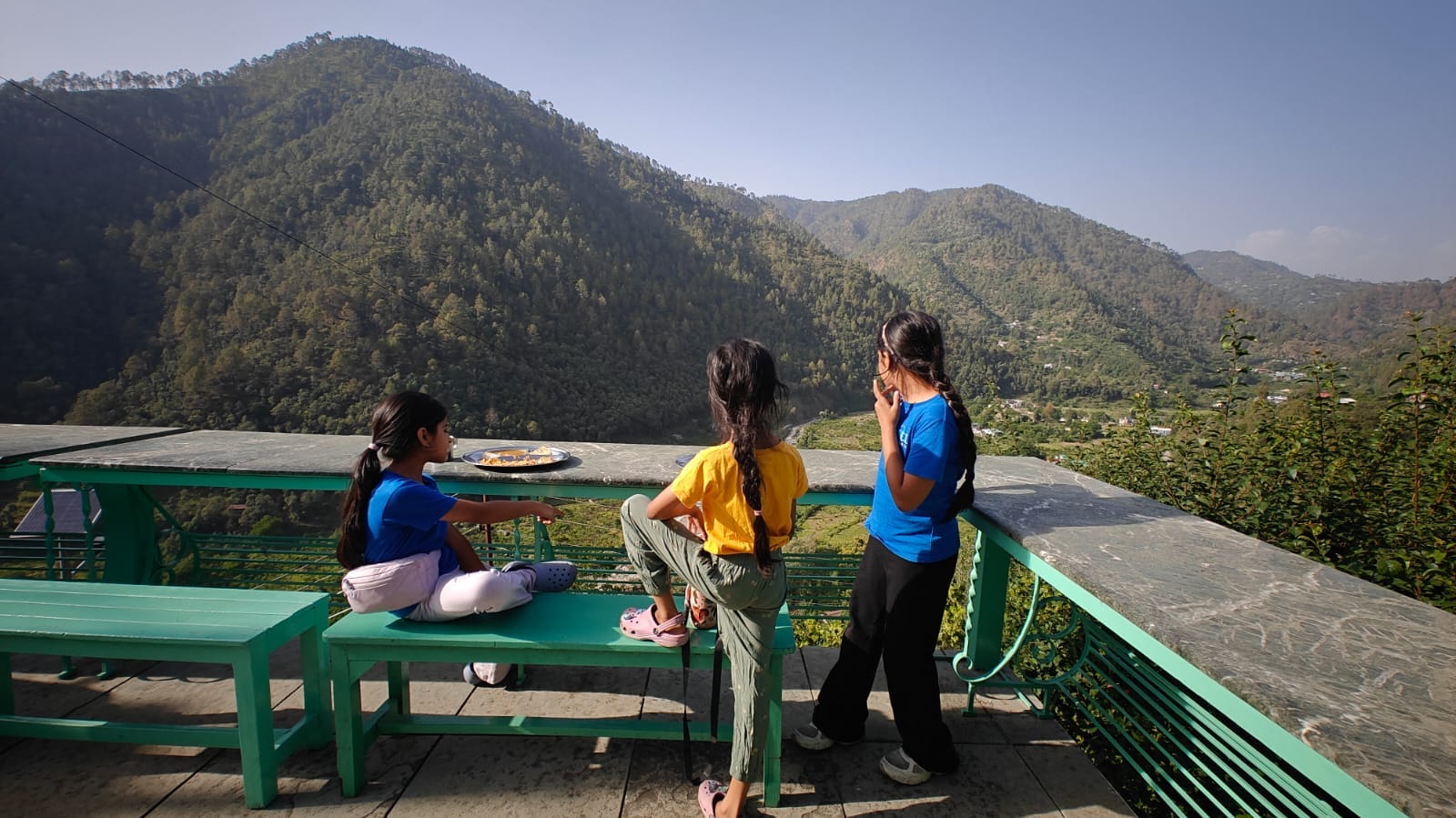
Not because of the food—though the food was wonderful—but because I could not stop looking at the mountains. The view was spectacular. The learners were equally mesmerised.
“People who eat with this view every day are so lucky,” one learner remarked.
I quietly agreed.
That evening, we met Lalu Bhaiya, the gardener who had nurtured much of the Ashram’s greenery.
As he guided us through the campus, I was struck by his confidence and pride in his work. He knew every plant by name. Hydrangeas, petunias, lilies, roses and countless other plants flourished under his care.
One learner asked whether these flowers could be grown back home in Noida.
Lalu Bhaiya explained that many of them thrive in cooler temperatures and struggle in the heat of the plains.
A simple question about flowers became a discussion about climate.
The learners began noticing how temperature influences what grows where. Apples, plums and walnuts flourish in the hills, while many plants familiar to us in Noida would struggle there.
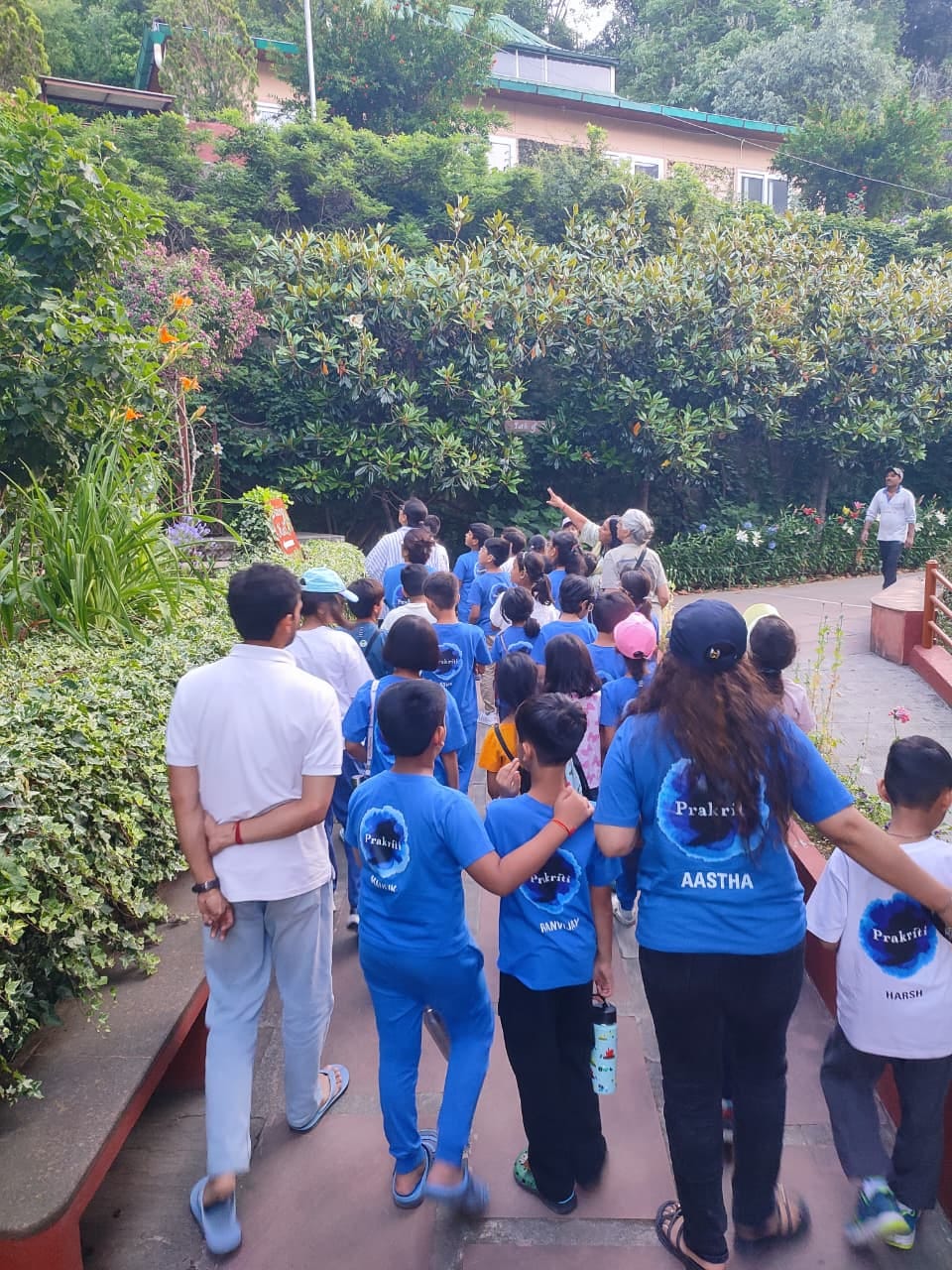
The children were fascinated by the dog flower and eagerly collected fallen blossoms from the ground. What pleased me most was that they did not pluck flowers from the plants. Instead, they chose only those that had already fallen. It was a small act, but one that reflected sensitivity towards nature and respect for the gardener’s hard work.
The learners were equally excited about the plum trees. When told that fruits are not plucked in the evening, they accepted it without complaint. Their curiosity remained, but so did their respect.
That evening ended with mantra chanting. Listening to Grade 4 and 5 learners confidently recite prayers and mantras together in a chorus was a deeply satisfying experience.
The next morning, we trekked down towards a basketball court.
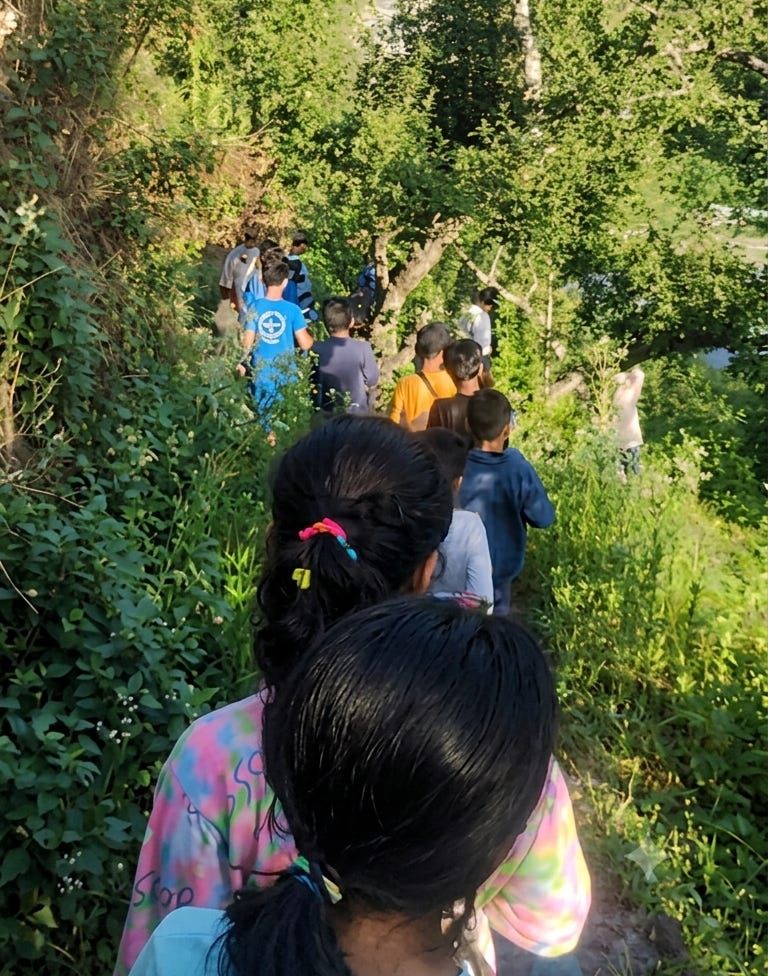
Some learners bounded down the slope enthusiastically while others moved carefully, making sure they didn’t slip. Learners were very keen to play a game so they were introduced to the game of kho-kho. Some learners were familiar with the game while to some it was completely new.
Watching them learn the rules and immediately forget them in the excitement of girls-versus-boys competition was both hilarious and delightful.
Soon after the game, we shifted our attention to observing the surroundings.
The questions came quickly :
Why does moss grow on some walls and not others? Why are tiny plants growing from rocks? Why do weeds grow without anyone planting them?
One particularly memorable moment involved a plant called bichchhu buti (stinging nettle). One of the Ashram girls warned learners not to touch it because it causes irritation.
A curious learner immediately asked, “What happens if someone accidentally touches it?”
We were told that the antidote plant usually grows nearby and local people simply use it to ease the irritation.
As I listened, I found myself amazed. Here was a plant that caused discomfort growing alongside another that provided relief. Nature had placed both the challenge and the solution together.
The more time I spent in Ramgarh, the more I realised how much wisdom is hidden within natural systems.
Throughout the trek, learners observed ferns, butterflies, wild fruits, weeds, moss and fallen leaves. Discussions emerged around soil formation, moisture, biodiversity and ecosystems.
At one point, I showed them the spores on the underside of a fern leaf.
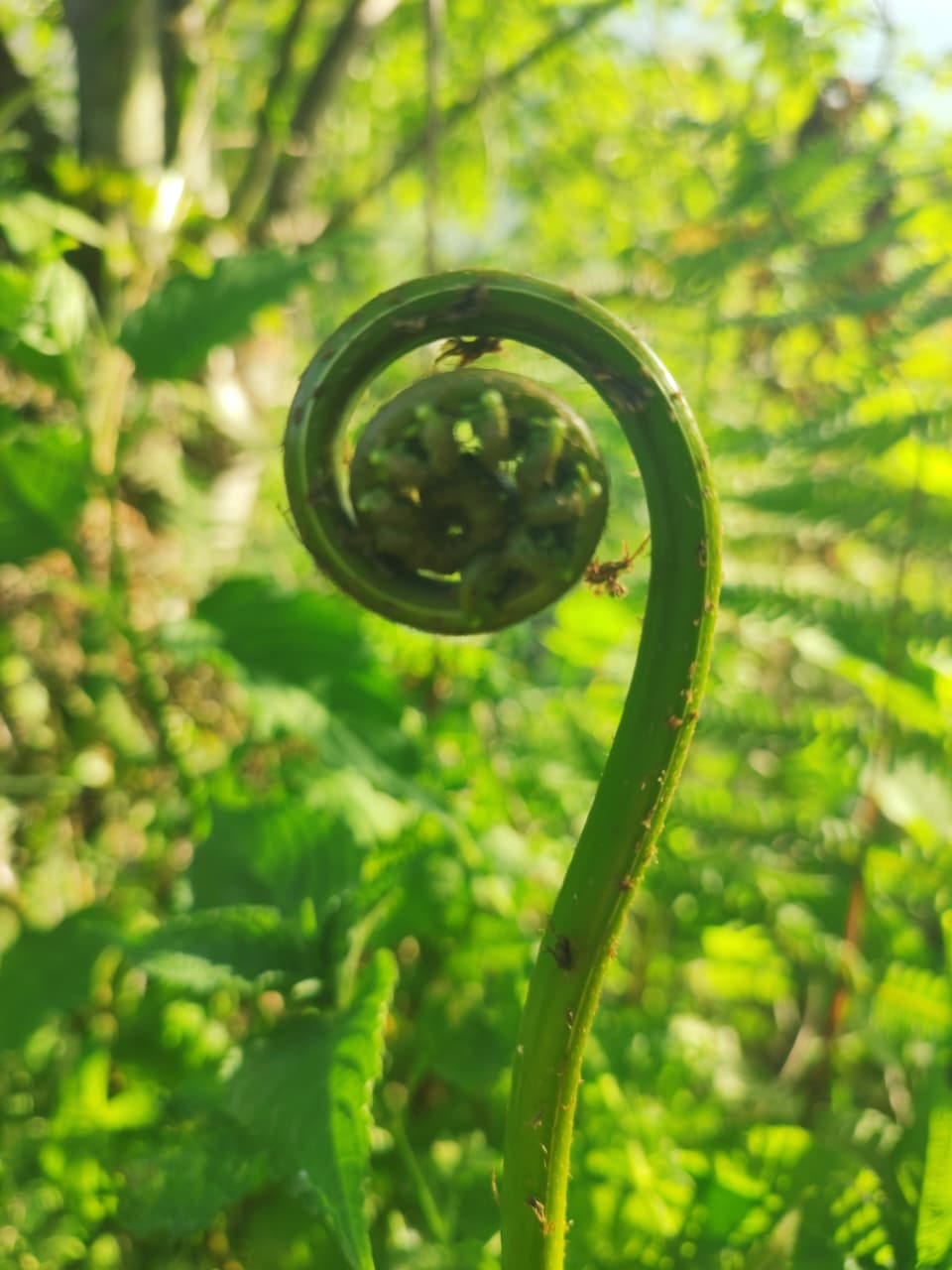
Immediately, I was transported back to my college days when my botany professor had shown me the same thing during a field visit.
Standing there, I realized something. Many classroom lectures fade with time. Experiences stay.
The farming activities helped learners experience the journey of food firsthand.
While harvesting onions, one learner remarked:
“Didi, I am tired just harvesting them. I cannot imagine how farmers work all day in the fields.”
That simple observation captured more understanding than many textbook lessons could.
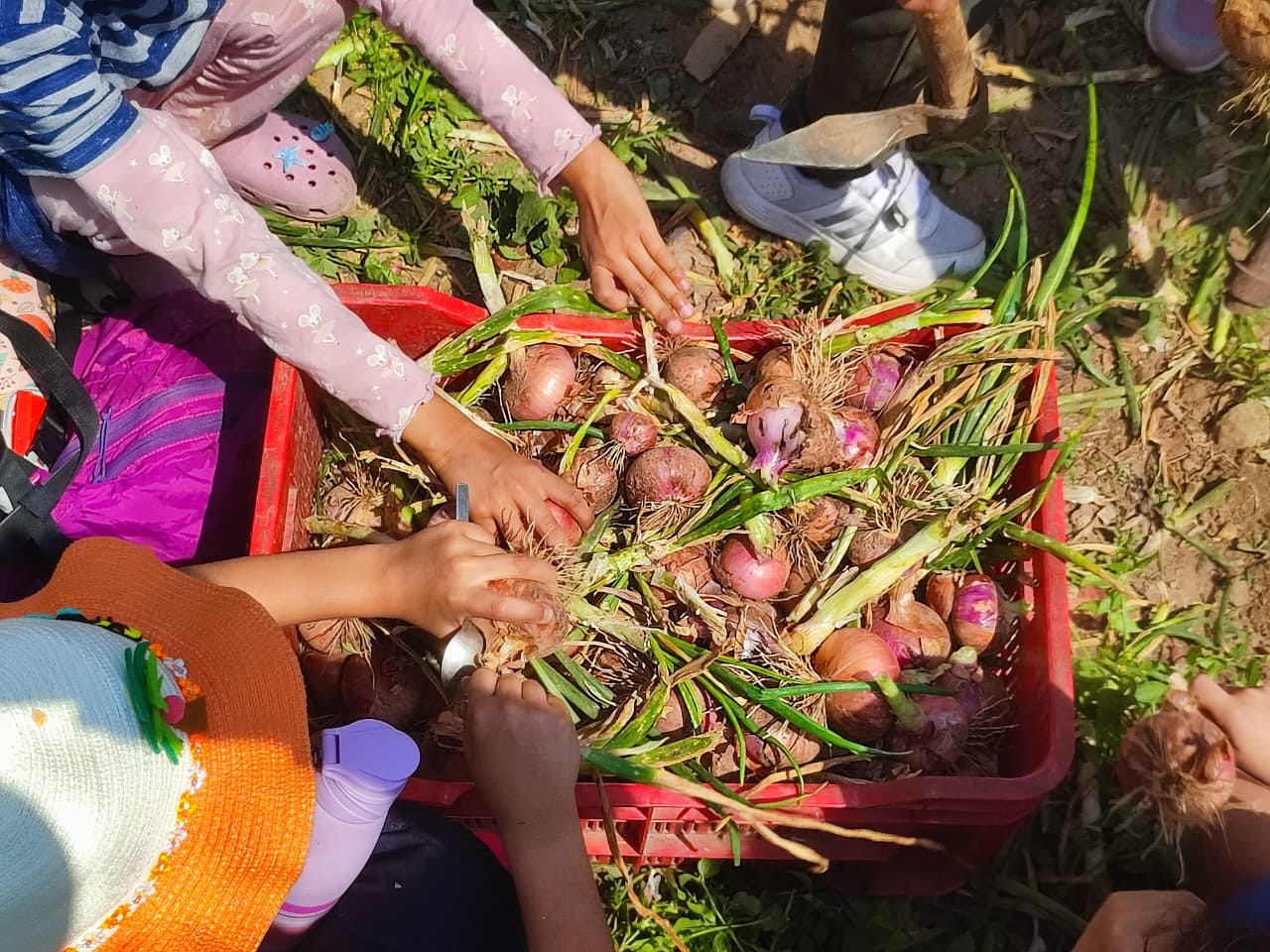
The learners harvested onions, learned about organic farming practices and heard how cow dung and cow urine are used to prepare fertilisers and pesticides.
The reactions were predictable. Many faces immediately displayed expressions of discomfort at the sound of making something from cow dung.
Little did they know what was coming later.
After lunch, learners explored Aipan art and created bookmarks. Watching their creativity unfold was a reminder that learning is not limited to one domain. Some worked carefully, some experimented fearlessly and many admired each other’s work.
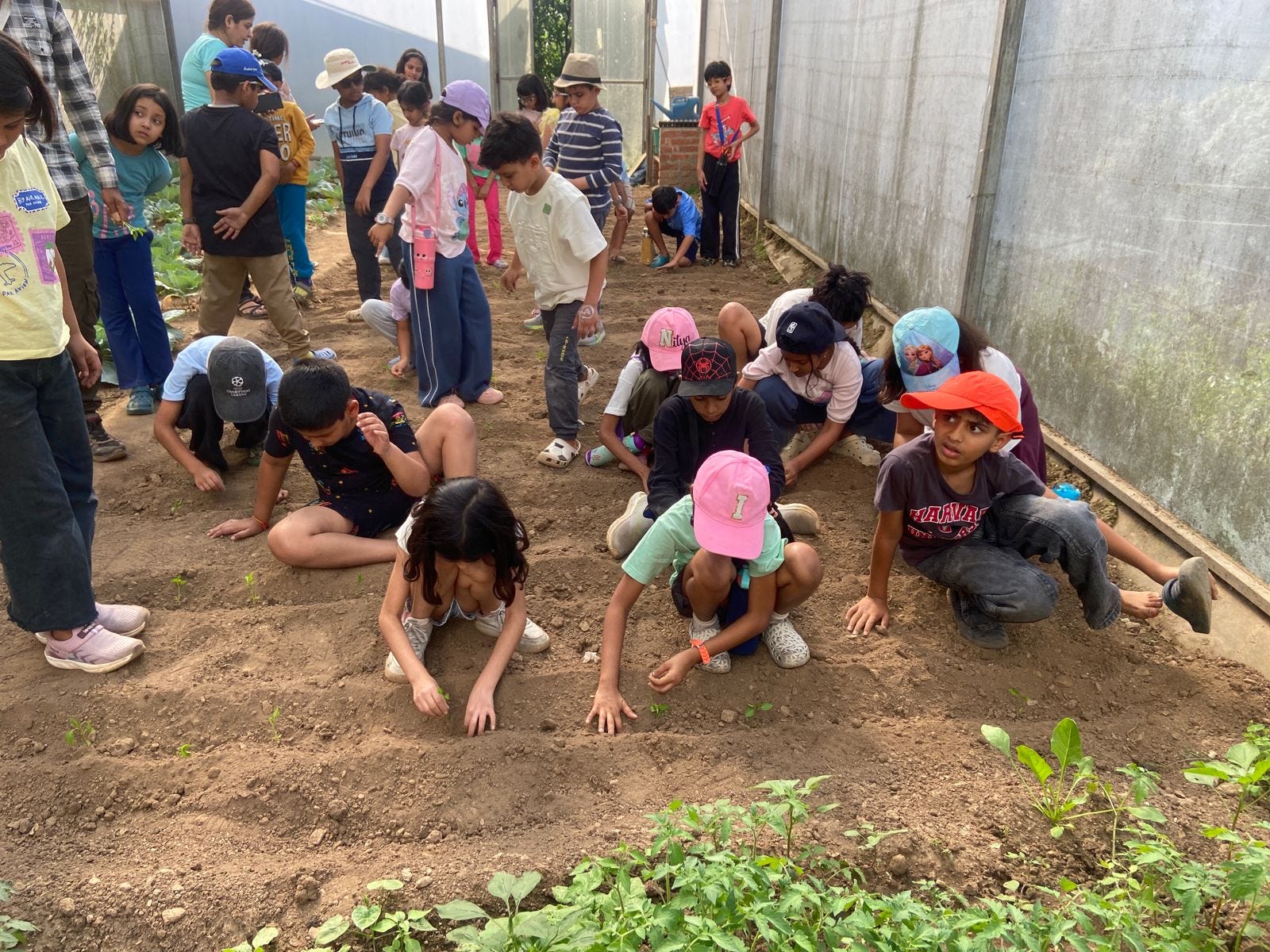
Later, learners planted capsicum saplings inside a greenhouse.
One learner referred to the sapling as “our capsicum” and immediately wanted to know when it would bear fruit. I remember smiling.
The moment effort was invested, ownership appeared.
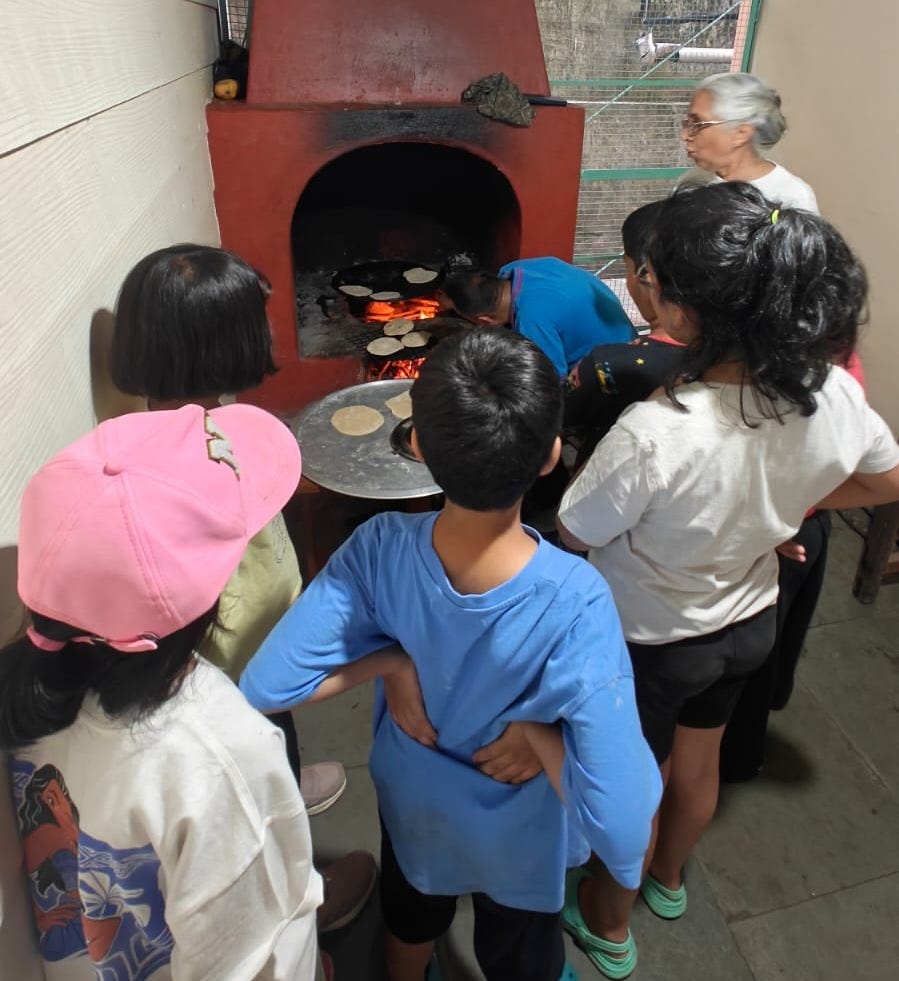
The farming journey culminated in a roti-making session. Learners rolled chapatis and watched them being cooked on a traditional chulha.
The discussions that followed were powerful.
We spoke about the journey of food—from farmers who grow it, to transporters who move it, to families who earn the money to buy it, and finally to the people who prepare it.
Food wastage suddenly became a very real conversation.
One of my favorite discussions of the entire OLE emerged from a simple fruit-sorting activity.
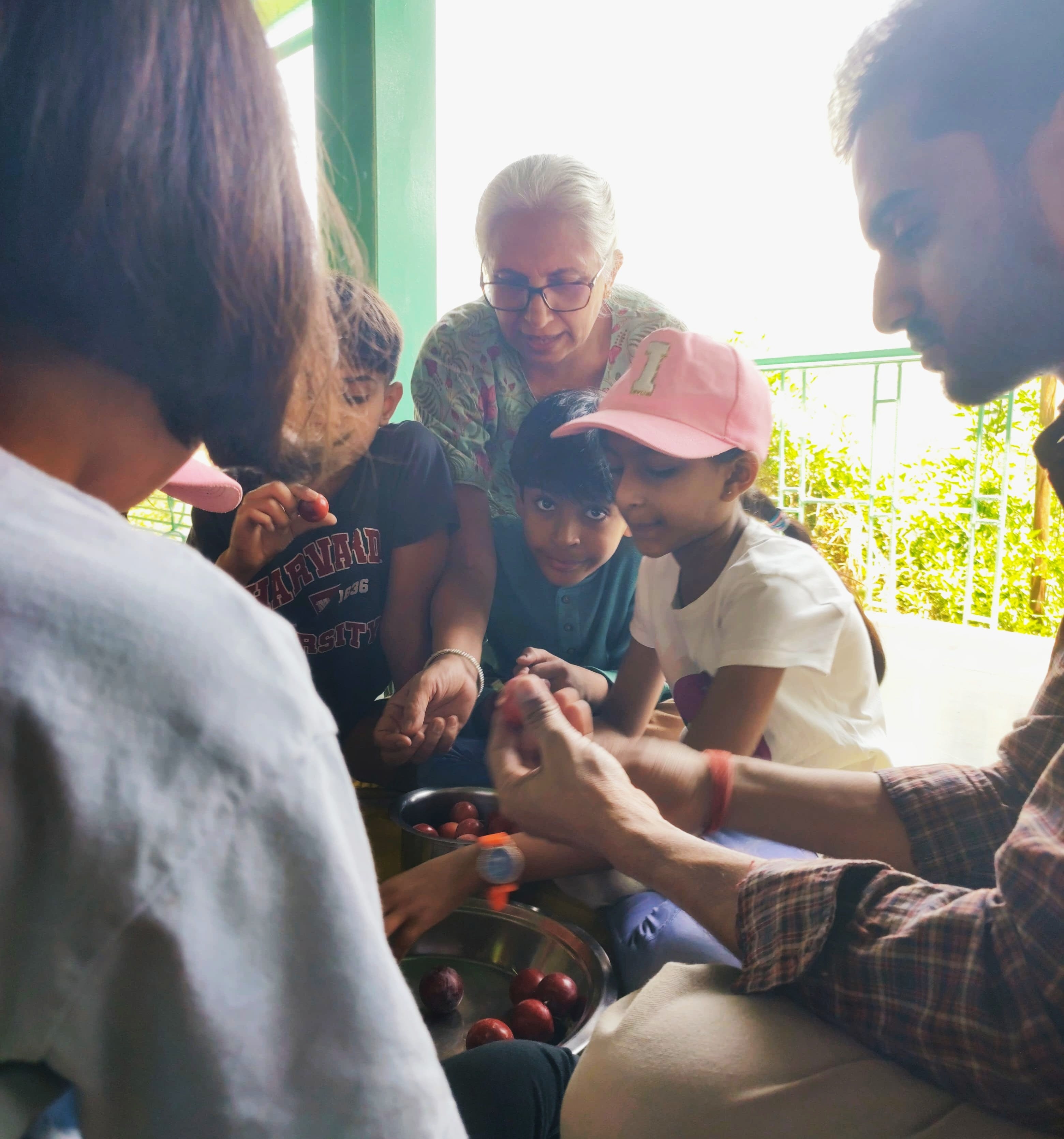
Learners were given plums and asked to separate ripe fruits from unripe ones.
The task was completed quickly.
Then came the question:
“How did you know which fruits were ripe?”
“By their colour,” learners replied.
The fruit had not spoken. Yet it had communicated.
That observation led to a fascinating discussion about what we began calling nature’s language.
Fruits communicate ripeness through color. Leaves communicate changing seasons. Flowers communicate environmental conditions. Nature is constantly communicating through patterns, colors and cycles. Perhaps nature has not stopped speaking. Perhaps we have forgotten how to listen.
One learner shared a thought that stayed with me:
“Natural disasters are also a kind of communication. Maybe nature is telling humans that enough is enough.”
The discussion lingered long after the activity ended.
Later that day, learners learned a Kumaoni folk song. Initially, they felt they had simply learned a new song. But as Chitra Didi unpacked its meaning, something deeper emerged. The song spoke about seasonal fruits, crops, weather patterns and everyday life.
It carried knowledge. It carried culture. It carried memory.
The learners realized that folk songs are much more than entertainment. They are windows into the lives of the people who created them.
I had never thought about folk songs that way before.
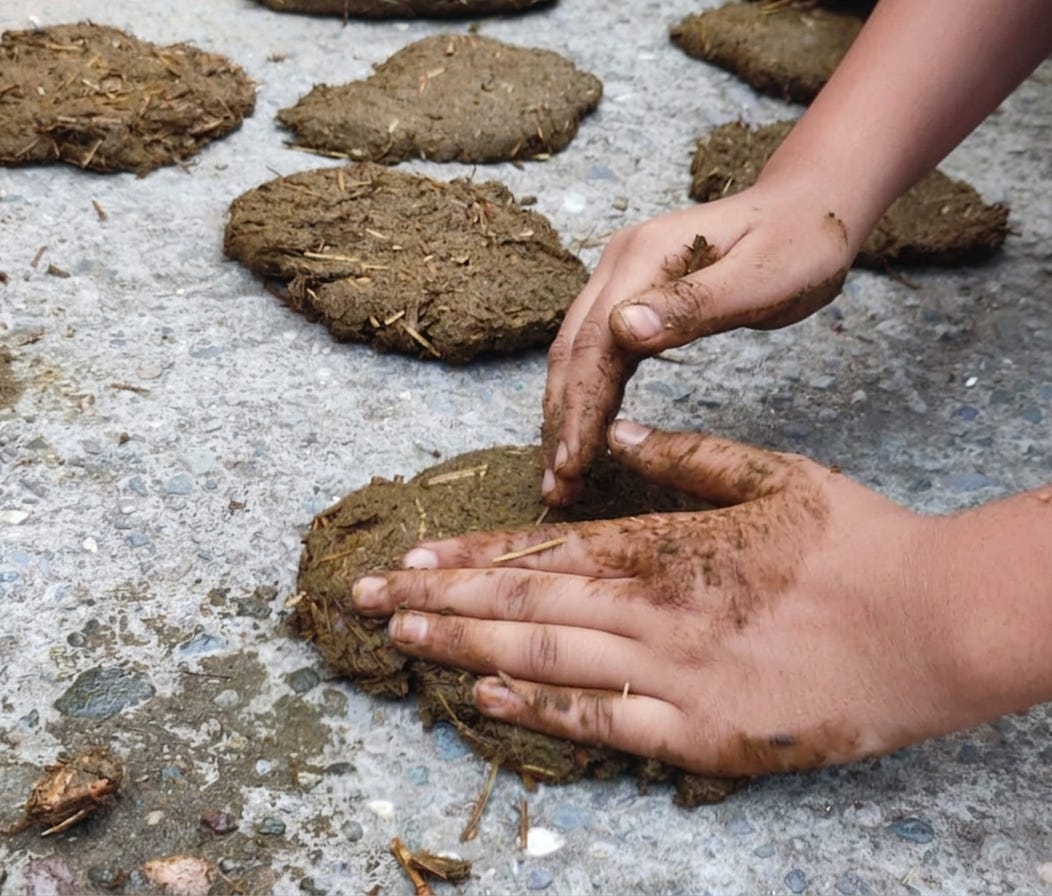
If there was one activity I was most uncertain about, it was making uplas.
The previous evening, facilitators had discussed how learners might react to handling cow dung. We carefully planned a conversation around its role in rural life—as fuel, fertiliser and part of many traditional practices.
Even after that discussion, I remained doubtful.
Then the activity began. To my complete surprise, learners jumped into it enthusiastically. Honestly, I surprised myself too.
Growing up, I had often heard adults say:
“Padh likh lo, warna bade hoke gobar uthana padega.”
There I was—well educated and happily making uplas alongside the learners.
The irony made me smile. It remains one of my favourite memories from the OLE.
The Learning We Didn’t See
Some of the most important learning happened after the learners had gone to sleep. Every night, facilitators gathered to reflect, evaluate and plan.
We discussed learner observations, homesickness, fatigue and possible changes to the schedule. We did not always agree. Some facilitators wanted to maximize learning opportunities. Others worried about learner exhaustion.
What impressed me was that even during disagreement, everyone remained focused on the same goal: learners’ wellbeing.
These meetings gave me a deeper appreciation of the invisible care that goes into every Prakriti experience.
The final day was intentionally slower.
Learners reflected on their experiences and later observed the preparation of plum jam and chutney.
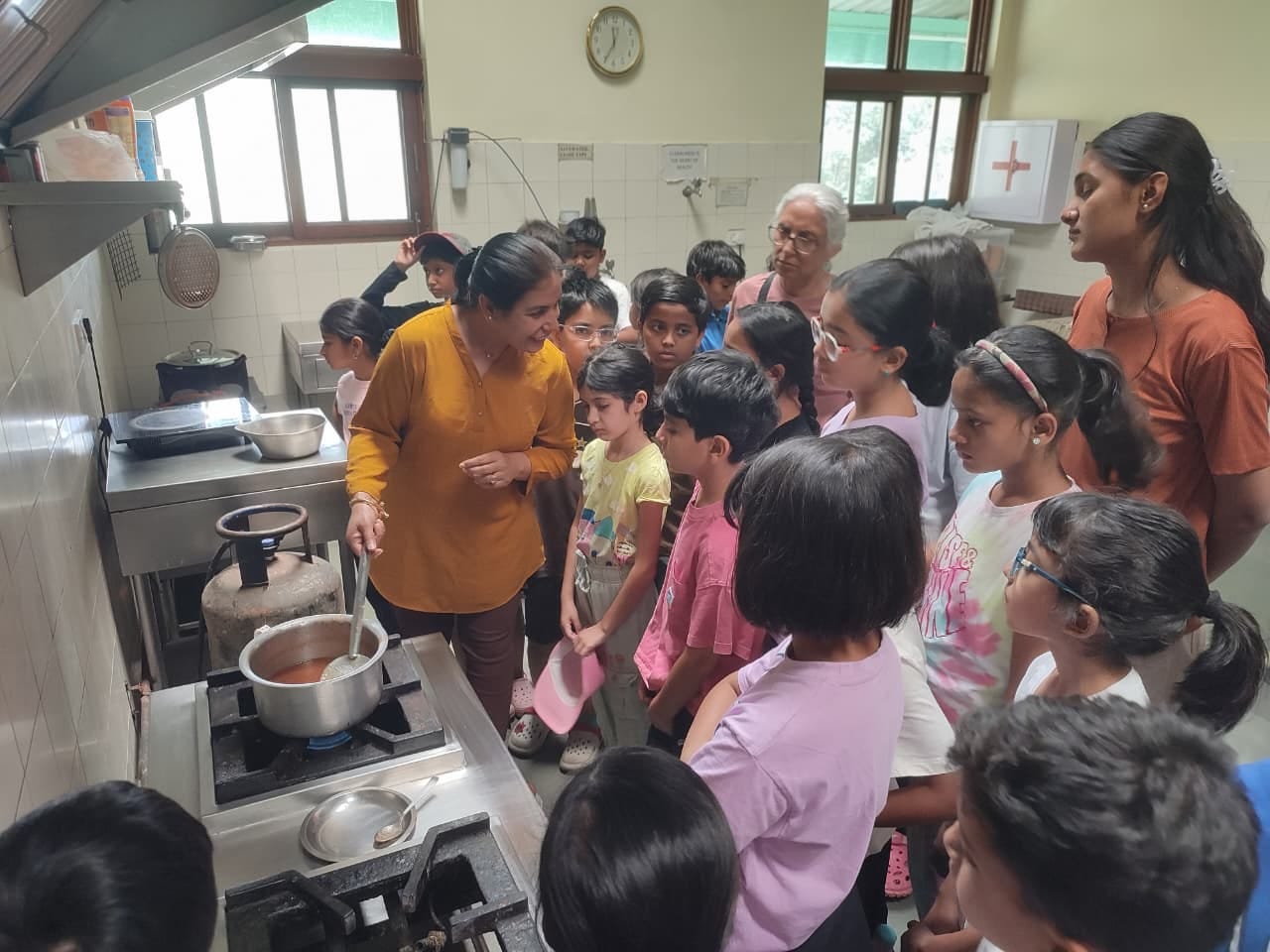
What appeared to be a cooking session soon became a discussion about food preservation and sustainability.
One learner explained that fruits spoil quickly, but turning them into jam allows seasonal flavours to be enjoyed throughout the year.
I loved that insight. It connected farming, science and sustainability so naturally. Later, local women set up a small market.
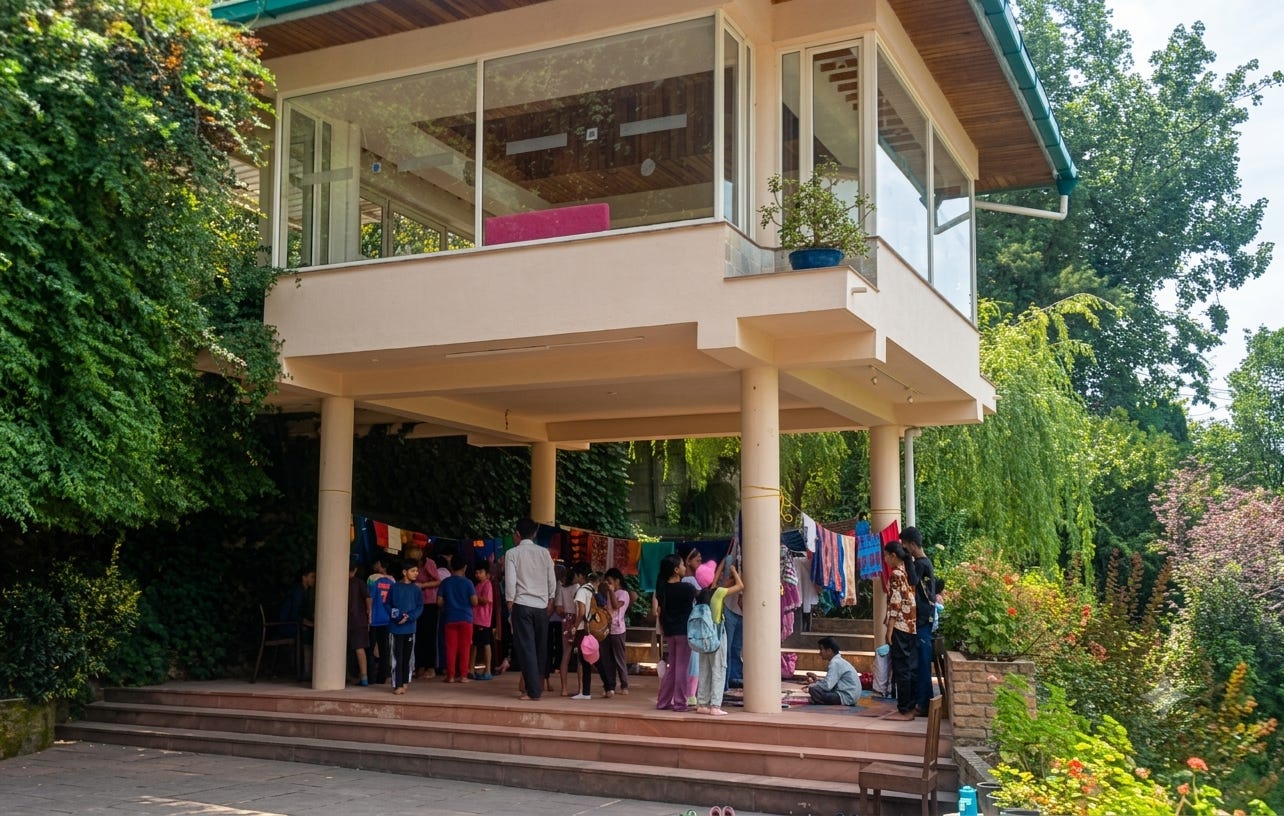
Learners excitedly purchased handmade items and gifts for family members. One learner bought a doll for his sister, and I found that gesture incredibly sweet.
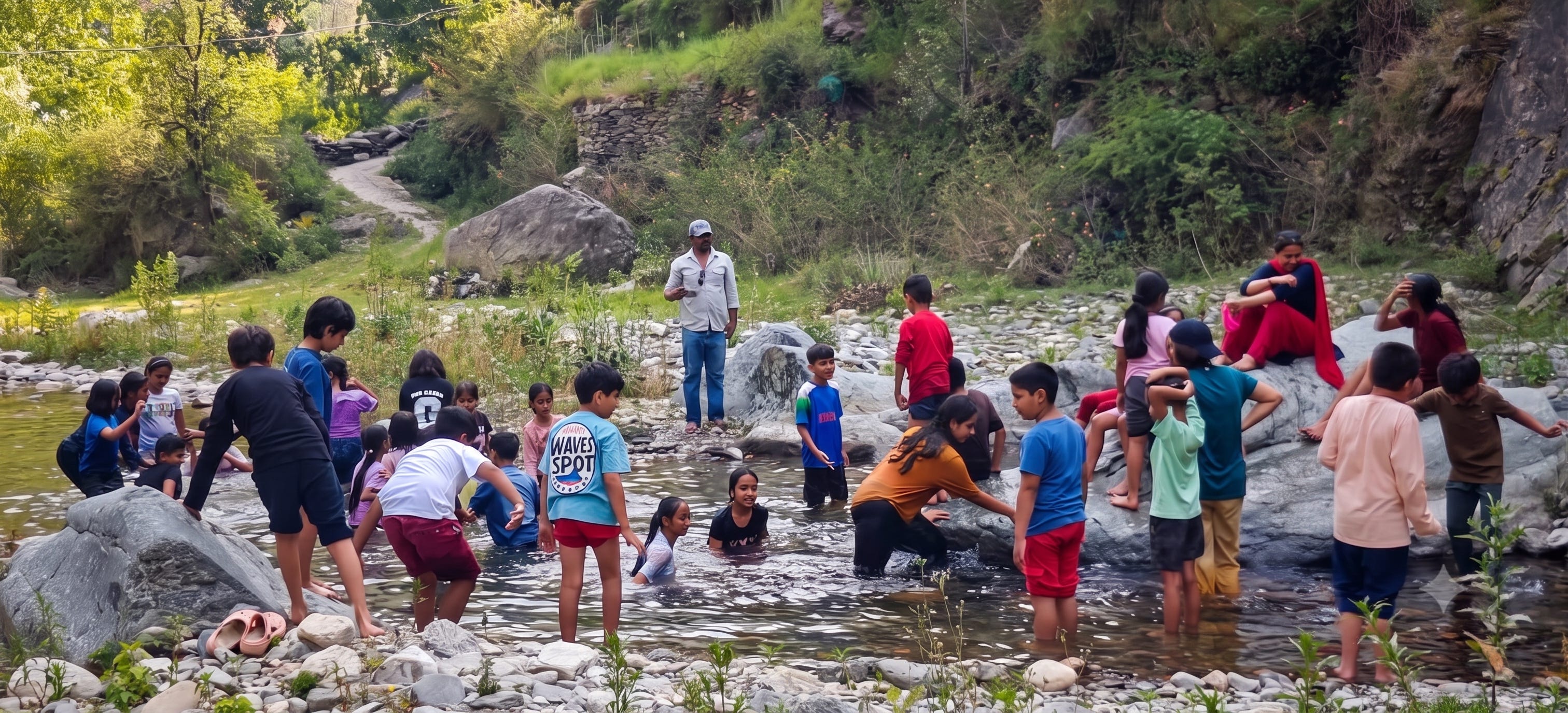
In the evening, we walked to the river. The original plan included a river-cleaning activity. The moment learners reached the water, however, they ran straight in.
There were splashes, laughter, fish sightings, crab discoveries and pure joy. We looked at each other and made a simple decision. The learners deserved this moment. Not everything needed to become a lesson.
Sometimes joy itself is enough.
What I Brought Back From Ramgarh
As we celebrated a learner’s birthday by singing in Sanskrit, Hindi and English before leaving the Ashram, I found myself reflecting on everything the past few days had offered.
The mountains… the flowers… the stars… the folk songs… the conversations… the learners’ questions… the laughter…
Most importantly, I reflected on something Rachna Didi had shared about having a no-complaint attitude.
Problems will always exist. The question is whether we spend our energy complaining about them or finding solutions.
That lesson travelled home with me.
We had gone to Ramgarh to learn about farming. We returned having learned about much more—nature, culture, teamwork, gratitude, resilience and ourselves.
And perhaps that is what makes experiences like these so meaningful. The lessons we remember most are often the ones we never planned for.
The article is written because it is inspired by meticulous observations and notes by the farming team of Aastha Mishra and Harpreet Ahluwalia (farming guest faculty).
Comments
Nothing yet. Say the first thing.
Sign in to join the conversation.