
As parents, it is natural to compare our child’s development with that of other children. While every child develops at their own pace, there are certain milestones that help us understand whether speech and language skills are progressing as expected.
One of the most common concerns parents share is:
“My child understands me, but isn’t talking much. Should I be worried?”
The answer is not always straightforward, but recognizing early signs and seeking timely guidance can make a meaningful difference.
When Parents First Notice Something Feels Different
Many parents begin to notice subtle differences long before anyone else does. A child may rely heavily on gestures, point instead of speaking, or communicate differently from peers of the same age.
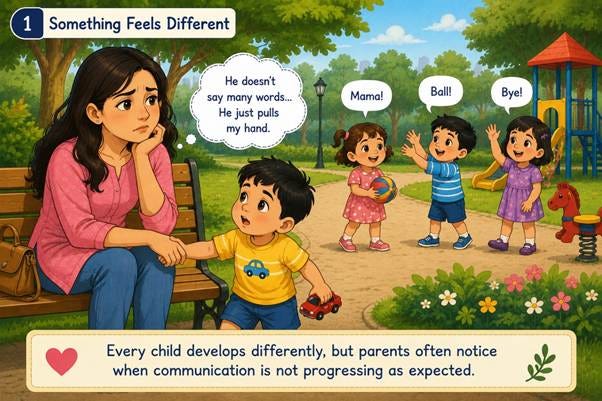
At this stage, parents often observe that their child is not using words as frequently as other children. These observations are important and should never be ignored.
Unfortunately, parents are often reassured with comments such as:
“Boys talk late.”
“Don’t worry, he’ll start talking when he’s ready.”
“Every child develops differently.”
While these statements may sometimes be true, they should not prevent parents from monitoring their child’s communication development carefully.
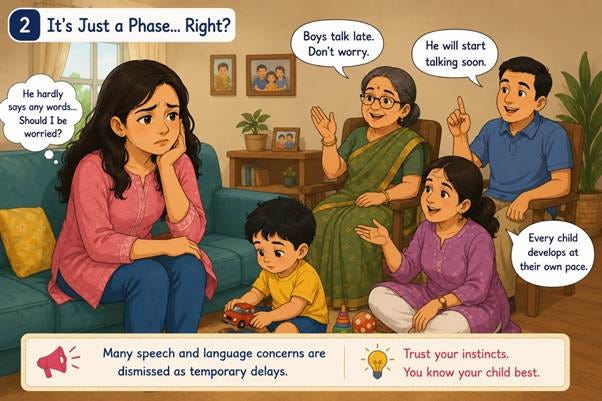
Trusting your instincts as a parent is important. If you feel concerned, it is worth seeking professional advice rather than waiting indefinitely.
Speech and language are often used interchangeably, but they are different.
Speech refers to the sounds a child produces to form words.
Language refers to understanding and using words, gestures, and sentences to communicate meaning.
A child may experience difficulties with speech, language, or both.
Although every child develops differently, the following milestones provide useful guidance.
By 12 Months
Responds to their name
Uses gestures such as waving and pointing
Babbles using different sounds
Attempts to communicate wants and needs
Says one or two meaningful words
By 18 Months
Understands simple instructions
Points to familiar objects when named
Uses approximately 10–20 words
Attempts to imitate words and sounds
By 2 Years
Uses at least 50 words
Combines two words together
Follows simple directions
Communicates basic needs
By 3 Years
Uses short sentences
Understands simple questions
Participates in simple conversations
Is understood by familiar listeners most of the time
Children who struggle to communicate often experience frustration because they know what they want but cannot express it effectively.
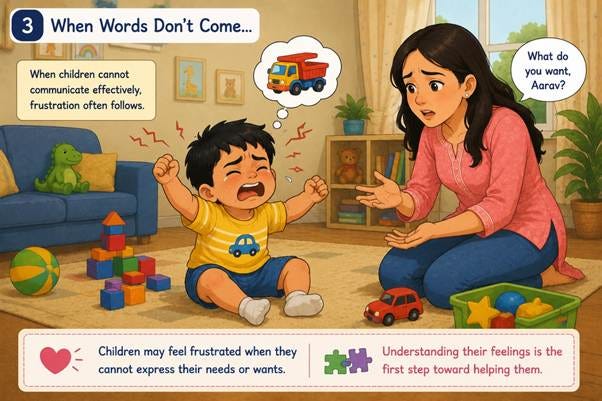
Some signs that may indicate a need for further evaluation include:
Difficulty Understanding Language
Does not consistently respond to their name
Has difficulty following simple instructions
Appears not to understand familiar words
Limited Use of Words
Uses very few words for their age
Relies primarily on gestures
Does not attempt to imitate sounds or words
Reduced Social Communication
Rarely initiates communication
Limited eye contact during interactions
Does not point, show, or share interests
Difficulty Being Understood
Speech is unclear for their age
Frequently omits sounds in words
Becomes frustrated when others cannot understand them
When Should Parents Seek Help?
One of the biggest misconceptions about communication development is that children will simply “grow out of it.”
While some children catch up naturally, others benefit significantly from early support.
If your child is not meeting communication milestones or you have ongoing concerns, consulting a Speech-Language Pathologist can provide valuable insight and guidance.
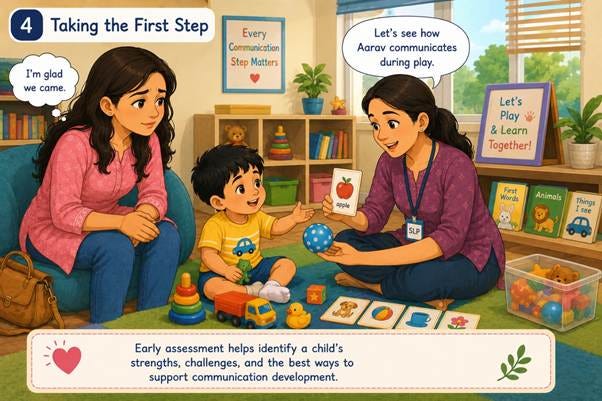
An assessment is not about labelling a child. Instead, it helps identify strengths, understand challenges, and determine the best ways to support communication development.
Research consistently highlights the benefits of early intervention.
During the early years, children’s brains are highly responsive to learning experiences. Providing support during this period can positively influence communication, social interaction, learning, and confidence.
Early intervention can help children:
Develop stronger communication skills
Improve social participation
Increase confidence
Reduce frustration
Build readiness for school and learning
Parents are a child’s most important communication partners.
Simple daily interactions can create powerful opportunities for language learning.
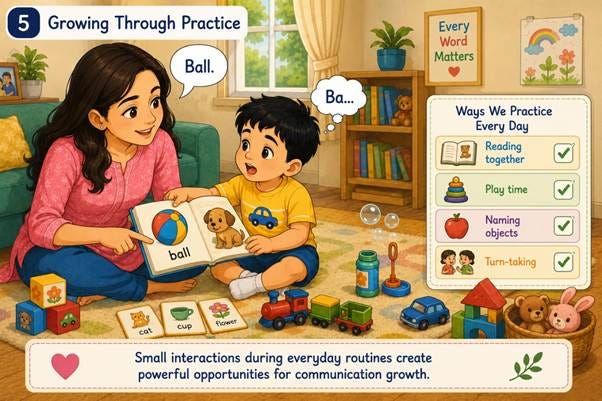
Some effective strategies include:
Read books together every day
Talk about daily activities and routines
Follow your child’s interests during play
Encourage turn-taking during conversations
Expand on your child’s words
Reduce passive screen time and increase interactive communication
Remember, communication development does not happen only during therapy sessions. It grows through meaningful interactions throughout the day.
Progress in communication is often gradual. A child’s first meaningful word, first request, or first short sentence can represent a significant achievement.
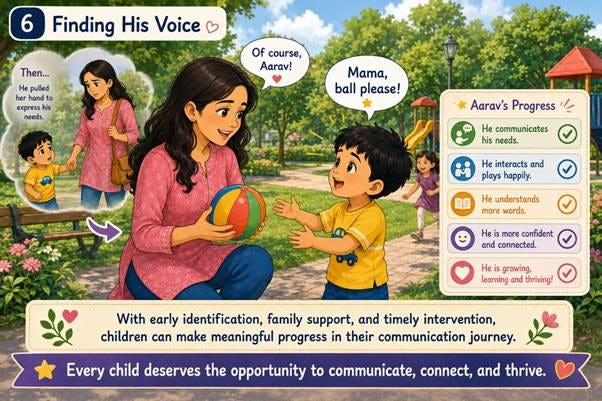
With early identification, family involvement, and appropriate support, children can make meaningful progress in their communication journey.
The goal is not simply helping children talk—it is helping them connect, participate, learn, and thrive.
Every child deserves the opportunity to communicate confidently and effectively.
If you have concerns about your child’s speech and language development, seeking guidance early can make a lasting difference. Early support provides children with opportunities to build essential communication skills and reach their full potential.
At Prakriti School, the Speech & Language Department is committed to supporting children and families through evidence-based assessment, intervention, and parent guidance- helping every child find their voice and flourish.
Comments
Nothing yet. Say the first thing.
Sign in to join the conversation.