
Every project, every conversation and every critique contributes towards understanding how the designed world works and how it can be improved.
In school, design occupies a very different position.
The students who enter my classroom are not only designers. They are also mathematicians, economists, scientists, writers, athletes and musicians. An hour spent discussing ergonomics may be followed by a lesson on calculus. A prototype built in the workshop competes for attention with examinations, assignments and deadlines from half a dozen other subjects.
So the question becomes:
How do you teach design when design is only one part of a student’s world?
For me, one object has consistently helped bridge that gap.
Simple enough that everyone has an opinion about it. Complex enough to contain questions of history, ergonomics, materials, manufacturing and behavior.
This year, I took the chair project in two very different directions.
My Grade 11 Design and Technology students, now in their third year with the subject, used the chair to explore design movements. The Grade 9 students, my design babies, were given a design problem:
Many learners find it difficult to sit through lessons and often find themselves fidgeting. What if there was a chair that helped them fidget and focus better?
Both groups were designing chairs.
Well: Neither group was really designing chairs.
With my Grade 11 students, the project began with a timeline.
Like scientists around a whiteboard, marker in hand, we attempted to make sense of design history.
We began with the Industrial Revolution and immediately felt bad for the artisan whose carefully crafted furniture was suddenly competing with machines and mass production. There was something appealing about that one-off oak chair, carrying the marks of its maker.
Then Bauhaus arrived and ruined everything. Or perhaps improved everything. The class was divided.
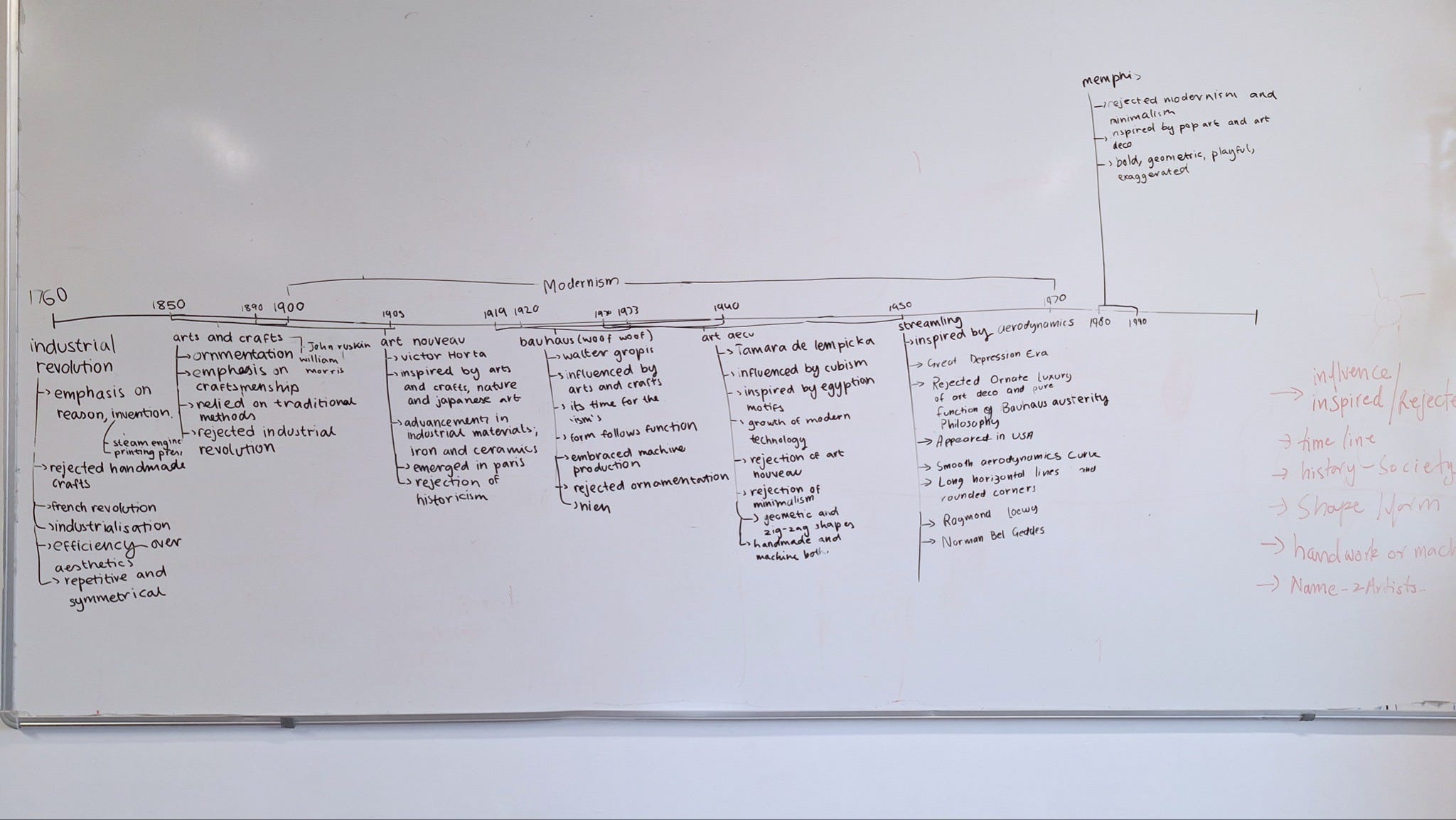
Some loved the simplicity. Others wanted ornament, personality and detail. Just when we thought we had settled the argument, Memphis entered the timeline in a riot of colour and strange geometry and everyone changed sides again.
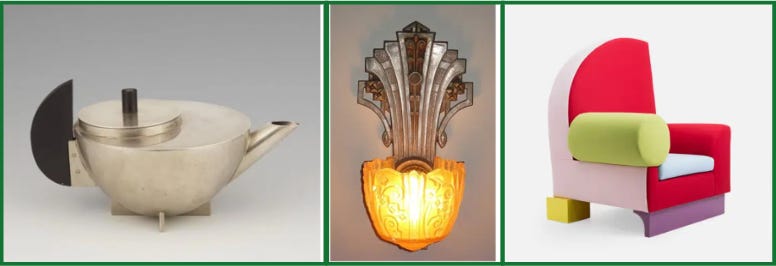
Fig : Left- Bauhaus movement example: Marianne Brandt teapot and lightshade, middle : Art Deco example, right : Postmodern furniture design examples: Bel Air chair by Peter Shire
As we jumped from one movement to another, a student finally asked:
“Why don’t we just make chairs inspired by our favorite design movements?”
And just like that, the project began.
What followed was a lot of experimentation with materials, manufacturing processes and construction techniques in our makerspace and at The Design Village.
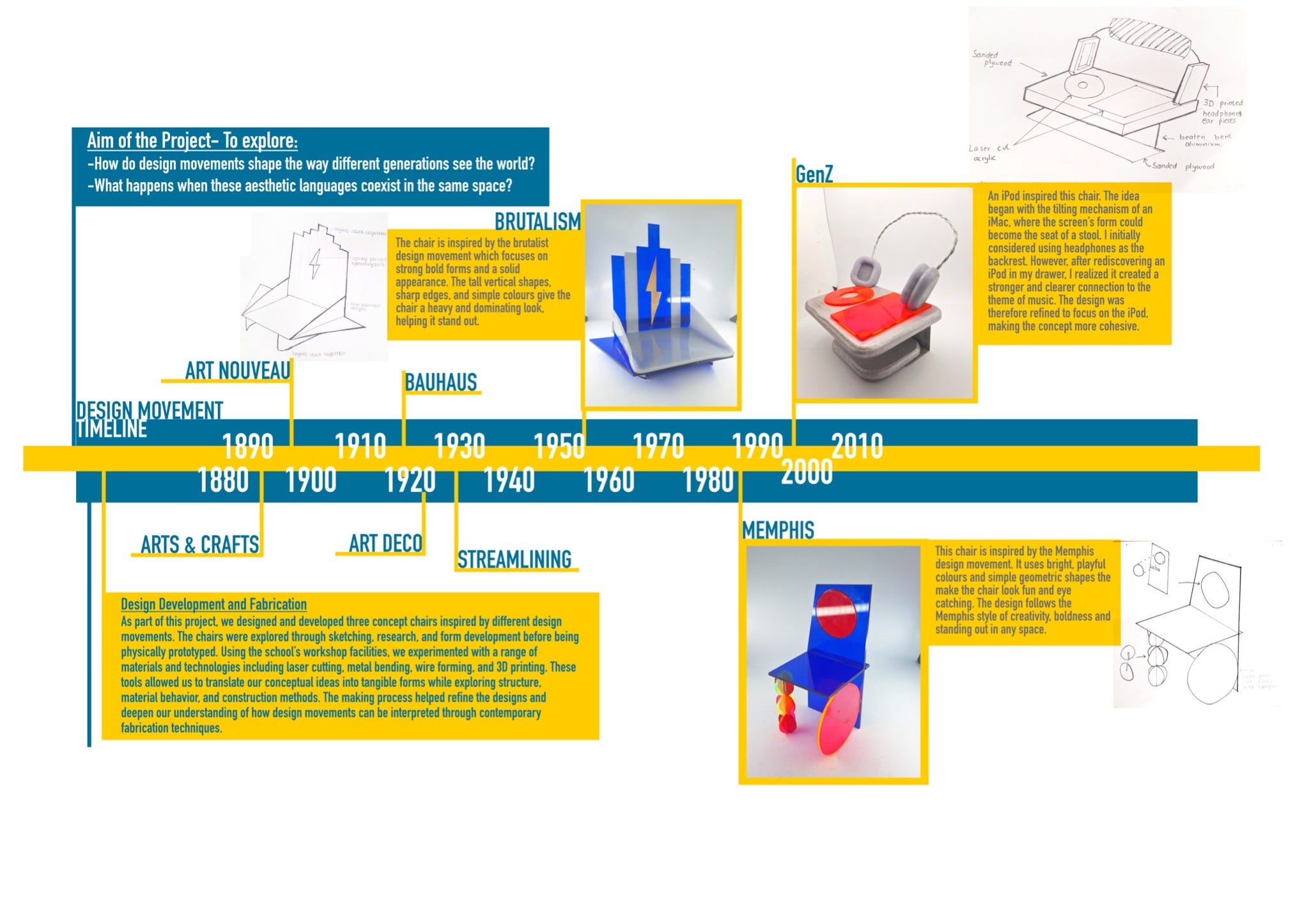
Fig: Student’s design movement timeline with their 3 chair designs inspired by Brutalism, Memphis and their own GenZ movement
Today, these concept chairs adorn the walls of the D&T lab and act as excellent conversation starters. The project is currently on pause as board examinations take over school life, but we hope to return to it soon and continue the journey from sketch to chair.
The Grade 9 students approached the chair from a completely different angle.
When I introduced the design problem, hands immediately shot up across the room.
Students eagerly described rocking chairs, spinning chairs, bouncing chairs and chairs with enough moving parts to rival an amusement park ride. But that was where I had to stop them.
One of the hardest lessons in design is resisting the temptation to jump straight to the solution. So I sent them back to their notebooks.
Before designing, we had to understand the problem.
After revisiting the problem statement, we began with mind maps exploring sitting, movement, focus and classroom behavior.
Then I asked them to think about the user again.
The user wasn’t a stranger. It was them, their friends, their classmates.
So I sent them out to observe-become a fly on the wall.
Watch lessons in progress. Notice who taps their feet. Who rocks on their chair. Who doodles endlessly. Who twists a pen until it nearly breaks.
Ask questions, talk to people.
The goal was simple: Empathize, understand the user better to understand the problem better.
Over the following weeks, I kept repeating one idea:
You are not designing a chair. You are designing behavior.
Through empathy maps, surveys and studies of existing products, students began to understand the problem more deeply. We then turned our attention to the humble classroom chair itself.
We measured it, observed it, critiqued it.
Students collected anthropometric data, analyzed ergonomics and developed design specifications around comfort, function, aesthetics and, of course, the all-important fidget elements.
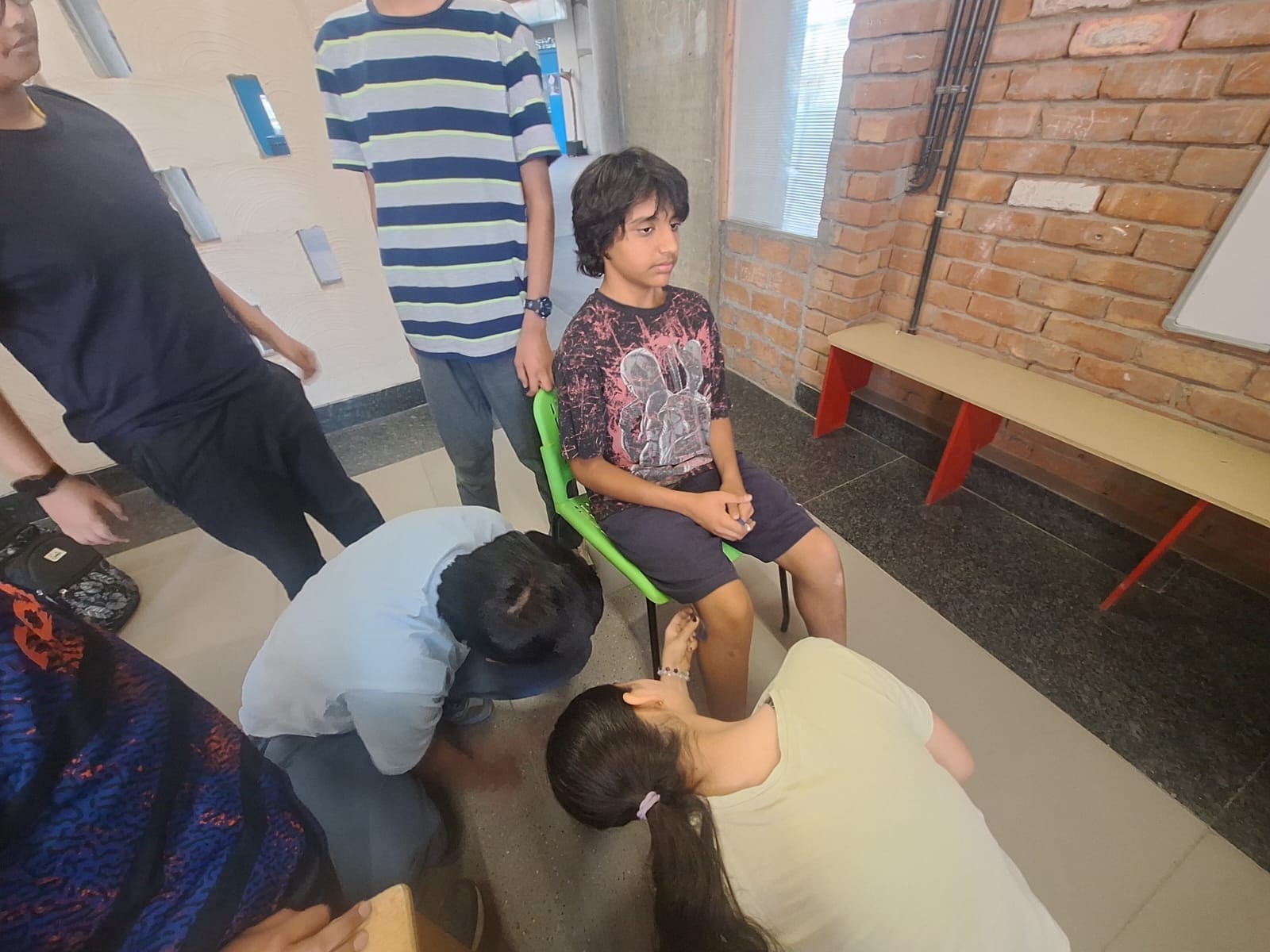
Fig: Students collecting anthropometric data
Before they designed their own chairs, however, I wanted them to do one final exercise. I took them to the school’s carpenter workshop.
By sheer luck, one of the chairs being made that day had not yet been glued together. So naturally, I took it apart. The students looked delighted.
“That’s it? We just have to put that back together?”
They had the confidence of people who had successfully sat on chairs their entire lives.
Ten minutes later, the chair was still in pieces, a leg was backwards, someone was holding the seat upside down.
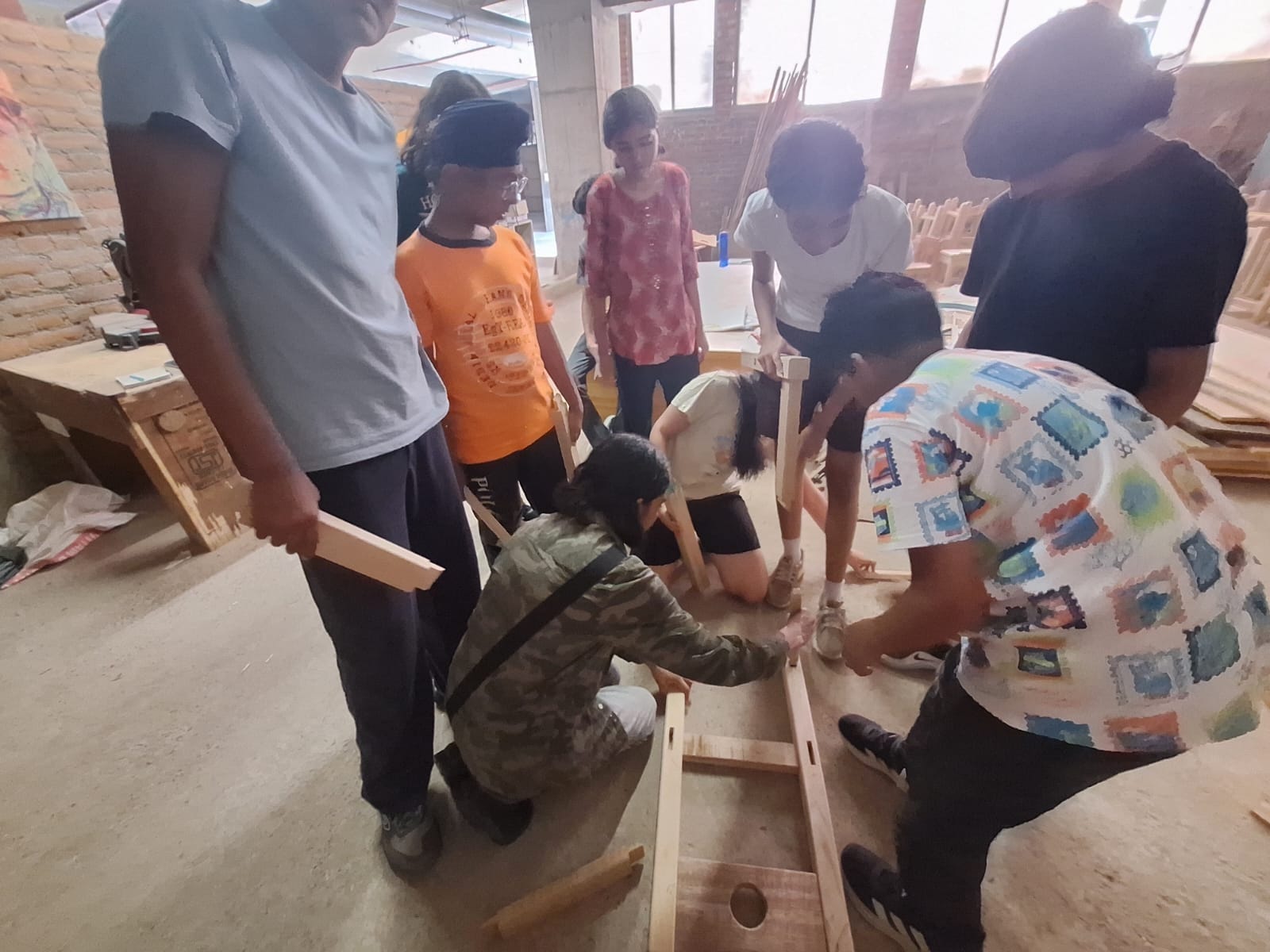
Fig: Students attempting to assemble a chair in the school carpentry workshop
Three students were suddenly having a very serious discussion about the mortise and tenon joint they had only learned about five minutes earlier.
The chair, meanwhile, remained unimpressed.
It was wonderful.
For the first time, they stopped seeing a chair as a single object and started seeing it as a collection of parts, joints and decisions. Only then did the sketching begin.
After a few lively brainstorming sessions around the whiteboard, students disappeared into their sketchbooks and returned with some wonderfully wild ideas.
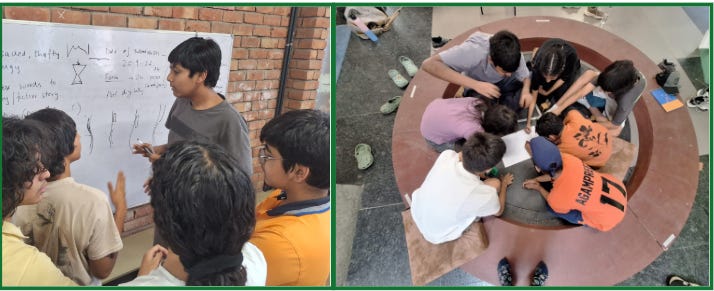
Fig: Students brainstorming as a group
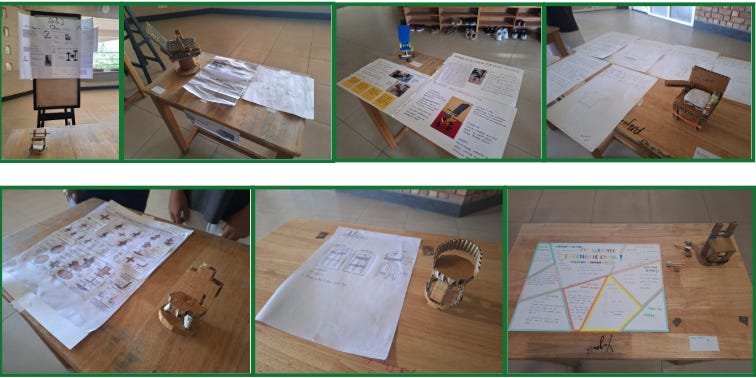
Fig: Student’s prototype with their research in brief
Then I decided to make things interesting.
“Let’s vote. The winning design will be built as a full-size chair in the makerlab.”
The effect was immediate.
Students who normally spoke only when necessary suddenly became salespeople. Designers turned into campaign managers. Every prototype had a passionate supporter.
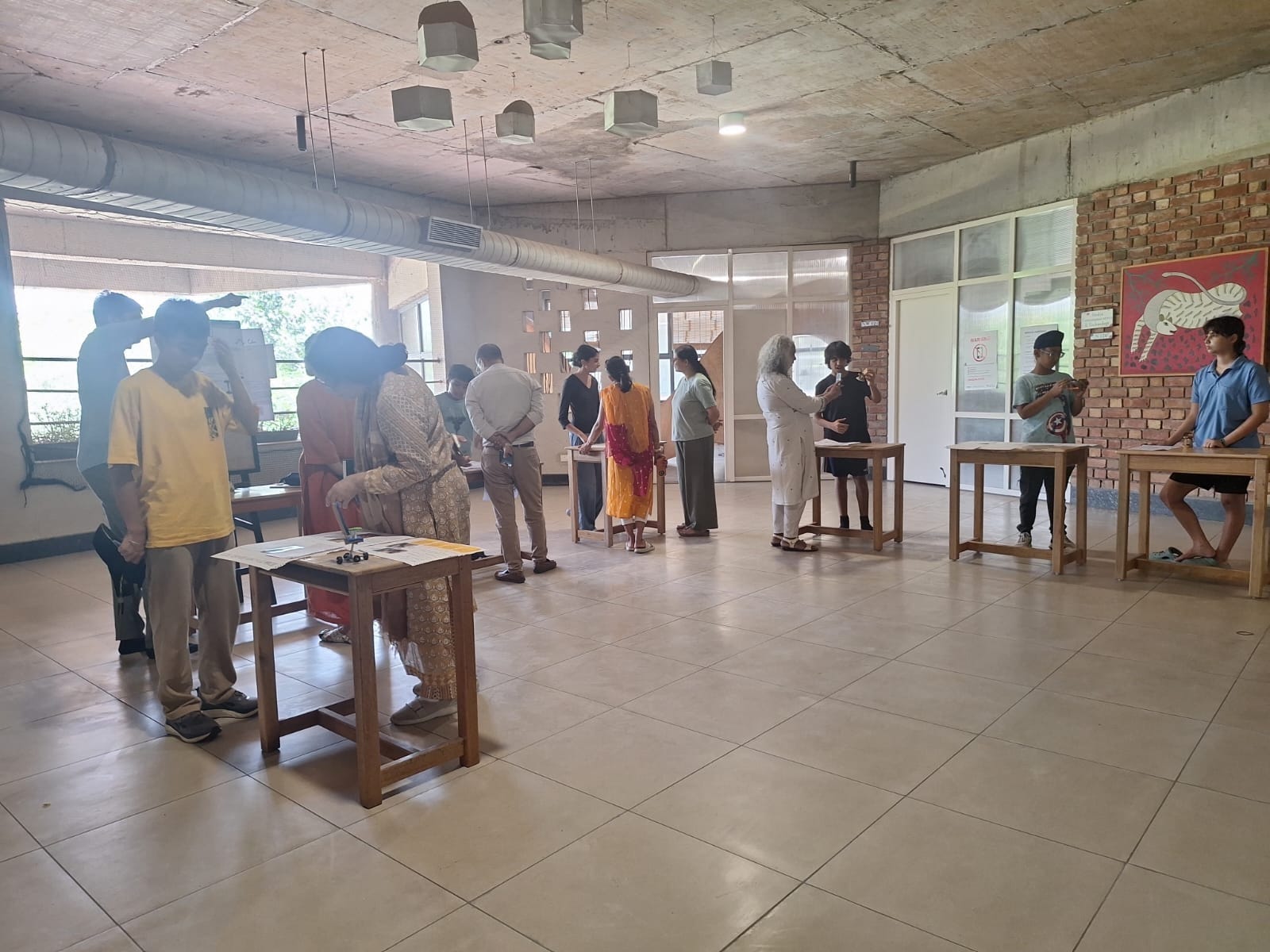
Fig: Students presenting their prototypes to school members

Students pitched, defended and argued for their ideas with surprising confidence.
When vote counting day arrived, there was a problem, there wasn’t one winner.
One design had the best foot-fidget mechanism. Another had a clever rocking feature. A third had a brilliant lego inspired mechanism and so on.
In true Prakriti School fashion, every design had something worth keeping.
So we did what designers do. We borrowed the best ideas from each prototype and combined them into one final concept:
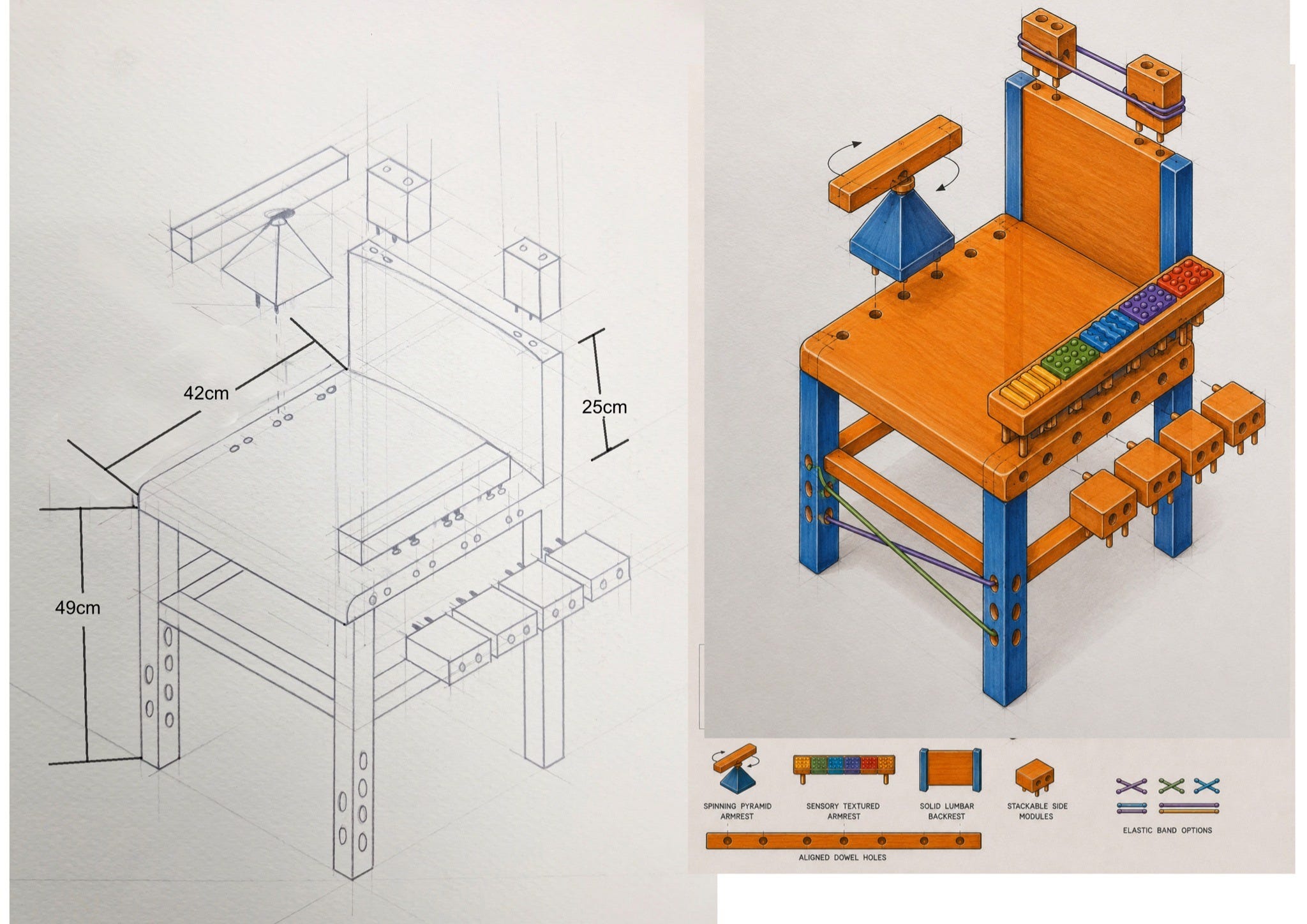
Fig: We made an isometric drawing of the final design(left) and then reimagined the drawing using AI in colour (right)
It is not one student’s chair.
It’s the class chair !
Perhaps that is the lesson I keep returning to.
Whether studying Bauhaus or designing for fidgeting learners, the chair was never really the point. The chair was simply an excuse to understand people a little better.
We built the chair.
Between makerspace sessions, free-play periods and every spare slot we could find in the timetable, the chair slowly came together.
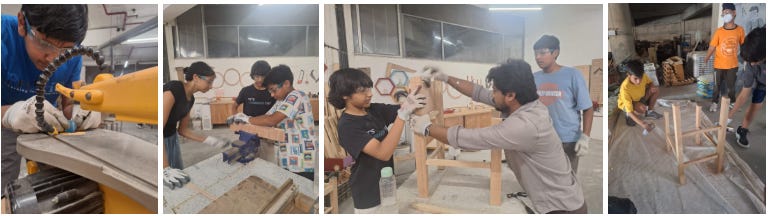
Fig: Students working in the school maker’s lab
And it works.
Of course, there are still a hundred things we could improve. A design is never really finished, it just reaches the point where someone takes the tools away from you.
But for now, we have a chair to fidget with.
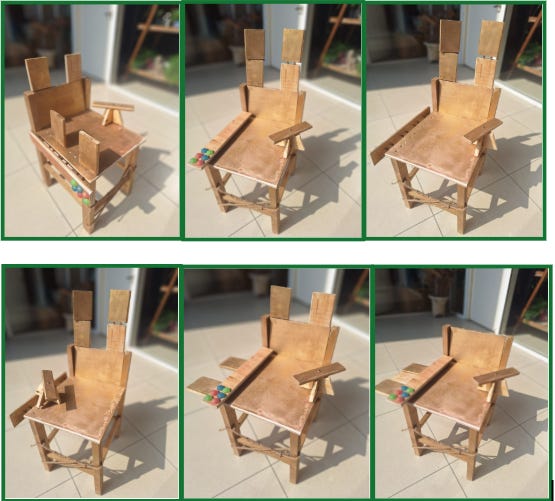
The students have already suggested we patent it, mass produce it and become millionaires.
I have suggested we finish our homework first. :)
Comments
Nothing yet. Say the first thing.
Sign in to join the conversation.