
At Prakriti, learning extends far beyond the classroom. Our school began an exciting organic farming programme for Grades 3 to 5. Through this hands-on journey, children are learning how food grows, how soil stays healthy, and how nature works in harmony.
Snippets of the presentation of learning assembly by grade 3 to 5 on the topic of waste management.
As we explored farming, we discovered that the first step towards healthy soil and healthy food is responsible waste management. Every fruit peel, dry leaf and vegetable scrap has the potential to become nutrient-rich compost, while mixed waste, plastic pollution and careless disposal disturb the natural balance of our environment.
The children soon realised that waste is not merely something we throw away. It is a reflection of our habits, our choices and our relationship with nature.
One of the earliest moments that stayed with us came when the children were introduced to the waste produced around them and the great Ghazipur landfill. As images of the towering landfill appeared on the screen, there was a moment of silence in the classroom. Then came the questions.
“How did this become a mountain?”
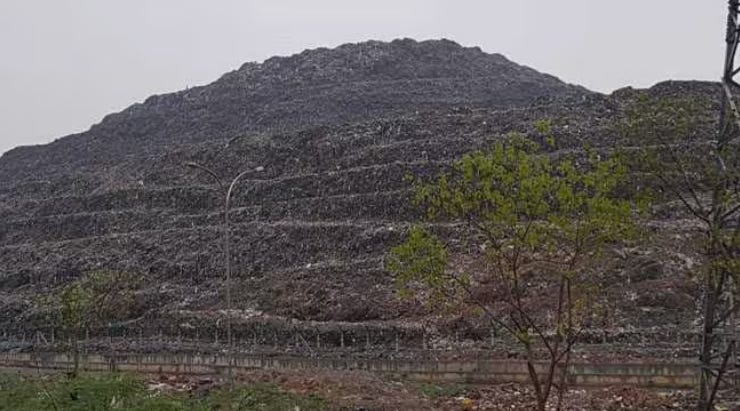
Photo: Shriram Rajagopalan / Wikimedia Commons / CC BY-SA 4.0
For many of them, it was difficult to comprehend that a mountain could be made entirely of waste generated by people. Their surprise soon turned into inquiry. If this was where our waste eventually ended up, how did it get there? The discussion naturally shifted from throwing away to where away actually is. This is where it all ends up!
Many learners confidently shared that waste segregation already happens in their apartment complexes and residential societies. But this led to another question that we ourselves had not anticipated.
“What happens after we segregate it?” The learners were done with seeing the practices of waste segregation done at home, but never pondered upon what happens to it later.
The children wanted to know whether segregated waste was actually recycled, who collected it, and why landfills continued to grow if so many homes were already separating their waste.
These questions of course were left unanswered in the class, but were specks of curiosity implanted in them. They genuinely want to understand the systems behind them.
As the conversations deepened, they began connecting waste management to their own lives. While discussing flowers used during festivals and poojas, some children shared that they had seen flowers immersed in rivers. Others had heard that temple flowers could be composted or even converted into products like incense sticks. Many admitted they had never stopped to wonder what happened to these flowers after the rituals ended.
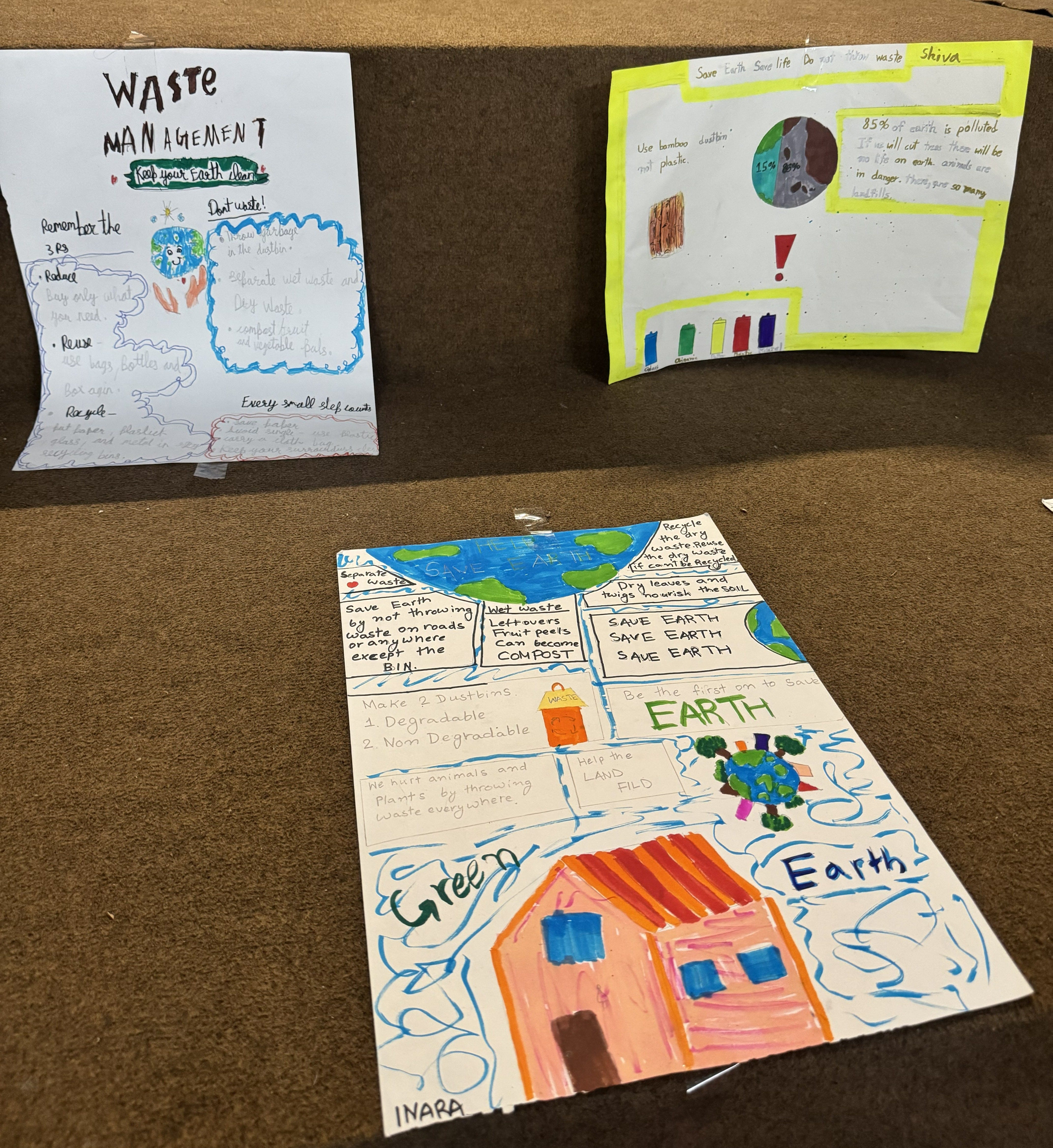
It was a small discussion, but an important one. The children were beginning to see that sustainability isn’t only about dustbins and recycling bins. It is embedded in our everyday choices, our traditions and even our celebrations.
And it is through these discussions, that we observed a gap between what they were learning in school and the waste management practices they often encountered at home in their daily family routine. This prompted us to ask an important question:
We realised lasting change is possible only when schools and families work together. Children may initiate conversations but parents play a vital role in reinforcing these values through everyday actions. With this goal of shared responsibility in mind, we invited parents to become active partners in the children’s learning journey.
A presentation was done by the students titled ‘Voices of Waste’. Through the voices of seventy-five young environmental ambassadors, every day waste items were given an identity and a story. Parents were encouraged to view each waste item as something with consequences and possibilities. Some materials could safely return to nature, others could be recycled and reused, while many remained in the environment for years, polluting soil, water, animals and human life, eventually creating landfills.
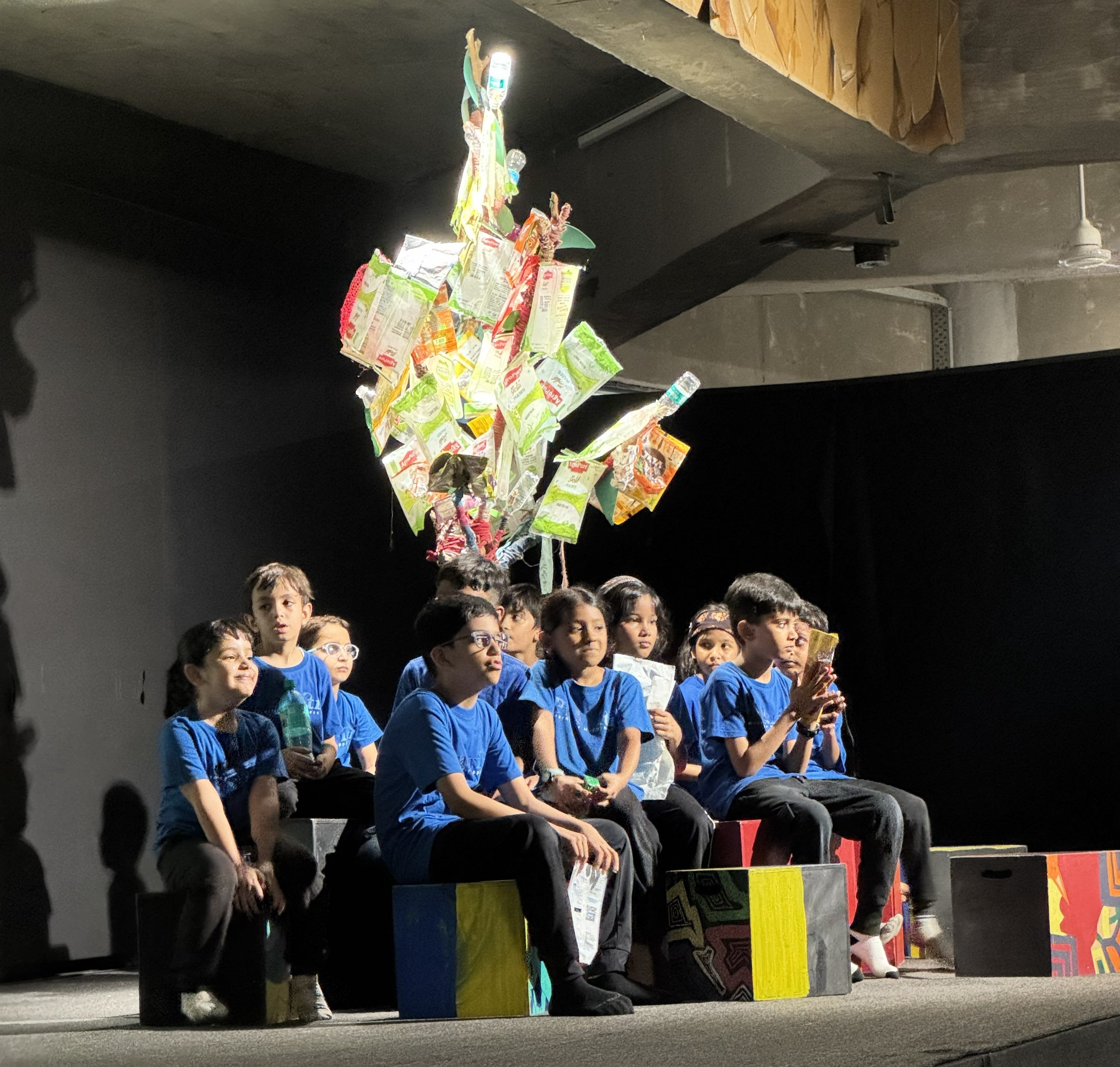
One of the most meaningful aspects of the presentation was the connection the children made between waste management and organic farming, how kitchen waste and fallen leaves are valuable organic matter for healthy soil and healthy plants.
The presentation concluded with a heartfelt appeal to parents. Rather than placing the responsibility solely on children or schools, it invited parents to work together in adopting simple, sustainable habits at home.
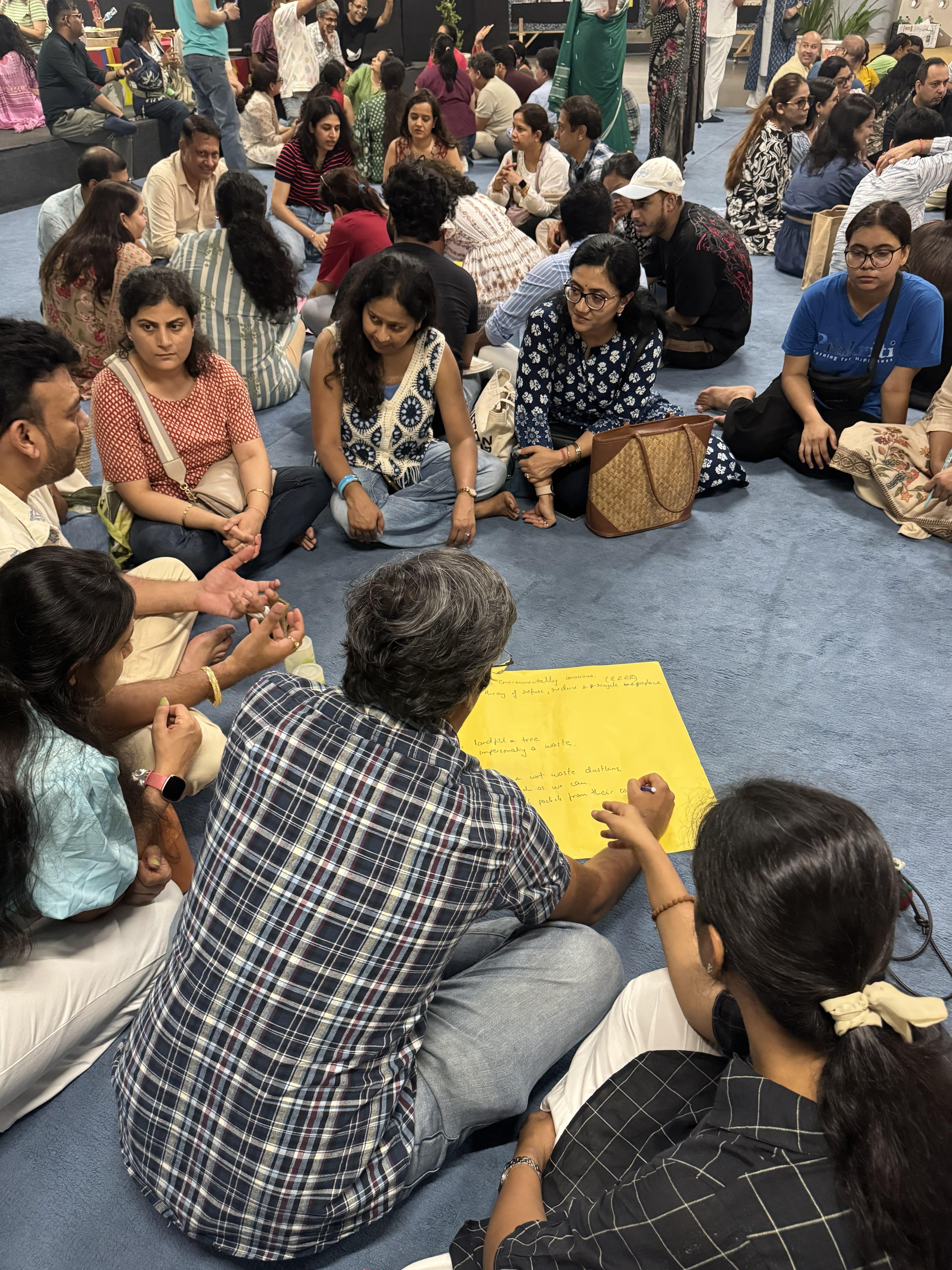
Following the presentation, parents came together in smaller groups and shared their learning, making a commitment to three or four sustainable habits they wished to adopt at home. These conversations became one of the most valuable outcomes of the programme. Colourful commitments were placed all over the auditorium!
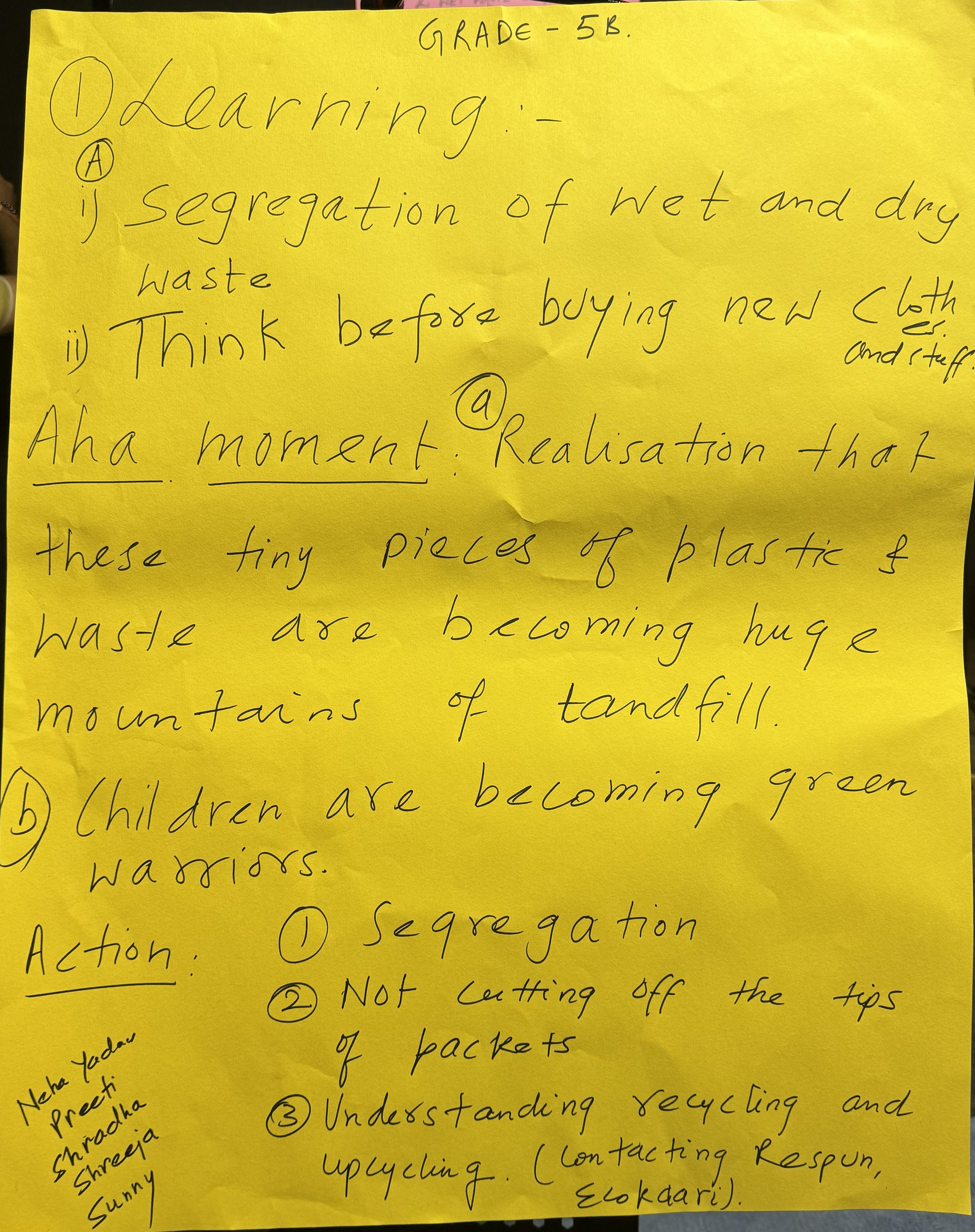
The next step is to bring our learners into action. These commitments are now displayed in the Farming room allowing learners to witness how their learning has inspired actions outside the classroom. After a month, the learners will conduct a simple survey with families to reflect on how many of the commitments have been put into practice. More than an activity, this is our attempt to bring about meaningful change within the community, one step at a time.
Reading through the parents’ reflections afterwards, we realised that the conversations had travelled beyond the classroom.
One parent wrote,
“My child has started applying practical knowledge from class at home.”
Another reflected,
“We all know these things, but often choose to look away. Thank you for reminding us. We will now become more conscious of our waste.”
Others appreciated how the children had communicated ideas that adults often overlook.
“Waste management and recycling should be taught and practised by everyone.”
“Wonderful initiative. Very well presented by the children.”
These reflections affirmed something we had hoped for from the beginning—that environmental education is not about children taking messages home, but about families beginning conversations together. The children had become facilitators of change, gently nudging adults to pause, question old habits and rethink everyday practices.
The exchange reinforced the idea that environmental education is most effective when schools and families work together.
Environmental education does not begin or end in the classroom. It flourishes when schools plant the seed, families nurture it through daily habits and children grow into responsible custodians of the Earth.
Special thanks to Nandini Singhal, English Facilitator, for her valuable insights and contributions.
Comments
Nothing yet. Say the first thing.
Sign in to join the conversation.