
Like any geography unit, we began with the familiar. We located Noida on a map. We discovered what the acronym NOIDA stands for, which, ‘unsurprisingly’, became an instant favourite among the learners. We explored the city’s landforms and how its location between the Yamuna and Hindon rivers has shaped its landscape, something that genuinely surprised many of them.
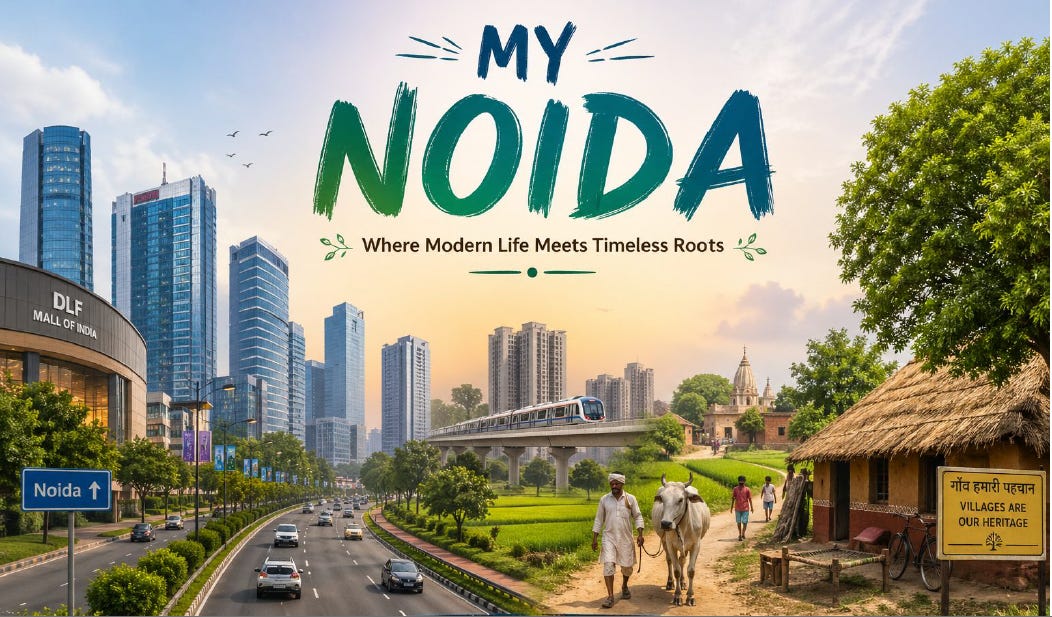
Then we arrived at the question every child could answer.
“What are the famous places in Noida?”
The responses came effortlessly.
Mall of India, ISKCON Temple, Botanical Garden, the metro, the schools, Wide roads, tall buildings.
As I listened, I realized something. Their answers were not incorrect. They simply reflected the Noida they experienced every day. It was a city of destinations rather than stories. A place they travelled through, but had never really paused to understand.
The truth is, I wasn’t very different from them. Before planning this unit, Noida was simply where I lived and worked. I knew its roads better than its history. It took conversations with colleagues, especially Vidya Didi, countless hours of reading, and my own curiosity to realize how much I had been walking past without noticing.
That was the moment I decided that this unit could not simply become a collection of landmarks and facts. If the children walked away remembering only where places were located, I would have missed the opportunity to help them see their city differently.
Over the next few weeks, we explored Noida through many different lenses. We got a glimpse of a Noida that rarely appears in tourist brochures. We explored villages like Bisrakh and the stories that continue to shape their identity.
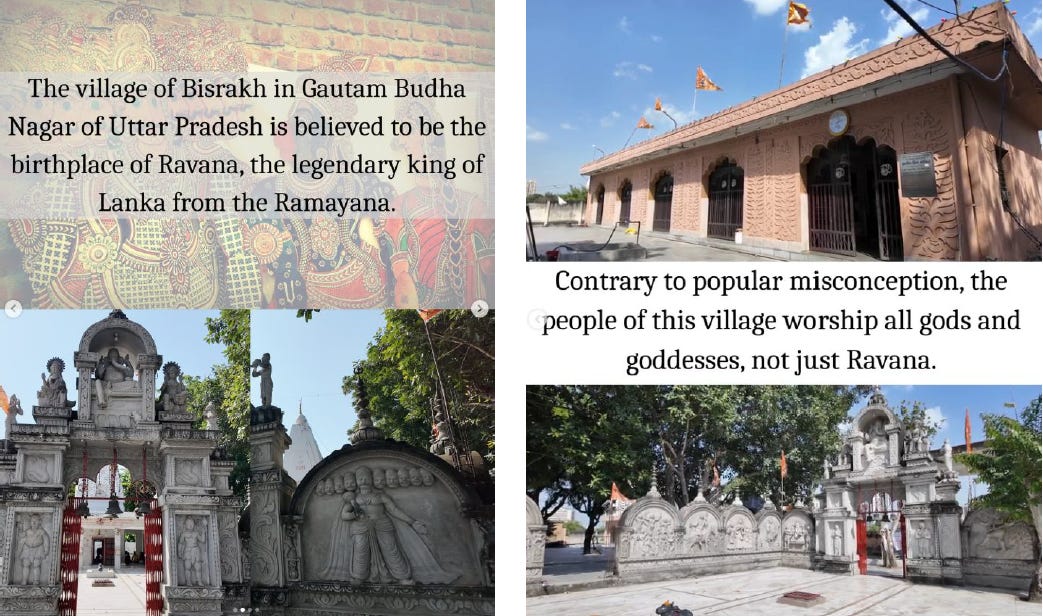
In fact, the story of Bisrakh sparked one of the most animated discussions of the unit. When the children learnt that Ravana is honoured there as a scholar rather than remembered only as a villain, one learner looked genuinely shocked and asked, “People actually worship Ravana?” Another quickly shared that he had heard and been to temples dedicated to Ravana in Sri Lanka.
What surprised them most, however, was discovering that a place with such a different perspective existed so close to home, as I described it - RIGHT UNDER OUR NOSES!
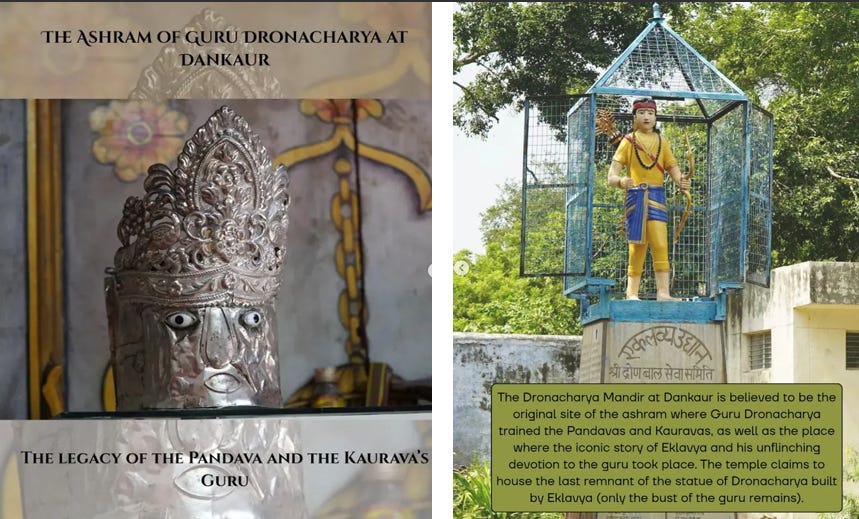
They were introduced to the Dronacharya Temple and a short story session on Eklavya ( as many weren’t aware ), reminding them that mythology, history, and geography often intertwine in unexpected ways. We also travelled back in time through the Victory Pillar, discussing not only the battle it commemorates but also why societies choose to preserve memories of defeat alongside triumph.
The Jewar International Airport was a moment of pride, along with discussions around Jungle trail park, not just meant for amusement but reducing carbon footprints. Children started looking at Botanical Gardens as more than just a garden or a metro spot, but an area of seedbank for our future. The concept itself was fascinating for them. Beejom farms, another place which sparked interest, not just for the seedbank and the sustainable farming practices, but the fact that we facilitators were able to go there and the promise that they will be taken there too soon!
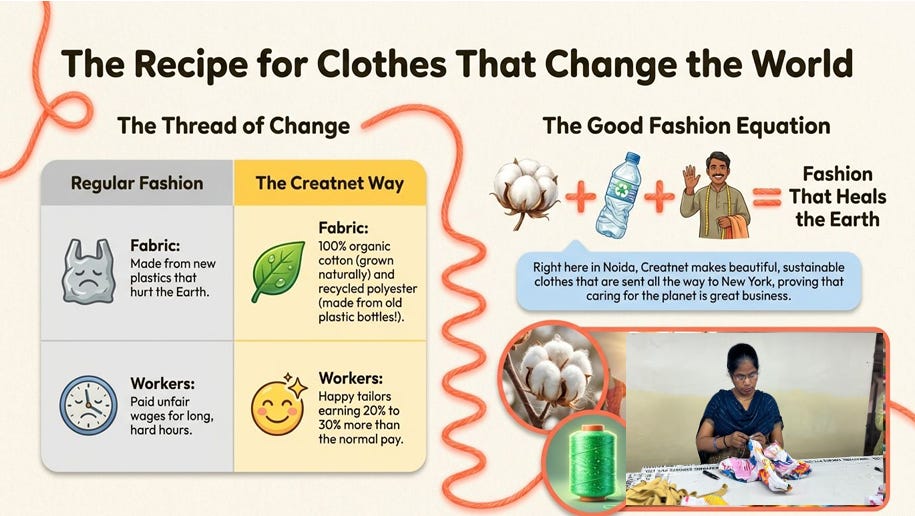
As our exploration continued, the children discovered another side of the city. They learnt that Noida is not only an IT and residential hub but also one of India’s significant textile manufacturing centers.
Looking at the journey from factories to fashion opened conversations about production, consumption and the environmental cost of the clothes we wear. We contrasted this with organizations promoting sustainable fashion, like Creatnet, and some who reduce waste through donations, like Goonj, converting discarded clothes back to fiber, like Respun, and began asking what responsible choices might look like.
For many of them, conversations about higher education often revolve around studying abroad, as though excellence exists only beyond our borders. This became an opportunity to introduce them to Noida as one of India’s growing educational hubs, home to universities and institutions that are shaping future designers, engineers, researchers and innovators. It was a reminder that world-class learning can also exist much closer to home.
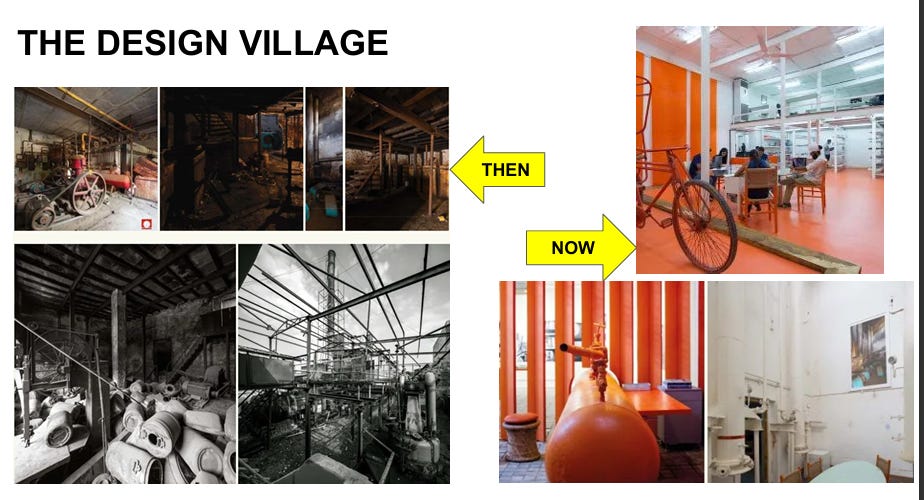
Among the places we explored, The Design Village left a lasting impression. The children were fascinated to learn that the campus was once an old katha factory. Instead of demolishing the structure and starting from scratch, much of the existing building was thoughtfully refurbished and repurposed, with many of its original components retained. Beyond creating a beautiful learning space, this approach prevented tons of metal and construction waste from ending up in landfills. It showed them how sustainability is not always about planting more trees.
For many learners, it was their first encounter with adaptive reuse, where creativity, environmental responsibility and education come together in one inspiring space, needless to mention, aesthetics too.
The lessons then shifted towards people who are quietly shaping the city in positive ways. We explored how businesses contribute through Corporate Social Responsibility, learnt about public libraries that make books accessible to communities and looked at initiatives supporting education and sustainable farming. These examples helped the learners realize that development is not measured only by buildings but also by opportunities created for people.
Only after the children had fallen a little in love with their city did we ask them to look at its challenges.
One of our biggest disappointments was that the weather did not allow us to step out into the city. We had hoped to visit some of these places, perhaps walk through a jungle trail or spend time observing a neighborhood together. The extreme heat made that impossible. But learning does not have to end because a field trip is postponed.
If anything, it reminded us that meaningful learning can continue inside the classroom when curiosity remains alive.
We hope to revisit many of these places during our upcoming Delhi unit when the weather is kinder, and the children are ready to experience them firsthand.
Some of the children’s reflections stayed with me long after the unit ended.
One of the learners spoke about The Design Village, a university built within an old factory. She had never imagined that an abandoned industrial space could be transformed into a place of creativity and learning. It challenged her idea of what buildings could become and how cities can reinvent themselves.
The Victory Pillar at the Noida Golf Course left an even deeper impression on some and, in fact, a memorable one for me .”Why would anyone build a monument for losing?” one of the learners questioned me. We spent the next fifteen minutes talking about memory, humility, and whether history should only celebrate victory.
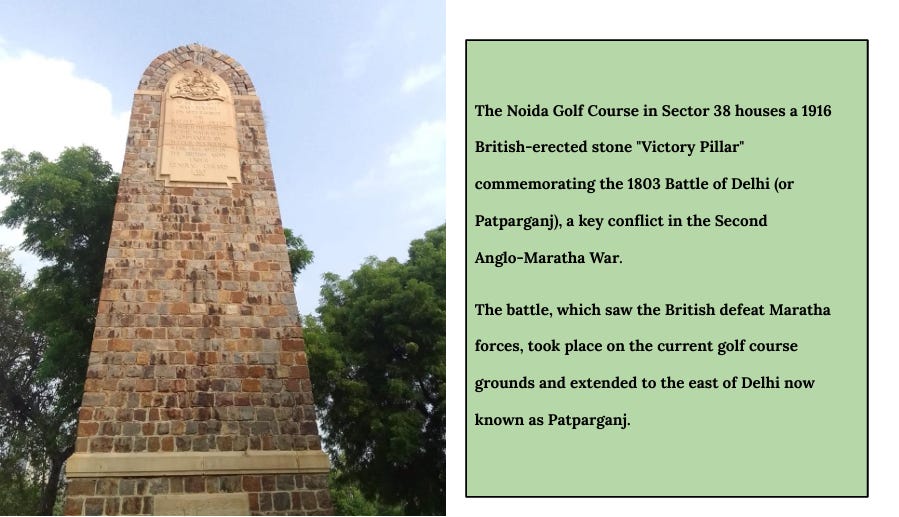
It wasn’t in my lesson plan. The Pillar acknowledged failure rather than hiding it. That observation itself opened a perspective none of us had planned for.
Should history tell only stories of victory? Is it important to hear different perspectives?
Around the same time, we explored the story of Bisrakh. The children were fascinated that one community could look at a familiar story through an entirely different lens. Rather than deciding who was right or wrong, we spent time discussing why understanding multiple perspectives matters. They recognized that people are rarely only good or only bad. Every person carries strengths and flaws, and every story has more than one voice. For children growing up in an increasingly polarized world, these conversations felt especially important.
Other discoveries surprised them in different ways. Many learners admitted that they had believed Noida was only a modern city. They had never thought about the villages that continue to exist alongside expressways and residential towers. Places like Bisrakh, the Dronacharya Temple and the stories surrounding Nalgarha fascinated them because they suddenly realised that history was not confined to textbooks. It was woven into the places they drive past every day.
Sometimes when units are made relatable, we get to experience moments where learners even understand their family members. Learners talking about their parents being in sustainable industries, children sharing their experience at the Beejom farms, and the pride when one gets to know their aunty and uncle are the force behind a big sustainable fashion brand! They look at them as well as the class in a different light!
One unexpected highlight of the unit was our discussion around Coforge Public Library. A number of learners returned after the summer break excitedly telling me that they had visited it themselves with their families.
Those moments are always reassuring. They remind us that authentic learning quietly continues long after a lesson ends.
As the unit progressed, we slowly shifted our attention from discovering Noida to questioning it.
Children noticed polluted rivers, waste dumped in villages, unfinished construction sites, air pollution, and homelessness. They wondered why workers were not always paid fairly and why some communities had access to resources while others struggled.
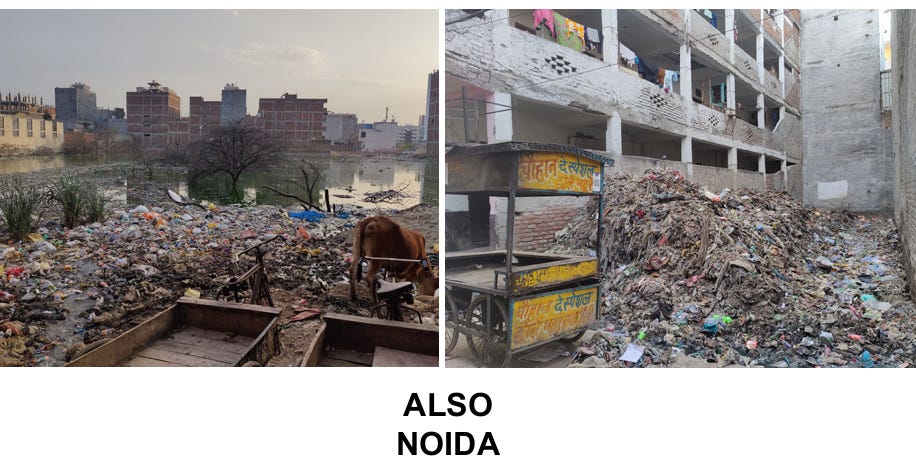
Each learner identified one issue they had observed and suggested ways in which it could be addressed. Some wrote about cleaning the Hindon River. Others proposed carpooling to reduce pollution. Some questioned abandoned construction sites while others suggested ways to support homeless communities.
Whether every solution was practical was never the point.
The real learning lay elsewhere. They had begun observing. They had begun questioning. Most importantly, they believed that their voices mattered.
For me, this was perhaps the most meaningful outcome of the unit. Education should help children understand that they are not passive observers of society. They are citizens with ideas, compassion and the confidence to ask difficult questions.
Another unexpected strength of the unit came from its interdisciplinary nature. At the same time, the learners were exploring farming, sustainability and waste management in another subject. As we discussed waste dumping in villages and the environmental challenges surrounding Noida, they naturally connected these ideas with what they had already been learning. The concepts no longer existed in separate notebooks. They became part of one larger understanding of how people, cities and the environment are deeply connected.
These are the moments that remind me why interdisciplinary learning is so powerful. Children rarely experience life in isolated subjects, so perhaps they should not always learn that way either.
As we reached the end of the unit, some sentences appeared repeatedly in the learners’ reflections and poems.
Noida is not just about malls…. It is a city with stories… It is a city with history….It is a city with creativity…. It is a city with inequality… It is a city trying to preserve parts of its past while constantly building its future.
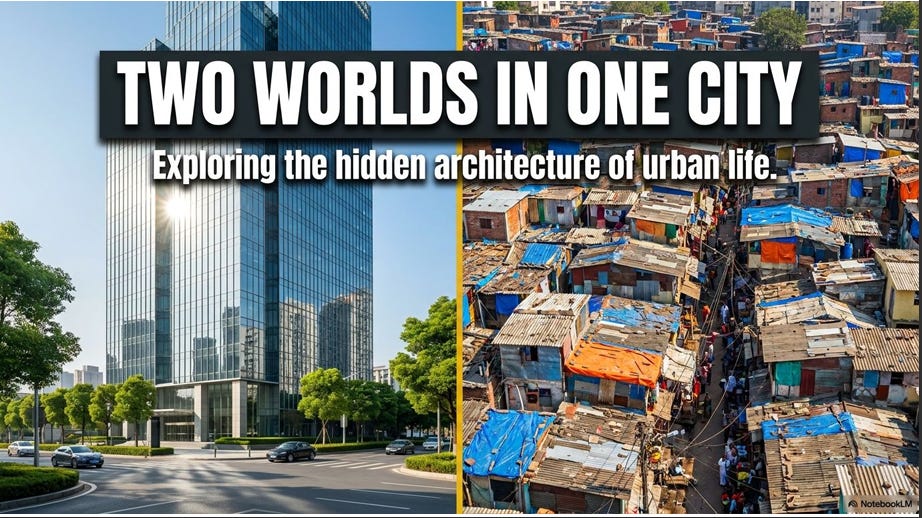
And perhaps that is the greatest lesson the children will carry forward. Now I understand that we don’t need extraordinary places to develop curiosity. It can begin much closer to home.
A forgotten monument.
A village hidden behind expressways.
A public library waiting to be discovered.
An old factory transformed into a university.
A polluted river asking difficult questions.
Sometimes education isn’t about helping children see somewhere new. Sometimes it’s about helping them notice what has always been there. And I truly hope they’ll remember this.
Comments
Nothing yet. Say the first thing.
Sign in to join the conversation.