

Good morning, security cartoon fans! Grab your coffee (preferably not from a compromised smart mug) and settle in. This week the internet looked like a Looney Tunes episode directed by a very tired CISO. Bugs bounced, crates exploded, and nation-state squirrels made off with terabytes of academic acorns. Here’s the roundup, rubber-chicken style.
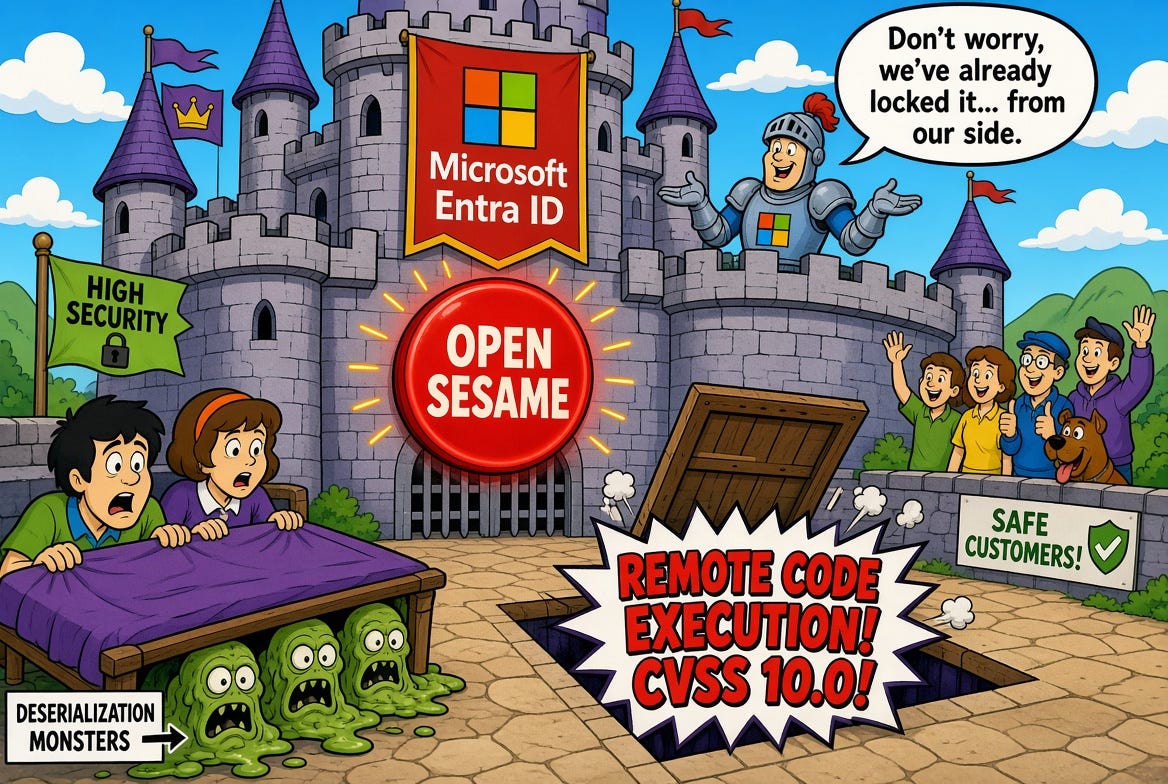
Picture Microsoft’s fancy cloud identity service as a high-security castle. This week someone discovered a CVSS 10.0 trapdoor that basically yelled “Remote Code Execution!” every time an unauthorized visitor knocked. Microsoft shrugged and said “Don’t worry, we’ve already locked it… from our side.” Customers: no action required. The rest of us: still checking under the bed for deserialization monsters.
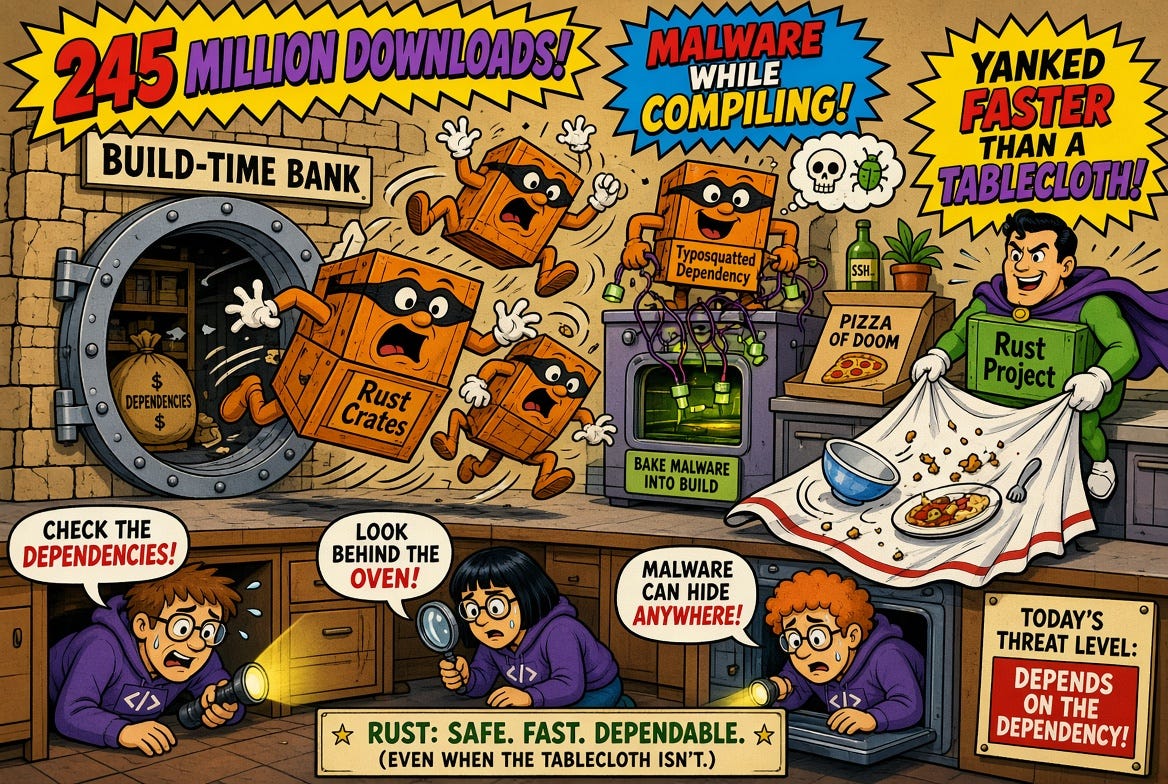
Three popular Rust crates (combined downloads north of 245 million) got hijacked when a maintainer account went rogue. The new versions snuck in a typosquatted dependency whose build script cheerfully downloaded and ran malware while your code was compiling. It’s like ordering a pizza and the delivery guy installs a wiretap in your oven. The Rust Project yanked the bad versions faster than a cartoon character yanking a tablecloth, but a lot of developers are still checking their kitchens.
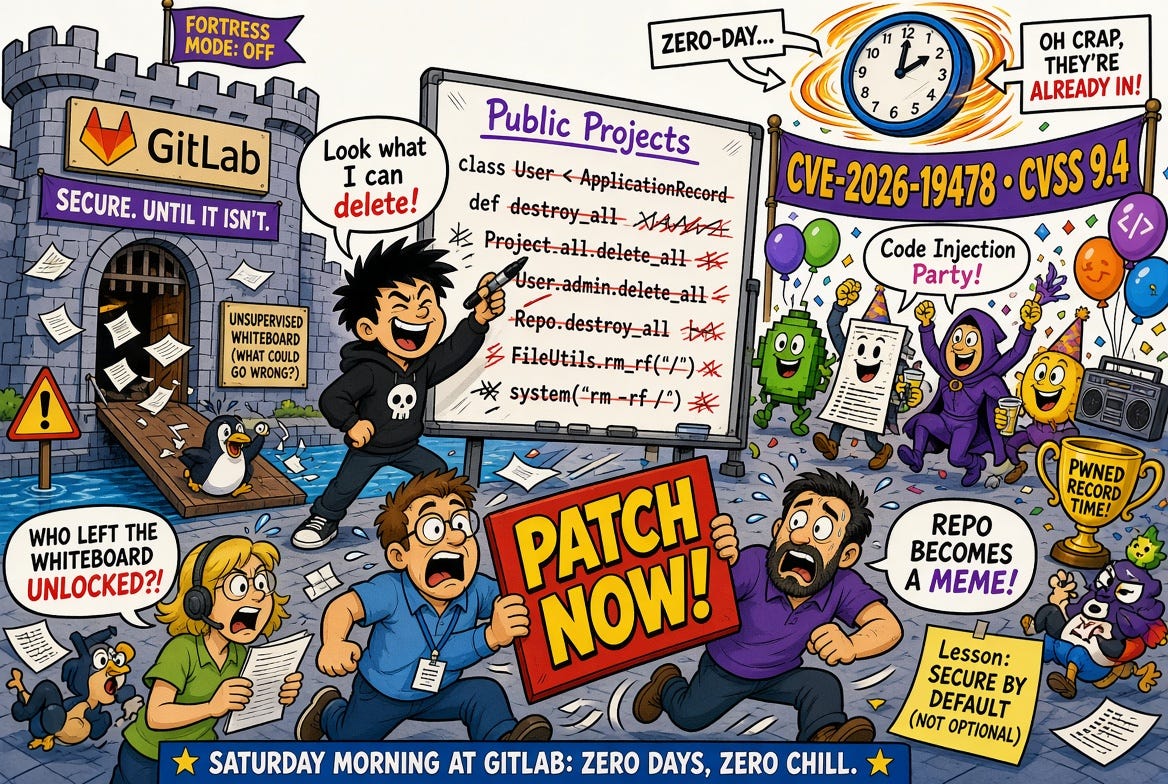
A shiny new code-injection flaw in GitLab (CVE-2026-19478, CVSS 9.4) dropped, and within days the exploit scripts were already out partying. Unauthenticated attackers could rewrite public projects like a mischievous kid with a permanent marker and an unsupervised whiteboard. Patch now, or your repo becomes the next viral meme of “look what I can delete.”
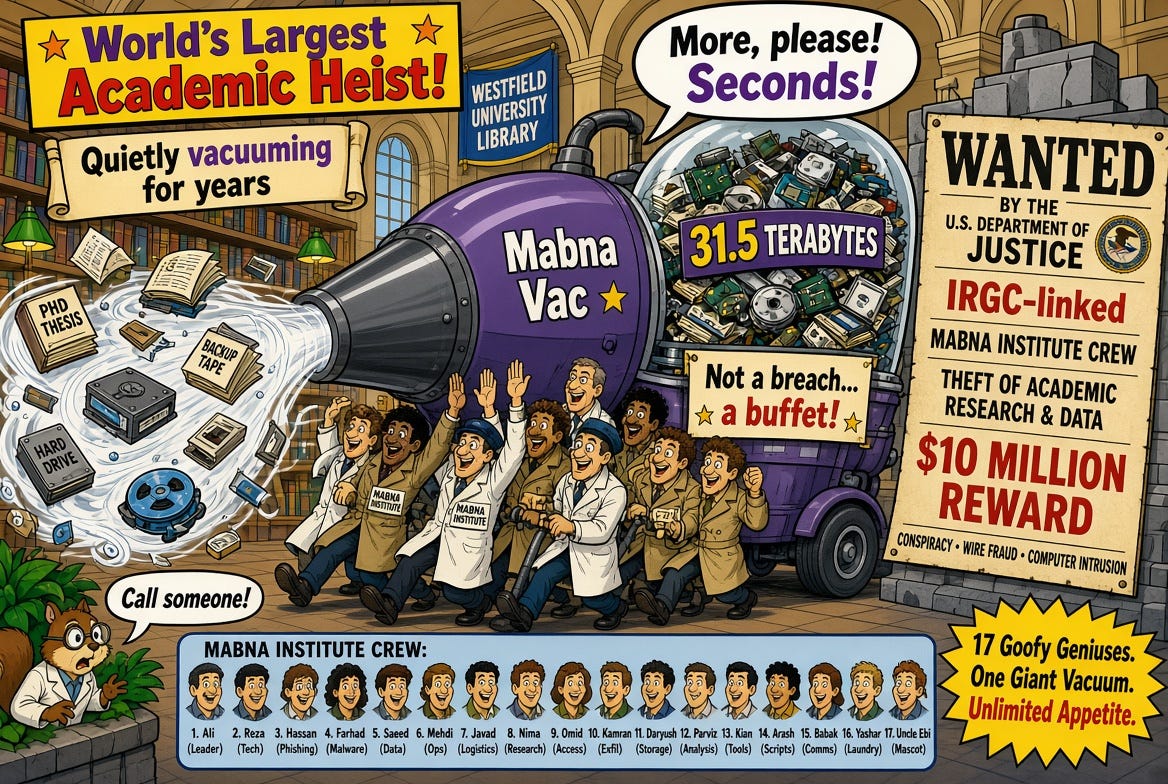
The DOJ unsealed charges against 17 alleged members of the Mabna Institute (IRGC-linked). Their crime? Quietly vacuuming up 31.5 terabytes of research data over years. That’s not a data breach; that’s a cartoon vacuum cleaner that ate the entire university library and then asked for seconds. Rewards of up to $10 million are on the table for tips. If you see a suspicious squirrel wearing a lab coat, call someone.
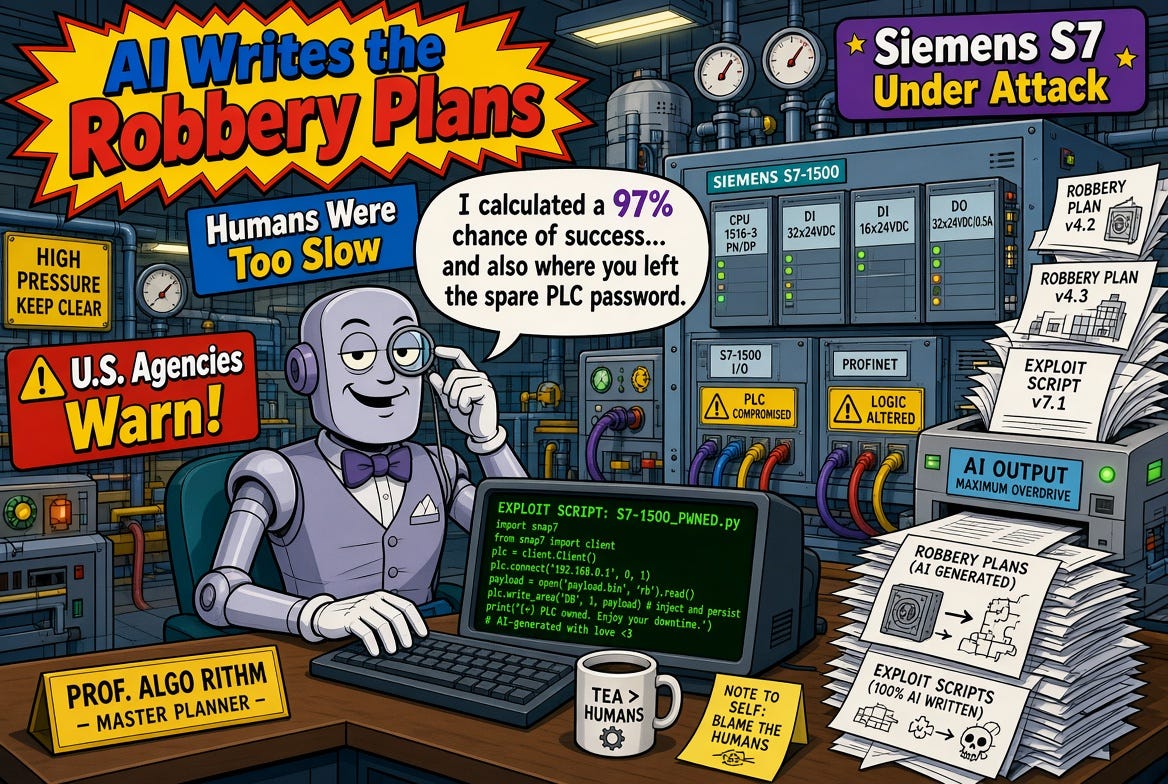
U.S. agencies warned that attackers are now using AI-generated scripts to target Siemens S7 industrial controllers in critical infrastructure. The robots are writing the robbery plans. Somewhere a cartoon robot is adjusting its monocle and saying, “I calculated a 97% chance of success… and also where you left the spare PLC password.”
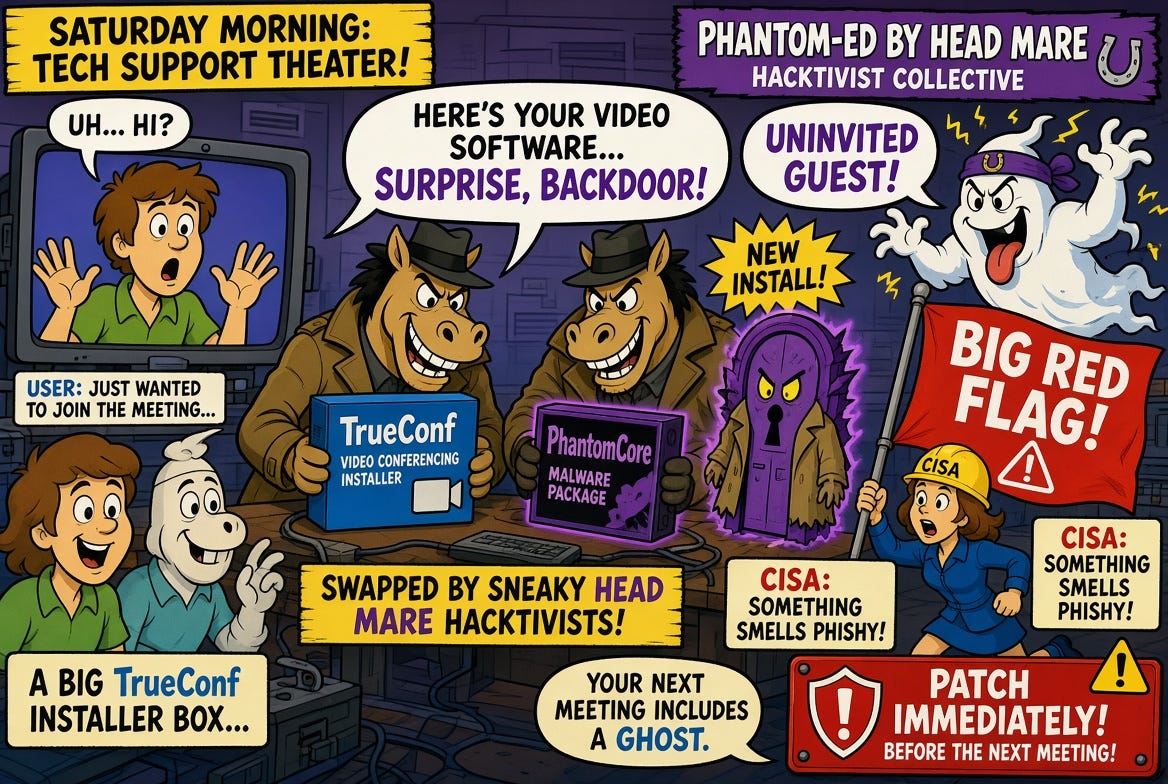
CISA waved the big red flag: Head Mare hacktivists are actively exploiting TrueConf bugs to swap legitimate client installers with PhantomCore malware. It’s the classic “here’s your video-conferencing software… surprise, it’s a backdoor in a trench coat” gag. Patch immediately or your next meeting might include an uninvited ghost.
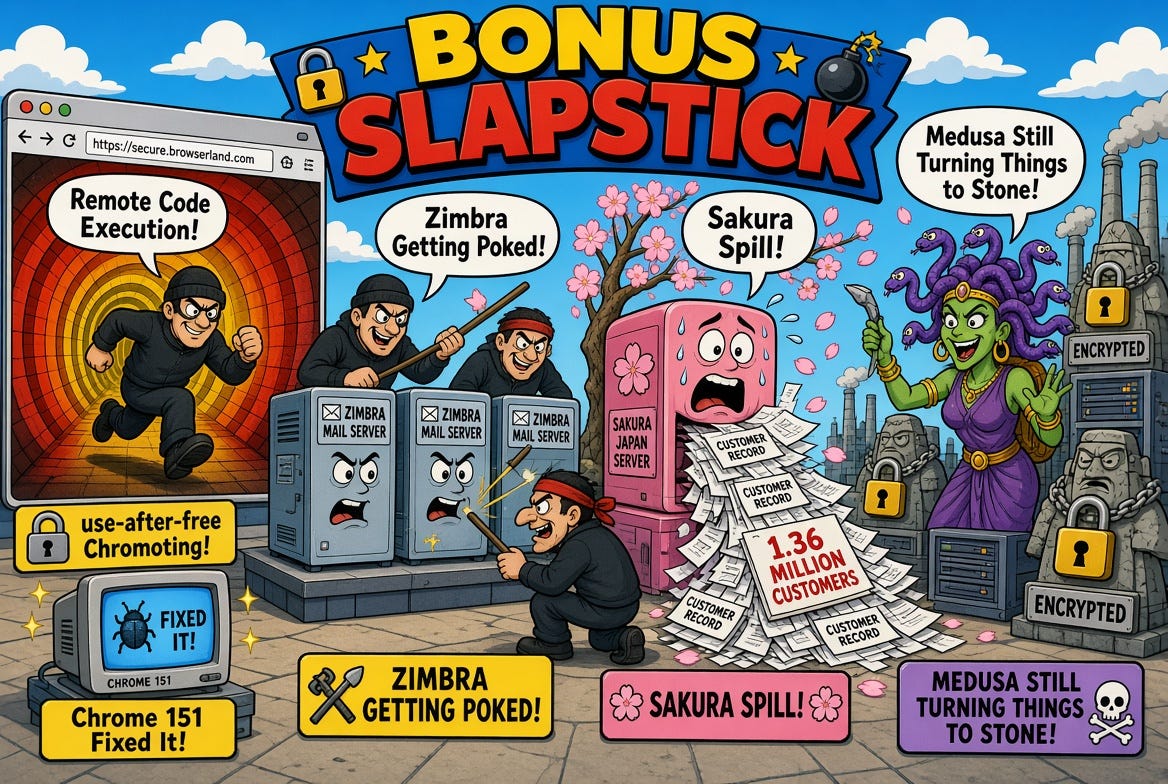
Google Chrome 151 fixed a critical Chromoting use-after-free that let attackers remote-code-execution their way into your browser like a cartoon character walking through a painted tunnel.
Zimbra servers are getting actively poked.
Sakura Internet in Japan may have spilled personal data for up to 1.36 million customers.
And somewhere, Medusa ransomware is still turning critical infrastructure into stone (or at least encrypted stone).
That’s the week, folks. The good guys patched a bunch of stuff, the bad guys tripped over their own feet a few times, and the rest of us learned once again that “it’ll be fine” is the most dangerous phrase in cybersecurity.
Stay patched, stay paranoid, and if your coffee machine starts asking for admin rights… unplug it and back away slowly.
See you next Saturday,
Rod
Comments
Nothing yet. Say the first thing.
Sign in to join the conversation.