
This is the Ride AI newsletter: The most comprehensive weekly digest of news and intelligence at the intersection of technology and transportation.
$799 Early Access tickets for Ride AI 2027 are now available until August 31st. Pricing climbs month by month toward $1,500 general admission, so get your tickets early. If you’re considering joining us next April at SF JAZZ,
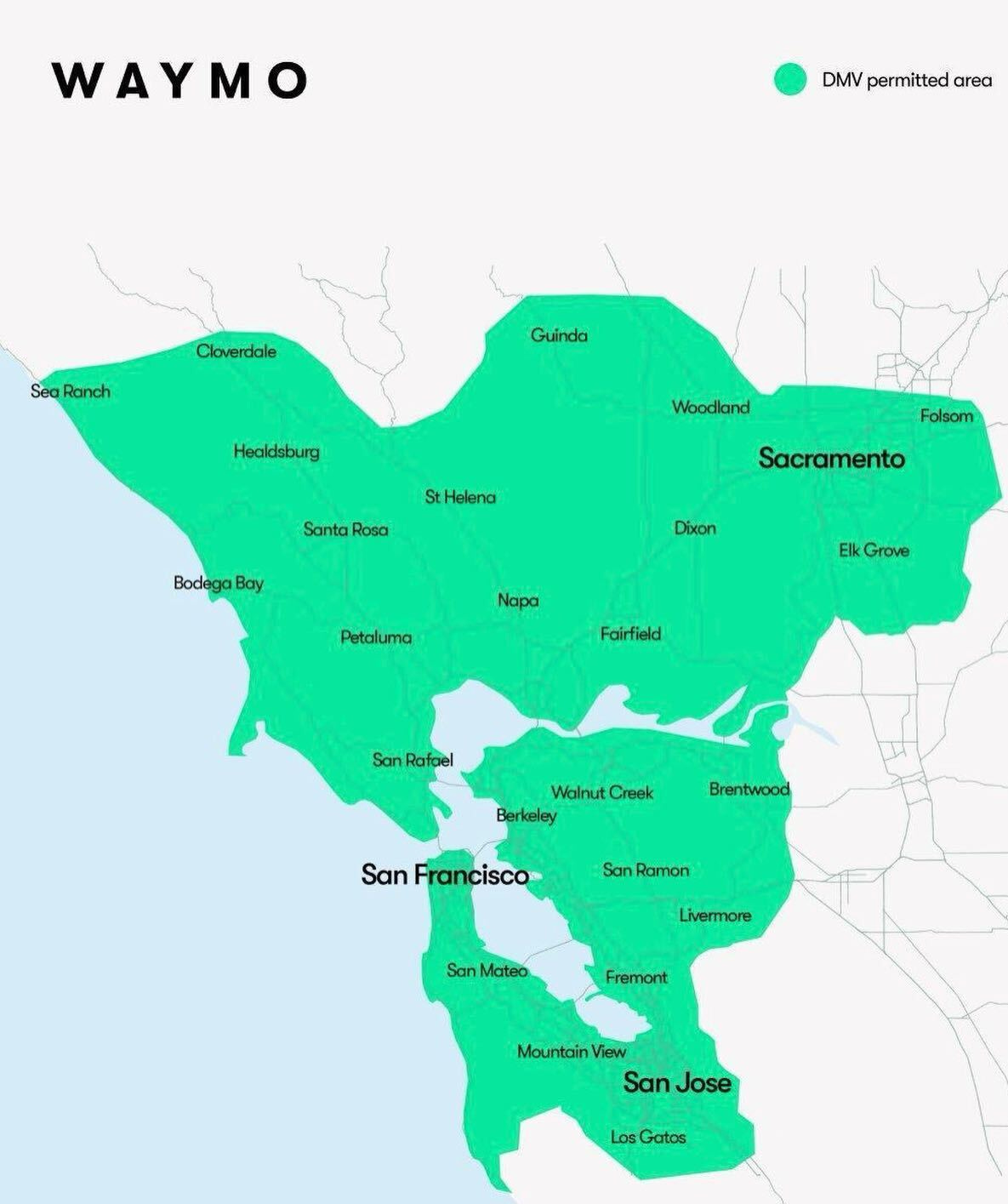
Waymo has won approval to run fully driverless, paid robotaxi service across 18 California counties, reaching from Sacramento and wine country down through the Bay Area and Los Angeles to a brand-new San Diego market. The California Public Utilities Commission (CPUC) signed off on the expansion this week, clearing Waymo to operate across nearly every road type and condition its cars handle today, from freeways and rural roads to parking lots and rail crossings, day or night, in rain, fog, or hail, with only widespread snow and ice being the exception.
The footprint now stretches well past the cities Waymo already serves. Sea Ranch, more than 100 miles north of San Francisco, Sonoma (wine country), and East Bay cities like Walnut Creek, Brentwood, Livermore, and Fremont are all now inside the approved zone, alongside coastal towns south of Pescadero. Both the Jaguar I-Pace and the newer Ojai, now also cleared for paid rides by the CPUC as of this approval, are cleared to operate anywhere in it.
Waymo says it won’t flip the switch on the newly approved rural stretches right away, but will instead follow its established safe expansion protocol. Roads in less dense areas are a different problem than city driving after all, with narrow two-lane highways, hairpin turns, and long stretches with nowhere to pull over.
Waymo has hired WPP Media to run its advertising strategy and buying across North America and Europe, the Middle East, and Africa, as the company ramps up marketing spend heading into a bigger international push. The assignment follows Waymo’s first national ad campaign during the World Cup, during which the company said it drove more than 90,000 trips to stadiums and watch parties and added over 200,000 first-time riders.
Waymo also struck its first-ever partnership with an NFL team, becoming the official autonomous ride-hailing partner of the Las Vegas Raiders and Allegiant Stadium, with a dedicated pickup and drop-off area for games, concerts, and other events. The company is also reportedly reviewing creative agencies ahead of its first-ever Super Bowl ad, though none has been named yet.
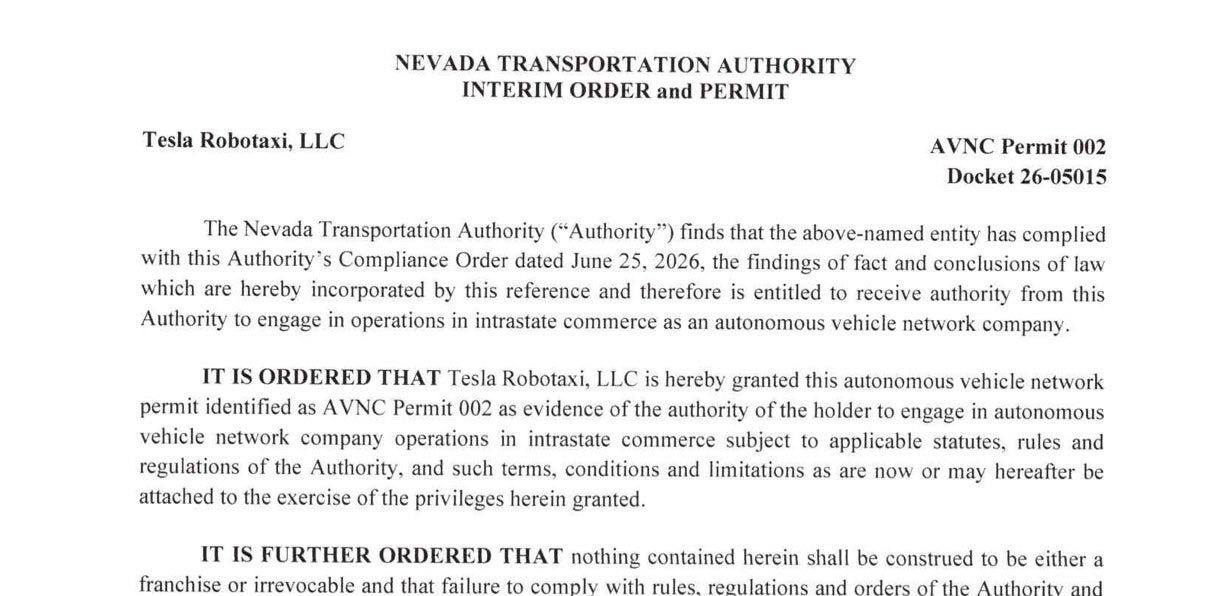
Nevada regulators have granted Tesla a permit to run driverless robotaxi rides on the Las Vegas Strip, but capped the fleet at just 10 vehicles, a fraction of what the company asked for. Tesla had originally sought authority for up to 5,000 vehicles across all of Clark County, including pickups at both Las Vegas airports.
The permit restricts Tesla to a geofenced area along the Strip, a 45 mph speed ceiling, and no pickups at or within a quarter mile of Harry Reid International Airport. This effectively means no highway service. Every vehicle has to be marked “Robotaxi,” riders must be told they’re in a driverless car, and Tesla has to report any crash or system failure to regulators within five business days. It is unclear how redacted the reports can be, and Tesla would need to re-apply for additional approval if it wants to expand its Las Vegas fleet past 10 vehicles.
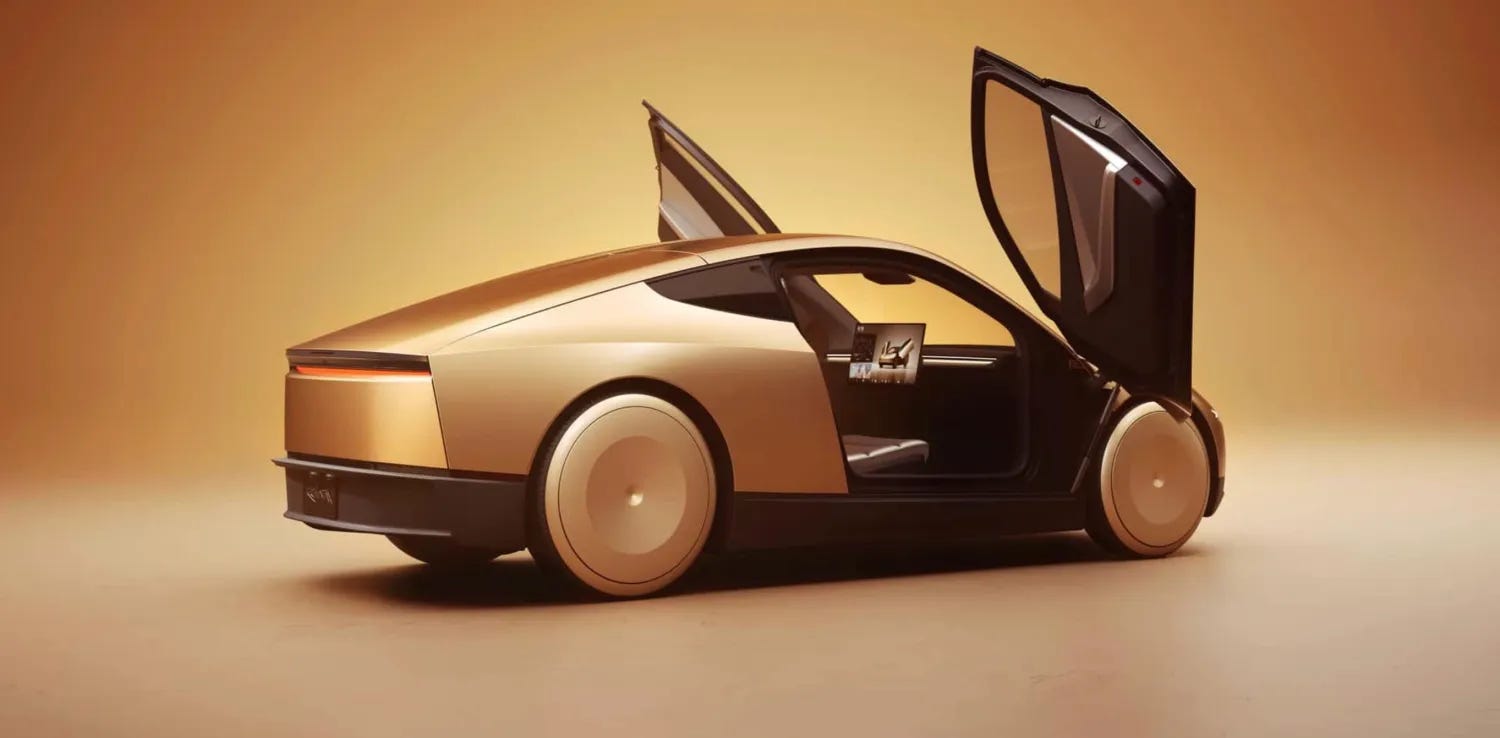
Tesla is also preparing to add its two-seat, steering-wheel-free Cybercab to the Austin robotaxi service by the end of August, after completing emergency-response training with local first responders, the company revealed in an internal memo circulated amongst employees. The company says it has built more than 100 Cybercab units since February. The unsupervised Austin fleet has shrunk to roughly 17 vehicles, down from about 25 in the spring, and has logged about 380,000 cumulative driverless miles to date.
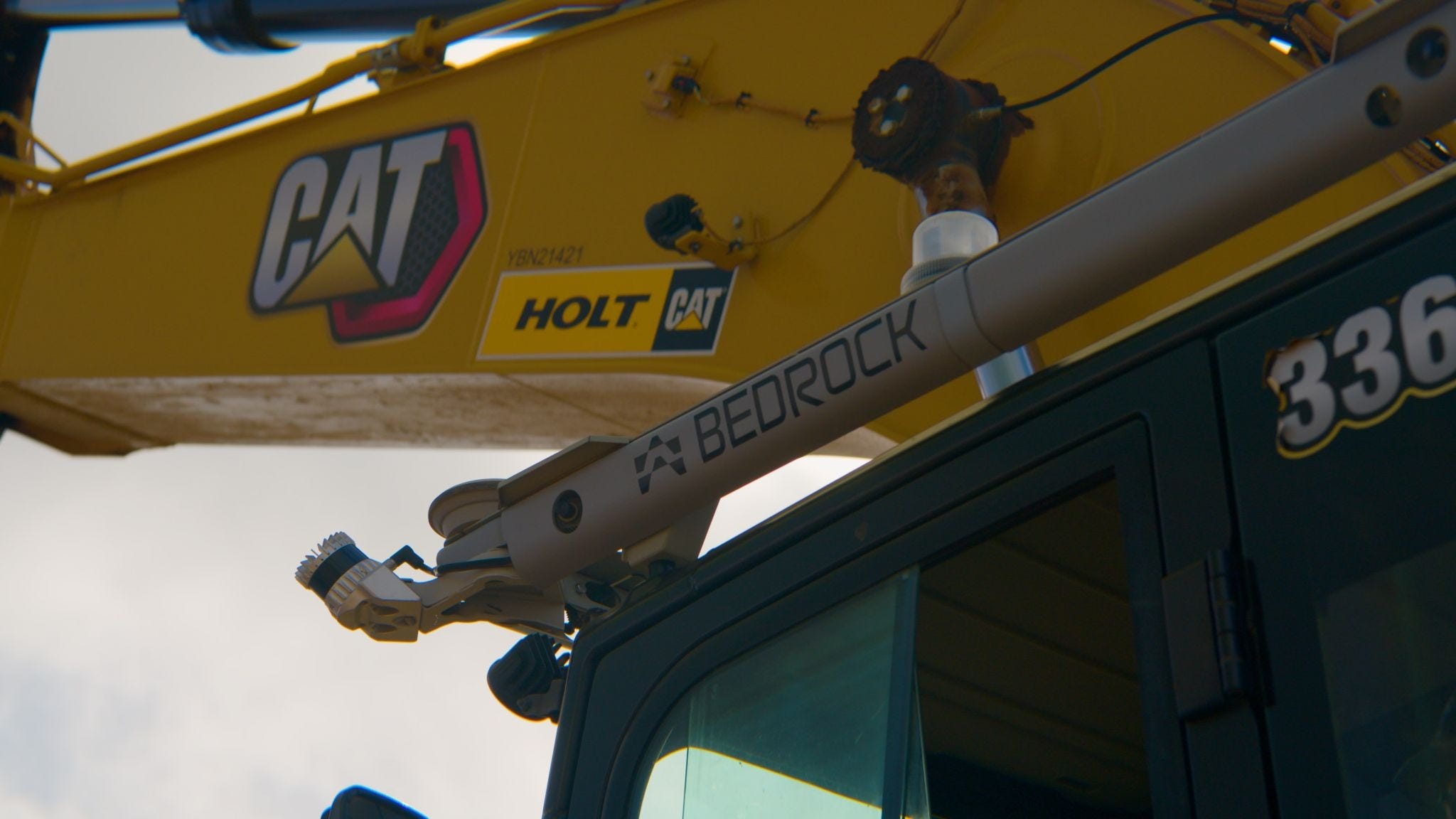
Bedrock Robotics says its excavators are now doing real work work on live commercial job sites with no one in the cab, which the company calls the first fully autonomous excavator deployments on US infrastructure projects. Once a site manager sets the initial plan, the machines perceive their surroundings, plan their own movements, and execute the work themselves, with safety systems that halt operations if a person or unexpected object gets too close.
The deployments include a water treatment facility site in Nevada with Sundt Construction, a multi-million-cubic-yard earthwork project in Texas with Champion Site Prep, and a 1.2-million-cubic-yard sitework project with Zachry Construction. Bedrock was founded in 2024 by Waymo alumni who worked on Waymo’s Via trucking project, and has raised $350 million to date from investors including CapitalG and NVIDIA Ventures.
Autonomous trucks are now testing on California’s public highways for the first time, after the DMV lifted its ban on driverless-capable vehicles over 10,000 pounds this spring. Aurora Innovation and Kodiak AI are the first two companies to receive permits, with Kodiak already running a handful of trucks near its Mountain View headquarters.
There are still restrictions, however. Testing still requires a safety driver behind the wheel, and trucks can’t run on roads with speed limits of 25 mph or under unless taking the most direct route between stops. Companies also have to meet the state’s usual safety, insurance, and driver-qualification requirements. Does California love autonomous trucks again? Not if you ask the Teamsters, who have sued the DMV over the rule change, arguing the agency skipped a required study of the economic impact and didn’t adequately weigh safety risks.
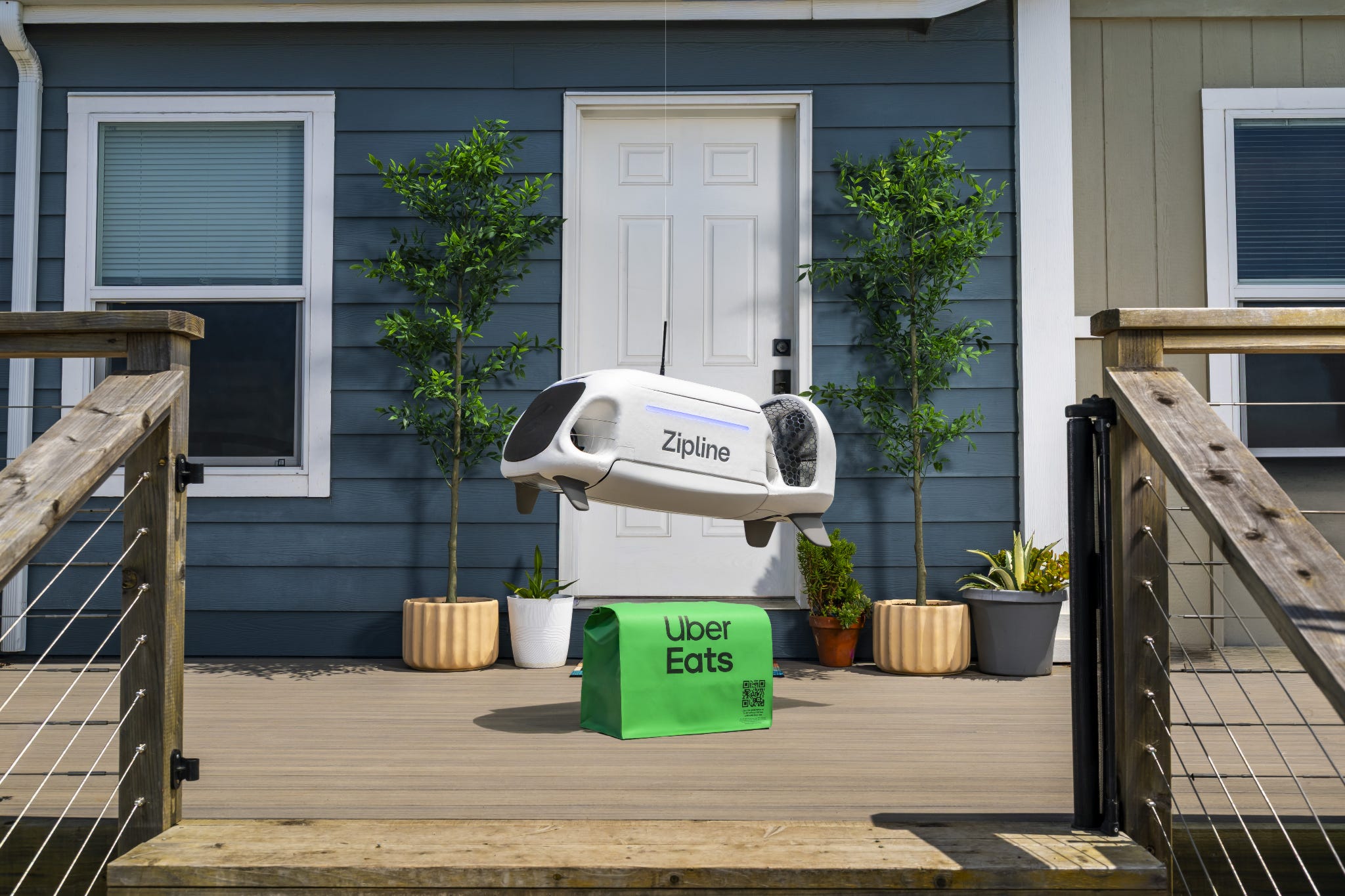
Uber is partnering with Zipline to bring autonomous drone delivery to Uber Eats, with Uber making an investment in the drone company as part of a deal that targets a launch in Zipline’s existing markets by the end of 2026, expansion to dozens of US cities, and a goal of one million daily deliveries by the end of 2029. Uber says the drones should be able to fulfill Eats orders in five to ten minutes.
To date, Zipline has completed more than 2.7 million autonomous deliveries across four continents and flown over 135 million miles, including deliveries to more than 5,000 hospitals. The company closed an $800 million funding round earlier this year at a $7.6 billion valuation.
Zoox has published its full safety case framework publicly for the first time, laying out how it defines, evaluates, and validates safety before any hardware change, software change, or operations update ships to its fleet. Because Zoox designs its own robotaxi, writes its own driving software, and runs its own fleet, the company claims that it has end-to-end ownership of safety that a company stitching together someone else’s sensors or someone else’s cars doesn’t.
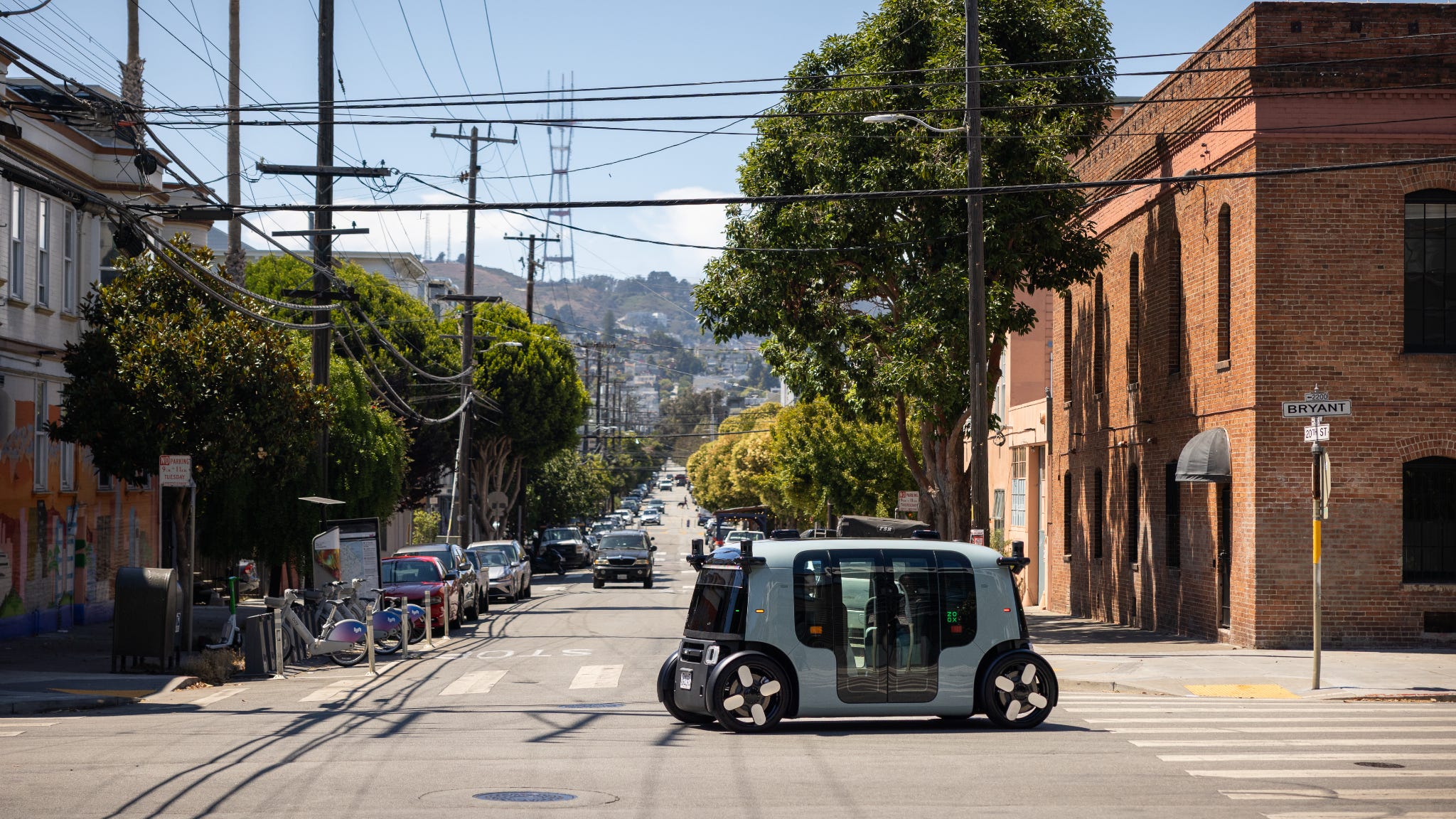
The single metric that Zoox uses to measure this wholistically is CIF, short for Collision, Injury, and Fatality, which is a predicted rate measured in miles per event that combines how the driving software behaves, how the AV platform itself performs, and how operations, including remote support, are run. Every safety-relevant software release, hardware change, or operations update has to clear that combined number, be benchmarked against NHTSA’s crash and fatality databases plus two Federal Highway Administration datasets, and be weighted to match the road types and speeds where Zoox actually operates.
To hit that target, Zoox says it leans on the same structured hazard-analysis methods used across the auto industry (STPA, FMEA, fault tree analysis) plus simulation, replays of real driving logs, and closed-course testing for scenarios too rare or dangerous to wait for on public roads. The AV platform gets its own ISO 26262 process (something I discussed with Drew Henry of Arm on the Ride AI Pod), assigning each safety goal a criticality rating and verifying it through fault-injection and closed-course testing. In addition, a separate collision-checking system, running its own perception stack, has independent authority to override the main planner’s chosen path if it judges the trajectory unsafe.
Safety cases like this aren’t unique to Zoox. Waymo publishes its own periodic safety performance reports benchmarked against human-driving baselines, and Aurora talks publicly about the “safety case” bar it has to clear before pulling a safety driver out of its trucks. A detailed, quantified safety case is, at this point, table stakes for any company trying to seriously scale while earning public and regulatory trust.
However, there is a real debate on how AV companies lay out these safety cases. Longtime AV safety researcher Phil Koopman has argued that the field treats severe crashes per mile as the only metric that counts, but a robotaxi that never crashes and still runs a red light near a crosswalk, strands riders in floodwater, or blocks an ambulance doesn’t show up in that number at all, even though those singular moments are the kind that get clipped for viral videos and dictate whether people end up trusting the technology. As Koopman puts it, “public opinion is likely to hinge more on stories than statistical abstractions,” which may be part of why robotaxi safety keeps polling worse with the general public than the favorable statistics would suggest, across every company publishing them.
So, is Zoox safe? Perhaps a better question might be are AVs safe. Zoox is not unique in providing an in-depth breakdown of its safety case, and that’s a good sign for the industry. After all, the more these frameworks get published, the more there is to compare and scrutinize. Zoox’s own framework says it isn’t a substitute for outside certification, and most of the industry hasn’t published enough operating data for anyone outside the company to check the math. The simple fact of the matter is that most AVs haven’t been in broad public service for long enough to generate enough general data. Waymo is the one notable case where outside groups have run their own numbers against its reported mileage, but one company doesn’t an industry make. And even where the will exists to compare companies head to head, gaps in what’s reported and mismatched definitions of what counts as a crash mean there’s still no standardized way to line up one company’s safety case against another’s. I’m afraid until the industry develops a widely agreed upon standard of measurement, there won’t be a straightforward answer, but it’s encouraging to see companies open up about their safety methodology nonetheless.
Uber and Pony.ai are expanding their robotaxi partnership to five European cities, with plans to deploy more than 2,000 autonomous vehicles beyond the pair’s existing launch in Zagreb, Croatia, with local partner Verne.
The companies are using a joint-deployment model where Pony.ai supplies the self-driving technology, Uber provides the ride-hailing platform, and local operators handle day-to-day fleet work like charging, cleaning, and maintenance. Which entity will actually own the vehicles will vary by market. The expanded deal also extends Middle East deployment plans the two companies first struck last year, and adds to Pony.ai’s push beyond China, where it says it has reached breakeven unit economics in both Guangzhou and Shenzhen, has 1.5 million registered users, and runs 1,975 vehicles.
Some other figures from Pony.ai’s Q2 earnings report, just released as of this writing, that I found interesting: robotaxi revenue all-time high of $12.1M (+691.2% YoY), fared revenue +849.3% YoY, and robotrucking revenue +40% YoY.
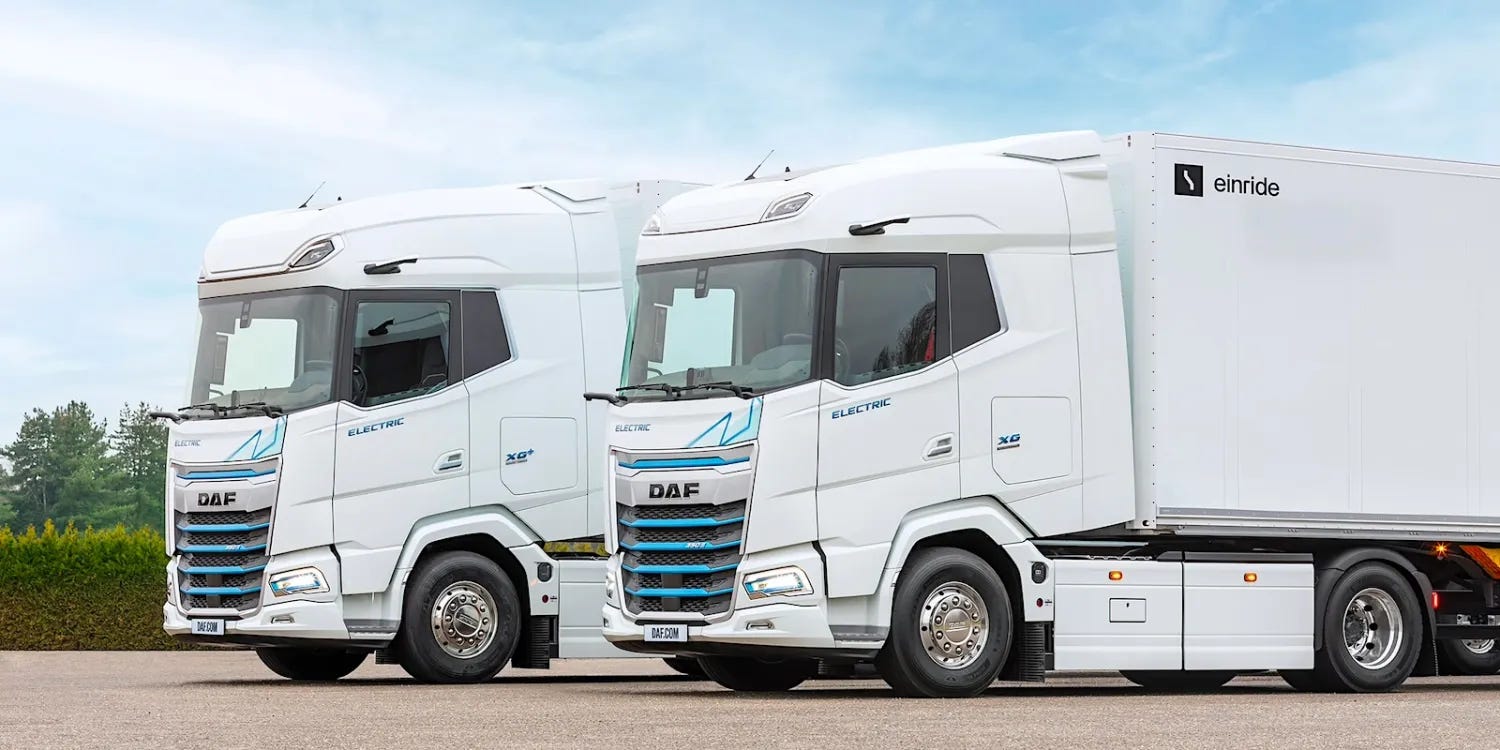
DAF is adding Einride’s Level 4 autonomous driving system to its electric truck lineup, from the 12-tonne XB Electric built for city distribution up to the longer-haul XG and XG+ Electric.
Einride’s driver-out system already runs at the Port of Antwerp-Bruges in Belgium and on private roads in Ohio. Both companies are betting the pairing helps logistics operators deal with driver shortages and volatile fuel costs without building an entirely new fleet.
The move is interesting, as DAF is a PACCAR brand and PACCAR still hasn’t cleared driverless operation on its own US trucks. You might remember the incident with Aurora earlier last year in which PACCAR had requested that the company return safety drivers to previously driverless runs. In response, Aurora built its second generation trucks on International Motors chassis instead to get a genuinely driverless truck on the road this year.
Uber has named Hinomaru Kotsu as the operator for its planned Tokyo robotaxi pilot, pairing Wayve’s self-driving software with Nissan Leafs for a launch targeted for late 2026. Japanese law requires passenger transport to run through a licensed taxi company, so Hinomaru Kotsu handles depot operations, maintenance, and charging while Uber supplies the app and ride-matching. Hinomaru Kotsu’s own drivers will ride along as safety operators at first, with fully driverless service coming later pending regulatory approval. The pilot is framed as a way to address Japan’s driver shortages, and builds on a Wayve-Nissan partnership announced in March.
A new study from Tel Aviv University and the European Commission’s Joint Research Centre finds that a robotaxi’s sensors and onboard computing can use nearly as much energy as the motor that drives it, undercutting some of the efficiency case for automated fleets. Modeling a 1,000-vehicle robotaxi fleet running for one day, the researchers found onboard sensing and compute added anywhere from 12% to 58% on top of propulsion energy depending on the sensor setup, with well-optimized systems landing closer to 26-30% overhead; a camera-only setup cut that to roughly 12-15%. Energy models that ignore this compute overhead may be underestimating automated fleets’ real energy demand by 5 to 30%, the study found. Another plus for a vision-only approach, perhaps?
Alright, that’s it from me… until next week. If you enjoy this newsletter, share it with your friend, colleague, or boss. Thank you for reading, Sophia out!
No posts
Comments
Nothing yet. Say the first thing.
Sign in to join the conversation.