
This is the Ride AI newsletter: The most comprehensive weekly digest of news and intelligence at the intersection of technology and transportation.
$799 Early Access tickets for Ride AI 2027 are now available until August 31st. Pricing climbs month by month toward $1,500 general admission, so get your tickets early. If you’re considering joining us next April at SF JAZZ,
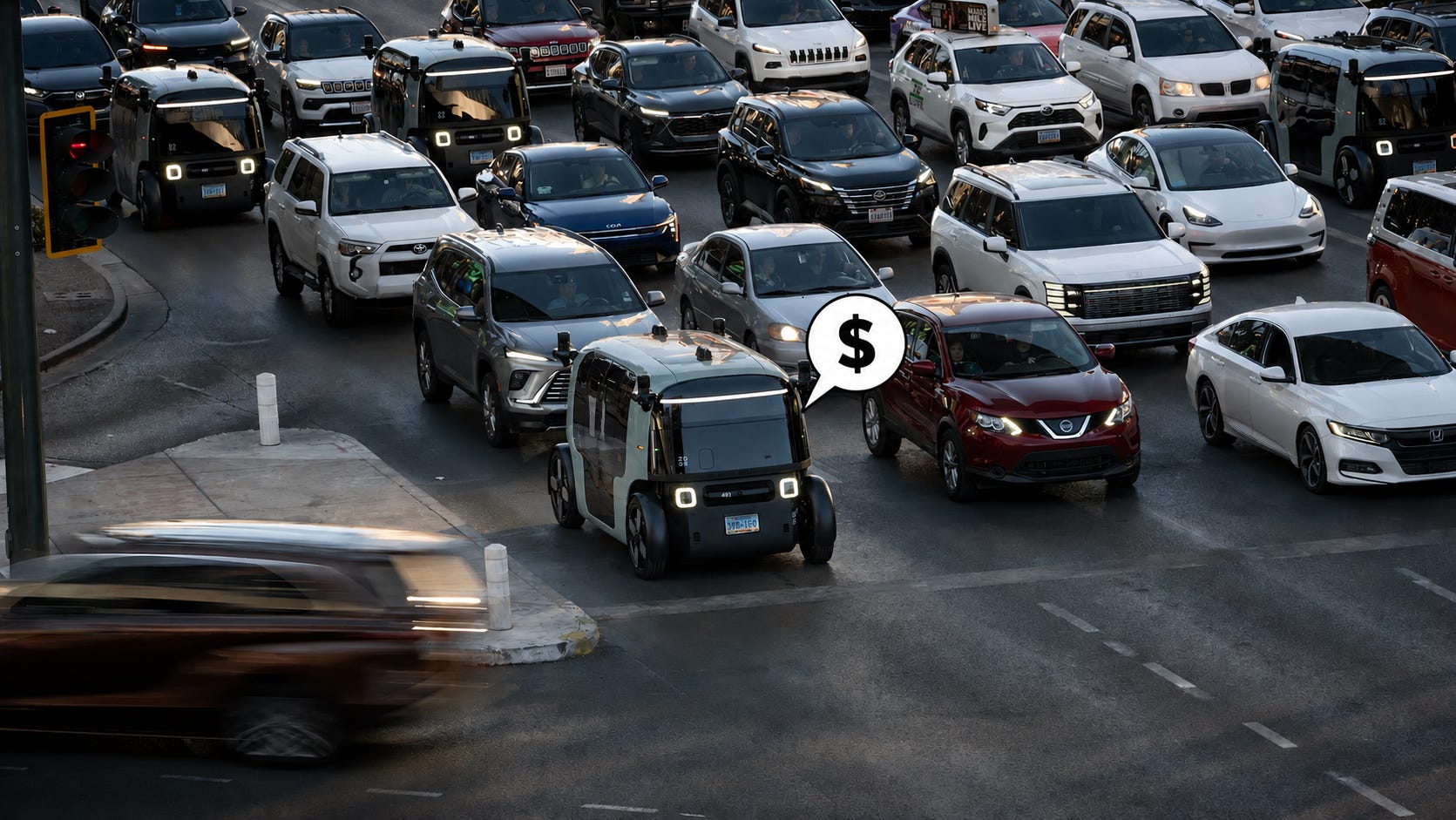
Zoox has started charging for robotaxi rides in Las Vegas, becoming the first company in the US to launch commercial operations with a vehicle with no steering wheel or pedals. The vehicle has now driven more than 3 million miles on public roads, and Zoox has carried nearly 1 million free riders across Las Vegas, San Francisco, Austin, and Miami since first opening the service last year.
Fares are calculated from a base fare plus distance and time traveled from pickup to dropoff, similar to standard ride-hailing pricing, with the full fare shown before booking and calculated using the best route. Like Waymo, Zoox says it won’t charge more if the car ends up taking a longer route than planned.
There have long been questions around how the company plans to price its ride-hailing service given the company’s previous position that it would be a competitively priced service, and the company has confirmed that it aims to be competitive with most ride-hailing operators’ “comfort” tier to start, with destination fees added for trips like the airport or high-traffic events at the Sphere or T-Mobile Arena, where Zoox offers riders premier pickup and drop-off locations.
The launch follows the commercial exemption Zoox received from NHTSA under Part 555 last week, covering eight federal motor vehicle safety standards written around a human driver and clearing the way to charge for up to 2,500 vehicles a year over the next two years. Zoox also had to complete separate notifications with Nevada regulators before it could start collecting fares. Payments haven’t launched in San Francisco, Austin, or Miami yet, however. Zoox says service stays free in those cities for now, with no timeline yet for when charging will expand there.
Waymo has dropped the waitlist for its robotaxi service in Dallas, opening it to anyone who downloads the app. The company had limited access since opening the service in February, when about 150,000 riders used the app from its interest list. Dallas joins Phoenix, Los Angeles, and San Francisco as markets where Waymo has ditched the waitlist entirely.
Riders still can’t hail a trip to Dallas Love Field Airport though. Waymo says testing is ongoing there and service is coming soon. The rollout also comes a few months after Waymo paused service in Dallas, Houston, San Antonio, and Atlanta over how its robotaxis handled flooded roads, and the company says it may pause or adjust service again based on severe weather.
Waymo has also started testing without safety drivers in Denver, Colorado, a region known for its heavy snows during the winter seasons. This will be a A pedestrian has died in Dallas after being struck by an SUV and thrown into an empty Waymo traveling in the opposite direction, police said. The man was jaywalking across a four way, two lane road around 11:30 p.m. Friday when an SUV heading southwest hit him. The impact threw him into the Waymo. The Waymo had detected the pedestrian and slowed down but was struck on its left rear quarter panel by the pedestrian after the initial hit. Both vehicles stopped, and first responders took the man to a hospital, where he later died.
Waymo said it’s working with first responders and that it’s “deeply saddened” by what happened. The man’s identity hasn’t been released.
You might remember something similar happening a few years ago that effectively ended Cruise’s robotaxi business. In October 2023, a hit-and-run driver in San Francisco struck a woman crossing on a red light and threw her into the path of a Cruise vehicle, which dragged her about 20 feet while pulling over because its sensors didn’t register she was still underneath it. The difference in that case is that Cruise didn’t disclose the dragging to regulators right away, and the cover-up allegations that followed cost it a $500,000 fine and criminal charges from the Justice Department, its driverless permit in San Francisco, and eventually the whole robotaxi business when GM shut it down in December 2024. The Dallas case looks different so far. The Waymo detected the pedestrian, slowed down, stopped after impact, and the company has been in touch with police and first responders from the start.
Uber has committed more than $10 billion over the next few years to deploy 120,000 autonomous vehicles, with robotaxi service planned in at least 15 cities by the end of the year and 28 by 2028. CEO Dara Khosrowshahi laid out the commitment alongside second-quarter earnings that included $14.2 billion in revenue and a record $2.8 billion in free cash flow for the quarter.
Rather than build its own self-driving system, Uber is positioning itself as the platform connecting AV partners to riders, and now holds equity stakes in several of them, including Rivian and Lucid, on top of the more than 30 AV partnerships it’s built since 2023. Uber did attempt to build its own self-driving system in the past under Uber ATG, but sold off the program after one of its vehicles operating in autonomous mode with a safety driver hit and killed a pedestrian in Arizona.
“We’re investing from a position of strength, as we accelerate our cross-platform strategy at a global scale and build the world’s largest platform for autonomous vehicles,” Khosrowshahi said. The push comes as Uber’s relationship with Waymo, its original robotaxi partner, continues to fray. Waymo ended their Phoenix arrangement in July and is working to exit its Austin and Atlanta contract early, aiming to launch independently in both cities by January 2028.
Moove plans to start buying the Waymo robotaxis it operates using debt financing, right after raising $250 million at a $2.1 billion valuation to scale up the infrastructure side of the robotaxi business. Mubadala Investment Company led the Series C, with Woven Capital, Toyota’s growth fund, Ion Pacific, and Uber joining as investors.
Moove started in Nigeria in 2020 financing human-driven ride-hailing fleets and now operates 42,000 vehicles across 14 countries as the fleet operator managing Waymo’s vehicles in Phoenix, Miami, and soon London. It already owns robotaxis from an AV developer it hasn’t named, and some of the new funding will go toward automated “nests,” depots that can charge, maintain, and service vehicles around the clock without anyone on site.
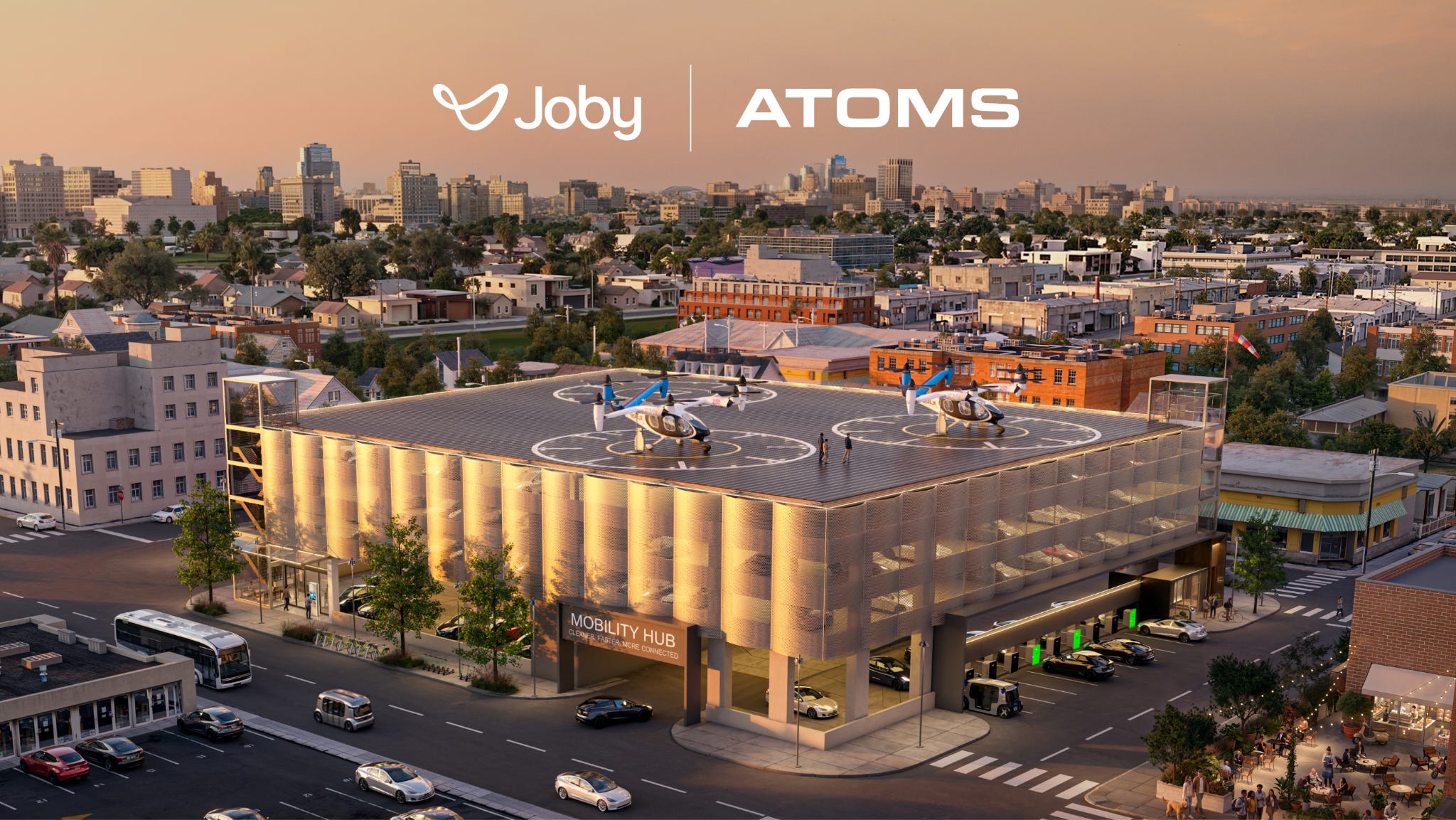
Atoms is partnering with Joby Aviation to build vertiports, multimodal hubs where electric air taxis, robotaxis, and ride-hailing converge. The companies plan to start in Florida, New York, Texas, and California, where Joby is preparing to launch early eVTOL operations under a federal pilot program.
It’s a full-circle moment for Travis Kalanick, who first envisioned autonomous vehicles and air taxis while running Uber. In addition to AVs, the company had an air taxi unit under Uber ATG. It later sold its air taxi unit, Uber Elevate, to Joby. Kalanick’s robotics startup Atoms has also hired former Uber finance chief Gautam Gupta as CFO, continuing a run of reuniting with old Uber colleagues just weeks after raising $1.7 billion in a round that included Uber itself as an investor, a striking reunion given Uber’s board pushed Kalanick out as CEO in 2017.
Rep. Kevin Mullin has introduced the AV Emergency Response Coordination Act,a federal bill that would direct NHTSA to set minimum safety standards for how autonomous vehicles interact with police, firefighters, and paramedics.
Mullin announced the bill at a San Francisco press conference alongside Mayor Daniel Lurie and the city’s fire and police chiefs, citing a mounting list of incidents, like AVs blocking ambulances, driving into active emergency scenes, and failing to recognize flares, smoke, or traffic cones in cities including Austin, Phoenix, Las Vegas, Dallas, and San Francisco.
The bill would require AV companies to publish standardized emergency response protocols, set up a 24/7 hotline for public officials, and let officials issue “geofence notices” so AVs avoid an area during an active emergency. “Seconds count during a crisis, and we’ve seen too many terrifying incidents of AVs interfering with police, firefighters, and paramedics,” Mullin said. It’s his second AV bill this year, after the AV Safety Data Act, which would require companies to report safety data to NHTSA.
Waymo co-CEO Dmitri Dolgov has laid out the clearest technical case yet for why camera-only self-driving can’t reach full autonomy, telling a Y Combinator Startup School audience that weak sensing hits a safety ceiling long before it reaches superhuman performance.
Dolgov argued cameras alone struggle in low light, poor visibility, and dust storms, or when something like a tree branch physically blocks the lens. He described a case where Waymo’s redundant lidar and radar let a vehicle safely drive itself back to a depot after a branch got caught in its wipers and blinded the camera. He framed reliability as an “exponential ladder of nines,” where each additional nine of safety takes roughly ten times more effort than the one before it.
Tesla, meanwhile, is racking up speeding tickets tied to FSD. In FSD v14, Tesla removed the adjustable speed offset that let drivers cap how far over the limit the car would go and replaced it with fixed presets that still drive over the posted limit. A Colorado driver was pulled over going 64 mph in a 45 zone in July while using FSD, and another driver was ticketed after the car accelerated to 78 km/h in a 50 km/h zone. FSD is a driver-assistance feature, not autonomous driving, so any ticket is the driver’s responsibility, not Tesla’s. Sweden has separately told the EU it wants the speeding behavior fixed before approval.
Did you know Zoox doesn’t yet drive over moving bridges? Cruise didn’t either when it was operating. Why? Because getting an AV to recognize when the road is not there is a whole category of edge case that most AV developers haven’t optimized for yet.
In China, you can see why. Autonomous delivery vans are falling into holes caused by road construction. This falls in the same category of edge case as moving bridges: With drawbridges, any number of safety features could just not work. The barriers could get stuck and not lower, or the warning lights could be out, and your AV has to understand that there is no road there, rather than just a dip or a hill that it can’t see beyond.
The same goes for large holes in the road. In this case, construction workers neglected to close the gate or put up any hazard cones. You could say this is a failure in proper road construction notice (which it is), but these are the edge cases that AVs have to contend with out on the open road.
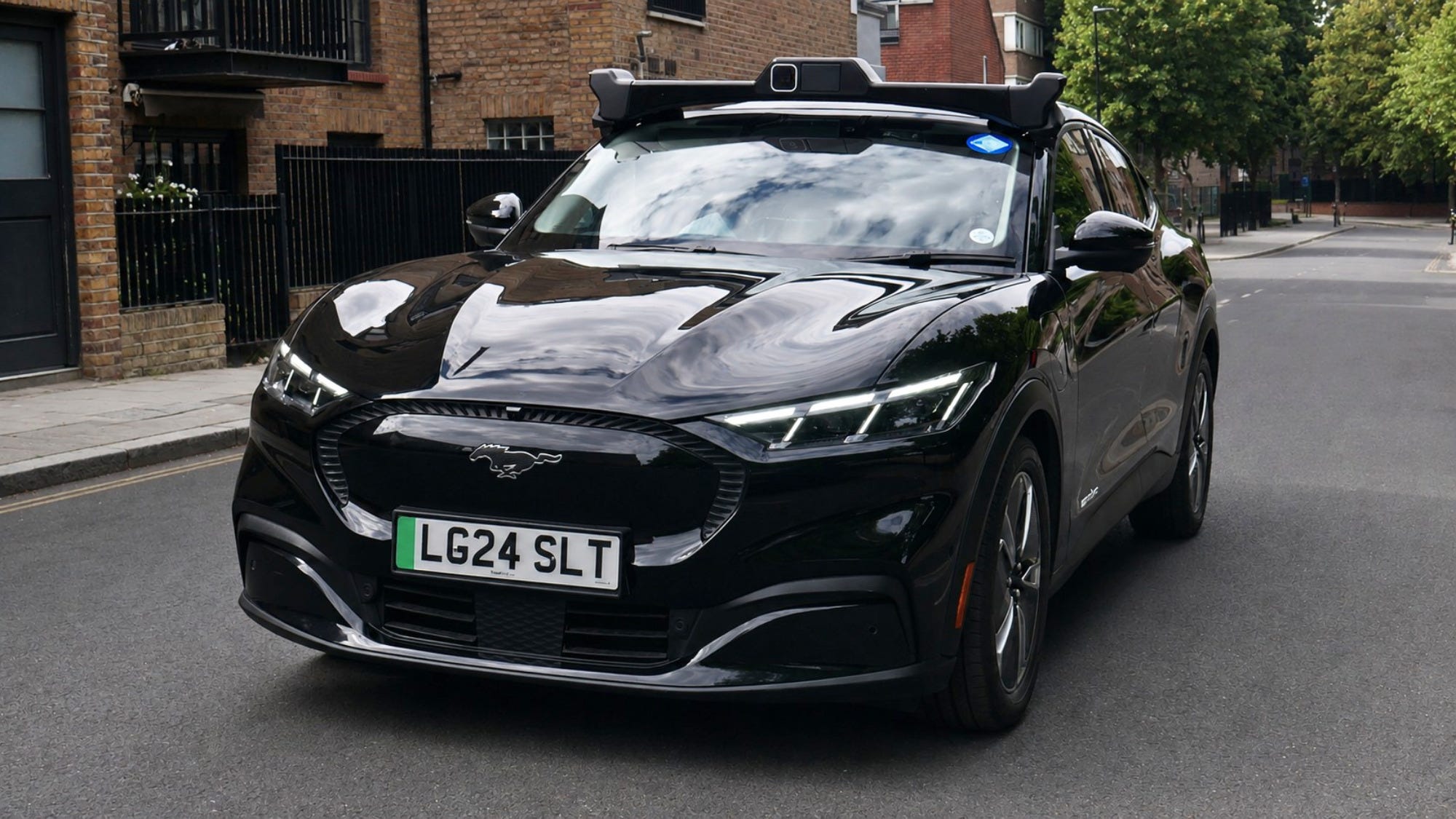
Transport for London has granted Private Hire Vehicle licenses to Wayve’s autonomous Ford Mustang Mach-E fleet, clearing the last regulatory hurdle before Uber can start offering supervised autonomous rides in the city.
The licenses complete London’s “triple-lock” requirement, where the operator, driver, and vehicle all need licenses from the same authority. A TfL-licensed private hire driver still rides along to supervise and can take over if needed, but Wayve’s AI Driver handles the actual driving using cameras and radar rather than HD maps or geofencing.
More than 100,000 Londoners have joined Uber’s interest list in the past eight weeks alone, and select riders will get early access later this summer ahead of a full public launch. “I believe that it’s the UK’s first license for AV technology to operate and a big step forward for the UK,” Wayve CEO Alex Kendall said, adding that rides could start within “a matter of weeks.” However, Wayve will soon need to contend with a crowded market. Baidu and Lyft started road testing there in July, and Waymo has been testing with safety drivers since April. Both companies intend to launch a service of some form by the end of year.
The Dutch road regulator RDW has refused to release the safety-testing data behind its approval of Tesla’s Full Self-Driving system, citing trade-secret protections that Tesla has pushed for since late 2024, according to internal correspondence between the automaker and the regulator. RDW approved FSD four months ago and has since advocated for its adoption across the EU, but hasn’t disclosed how it evaluated the driver-assistance system’s safety or how its performance compares with human drivers.
Other European regulators involved in the review, including in Germany, Norway, and Denmark, gave the same trade-secret rationale for withholding their own data. Norway’s road agency noted that the figures it reviewed don’t match what Tesla publishes on its own website, and a separate investigation found Tesla’s self-published FSD safety statistics are significantly overstated. France has said it won’t approve FSD in its current form over speeding and driver-attention concerns, while Finland flagged worries about how the system handles steep, winding roads.
RDW is now pushing for EU-wide approval of FSD, which needs support from countries representing 55% of member states and 65% of the bloc’s population. A vote could come as soon as October.
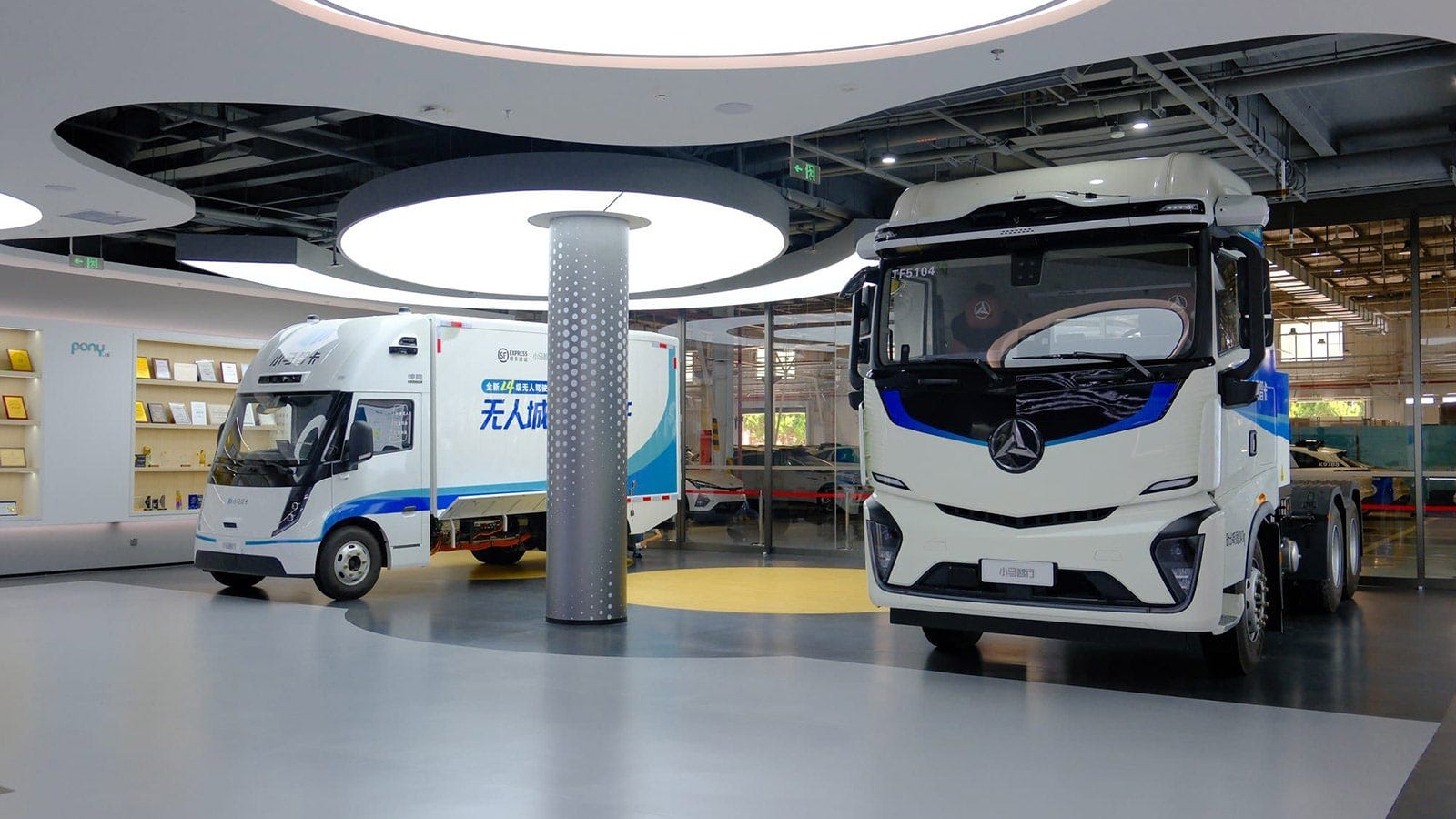
Pony AI plans to deploy 500 to 1,000 fourth-generation autonomous heavy trucks in China over the next two to three years, with hardware costs down about 70% from the previous generation.
The company laid out the targets at a media briefing this week, aimed at long-haul freight, bulk commodities, and port logistics. Shenzhen’s Mawan Port will be among the first commercial deployments. Pony AI has run about 200 trucks since entering the business in 2018 and has moved more than 1 billion ton-kilometers of freight to date.
The bigger bet is on light-duty trucks, where Pony AI wants 100,000 vehicles on the road by 2030. Co-developed with battery giant CATL, the light trucks share more than 90% of their technology and operations with Pony AI’s seventh-generation robotaxi, including charging, fleet management, and remote assistance, and the company says fully driverless operation could cut per-kilometer costs by 40 to 50% compared with human drivers.
Alright, that’s it from me… until next week. If you enjoy this newsletter, share it with your friend, colleague, or boss. Thank you for reading, Sophia out!
No posts
Comments
Nothing yet. Say the first thing.
Sign in to join the conversation.