
I have a new piece coming out on Monday at 3 p.m., when a certain scientific study comes off embargo. Meantime, with the 250th anniversary of American independence in mind, and American racists in the White House running the show, it’s time to revisit this piece on this country’s white supremacist roots.
I used to tune out when my father was going on about eminent domain: How his immigrant grandparents had built up a modest little homestead, with two houses, three children, and a flock of chickens on the banks of the Bronx River, in northernmost New York City. And then, around 1913, how the government seized the property to make way for the Bronx River Parkway. That the episode still rankled after almost a century just seemed like a manifestation of my father’s cranky late life conservatism.
That was before I found out about Madison Grant, though.
It’s a name you should bear mind as we deal with a president, Donald Trump, now allowing his lieutenants to follow through on his campaigns promises to round up undocumented immigrants, build camps to forcibly detain them, and carry out the “largest domestic deportation operation in American history.” Given the Supreme Court’s eagerness to roll over at Trump’s every request, there is really no limit to what he might feel entitled to do, on the immigrant issue or anything else.
So what’s the link to Madison Grant? It may seem at first like a stretch, because Madison Grant at least did some good in his life. The National Park Service was in large part a product of Grant’s work as “the greatest conservationist that ever lived,” according to one early Park Service director, and as the creator of “the park concept,” in the words of another. But conservationists rarely even whisper his name these days because his peculiar line of thinking also helped lay the groundwork for the death camps of Nazi Germany.
Born in 1865, Grant enjoyed a blueblood Manhattan childhood thanks to his mother’s wealth, and his father’s reputation as a doctor and Civil War hero. At 16, he went for four years of private tutoring in Dresden, Germany, before moving on to Yale College and Columbia Law School.
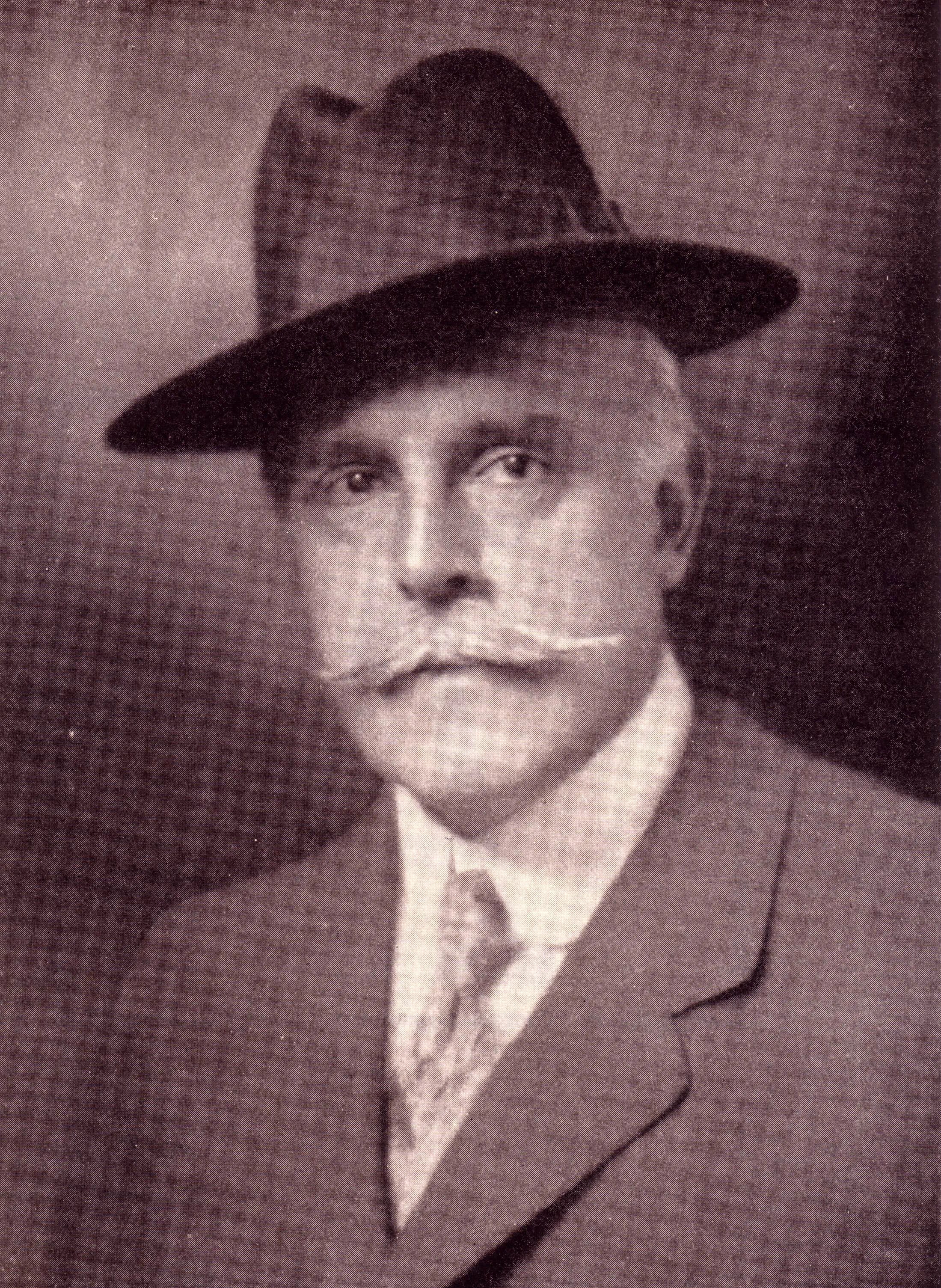
Grant was a handsome, urbane figure with a thick mustache, steady, deep-set eyes, and a reputation as a ladies’ man, though he never married. He set up a Manhattan law office but rarely practiced. Nor did he ever hold public office, despite his keen political interests. Big game hunting was his real passion, according to the 2008 biography Defending the Master Race, by historian Jonathan Spiro, and he recognized early on that reckless overhunting was driving many species to extinction. It became his first great cause, often in collaboration with Theodore Roosevelt, Gifford Pinchot, George Bird Grinnell and like-minded hunters in a spectacularly influential little group that called itself the Boone and Crockett Club.
By 1895, Grant had founded the committee that drove through construction of the Bronx Zoo, dedicated to the preservation of North American species. He also founded the Wildlife Conservation Society, now among the most effective such organizations in the world. Among his many other initiatives, Grant largely ended the commercial sale of wild game in the United States, launched the campaign to stop the last of California’s magnificent redwoods from being logged, worked to save the American bison from extinction (restocking the Plains with bison from his zoo), and pushed for the creation of Glacier, Denali, Olympic, and Everglades national parks. It would be a monumental legacy for anyone.
The big, ugly problem was that Grant soon began extending his efforts on behalf of North America’s native species to what he considered its “native American” people—not Indian tribes but Northern Europeans, preferably “of Colonial descent.” He published his book The Passing of the Great Race in 1916 to call attention to the plight of the “Nordics,” a new word he popularized. “Unlimited immigration” and intermarriage, he warned, were “sweeping the nation toward a racial abyss.”
The book was a 476-page pseudoscientific compendium of stereotypes. Black men were “a valuable element in the community” so long as they remained “willing followers who ask only to obey and to further the ideals and wishes of the master race.” The Irish tended to be “intellectually inferior” and “gorilla-like” in appearance, and “the Slovak, the Italian, the Syrian and the Jew,” were “social discards.” He worried that “the sweepings” of Europe’s jails and asylums were adopting “the language of the native American,” wearing his clothes, stealing his name, and “beginning to take his women.” Grant was especially enraged at “being literally driven off the streets of New York City by the swarms of Polish Jews.”
Madison Grant’s book ought to have been a national scandal. But eugenics, the idea that human stock could be managed and improved much like livestock, was then becoming almost an establishment religion. So The Passing of the Great Race was published by Scribner’s and edited by Maxwell Perkins, who later edited F. Scott Fitzgerald and Ernest Hemingway. The president of the American Museum of Natural History wrote the preface, and a former president of the United States provided a blurb (“A capital book” -- Theodore Roosevelt).

Grant parlayed his rising influence into a series of punitive measures aimed at “inferior races and classes.” The Bronx River Parkway project, for instance was originally about cleaning up a polluted river and adding a roadway through newly picturesque landscapes. But Grant’s commission carefully planned the project to take out “the wrong sort of development,” meaning “Italian shacks” like my great-grandparents’ home, and neighborhoods populated by “Negroes.”
Others lost far more than their homes under Grant’s influence. Many states pursued his recommendation to apply mandatory sterilization “to an ever widening circle of social discards, beginning always with the criminal, the diseased and the insane and extending gradually to types which may be called weaklings rather than defectives.” Grant wanted to apply it “perhaps ultimately to worthless race types.” Congress followed Grant’s lead to produce a 1924 law that severely curtailed immigration by those he deemed undesirable, and explicitly outlawed immigration by Arabs and Asians.
When the Nazis established their compulsory sterilization program in 1933, proponents said they were following “the American pathfinders Madison Grant” and a Grant disciple, Lothrop Stoddard. Hitler himself supposedly wrote to Grant to say his book had become “my Bible.” Grant died in 1937, too soon to see his loose words turned to mass murder. But among those he inspired was Karl Brandt, the physician who began the Nazi program of forced “euthanasia” and later performed experiments on un-anesthetized death camp prisoners. At his war crimes trial, Brandt’s lawyers presented The Passing of the Great Race as evidence that the Nazis had merely done what a prominent American scholar had advocated. (On the scaffold, unrepentant, Brandt called his death sentence “nothing but political revenge.”)
That genocidal legacy has led Americans to write Madison Grant out of our history. But the kind of political rhetoric we are now hearing suggests he belongs, if not at the center of American history, then just right of center. Some among us no doubt rejoice when Donald Trump says appalling things about Mexican immigrants, or Muslim-Americans, or the political adversaries he calls “the communists, Marxists, fascists, and the radical-left thugs that live like vermin within the confines of our country.” Think about it, though, and you will hear the dark ghost of Madison Grant whispering in Trump’s ear and walking among us in search of new victims.
I think a lot these days about how Madison Grant came for my Italian-Irish great-grandparents, and about how his followers used his words to plunder the homes and the lives of Black Americans, European Jews, the mentally handicapped, the homosexuals, the politically dissident. It strikes me that very few Americans these days would meet the Madison Grant/Donald Trump standard for ethnic, political, or social purity. I’m certainly not pure enough. Are you? And I worry: If Trump is willing and to use the military and his gang of thugs at ICE to target undocumented immigrants and American citizens who dare to protest, who will he have them target next?
The great lesson of his career so far is that everyone—Gold Star parents, his former vice president, past cabinet members, ex-wives and mistresses, the crowds that fill his MAGA rallies, and of course his critics—all of us sooner or later are just Donald Trump’s idea of vermin.
Comments
Nothing yet. Say the first thing.
Sign in to join the conversation.