
Disney has never just sold entertainment; it has sold worlds to inhabit. From the earliest animated films to the intricate choreography of theme parks, Disney has been in the business of identity formation and integrated businesses.
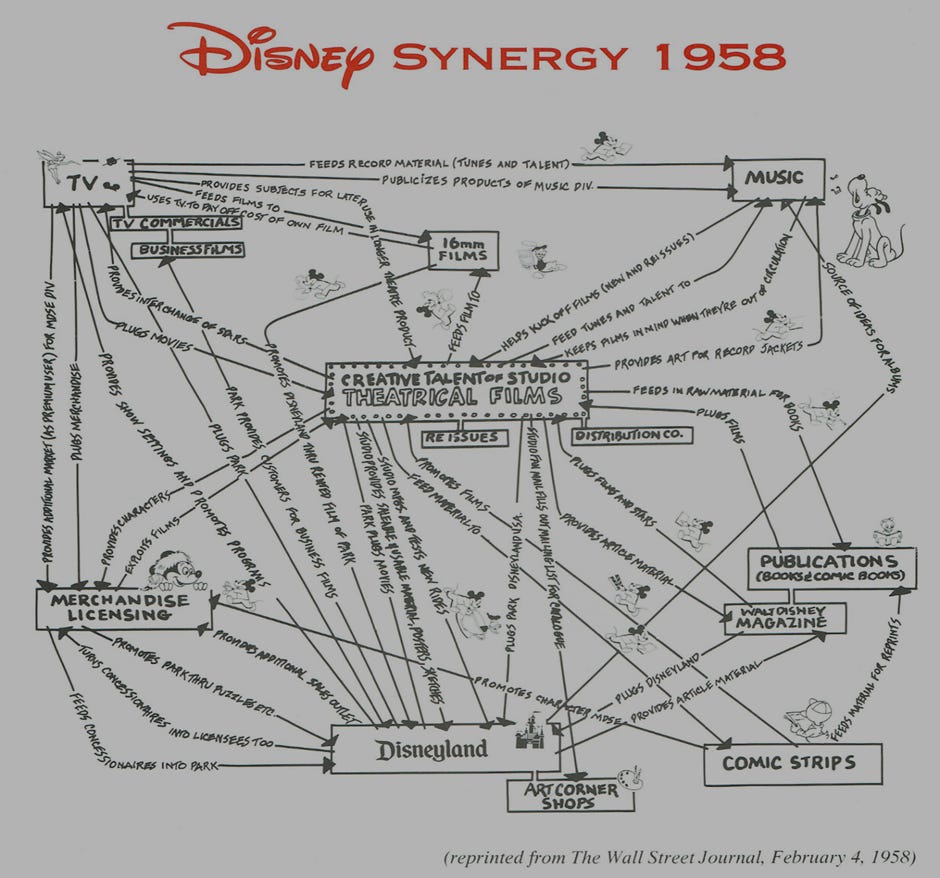
Each medium, film, merchandise & streaming platforms today, functions as a node in a carefully designed system that embeds characters into the lives of families.
Past: The VHS tape, the Disney Channel, and branded Happy Meal toys transformed entertainment into habit. Childhood rituals became a form of brand loyalty that lasted generations.
Present: Disney+ and transmedia storytelling extend this legacy. It’s ecosystems of narrative IP, cross-sold across parks, games, and merchandise.
Future: The next node as many can already see is about embedding this knowledge and understanding of their IP and viewer habits from streaming across the merchandise and live experiences. (See: Netflix also launching Netflix House)
But I posit, Disney is actually sitting upon some character IP that is multi-generational and with the arrival of AI, it can go beyond just ‘generative AI content’ strategy for entertainment but enter the world of utility with embodied technology robots that blur the boundary between toy and tool, companion and utility.
A foresight lens reframes the question: the robot is not just a gadget, but can be a cultural anchor in the household system. Its value isn’t in the tasks it performs but in how it shapes the identities, habits, and trust structures of families.
We are on the edge of the first true consumer robot moment. The Roomba showed utility; Alexa introduced voice as an interface. But both lacked character. Disney could deliver what Apple did for personal computing: fuse functionality with cultural resonance.
I typically apply my foresight work to the realm of investing, yet as I surveilled the landscape of the emergence of household robotics, I’m seeing the convergence of a few technological breakthroughs:
Energy density for household robotics (e.g. Unitree’s G1 claims to have 2hrs of active usage with a swappable battery)
Dexterity in their hand movements (e.g. The latest Tesla Optimus claims to have 22 Degrees of Freedom, which is a significant upgrade from earlier versions and approaches the complexity of a human hand, which has around 27 DoF).
Cognitive functionality with AI (e.g. NVIDIA’s Jetson enables the combining of vision-language-action neural networks at the edge to allow robots to understand, adapt, and execute tasks in real-world, dynamic environments without requiring extensive reprogramming)
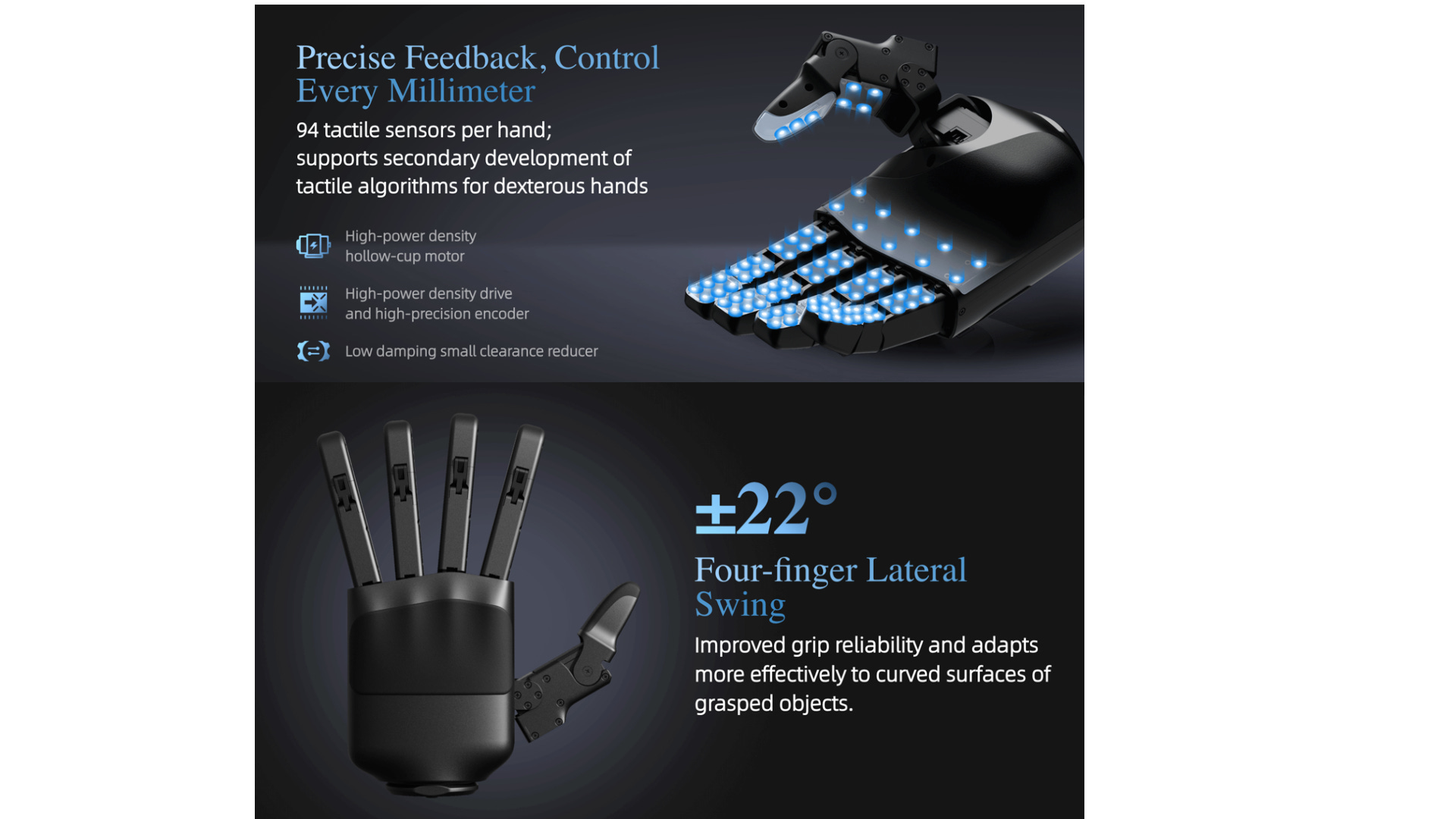
… however the cultural unlock to market still remains a question mark.
At a high level, a home robot earns its keep only if it crosses a simple bar: it must replace paid chores with real savings or unlock new capabilities that compound a household’s time and skills.
Think “downloadable mastery” (e.g., precision carpentry to custom-fit a door frame) or supporting in various routine activities, whether cleaning, tidying or meal-prep assistance. I wrote about this last year.
The dividend is time: more attention for partners and kids, less cognitive load for everything else.
So now the question is how do we convey this social value to potential customers… what if we design a product that serves a dual function that piggy backs off the trust and entertainment value of an existing IP… enter Disney.
First, Disney would have to make the idea of personalized AI show its value in a simpler form function (before jumping to more complex robotics). Beginning with a Toodles AI companion.
Some context for non-parents/non-watchers:
Toodles is a helpful companion from the Mickey Mouse Clubhouse show. Toodles’ main function is to carry and present “Mouseketools,” a selection of four tools (sometimes three) chosen at the beginning of each episode to solve specific tasks and challenges faced by the characters. Toodles is summoned by the call “Oh, Toodles!” at which point he appears onscreen so the characters (and the audience) can pick which tool is most helpful for the current situation.
Toodles serves not only as an interactive plot device to encourage problem-solving but also helps educate young viewers on critical thinking, sequencing, and teamwork. His positive, ever-helpful persona is integral to reinforcing the show’s educational and collaborative themes.
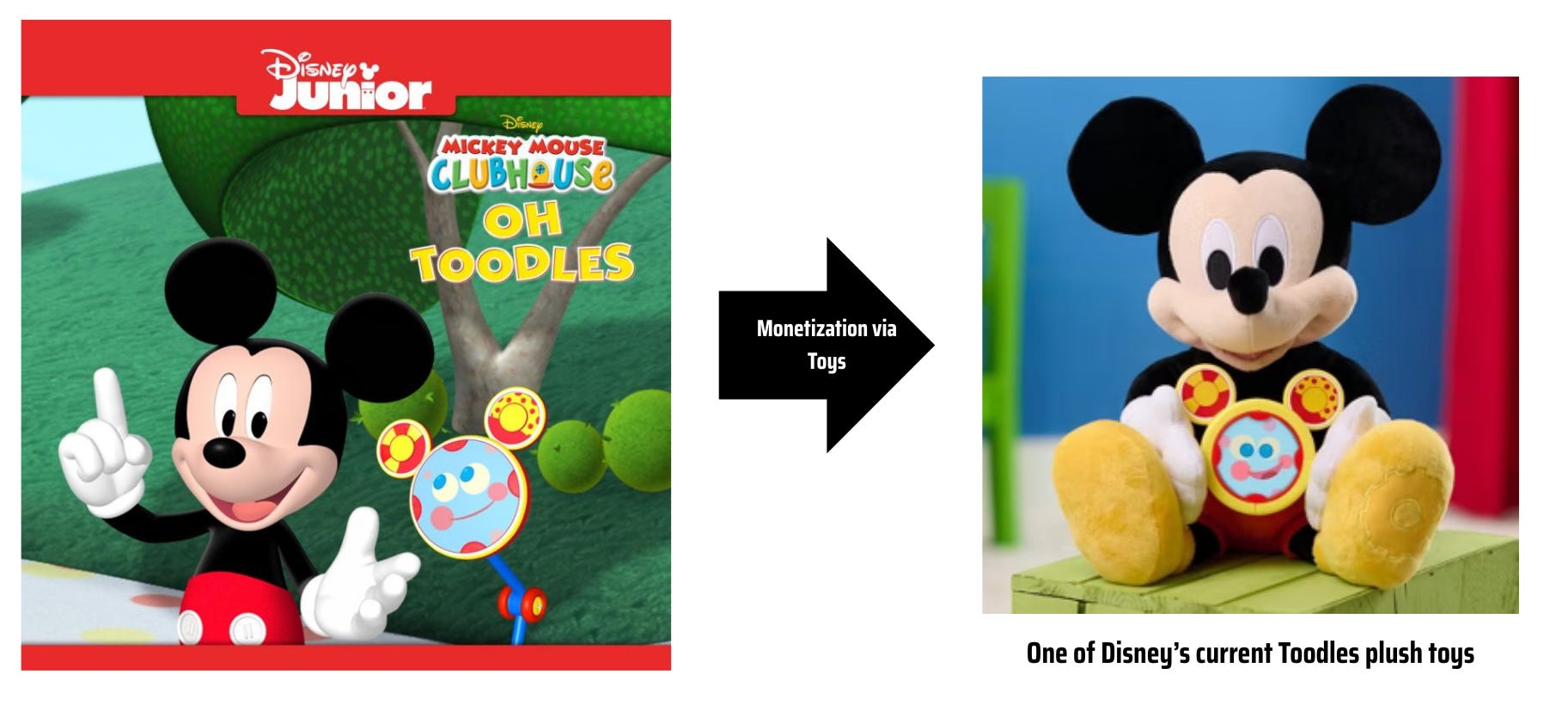
So how could Toodles be envisioned with AI? Part toy, part personalized tutor.
If you want families to accept a machine into their daily rituals, begin with a ritual, not a machine. Toodles already encodes a loop children trust: call, choose, solve together. Reinterpret that loop with AI and you have a gentle on-ramp with minimal new hardware (AI-enhanced existing toy), just a familiar face that makes bedtime smoother and mornings less fraught. The test is modest: can “Oh, Toodles” reliably convert five minutes of chaos into five minutes of calm? If yes, parents will ask for more.
The AI “Mouseketools” become a small set of context-aware skills: story endings that invite a parent, a tidy-up game that ends in a real-world handoff, a feelings check-in that names emotions without mining data. Guardrails are explicit: local edge processing, clear consent for anything cloud-assisted, and a visible off switch. The aim is not stickiness but relief. If the outcome is fewer tantrums and quicker bedtimes, trust accrues quickly.
The business model is dull by design: a fair-priced object and a modest subscription for curated skills, no ad tech, no numbing scroll. In exchange, families get predictable gains at the margins of the day.
Disney’s 2025 refresh, Mickey Mouse Clubhouse+, brings back Toodles and introduces Little Helper to the Clubhouse world… an explicit bridge between “helpful character” and “household helper.”
In other words, Disney already has a robot archetype children recognize and parents trust; the only question is how far to let it step off the screen.
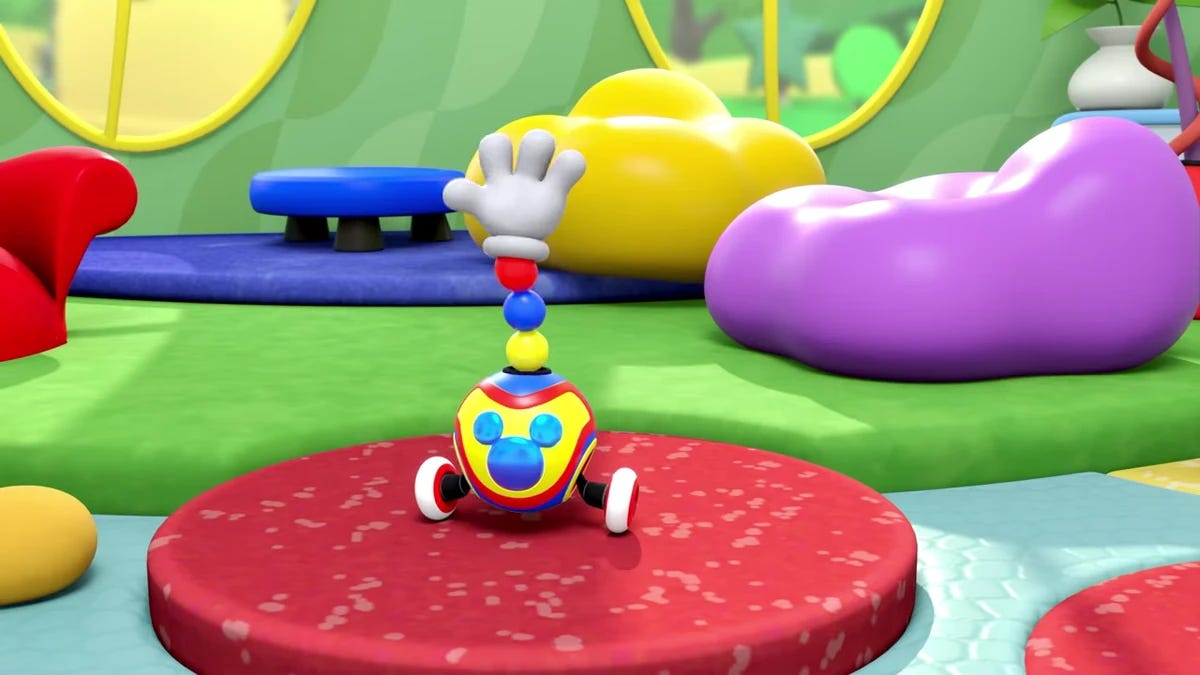
Toodles would just be the introductory AI-at-home piece offering simple bedtime stories and helpful child friendly AI companion, but the real utility robot would be the Little Helper adaptation.
Little Helper is the household’s third hand: a quiet articulating arm on a weighted base, closer in spirit to the Pixar lamp than to a humanoid. It does unfussy work people fumble when tired, holding the bowl while you stir, steadying the onion while you chop, keeping the toy bin at floor height so a child can finish the job.
So is this feasible? Well, we had the core mechanics of the ‘Pixar Lamp’ prototyped 13 years ago, over a decade before our ChatGPT/LLM awakening.
We would need to ensure that agency remains with the family. The robot offers; a human accepts. Movements are slow, joints are force-limited, and certain actions simply won’t happen without an adult present.
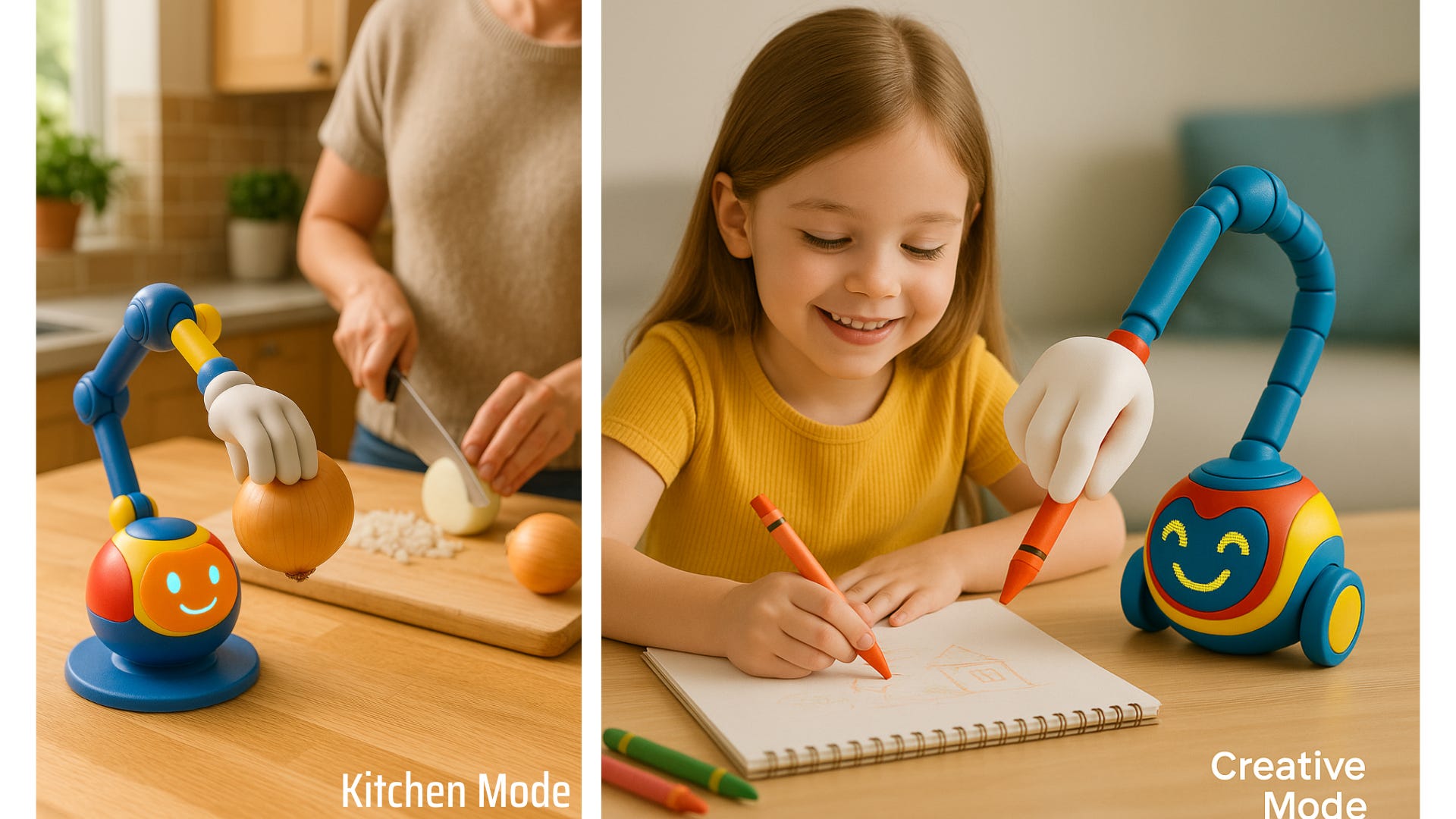
The value proposition is time and attention. Not grand automation, but fewer dropped plates, literal and cognitive, during the pressure windows of the day.
If Toodles can help restore order in five-minute slices, Little Helper extends that order into the physical world.
Together they form a ladder of trust: ritual first, embodiment second.
Disney’s superpower has always been cultural inheritance across generations. Older siblings, cousins, and parents pass down characters like Mickey, Moana, or Elsa as trusted guides to the next generation.
Parents as transmission vectors: Today, elder siblings and parents recommend Mickey Mouse Clubhouse to nieces, nephews and younger children. Disney isn’t just targeting kids, it is co-opting parents as cultural curators. My wife and I were introduced to the show through a dual signal of parent friends & family (thanks Lisa & Farnaz!)
Robot as cultural anchor: By embedding the first lovable household robot in this lineage, Disney doesn’t just win market share, it colonizes the trust architecture of families. When AGI-capable assistants arrive, they will not be alien, they will already “live in Mickey’s world.”
The opportunity lies at the right price point, where parents justify the purchase as both an educational toy and a household aid:
An affordable companion tool that is Toodles from Mickey Mouse Clubhouse: playful, familiar, and loved by children - will break the initial surveillance paranoia.
Following by a third-hand helper for parents: holding, fetching, tidying, extending household capacity in subtle ways whilst also being a companion to children.
Like the iPod moment for robotics: a device that starts as novelty but becomes infrastructure.
This is the market wedge. Once the first wave of families normalizes a Disney robot, the pathway to more advanced, AGI-enabled household companions becomes inevitable.
This is not speculation but an inevitable convergence: Disney as the first mover to make robots culturally acceptable, affordable, and desirable.
Here lies the real fork in the road…
Mass Consumer Everything: Robots as dopamine factories, another way to capture attention, monetize childhood, and deepen dependence on branded ecosystems.
Freedom + Augmentation: Robots as genuine aids, designed to reduce parental load, extend children’s play and cultivate deeper bonds.
Disney can choose to build either the next attention trap or the first cultural gift of the AI & Robotic age.
The question is not just what Disney could do, but what it would mean for humanity if they did it first. Systems thinking applied to this VFS forces us to look beyond the product launch to the broader feedback loops and externalities:
The first Disney robot in a living room would not be a gadget, but a childhood companion. If children grow up with lovable, capable robots as normal, they will enter adulthood with different baselines of trust and expectation. Just as the iPhone rewired social behavior in a decade, a Disney robot could recalibrate our human-machine relationship in a single generation.
When technology is introduced through culture, it bypasses skepticism. Parents may resist buying “robots” but they will happily buy “Disney toys.” This framing turns consumer tech into cultural infrastructure: invisible, trusted, and sticky. The household becomes both the adoption site and the training ground for AGI.
Here lies the danger. If the most formative interactions between humans and machines are owned by a single brand, then the architecture of childhood itself risks becoming corporate IP territory. The long arc of identity formation… stories, play, even moral lessons, could be shaped less by community or family and more by corporate design decisions.
The fundamental choice isn’t technical, it’s moral.
Robots can become dopamine amplifiers, designed to monetize every interaction.
Or they can become freedom machines, designed to free up parental bandwidth, create healthier play environments, and scaffold children’s learning.
Which path Disney (or whoever comes first) chooses will ripple far beyond consumer robotics, it will help set the normative expectations for how AGI enters society.
🎭 As a parent, this isn’t abstract. It’s my lived review of Mickey Mouse Clubhouse. Despite skepticism of mass dopamine factories, from junk food to social media, I still see the possibility for a company like Disney to seed something different: a robot that truly helps families flourish.
No posts
Comments
Nothing yet. Say the first thing.
Sign in to join the conversation.