
Directed by Quentin Tarantino
USA, 1994
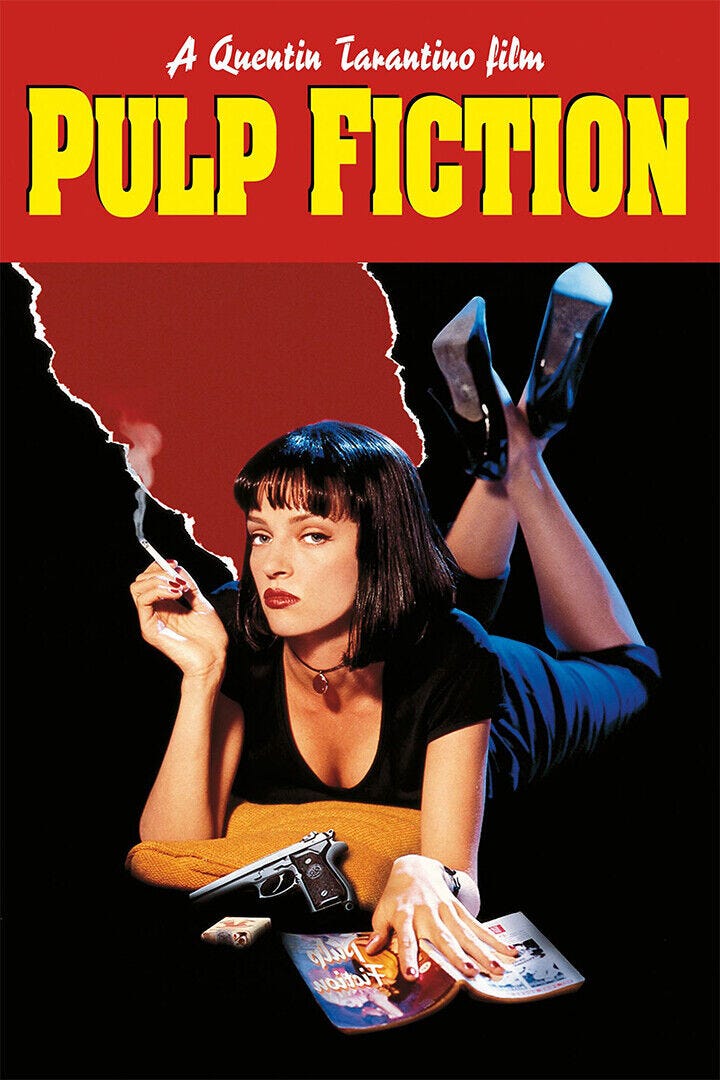
It is fair to say that ReidsonFilm have never been champions of Quentin Tarantino. In fact, we’ve previously coined the phrase ‘Tarantino Syndrome’ to describe that point at which a filmmaker becomes so celebrated that nobody around them – the editors, the producers, the studios – will ever push back and say, “this scene just doesn’t work”, or “Let’s end it here, we definitely don’t need another thirty minutes.” The result is often a self-indulgent, overlong film in which style overwhelms discipline.
Whether that diagnosis applies to Tarantino’s later career is a debate for another day. Here, we are putting aside our hang ups and preconceptions to revisit the cultural behemoth that is Pulp Fiction. One of the defining films of the 1990s – some would say one of the great films of all time – it has been imitated repeatedly, quoted incessantly, and has undoubtedly had a huge influence on both cinema and television. The question we want to ask is… does Pulp Fiction deserve its near-mythic status?
Pulp Fiction arrived on the back of Reservoir Dogs, a heist movie whose nonlinear narrative laid the groundwork for the pop-culture sensibility and graphic violence that would become Tarantino’s trademark. His second feature expands on that model as we follow three overlapping narratives revolving around a Los Angeles crime network, headed up by Marsellus Wallace (Ving Rhames). Hitmen Jules Winnfield (Samuel L. Jackson) and Vincent Vega (John Travolta) are sent to recover a mysterious briefcase, a task that turns out much messier than expected; washed up boxer Butch Coolidge (Bruce Willis) agrees to throw a fight for Wallace, but then double-crosses him; and Vega’s night out as an escort for Wallace’s wife, Mia (Uma Thurman), spirals out of control after a drug overdose.
The storylines – by Tarantino’s own admission – are derivative, borrowing liberally from film noir, and blaxploitation and B-movies. But rather than disguising these ‘influences’ he puts them centre stage where they become the raw material for Tarantino’s own brand of unapologetically garish, in-your-face filmmaking.
The film opens at the Hawthorne Grill, a renowned Googie-style diner where Pumpkin (Tim Roth) and Honey Bunny (Amanda Plummer) are finishing their breakfast. It turns out that they are a couple of stickup kids who usually rob liquor stores. A mundane conversation about ‘giving up the life’ evolves into an actual robbery of the diner. Leaping onto the table, guns drawn, the frame freezes as Dick Dale’s blistering rendition of ‘Misirlou’ crashes onto the soundtrack.
The set-up mirrors a scene in a diner from Arthur Penn’s Bonnie and Clyde, but Tarantino injects it with his own signature blend of a sardonic take on American diner culture, self-referential commentary on heist movies and, last but never least, explosive violence, as Honey Bunny exclaims:
Any of you fucking pricks move, and I’ll execute every last motherfucking one of you!
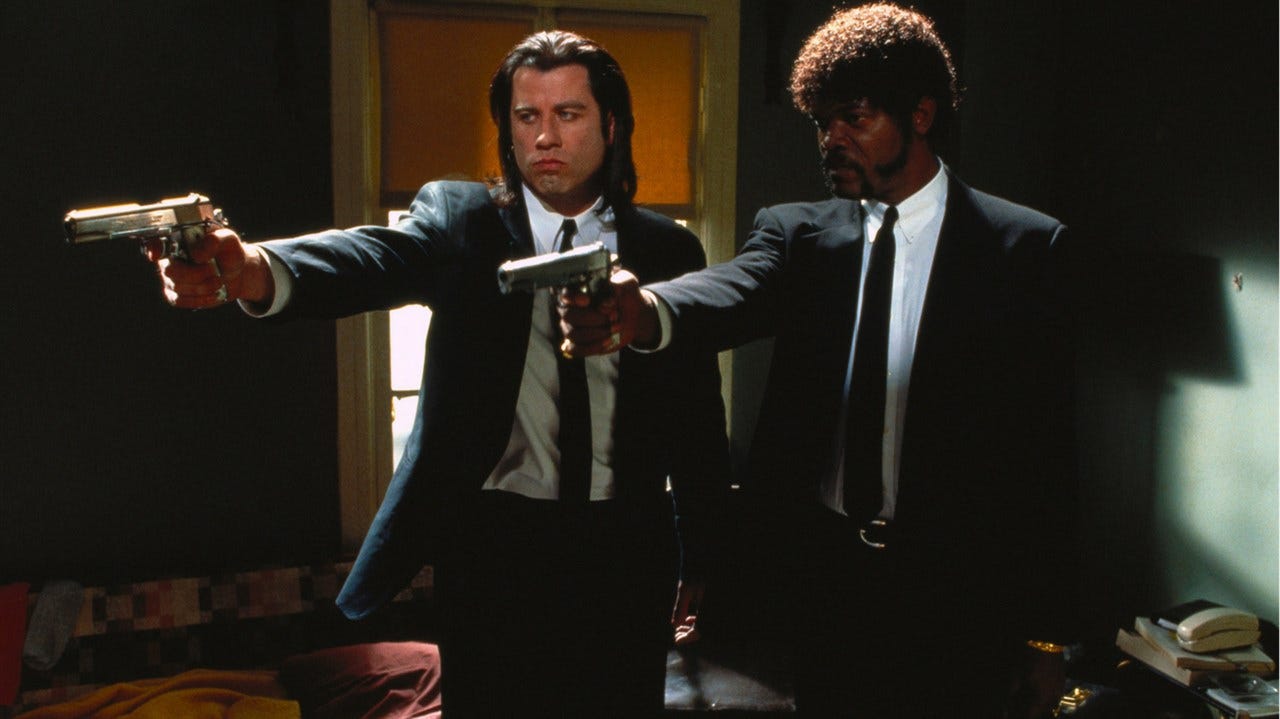
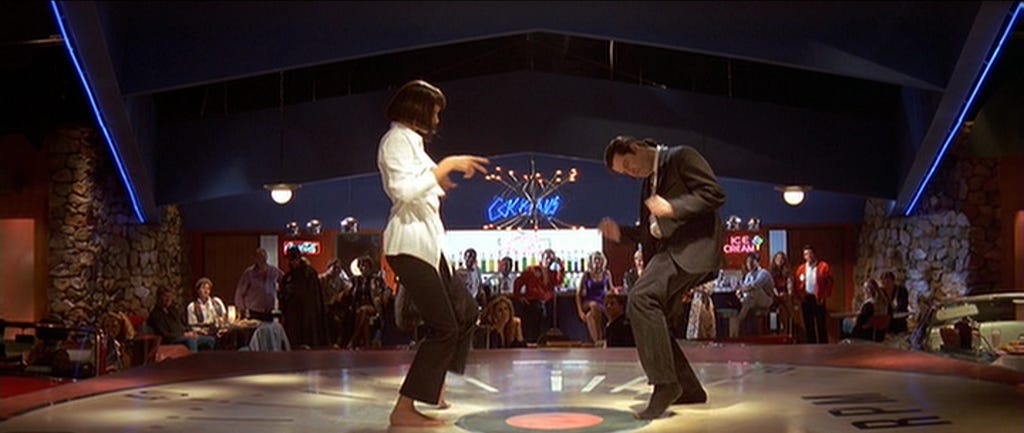
In 1994, this opening sequence was striking, felt shocking, even invigorating. And yet, Tarantino’s skill is not necessarily in invention, but in remixing existing themes and ideas with an extraordinary confidence. The famous dance at Jack Rabbit Slim’s, the two hitmen in black suits: these scenes are so memorable in part because they feel strangely familiar. In this sense, Quentin Tarantino is not just the self-confessed film geek, but cinema’s first meme lord, a walking archive regurgitating film, television, and music straight back at us. What we end up with are a host of quotable moments that spread through popular culture almost independently of the film itself.
So for many viewers, it is that dexterous weaving of memes, catchphrases, and homage that make Pulp Fiction a great film. For ReidsonFilm, however, it raises a more awkward question: where does all of this actually lead? For all the sound and fury Tarantino generates, could it be that frankly, it signifies… nothing? Take a moment to ask yourself what Pulp Fiction is really about: there are repeated gestures towards larger ideas – redemption, loyalty, morality – but Tarantino soon loses interest and flips back to a barrage of gunfire, or:
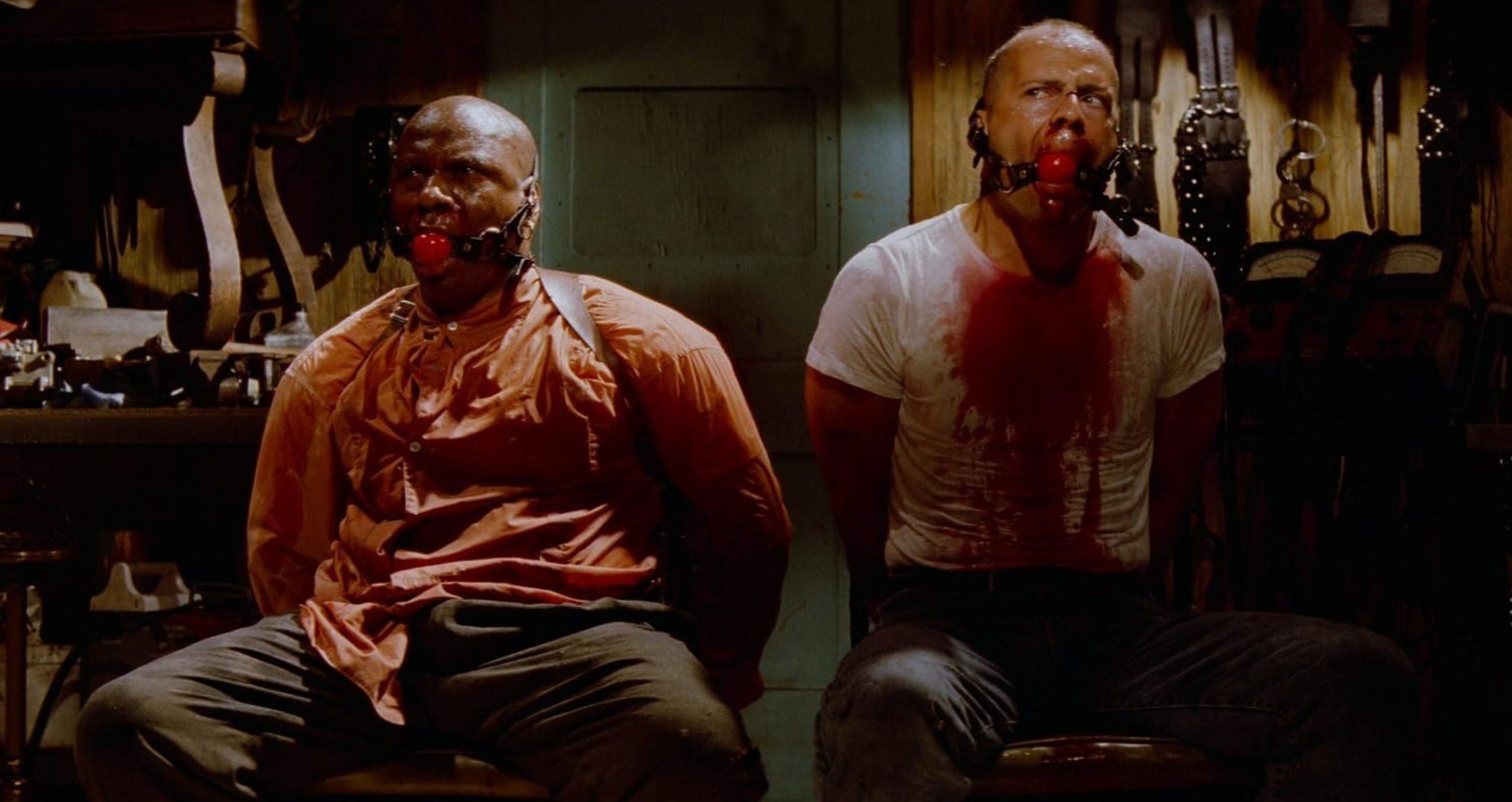
You hear me talkin’, hillbilly boy? I ain’t through with you by a damn sight. I’ma get medieval on your ass.
One of the most compelling plot devices in the film, the mysterious glowing briefcase, functions not as a symbol but as just another borrowed contrivance, a MacGuffin taken from Robert Aldrich’s Kiss Me Deadly (1955). It’s a mystery without meaning, and for Tarantino this may be the point. He isn’t aspiring to be Kubrick or Tarkovsky after all – this is pulp fiction. There is nothing inherently wrong with that. Yet once we pass the two-hour mark, the initial thrill has largely faded, the novelty has worn thin, and you are left listening to overlong conversations, adolescent wit, and a film in love with the sound of its own voice. And that voice is Tarantino’s. This reaches a low point when Tarantino himself appears on screen as Jimmie, liberally tossing around the n-word. White characters using racist language isn’t in itself objectionable, but the director’s fervent enthusiasm here comes across as less social observation and more personal fascination.
Spike Lee: Quentin is infatuated with that word. What does he want to be made – an honorary black man?
This is where Tarantino’s limitations as a filmmaker become clear. He is brilliant at capturing moments in film, a magpie director gathering ideas from everywhere, but ultimately Pulp Fiction is an exercise, albeit a watchable exercise, in style. Everyone can name their favourite scenes but far fewer could articulate what, if anything, it ultimately amounts to. And if you were to unfold the narrative loops and play the story in sequence, I think what you are left with is pretty thin gruel.
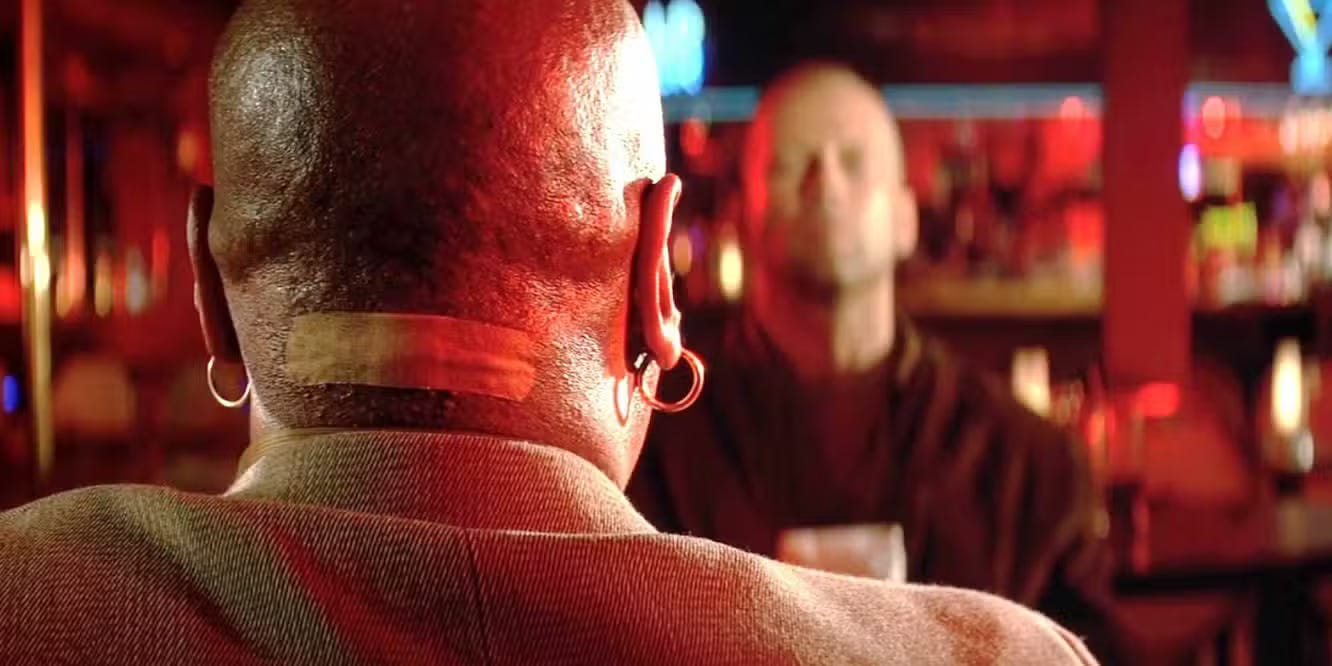
There is no doubting Pulp Fiction’s influence. Tarantino’s fingerprints are all over modern crime cinema, prestige television, music videos, and advertising. But does influence equate to greatness? Just like popcorn, Pulp Fiction can be really enjoyable while you’re consuming it. Too much though, and you may finish feeling queasy. And once it’s over, you’re left wondering how much substance there really was beneath that sweet and salty flavour.
Dialogue is, on the whole pretty good, music of course really good, a few very good scenes but then also quite a few bad ones, especially the scenes with Tarantino acting and delivering lines he has written for himself – like Wizard of Oz stepping out from behind the curtain – N
I feel like we’re throwing the baby out with the bathwater here - just as a reminder, Tarantino is in the film (2h29 minutes) for less than 10 minutes in total – C
Reids’ Results (out of 100)
C - 81
T - 78
N - 77
S - 63
Thank you for reading Reids on Film. If you enjoyed our review please share with a friend and do leave a comment.
Coming next… Johnny Guitar(1954)
No posts
Comments
Nothing yet. Say the first thing.
Sign in to join the conversation.