
Nicholas Ray
1954, United States
Just a reminder… if you're at a loss for a film to watch, do give our personalised film recommendation engine a try:
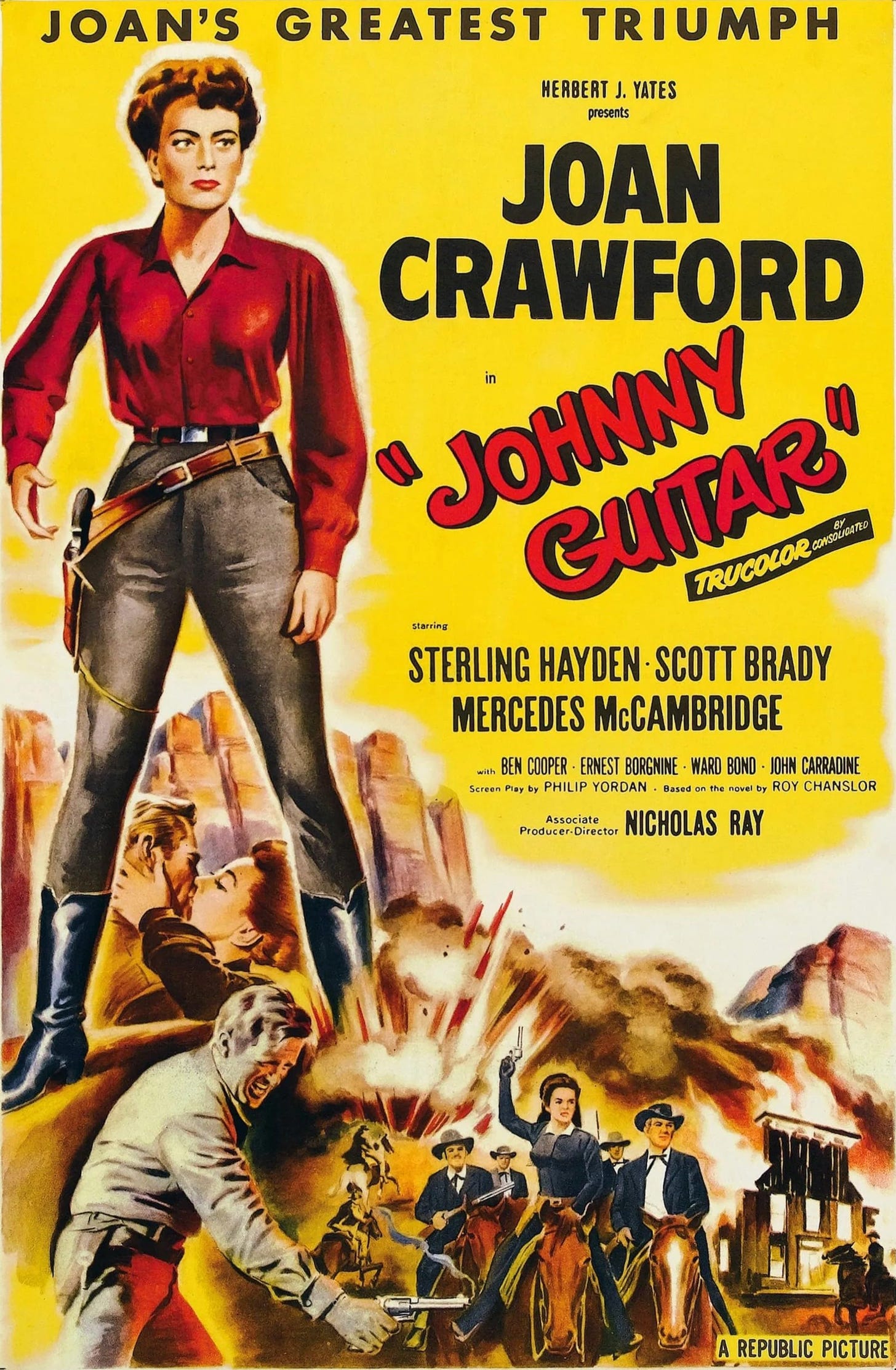
When is a Western not a Western? I would say when it’s Nicholas Ray’s Gothic fever-dream, Johnny Guitar. The classical Western really came of age in 1953 with the arrival of Shane. Alan Ladd’s mysterious gunfighter rides into a frontier town, hoping to escape his past, and inevitably gets caught up in the battle between ruthless cattle barons and farming homesteaders. The Western as a genre came laden with a panoply of tropes: the lone drifter, the lawless frontier, black-hatted villains, the gunfight at high noon. But it was these dependable conventions that made the films such a successful and enduring staple of Hollywood’s Golden Age – plus of course they were pretty cheap to produce.
Just one year after Shane, director Nicholas Ray and screenwriter Phillip Yordan made a bonfire of this collection of clichés, resulting in one of the most subversive films to escape from a Hollywood studio.
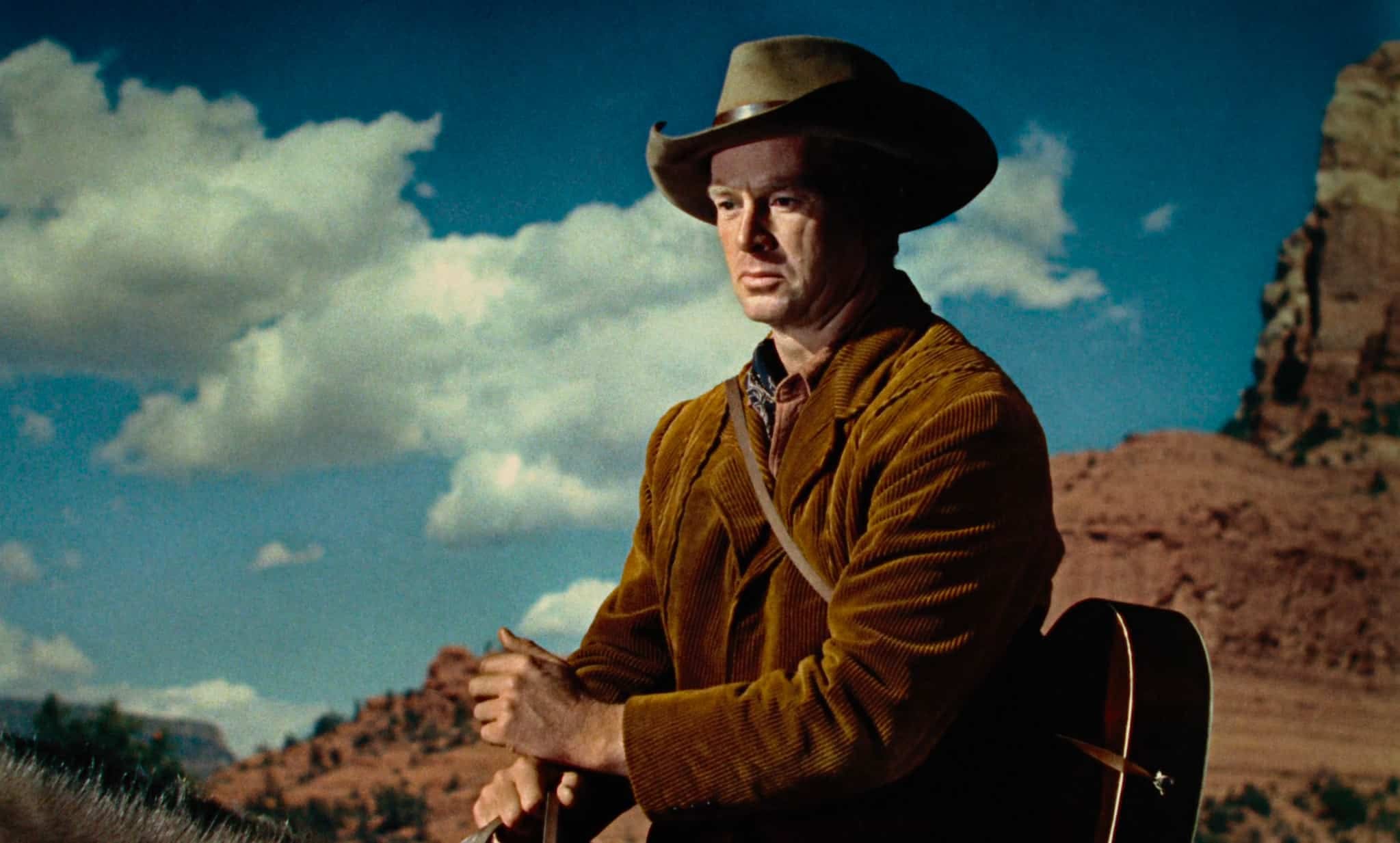
Shot amidst the iconic red sandstone buttes of Monument Valley – where else? – our eponymous lead, Johnny ‘Guitar’ (Sterling Hayden – last seen by ReidsonFilm in The Killing), drifts into town after witnessing a stagecoach robbery. So far, so familiar, but Johnny hasn’t really drifted into town at all. He has been sent for: to play guitar at Vienna’s – an isolated saloon way outside the town limits. Carrying a guitar rather than a gun conceals the fact that Johnny is in fact, Johnny Logan, reputedly the fastest draw out of Albuquerque.
And yet, that is just the first of the genre-bending devices employed in Johnny Guitar because the star of this film is not the title character, but the self-possessed owner of the saloon: Vienna – played with a commanding authority by Joan Crawford.
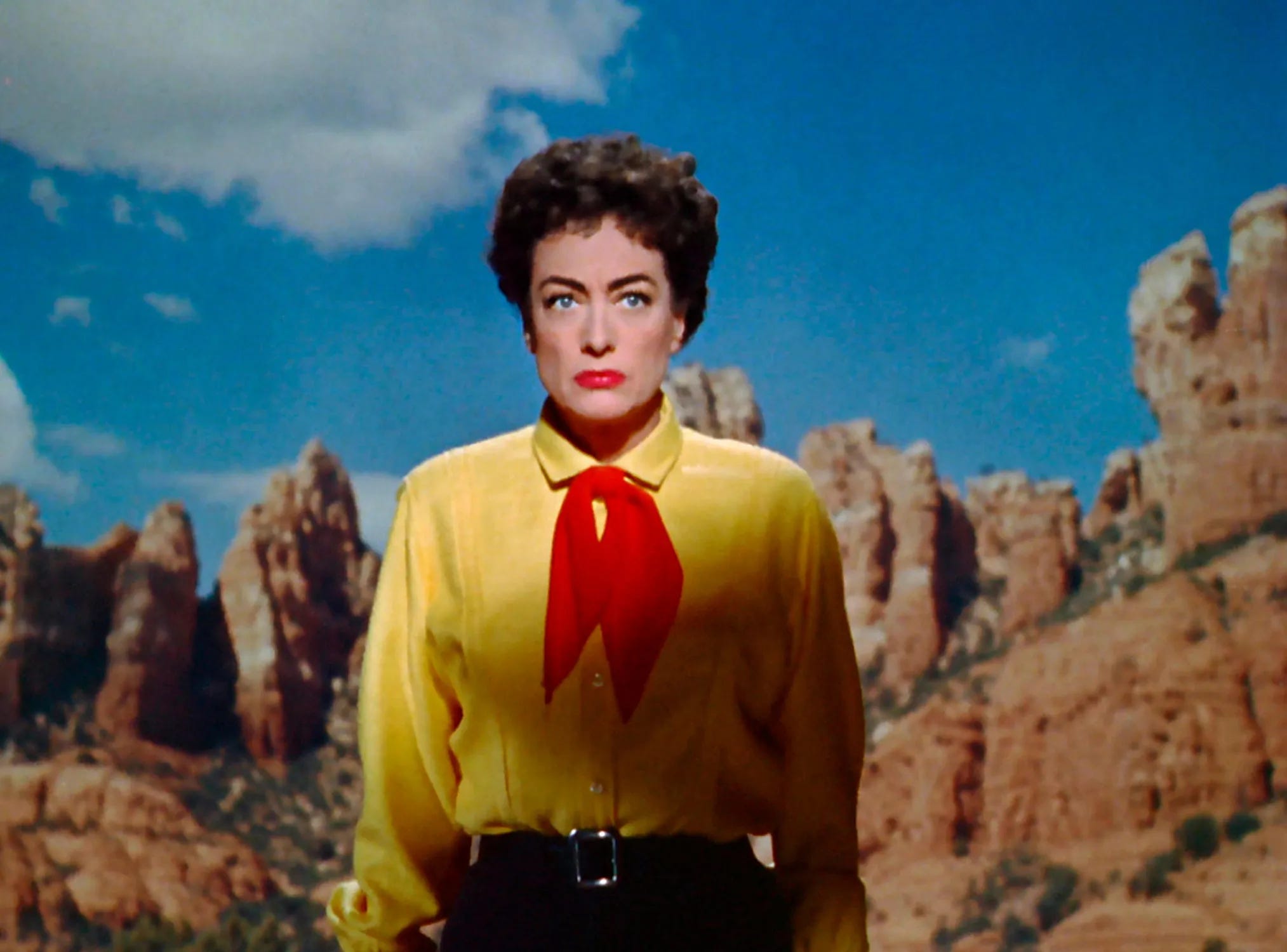
Johnny Guitar is above all a tale of two women. Vienna has built her saloon from scratch. It comes with a chandelier, a roulette wheel, and a couple of smartly dressed croupiers. And the saloon stands outside of town because as the routine dynamite explosions from the surrounding hills tell us, the railroad is coming through. Vienna sees the future and knows there is a fortune to be made. This is a future not welcomed by everybody. The railroad means commerce, new settlers, and change: a threat to the established order and the townsfolk are opposed to it. They are led by the owner of the town bank, Emma Small – a frighteningly intense Mercedes McCambridge. Not only do they want to stop the train, they are determined to drive Vienna out of town – or worse.
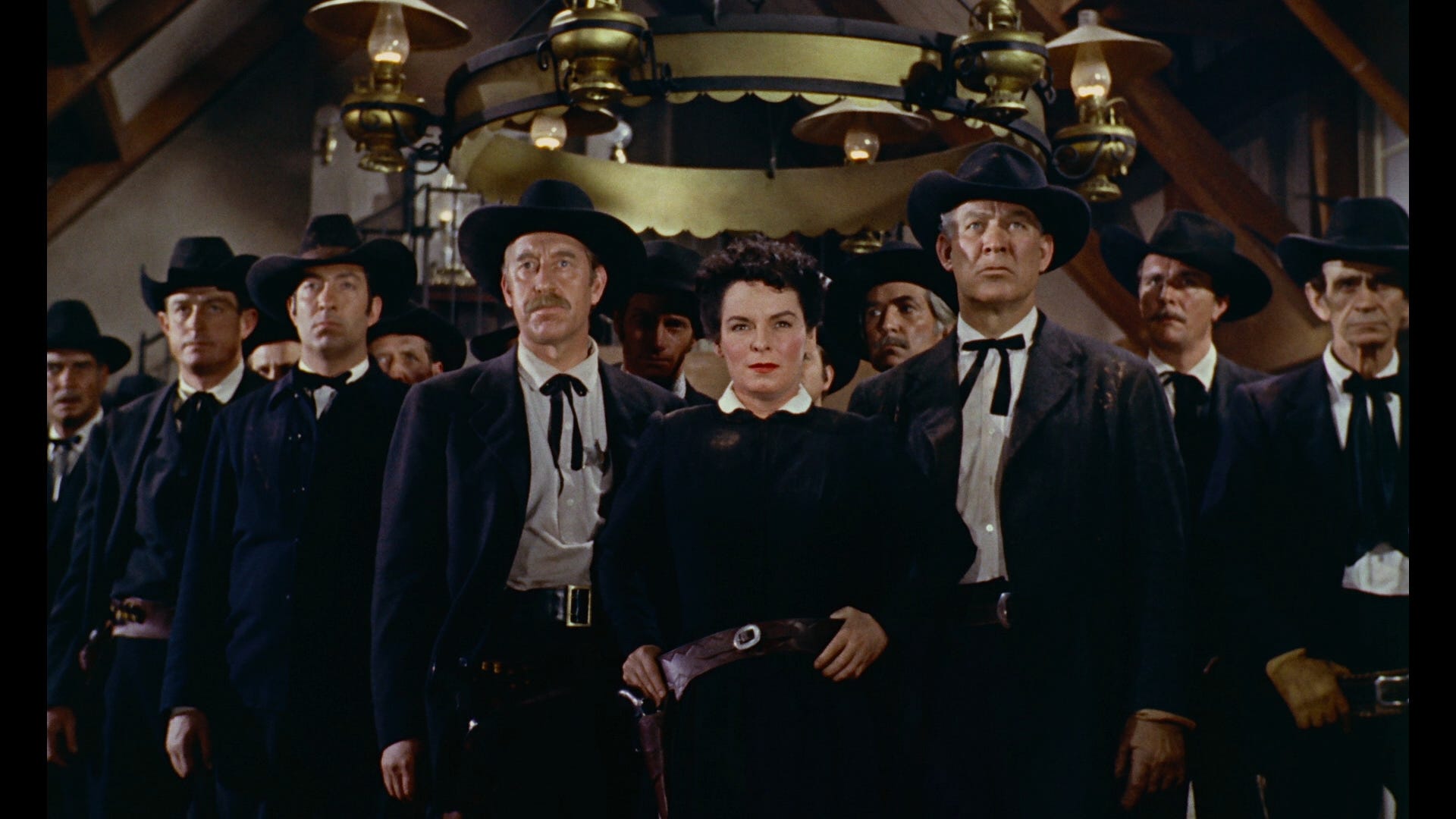
But this is a fight between Vienna and Emma, with the men – including Johnny Guitar – relegated to a supporting cast. That cast includes stalwarts of the Wild West such as Ward Bond (as cattle boss McIvers) and John Carradine playing Vienna’s factotum. This being a Western we also have a gang of bad hombres led by the Dancin’ Kid (Scott Brady). The thing is they really don’t seem that bad at all: Corey, Turkey, and Lonergan (Ernest Borgnine) spend more time ribbing each other than robbing anybody, and they even have a secret hideout behind a waterfall.
The great Ernest Borgnine, friend of ReidsonFilm, here playing the same ornery character we saw in The Black Hole and The Poseidon Adventure.
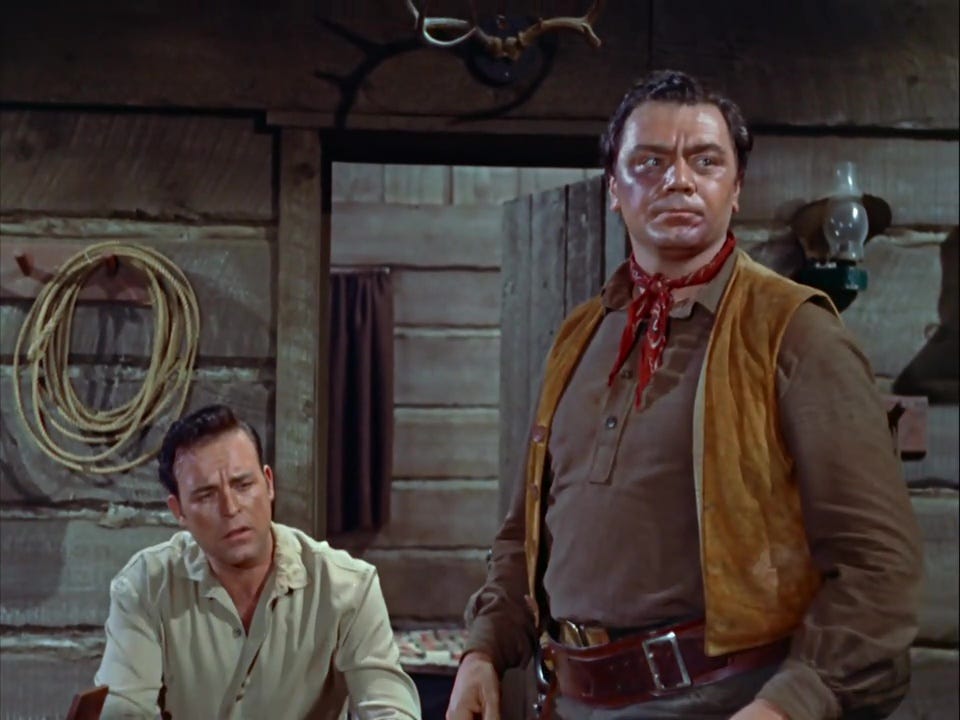
The true dynamic in Johnny Guitar is not one of power but of desire. Johnny longs for Vienna, Vienna still loves Johnny – the man from her past. The Dancin’ Kid wants Vienna, but Emma wants the Dancin’ Kid… or does she? Vienna embodies everything Emma is against. She is independent, self-assured, she welcomes outsiders and embraces change. Even her name smacks of the cosmopolitan. Vienna is the future:
I intend to be buried here in the twentieth century
Could it be that Emma’s obsessive loathing for Vienna is really a twisted desire – a destructive attraction? When Vienna observes:
He makes her feel like a woman, and that frightens her.
we have to wonder if the Dancin’ Kid is really the object here.
The Dancin’ “Kid” looks like he’s pushing 50 – N
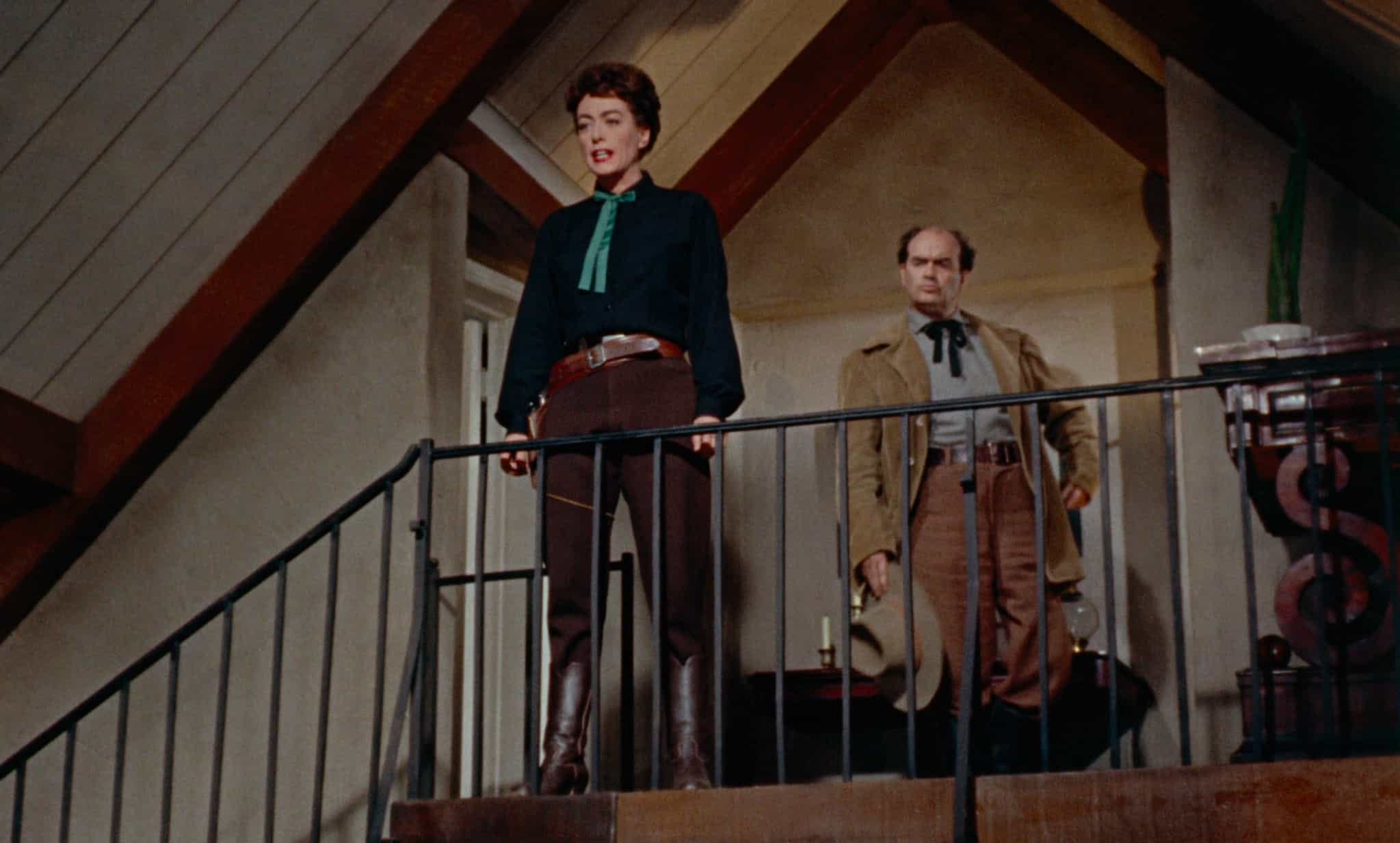
When we first see Vienna, she’s standing confidently at the top of a staircase – wearing the trousers both literally and figuratively. Looking down on her employees, one of them pointedly remarks:
Never seen a woman who acts more like a man. She looks like one, thinks like one, and sometimes makes me feel like I’m not.
Both women exude power, both occupy traditional male roles, and both carry a pistol on their thigh. When it comes to raising a posse to hunt down Vienna and the Dancin’ Kid, who takes the lead but Emma, wearing a black veil and the mourning garb from her brother’s funeral. This is a surreal sight, but it is the stylised design and performances that make Johnny Guitar a singular film. Vienna’s saloon consists of a wooden façade behind which lies an interior hewn out of solid rock. The film was shot in Trucolor giving a saturated palette of bold colours that cuts against the Westerns’ usual naturalistic form. This is heightened – no, baroque – expressionism.
As the film approaches its climax, while Emma dresses entirely in black, Vienna appears in a brilliant white ball gown, or is it a wedding dress? And what is she doing? In the saloon where no one has been seen playing roulette, she plays a grand piano. That Ray rejects realism in favour of artifice is one of the film’s artistic strengths. The actors declaim their lines as though they are performing in a Greek tragedy. However, this is a Western not a Greek tragedy, so we need a gunfight to bring the film to a close. Rest assured that Johnny Guitar and the Dancin’ Kid remain on the sidelines for the final confrontation.
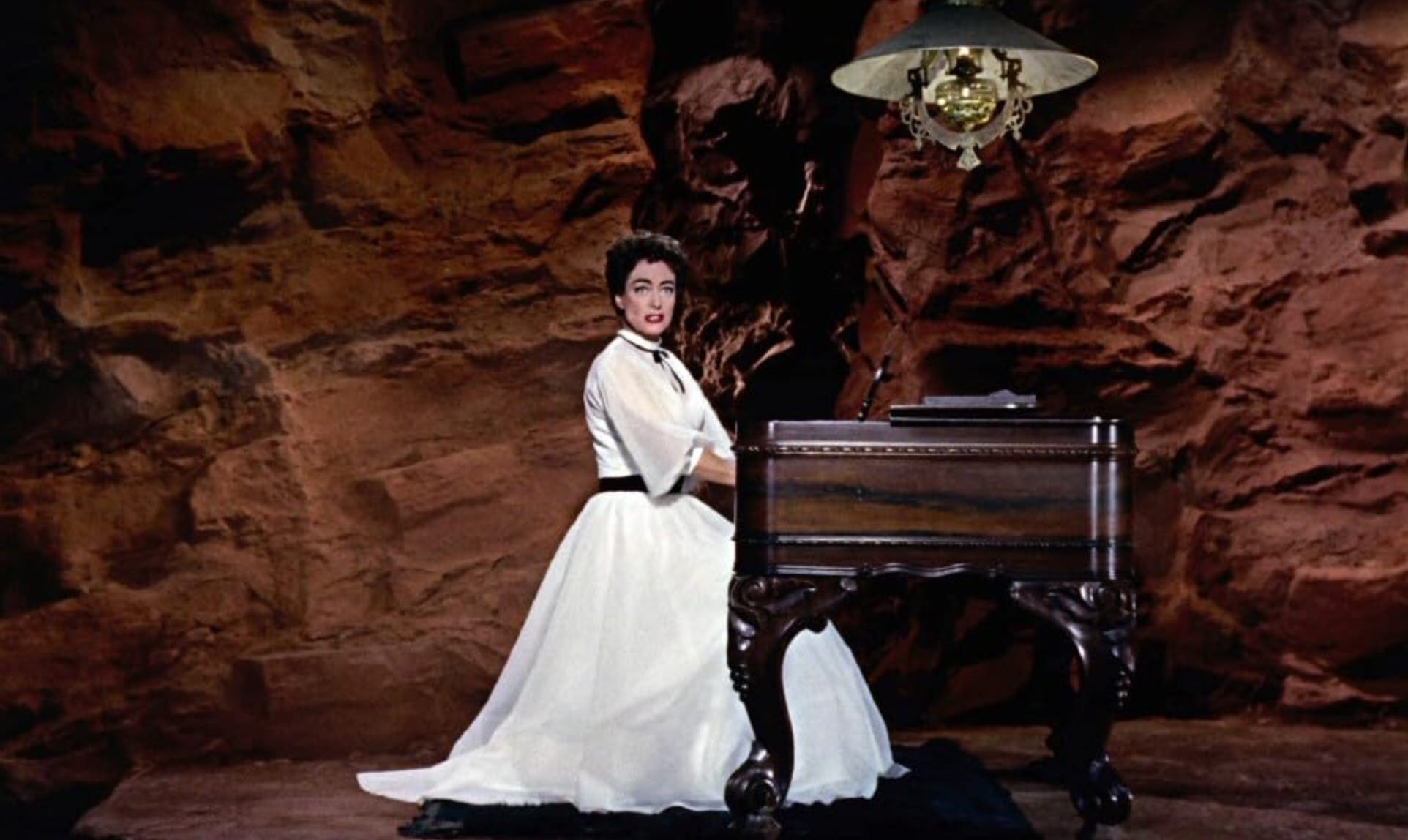
A ‘horse opera’ was a pejorative label often given to a formulaic Western, but with Johnny Guitar’s theatricality, the expressionist lighting, the heightened performances, what we have is less Western and more opera. An opera without an aria perhaps but who needs an aria when we have Peggy Lee’s title song – a haunting expression of longing – playing as the credits roll.
When a fire is burnt out, all you have left is ashes – Vienna
I thought it was decent but a bit goofy – T
Reids’ Results (out of 100)
C - 72
T - 68
N - 75
S - 79
Thank you for reading Reids on Film. If you enjoyed our review please share with a friend and do leave a comment.
Coming next… Punch-Drunk Love(2002)
No posts
Comments
Nothing yet. Say the first thing.
Sign in to join the conversation.