
The book, friends, is DONE. At least, I have flung myself inelegantly over the biggest hurdle. I turned in the entire manuscript of Refugia Church last week, and the editor did not hate it. A triumph! Now come revisions (not too bad—whew!) and copyediting and all that. I’ll share the cover with you when that’s ready. Please enjoy this brief reprieve before I start nagging you about pre-orders.
Finishing a first draft, no matter how faith-related the book’s topic, usually involves, in the last stages, referring to said book with mild curse words. This is true for me anyway. But I keep at it, because apparently people find this whole refugia thing helpful? For instance, I was astonished to receive a tip that, earlier this month, United Methodist Bishop Dan Schwerin focused his recent address at a regional conference on the theme of refugia. Books have a way of ending up in places you never imagined, and that’s really cool.
This past week, spouse Ron and I did a fun webinar for A Rocha Canada, and I also appeared as a guest for Third Act’s Hope and Joy series. I’ll share those links with you when they’re ready.
We also got to spend some time with dear friends visiting the Indiana Dunes National Park. I practiced a bit with my new/used camera, a hand-me-down from my daughter (hand-me-up??). I have no idea what I’m doing. But this photo of the Michigan City lighthouse turned out all right!
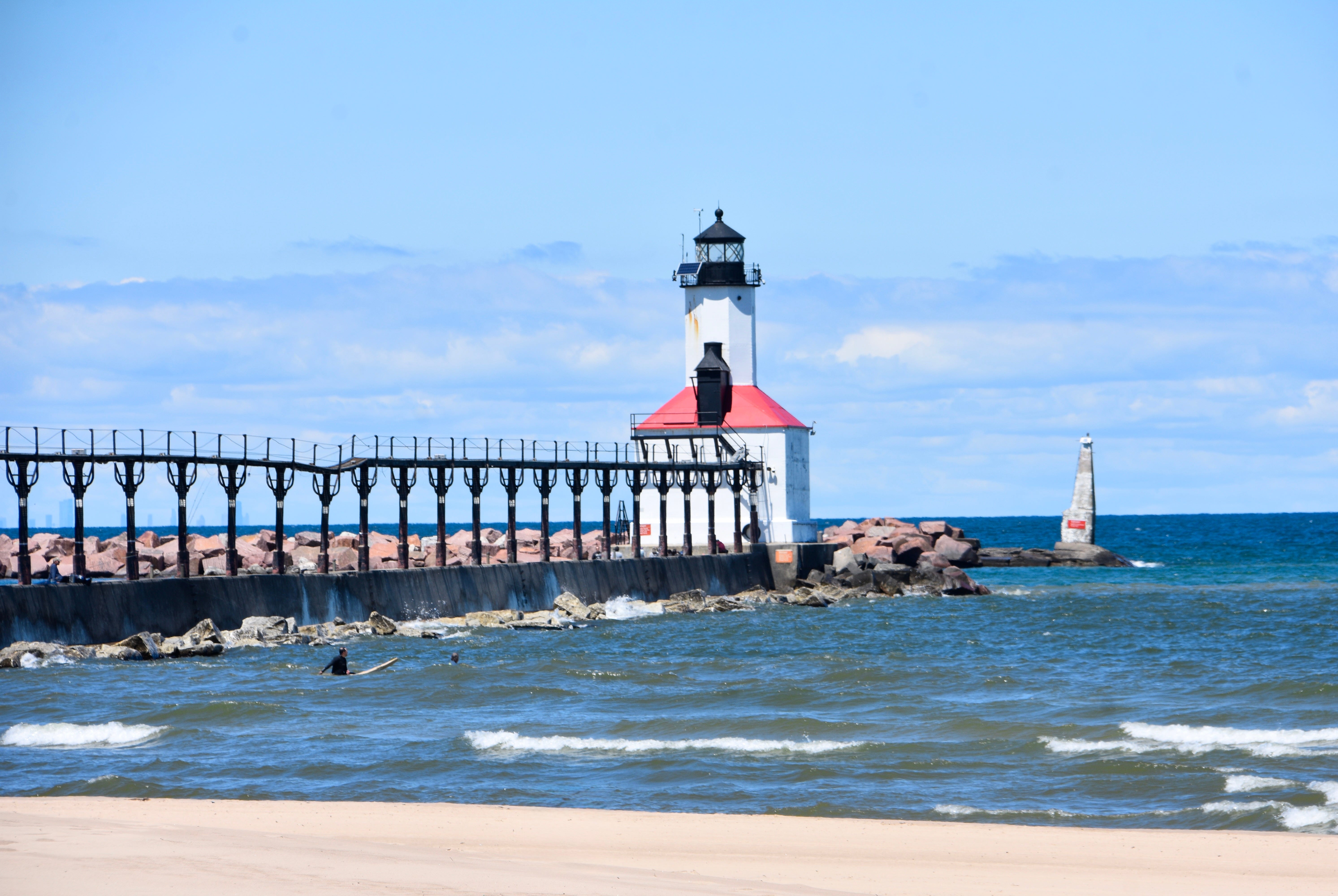
Taken with a Nikon D3400 with some sort of fancy lens. Boy, that camera is heavy to tote around!
To offer us all another reality-check on climate change, Europe has been sweltering under another heat dome. Since you’ve probably already read about this in the news, I’m just going to say: wow. Brutal. Hang in there, European friends. Here’s a CNN weather map from June 24 (in Fahrenheit).
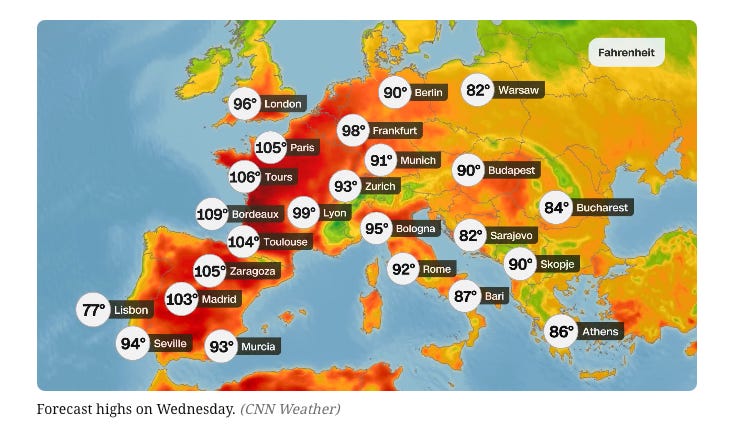
While acknowledging this and so many other instances of real suffering due to climate impacts, I’m going to focus on good news today. There’s so much! I’ll select just a few stories.
First, a follow-up on the threatened removal of ocean monitoring systems that I covered last time: threat averted! That was a quick and satisfying reversal! Maxine Joselow writes for the New York Times:
The Senate passed a measure Wednesday [June 17] that would block the government from dismantling the system, with lawmakers in both parties warning that the action would be illegal and would threaten the safety of coastal communities. The Trump administration had also tried to cut the program’s funds the last two years, but Congress restored the money both times.
The senate! By unanimous consent, even! How do you like that?
Now for another beautiful act of resistance against this regime’s attempts to dismantle science. The folks at Carbon Brief have just launched Project Cosmos, a massive climate science database. Fix the News summarizes:
Carbon Brief has launched Project Cosmos, the world’s largest database of climate change research, covering 1.8 million publications and more than 40 million citation links. Built from every major IPCC report since 1990, plus 22 climate-focused journals, the database ranks the most influential climate papers, authors, and institutions, and will help researchers track how the field has evolved, where knowledge is concentrated and where gaps remain.

That image is the map of this database! Click on the image to go to the Project Cosmos website—it’s super cool. The website explains the image:
This is the vast “cosmos” of academic literature and evidence that underpins humanity’s knowledge of climate change.
Every “star” – all 1.8m of them – represents one of the studies inside Carbon Brief’s Cosmos database.
The coloured “nebulae” and “galaxies” within this cosmos illustrate where clusters of studies share similar citations and, hence, areas of common academic focus.
Now for some clean energy wins.
In May, solar overtook coal in the US for the first time. That is, solar power provided more energy than coal power that month. Such a pretty graph. You can read the whole Ember report here. Or an article in Grist here.
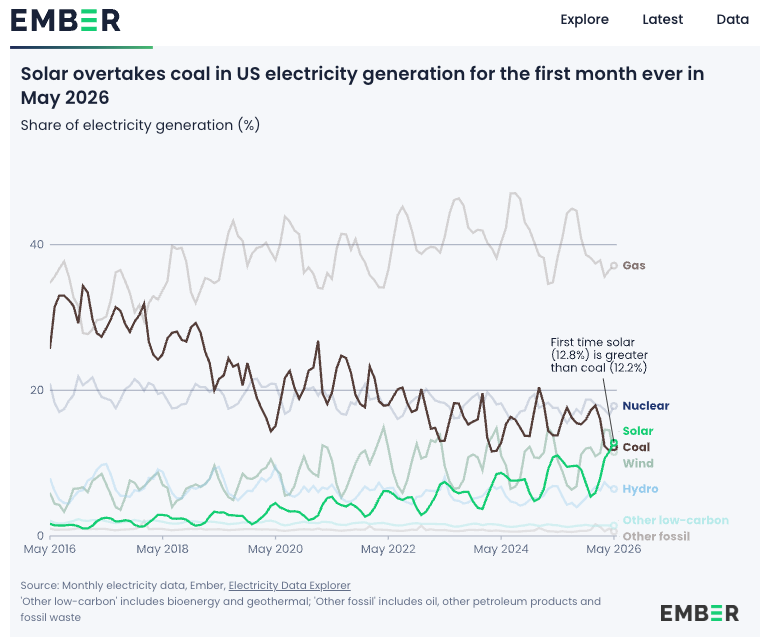
That green line is so pretty. And look at the icky black line going dooowwwwn.
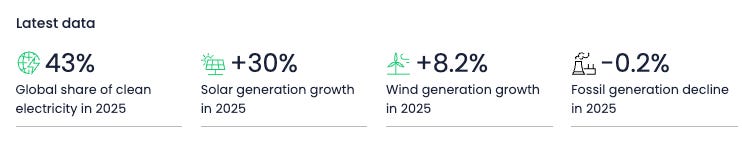
Meanwhile, just a little snapshot from the Ember dashboard to keep our clean energy enthusiasm buoyed up.
Australia’s free electricity plan is about to go into effect. You want affordability? There you go. Free. Basically, Australia is producing so much solar power now, they have decided to give people in some areas free power for part of the day. Last fall, Jameson Dow of Electrek explained the reasoning behind the plan, which has to do with grid load and grid demand:
The program would require electricity retailers to provide free electricity to everyone for at least three hours a day, in recognition of the incredibly low wholesale cost of electricity during daytime due to extensive solar power penetration.
There are some tricky things to iron out yet about fairness, but this is one early experiment in responding to clean energy abundance. We could have nice things, people! We could!
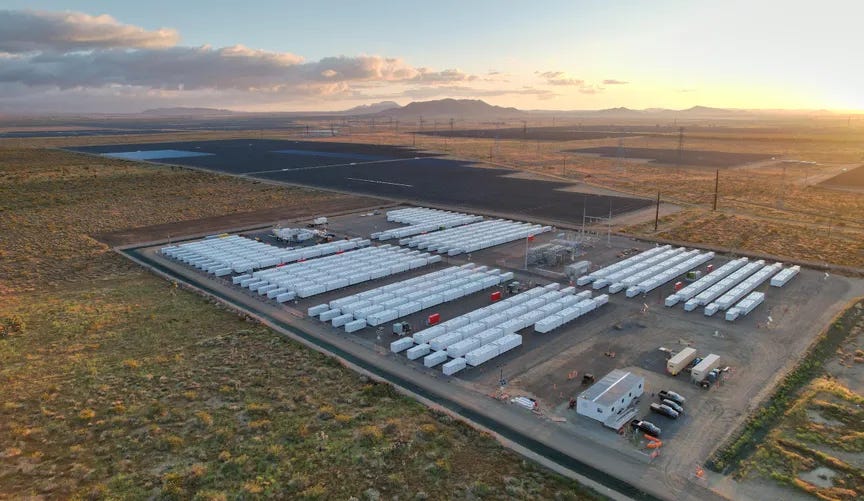
“The Tumbleweed project’s surroundings resemble Texas: The arid, scrubby terrain that once hosted oil extraction has become a hot spot for wind, solar, and batteries.” Image credit: Rev Renewables via Canary Media. Caption from Canary Media.
To have nice things, we are going to need: batteries on the grid. They’re coming everywhere, and California is leading the way in the US with the Tumbleweed project. Julian Spector reports for Canary Media:
On June 1, the Tumbleweed project in California’s Kern County became the first major battery installation in the U.S. that can discharge power for up to eight hours at a time — twice as long as typical energy-storage facilities.
The idea is to soak up energy created by solar during the day and discharge it as needed after sundown. Long-duration batteries get California closer to 24/7 clean energy.
Next: legal wins. To help you feel brave and steely-eyed and determined, read through this commentary piece by Justin Gerdes in Quitting Carbon. Here’s the headline and tagline:
Clean energy advocates are winning the legal fight against the Trump administration. A string of legal setbacks has the Trump administration on the back foot. Clean energy companies and Democratic state attorneys general should continue to press their advantage.
Gerdes’s advice: keep on the offense!
There’s lots more. But I’ll end with this juicy bit. Thanks, Michael Bloomberg. Cash always helps:
Michael Bloomberg, the former New York City mayor and founder of Bloomberg L.P., has announced $590 million in new environmental commitments in recent days.
The New York Times’s David Gelles reports (free link) on how the Bloomberg Philanthropies money will be spent:
Some $285 million will go to efforts accelerating the transition away from fossil fuels and toward renewable energy at a moment when the Iran conflict is rattling energy markets.
Bloomberg Philanthropies said it would do this by supporting renewable energy industry associations, providing data and analysis on the industry and advising regulators and grid operators.
That associations bit is important: clean energy industry associations need resources to fight the fossil fuel industry associations, which are awash with cash and bristling with nefarious legal and public relations schemes to thwart clean energy.
Finally, what’s the latest on balcony solar in your state? You can find out with this super nifty legislation tracker.

A wee screen-shot sample from the tracker. Come on, Michigan! Keep at it!
Action item for today: remind your state reps that balcony (or plug-in) solar laws are sweeping the nation, and make sure they’re on board!
Oh! And if you wish you could invest in fossil-free investment funds, but don’t know where to find them, here you go.
Two deep dives today. First: corals. I had no fewer than six separate stories on corals hit my in-box these past two weeks. What was up? Some landmark study? Well, yes—and more.
This study is actually a great refugia sighting, but I’ll put it in the Deeper Dive category because: ocean. The study is the result of research efforts to identify—you guessed it—coral refugia. That is, places where coral reefs are surviving, and likely to continue surviving, despite extremely warm ocean temperatures that tend to bleach coral reefs. The study used AI to crunch a whole lot of data and identify “166,364 km² of climate-resilient reefs spanning 72 countries and 100 territories and jurisdictions.”
As Katharine Houreld reported for the New York Times (free link):
The newly identified refugia are not evenly spread around the world. More than half are in five countries: the Bahamas, Cuba, Australia, Indonesia and the Philippines. Others cluster around small islands in places like Vanuatu, American Samoa, Christmas Island and the Chagos Archipelago.
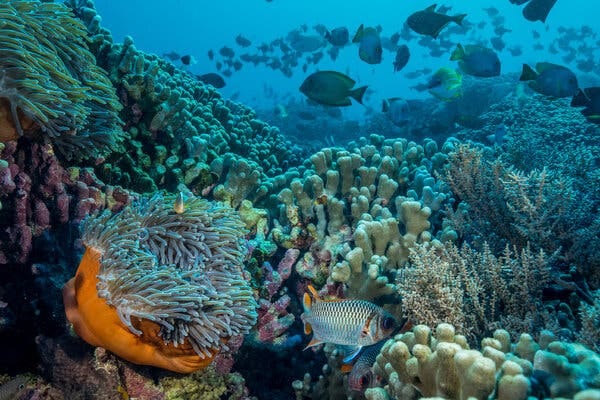
Coral near Pemba Island, off the Tanzanian coast. Image credit: Michael Markovina via New York Times.
Why do we care about coral reefs? Because coral ecosystems support about 25% of ocean species, and a lot of people depend on them, too, to supply fish and protect coastlines. Unfortunately, extremely warm ocean temperatures are killing off these crucial ocean ecosystems:
Already, the world has lost more than half of its coral reefs to the combined pressures of climate change and other human activity. Some scientists warn that without significant intervention, more than 90 percent of tropical reefs could disappear in the next 25 years.
That last bit is from an article by Teresa Tomassoni for Inside Climate News, which leads me to two other quick coral stories. That article describes a group of researchers looking for “super reefs,” which not only survive hotter water temperatures but could also reseed other reefs. Which is exactly what’s happening in Florida’s Dry Tortugas National Park, (according to more reporting by Tomassoni) where scientists are “outplanting” lab-raised baby coral, including a new cross-breed of Florida and Honduran elkhorn corals called “Flondurans.”
All of this science is supporting decision-making about where to focus research spending, management efforts, and policy initiatives for ocean protections.
Now that we’re all caught up on coral reef news, let’s turn to climate communications. It is so hard to talk to people about climate action, isn’t it? Especially when these neighbors, family members, co-workers, friends, co-religionists or whatever are skeptical or grumpy. Well, there are strategies that work!
This is my if-you-click-on-nothing-else story for the day. The people at Potential Energy Coalition do amazingly helpful research on which messages move people to take (and support) action on climate. You can click through and download the whole report, but I’ll give you a taste here with an excerpt.

Three shifts in frame that can strengthen climate communications
1. Make the consequences of climate change human and material: for the people I love, for my health, for my wallet. Across all six countries, three messages about the everyday impacts of pollution and an overheating planet are consistently the most effective at driving support.
2. Make the cause concrete: “pollution” reminds people climate change is a problem we can solve. Returning to the root cause in plain language emphasizes this is a real, physical problem with a practical solution: reducing the pollution that’s warming the planet.
3. Make the cure exciting: unlimited, local sources of reliable power. Instead of focusing solely on the things we’re banning and blocking, spend time on what we’re building toward: MORE energy to affordably, securely meet rising demand.
If you want to think of this in terms of key motivations, here you go:
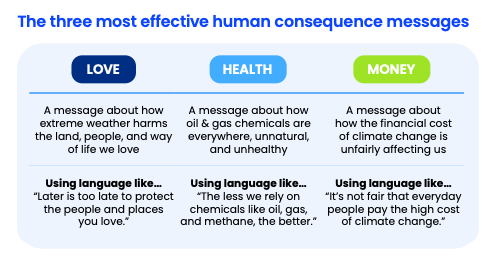
Regardless of whether we think these are the messages and motivations that should move people, these are the ones that apparently do. Check out the report for all the details and the methodology for the research.
Two sightings today. First, mangroves are doing better! Mangroves are marvelous coastal anchors, and thanks to stronger protections and public awareness, declining mangrove forests are bouncing back. For the BBC, Matt McGrath and Esme Stallard write that “the key factor … is the remarkable capacity of these forests to regenerate naturally once humans stop chopping them down.”
Mangroves like brackish water and need to have “their feet wet.” As a result,
Mangroves are one of the world’s unsung environmental heroes.
Not only do they store up to five times more carbon dioxide than land-based forests, but their tangled roots can also slow down waves and protect coastal communities from storm surges and tsunamis.
These same roots provide a perfect nursery for many species of fish and other marine life - protecting them from predators and providing ample food. [some bold original]
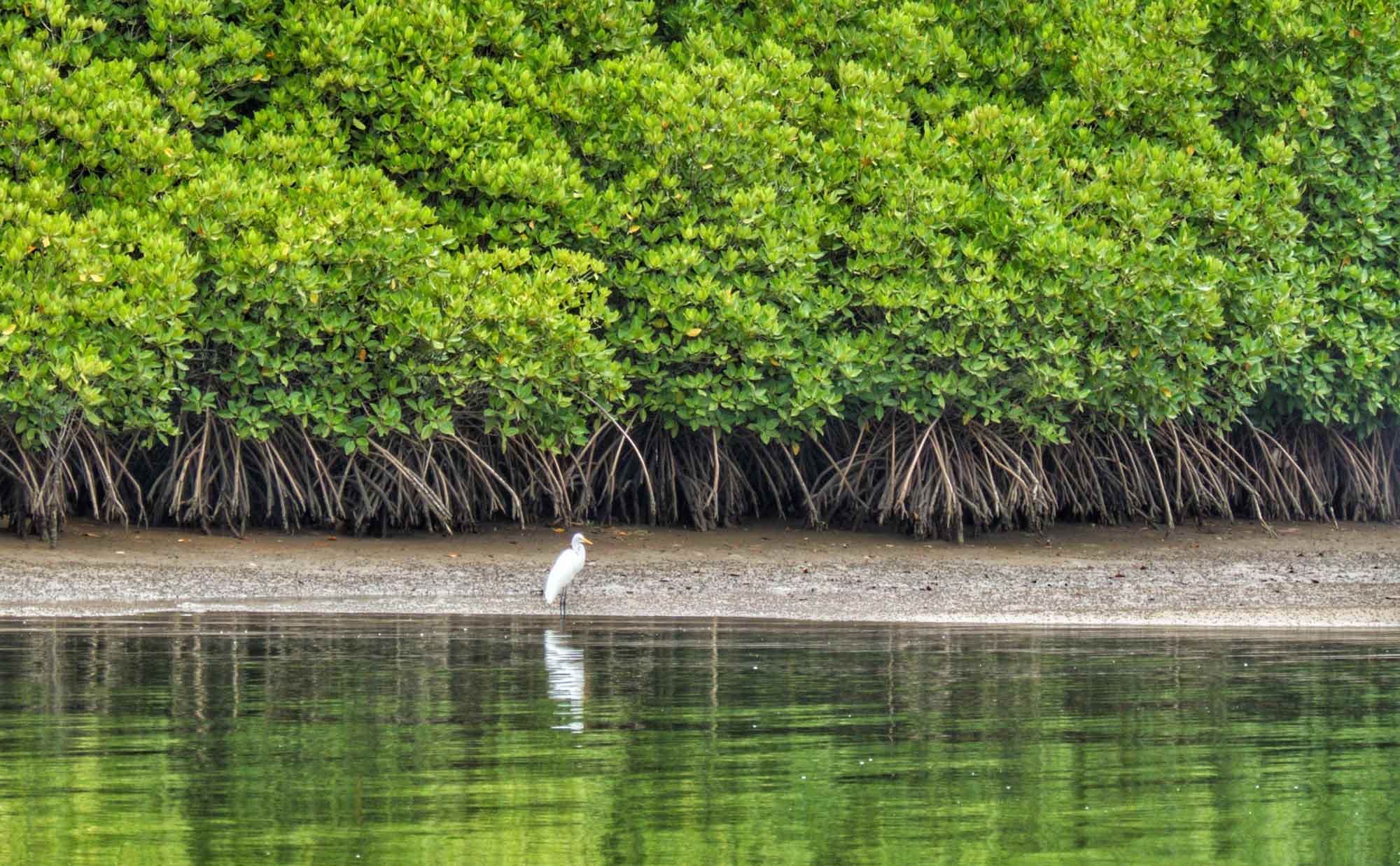
Image credit: sustainabletravel.org
Now for a refugia-palooza. Thanks to Tim Gossett, Associate Director of the Iowa Faith & Climate Network, for sharing with me this nifty blog written by Deborah Douglas. Deborah writes stories on faith communities across Iowa who are Doing The Work. She’s mapping a refugia network!
The five stories available so far feature Presbyterian, Catholic, UMC, and Lutheran churches plus a campus ministry engaged in a range of projects: slapping up solar panels, planting veg and pollinator gardens, offering Bible studies on creation care, planning creation-focused worship events, and more. I’m impressed with the two sets of retired couples who founded their churches’ green teams. Go, elders!

The veg garden at Bread of Life Presbyterian in Dubuque, where they grow veg for a local food pantry. Nothing builds community like getting muddy in a garden together! Image credit: iowafaithandclimate.org.
Some Michigan loveliness for you to close out today’s newsletter. Michigan Public Radio did a fun podcast episode on the perennial mystery of Michigan: Where does “Up North” begin? No really, we’re serious about this question in Michigan. People have opinions.
Well, I’m happy to report that my own answer to this question, based on intuition gained from many trips up north over my lifetime, turns out to have scientific evidence behind it. So there! It has to do with bioregions, but I won’t spoil the rest for you; the podcast episode explains. OK, just one hint…
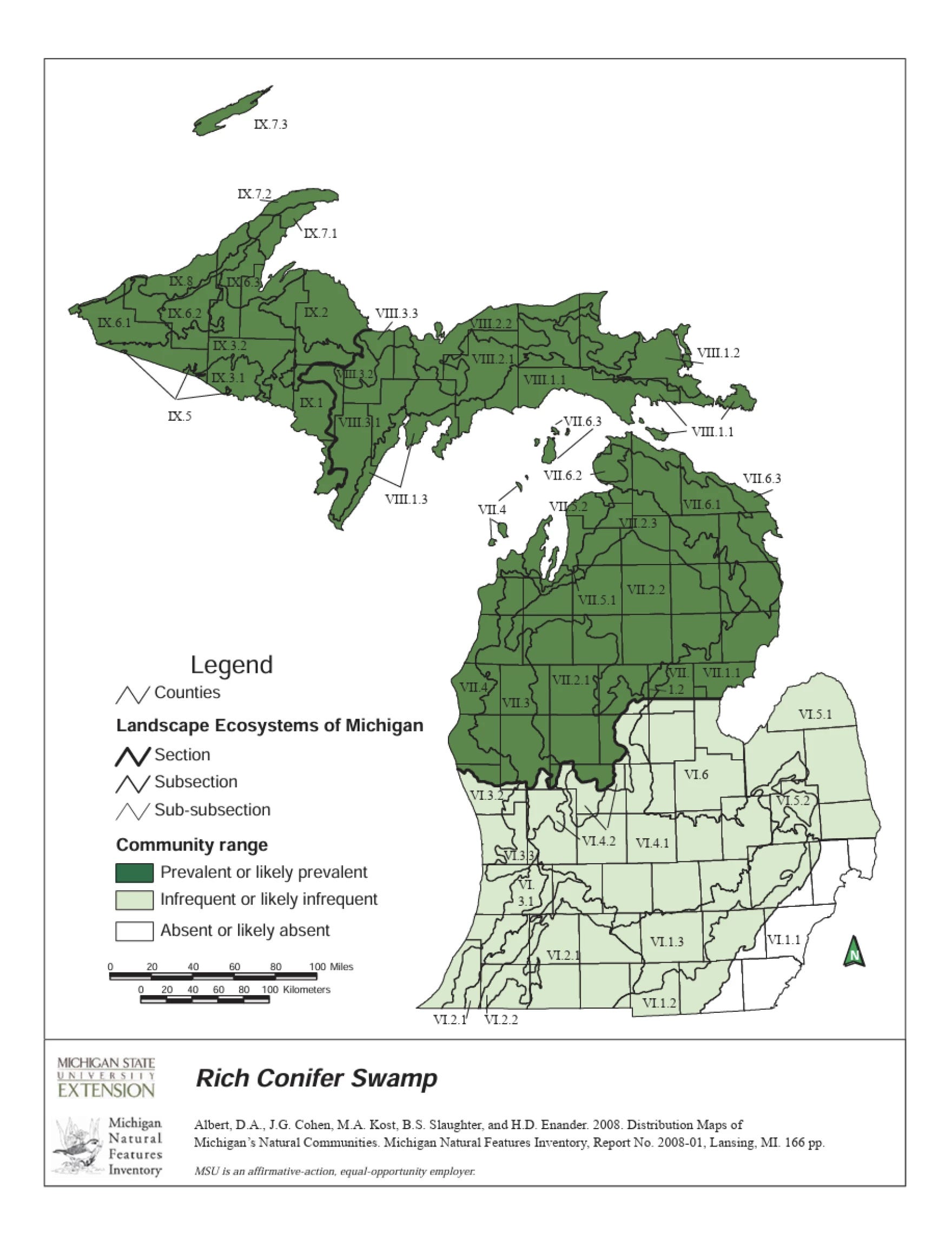
Speaking of “Up North,” we have good news from the northern Michigan beaches where the critically endangered and irresistibly adorable piping plovers breed. It’s been a great year for plover love, with 90 nesting pairs—which should be called “plover lovers,” don’t you think? Great Lakes piping plovers are endemic to the Great Lakes basin, which means they don’t live anywhere else.
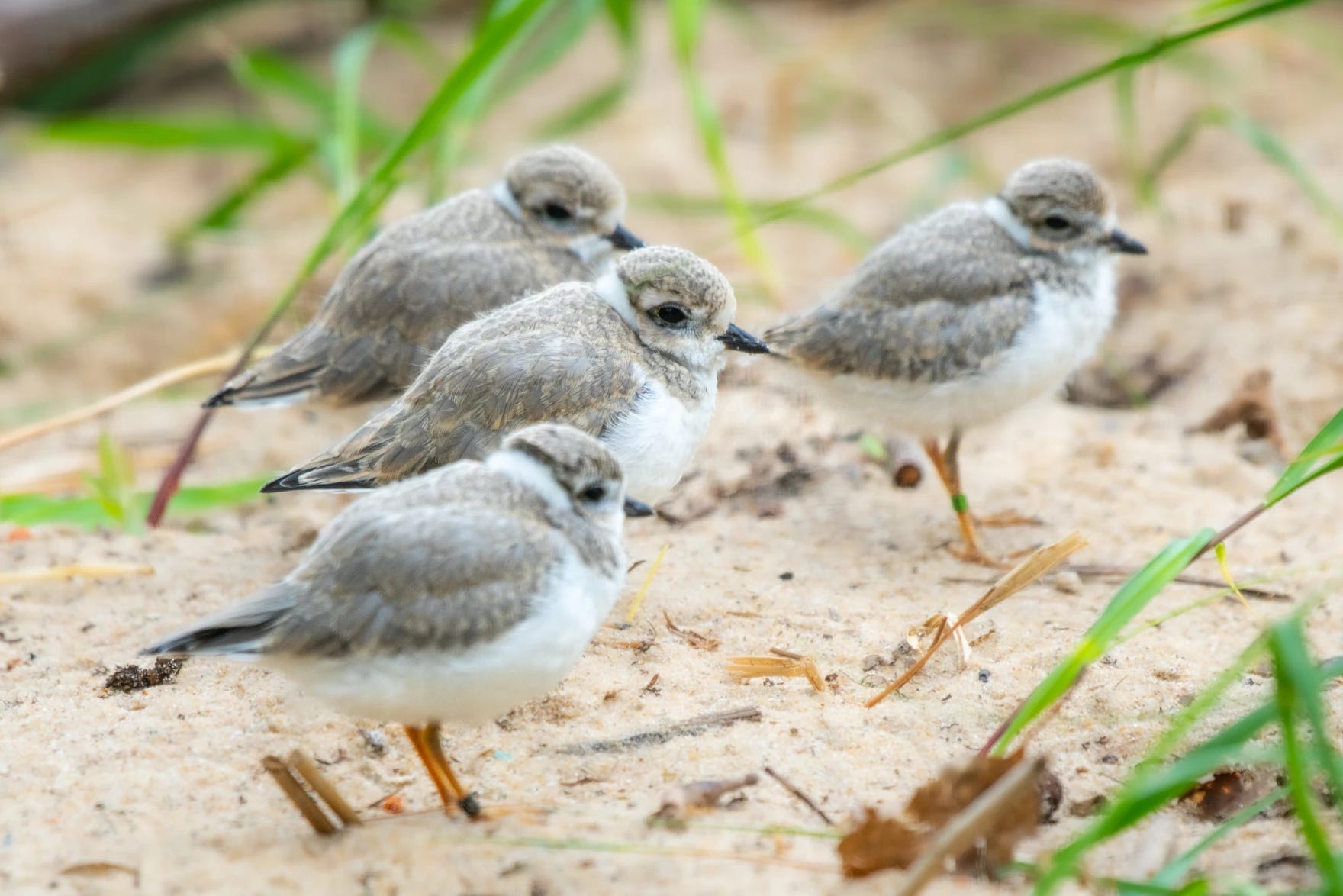
It really helps protection efforts when the birdies are so doggone cute. Image credit: Lester Graham for Michigan Public Radio
Wherever you live, whatever you’re dealing with right now, I hope you find some grace and courage this next week. Thanks for reading. Till next time, be well!
Note: Bold text in quotations is added unless otherwise indicated.
Note: I typically include the names of the writers whose work I quote in order to honor the importance of good climate journalism and the people who do this vital work.
No posts
Comments
Nothing yet. Say the first thing.
Sign in to join the conversation.