
You know, I think it is possible to max out on pollinator gardens in one’s yard. Shall we call this bug-maxxing or something? We’re on native plantings area number four at my house, and I had to give away some black-eyed Susans I grew from seed (from seed, I tell you!) because I ran out of space. Also, the native plants are starting to pop up where we did not plant them. All good things, but I’m reminded that plants are wild creatures. They will do what they can to live and multiply. Never mind your little planning drawings.
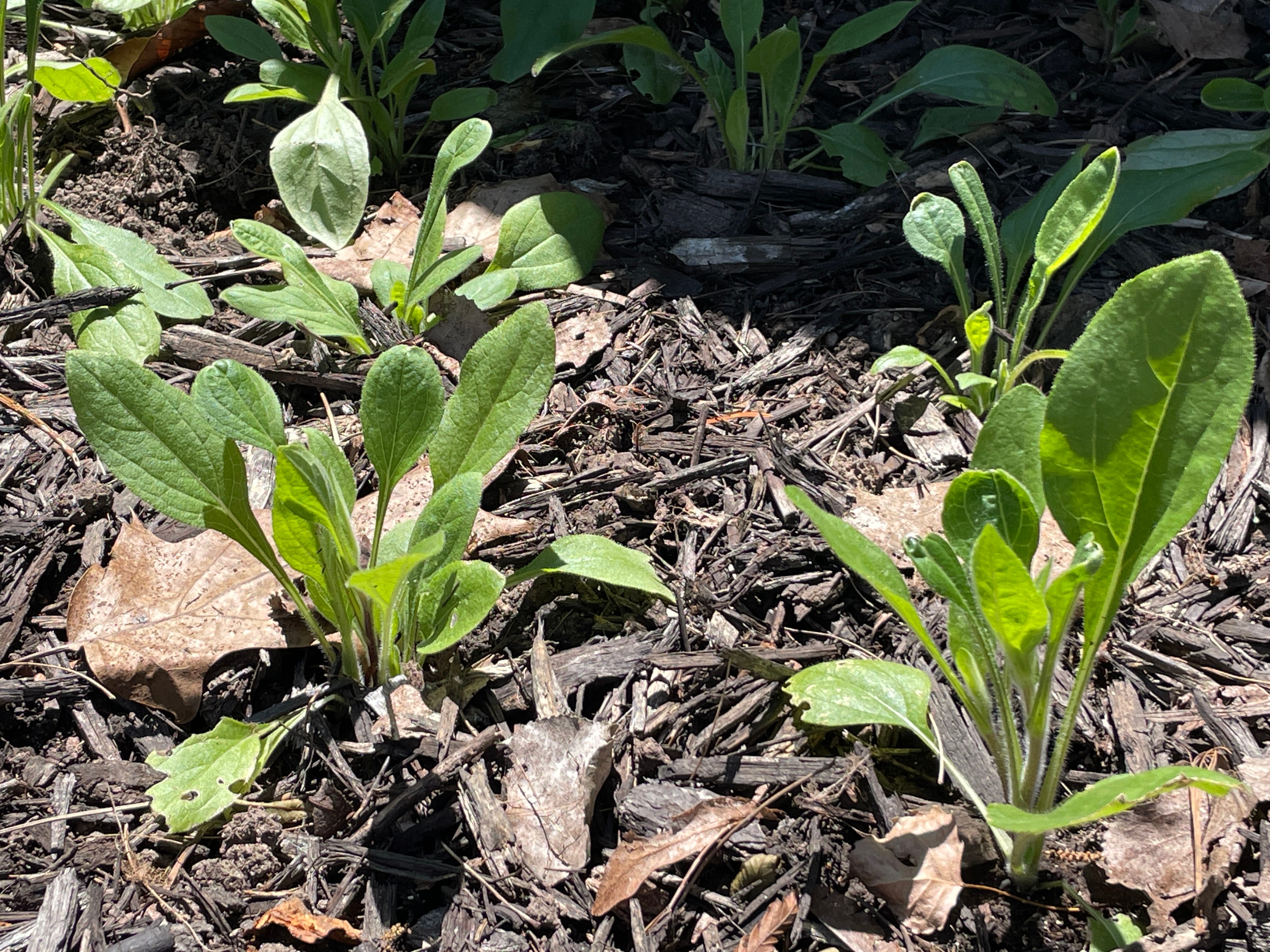
Some of the black-eyed Susans that did wind up in my own gardens.

If you look veeerrrryy closely, you can spot a bee backing out of a foxglove beardtongue bloom. Hint: upper right of image. Wild quinine and mountain mint in the background.
Meanwhile, some vegetable failures in the garden beds already: radishes, cabbage—no go. So far no successful baby squashes, either (apparently you have to help them with, um, fertilization??). The tomatoes, however, are doing great. Anyway, if you are a gardener, too, I hope you are finding joy in successes as well as in solving all the inevitable puzzles (what are those weird brown spots? who is eating the leaves?).
I continue to push hard toward the deadline for Refugia Church. I am almost finished drafting the entire manuscript, working now on the chapter about resilience hubs. That’s what I should be working on today, but instead, let’s have some newsletter fun, shall we?
I promised I would let you know when the Earthkeepers podcast episode released featuring me and pal James Amadon interviewing the legendary and ever-generous Bill McKibben. Here it is! Actually, we had such a great conversation that the producers decided to split the release into two episodes, so this is only part 1. Bill talked to us from his home in Vermont, on the porch, and while we were recording a big thunderstorm came through. You can hear it in the episode—it sounds really cool. Thanks to the good people at Circlewood, sponsors of the podcast, for creating this opportunity, especially executive director James and usual podcast host Forrest Inslee.

Fine. I will talk about AI and data centers. As a writer and educator, you can imagine that AI is not my favorite topic. But data centers have been in the climate news these past few weeks, so: FINE.
I refer you to the long piece I did in this newsletter last November in which I tried to explain, as best I understand it, what is going with data centers. I’m pleased to find that the information in that piece still holds up. Here, I will address two important developments: the pope’s encyclical and the growing opposition to data centers.
Perhaps you have already read through all 42,000 words of Pope Leo XIV’s encyclical Magnifica Humanitas (“Magnificent Humanity”). No? Well, neither have I. But I have read some good summaries—actual human-written ones, not AI summaries. This article in the National Catholic Reporter by Justin McLellan emphasizes the philosophical and theological themes in the letter, emphasizing that AI serves as the presenting “case study” for a larger exploration of humanity and technology. The pope is keen to “disarm” AI and to critique the concentration of power in the tech industry, as well as injustices that harm the poor and the potential degradation of human dignity represented by the rise of AI.

Image credit: maryknollgc.org.
Here’s an interesting fact I did not know: “The document is the fruit of 10 years of dialogue on ethics between the Vatican and the tech industry.” What? Apparently, at least some folks in the industry were seeking some ethical guidance from the Vatican. Hunh.
Two other good introductions to the encyclical, both by my friend Jim Stump. He wrote a more serious piece for the BioLogos website, but I especially enjoyed his cheekier but also very wise Substack article in which he fruitfully explores the governing images of the letter: the Tower of Babel contrasted with the rebuilt walls of Jerusalem in Nehemiah. And yes, Jim has read the whole encyclical (probably all of Nehemiah, too).
OK, all of that sets the scene for the main news story this week: growing opposition to data centers. The ginormous tech giants would love to slap up data centers everywhere in the race to make money from AI (see previous newsletter for more), but it turns out nearby residents are not so keen on data centers as neighbors. This summary by Claire Brown in the New York Times (free link) gives a brief overview. The lede:
The backlash against energy-guzzling data centers has snowballed in recent months, prompting more than 100 proposed moratoriums at the local, county, state and national level.
Proposals for data center moratoriums fall into two categories: Most call for a short-term pause in permitting or construction to give local governments time to establish guidelines. A few others call for permanent construction bans.
Interestingly, this surge of legislation is being driven by: public opinion. People are catching on (partly thanks to good advocacy groundwork by a number of environmental groups) that “jobs and tax base” are the usual iffy promises hiding higher energy prices, noise, enormous water use, air pollution, and big ol’ ugly buildings.
Recent reporting by Emily Pontecorvo for HeatMap shows that people blame data centers for increasing energy prices across the political spectrum even if that’s not quite true in their area. This anti-data-center backlash is fueled (sorry) by rising energy prices that are mostly resulting from the Iran debacle and grid problems.
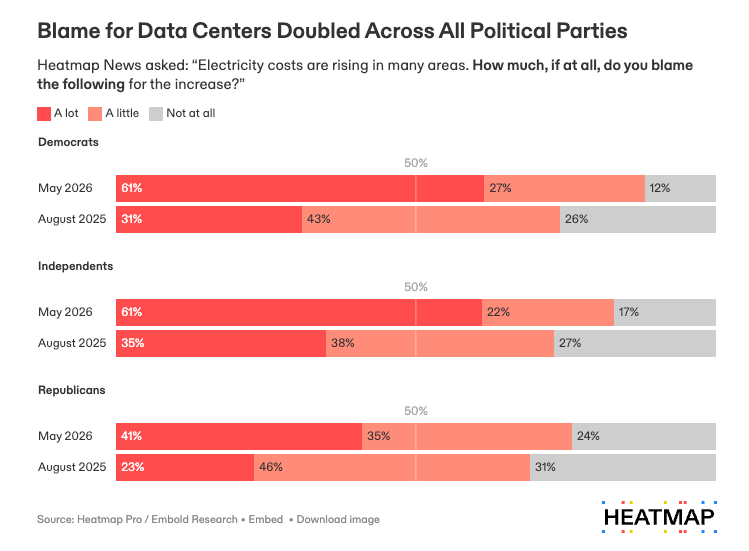
Grist did a deep dive in February on what is actually causing higher prices in each region of the US. It’s definitely data centers in some regions, but not in all.
Wondering whether there are any data centers proposed near you? You can find out! Check out this very cool interactive tool. Watch especially for “hyperscale” data centers. Those are the big ones everyone is especially worried about. Wondering whether there are any proposals to pause or block data centers? You can find that out, too! Another cool tracking tool!
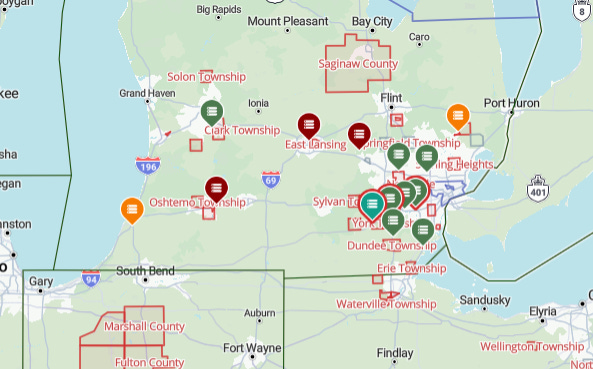
A screenshot from the proposal tracker focused on lower Michigan. Interestingly, only one of these dots is actually in production. The rest are proposals or have already been delayed or withdrawn. Note that this tracker is a citizen-run endeavor based on publicly available records. (Secret deals not included, ie.)
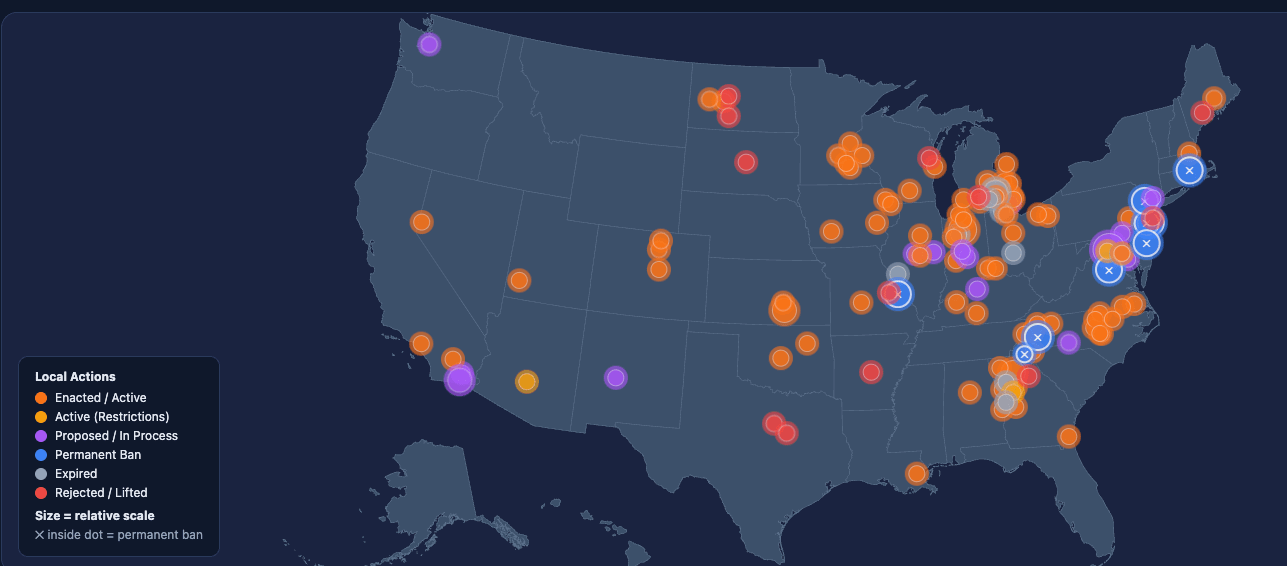
Screenshot from the moratorium tracker. Note that this website is run by a firm excited about the rise of AI.
Whatever results from this public pushback, I think it’s noteworthy how quickly it is happening and how widespread the opposition. This tells me, among other things, that people are learning how to speak up about issues that affect them. That’s a good thing.
Hollywood Climate Summit. Speaking of not crushing human creativity with AI slop and stolen creative work, I’m always a fan of artists enlisting the imagination to shift public opinion, convince more people that climate change is real and urgent, and help us imagine better futures. So good to know that Hollywood is on the job (kind of) as evidenced by this year’s Climate Summit. Reporter Sammy Roth (having recently left the LA Times) is now writing a great Substack called Climate-Colored Goggles. He attended the summit this year and loved it, because it was fun. And also serious:
Over two days this week, hundreds of people spanning a wide range of industries and job descriptions — environmental science, filmmaking, philanthropy, activism, space exploration, journalism, religion, video games, advertising and more — gathered for a series of panels, workshops and happy hours. …
But even when the topics were wonky or scary, the conversations were joyful. Folks were bursting with energy and ideas. They were totally convinced that if they pooled their expertise and creativity, they could tell stories that inspire people to care about the climate crisis and take action.
Roth also mentioned a great new database that catalogs films, TV series, and episodes made since 2018 that “feature climate and environmental themes.” It’s called the Green Title Database. Pop the popcorn and start at the top! (Just kidding. There are a LOT of titles here—which is good.)
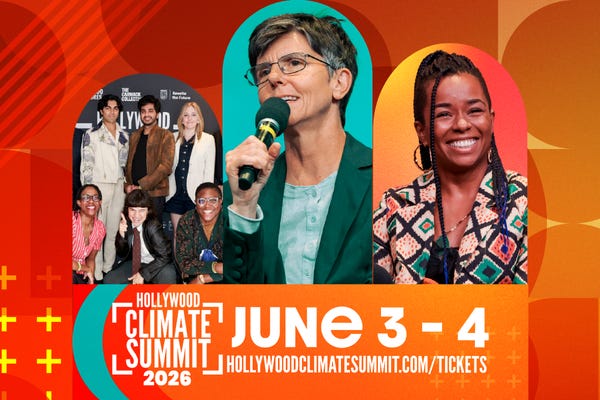
Image credit: hollywoodclimatesummit.com
Finally, one quick update on a previous story. Thankfully, I presented this one with a hedge: “Donut Lab claims…” that their new solid state battery is a game changer. Well, it came out this week that they were pretty much running a scam. The battery uses lithium, among other things. So not really a game-changer after all. Electrek’s Fred Lambert reported the story in full technical detail. Bill McKibben also covered the story here and quoted this crucial statement from Lambert:
My biggest concern now is that this damages public trust in solid-state battery technology more broadly. I hope it doesn’t cool people on the technology, because solid-state batteries do appear to be genuinely, finally coming. Toyota has invested over $15 billion and targets production vehicles by 2027-2028. Samsung SDI has the world’s largest pilot solid-state production line and plans mass production by 2027. These are real programs from companies with real technical credibility. Solid-state is coming — just not from Donut Lab, and not with the impossible combination of specs they promised.
By the way, McKibben’s headline story in that newsletter is the death of Lee Raymond, former Exxon CEO. He is one of the main people responsible for setting up decades of deliberate and strategic deceit about the impacts of burning fossil fuels on the climate. That is his legacy. That’s all I’m going to say.
Let’s take a few moments to mourn the rapid (and utterly foolish) dismantling of American federal science. I cannot keep track of all the disheartening stories in this category. But I’ll sum up a few recent ones here, and end with a glimmer of good news. Just a glimmer.
We have already lost 17% of the federal science workforce in 2025 alone. That’s 10,109 PhDs either leaving voluntarily or being forced out from the FDA, CDC, NSF, EPA, NOAA, USDA, USGS, and US Fish & Wildlife. Frontiers in Ecology and the Environment published a public thank-you letter to federal scientists on May 18, acknowledging the real grief and loss involved:
During the past year, we watched this exodus and the strain that it and the associated uncertainties put on our colleagues across the federal agencies. These are colleagues who do some of the world's most important research, reinforcing the country’s status as a global leader in science and technological innovation. Reflecting on these events, we want to express appreciation to federal scientists, engineers, and health professionals for their contributions.
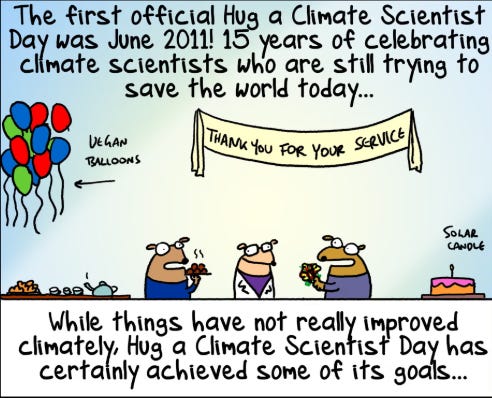
Did you know that yesterday, June 12, was “Hug a Climate Scientist Day”? Neither did I! Check out this sweet cartoon series in Grist.
You probably already know why people are leaving government agencies. But here’s a fresh example. Dan Vergano for Scientific American reported:
On Thursday the White House released long-anticipated draft regulations that, if enacted, would give political appointees the final word on federal research grants and other funding across government agencies.
The plan is to have the head of the Office of Management and Budget sign off on all scientific funding. And who heads the OMB? “Russell Vought, lead architect of Heritage Foundation’s Project 2025 plan for the Trump administration.” So this would make a political appointee the boss of the future of American science—not people who actually know what they’re doing. For a concise list of reasons why this is BAD, try this site. If you want to speak against this, the comment period is open. Submit a comment here.
What happens when federal science is subject to ideological control? Dumb things. For instance, the NOAA is told to dismantle an ocean monitoring system. Paula Dobbyn writes for Inside Climate News,
The National Science Foundation announced plans in May to decommission the Ocean Observatories Initiative, a nearly $368 million network of scientific instruments that tracks ocean chemistry, wave action, water temperature, salinity and a host of other metrics.
Why are they trying to do this? Well, they say it’s to save money, be nimble, etc. Really? And how much are we spending in Iran right now? The more likely reason is that the data is very useful in proving that climate change is real.
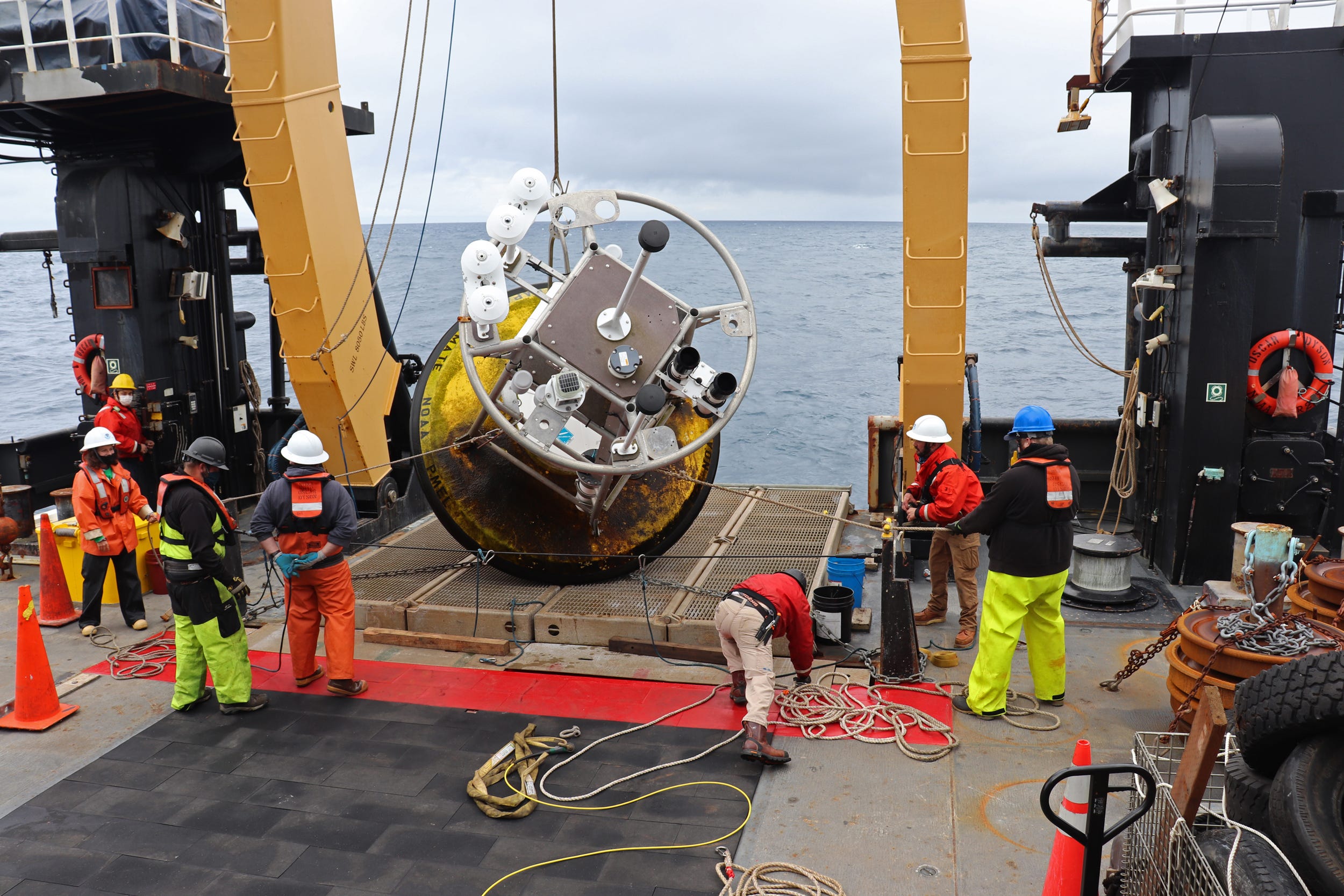
“A NOAA crew retrieves an Ocean Station Papa buoy in the Gulf of Alaska.” Image and caption credit: Laura Dwyer/NOAA via Inside Climate News.
Dobbyn’s article focuses on the response to this plan from Alaska’s fishing industry:
The NSF’s decision to pull the observatories from the water has alarm bells ringing in fishing circles of Alaska, home to a $5.3 billion commercial seafood industry that employs nearly 42,000 people.
The fishing industry needs real-time information from these buoys to run their businesses, especially since Alaska is dealing with marine heatwaves and other climate impacts.
Yes, people are fighting the proposal, including high-profile legislators. Of course, if the US abandons our science leadership, other countries will take over. Dobbyn quotes University of Alaska climate specialist Rick Thoman:
“You know the Chinese could come and plunk down a buoy there tomorrow if they’re inclined,” Thoman said. “If anyone thinks that the U.S., by stopping doing this, is going to stop the monitoring or stop our understanding of this, they are woefully mistaken. All of these things are international efforts.”
Time for that glimmer of good news. Pushback on these sorts of nefarious anti-science tactics does make a difference.
Mauna Loa is OK! After the current regime threatened to shut down this crucial monitoring site, sanity has prevailed. The story is actually rather complicated, but is explained beautifully in Forbes by Ingmar Rentzhog. The threat, believe it or not, hinged on a $105,000 budget line item for the observatory’s support station in Hilo. Also, there was a volcanic eruption in 2022 that messed up roads to the observatory—not related to federal budget cuts but also problematic.
Rentzhog explains why this observatory and the data it produces is so important:
Since 1958, measurements from Mauna Loa have produced the Keeling Curve, the iconic record of carbon dioxide rising in Earth’s atmosphere. The curve is famous because it is so brutally simple. Year after year, CO2 rises. Season after season, the planet breathes in and out, but the long-term direction is unmistakable. The Keeling Curve does not argue. It measures.
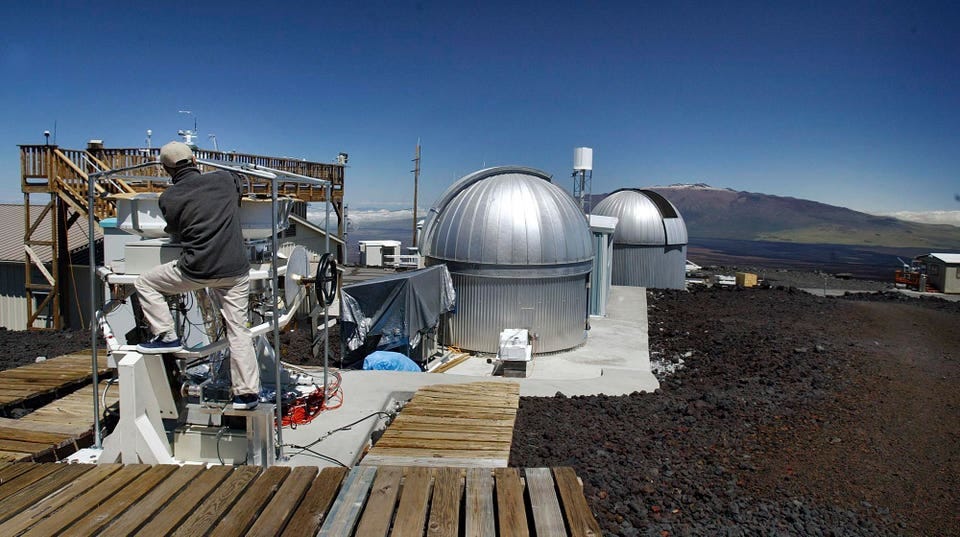
The Mauna Loa Observatory, at 11,000 feet. Image credit: AP Photo/Richard Vogel, file, via forbes.com.
Lava from the 2022 caused access problems, but the scientists figured out how to keep going (helicopters were involved), determined to keep up the “unbroken thread” of data. Cancelling the lease on the Hilo support office—to save $105,000—would basically scuttle that unbroken thread.
Fortunately, “This spring, NOAA announced the opposite: the same site [the Hilo site] was being reopened, rebuilt and expanded.” (Note: the expansion was planned before the eruption.) Rentzhog attributes this outcome to a collection of people who steadfastly addressed the threat, including the Congress members who refused to defund the NOAA:
Scientists explained why the Hilo office mattered. Journalists reported on the issue. Lawmakers publicly defended the observatory. The lease was preserved, funding continued, and access to the site was restored.
Three very different sightings today. First, Guns to Gardens. Perhaps you know the verse from Isaiah 2:4, “They will beat their swords into plowshares and their spears into pruning hooks.” That verse is the inspiration behind a program that helps people surrender their guns and have them immediately dismantled and then made into gardening tools, sculptures, jewelry and more. The surrender and initial dismantling happens in church parking lots! Alma Beauvais writes for The Trajectory:
Guns to Gardens has been turning unwanted firearms into garden tools and art for over a decade. Since 2013, this faith-based safe disposal movement has destroyed and repurposed an estimated 13,000-plus guns across the country.
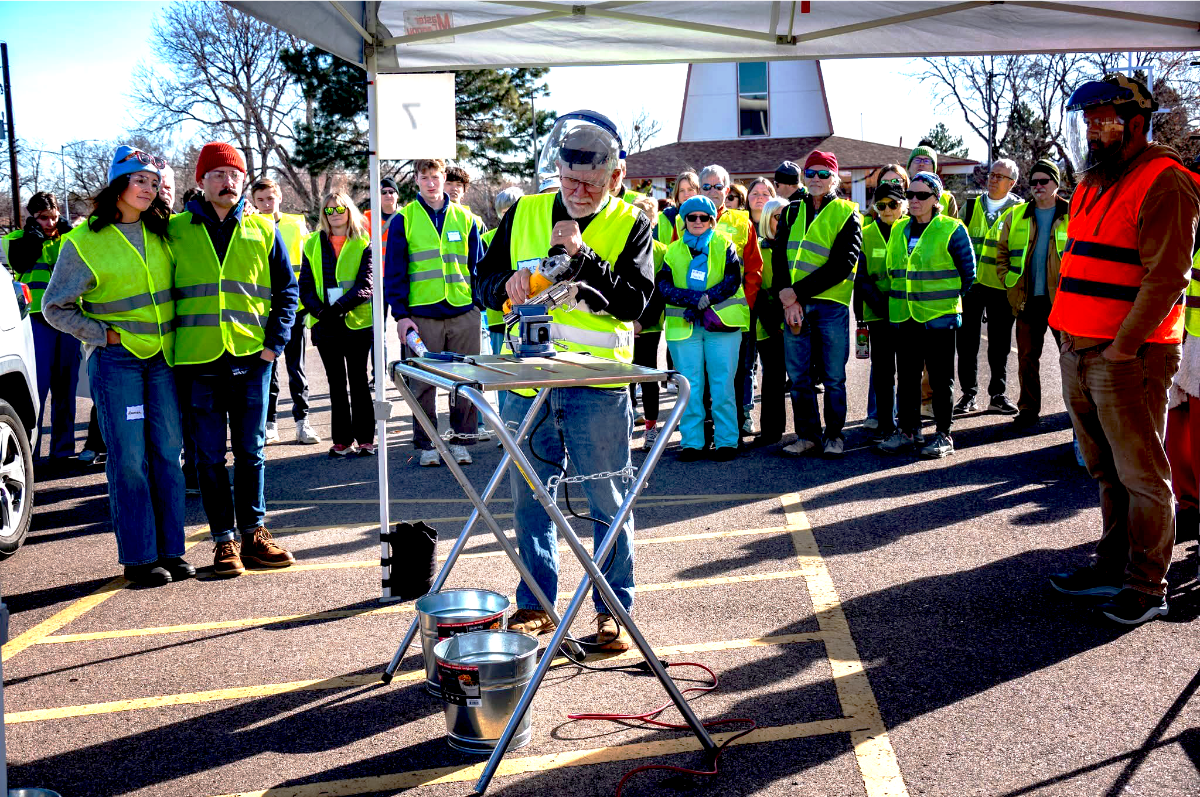
A volunteer slices up a gun at a Guns to Gardens event. Image credit: Guns to Gardens Metro Denver via The Trajectory.
The program was founded by Mike Martin, a Mennonite youth pastor in Colorado Springs, after the 2012 Sandy Hook school shooting in Connecticut. He decided to learn blacksmithing himself and found the nonprofit RAWtools, which began as a by-appointment endeavor. Raw because raw is war spelled backwards, by the way.
In 2021, after a mass shooting in Boulder, the Community United Church of Christ organized the first Guns to Gardens event in Colorado. Also, you can go to their website and purchase tools, jewelry, and sculpture made from dismantled guns.
People often see this kind of gun surrender program as a meaningful way to respond to trauma after they have been touched in some way by gun violence, such as a death by suicide in the family. They are eager to make sure that their guns will never be put back into circulation, as sometimes happens with police buy-back programs. Beauvais writes:
Guns to Gardens has since grown into a nationwide network with hundreds of volunteers — including blacksmiths, woodworkers, and artists — participating in annual church-organized events across more than 25 states, supported by the Presbyterian Peace Fellowship's Action Circles. Attendees and volunteers at these safe surrender events include gun owners, people directly affected by gun violence, and veterans.
Next: beavers! Of course. Climate change is causing increased flooding in England, and that means the Underground can get pretty soggy sometimes. In West London, the Greenford Tube station ticket office kept flooding, and finally the city brought in the experts: beavers. It worked! This very fun article by Lauren Frayer for NPR tells the tale:
In West London, conservationists got a government license to resettle a family of five beavers in a 20-acre urban park near the Greenford Tube station. It used to be a golf course, with a creek running through it. Within weeks, the beavers dammed up the creek, creating a pond that holds water and stops it from spilling into the city. They also diverted the creek's flow into smaller tributaries, creating a wetland that better absorbs heavy rainfall—mitigating the risk of flooding downstream.
Not only did they dry out the tube station, they brought back a lot of biodiversity and charmed the neighbors. The article is worth reading and the photos are great. There is even a video of beavers working at night, with little hardhats and orange vests on. (Just kidding, but there is a great video.)
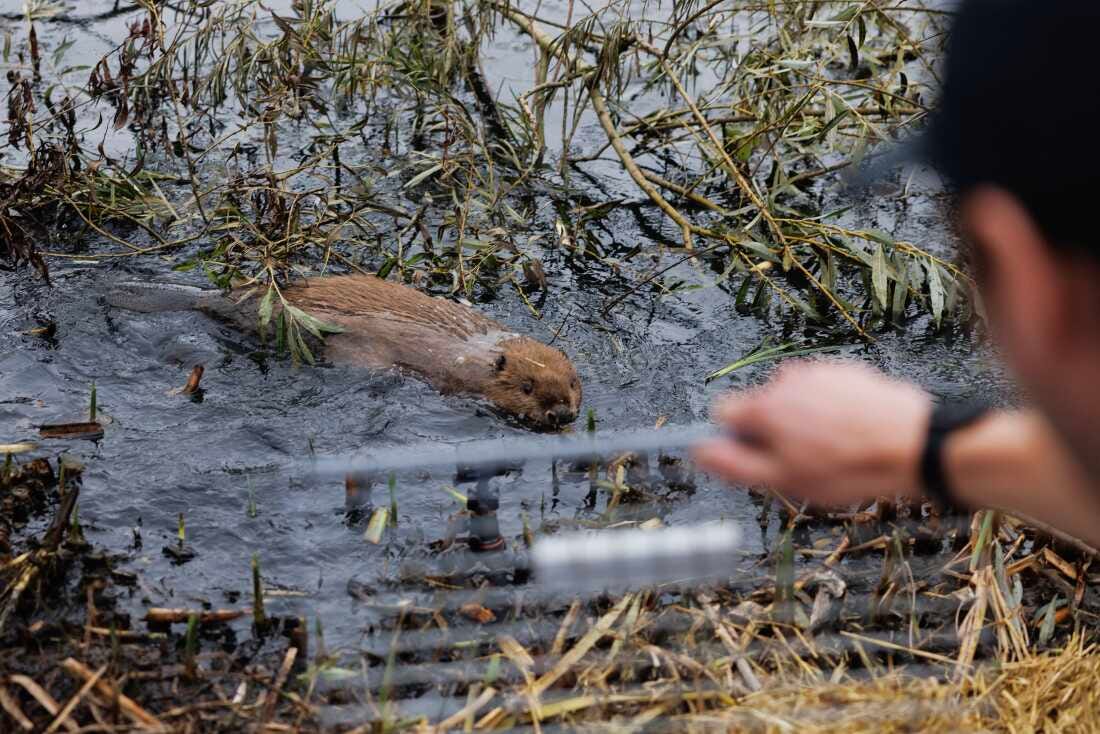
A beaver released in 2023 in West London. Image credit: Dan Kitwood/Getty Images via NPR.
Finally, many thanks to reader Terry Woodnorth who sent me a tip recommending the 2023 documentary Wilding, streaming on PBS. I don’t know if you ever plan to inherit a beautiful English estate, but if you do, you might want to consider what Isabella Tree and her husband Sir Charles Burrell did with their land: they stopped farming it and let it transform into wildland again.
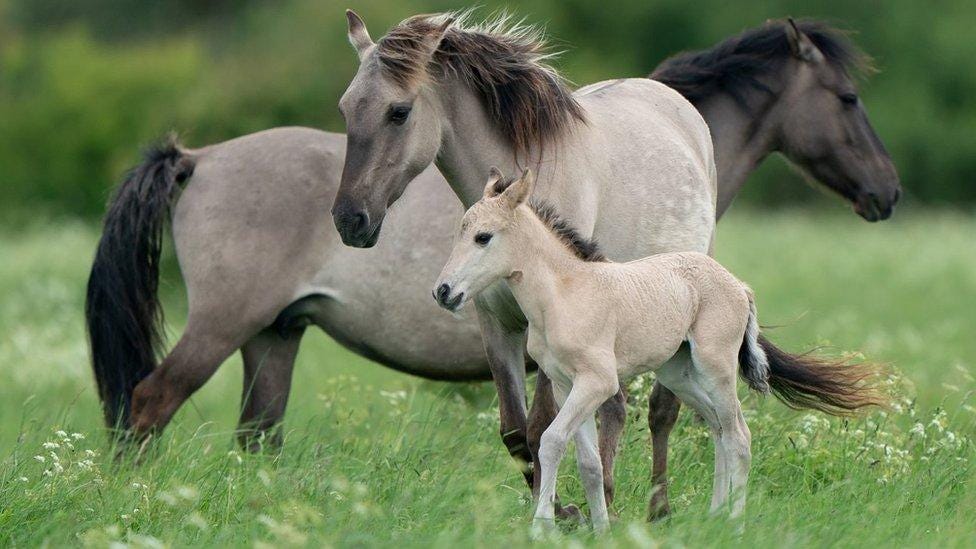
Konik ponies. Image credit: bbc.co.uk
Inspired by the Oostvaardersplassen experiment in the Netherlands, Sir Charles and Isabella brought in grazing animals close to ancient wild species: Heck cattle, Konik ponies, and almost-wild pigs. Over 20 years, the Knepp estate transformed and healed. It wasn’t always easy, neighbors were not always thrilled. At one point, they were rescued by a butterfly migration, at another point by: beavers! But eventually, with a little prompting and a lot of letting go, the land has become an incredible refugium.
The film is really beautiful: so much terrific nature cinematography. It’s based on Isabella Tree’s 2019 memoir, Wilding: The Return of Nature to a British Farm.
Two fun photos to conclude today. Friend Bill Vriesema—who is both an excellent photographer and an expert gardener—sent me this photo he took of a remarkable find in his compost pile. It’s a gourd nest! I mean, a nest for gourds!

Bill wrote:
Yesterday I was turning over our compost and came across this gourd with its babies growing inside. I was surprised it had life in it when all neighboring debris was turning to dirt. The story didn’t end well, however. We took it up to our deck to show the boys [his grandsons] last night. This morning we noticed all the plants missing. Something came and snacked on them. Oh well!
Speaking of nests in odd places, how about this?
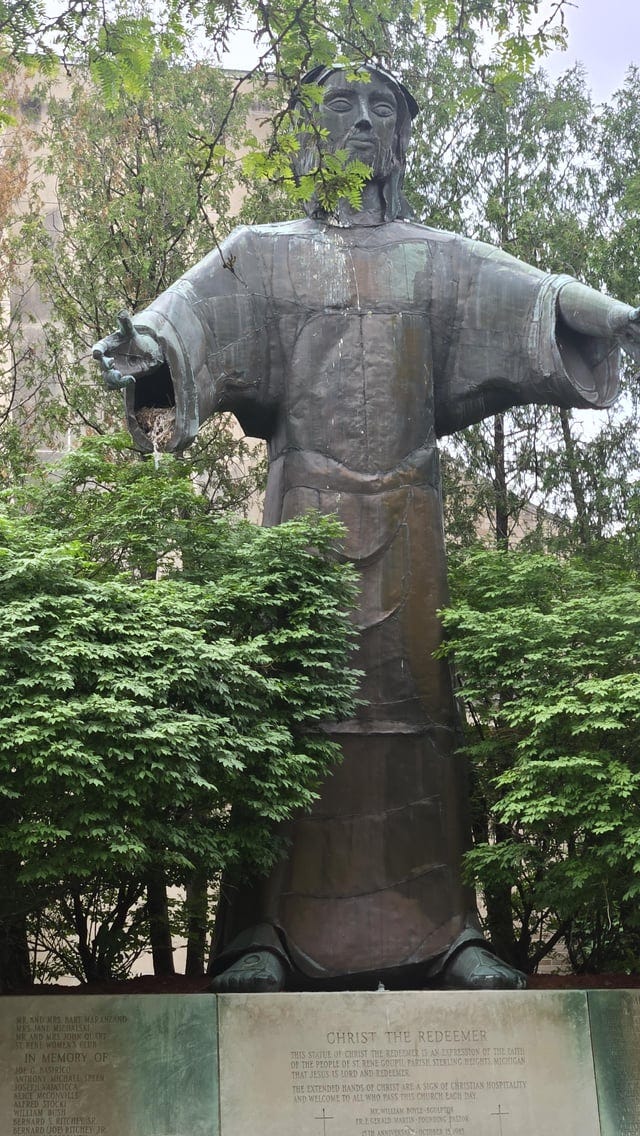
Notice anything interesting about that sleeve under Jesus’s right hand? Yeah, “Even the sparrow finds a home and the swallow a nest for herself, where she may lay her young, at your altars, O Lord of hosts” (Psalm 84:3). Actually, I don’t know if that’s a sparrow’s nest. I’m going to guess robin.
According to my sources, “This picture was taken on the front lawn of the St. Rene Goupil Catholic Parish located in Sterling Heights, Michigan. Uploaded anonymously on Reddit.” Anyone know this parish? Or the photographer? I’m happy to give proper credit.
All right, that’s enough for this week. Remember to hug a scientist today (with permission, of course). Wishing you the grace to carry on with courage and purpose. Till next time, be well.
Note: As always, bold type in quotations is added unless otherwise indicated.
No posts
Comments
Nothing yet. Say the first thing.
Sign in to join the conversation.