
Dear Reframers,
India’s recent protests demanding accountability for examination failures and broader education reforms saw thousands of young people take to the streets, including persons with disabilities. Yet much of the media and social media coverage treated the presence of disabled people as novel. Cameras gravitated towards wheelchair users navigating crowded protest sites, white cane users making their way through the streets, and sign language users communicating visually, often framing them as extraordinary participants rather than citizens with the same stake in public life as everyone else.
The coverage did bring welcome visibility to disabled people speaking out against systemic failures and corruption. But it also revealed how disability is still misunderstood.
Along with disability researcher, advocate, and longtime friend of Reframing Disability, Kavya Mukhija (who is an amazing person), I’ve identified five patterns and how journalists and content creators can do better.
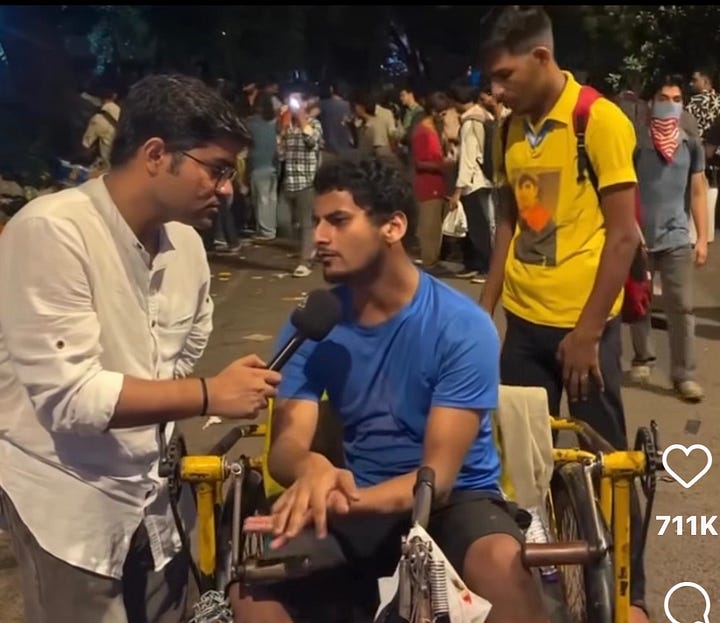
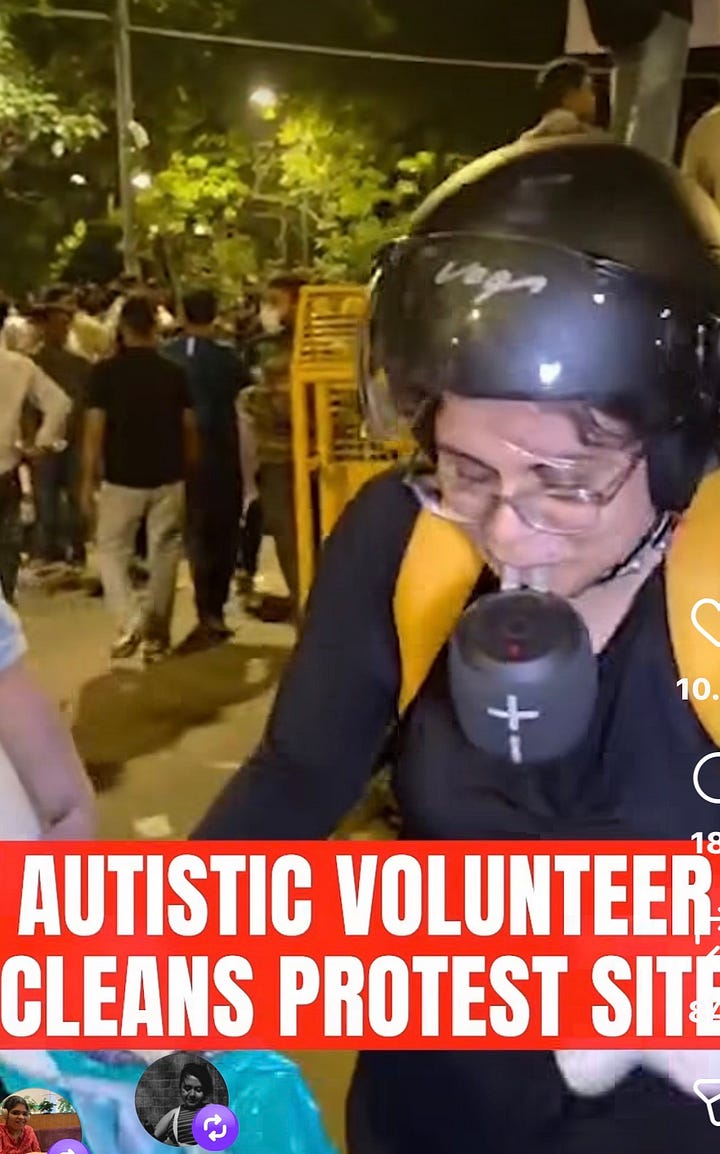
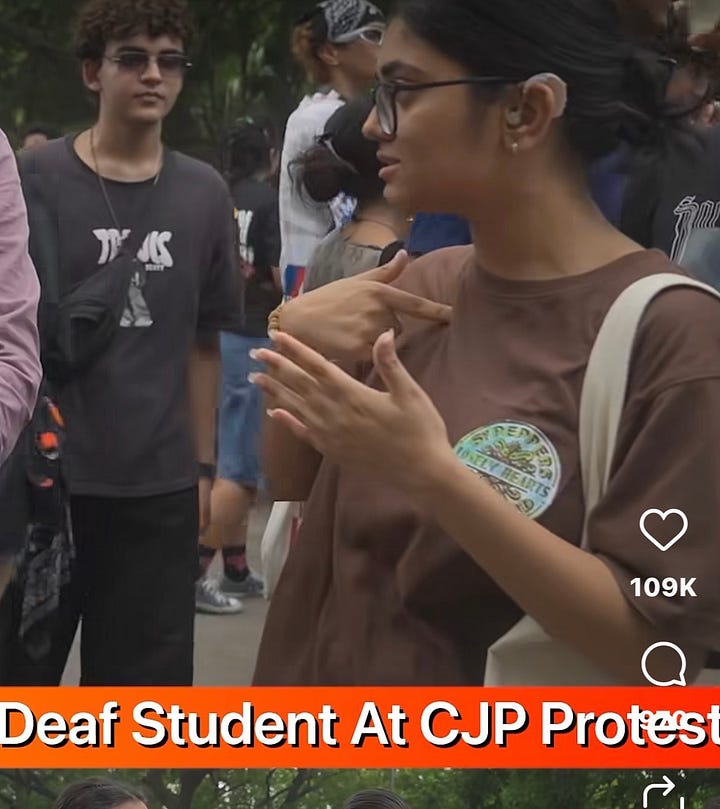
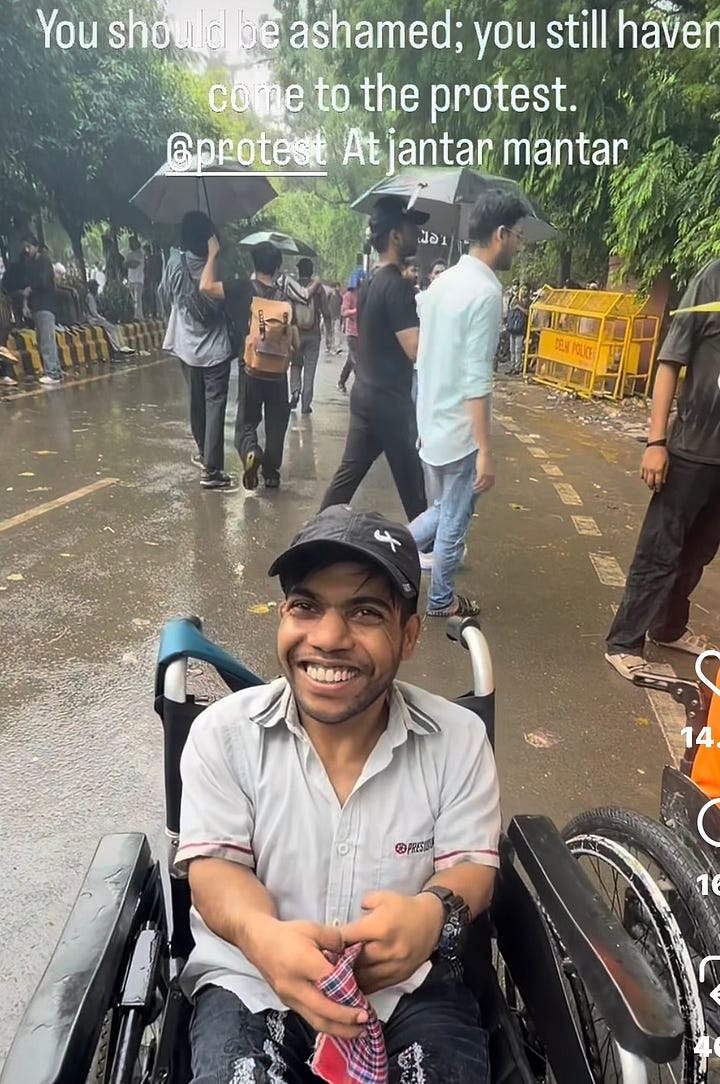
Source: Instagram
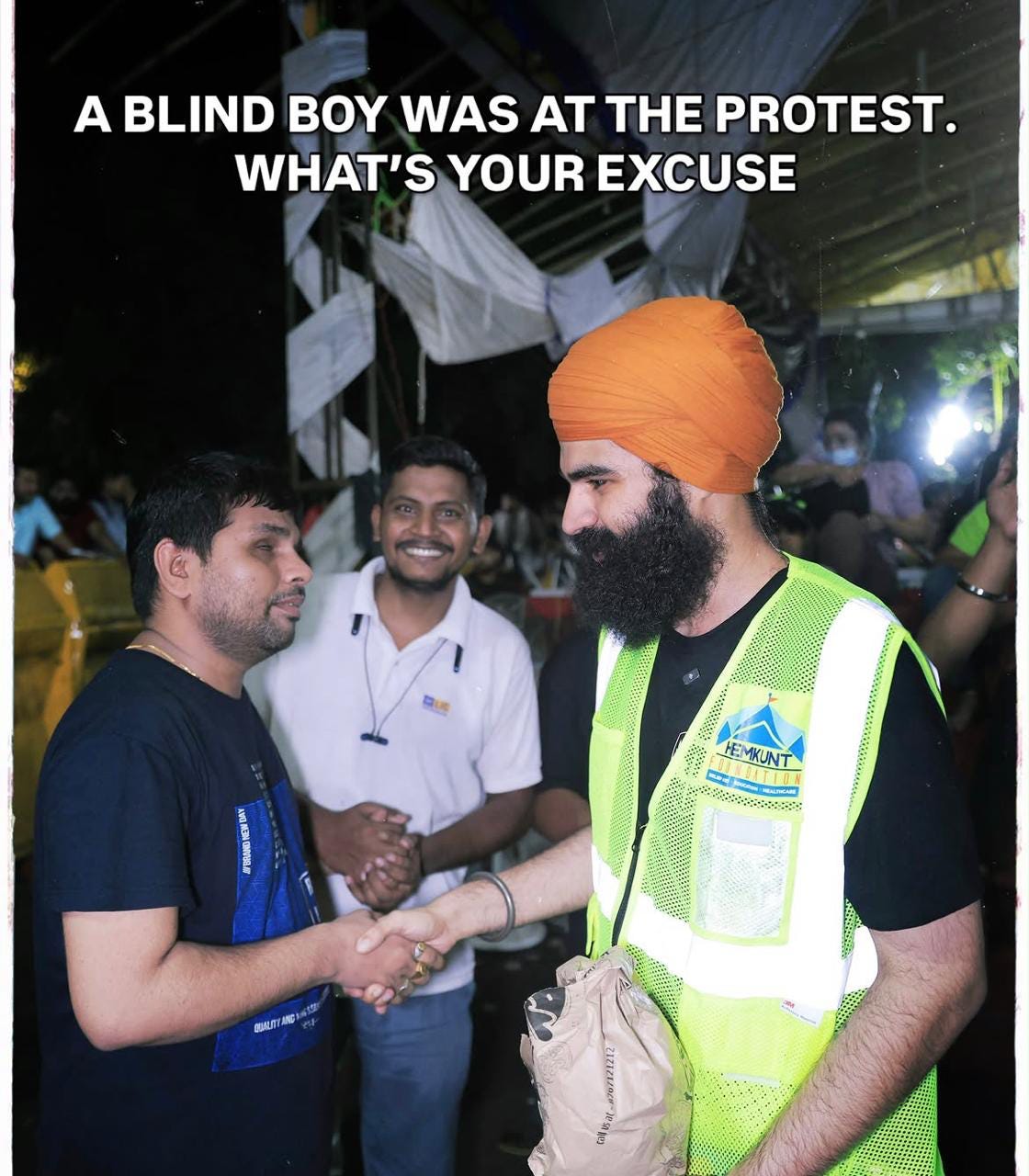
One of the most common narratives on social media was what disability activists call inspiration porn, i.e. using disabled people to inspire or shame non-disabled people.
Videos of disabled protesters were shared with captions like:
“If a disabled person can come all the way, why can’t you?”
“Making such remarks reduces an individual to their disability,” says Kavya. “Disabled people joined the protests because they care about the same issue as everyone else, and not to inspire others.”
Source: Instagram
Report disabled people as protesters, not as motivational stories. Ask about the issue they are protesting, the change they want to see, and how it has affected them.
If disability is relevant, connect it to the issue, not to the person’s perceived grit and determination.
Replace captions such as “A disabled student bravely joins the protest,” with “A deaf student protests against inaccessible education,” or simply quote the person in their own words.
“There’s a general assumption that we don’t understand or can’t speak about public issues,” says Kavya. “That’s simply not true. We have opinions, we have political views, and we want change.”
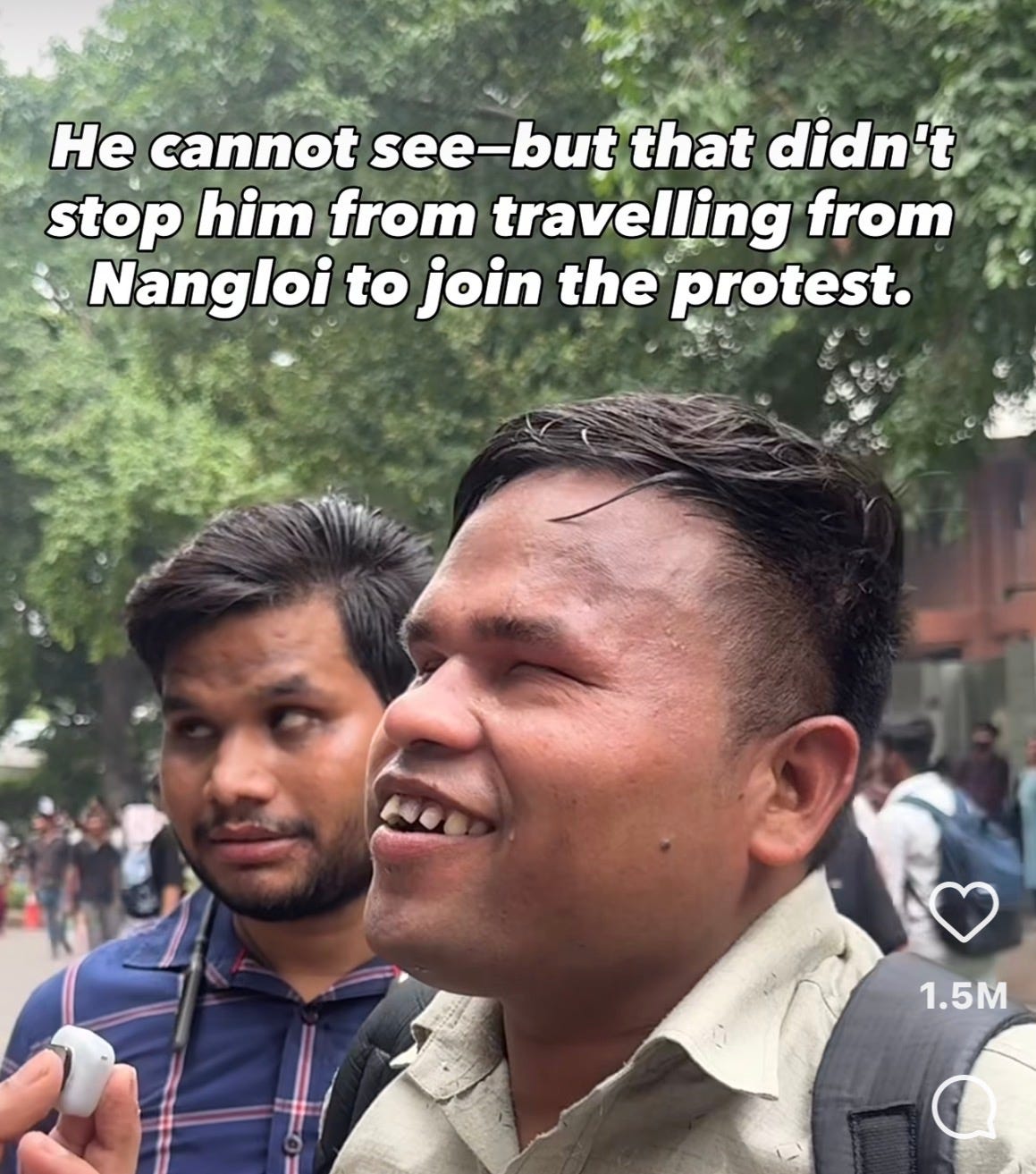
Another common response was to call every disabled protester “brave” or “courageous”, often intended as praise.
Showing up to a protest does not automatically make someone courageous because they are disabled.
“Every person is different. So every disabled person is also different,” says Kavya. Some may have encountered inaccessible transport or inaccessible protest sites. Others may have faced resistance at home before they could even attend.
Source: Instagram
Instead of praising disabled people simply for attending, ask whether they encountered barriers that affected their participation.
For example:
Did you face any barriers to attending?
What made it easier or harder to be here?
And unless disability is central to the story, don’t make it the first question. “We’re tired of constantly being asked about our disability,” says Kavya.
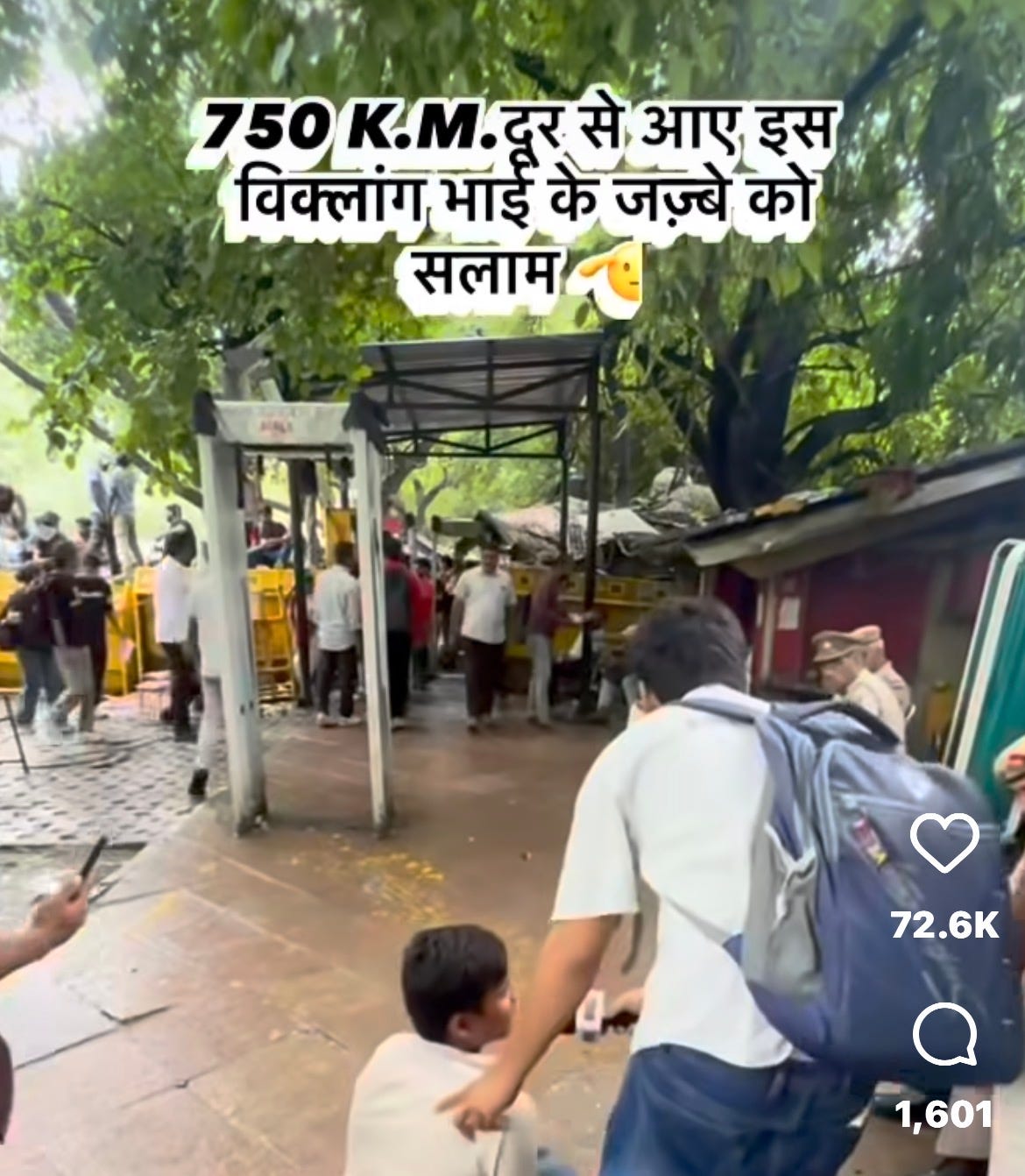
Many interviews began with some version of, “Why are you here?”
Although the question may sound harmless, it often carries an underlying assumption that disabled people are unexpected participants in a political movement.
One wheelchair user was asked why he had come into such a crowded protest. Police reportedly asked similar questions, including, “Who has come with you?”
Crowded protests can certainly be difficult to navigate, but aren’t they for everyone?
“Such questions imply that we’ll get hurt, so we should stay at home,” says Kavya.
Disabled people are students, workers, taxpayers, voters and citizens. The same education system, governance failures and public policies that affect everyone else affect them too, sometimes more acutely.
“We are everywhere we can be. Look out for us,” Kavya says.
Source: Instagram
Assume disabled people belong in civic spaces. Begin by asking what brought them there.
Choose to share their perspective, not presence.
Visibility alone doesn’t make representation meaningful.
One widely shared video featured an autistic woman at the protest site, with their consent, of course. It helped audiences see autistic people as people exercising their democratic rights.
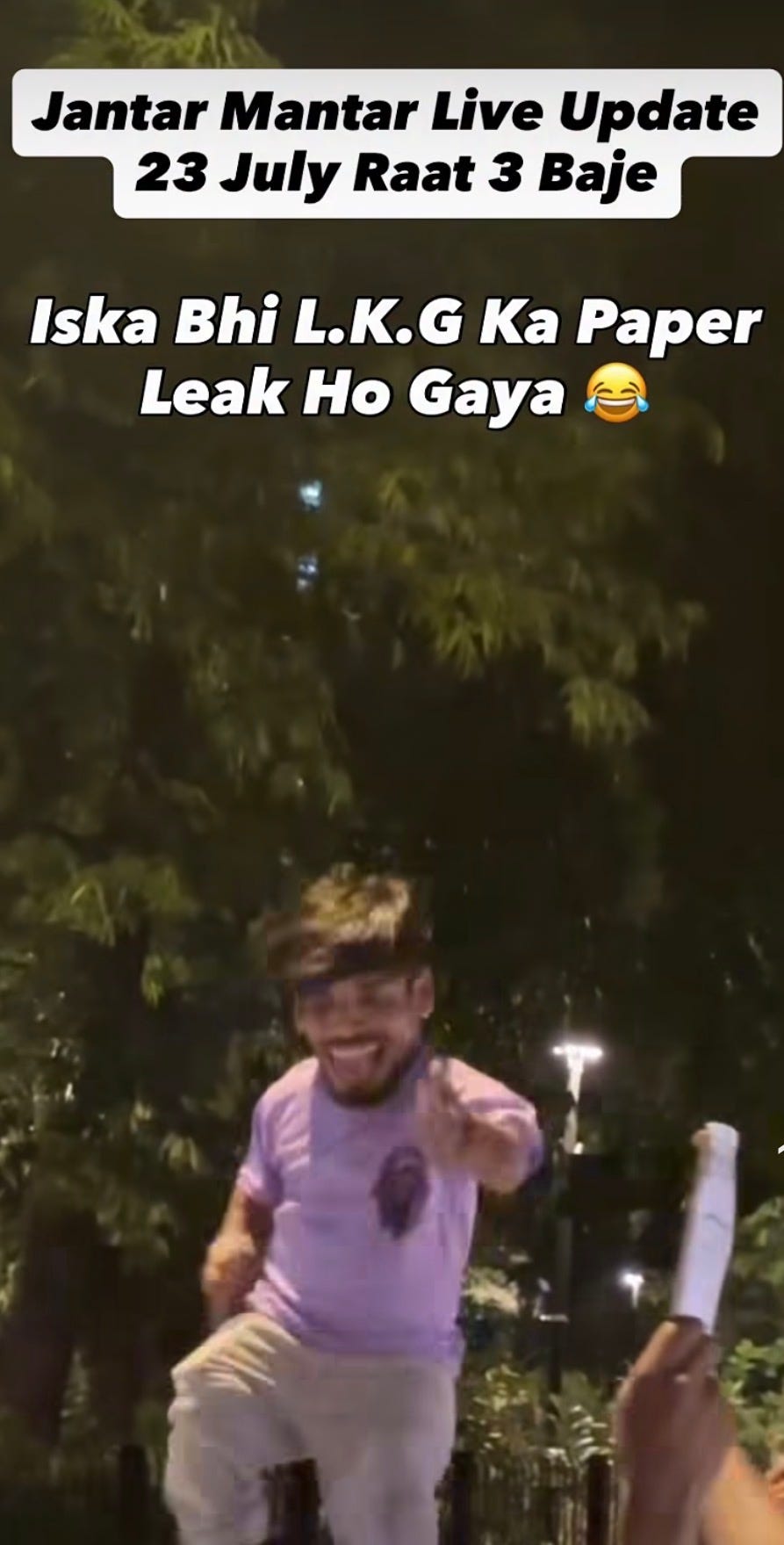
Contrary to that, a stream of videos mocked a little person’s height, joking that they had come to protest the leak of their “LKG (Lower Kindergarten) exam paper.”
That’s ridicule, not representation.
“Even if a person jokes about themselves,” says Kavya, “it doesn’t give others permission to make fun of their disability or any other identity.”
Source: Instagram
Before posting or publishing, ask yourself:
Does this centre the person’s voice or their disability?
Would I tell this story the same way if the person weren’t disabled?
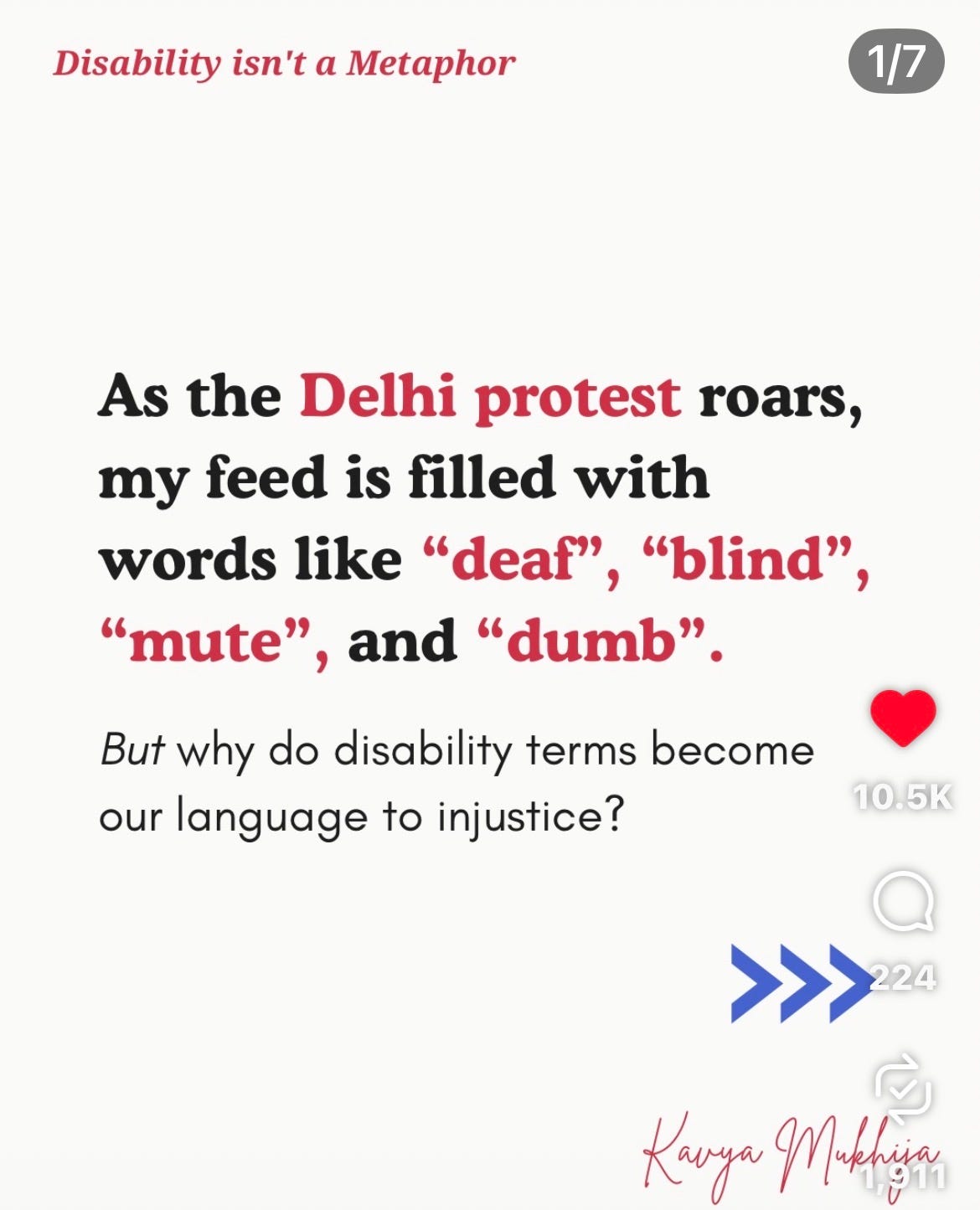
Political commentary often relies on disability-related words as shorthand for incompetence or moral failure, says Kavya in an Instagram post. Governments are described as “blind” to an issue, institutions as “deaf” to public demands, and politicians as “spineless” or “dumb”.
Think about what these words imply, she explains. Does being deaf mean refusing to listen? Does being blind mean refusing to see injustice? Does being non-speaking mean refusing to communicate?
These are disabilities, not moral or political failures.
Our words should reflect the injustice itself, not borrow disability as a metaphor to explain it.
Source: Instagram
What to do instead
Choose language that accurately describes the action or inaction.
Instead of saying a government is “blind” to an issue, say it is:
Ignoring the evidence
Refusing to acknowledge reality
Wilfully ignorant
Instead of calling a system “deaf” to people’s demands, say it is:
Refusing to listen
Unresponsive
Ignoring people’s concerns
And instead of describing a politician as “spineless” or a decision as “dumb,” be specific. Call the politician lacking in courage. Call the decision ill-informed, poorly thought out or unjust.
Reframing Disability’s Global Directory of Disabled News Media Professionals currently includes nearly 70 professionals from 17 countries and is steadily growing.
The Directory aims to give visibility to disabled media professionals by creating a database for those looking to commission paid work from them. It will help reduce some of the structural barriers they face, while making it easier for media to commission more diverse, inclusive storytelling and journalism.
Read more about its purpose and use. If you want your name to be added to the directory, please submit your details using this form.
Please share it widely to make it a success!
On a bright purple background, two white hand illustrations form an open rectangular frame. Inside the frame, the words ‘Reframing Disability’ are written in white text, symbolising a fresh perspective on disability.
In the past, Reframing Disability has reviewed the media coverage of the Bollywood flick Sitaare Zameen Par, the “magical cure” trope films use for happy endings and celebrated fun, pleasure and leisure in disability-centred storytelling. Read or listen if you haven’t already!
What do you think of this edition? Press reply and let me know about the frameoworks you liked or despised in the coverage of protests, or to indicate any errors I can fix. I’m available on LinkedIn and Instagram as well, and Reframing Disability has an Instagram account too. Engage wherever you are active!
Warmly,
Priti
Comments
Nothing yet. Say the first thing.
Sign in to join the conversation.