
Dear Reframers,
I met Harry Smith as a StoryLab participant last year. During the nine-week mentorship programme conducted by Reframing Disability and News Verifier Africa, I learned how passionate Harry is about journalism. Apart from having a flair for writing, he pays close attention to minor details that make his storytelling shine. Working with StoryLab, he says, allowed him to engage directly with disability and its relationship with journalism, the pitfalls and the often underappreciated positives.
In a freewheeling interview for today’s issue, he tells Reframing Disability about his early life, journalism, myths about dyslexia and much more.
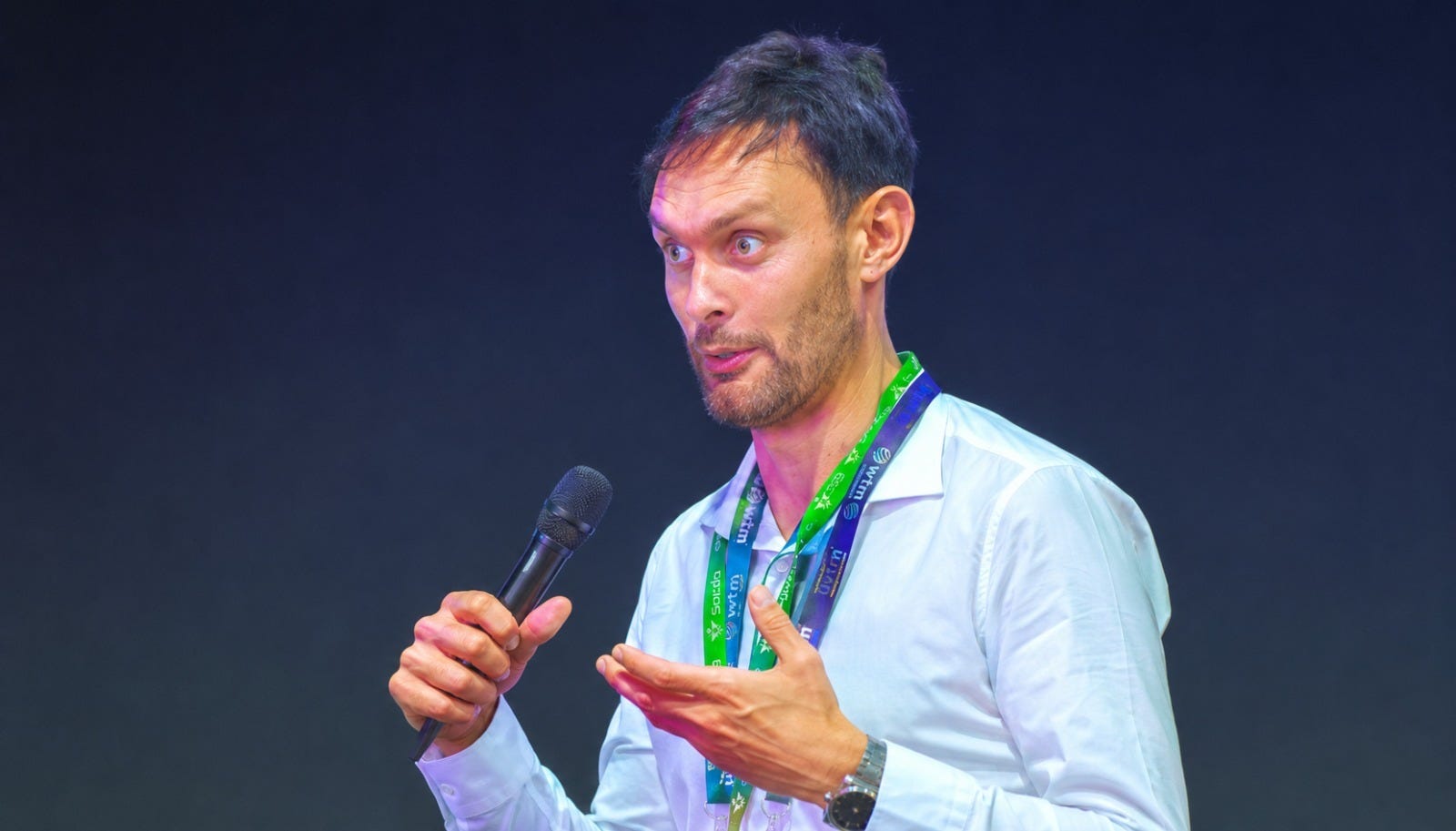
Harry Smith is a 28-year-old early-career journalist based in the United Kingdom. He came to the profession through the nonprofit Ability Today, which identifies and trains disabled people for the journalistic profession. He has written for publications such as The Guardian and The Media Diversity Institute, alongside many other disability special-interest publications, notably reporting on the 2024 Paris Paralympic Games.
Naturally curious about the world from an early age, Harry had a long-held passion for journalism. Still, he resisted pursuing a career in a notoriously competitive profession, believing his disabilities would make success a remote possibility. He failed to consider that some of the traits gained from being a disabled man would be advantageous to the profession. The nature of journalism means that these experiences must remain unspoken subtext, with the story taking priority.
Harry’s early diagnosis of dyslexia and Cerebral Palsy (CP) significantly influenced his academic and career path. His CP was diagnosed at birth and his dyslexia around the age of five, following a testing process for neurodivergence with a specialist.
Due to CP affecting his handwriting, Harry received one-to-one support in school with a classroom assistant. This support evolved to help with various aspects of dyslexia, such as having information read to him and having a scribe he could dictate to rather than handwriting or typing.
By the time he was considering GCSEs around age 16, Harry’s school wanted his reading fluency to be good enough to avoid needing support for his English exam. He had previously used a reader and a scribe for everything, but this would have capped his grade in language exams. To address this, he went to school an hour and a half early every day to sit with a teacher and improve his reading fluency. Harry noted that this level of support is rare for most dyslexics.
Initially, he attended a mainstream lower school. Then the middle school he was to move to said that it couldn’t support his needs, leading him to attend an independent private school. This school, while mainstream, had an excellent reputation for helping individuals with ADHD and dyslexia. But, his parents had to negotiate with the governors and headmaster and pay extra fees for his enrollment.
My family supports me in everything I’ve ever done, even the slightly unrealistic or outlandish ideas that I don’t seem suited to.
I pursued journalism after a short stint at a job in compliance, followed by a mini personal reflective crisis I tried to solve with travel. Then I wrote a personal essay about how the experience of travelling as a disabled man had changed my worldview and helped me come to terms a little more with my difficulties and myself.
I wanted to publish it because I was quite proud of the process it had taken, both in terms of writing it and the mental gymnastics to get to the point where I was comfortable enough to write it. During that process, I came across Ability Today and wanted to apply as a student to their Academy for Disabled Journalists.
Before applying, I thought I wasn’t disabled enough to be considered for that kind of programme, and felt morally a bit of a fraud.
But my parents said, ‘That’s not your decision; your interviewer will make that decision,’ even though I had expected them to stop me.
They encouraged me to apply, and I was recruited! I got a chance to interview half a dozen Paralympians, which I loved and did well. I knew then that I could pursue journalism as a career.
Most work I do at the moment is for the disability media, so I don’t tend to have a problem. As I’ve tried to branch out of that, it has become more difficult.
Put yourself in an editor’s shoes for a second. If somebody has declared they are dyslexic in an application or a pitch, why would they want them? Dyslexics are generally understood to be people who struggle to read and understand spelling and grammar. Why would a commissioning editor want to risk encountering these problems when there are so many more low-risk freelancers to choose from in today’s journalism landscape? So, I am selective. Sometimes I choose to declare the CP but not the dyslexia. But if I’m building an ongoing relationship with someone, I make sure to tell them everything to avoid the internal stress of masking.
I use a screen reader for reading everything, and I’m lucky because technology is very good now. AI has made screen readers sound more human, so I don’t have to spend my days listening to a robot like I did when I was younger.
I use Dragon, which is a speech-to-text platform, because the CP reduces my fine motor skills and I can’t type much, and when I do, I’m slow and make lots of mistakes.
Organising work is also a big thing for dyslexics. We live fairly chaotic lives because our working memory is hugely affected - it is low. So one can be ambitious and capable, but being forgetful can spoil it all.
If I’m researching a new article, I use NotebookLM to organise my notes, and Grammarly for editing.
So, there are definitely ways to manage your work efficiently, but you do have to be ready to engage with technology.
Dyslexics are extremely good communicators, and there are certain qualities that [help them do well in] journalism. Studies show people with dyslexia and ADHD have more empathy with other people, which is needed during interviewing. My interview partners have often mentioned that.
The ability to communicate complex topics in relatable and approachable ways is fundamental to good journalism. Dyslexic people often map their thoughts visually, which means we can be naturally drawn to visual metaphors when explaining ideas to others.
I was reminded of this recently when I interviewed for a broadcast journalist role and was asked to pitch a three-minute TV package to the panel. I explained the sequence shot by shot, including the camera angles, structure and cuts, exactly as I could see it in my mind’s eye.
When I finished speaking, one of the interviewers remarked: “Wow, you really weren’t joking when you said you think in pictures.”
It also helps having had a complex lived experience, because it makes you a better listener. Because you’re prepared to put your preconceptions on hold and assume that somebody’s life is more complicated than what they’re presenting.
Having a dyslexic person as a journalist is probably more useful because of these things.
I know from my own school days that the challenges dyslexic children face early in life can also prepare them for the practical realities of journalism. If you cannot read the whiteboard in class, you learn to rely on the teacher reading it aloud. Over time, you train yourself to absorb information quickly by listening carefully. I now apply that same skill to chance encounters with sources, where the most useful detail is often said once, in passing.
Dyslexic children also become used to navigating high-stress situations that many people take for granted. Imagine taking a train halfway across the country without being able to read the information boards, or ordering from a restaurant menu you cannot easily make sense of.
Those daily spikes of anxiety can become a form of training. They teach you to stay calm, adapt quickly and solve problems under pressure, all of which are extremely useful skills in journalism.
People don’t know that dyslexia is more complex than just being a slow reader or having difficulty with the written communication side.
So, there are just preconceptions about what a dyslexic person is going to be like. And I’d be lying if I didn’t say that those things were an issue.
But dyslexia doesn’t affect your intelligence. One of the ways dyslexia is tested is by testing one’s reading ability and then an interview to rate intellect. If there’s a disparity between your intelligence and your reading ability, you’re probably dyslexic, and not just developing slightly slower. So, dyslexia is actually a reading and learning difficulty.
Also, all dyslexics are different. I am very severely dyslexic. For those moderately dyslexic, dyslexia-friendly fonts or wearing green or red glasses which ease visual stress, are useful, because for dyslexics letters move around the line when they read.
It was great because they’d taken care of my accessibility needs and given me a laptop with a screen reader to work. On the last day, I was asked to give feedback on the software.
“This was the first time in my professional career that my unique experience as a dyslexic was treated overtly as an asset. Not something I had to downplay, hide or explain, but something useful to the organisation.”
This experience was so different because their genuine enthusiasm and interest were the complete opposite of what I usually encounter.
When you’re dyslexic and you’re in a workplace, you are so aware of the disparity between you and the others. You develop this reflex: they mustn’t find out that I can’t read, so you’re constantly trying to make yourself seem capable.
I didn’t need to constantly evaluate what I should say and do in that newsroom.
“Storylab was amazing. I loved it. Partly because getting used to the idea that there are disabled journalists out there who are just as ambitious as me and working on the same concepts was novel. And also because my acceptance of my own difficulties and disabilities is relatively new. I’m still coming to terms with the idea that I have a place in this world.”
Connecting with the other disabled journalists as part of the Global Directory of Disabled News Media Professionals has been an education. Having disabled journalists in newsrooms is a relatively new concept, so having the opportunity to see how others are carving a new path in the industry keeps me motivated, and having the opportunity to collaborate with such a diverse group of professionals has helped on specific projects too.
Reframing Disability’s Global Directory of Disabled News Media Professionals currently includes nearly 70 professionals from 17 countries and is steadily growing.
The Directory aims to give visibility to disabled media professionals by creating a database for those looking to commission paid work from them. It will help reduce some of the structural barriers they face, while making it easier for media to commission more diverse, inclusive storytelling and journalism.
Read more about its purpose and use. If you want your name to be added to the directory, please submit your details using this form.
Please share it widely to make it a success!
Shruti Rajkumar recently quoted me in a story in The Objective on how disability is still inconsistently prioritised in the news and Katerina Voutsina in her piece for iMEdD on putting disability at the center of the story.
On a bright purple background, two white hand illustrations form an open rectangular frame. Inside the frame, the words ‘Reframing Disability’ are written in white text, symbolising a fresh perspective on disability.
Did you read the last issue about Disability Representation in the Coverage of Civil Protests or the one prior on a journalist’s experiences with Long COVID? Read or listen if you haven’t already, and let me know what yo think! I’m available on LinkedIn and Instagram as well, and Reframing Disability has an Instagram account too. Engage wherever you are active!
Warmly,
Priti
Comments
Nothing yet. Say the first thing.
Sign in to join the conversation.