
Hello, Reframers,
The newsletter will be on a pause for a few weeks as I work on putting together future issues. Meanwhile, please enjoy an honest and insightful interview from the archives with journalist DVL Padma Priya, the co-founder and editor-in-chief of Suno India, an award winning podcast platform bringing quality audio journalism. She also founded the India Covid Survivors group on Telegram and has over 17 years of experience across journalism, digital storytelling and advocacy-communications.
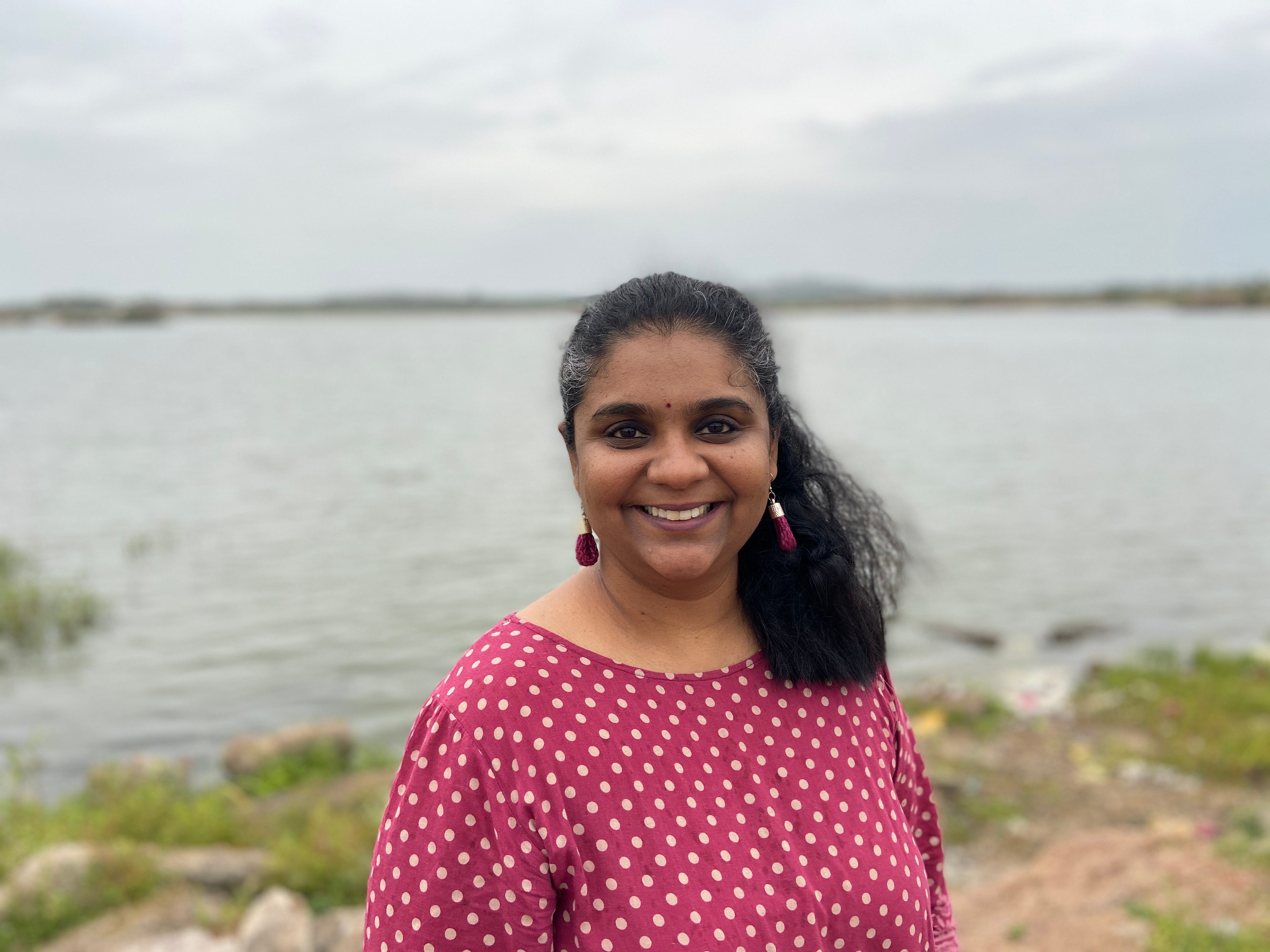
Each time I have met or worked with Padma Priya, I have realised how helpful and generous she is with her knowledge and expertise. I interviewed her for this piece two years ago and it was originally published in Reframing Disability in July 2024.
Padma Priya: [In July 2020], two months after I first had COVID, I blacked out in my apartment. I felt my heart rate was very high and before I could sit down, I blacked out. I went to the doctor and they said, “Oh, I think the BP is low.” But the heart rate was through the roof. Things didn’t get better from there. I had a couple more of these blackouts. As soon as I would stand or sit, I would start to blackout. That’s when I knew that there was something off about my health.
I started looking up for any support groups or people who had recovered from COVID and found one Facebook group of survivors where I read more about other people experiencing similar things. A few months later, some people started calling it long COVID on social media and that’s how it became part of the terminology.
Padma Priya: It’s been over four years now since I got COVID the first time and after that I got it twice again. What I thought was post viral symptoms and would go away, hasn’t. Essentially, it has led to a condition called dysautonomia where the autonomous nervous system which controls the heart rate, the blood pressure and other bodily functions, malfunctions. So, the blood doesn’t immediately rush to protect my brain when I stand up and I experience a blackout because the brain can’t go without blood. It was pretty bad in the first year. There were months when I was not upright, could not sit and was pretty much just lying on the bed reading or watching TV. I needed support to walk and even go to the bathroom.
Part of my job is recording podcasts, but in the beginning, I couldn’t hold a conversation. I would read the same paragraph 10 times over and not understand what it meant. It was incredibly hard for me. When I started typing something I lost my thought or when someone told me something, I forgot.
I’m managing much better, but even now, my body can’t properly regulate changes in temperature. I’m very intolerant to heat now.
Padma Priya: From the time I’ve had these symptoms, I’ve [worked for] my own company. But if I were to return to full-time work, work from home would be the biggest accommodation that anyone could make for me, because if I sit for too long and talk, it drains me faster than when I’m lying down in a reclined position and talking. Most of the time, I’m actually doing a lot of my work that way. Sometimes, when I feel faint, all I need to do is just lie down for two minutes and then I’m okay. At other times, raising my legs and sitting is all I need to do.
I would say I’m managing it much better now. Most people with any sort of chronic illness might just need three days of work from home. My brain is working perfectly. It’s the body that’s just not keeping up. And if it could be done during the lockdown during the peak COVID period, why is it not being done now?
Padma Priya: I think a lot of people across countries don’t understand long COVID. There are pockets within the scientific and medical community who don’t believe in long COVID. They all agree that post-viral is an issue but they don’t want to call it long COVID. They don’t want to acknowledge the severity that the COVID virus has had on the brain, on the heart, or on pretty much every single organ of the body. So I think the most ableist comments that I have received in the last four years have been actually from those in the medical community. From being told that if I lose weight, everything would be fine, to that I have depression because of COVID, I’ve heard it all. I’ve been told to take antidepressants, asked if I was really that ill, or if I was doing it for attention. I think just as a woman and as a mother, there is that added burden on you when your husband is having to take care of you. So it’s a constant guilt trip that’s strictly put on you. I think that’s the hardest part of being unwell.
The most frustrating part has been when my friends tell me, “Oh my god, I don’t know how you pull through. You’re so brave.” And I literally say, “What else am I supposed to do? What are my options?” But then there is really a dark side to these things, where you’re literally battling with your mind every single day, telling yourself not to give up. There’s nothing inspiring about that.
Padma Priya: I started a support group because of my own frustration, a little after the second wave of COVID started, thinking I can’t be the only one. I’ve been doing whatever we can in terms of giving media interviews and writing in the media. I have also been a part of the Patient-Led Collaborative Research at PLRC (Patient-Led Research Collaborative) which has published quite a lot of research on long COVID. We did a podcast series at Suno India, Gasping For Breath Season 2, and I also contributed my lived experience for the book, The long COVID Survival Guide. I’m also volunteering to update WHO’s post-COVID-19 guidelines.
Padma Priya: The media should not write about long COVID in spurts or only when some research comes out. I feel like the media and medical community are both overstretched with too many competing agendas. They should write more regularly and reach out more to doctors and researchers to understand what’s happening. There needs to be more questioning of both the state and the central governments about what they are doing in the space of COVID research or whether they are allocating any budget to research or pandemic management. Research being done now could lead to benefiting people in the next pandemic, which may inevitably be another viral pandemic.
Journalists should also look into intersectional perspectives of people impacted by COVID both physically and mentally. In general, there is not much written about chronic illness in our society. I think people with chronic illness are just expected to live with it and move on.
Journalists should cover the nuances in the daily life of someone with a chronic illness. For example, my daughter was just four when I fell sick. She still wanted me to sometimes pick her up and I couldn’t do simple things which gave me joy like picking her up and going for short walks with her.
Another example is that given my limited energy in a day, I have to be careful about where I expend it. I have learnt pacing which is widely used by those in the Myalgic Encephalomyelitis/Chronic Fatigue Syndrome (ME/CFS) community. I can probably hang out with my cousins at home but cannot go out shopping with them. One starts to make all these little bargains in life when they have chronic illness. These are the conversations that need to come out in the media.
We agree that patients’ lived experiences are critical in journalistic stories. My colleague and fellow Narnian at the Reuters Institute for the Study of Journalism, Hanne Østli Jakobsen, wrote a paper on the coverage of long COVID in the Norwegian media. To balance an empathetic presence with the need for journalistic verification, she came up with some strategies reporters can use during their coverage of long COVID.
“Giving the patient an active role in the article, presenting them as someone the other sources talk with, is different from having them be the object that politicians and researchers talk about. That means fully integrating them and their perspectives in the discussion.” Hanne wrote.
She proposed a few strategies that a journalist can use while working on a story to try to reduce the patients-expert divide. (Read the full paper for other insights).
Prepare the patient intervieweee by telling them in advance to expect difficult questions about their conditions.
Let them explain their reasoning by asking, “Are you sure it’s caused by COVID-19?” and not “Why do you think it’s caused by COVID-19?”
Give them any opportunity to respond when a scientist or another source contradicts their experience.
Disability Debrief has a new open call for writing, asking for a disability diary entry, up to 500 words. Five favourite picks will be published and paid £100 each. Deadline 20th July. So, think about how disability shaped your day and submit!
Reframing Disability’s Global Directory of Disabled News Media Professionals currently includes nearly 70 professionals from 17 countries and is steadily growing.
The Directory aims to give visibility to disabled media professionals by creating a database for those looking to commission paid work from them. It will help reduce some of the structural barriers they face, while making it easier for media to commission more diverse, inclusive storytelling and journalism.
Read more about its purpose and use. If you want your name to be added to the directory, please submit your details using this form.
Please share it widely to make it a success!
On a bright purple background, two white hand illustrations form an open rectangular frame. Inside the frame, the words ‘Reframing Disability’ are written in white text, symbolising a fresh perspective on disability.
Reframing Disability’s recent issues featured a piece on how disability-led design is changing India’s arts and cultural places and the “magical cure” trope films use for happy endings. Read or listen if you haven’t already!
What do you think of this edition? Press reply and let me know. I’m available on LinkedIn and Instagram as well, and Reframing Disability has an Instagram account too. Engage wherever you are active!
Until soon.
Warmly,
Priti
Comments
Nothing yet. Say the first thing.
Sign in to join the conversation.