
Welcome to edition #50 of 54 Shades of Opportunity, a weekly deep dive into Africa’s distinct markets. Each Monday, we explore innovation, culture, and investment opportunities across the continent, one country at a time.
Note: This analysis draws on publicly available sources, including government reports, international organizations, business publications, and research institutions. It’s not exhaustive; readers should explore further and, where relevant, consult local expertise before making decisions.
Comoros is the Indian Ocean’s most overlooked archipelago, a volcanic three-island nation of fewer than 900,000 people that produces 50-70% of the world’s ylang-ylang, claims a fourth island it does not govern, has experienced more than 20 coups or attempted coups since independence, and is being repositioned by its longest-serving president and the World Bank alike around a single transformative concept: the blue economy. President Azali Assoumani who first came to power in a 1999 coup, then governed again from 2016, and was re-elected in January 2024 for a fourth term (63% of votes, low turnout, opposition boycott, disputed results) leads a government whose Convention for the Renewal of the Comoros (CRC) party secured an absolute parliamentary majority in January 2025 elections and swept municipal elections in February 2025.
GDP growth reached 3.8% in 2025 (government figures), 3.4% per World Bank, projected to accelerate to 4.2-4.6% (2026) driven by services, construction, tourism, and fishing. GDP per capita $1,700 nominal (2025), $4,020 PPP. The World Bank’s June 2025 Economic Update identifies the blue economy as Comoros’ transformative pathway: fisheries averaging 11.4% of GDP (2018-2024) could rise to 16% by 2035; marine tourism could quadruple; the Moroni Declaration (2023, adopted by African leaders) positions Comoros as continental convener on blue economy frameworks. Remittances from the diaspora in France (300,000-400,000 Comorians) constitute 20-25% of GDP, the single most important income source. The Mayotte dispute (fourth island of the Comorian archipelago, administered by France, rejected Comorian independence in 1974 and voted to remain French, claimed by Comoros since 1975) shapes migration, diplomacy, and bilateral relations with France permanently. Approximately 877,400 people, GDP $1.55B nominal, CFA franc (pegged to euro via French monetary arrangement), Least Developed Country classification, COMESA/IOC member.
Size: 1,861 km² (three volcanic islands, Grande Comore/Ngazidja, Anjouan/Nzwani, Mohéli/Mwali, roughly the size of Réunion or Rhode Island, Indian Ocean between Mozambique Channel and Madagascar).
Population: Approximately 877,400 (2025), Comorian (Shikomori) primary language alongside Arabic and French official, predominantly Muslim, complex ethnic heritage (Bantu African, Arab, Malagasy, French influences), very high population growth rate, significant diaspora in France (300,000-400,000).
Capital: Moroni (Grande Comore island, political/administrative center, 60,000+ city proper), major towns include Mutsamudu (Anjouan island capital, main port), Fomboni (Mohéli island capital), Domoni (Anjouan, historical sultanate).
Economic Profile: GDP $1.55B nominal (2025), 3.4-3.8% growth (2025), 4.2-4.6% projected (2026), inflation declining (5.1% in 2024, projected 2.2% in 2025-2026), remittances 20-25% GDP, fisheries 11.4% GDP average, ylang-ylang/cloves/vanilla primary agricultural exports, fiscal deficit 2.7% GDP (2025, narrowing), public debt elevated, Comorian franc (KMF, pegged to euro), LDC classification, poverty rate 38.1% ($3.65/day line, 2024).
Strategic Position: Indian Ocean archipelago (Mozambique Channel), 200 nautical mile Exclusive Economic Zone (EEZ) rich in tuna, billfish, marine biodiversity, Indian Ocean Commission (IOC) member, COMESA member, African Union member, AfCFTA signatory, AU Chairmanship held by Azali Assoumani (2023-2024), Moroni Declaration blue economy convener, French monetary arrangement (CFA franc peg), volcanic soil enabling unique agricultural products (ylang-ylang world market dominance).
Comoros declared independence from France July 6, 1975, unilaterally and ahead of a scheduled referendum, under President Ahmed Abdallah. France did not contest independence for three of the four islands but retained Mayotte, whose population had voted against joining an independent Comoros. The separation defined Comorian sovereignty from day one: the state began with a territorial claim it could not enforce.
Post-independence history is among Africa’s most turbulent per capita. More than 20 coups or attempted coups in 50 years, involving homegrown military factions, inter-island secessionism, and distinctively French mercenaries. Bob Denard, a French soldier-of-fortune, participated in multiple Comorian coups across three decades (1975, 1978, 1995), operating with varying degrees of French government knowledge, converting to Islam, taking Comorian citizenship, and at various points effectively controlling the country’s security forces. His repeated interventions gave Comoros the nickname “Coup-Coup Islands” in international media, a characterization that, while reductive, reflects genuine governance fragility.
Inter-island tensions provided a structural driver of instability beyond individual personalities. In 1997, Anjouan and Mohéli declared independence from Comoros, citing neglect and resource distribution grievances. The crisis produced the Fomboni Accords (2000) and eventually the 2001 constitution establishing the Union of the Comoros, a rotating federal presidency cycling among the three islands, each island maintaining substantial autonomy including its own president and government. The structure traded some central governance efficiency for inter-island legitimacy, distributing patronage and executive authority across island-based networks.
Azali Assoumani entered this system via coup in April 1999, overthrowing President Massounde. He governed until 2002 (transitional), stepped back, then returned through elections in 2016. A 2018 constitutional referendum, contested by opposition as designed to extend his rule, abolished the rotating presidency, allowed consecutive terms, and extended the presidential term to five years. Azali won re-election in March 2019 under the new constitution. January 2024, he won again (63%, low turnout, opposition boycott, post-result protests, disputed credibility). His CRC party’s absolute parliamentary majority (January 2025) and municipal sweep (February 2025) consolidated one-party dominance across all governance levels. Political space for opposition is constrained; press freedom is restricted; journalists face arrest risks for coverage deemed offensive to the government.
The governance consolidation has delivered relative stability compared to the coup decade of the 1990s-2000s, investor and multilateral institutions treat current Comoros as more predictable than its historical average. Whether stability under constrained political pluralism translates into institutional development sufficient for the Emerging Comoros 2030 Plan is the governance question the blue economy strategy must answer.
The World Bank’s June 2025 Economic Update frames the blue economy as Comoros’ structural development pathway with unusual specificity. The case rests on three pillars:
Fisheries: Comoros’ 200 nautical mile Exclusive Economic Zone covers substantial Indian Ocean waters rich in tuna (yellowfin, skipjack, bigeye), billfish, and reef fish. Fisheries have demonstrated strong performance, averaging 11.4% of GDP between 2018 and 2024. Modernizing the sector could increase its contribution to 16% by 2035. Currently, much of the EEZ’s fishing value is captured by foreign fleets, EU, Japanese, and other vessels operate under licensing agreements, paying access fees but processing and marketing catch abroad. Developing domestic industrial fishing capacity, processing facilities, cold chain infrastructure, and direct export relationships would capture more value domestically. Artisanal fishing employs thousands of coastal Comorians but operates with minimal infrastructure, unreliable market access, and climate vulnerability (warming Indian Ocean temperatures, coral bleaching). Between these two scales, foreign industrial fleets and domestic artisanal lies the development opportunity: semi-industrial Comorian-operated vessels with onshore processing and direct export.
Marine tourism: Comoros’ volcanic landscapes, coral reef systems, rare coelacanth fish (considered a “living fossil,” known to inhabit Comorian waters), whale sharks, humpback whales, and nesting sea turtles represent a marine biodiversity profile that premium ecotourism markets value. Marine tourism holds significant promise, with the potential to quadruple. Current tourism infrastructure is limited, hotels concentrated in Moroni and Mutsamudu, unreliable electricity, road connectivity to natural attractions poor, international air connectivity limited (regional connections through Nairobi, Antananarivo, Dar es Salaam, Réunion rather than direct European/Gulf routes). Developing marine tourism requires infrastructure investment (boutique eco-lodges, dive centers, marine protected areas, airport upgrades) and political stability perception management, tourism is acutely sensitive to governance credibility signals.
Conservation and blue carbon: Comorian mangroves, seagrass beds, and coral reefs provide ecosystem services (coastal protection, carbon sequestration, fish nurseries) that can be monetized through blue carbon markets and international climate finance. The Great Blue Wall initiative, an Africa-driven roadmap for maritime security, coastal community resilience, and marine ecosystem conservation positions Comoros within a continental framework that attracts financing. The Moroni Declaration (June 2023, adopted at a historic ministerial meeting in Moroni with leaders from across Africa) elevated Comoros as a convening voice on African blue economy governance. Azali’s AU chairmanship (2023-2024) amplified this positioning internationally.
With targeted reforms and strategic investments, the blue economy has the potential to elevate Comoros to upper-middle-income status by 2050, requiring sustained annual GDP growth of 6.1 percent. This is an ambitious projection from 3.4% current growth, achievable in theory if fisheries modernization, tourism infrastructure, and conservation finance compound over 25 years. The implementation constraints are equally real: governance capacity, private investment attraction, infrastructure financing, and regulatory frameworks for marine resource management all require development that is measured in institutional years rather than project cycles.
Comoros earns its “Perfume Isles” designation through market dominance in a specific niche: ylang-ylang (the Comoros produces approximately 50-70% of the world’s supply), vanilla, and cloves are vulnerable to global commodity price swings and growing competition.
Ylang-ylang essential oil is the primary ingredient in some of the world’s most recognized perfumes (Chanel No. 5 historically, numerous others). Comorian ylang-ylang grown on Grande Comore’s volcanic slopes particularly on the flanks of Mount Karthala, the active volcano, achieves quality grades (extra, first, second, third, complete) that command premium prices in the French and global fragrance industry. Smallholder farmers grow ylang-ylang trees (which flower and can be harvested within two years of planting), distill the flowers in locally operated stills, and sell oil to exporters who consolidate supply for international buyers.
The sector’s structural vulnerabilities: price volatility as synthetic fragrance alternatives compete; quality inconsistency across smallholder production; lack of direct market access (Comorian producers sell to intermediaries rather than directly to perfume houses); limited value addition beyond primary distillation (no perfume manufacturing in Comoros itself); and climate sensitivity (ylang-ylang trees sensitive to cyclone damage and rainfall variability). Cloves, Comoros is among the world’s leading producers alongside Zanzibar, Madagascar, and Indonesia, face similar dynamics: commodity price cycles, competition, and minimal domestic processing. Vanilla production is smaller scale than Madagascar’s dominant global position but contributes to export earnings.
Total agricultural exports remain modest in absolute terms under $35 million annually against imports exceeding $300 million, producing the persistent trade deficit that remittances and aid partially offset. The structural agricultural challenge is not primarily about ylang-ylang quality or ylang-ylang market development: it is that Comoros’ small size, limited arable land, and population growth mean agriculture alone cannot generate the export revenues needed for development financing regardless of how well individual commodities perform.
Remittances constitute 20-25% of Comorian GDP, the single largest income source, exceeding all merchandise exports combined. The Comorian diaspora in France (estimated 300,000-400,000 people, in a country of fewer than 900,000) sends money home through formal channels (bank transfers, mobile money) and informal networks (cash carried by travelers, hawala-style systems). This diaspora, concentrated in Marseille, Paris, and other French cities maintains deep family and cultural connections to the islands, funds construction (diaspora-financed housing is visible across Comorian towns), supports family consumption, and finances children’s education.
The Mayotte dimension is inseparable from this remittance economy. Mayotte is the poorest department of France, but has remained much richer than its Comorian neighbours ($10,000 per capita GDP in Mayotte versus $1,500 for the Comoros). This gap generates persistent migration: thousands of Comorians attempt perilous crossings to Mayotte annually via fragile fiberglass boats known as kwassa-kwassa, driven primarily by economic pull factors. Children born in Mayotte to Comorian parents historically acquired French citizenship through birthright, a pathway France has progressively restricted, generating diplomatic friction. Illegal immigration remains the focal point of disagreements between the Comorian and French governments, and hinders any possible appeasement in the bilateral relationship.
Comoros’ sovereignty claim over Mayotte is consistent and formally reiterated. Renewed diplomatic pressure occurred during Comoros’ 50th independence anniversary on July 6, 2025, where officials reiterated demands for Mayotte’s reintegration. The UN General Assembly has historically supported Comorian sovereignty claims invoking decolonization principles. France’s position (that Mayotte’s population democratically chose to remain French) has not shifted. The impasse is structural: no resolution pathway is visible, the economic gap driving migration persists, and the bilateral relationship manages tension rather than resolving it.
The 2024 Mayotte crisis (French police operations against undocumented Comorian immigrants, demolition of makeshift housing, escalating social tensions on the island) intensified this bilateral friction. For Comoros, Mayotte simultaneously represents a territorial grievance, a migration pressure valve releasing population in excess of island economic capacity, a channel for diaspora connection and remittance flows, and a diplomatic irritant with its primary development partner.
Mount Karthala, an active shield volcano on Grande Comore, one of the world’s largest active calderas, is the dominant geographic feature of the main island and represents an energy development opportunity: geothermal electricity generation from volcanic heat. Recent development efforts have focused on geothermal energy from Mount Karthala. Comoros currently relies heavily on diesel generators for electricity, expensive, carbon-intensive, and vulnerable to fuel import price shocks. Geothermal development would provide baseload renewable electricity, reduce import dependency, and potentially enable industrial development that reliable power makes possible. Feasibility studies and initial exploratory work have been conducted; full development requires capital ($100M+ scale), technical expertise, and long-term financing that bilateral and multilateral partners are being solicited to provide.
Electricity reliability affects every economic sector: tourism requires reliable power for hotels and facilities; fish processing requires cold chain electricity; digital economy development requires connectivity infrastructure; ylang-ylang distillation uses locally sourced wood fuel but modernization would benefit from grid electricity. The infrastructure deficit is a binding constraint on the blue economy strategy, marine tourism cannot quadruple without power, connectivity, and transport infrastructure that currently does not exist at scale.
The Emerging Comoros Plan (PCE, Plan Comores Emergent) targeting modern competitive economy status by 2030 encompasses infrastructure development, education reform, energy improvements, and anti-cost-of-living measures alongside the blue economy framework. The $4.6 billion investment target Azali Assoumani sought at a Paris investment conference reflects the financing gap between current infrastructure and PCE ambitions. Whether that capital materializes, through Gulf state investment (Comoros has cultivated Gulf relationships, including citizenship-by-investment programs marketed toward Gulf investors), Chinese financing, French development cooperation, World Bank/AfDB lending, and diaspora bonds, determines whether the 2030 target represents a credible trajectory or a policy aspiration.
Several structural features shape Comoros’ development ceiling regardless of governance quality or strategy execution.
Size and isolation: 1,861 km² across three islands limits domestic market scale, natural resource diversity, and economies of scale in any productive sector. Transport costs for imports (all petroleum, most manufactured goods, much food) are high relative to mainland African countries. Inter-island transport within Comoros is costly and unreliable, limiting economic integration across the archipelago.
Poverty persistence: Poverty is projected to decline only slightly, due to modest GDP growth, high inequality, and weak social protection. Using the lower middle-income poverty line of $3.65 per day, the poverty rate is estimated at 38.1% in 2024 and expected to fall marginally to 37.2% in 2025. At current growth rates of 3-4%, poverty reduction is measured in decimal points annually, the blue economy’s 6.1% sustained growth scenario is specifically designed to generate faster poverty reduction, but it requires institutional and infrastructure prerequisites not yet in place.
Climate vulnerability: Comoros remains highly vulnerable to climate-related disasters. Cyclones periodically devastate island agriculture and infrastructure. The 2024 cholera pandemic, linked to water contamination and inadequate sanitation infrastructure directly reduced agricultural GDP growth below projections. Coral reef bleaching from warming Indian Ocean temperatures threatens the marine biodiversity on which the blue economy strategy depends. Climate adaptation is not optional for Comoros; it is the precondition for every other development objective.
Banking sector fragility: A fragile banking sector increases macroeconomic risks. Credit to the private sector is limited; financial intermediation is shallow; state-owned enterprise contingent liabilities represent fiscal risks not fully captured in headline debt figures. The CFA franc peg to the euro provides monetary stability but limits exchange rate adjustment as a competitiveness tool.
Governance constraints: Press freedom restrictions, opposition space limitations, and judicial independence concerns affect both the political environment and investor confidence signals. Governance quality, transparency, anti-corruption, regulatory predictability is the determinant of whether the blue economy strategy attracts the private investment it requires or remains a multilateral planning document.
Growth projected at 4.2-4.6% through 2026-2027, supported by services sector expansion, construction (tourism and transport infrastructure), fishing sector development, and remittance-supported consumption. This favorable economic outlook is exposed to risks including deterioration in the political and social climate following the January 2025 legislative elections, deterioration in the international economic situation, and the negative effects of climate change.
The blue economy trajectory toward upper-middle-income status by 2050 requires sustained 6.1% growth over 25 years, achievable if fisheries modernization, tourism infrastructure, and marine conservation finance compound sequentially. The immediate development priorities identified by the World Bank, fiscal sustainability, private sector competitiveness, governance improvement are the same prerequisites that determine whether the blue economy translates from framework to revenue.
Comoros’ development story is unusual in Africa: a country where the primary comparative advantage is its ocean rather than its land, where the diaspora in the former colonial power is the largest single income source, and where a territorial dispute with that same former colonial power shapes migration, bilateral relations, and domestic politics simultaneously. The ylang-ylang fields on Karthala’s slopes, the tuna in the EEZ, the whale sharks off Mohéli’s coast, and the kwassa-kwassa crossing to Mayotte are all part of the same economic geography, connected by the ocean that both defines Comoros’ opportunity and frames its constraints.
Thank you for reading!
Disclaimer: Market conditions in African economies change quickly. While this analysis relies on credible sources, readers are encouraged to conduct additional research and seek local insights before making investment or business decisions.
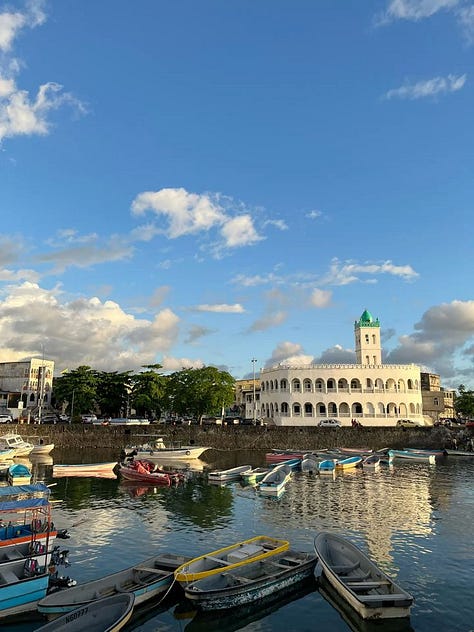
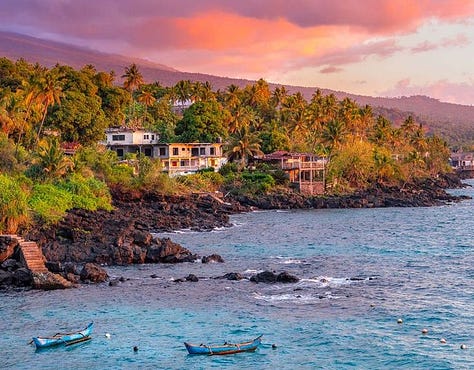
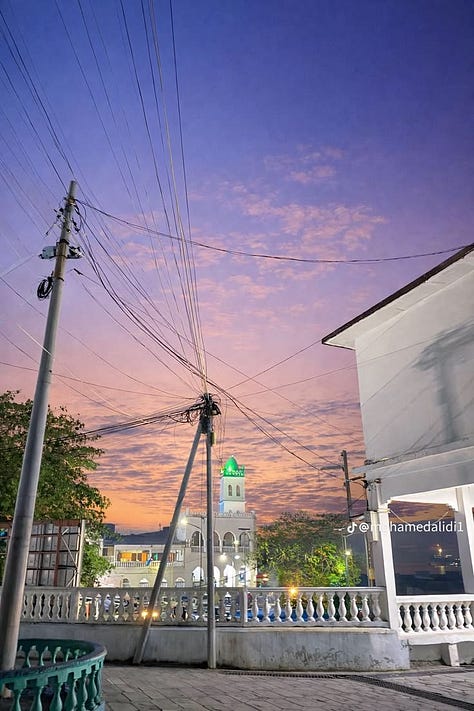
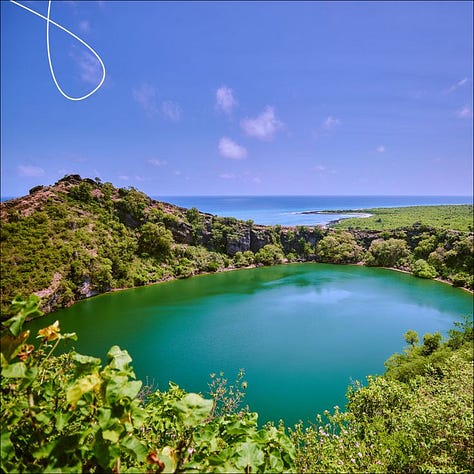
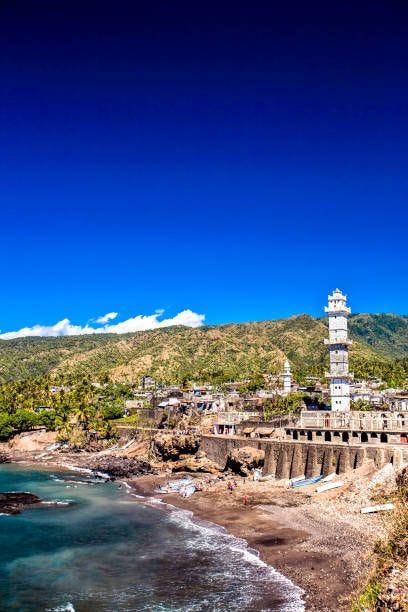
Take a short virtual tour of Comoros with me. Can you spot the opportunity?
Next week: Your vote decides our next destination. Click here to access the tracker
Comments
Nothing yet. Say the first thing.
Sign in to join the conversation.