
Welcome to Issue #72 of TAIS, where every Friday we spotlight visionary changemakers reshaping Africa’s tech, data, and AI landscape, one breakthrough at a time.
Today we spotlight William Lesetja Makgaba, a South African educator and founder of Vexospark Digital College in Limpopo, whose path into digital education began with being embarrassed in front of others simply because he did not know how to use basic software. That experience, before he had language for what digital exclusion actually was, planted in him the understanding that the gap between those who can navigate technology and those who cannot is a gap of opportunity rather than a gap of intelligence.
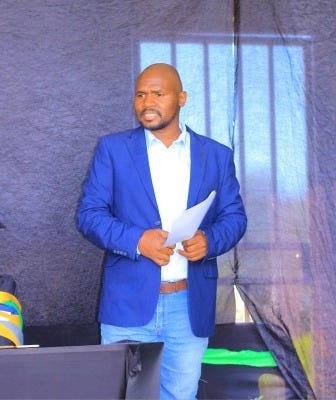
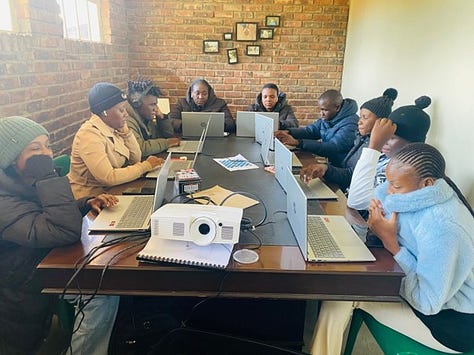
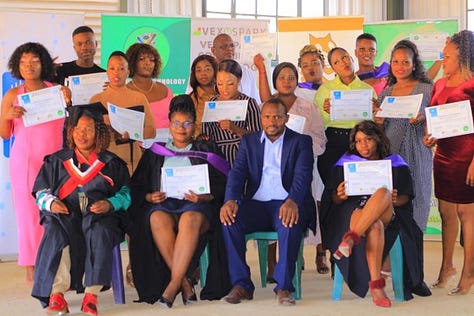
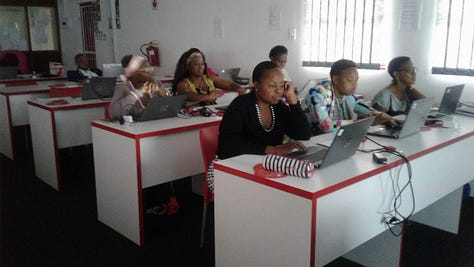
Vexospark Digital College, officially launched in Tzaneen in 2021, is what that understanding eventually became. It offers training in coding, robotics, cybersecurity, and AI alongside foundational digital literacy but William’s argument, which runs through every answer in this conversation, is that none of the advanced work means anything without the foundation. In rural Limpopo, where many people encounter a computer for the first time after finishing school, digital literacy is not a stepping stone. It is the condition without which everything else becomes another form of exclusion.
Q: You’ve spoken about a moment in your early life when you were publicly embarrassed for not knowing how to use basic software like MS Word. How did that experience shape your understanding of digital exclusion and your later decision to build Vexospark Digital College?
A: That experience was deeply personal and formative. Being humiliated in front of others simply because I lacked access to tools that others took for granted made me realise that digital exclusion is not about intelligence, it is about opportunity. It planted a seed of empathy that never left me. I understood from that moment what it feels like to be invisible in a world that is moving forward without you, and I made a quiet commitment that others in my community would not have to carry that same shame.
Q: You went on to establish Vexospark Digital College in 2008. What was the first step in moving from a personal experience of exclusion to building a structured educational institution?
A: Looking back, I believe this was a calling rather than a plan.
I was working as a gardener at the time. The lady I worked for,I called her the Boss Lady, gave me a computer tower one day and said, “Go back to Limpopo and make a new life.” The very next day when I arrived at work, she was gone. She had passed away. I left carrying that system unit and the weight of her last words.
What I did not know then was that a desktop computer needs a monitor, a keyboard, and a mouse to function. I was still digitally illiterate. But I was determined. People like Mr. Matjuda, former Head of Maths and Science at UL, former Mosebo Primary School Principal Mr. Monyela, and former Deputy Principal at Toronto Primary, Mr. Mokgehle, guided me during those early years and I am deeply grateful to them.
The journey unfolded in stages:
2008–2011: Vexospark was unregistered. I was training people in rural communities and taking them to the University of Limpopo for assessments and certification.
2012: I joined the Activate! Leadership and Public Innovation programme, now called Activate Change Drivers. It opened my eyes to the power of networking and introduced me to LinkedIn. On 12 October 2012, I received a short DM from a woman named Nora Tager of the P.E.A.C.E. Foundation Trust. It simply read: “William, I think I can help you.” That message changed everything. She taught me how to run a business, registered Vexospark formally, shaped our logo and identity, established seven ICT hubs across Limpopo, and ensured I continued learning about business.
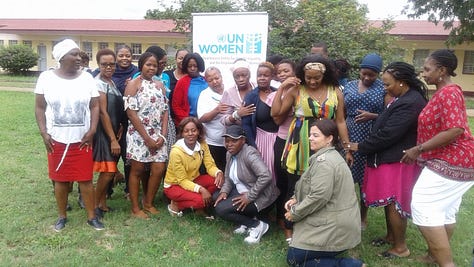
2013: Through LinkedIn I connected with Smiley Ahmed- may he rest in peace, who donated computers to help us convert community halls into Community Technology Centres. He introduced Vexospark to Cisco, UN Women, Intel, Google, SAP, and others.
2014: We were recognised as Youth Emerging Social Entrepreneur of the Year at UJ. That same year, Investec invited me to Israel as part of a trip for young South African entrepreneurs.
2016: We secured funding from the IDC and Flanders as a social enterprise to build a dedicated digital college, which was officially launched in Tzaneen on 15 April 2021 by then Minister of Communications and Digital Technologies, Stella Ndabeni-Abrahams.
Editorial commentary: William's opening story exposes an assumption that often goes unquestioned: we tend to interpret digital competence as an individual attribute rather than the product of accumulated opportunity. Not knowing how to use a computer is easily read as a personal deficiency, when it may simply reflect unequal exposure to technology, education, and mentorship. The humiliation he describes therefore matters less as a biographical anecdote than as evidence of how structural inequalities become experienced as individual shortcomings. That shift in perspective also explains why Vexospark evolved into more than a training centre. If exclusion is produced socially, then inclusion requires more than teaching technical skills; it requires creating pathways into the networks, confidence and opportunities that make those skills meaningful.
Q: Your work focuses on coding, robotics, cybersecurity, and AI education for rural communities. Why do you believe digital literacy must come before conversations about advanced technologies like AI?
A: Because in rural communities, a computer is still a luxury. Most people only encounter one for the first time after finishing matric, if at all. Students pay others to type their assignments not because they do not know the answers, but because they do not know font types, font sizes, or how to navigate a document. They have the knowledge but not the tools or the language to express it digitally.
Rural communities are, in a very real sense, swimming in a dark pool. You cannot teach someone to swim in the deep end if they have never seen water. Digital literacy is not a stepping stone, it is the foundation. Without it, advanced technology becomes another form of exclusion.
Q: What is something about digital literacy and rural inclusion in Africa that you think is still widely misunderstood?
A: The most dangerous misunderstanding is that digital literacy is optional, a luxury that people in rural areas can afford to acquire later. It is not. It is already a prerequisite for basic participation in society, and the gap between those who understand this and those who do not is widening every day.
Consider what is already happening around us. Shoprite and Checkers are introducing self-checkout systems where a store can operate without a single teller, you scan your trolley, pay, and leave. The IEC is consulting on digital voting. McDonald’s, KFC, and Nedbank are progressively removing human-staffed counters in favour of digital interfaces. These are not distant possibilities. They are current realities.
For someone who is digitally illiterate, each of these shifts does not represent progress it represents exclusion. They will stand at a self-checkout machine and not know what to do. They will be unable to vote if the system moves online. They will be turned away, not by a person, but by a screen. Digital illiteracy in 2026 is becoming what not having an ID was a generation ago, it makes you invisible to the systems that govern everyday life. Until that urgency is widely understood, the people most affected will continue to be left furthest behind.
Editorial commentary: Digital literacy has long been framed as a pathway to employment and economic opportunity. William's examples suggest that its role is changing. As more everyday interactions move behind digital interfaces, digital literacy begins to function less as a marketable skill than as a condition for civic participation. This changes the nature of exclusion itself. It is no longer confined to the labour market or the classroom; it becomes embedded in the design of everyday systems. The consequence is that digital inequality stops looking like a technology problem and starts functioning as a governance problem. Decisions about who can access services, exercise rights, or participate in economic life increasingly become decisions about who can navigate digital systems.
William's emphasis on digital literacy is less about teaching computers than about correcting the order of the conversation. AI may be transforming society, but participation in that transformation still begins with the ability to navigate a digital interface. Without that foundation, every new technological advance risks widening the gap between those who can engage with it and those who cannot.
Q: Many young people encounter technology only at a later stage in education or employment. What difference does early exposure to digital tools and systems make in shaping long-term opportunity?
A: The difference is enormous, and the absence of early exposure is painful to witness. I have seen second-year university students charge money, or worse, demand sexual favours, just to help a classmate with a basic computer task. That happens because tertiary institutions assume everyone arrives digitally literate. That assumption is wrong, and for many rural students it becomes a source of exploitation and shame.
When young people encounter technology early, they arrive in further education and the workplace with confidence rather than dependency. Early exposure does not just build skills, it protects dignity.
Q: Your work specifically focuses on women, disabled people, and rural youth. What does it take to ensure these groups are not left behind in digital transformation?
A: This question, for me, goes beyond pedagogy. It is about justice.
Redressing historical disadvantage for women and building genuine equality must be a shared motivation not a programme objective on a funding report, but a moral commitment that drives everything we do. Women have been systematically excluded for generations. That is not a skills problem. It is a justice problem, and education is one of the most powerful tools we have to begin correcting it.
People living with disabilities being seen and treated as fully human is not a progressive idea it is a basic one. The fact that it still needs to be said tells you how far we still have to go. Inclusion is not a favour we extend to people with disabilities. It is an overdue recognition of their humanity.
And when it comes to young girls, the urgency is different, because the threat is immediate. Online predators do not wait for girls to grow up. They target them now, where they are, through the very devices we are putting in their hands. If we teach girls to use technology without teaching them to be safe online, we are not empowering them, we are exposing them. We are handing them over to scavengers.
That is why digital safety is not an optional module in our programmes. For young girls in particular, it is the foundation. Protecting them online is inseparable from educating them. You cannot have one without the other.

Editorial commentary: William shifts the conversation away from technology itself and toward the power relationships that surround it. In his telling, digital exclusion is not simply the absence of skills. It creates conditions in which some people become dependent on others, making exploitation easier and autonomy harder to achieve. That is why his examples are not about devices or connectivity. They are about the social consequences of unequal access. These are different manifestations of the same underlying problem. Technology does not erase existing inequalities simply by becoming available. Unless inclusion is designed with those inequalities in mind, digital transformation risks reproducing them in new forms.
Q: Your programmes include training in AI, IoT, and cybersecurity alongside foundational IT skills. How do you decide what advanced technologies are appropriate to introduce in communities where basic digital access is still uneven?
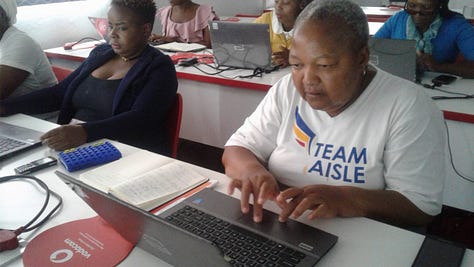
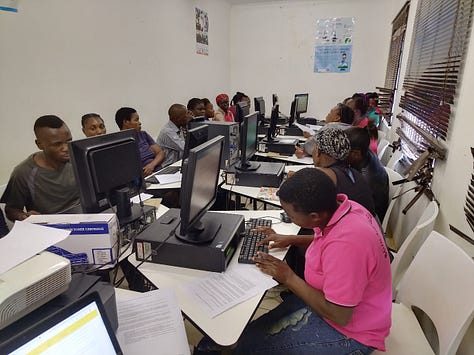
A: We use a structured approach. At the college we have a learning space called EDEN, if you have never used a computer before, you begin at EDEN. You learn the absolute fundamentals: how to use a keyboard, how to use a mouse, how to navigate a screen. No one is fast-tracked past that stage.
For our more advanced programmes, we focus on what we call Digital Skills for Decent Jobs. Before placing anyone on a pathway, we conduct a pre-assessment. Based on the results, we can tell a student whether they are suited for Ethical Hacking, Drone Coding, Cybersecurity, and so on. The technology is always matched to the learner’s readiness not the other way around.
Q: There is often a difference between having access to technology and being able to meaningfully use it. What does “meaningful digital inclusion” actually require beyond access to devices and internet connectivity?
A: It requires two things working together: the tool and the skill. One without the other is not inclusion, it is a gesture.
A clear example: through the She Will Connect programme, we trained women on Canva. By the time we left, only about 30% were still using it. Not because they lacked the desire, but because they lacked consistent access to devices and reliable connectivity. The remaining 70% were left behind, not by lack of ability, but by circumstances outside their control.
Meaningful inclusion means ensuring that after the training ends, people still have what they need to keep going. That is the gap most programmes ignore.
Editorial commentary: William's Canva example also exposes the limits of treating digital inclusion as the responsibility of any single organisation. Training is one piece of a much larger system. Whether someone continues using a digital skill depends on factors that extend well beyond the classroom: access to devices, affordable connectivity, supportive institutions, and opportunities to apply those skills in meaningful ways. The fact that 30% continued using Canva is significant given those constraints. But it also raises a second question. How many of those women were ultimately able to translate that continued use into income, employment, or entrepreneurship? That outcome depends not only on William's work, but on whether the broader ecosystem is capable of converting digital capability into economic opportunity. His experience therefore points to a wider lesson: digital inclusion cannot be built through training programmes alone. It requires an ecosystem in which educators, governments, employers, technology companies, and funders each carry part of the responsibility.
Q: Much of South Africa’s digital skills ecosystem is concentrated in urban centres. What specific barriers make it difficult for rural communities to access meaningful participation in digital and AI-related fields?
A: The most painful barrier is how funding flows. Funders consistently support organisations that are camera-ready, polished, urban, and easy to photograph for a report. They overlook grassroots organisations that are doing the hardest, most necessary work in the most neglected places.
That is why, in South Africa, almost everything is concentrated in Gauteng, the Western Cape, and KwaZulu-Natal. Rural provinces like Limpopo are treated as afterthoughts. Until funders deliberately direct resources toward grassroots organisations, the digital divide will not only persist, it will deepen.
Q: Initiatives like Vexospark often operate in environments with limited infrastructure support. What does sustainability look like for grassroots digital education institutions in rural regions?
A: Honestly, it is hard and the irony is not lost on me. When Digital Vexospark was still a private company, funding came from organisations like Barloworld Mbewu, the IDC, Siyafunda, the P.E.A.C.E. Foundation Trust, and the University of Limpopo. Since we converted to a non-profit in 2023, the only monetary funding we have received was from the International Labour Organization that same year. That was the first and last. Nothing has come since.
The same dynamic that makes rural communities invisible to funders applies to us as an organisation. Funders want camera-ready projects visible, urban, photogenic for an annual report. We do not fit that mould, and we refuse to pretend we do.
What has kept us going is something money cannot easily replicate: passion. We have continued to run zero-budget programmes because our mandate is unambiguous, making a stand against rural poverty. Education is the most powerful and enduring way out of poverty. Until the funding landscape changes and grassroots organisations are seen as worthy of investment, passion will have to be its own form of sustainability. It is not ideal. But it is real.
Editorial commentary: Every national AI strategy depends on institutions capable of turning ambition into reality. That dependency is often overlooked. Policymakers announce digital skills targets, companies invest in new technologies, and funders back innovation programmes, yet much of the work of preparing people to participate in that future falls to small organisations embedded within local communities. William's experience raises a broader question about what happens when those institutions themselves become precarious. If the organisations building digital capability are forced to operate from one grant cycle to the next, their ability to plan, retain talent, expand programmes, and build long-term relationships inevitably becomes constrained. The challenge, then, is not only financing digital inclusion. It is recognising grassroots institutions as part of the infrastructure on which digital transformation itself depends.
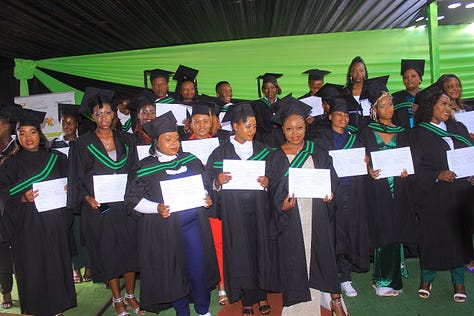
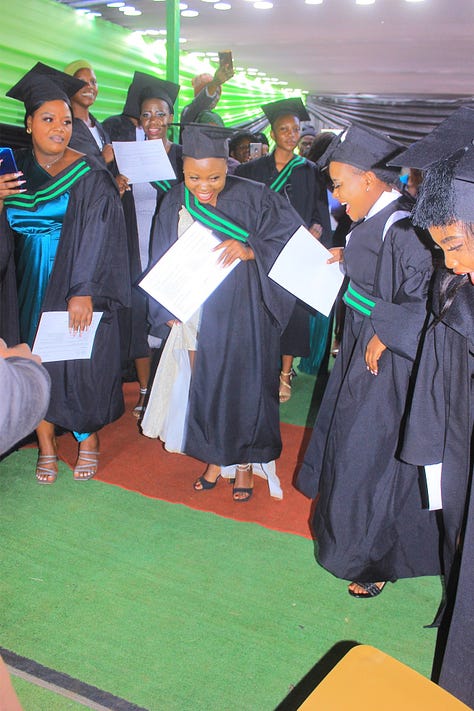
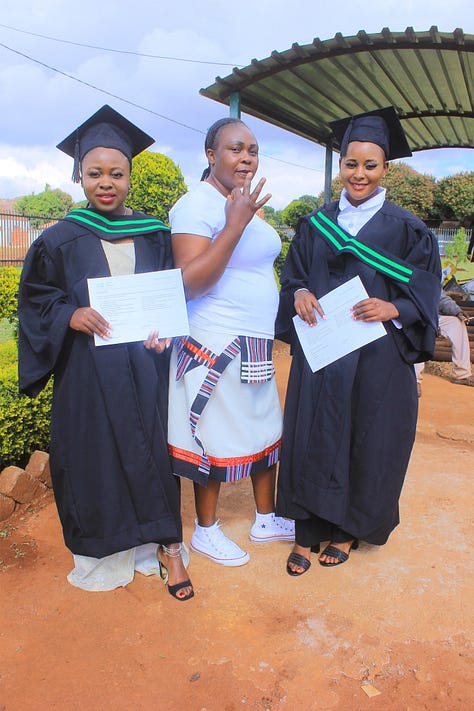
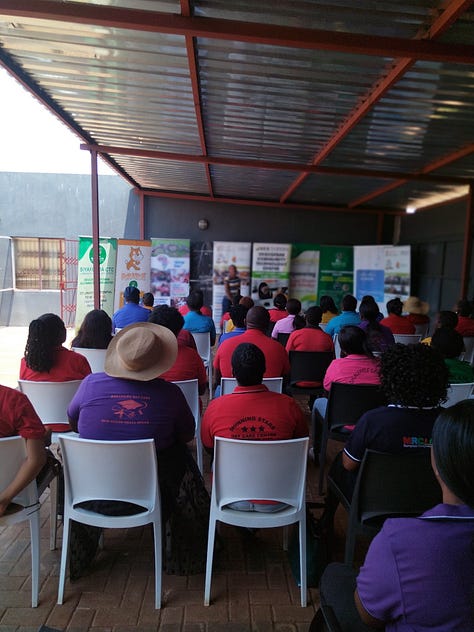
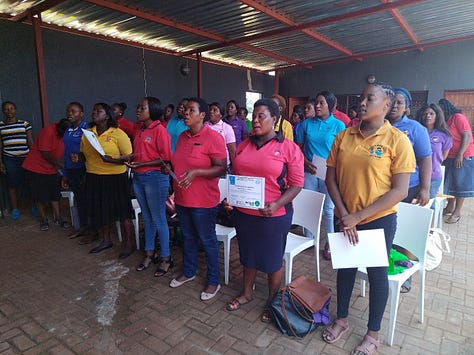
Q: More than 1,000 women have benefited from your programmes. How do you think about education not just as skills training, but as a form of restoring dignity and confidence in communities that have been historically excluded?
A: Education carries its own kind of dignity. When the women who have come through our programmes describe what learning has meant to them, they often say something in Sepedi: “O re dirile batho” meaning “You have made us human.”
That phrase says everything. They came to us believing they were nothing because they had been excluded. They leave believing they are something. That transformation, from invisibility to belonging is what education does when it is done right. Skills matter, but restored dignity matters more.
TAIS Bridge Builders Circle Question: You’re at the edge of AI where electrons meet atoms. Your focus on disabled people, women, and youth in rural communities presents both unique challenges and incredible opportunities. What have been a few of the most rewarding moments in this journey?
A: There are two moments that stay with me above all others.
The first was during a Design Thinking session focused on coding and robotics. One of our young participants, a girl living with a hearing disability came up with a solution that stopped everyone in the room. She had identified a real problem: small-scale farmers around Tzaneen struggling to afford expensive equipment to monitor their crops. Her design combined an IoT sensor with freely available satellite data from Sentinel-2 and Landsat i.e. government satellites that capture heat and soil data at no cost and connected this to a fusion engine we developed to compile risk reports and send them directly to the farmer with practical recommendations. She did not need to hear us teach her about innovation. She already understood the problem. We simply gave her the tools to express the solution she already had inside her.
The second is quieter but equally profound: watching young girls who came through our programmes enter the cybersecurity field. Girls who were once told, by circumstance if not by words, that technology was not for them. They are now the ones protecting systems, detecting threats, and building careers in a domain that desperately needs more diverse minds. That shift, from exclusion to expertise is what Vexospark exists for. Those moments remind me that the work is worth every obstacle.
Editorial commentary: Capability is far more widely distributed than opportunity. Again and again, William describes people whose potential was never absent, only constrained by the systems around them. The hearing-impaired girl did not become capable when she encountered robotics; she finally had the means to express knowledge she already possessed. The women who describe education as "making us human" are not saying they lacked humanity before. They are describing what happens when institutions stop treating them as though they have little to contribute. These stories challenge one of the assumptions that still shapes much of digital development: that the primary task is to create capability. William's experience suggests a different task altogether which is to build institutions that are capable of recognising, developing, and trusting the capability that already exists.
Conversations about AI often begin with models, algorithms, and the technologies reshaping the future. William’s work suggests that the more important questions may lie further upstream. Throughout this conversation, he returns to a simple but powerful idea: exclusion is rarely the consequence of an absence of ability. More often, it reflects the unequal distribution of opportunity, infrastructure, institutional support, and belief in people’s potential. Whether he is describing rural students encountering a computer for the first time, women rebuilding their confidence through education, young girls entering cybersecurity, or grassroots organisations struggling to survive, the underlying argument remains remarkably consistent. The challenge is not discovering talent where none exists. It is creating the conditions in which talent can be recognised, developed, and sustained.
That perspective also broadens how we think about AI readiness. Preparing societies for an AI-enabled future is not only about expanding technical capacity or accelerating technology adoption. It also requires investing in the institutions that make participation possible in the first place: schools, community organisations, educators, local innovators, and the grassroots ecosystems that often remain invisible within national technology strategies. These institutions do more than teach digital skills. They shape who is able to participate in the digital economy, who becomes a creator rather than merely a consumer of technology, and whose ideas are ultimately reflected in the future being built.
William’s story reminds us that every technological transformation rests on decisions that are deeply human. Long before societies debate frontier AI models or autonomous systems, they decide where opportunities are created, who receives them, and which communities are expected to build the future from the margins. As AI becomes increasingly woven into education, work, and public life, perhaps the more enduring question is not how intelligent our technologies will become, but how widely we are willing to distribute the opportunity to shape them.
Thank you for reading!
Don’t see your pick in the options? Drop it in the comments. William joins the map this weekend.
Thank you for standing with this work.
Comments
Nothing yet. Say the first thing.
Sign in to join the conversation.