

Myriam Ben Salah is a Tunisian-French curator. Since 2020, she is the Director and Chief Curator of the Renaissance Society in Chicago, where she has organized solo exhibitions with artists from around the globe. In 2026 she was the curator of Yto Barrada’s French Pavilion at the 61st Biennale di Venezia. In 2020, she co-curated the biennial exhibition Made in L.A. at the Hammer Museum in Los Angeles. She lectured at ArtCenter Pasadena, Yale, and Bard College. She currently sits on the Graduate Committee at the Center of Curatorial Studies at Bard College.
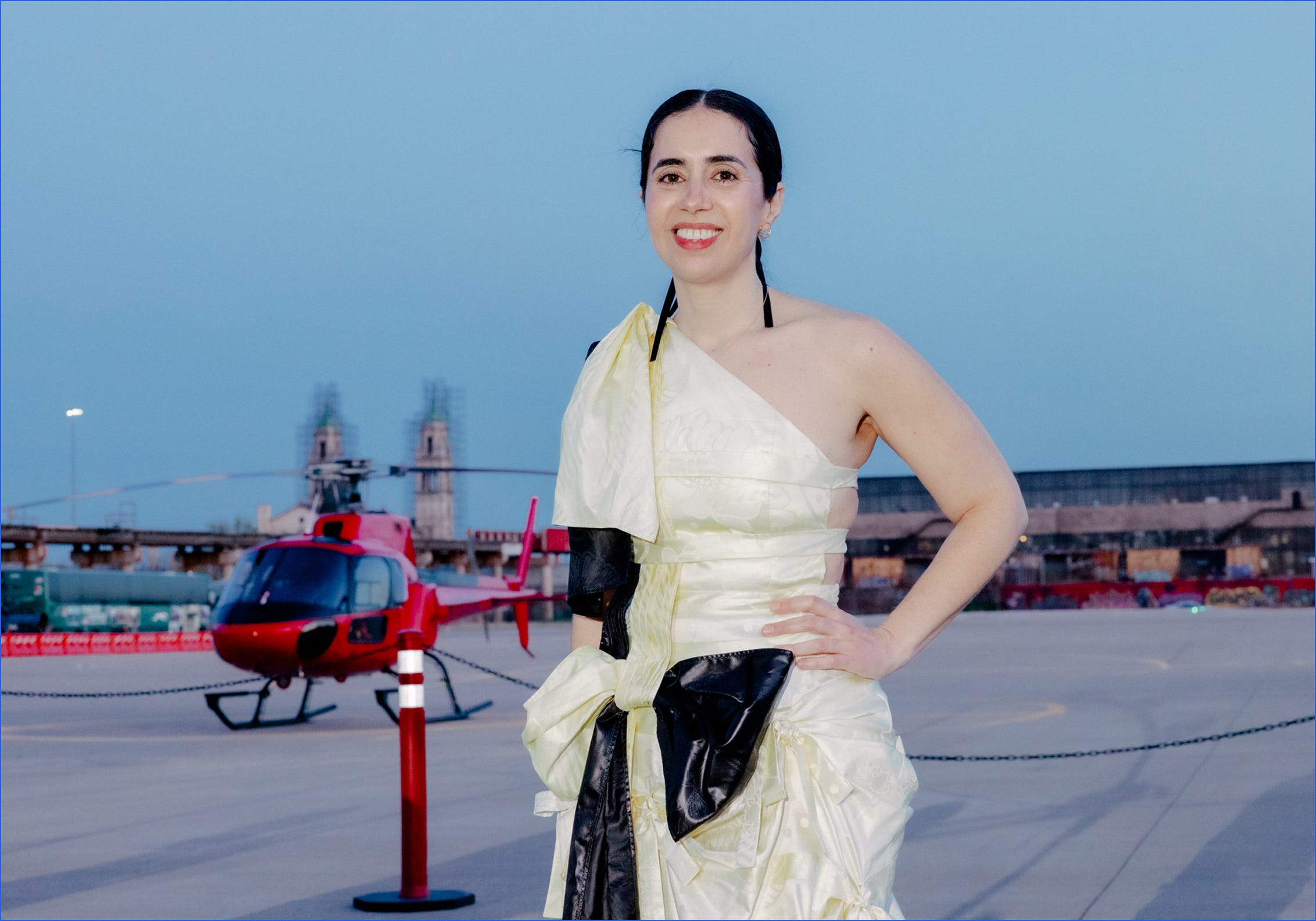
RTH: Where were you, when was it, and what brought everyone together?
Sometimes it feels like I’ve organized my entire life around finding reasons to bring people together. Hosting isn’t so different from curating, really. In both cases you’re trying to place people, ideas and energies next to one another and hope something unexpected happens. It’s about finding the right constellation.
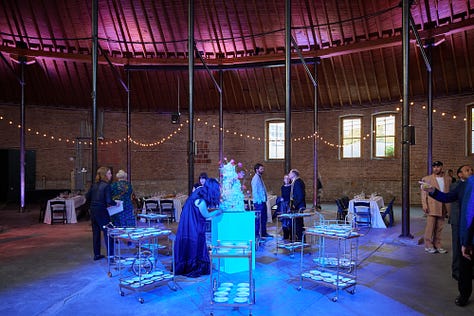
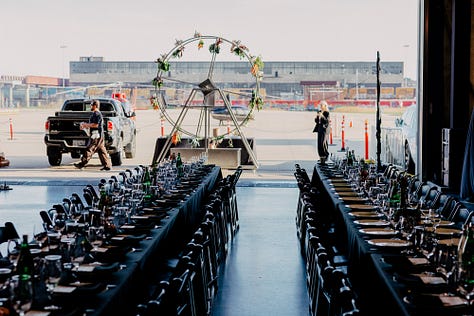
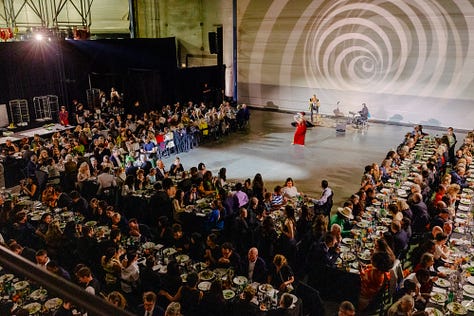
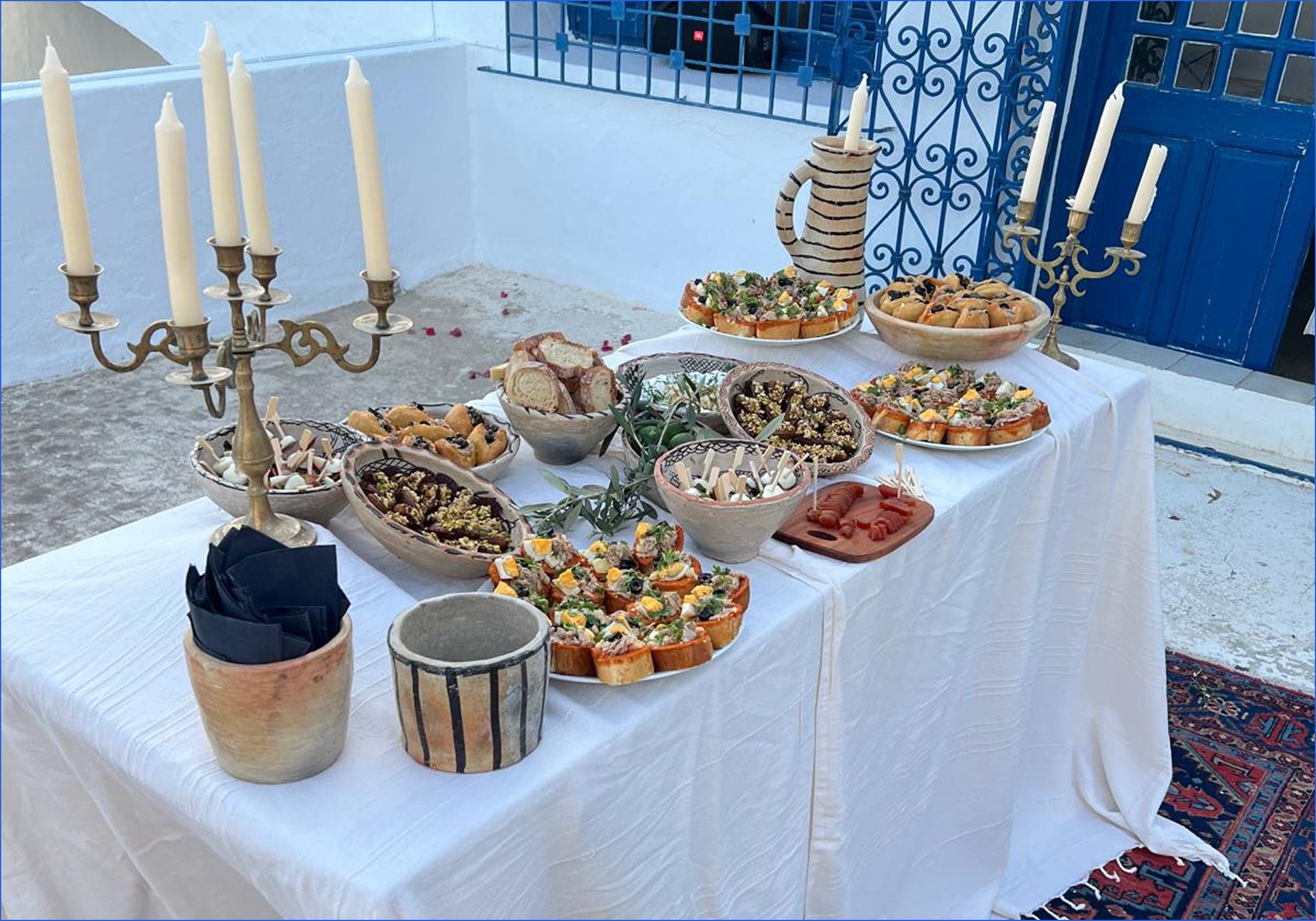
For my 40th birthday, I convinced about thirty friends to come to Tunis, where I grew up. Tunisia is still a little under the radar, and much of who I am was formed there: an elastic relationship to time, a preference for gatherings that begin at lunch and end after sunset, an appreciation for gossip as a social art form, and the firm belief that if someone arrives with a friend there is always, of course, room for one (or three!) more at the table. Hospitality is like the default condition.
The main dinner happened at my friend Sofia Guellaty’s beautiful home in Sidi Bou Said, on the hills overlooking the Mediterranean. By sunset, everyone had arrived from different corners of my life and the world, and for a few hours those circles merged.
RTH: Who was there?
A completely mixed crowd, which is always my favorite. One of the things that brings me the most joy is bringing people together that would have never met otherwise and seeing friendships form in the long run, even without me.
I’m not a big fan of the art world’s insularity and I try to avoid tables where people are introducing themselves through their jobs. The best tables are when your friend from high school is sitting next to an artist’s auntie, or someone brought their cousin and they end up flirting with the cook or event producer. That was very much the vibe.
RTH: Where do you draw inspiration for the look?
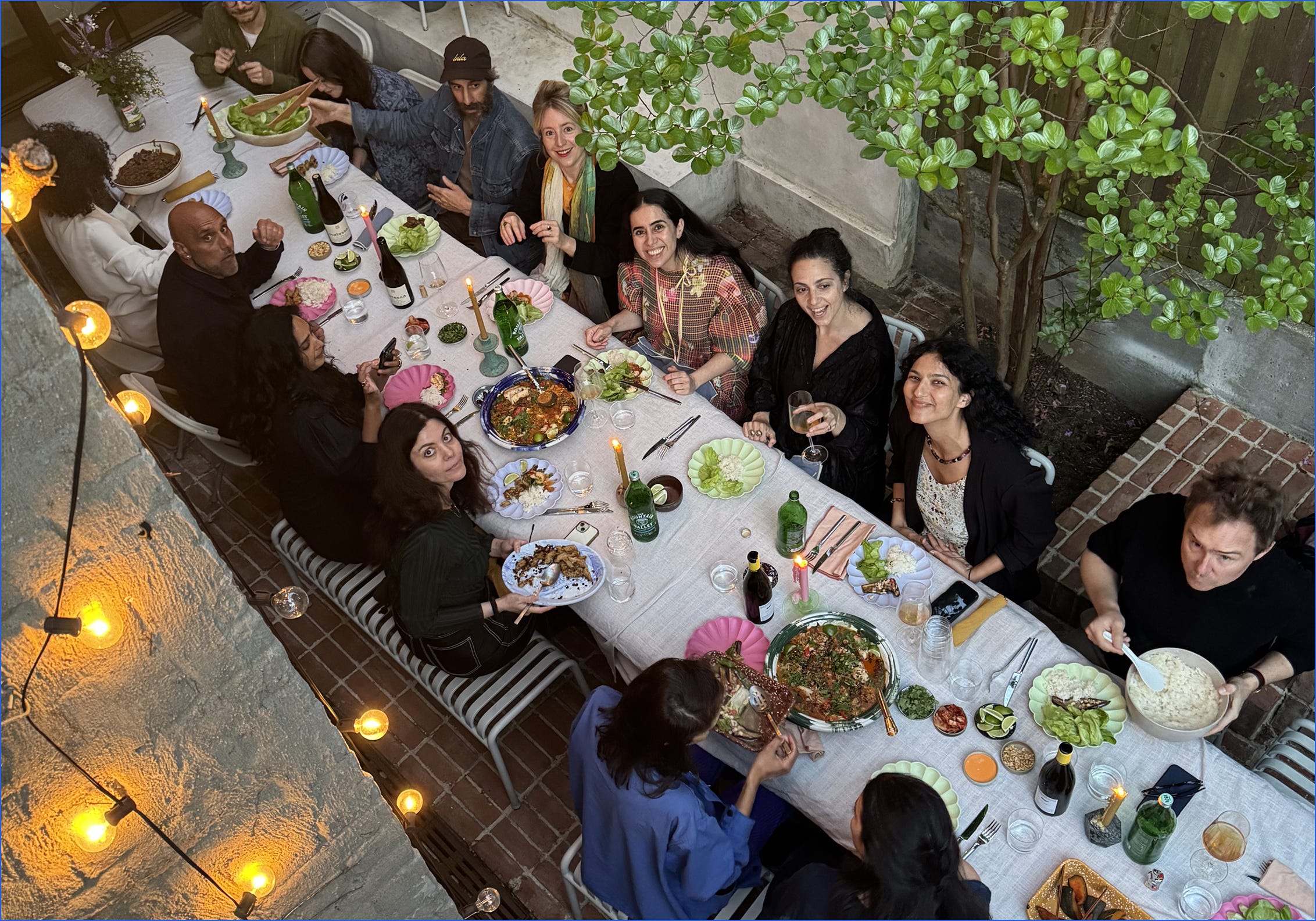
Honestly, from friends. Laila Gohar has probably influenced me more than anyone when it comes to entertaining. She has an ability to make things feel effortless while paying attention to every detail. Years ago she organized a birthday dinner for me on the street in front of her studio in New York. I think about that table all the time. Nothing felt overworked, and it made people feel good.
My friends Benjamin Trigano and Vanessa Moshay as well. They host dinners at their home in LA at least twice a week and it’s just the most cozy and unpretentious. I don’t like overdesigned tables. Give me two long tables, a couple of candles, flowers picked from somewhere nearby and that’s plenty.
RTH: What did you serve and why?
I worked with Molka Annabi, who I think is one of the most talented cooks in Tunisia. She made an incredible harissi couscous with handmade semolina, meat, chickpeas and raisins, alongside lots of Tunisian things I wanted everyone to discover: bottarga, fricassés, little spoonfuls of mloukhiya. Molka has this rare quality where she’s incredibly skilled but also completely chill. There isn’t that frantic energy that sometimes comes with entertaining. She’s just… cool.
For smaller gatherings I cook myself. My favorite thing is inviting people over on a Sunday for shakshouka around lunchtime and then nobody leaves until dinner. I love making things that are easy to share and easy to eat. Pissaladiere is always a good idea. A stew as well.
RTH: What were you pouring?
Champagne, because I love it and life is short. And wine. My favorite wines ever are made by Tom Lubbe, a New-Zealander that makes the most exquisite wines at Matassa, in the Pyrenees. I’m obsessed with Cuvée Alexandria and Cuvée Marguerite. I literally convinced Lula Café, my favorite restaurant in Chicago, to keep a secret stash for me. We drank Matassa at my birthday dinner this year too, which my friend Deana Haggag hosted for me in her backyard in Brooklyn (she’s definitely another hosting inspiration).
RTH: How did you shape the atmosphere?
String lights forever. They’re the biggest cliché, but I don’t care. They remind me of old Italian dance halls and French guinguettes and immediately make everything feel warmer.
For the Tunis dinner we also had a live mezoued band. Mezoued is a traditional Tunisian folk music built around a bagpipe-like instrument. It’s impossible to stay seated for very long. I think a dinner that ends with dancing is a successful dinner.
RTH: What are your go-to hosting tricks?
Do most things before people arrive. The whole point is to actually spend time with your friends. If you’re still cooking and/or panicking while everyone else is having fun, something has gone wrong. Also: always make too much food and have people take it home.
RTH: Are there any small touches or rituals that made the gathering feel personal?
Towards the end of dinner, people started standing up one by one to tell stories. People talked about how we’d met, apartments we’d shared, embarrassing moments, old trips. It became less of a birthday dinner than a collective remembering. I cried. Obviously.
RTH: What’s something you overheard, or a moment that captured the night?
I think two friends realized they were distant cousins?
Please note: this interview has been edited for length and clarity.

One of the main reasons talking to strangers can feel particularly scary is because you don’t know where the conversation will go. It’s unpredictable. But that’s one of the things that makes conversing with strangers so wonderful, according to Dr. Gillian Sandstrom, author of Once Upon a Stranger; the science of how ‘small’ talk can add up to a big life. Sparking a conversation with someone you don’t know offers new perspective, fresh wise takes, and can actually help us feel more settled when things are uncertain (for example, you’re at a dinner party where you only know the host and went in prepared to make a quiet, early exit…).
Some tips on having meaningful conversations with strangers inspired by Dr. Sandstrom’s research:
Make eye contact
Smile at strangers or share a small wave, these tiny moments of connection make the difference
Don’t be afraid of simplicity. We’re all taught to avoid small talk, but sometimes small talk is exactly the point. Give a small compliment, ask for their opinion, comment on a shared experience you’re having.
Accept what you can’t control and try having a conversation with the person standing next to you.
No posts
Comments
Nothing yet. Say the first thing.
Sign in to join the conversation.