
Some fun facts: I was captain of my high school varsity tennis team and a ranked USTA junior player in Southern California. I’m a jock through and through, and I jump at any opportunity to watch a major live sporting event. For the last two months, I was glued to the TV between the Knicks’ historic playoff run, Wimbledon and the World Cup. I already miss the feeling of gathering with friends, and complete strangers, around a shared goal: wanting our boys to win.
At this point, it probably goes without saying that I’m bullish on the experience industry. But I’m not just talking about “hot girl dinners” (as Care of Chan partner and Director of New Business Gaby Domingo likes to call them) or dînatoires (The New York Times’ preferred term, not mine). If this summer taught us anything, it’s that people don’t need elaborate floral center pieces or canapés to connect, they simply just need a reason to care together.
More than 62 million Americans watched the World Cup Final, while more than 20 million tuned into the NBA Finals. Obviously, these sporting events didn’t solve the loneliness epidemic. (Or did they?!) But they did remind us of something we should never forget: a shared purpose, like cheering for your home team, has an extraordinary ability to bring people closer together.
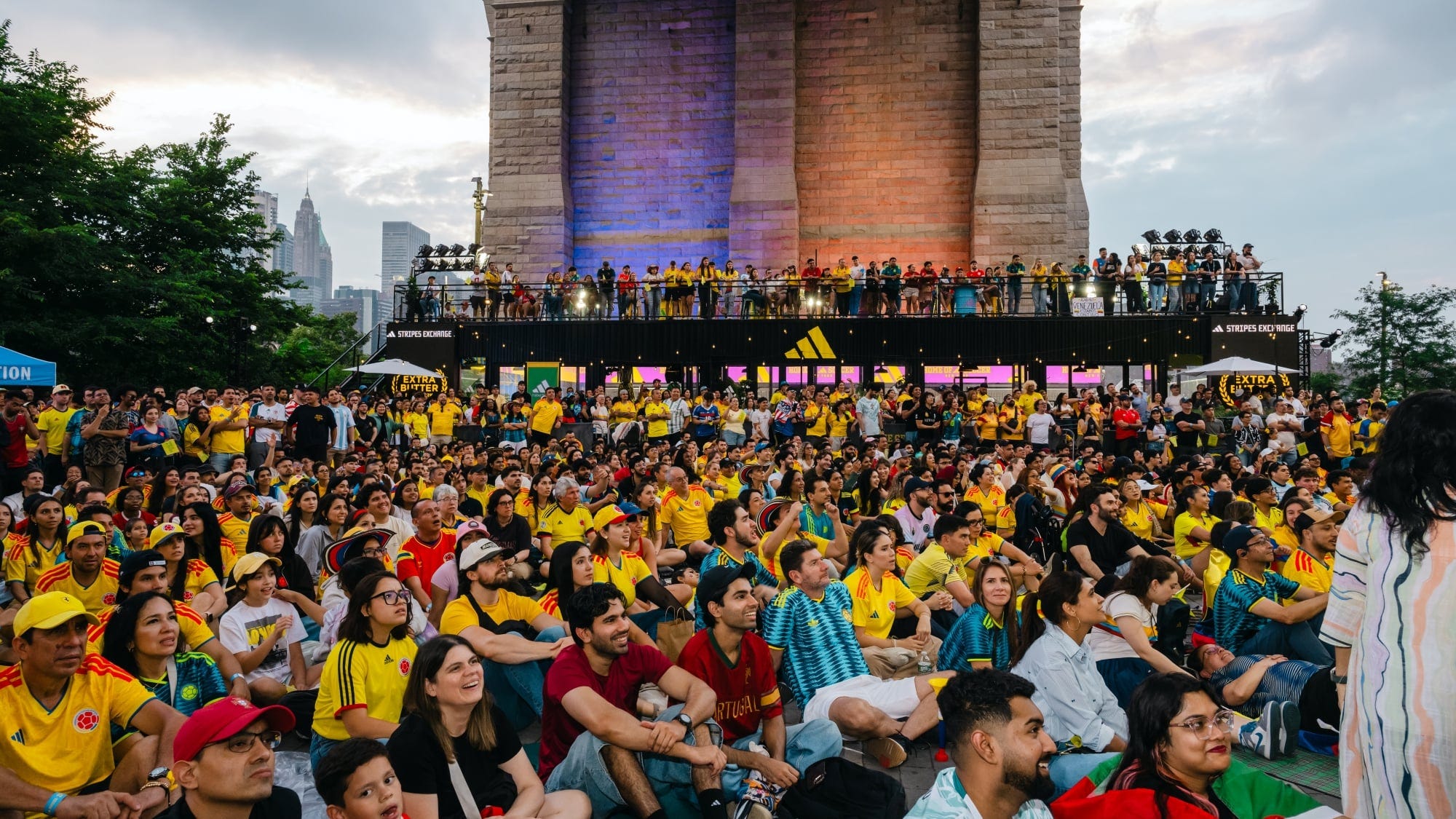
Sports have a lot going for them. They’re one of the few cultural experiences that can’t be completely gatekept. Yes, ticket prices were astronomical, but as we saw this summer, New Yorkers gathered around games projected on the side of West Village buildings, filling restaurants for watch parties. If you want to watch a sports game, you can often find a way to do it for free. (Hot tip: The qualifying rounds for the tennis U.S. Open, which happens a week before the main draw, are completely free to attend.) They are also one of the last sectors where talent and merit matter more than who you know or where you came from. It’s spontaneous. In a world full of carefully planned Instagram-perfect moments, anything can happen in a sports game, down to the last minute, or seconds (looking at you, OG). Most importantly, sports are best enjoyed with groups of people, spilling into the streets, overflowing from bars, blocking traffic. For ninety minutes or more, the game and your fellow fans become more engaging than doom scrolling alone.
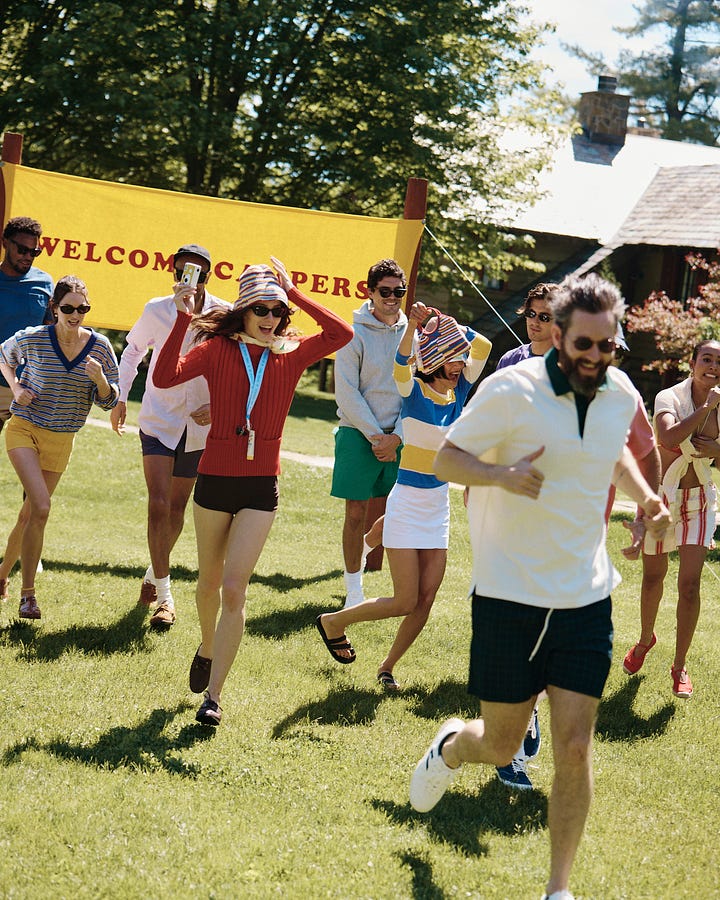
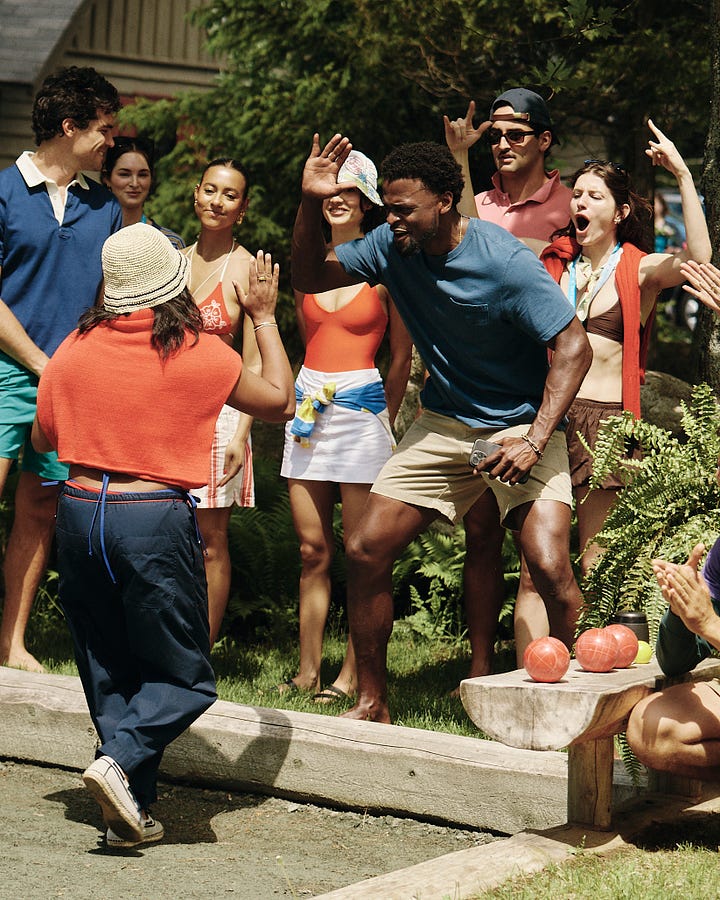
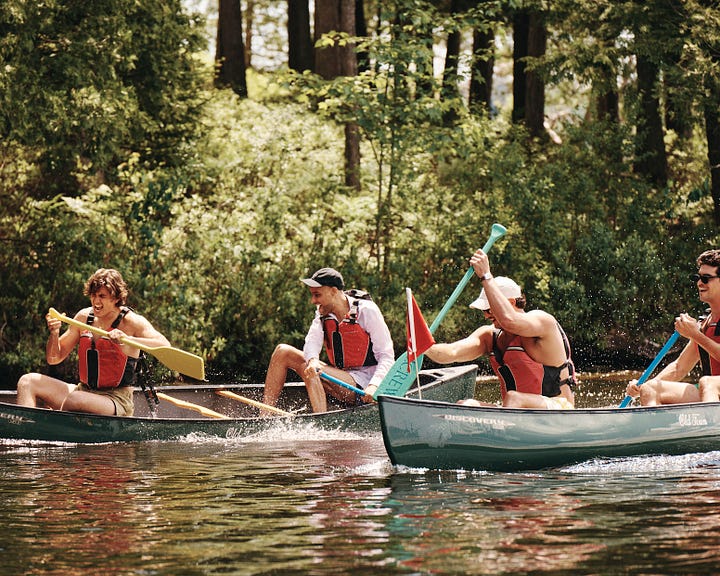
We’ve seen this magic work firsthand in our own work. During J.Crew’s recent “Camp Crew” trip in the Adirondacks, we split the guests into two teams and had a friendly competition of classic outdoor summer camp games, think canoe races, tug-of-war, and archery. There was yelling, cheering, teasing and friendly competition. While the activities encouraged teamwork, that wasn’t really the point. We wanted to recreate the carefree feeling of childhood play and give guests something bigger than themselves to rally behind. Winning was secondary. A shared objective was what brought everyone together.

This idea reminds me of one of my favorite books, Bowling Alone, in which political scientist Robert D. Putnam argues that healthy societies depend on two different kinds of relationships: bonding and bridging social capital:
Bonding social capital consists of the people most like us: our families, our group chats and the people we follow on Instagram. These relationships or parasocial relationships provide trust and support, and help us build resilience.
Bridging social capital connects us to people who are different from us: the barista at our local coffee shop, our Uber driver, someone from our recreational soccer league or the stranger high-fiving us after a last-second goal. These relationships expose us to different perspectives, build empathy for those unlike us and create opportunities and ways of thinking that wouldn’t otherwise exist in our lives.
Events like the World Cup and the NBA playoffs excel at providing bridging connections. They bring together people who might never otherwise cross paths and give them a common identity. As Putnam puts it, “Bonding social capital constitutes a kind of sociological superglue, whereas bridging social capital provides a sociological WD-40.” In other words, bonding helps us get by. Bridging helps society move forward.
Maybe that’s what I’ve been missing since the final buzzer. It wasn’t just the excitement and the endorphins from watching our team win, but the permission these events gave us to care about something together. For a few hours, strangers became teammates, cities became neighborhoods, and we remembered what it feels like to belong to something larger than ourselves.
Knicks in Five!

No posts
Comments
Nothing yet. Say the first thing.
Sign in to join the conversation.