
There is a Crete of mountains, monasteries, old stones, ruined cities, shepherds, saints, guns, songs, olives, wine, and war. That is the Crete we usually talk about, and rightly so. It is dramatic, ancient, defiant, and almost impossible to exhaust.
But there is another Crete too, and it shines strangely in the sun.
You see it as you drive along the south coast near Ierapetra, or across the warmer parts of the Messara, where the land seems to have been covered with a pale, crinkled skin. It is not the silver of olive leaves, nor the gold of barley, nor the red earth after rain. It is plastic, stretched over frames, patched, repaired, weighed down, flapping at the edges, glowing in the morning light and glaring in the hard afternoon sun.
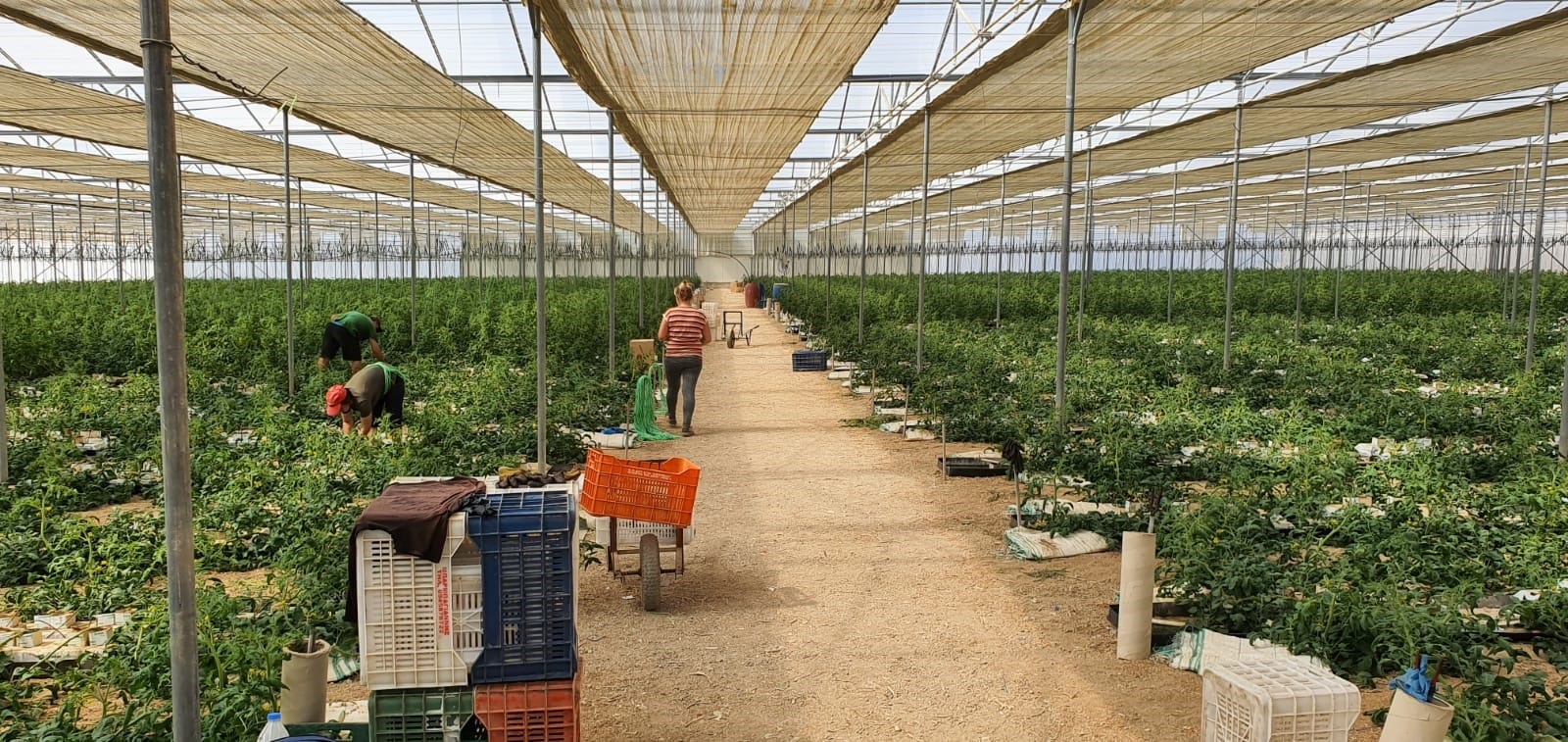
To some people, the greenhouses of southern Crete are ugly. They say they spoil the view. They say they are not the real Crete. They would rather see terraces, olive trees, old threshing floors, and donkeys under carob trees. I understand that feeling, because I feel it myself sometimes. There are places where the plastic seems to have swallowed the landscape, and where a valley that once looked open and ancient now looks busy, enclosed, and industrial.
But that is only half the truth.
The greenhouses of Ierapetra and the Messara are also among the great modern stories of Crete. They changed poverty into income. They kept families on the land. They turned small plots into businesses. They made winter vegetables possible on a scale nobody had imagined. They linked the Libyan Sea, the Cretan sun, Dutch know-how, local stubbornness, hard labour, export markets, water shortages, migrant workers, and supermarket shelves across Europe.
They are not romantic in the old way. They are not the Crete of frescoes, myths, and Venetian harbours. But they are very Cretan in another way. They are about survival. They are about looking at a difficult place and saying, somehow, we will make this work.
That is why they are worth knowing.
To understand the greenhouse story, you have to begin with the old South Coast.
Ierapetra has always had something special. It sits on the Libyan Sea, far from the grand northern towns, facing Africa rather than Europe. The north winds lose some of their bite before they get there. The winters are mild. The sun is generous. The land between the mountains and the sea is narrow in places, wider in others, but always precious. Every bit of soil matters.
The town itself has a long history, far older than its greenhouses. Ancient Hierapytna was once a powerful city, a rival in eastern Crete, a place involved in the difficult politics and wars of the ancient island. Later came Romans, Byzantines, Arabs, Venetians, Ottomans, and modern Greeks. But for most ordinary people, life was not lived in the marble language of history. It was lived in fields, family plots, fishing boats, animals, wells, and the small economy of whatever the land and sea would allow.
Before the greenhouse revolution, this was not a wealthy place. South Crete could be warm, yes, but warmth alone does not make a living. Rain was unreliable. The soil could be good, but the holdings were often small. Families grew olives, grapes, cereals, vegetables, and fruit. They kept animals. They traded where they could. They worked hard because there was no other choice.
In the Messara, the story was similar but wider and older in feeling. The Messara plain is one of the great agricultural basins of Crete, a broad sweep of land between Psiloritis and the Asterousia mountains, with ancient cities, Minoan palaces, Roman memories, Byzantine churches, Ottoman traces, and villages that have lived by the soil for thousands of years. Phaistos, Agia Triada, Gortyn, Matala, Tymbaki, Moires, and the surrounding villages all belong to that larger southern world. This is one of the places where Crete has always fed itself.
The old crops of the Messara were olives, vines, cereals, pulses, figs, carobs, vegetables, melons, and fruit. There were market gardens, of course. Cretans were not waiting for a foreigner to teach them how to grow food. They had been doing that since before history had a proper alphabet. But what changed in the twentieth century was the idea of controlling the season itself.
That was the great leap.
It was not enough to grow a tomato. The trick was to grow it early, grow it reliably, grow it in quantity, and get it to market when other places were still cold. A winter tomato from southern Crete was not just a vegetable. It was a small economic weapon.
The name that always comes up in Ierapetra is Paul Kuijpers, often remembered locally as the Dutchman. He arrived in Crete in the 1960s, and the story has now become almost legendary.
There is a statue of him at Gra Lygia, among the greenhouses, which says a great deal. Cretans do not usually raise statues to people for nothing. A statue means that someone changed the place. Kuijpers did.
He was a Dutch agriculturist who understood greenhouse cultivation. In Holland, greenhouses made sense for a very different reason. The Dutch had cold, damp weather and needed glass and controlled growing conditions to produce flowers and vegetables. In Crete, the problem was not cold in quite the same way. Crete had sun. Crete had mild winters. Crete had warmth when much of Europe was shivering. What was needed was protection, structure, and technique.
That was the genius of seeing Ierapetra properly.
A greenhouse in Crete is not simply a way of creating warmth. It is a way of protecting a crop from wind, rain, cold nights, pests, and sudden changes. It allows a farmer to bring forward the season and produce vegetables when prices are better. It turns the winter sun into money. It makes the south coast not a remote edge of Greece, but a winter garden for the market.
When Kuijpers began working with local farmers around Ierapetra in the 1960s, the idea seemed strange to many. That is always the way with revolutions before they work. People laugh first. They look at the frame, the plastic, the cost, the risk, and they say, Why should we do this? We already have land. We already know how to farm. Why cover a field with plastic like a madman?
Then the results came.
More crops. Earlier crops. Better prices. Several harvests had been before there had been one. Tomatoes and cucumbers at a time of year when markets wanted them badly. A small plot suddenly had the earning power of a much larger one.
Once Cretans saw that, the idea no longer belonged to the Dutchman. It became Cretan.
That is the point where the story changes from one man’s experiment into a local revolution. Farmers began copying. Families borrowed, built, repaired, expanded. The first structures were simple compared with modern installations. Many were wooden or basic metal frames with plastic covering. They were not glamorous. They did not look like the high-tech glasshouses of northern Europe. But they worked.
Kuijpers did not live to see the full transformation he helped begin. He died in a car accident in 1971, still a young man. That gives the story a sad edge. He saw the possibility, but not the full harvest of his own idea. Yet his memory remained because the people knew. He had helped turn Ierapetra towards a new future.
And there is something rather Cretan in that too. A foreigner arrives with an idea, but the island tests it in its own hard way. If it fails, it is forgotten. If it works, it is absorbed, argued over, improved, and made local.
Today, the greenhouse belt of Ierapetra is one of the most distinctive landscapes in Greece. It stretches west and east of the town, especially towards Gra Lygia, Stomio, Neos Myrtos, Psari Forada, and other productive pockets along the south coast. From above, it looks almost like a second town, a pale city made not of stone but of plastic.
There are roads between the greenhouses, yards full of crates, irrigation pipes, fertiliser sacks, vans, old farm vehicles, dogs, tanks, tools, and heaps of discarded material waiting to be moved or reused. It can look chaotic, because farming often does. But inside that apparent disorder is knowledge, timing, and endless work.
The main crops are tomatoes, cucumbers, and peppers, with aubergines, courgettes, beans, lettuce, herbs, and other vegetables also grown according to season, market, and individual choice. The exact mix changes because farming is never still. Prices rise and fall. Diseases appear. Export demand changes. Water quality changes. A farmer who grew mainly tomatoes one year may switch part of the holding to cucumbers or peppers the next. The greenhouse is a living calculation.
Tomatoes became one of the great symbols of the Ierapetra greenhouse, partly because they travel well, sell well, and are familiar to every kitchen in Europe. Cucumbers are another staple, especially because they can be produced quickly and in volume. Peppers, including long sweet peppers and blockier types, became important because they add value and variety. These crops suit intensive cultivation, controlled irrigation, and protected conditions.
The purpose was never simply to feed Crete. Crete already had vegetables. The purpose was to produce early vegetables for the wider market, especially in winter and early spring. That is the key. A tomato in August is one thing. A tomato in January is quite another. A cucumber, when northern fields are sleeping, has a different value.
This is why Ierapetra became famous in agricultural circles. It was not just warm. It was organised enough, experienced enough, and determined enough to make that warmth commercially useful.
Of course, the phrase organised enough has a lot hidden inside it. There are cooperatives, exporters, agronomists, seed companies, transport networks, packing houses, merchants, and endless informal knowledge passed from one farmer to another. There are arguments over prices, worries over disease, complaints about water, battles with weather, and the usual Cretan suspicion that somebody else is getting a better deal.
That is agriculture everywhere. But in Ierapetra, it is intensified under plastic.
The farmer is not just planting and waiting. He is pruning, tying, ventilating, irrigating, feeding, watching leaves, checking fruit set, managing humidity, watching the market, negotiating with buyers, and worrying about the next bill. A greenhouse can make money, but it also eats money. Plastic must be replaced. Frames rust. Pumps fail. Seeds are expensive. Fertilisers are expensive. Labour is essential. Water is never a small subject. A mistake inside a greenhouse multiplies quickly.
This is not easy wealth. It is hard-earned, practical, and exposed to risk. But it changed the south coast all the same.
The Messara has a different character from Ierapetra. Ierapetra is a coastal greenhouse kingdom, narrow and intense. Messara is broader, deeper, and more ancient in its agricultural identity. It feels like a great basin of Cretan memory. The land has been worked for so long that the idea of agriculture there seems older than the villages themselves.
Greenhouses in the Messara developed in places where the conditions made sense, especially around Tymbaki and the wider area near Moires and the south coast. Tymbaki in particular became known for early vegetables. The plain has sun, relative warmth, access to markets, and a farming population already used to commercial cultivation.
The greenhouse story in Messara does not have one famous founding figure in quite the same way as Ierapetra has Kuijpers. It grew more through adoption, adaptation, and the spread of a successful model across Crete. Once it was clear that protected cultivation could transform the south, other warm regions began to use the same logic. Messara had the land, the farming knowledge, and the climate. It was natural that greenhouses would take root there too.
Tomatoes and cucumbers are again central. In some years and seasons, cucumbers from Tymbaki and Messara are especially important in the market before other Cretan areas reach their peak. Growers often think in planting cycles. One crop may follow another. A greenhouse is not idle if it can be avoided. The farmer wants production, but also has to manage soil tiredness, disease pressure, water, and market timing.
Messara also has more visible continuity with older farming. You can pass from greenhouses to olive groves, from vegetable plots to vineyards, from plastic tunnels to old villages, from modern irrigation to ancient ruins. This is what makes the area so fascinating. It is not a break with the past as much as another layer placed on top of it.
The Minoans farmed this plain. The Romans made Gortyn the capital. Byzantines prayed here, Venetians taxed it, Ottomans controlled it, Cretan families endured it, and modern farmers covered parts of it in plastic to grow cucumbers for winter markets. That is Crete. Nothing disappears entirely. It just gets another roof, another name, another purpose.
The greenhouse crops of southern Crete are chosen because they make sense under pressure. They are not random.
Tomatoes are in high demand, widely used, and exportable. They have many varieties, from large salad tomatoes to cherry types and more specialised forms. Under greenhouse conditions, growers can manage feeding, irrigation, pruning, and fruit quality more closely than in open-field cultivation. A good tomato crop can be valuable, but it is also demanding. It needs care, knowledge, and a quick response when something goes wrong.
Cucumbers are fast, productive, and important for winter supply. They are also sensitive, and they require steady management. A cucumber plant can be generous, but it is not forgiving. Heat, humidity, disease, and irrigation must be watched closely. In a good season, cucumbers can move quickly from plant to crate to lorry to market.
Peppers are another major crop, especially in Ierapetra. They can handle greenhouse systems well, and different varieties allow growers to target different buyers. Sweet peppers, long peppers, coloured peppers, and local preferences all play into the market. Peppers also show how modern horticulture depends heavily on seed selection and technical advice. The old idea of saving seeds in the village is not the world of the modern greenhouse. Modern varieties are chosen for yield, resistance, shape, colour, shelf life, and market demand.
Aubergines, courgettes, beans, and other vegetables fill out the picture. Some growers experiment. Some specialise. Some stay with what they know. There are herbs and salad crops too, although the big story remains tomatoes, cucumbers, and peppers.
Why these crops? The greenhouse is there to solve a particular problem. It is not just growing food. It is growing food at the right time, in the right condition, for the right buyer. The crop must justify the investment. It must produce enough value per square metre. It must be harvestable, packable, transportable, and saleable.
This is why wheat did not go under plastic. This is why olives remain outside. A greenhouse is not for romance. It is for intensive value.
The climate gives Crete the advantage, but climate alone is not enough. A warm winter is useful only if you can turn it into production. The greenhouse does that. It traps possibility.
There were other crops too, and this is where the greenhouse story becomes more interesting than people might expect. It was never only tomatoes and cucumbers, although they became the great staples. Some growers tried flowers, including dahlias and other blooms grown for florists far away in northern Europe.
That made perfect sense when you think about it. A flower is a crop too, and a greenhouse can protect it, bring it forward, and turn Cretan light into something that can be sold in a colder country where winter is still sitting heavily on the glass. Holland itself had shown the world what could be done with protected growing and flowers. Crete had the light and the warmth, so why should flowers not be part of the experiment?
I remember seeing this myself, and it stayed with me. There was something almost strange about it. Here in Crete, under plastic, flowers were being raised not simply for a village feast day or a local name day, but for florists in the north, where they would appear in shop windows and bouquets with no obvious sign of the island that had grown them. It was the same principle as the winter tomato, but somehow more delicate. A cucumber feeds a family. A flower carries a message.
More recently, bananas have appeared in greenhouses too, and that also tells us something about the Cretan farmer’s mind. Bananas are not entirely new to Crete. The south coast, especially places such as Arvi, has known them for a long time. The Cretan banana is usually smaller than the imported banana, but often sweeter and more fragrant. Once you have tasted a good one, you understand why people defend it.
Growing bananas under cover is partly practical and partly experimental. They need warmth, shelter, and a kind microclimate. In the right place, Crete can offer all three. The greenhouse adds protection and gives the grower more control. Some farmers have gone further, trying papayas, dragon fruit, and other subtropical crops. Not every experiment will become a revolution, and not every strange crop will pay its way, but this willingness to try is important.
It shows that the greenhouse is not a fixed thing. It is not just a plastic box for tomatoes. It is a tool. What goes inside it depends on climate, courage, fashion, price, water, labour, and luck.
This is one of the things I admire about Cretan farmers. They do not always say much in advance. They may shrug, laugh, criticise, and pretend not to be impressed. Then one day you see a row of bananas where you expected tomatoes, or flowers where you expected cucumbers. Somebody has tried something. Somebody has taken a risk. Somebody has thought, why not?
That is how the whole greenhouse story began in the first place.
I can say a little of this from memory too, because I worked in a greenhouse in the 1960s, although not for long. It was hot, hard work. There is no romance when you are inside one, bending and sweating, with the heat caught under the plastic and the day pressing down on your shoulders. But I was well paid, and that matters.
That small memory taught me something I have never forgotten. A greenhouse may look simple from the road, but inside it is labour, judgement, and endurance. You do not drift through that sort of work. You feel it in your back, your legs, your shirt, your hands. You feel the heat in your head. The plants may look calm, but the people are working.
That is why I never quite dismiss them, even when the plastic looks harsh in the landscape. I know there are people inside that story. I know there is heat in there. I know there are hands that have done the work. And I know that for many Cretan families, those hot, difficult places were the difference between staying and leaving.
It is easy to talk about greenhouses as an economic success and forget the bodies inside them.
A greenhouse in summer can be brutal. Even in winter, the work is physical and repetitive. Plants must be tied, pruned, picked, sorted, carried, and cleared. Old crops must be ripped out. New crops must go in. Plastic must be repaired. Irrigation lines must be checked. Boxes must be filled. There is bending, lifting, heat, humidity, chemicals in some cases, dust, mud, and pressure.
Family labour was central at the beginning. The greenhouse was often a family enterprise, and everyone helped. Husband, wife, parents, children, cousins. That is the Cretan way when work has to be done. But as the sector grew, it needed more hands than local families could provide.
Migrant labour became part of the story. Workers from Albania, Bulgaria, Pakistan, Bangladesh, Egypt, and other countries have worked in Greek agriculture, including intensive farming areas. In parts of Crete, they have become essential. Without them, much of the produce would not be harvested on time.
This is one of the uncomfortable truths that has to be said plainly. The prosperity of modern farming often rests on people whose names the consumer never hears. Some are treated well. Some become part of local life. Some build a future. Others live in poor conditions, work hard for low pay, and remain almost invisible. The greenhouse can be a place of opportunity, but it can also be a place of exploitation if nobody is watching.
Crete should be honest about this. The island knows hardship. It knows what it means to labour, to migrate, to leave home, to work in another country and send money back. Many Cretans did exactly that in Germany, Australia, America, and elsewhere. That memory should matter when looking at the workers who now come to Crete.
The tomato on the plate has a human story behind it. So does the cucumber in a northern supermarket in February. So does the flower in a bouquet, and the little Cretan banana with its sweet taste of the south. Somebody grew it. Somebody picked it. Somebody stood under the plastic while the rest of us drove past and talked about the view.
The great weakness in the greenhouse story is water.
Crete has always been a thirsty island. That is not new. The Minoans built water systems. Villages grew around springs. Old men watched clouds as if they were reading scripture. Cisterns, wells, channels, terraces, and later dams all belong to the same long struggle. The greenhouse did not invent the water problem. It made it sharper.
Protected cultivation can be efficient because drip irrigation and fertigation deliver water and nutrients directly to the plant. In that sense, a modern greenhouse can use water intelligently. But it also produces intensively, and intensive production needs reliable water. When rainfall is poor, reservoirs are low, aquifers are stressed, and wells become saline, the whole system feels it.
In Ierapetra especially, salinity has become a serious issue. When too much groundwater is drawn near the coast, seawater intrusion can creep into the aquifer. The water may still be usable, but it becomes more difficult. Salty water stresses plants, affects roots, reduces yield, and forces farmers into more careful management. Some crops and varieties tolerate it better than others, but nobody would choose saline water if good fresh water were easily available.
This is where the modern greenhouse becomes almost scientific. Farmers talk about conductivity, nutrients, root health, substrates, drainage, and irrigation schedules. Some use hydroponic or semi-hydroponic systems. Some use soil but manage it with increasing care. Agronomists are part of the landscape now, just as much as shepherds once were in the mountains.
Messara has its own water pressures. The plain is fertile, but fertility without water is only a promise. Greenhouses, olives, vegetables, tourism, villages, and changing rainfall all compete within the wider Cretan water story. Dams and reservoirs help, but they do not remove the need for discipline. Desalination is discussed more often now in Crete for good reason. The island has sea all around it and drought at its back.
The greenhouse areas show the future of this argument very clearly. Crete can grow astonishing food, but only if it treats water as treasure rather than a convenience.
The greenhouse revolution brought money into places that had known the lack of it too well.
In Ierapetra, it changed the town’s status. Agriculture became not just a background activity but a major source of wealth. The area became known for production and export. Families improved houses, educated children, bought vehicles, invested in land, and stayed in the region. The greenhouse was not merely a structure. It was a ladder.
This matters. We sometimes talk about old rural Crete as if poverty had a beauty of its own. It did not. Poverty may produce strong people, but it is not kind. The old villages were warm, human, and generous, but they were also hard. Many people left because they had to. When a new form of farming allowed people to remain, earn, and build something, that was no small thing.
The Cretan instinct is practical. It respects tradition, but it does not worship failure. If something works, Cretans will study it, copy it, argue over it, improve it, and make it their own. That is what happened with the greenhouse. A foreign idea arrived, but it survived because it fitted a local need.
The markets, of course, are not sentimental. They want quality, volume, timing, and price. A farmer may love his land, but the buyer wants the crate. Export agriculture is a hard school. Prices can collapse. Fuel costs rise. Transport costs rise. Seeds and fertilisers become expensive. A disease in the crop can ruin the season. A warm spell in another country can reduce demand. A supermarket specification can reject produce that still tastes perfectly good.
This is why farmers complain. They are not doing it for sport, although Cretans do enjoy a good complaint. They complain because the margins can be frightening. A crop that looks abundant may not make a profit if the price is wrong. A greenhouse full of beautiful cucumbers is not a success until the farmer is paid properly.
The purpose of the greenhouse, then, is not only production. It is survival in the market. It gives the farmer a chance, not a guarantee.
Now we come to the difficult part.
The greenhouses changed lives, but they also changed the look and feel of southern Crete. There is no point pretending otherwise. Around Ierapetra especially, the scale can be startling. Plastic spreads across land that once looked open. Old views are interrupted. Waste plastic becomes an issue. Broken frames, old covers, pipes, and agricultural debris can make the edges of fields look tired and neglected.
Some visitors dislike it intensely. They come to Crete seeking beauty, and they find what looks like an agricultural industrial zone. Even people who love Crete can feel a sadness when a valley becomes plastic. There are places where the old landscape has been overwhelmed.
But the question is not simple. What should the people have done instead? Remain poor so that visitors could enjoy a prettier view? Abandon farming and sell the land for villas? Leave for Athens, Germany, or Australia? Turn the whole South Coast into tourism and call that preservation?
Crete has always been a worked landscape. Terraces are human. Olive groves are human. Vineyards are human. Stone walls, threshing floors, wells, and mills are all interventions. We accept the old ones because they have become beautiful with age. Plastic has not. It is too new, too bright, too temporary, and too honest about money.
The challenge now is to make greenhouse farming cleaner, better organised, less wasteful, and more respectful of the land around it. Plastic recycling matters. Proper disposal matters. Better design matters. Water management matters. So does keeping some sense of beauty and order where possible.
The greenhouse landscape may never be conventionally pretty, but it does not have to be careless.
The old greenhouse was often a simple frame and plastic cover. The modern one can be much more advanced.
Today, growers may use improved ventilation, insect screens, drip irrigation, fertigation systems, sensors, better substrates, biological pest control, grafted plants, specialised seed varieties, and more careful climate management. Some systems are moving towards hydroponics or semi-hydroponics. Not every grower has the money to modernise fully, and many still work with older structures, but the direction is clear.
The greenhouse is becoming more technical.
This can be good. Better irrigation saves water. Biological control can reduce chemical use. Improved structures can protect crops more efficiently. More precise feeding can reduce waste and improve quality. Better training can help young farmers stay in the sector.
But modernisation also costs money, and debt is no small matter. A small farmer can be squeezed between the need to invest and the fear of not recovering the investment. Large operations may adapt more easily. Smaller family farms may struggle unless cooperatives, grants, and sensible support help them.
This is where agricultural education matters. The Messara has been connected with agricultural training, and Crete as a whole needs more of it, not less. The old knowledge of the land is still valuable, but it now has to sit beside plant science, water chemistry, market strategy, pest management, and environmental rules.
The best Cretan farmer of the future may have one foot in his grandfather’s field and the other in a laboratory. That sounds strange, but it is already happening.
Ierapetra and Messara are not the same, but together they show the power of southern Crete.
Ierapetra is the emblem, the place where the greenhouse revolution has its founding story, its Dutch pioneer, its statue, and its vast plastic landscape. It is the name most people associate with greenhouse production in Crete. It is intense, famous, and economically transformed.
Messara is the great agricultural plain that absorbed the greenhouse idea into a much older farming civilisation. It shows how protected cultivation became part of a broader southern economy, not just a local miracle. Around Tymbaki and nearby areas, greenhouses became another expression of the plain’s ancient purpose, which is to grow, feed, trade, and endure.
Both areas are linked by climate. Both look south. Both understand the value of winter sun. Both face the same hard questions about water, labour, markets, plastic, and sustainability. Both have helped make Crete one of the leading greenhouse regions in Greece.
They also remind us that modern Crete is not only about tourism. Tourism gets the photographs, the brochures, the pretty words, and the easy money in summer. But agriculture is deeper. It is riskier, older, and more tied to the dignity of work. The greenhouses may not be as charming as a harbour taverna, but they may tell us more about how Crete actually survives.
There is something almost miraculous about driving through Europe in winter and knowing that somewhere in a northern city, under grey skies, someone may be eating a cucumber or tomato grown under the Cretan sun. The fruit began in a warm greenhouse near the Libyan Sea, handled by people working in heat and humidity, packed into crates, loaded, transported, sold, bought, sliced, and placed on a plate far from the field.
The same can be true of a flower grown under Cretan plastic and sold in a northern florist. It may brighten a cold street in a country where the sun is weak and the sky is low. Nobody looking at it may think of Ierapetra or the Messara. Nobody may imagine the worker who cut it, the farmer who took the risk, or the greenhouse where it opened under southern light.
That is the modern world, for better and worse.
The greenhouse turns sunlight into trade. It turns a small plot into a livelihood. It turns winter into a season of production. It allows Crete to send a little of its warmth outward.
But the warning is there too. If the water fails, the system suffers. If labour is exploited, the success is morally weakened. If plastic waste is ignored, the land pays. If farmers are forced into impossible price competition, the villages suffer. If the next generation sees only debt and stress, they will leave.
The greenhouse revolution solved one old problem, but it created new ones. That is not a criticism. It is simply life. Every answer becomes another question.
The greenhouses of Ierapetra and Messara are worth knowing because they are one of the clearest examples of modern Cretan adaptation.
They are not ancient, yet they belong to the long history of the island. The Minoan farmer storing oil, the Roman estate near Gortyn, the Venetian vineyard, the Ottoman tax village, the poor Cretan family with a donkey and a small plot, the returning migrant with savings, the modern grower tying tomato plants under plastic, they are all part of the same chain.
Crete has always had to negotiate with difficulty. Too many mountains, not enough plains. Too much sun, not enough water. Too much history, not enough easy living. The greenhouse is one of the island’s modern answers. It is not perfect. It is not always beautiful. But it is clever, stubborn, and productive.
There is something very Cretan about that.
When I look at the greenhouses, I do not only see plastic. I see a Dutchman standing in the south and realising what the place could do. I see local farmers laughing at first, then watching, then learning, then building. I see families who stayed because the land gave them a future. I see flowers grown for faraway florists. I see bananas under cover, and farmers are still trying new things because the old crop is never enough forever. I see women and men working in heat that would make most visitors run for shade. I see migrants whose labour should not be forgotten. I see water pipes carrying the island’s most precious resource. I see crates of tomatoes and cucumbers moving out into the world. I see prosperity, anxiety, ingenuity, and danger all under the same roof.
That is Crete too.
Not postcard Crete. Not museum Crete. Not the soft-focus Crete of sunsets and blue chairs. This is working Crete, sweating Crete, calculating Crete, Crete with mud on its boots and plastic caught on the fence.
And perhaps that is why the story matters. The greenhouses remind us that an island is not kept alive by memory alone. It must also eat, earn, adapt, argue, repair, and begin each season again.
The old Crete is still there. It is in the mountains behind Ierapetra, in the villages above the Messara, in the olive groves, in the chapels, in the ruins, in the songs, in the way people talk and laugh and remember. But beside it is this newer Crete under glass and plastic, growing winter vegetables, flowers, bananas, and whatever else a brave farmer thinks might work.
It may not be pretty in the usual way.
But it is powerful.
And once you understand it, you cannot drive past those shining roofs quite so easily again.
Comments
Nothing yet. Say the first thing.
Sign in to join the conversation.